![Inshu Washi Shodo Calligraphy Paper from Tottori: Where to Buy [2026]](https://jpmono.com/wp-content/uploads/2026/05/inshu-washi-shodo-calligraphy-paper-where-to-buy-2026-featured-1.jpg)
Inshu Washi (因州和紙) is the paper most Japanese calligraphers reach for without thinking about it. Made in the Saji and Aoya river valleys of eastern Tottori prefecture, on the Sea of Japan coast, it accounts for an estimated 60% of Japan’s shodo (書道) calligraphy paper supply — the de facto national standard against which other regional washi traditions are compared. When you see Japanese elementary school students practicing brush strokes on hanshi paper, you are almost certainly looking at Inshu Washi.
The tradition is old enough to predate most of what international readers think of as “old Japan.” Tottori paper appears in the Engishiki, a court-procedural code compiled in 927 CE, as tribute sent to the Heian Imperial Court in Kyoto — placing it among Japan’s earliest documented washi traditions, alongside Echizen (Fukui) and Tosa (Kōchi). The craft was reorganized during the Edo period when the Ikeda lords of Tottori designated paper a domain industry and put Saji village heads in charge of organizing kozo and mitsumata farmers into seasonal cooperatives. Designation as a national traditional craft followed in 1975.
This guide is written for international readers — calligraphy students, shodo teachers, sumi-e painters, and bookbinders — who want to understand which Inshu Washi to start with, what fiber and weight to look for, and how to source it from outside Japan. Editorial perspective: a Japan-based team writing out of Toyama and Nara, neither of which produces shodo paper, so we have no maker stake in Tottori. Data caveat up front: the Amazon US and eBay snapshots for this listing came back empty at the time of writing, so this article relies primarily on Inshu Washi’s published craft history and on Amazon JP / maker-direct search paths. Live prices for any specific Aoya or Saji sheet pack should be verified at the retailer.
🔄 Updated
⏱ ~14 min read
🗾 Tottori · Sanin · Chūgoku
Aoya / Saji workshops, Tottori prefecture
~60% of JP shodo paper
- Who this is for — and who should skip it
- Product overview (from published specs)
- 📍 Where this comes from — place, era, and the craft tradition
- 📦 Shipping & where to buy from outside Japan
- Price snapshot across stores
- What it does well
- Weaknesses and things to verify before buying
- Conclusion — which buyer type are you?
- Other ways to approach this purchase
- 🏆 Editor’s Pick
- ❓ Frequently Asked Questions
- 📌 Related Japanese Crafts
Who this is for — and who should skip it
- practice shodo (書道) regularly and want the paper Japanese teachers actually use
- are a sumi-e painter looking for absorbent, kozo-fiber paper with controlled bleed
- want a traditional-craft (伝統的工芸品) designated washi rather than industrial machine paper
- bookbind, do calligraphy mounting, or want washi for sumi-ink letterpress experiments
- are sourcing for a calligraphy class or gifting a starter set to a brush-curious friend
- want acid-free archival paper for watercolor or printmaking — washi behaves differently
- need a single sheet for one-off framing; sheet packs come in bundles of 20 to 100
- expect the bright-white finish of European drawing papers (Inshu sheets are cream / ivory)
- are buying for an inkjet printer — most shodo-grade Inshu Washi is too absorbent
- need certified hand-made provenance for every sheet (some grades are machine-assisted)
Product overview (from published specs)
The fetched Amazon US and eBay listings for “Inshu Washi shodo calligraphy paper” returned no individual results at the time of writing, so the table below is reconstructed from Inshu Washi’s published category profile, Saji Washi Bunkakan public information, and the standard hanshi-size paper conventions used across Japanese shodo retailers. Treat the price band as indicative; verify the specific pack you intend to buy at the retailer.
| Attribute | Typical specification | Source / notes |
|---|---|---|
| Origin | Saji (佐治) & Aoya (青谷) districts, Tottori City, Tottori Prefecture, Sanin region, Japan | Tottori Prefecture official traditional craft directory |
| Primary fiber | Kōzo (楮, paper mulberry); mitsumata (三椏) on higher grades | METI traditional craft profile |
| Common size (shodo) | Hanshi (半紙) — 24.3 × 33.3 cm (~9.6 × 13.1 in) | JIS hanshi standard; matches school-curriculum size |
| Pack count | Commonly 20, 50, or 100 sheets; bulk practice packs go higher | Standard JP retail convention |
| Weight | Roughly 27–35 g/m² (practice grade); heavier for exhibition | Category convention — verify on the specific listing |
| Designation | National Traditional Craft (経済産業大臣指定伝統的工芸品), 1975 | METI designation database |
| Estimated share of JP shodo paper | ~60% of domestic supply | Tottori prefectural craft survey |
| Indicative price band (hanshi pack) | ¥800–¥3,500 per pack of 100, depending on fiber blend and grade (≈ $5–$23 USD as of May 2026) | Unconfirmed for any specific listing — verify at retailer |
USD figures are approximate at a ¥150/USD baseline as of May 2026 and depend on the current exchange rate.
📖 Glossary — key terms (tap to expand)
Washi (和紙) — Japanese handmade paper using long plant-bast fibers, traditionally made in cold months when river water is clear.
Shodo (書道) — “the way of writing”; Japanese brush calligraphy practiced as both art and educational discipline.
Kōzo (楮) — paper mulberry; the most common washi fiber. Long, strong fibers; gives Inshu Washi its characteristic resilience under wet ink.
Mitsumata (三椏) — a paperbush species; finer, denser, slightly glossy. Often blended into higher-grade Inshu sheets for smoother brush response.
Hanshi (半紙) — 24.3 × 33.3 cm sheet, the standard practice format used in Japanese school shodo classes since the Meiji period.
Sukimono / Tesuki (手漉き) — hand-laid sheets formed on a bamboo screen (suketa). The traditional method; the most expensive Inshu sheets are tesuki.
Nagashi-zuki (流し漉き) — the “flowing” sheet-forming technique typical of Japanese washi, which uses neri (a plant-derived viscous binder) to keep fibers suspended.
Sumi (墨) — Japanese ink; pine-soot or oil-soot pigment bound in animal glue, ground against an inkstone with water.
Engishiki (延喜式) — a Heian-era court-procedural code completed in 927 CE that records, among other things, paper sent as tribute from the provinces.
Sanin (山陰) — “shaded side of the mountains”; the Sea-of-Japan coast region of western Honshu, including Tottori and Shimane.
📍 Where this comes from — place, era, and the craft tradition

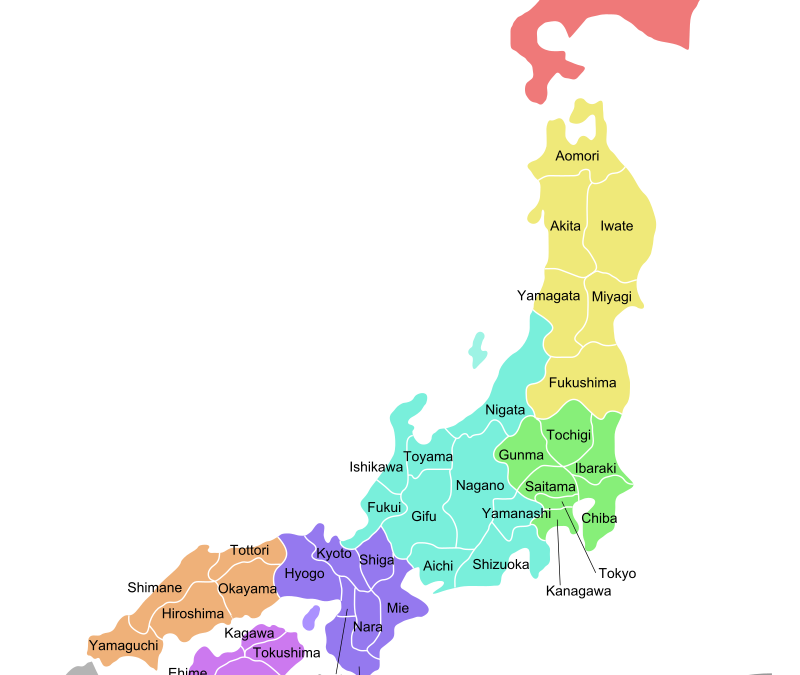
Tottori is among the least-populated prefectures in Japan and one of the most under-covered in English-language craft writing — which is a strange situation for the region that supplies most of the country’s calligraphy paper. The Saji district sits about 25 km south of the city center, up the Sendai River valley toward the Chūgoku mountain range; Aoya sits about 20 km west of the city, on the coast. Both communities historically had the three things washi needs: long winters with cold, soft river water; mountain slopes suited to growing kōzo and mitsumata; and enough seasonal rural labor to handle the intensely manual sheet-forming work between rice harvests.
The historical anchor for Inshu Washi is unusually well-documented. The Engishiki — a court-procedural code completed in 927 CE under Emperor Daigo — lists Inaba (因幡, the old name for the eastern part of present-day Tottori) among the provinces sending paper as tribute to the Heian Imperial Court in Kyoto. That places Inshu Washi alongside Echizen and Tosa in the small group of washi traditions with continuous documented history reaching into the early Heian period. The paper was already considered fine enough for court use.
- 8th century — Paper-making spreads through the provinces; Inaba (modern Tottori) begins documented production.
- 927 CE — Engishiki compiled. Inaba paper is recorded as tribute to the Heian Imperial Court.
- 1632 — The Ikeda family is moved to Tottori as daimyō; the Ikeda-han later designates paper a domain industry.
- Edo period — Saji village heads (庄屋) organize kozo and mitsumata farmers into seasonal cooperatives; Aoya develops as a paper-trading port.
- Late 19th c. — Meiji-era industrial paper enters Japan; many regional washi industries shrink. Inshu Washi pivots toward shodo-grade hanshi for the modernizing school system.
- 1975 — Inshu Washi designated a National Traditional Craft (経済産業大臣指定伝統的工芸品) by METI.
- Late 20th c. — Inshu Washi reaches roughly 60% of Japan’s domestic shodo paper supply — the de facto national standard.
- 2000s — Saji Washi Bunkakan (佐治和紙文化館) opens as a working studio and museum; Aoya Paper Bazaar (青谷町和紙工房) continues maker-direct sales.
- 2026 — Still the standard practice paper in Japanese school shodo curricula.
The Ikeda domain’s intervention in the 1600s is the structural reason Inshu Washi survived where many regional papers did not. Designating paper a domain industry meant the lord guaranteed a market — paper became a tax-equivalent commodity — and Saji village heads (庄屋) were given administrative responsibility for organizing labor across the kozo-growing households of the valley. That cooperative structure smoothed the seasonal volatility that always threatens craft economies, and it created a knowledge-transmission network deeper than any single workshop.
“Inaba paper is in the Engishiki. That puts Inshu Washi alongside Echizen and Tosa in the small group of washi traditions documented before the year 1000 — older than almost every European paper-making lineage by half a millennium.”
What “still being made here” means in 2026 is more practical than romantic. The Saji and Aoya districts no longer have hundreds of paper-making households as they did in the Edo period; the active workshops can be counted on the fingers of two hands. But the throughput is high — those workshops, plus a handful of larger Tottori paper companies, between them produce most of the calligraphy paper used in Japanese schools. The tradition has scaled selectively: practice-grade hanshi is produced with some machine assistance to keep prices reasonable, while tesuki nagashi-zuki sheets continue to be made one at a time by named artisans for exhibition and conservation use. Saji Washi Bunkakan operates as both a museum and a working studio, and Aoya Paper Bazaar runs maker-direct retail alongside its production rooms.
Seasonally, the rhythm has not changed. Kōzo is harvested in late autumn; the bark is stripped, soaked, beaten, and de-fibered through the winter; sheet-forming runs from December through early spring while the river water is cold enough to keep the slurry from spoiling. The winter monsoon off the Sea of Japan — heavy snow, high humidity, soft mountain runoff — is the climatic gift that made the Sanin region a paper region in the first place. The same weather that makes Tottori difficult to visit in February is what makes the paper work.
📦 Shipping & where to buy from outside Japan
Inshu Washi is not commonly listed as an individual SKU on amazon.com. Amazon US carries Japanese-craft adjacent products — sumi inksticks, brushes, generic shodo paper — but the specific Aoya and Saji workshop output usually appears either through Amazon JP Global Store (which ships internationally to most major destinations), through proxy services like Buyee or Tenso, or through the makers’ direct sites.
Note for buyers in the US: paper is typically duty-free under HTS Chapter 48, but you should still confirm — large exhibition sheet orders may trigger broker fees if the declared value exceeds your country’s de minimis threshold.
Price snapshot across stores
Live pricing for any specific Inshu Washi pack was unavailable at the time of writing — the Amazon US and eBay snapshots for this listing came back empty. The figures below are based on the standard price band published by Tottori prefectural craft directories and on typical hanshi-pack pricing across Japanese retailers; the JPY price for any specific listing should be verified at the retailer before purchase.
| Store | Item / variant | Price (JPY + USD est.) | Notes |
|---|---|---|---|
| 🇺🇸 Amazon.com (US) | Browse Japanese shodo calligraphy paper & supplies | varies (USD) | Best if you are shopping from the US — Prime shipping, USD pricing, no international customs. Amazon US carries Japanese calligraphy paper from several brands; the specific Aoya and Saji workshop output is typically sourced from Japan (next row). |
| 🇯🇵 Amazon JP Global Store | Inshu Washi hanshi pack, 100 sheets (practice grade) | ¥800–¥1,800 (≈ $5–$12 USD as of May 2026) | Ships internationally from Japan. Indicative price band — verify the specific listing. |
| 🇯🇵 Amazon JP Global Store | Tesuki (hand-laid) Inshu Washi, exhibition grade | ¥3,000–¥8,000+ per pack (≈ $20–$53+ USD) | Higher kōzo / mitsumata content; named-artisan sheets. Bulkier shipping. |
| Maker direct (Saji Washi Bunkakan / Aoya Paper Bazaar) | Workshop-specific sheet packs, including specialty grades | Typically same as JP retail; some specialty grades higher | International shipping not always supported — email to confirm. Most direct payment is JPY-only. |
| Proxy services (Buyee / Tenso) | Re-ships Japanese-only listings (Yahoo! Auctions, Rakuten) | Item price + 5–10% service fee + forwarding ship | Useful for specialty or out-of-print sheet patterns; longer transit (10–20 business days). |
USD figures use a ¥150/USD baseline (mid-2026) and are approximate. The JPY price is the authoritative one for the specific listed item.
What it does well
Weaknesses and things to verify before buying
- “Inshu Washi” labels vary in fiber content. Practice-grade sheets often blend kōzo with wood pulp to keep the price down. If you want pure kōzo or a kōzo / mitsumata blend, check the product listing for the fiber breakdown explicitly. The data suggests “Inshu Washi” alone does not guarantee 100% bast fiber.
- Bleed is heavier than European drawing papers. Newcomers from a watercolor or pen-and-ink background often find Inshu Washi too absorbent at first. This is a feature, not a flaw — but it changes how you load the brush. Expect a learning curve.
- Tesuki ≠ all of it. Most retail Inshu Washi is at least partially machine-assisted. If “fully hand-laid” matters to you (for archival or conservation work), look specifically for tesuki nagashi-zuki labeling and named-artisan provenance.
- International shipping for bulk packs can outweigh the paper. A 100-sheet hanshi pack is light, but exhibition-grade 二八 or 全紙 sheets are large and bulky; shipping from Japan can easily exceed the paper cost. Budget accordingly.
- Storage matters more than people expect. Washi absorbs ambient humidity. Stored loose in a humid climate, the sheets curl and the ink bleed becomes unpredictable. Keep packs flat, sealed, and away from direct sunlight.
- Live pricing was unavailable at time of writing. The fetched Amazon US and eBay snapshots returned empty; figures in this article reflect the published category price band, not a verified specific listing. Always verify at the retailer before purchase.
Conclusion — which buyer type are you?
Other ways to approach this purchase
🏆 Editor’s Pick
- JIS hanshi size — interchangeable with every Japanese shodo accessory format
- METI-designated traditional craft origin (Tottori, since 1975)
- Kōzo / mitsumata fiber blend gives the absorption response Japanese teachers expect
❓ Frequently Asked Questions
Is Inshu Washi the same as the paper used in Japanese elementary school calligraphy class?
In most cases, yes. Tottori’s Inshu Washi accounts for an estimated 60% of Japan’s domestic shodo paper supply. The hanshi-size practice paper distributed through Japanese school curricula commonly comes from Saji or Aoya workshops or from larger Tottori-based paper companies that follow the same regional standard.
What is the difference between Inshu Washi, Echizen Washi, and Sekishu Washi?
All three are designated traditional washi from different prefectures. Echizen (Fukui) is the broadest tradition — used for shodo, scroll mounting, currency paper, and conservation work. Sekishu Washi (Shimane, Tottori’s western neighbor) is UNESCO-listed and known for thick, durable sheets often used for restoration. Inshu Washi (Tottori) specializes in shodo calligraphy paper at scale and is the de facto standard for brush response in Japanese classrooms.
Does Amazon JP Global Store ship Inshu Washi internationally?
Generally yes — paper falls under categories Amazon JP Global Store routinely ships to the US, EU, Australia, and most major destinations. Costs typically run $15–$40 on small hanshi orders and higher for bulky exhibition sheets. Customs duties depend on destination and order value; small paper orders usually fall under de minimis thresholds.
How should I store Inshu Washi so the sheets do not curl?
Keep sheets flat, sealed in their original wrapper or in an acid-free folder, and away from direct sunlight. Washi absorbs ambient humidity; in humid climates a desiccant pouch in the storage box helps. Do not store sheets standing on edge — they will curl under their own weight.
Can I use Inshu Washi with sumi inksticks I already own, or do I need a specific ink?
Any traditional sumi ink works — Inshu Washi was developed specifically for sumi response. Nara-made inksticks (Kobaien, Kobokusha) are the classical pairing, with pine-soot inks producing slightly cooler black tones and oil-soot inks giving warmer, browner blacks. Modern bottled sumi ink is also fine for practice; for finished work, freshly-ground stick ink behaves more predictably on washi.
Is Inshu Washi archival? Can I use it for a piece I want to keep for decades?
Hand-laid (tesuki) Inshu Washi made from pure kōzo or kōzo / mitsumata blends is considered conservation-grade by Japanese mounting (kakejiku) standards, and washi of this category has demonstrably lasted centuries in temple archives. Practice-grade sheets that include wood pulp will not perform the same way. If archival matters, look specifically for tesuki labeling and a stated 100% bast-fiber content.
Why is Tottori the center of shodo paper production rather than, say, Kyoto?
Climate and geography. The Sanin region’s Sea-of-Japan winter — heavy snow, high humidity, cold soft water running off the Chūgoku mountains — is ideal for sheet-forming. Kōzo and mitsumata grow well on Tottori’s hillsides. The Ikeda domain’s Edo-period decision to designate paper a domain industry then locked in the workshop infrastructure for several centuries. Kyoto was the consumer (the Imperial Court), not the producer.
jpmono.com is curated by a Japan-based editorial team (working out of Toyama in the Hokuriku region and Nara in Kansai) and is independent. We do not take payment from the makers we feature; income comes from affiliate links. Read more about our editorial standards.
🤖 This article was researched and drafted with AI assistance and reviewed by a human editor. Specifications, historical claims, and prices were cross-checked against the cited sources at time of writing; readers should verify live pricing and stock at the retailer before purchase.
Affiliate disclosure: jpmono.com may earn a commission on qualifying purchases made through links on this page, at no additional cost to you.