![Karatsu Ware Guinomi Sake Cup: Where to Buy Saga Pottery [2026]](https://jpmono.com/wp-content/uploads/2026/05/karatsu-ware-e-garatsu-guinomi-where-to-buy-2026-featured.jpg)
Karatsu ware (唐津焼, karatsu-yaki) is the rustic, iron-painted stoneware of northwestern Kyūshū, and an e-garatsu (絵唐津, “picture Karatsu”) guinomi is one of the most direct ways to hold it in your hand. The cup covered here is a small footed sake cup decorated with an iron-oxide brush motif of reeds and grasses on a warm, earthy clay body, fired in a traditional climbing kiln (noborigama, 登窯) in the lineage associated with the Nakazato Taroemon house and the Ryūta-gama workshop in Saga.
What makes Karatsu interesting to an international reader is its place in Japan’s drinking and tea culture, not surface prettiness. In the old tea-ceremony ranking of ceramics for chanoyu — ichi-raku, ni-hagi, san-karatsu (“first Raku, second Hagi, third Karatsu”) — Karatsu sits third, which in this world is a high compliment rather than a low one. It is the everyday-yet-respected stoneware of western Japan, born when Korean potters settled across the Matsuura region after the campaigns of the 1590s and built the climbing kilns the tradition still uses.
This guide is written for a buyer outside Japan deciding whether an e-garatsu guinomi belongs on their shelf, and how to actually obtain one. We cover what the style is, how it differs from its tea-ranking neighbors Raku and Hagi, where it sits geographically, the realistic buying paths (Amazon US search, Amazon JP Global Store, maker-direct, and proxy services), and the honest caveats — including the fact that, at the time of writing, no live price or listing snapshot was returned for this specific item.
🔄 Last updated:
⏱️ Read time: ~9 min
![Karatsu Ware Guinomi Sake Cup: Where to Buy Saga Pottery [2026]](https://m.media-amazon.com/images/I/417l1bi-jxL._SL500_.jpg)
- Who this is for — and who should skip it
- Product overview (from published specs)
- Where this comes from — place, era, and the craft tradition
- 📌 How does it compare?
- Price snapshot across stores
- What it does well
- Weaknesses and things to verify before buying
- Conclusion — which buyer type are you?
- Other ways to approach this purchase
- 🏆 Editor’s Pick
- ❓ Frequently Asked Questions
Who this is for — and who should skip it
- Prefer rustic, asymmetric stoneware over flawless porcelain
- Drink sake and want a cup with a recognized place in tea culture
- Value a documented kiln lineage (noborigama, Nakazato Taroemon line)
- Are comfortable with each piece being one-of-a-kind and slightly irregular
- Don’t mind sourcing from Japan with a few extra steps
- Want a matched set of identical, uniform cups
- Need confirmed dishwasher/microwave specs before buying (not provided)
- Expect bright white, ultra-smooth porcelain (consider Arita instead)
- Are unwilling to verify price and stock at the listing yourself
- Need guaranteed fast domestic shipping and a fixed published price

Product overview (from published specs)
The table below reflects what could be established from the spec brief and the general Karatsu tradition. Several rows are marked Unconfirmed because the fetched data returned no listing snapshot, price, or measurement for this specific item. Verify all of these at the live listing before purchasing.
Karatsu Ware Guinomi Sake Cup
唐津焼 絵唐津ぐい呑み
通常7~8日以内に発送します。 · Sold by こゆてゅこハウス · ASIN B0G4B9QBSH
Price and availability as of 2026-08-31 02:30 JST. The Amazon listing at the time of purchase is authoritative. jpmono.com earns a commission on qualifying purchases at no extra cost to you.
| Attribute | Detail | Source |
|---|---|---|
| Item type | Guinomi (ぐい呑) — a small footed sake cup | Spec brief |
| Ware / style | Karatsu ware, e-garatsu (iron-oxide reed/grass brushwork) | Spec brief |
| Material | Glazed stoneware (earthen clay body) | Tradition (general) |
| Kiln / lineage | Noborigama (climbing kiln); Nakazato Taroemon lineage / Ryūta-gama | Spec brief |
| Origin | Karatsu, Saga Prefecture, Kyūshū | Spec brief |
| Capacity / dimensions | Unconfirmed — check listing | No data fetched |
| Weight | Unconfirmed — check listing | No data fetched |
| Care (dishwasher/microwave) | Unconfirmed — check listing | No data fetched |
| Price (JPY) | Unconfirmed — no listing snapshot at time of writing | No data fetched |
| Amazon JP item ID (ASIN) | B0G4B9QBSH | Spec brief |
Note: Only the spec brief and general tradition were available; no Amazon JP listing snapshot or live pricing was returned at the time of writing. Treat all measurements and prices as unverified until you see them on the live listing.
📖 Glossary — key Karatsu terms
Guinomi (ぐい呑) — a small, slightly deep cup for drinking sake; larger and more casual than the shallow sakazuki.
E-garatsu (絵唐津, “picture Karatsu”) — Karatsu ware decorated with a loose iron-oxide brush painting, classically reeds, grasses, or simple plants, under a transparent glaze.
Chosen-garatsu (朝鮮唐津) — “Korean Karatsu,” made by overlapping a straw-ash glaze and an iron glaze so they cascade and mingle on the surface.
Madara-garatsu (斑唐津) — “mottled Karatsu,” a milky white-ish glaze with speckling from iron in the clay.
Noborigama (登窯) — a multi-chamber climbing kiln built up a slope, the wood-fired kiln type Korean potters introduced to Karatsu.
Chanoyu (茶の湯) — the Japanese tea ceremony, whose aesthetics shaped the ranking of ceramics in which Karatsu places third.

Where this comes from — place, era, and the craft tradition

Karatsu sits on the northwestern shoulder of Kyūshū, in Saga Prefecture, looking out across the Genkai Sea. The name itself is a clue to its history: 唐津 means “Tang (China) port” — for centuries this stretch of coast was Japan’s closest jumping-off point toward the Korean peninsula and the continent beyond. That position is exactly why the area became a ceramics center.
The craft was seeded by people, not just clay. After Toyotomi Hideyoshi’s campaigns on the Korean peninsula in the 1590s (the Bunroku–Keichō campaigns of 1592–1598), Korean potters settled across the Matsuura region around Karatsu and built climbing kilns — the noborigama — that could reach the high, even temperatures stoneware needs. Under the Terazawa domain and the domains that followed, their pottery spread as the everyday stoneware of western Japan.
It spread so thoroughly that in the Kamigata (Kyoto–Osaka) region the word “Karatsu-mono” — “Karatsu stuff” — came to mean ceramics in general, the way a brand name slips into common speech. That is the historical weight behind a cup that looks, at first glance, simply rustic.
- 1592–1598 — Hideyoshi’s Bunroku–Keichō campaigns on the Korean peninsula.
- After the 1590s — Korean potters settle across the Matsuura region and build noborigama, founding Karatsu ware.
- Early Edo (Terazawa domain) — Karatsu spreads as western Japan’s everyday stoneware; “Karatsu-mono” becomes Kamigata slang for ceramics generally.
- Tea-culture era — Karatsu earns third place in the chanoyu ranking “ichi-raku, ni-hagi, san-karatsu.”
- 20th century — The Nakazato Taroemon house (a Living National Treasure lineage) revives Momoyama-era Karatsu techniques.
- 2026 — Karatsu kilns including the Ryūta-gama still fire e-garatsu in wood-burning noborigama.
In tea culture, the ranking that matters is ichi-raku, ni-hagi, san-karatsu: first Raku, second Hagi, third Karatsu. It reflects how well each ware suits the tea bowl and the spirit of wabi — restraint and quiet imperfection — not a scoreboard of quality. Karatsu’s third place is a seat at a very short table.
“Tea masters rank it third — ichi-raku, ni-hagi, san-karatsu — but for everyday sake, third place is where the drinking begins.”
The continuity case is concrete. In the 20th century the Nakazato Taroemon house, a Living National Treasure lineage, deliberately revived the Momoyama-period Karatsu techniques that had faded, and workshops in that tradition — the Ryūta-gama among them — still load and fire wood-burning climbing kilns today. A cup in this lineage is not a reproduction of an old idea; it is the same practice, still running.

📌 How does it compare?
Related jpmono guides — other Japanese cups, kilns, and wares worth comparing before you commit:
 🍵 Hagi ware yunomi (the “ni-hagi” of the tea ranking)
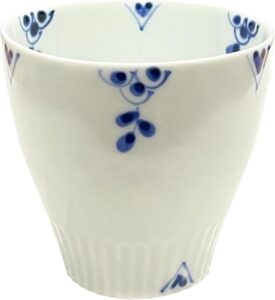 🏺 Arita ware — same Saga prefecture, porcelain counterpart
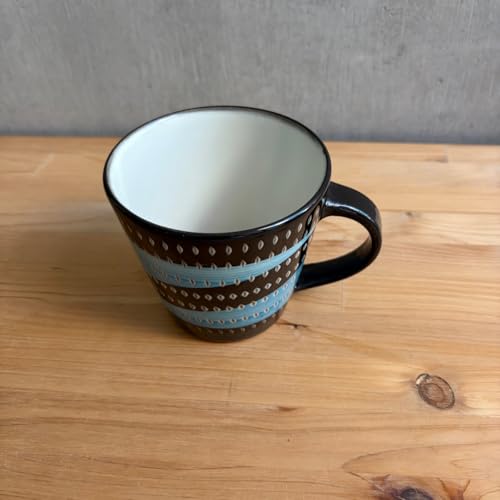 🌀 Koishiwara ware — Kyushu, shared Korean-potter lineage
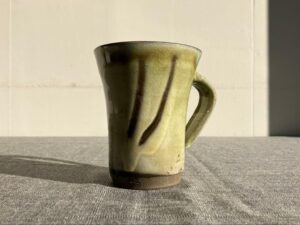 🪵 Onta ware — Kyushu mingei kiln
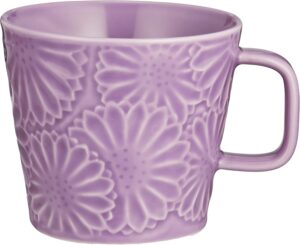 ⚪ Hasami porcelain — neighboring Nagasaki
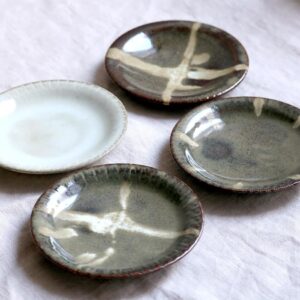 🍽️ Shodai ware — Kumamoto stoneware
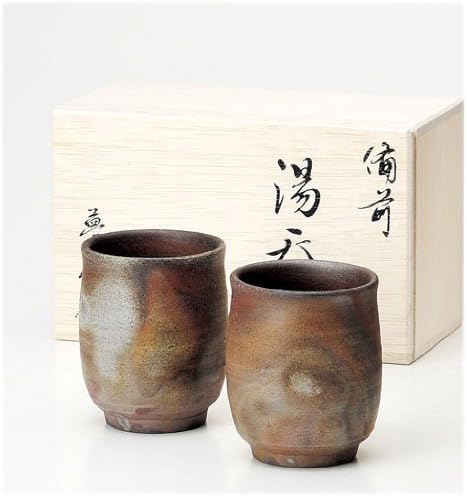 🟤 Bizen ware — unglazed stoneware peer
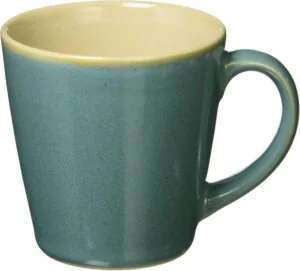 🟢 Mashiko ware — mingei pottery
Price snapshot across stores
No live price was returned for this item at the time of writing, so the price cells below are marked unverified. Use them to compare buying paths, then confirm the actual figure at the listing.
| Store | Item / variant | Price (JPY + USD est.) | Notes |
|---|---|---|---|
| 🇺🇸 Amazon.com (US) | Browse Japanese sake cups & guinomi | varies (USD) | Best if you’re shopping from the US — Prime shipping, USD pricing, no international customs. Amazon US carries Japanese sake cups and tableware from various makers; this exact e-garatsu piece is sourced from Japan (next row). |
| 🇯🇵 Amazon JP Global Store | E-garatsu guinomi (ASIN B0G4B9QBSH) | Unconfirmed — check listing | Where the specific item is sourced. Ships internationally from Japan to most major destinations. JPY is the authoritative price once shown. |
| Maker direct (Ryūta-gama / Karatsu kilns) | E-garatsu guinomi (varies by firing) | Unconfirmed — check maker site | Kiln/gallery sales may offer choice of individual pieces; international shipping is not guaranteed. |
| Proxy services (Buyee / Tenso) | Re-ships JP-only listings abroad | item price + proxy fee + forwarding | Useful when a piece is listed only on Japan-domestic shops; adds a service fee and a second shipping leg. |
Prices in USD are approximate and depend on the current exchange rate (≈ ¥150/USD baseline as of mid-2026). The JPY price shown on the listing is the authoritative one.
What it does well
Weaknesses and things to verify before buying
- No verified price. The fetched data returned no listing snapshot — confirm the current JPY price at the listing before ordering.
- No confirmed dimensions or capacity. Guinomi sizes vary; if you have a specific volume in mind, check the listing’s measurements.
- Care specs unconfirmed. Dishwasher/microwave suitability was not provided. As hand-made glazed stoneware, hand-washing is the safe default until the listing states otherwise.
- Piece-to-piece variation. Because each cup is individually made, the one you receive will differ from any sample photo in brushwork, tone, and form.
- International shipping not guaranteed for every path. Amazon JP Global Store ships many items abroad, but availability and cost vary by destination; maker-direct may be Japan-only.
- Customs/duties. Orders above your country’s de-minimis threshold may incur import duty or tax on delivery.
- Not a matched set. If you need identical cups for guests, a hand-made single guinomi is the wrong tool — look for a production set instead.
Conclusion — which buyer type are you?
Other ways to approach this purchase
🏆 Editor’s Pick
❓ Frequently Asked Questions
What is e-garatsu (絵唐津)?
Where is Karatsu ware made?
Why is Karatsu ranked third in “ichi-raku, ni-hagi, san-karatsu”?
How do I care for this guinomi?
Does it ship internationally?
How is Karatsu ware different from Hagi or Arita ware?
Was the price verified?
jpmono.com is curated by a Japan-based editorial team (working out of Toyama in the Hokuriku region and Nara in Kansai) and is independent. We don’t take payment from the makers we feature; income comes from affiliate links. Read more about our editorial standards.
This article was prepared with AI assistance and reviewed against the available source data. Where live pricing, dimensions, or listing details were not returned by our data sources, that is stated explicitly rather than estimated.
Affiliate disclosure: jpmono.com may earn a commission on qualifying purchases made through links on this page, at no additional cost to you.