![Chiba Koshogu Hand-Forged Grass Sickle (Kama): Where to Buy [2026]](https://jpmono.com/wp-content/uploads/2026/05/japan-map-regions-and-prefectures-800x1050.png)
On the flat, sandy farm belt east of Tokyo, village blacksmiths have been forging sickles, hoes, and knives for the people who work the land for centuries. The piece covered here is one of those tools brought into the present: a kusakari-gama (草刈鎌, “grass-cutting sickle”) made by Chiba Koshogu (千葉工匠具) smiths on the Kujukuri plain. Per the spec for this guide, it is a hand-forged, single-bevel grass sickle with a high-carbon steel edge forge-welded onto a softer iron body — the same lamination logic used in Japanese kitchen and garden blades.
What makes Chiba Koshogu notable internationally is recognition, not romance. In 2017 Japan’s Ministry of Economy, Trade and Industry (METI) designated Chiba Koshogu a national traditional craft — Chiba Prefecture’s second such designation, alongside the Boshu Uchiwa fan. That places a humble farm sickle in the same legal-heritage category as lacquerware and porcelain, on the strength of a defined process: free-forging by hand, forge-welding hard steel to soft iron, and water quenching for a keen, re-sharpenable edge.
This article is for gardeners, small-acreage growers, and tool enthusiasts outside Japan who are weighing a genuine maker-forged sickle against a hardware-store stamping. It explains the hand-forged carbon-steel edge, the care it demands, and how this kind of Japanese tool compares with other forged tools. Details that vary by maker are identified rather than guessed.
🔄 Updated:
⏱ Read time: ~9 min
- Who this is for — and who should skip it
- Product overview (from published specs)
- 📍 Where this comes from — place, era, and the craft tradition
- 📌 How does it compare?
- 📦 Shipping & where to buy from outside Japan
- Buying options
- What it does well
- Weaknesses and things to verify before buying
- Conclusion — which buyer type are you?
- Other ways to approach this purchase
- ❓ Frequently Asked Questions
Who this is for — and who should skip it
- Want a maker-forged, re-sharpenable blade rather than a disposable stamped sickle
- Do regular hand weeding, verge trimming, or small-plot harvesting
- Already maintain carbon-steel tools and are comfortable with rust care
- Value a defined craft process (METI-designated) and traceable origin
- Are buying for someone who appreciates Japanese hand tools
- Want a zero-maintenance, dishwasher-and-forget stainless tool
- Need to cut woody brush, saplings, or thick stems (this is for grass and weeds)
- Are left-handed and need a confirmed left-bevel option
- Need a guaranteed delivered price before ordering (none is stated here)
- Expect a long-handled scythe — this is a short, one-hand sickle

Product overview (from published specs)
| Attribute | Detail (per spec / data notes) |
|---|---|
| Item | Single-bevel kusakari-gama (grass sickle) |
| Maker / brand | Chiba Koshogu (千葉工匠具) — Togane / Sanmu area smith |
| Blade construction | High-carbon steel edge forge-welded (laminated) onto a softer iron body; water-quenched |
| Edge geometry | Single bevel (片刃), curved blade |
| Origin | Kujukuri coastal plain, Chiba Prefecture, Kantō region, Japan |
| Designation | METI national traditional craft (designated 2017) |
| Blade length / weight | — |
| Price | — |
Exact dimensions and current availability can vary between hand-forged sickles. The table keeps unconfirmed fields open rather than estimating them from appearance.
📖 Glossary — Japanese terms used in this article
- kama (鎌) — a sickle; a short, curved one-hand cutting blade used in farming and gardening.
- kusakari-gama (草刈鎌) — specifically a grass-cutting sickle, the emblematic Chiba Koshogu piece, used for weeding and harvesting.
- Chiba Koshogu (千葉工匠具) — the umbrella name for hand-forged edged tools (sickles, hoes, knives, shears) from Chiba; a METI national traditional craft since 2017.
- hi-zukuri (火造り) — free-forging by hand, shaping hot steel on the anvil without a closed die.
- yaki-ire (焼入れ) — quench-hardening; here, water quenching to set a keen, durable edge.
- kataba (片刃) — single-bevel; ground on one face only, common in Japanese blades for a fine, re-sharpenable edge.
- kuwa (鍬) — a hoe; another staple of the Chiba farm-tool tradition.
- Kujukuri plain (九十九里平野) — the broad, flat coastal lowland of eastern Chiba, historically one of Japan’s largest stretches of farmland.

📍 Where this comes from — place, era, and the craft tradition

Chiba Prefecture is the broad peninsula that forms the eastern wall of Tokyo Bay, immediately across the water from the capital. The forges that make this sickle cluster in Togane and Sanmu, on the inland edge of the Kujukuri plain (九十九里平野) — a long, flat, sandy coastal lowland running down Chiba’s Pacific side. In the old provincial map this was Kazusa and Shimōsa, and the plain was for centuries one of the largest single stretches of agricultural land in Japan.
That geography is the whole reason a blacksmith tradition took root here. Flat, workable farmland at scale means constant demand for the tools that work it: sickles to cut grass and harvest, hoes to turn soil, knives and shears for everything in between. Where the fields are, the smiths follow.
- Late 1500s — The warring (Sengoku) era ends; some swordsmith lineages turn to forging farm implements as demand for weapons falls.
- Edo period (1603–1868) — The Kujukuri plain develops as a major farm belt in Kazusa/Shimōsa; village smiths supply sickles, hoes, knives, and shears.
- 18th–19th c. — Sustained demand for farm implements keeps the local forging trade alive across generations.
- Meiji onward (1868–) — Hand free-forging persists alongside industrial tool-making.
- 2017 — METI designates Chiba Koshogu a national traditional craft — Chiba’s second, alongside Boshu Uchiwa.
- 2026 — The kusakari-gama is still hand-forged one at a time in the Togane / Sanmu forges.
The historical hook here is not a former capital but a craft lineage. According to the data notes for this guide, some of the village smiths descended from swordsmith families who, once the warring era closed, redirected their forge skills from weapons to the implements a farming economy actually needed. The technique carried over: forge-weld a hard, high-carbon steel edge onto a softer, more forgiving iron body, then water-quench it. That lamination is exactly what gives a sickle a thin, keen edge that can be re-sharpened many times rather than thrown away when dull.
The METI designation in 2017 is the formal recognition of that continuity. It is worth noting what it certifies: not a single famous workshop, but a defined regional process — hand free-forging (火造り), forge-welded steel-on-iron lamination, and water quenching (焼入れ) — kept alive by the smiths of the district.
“A grass sickle is the most ordinary tool on a farm — which is exactly why it took a few hundred years of daily demand on one wide plain to forge it this well.”
What “still being made here” means in practice: the kusakari-gama remains a hand-forged object, shaped one at a time rather than stamped from sheet. The exact number of active forges and succession picture is not detailed in the spec for this guide, so we will not put a figure on it — but the 2017 national designation indicates a tradition judged to be living, not archival.

📌 How does it compare?
Related forged-tool and Chiba craft guides on jpmono.com:
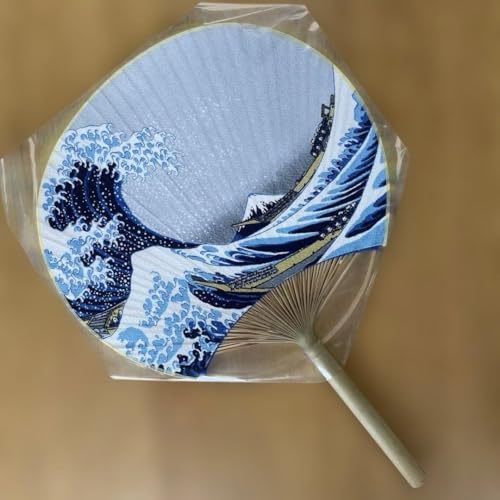 Chiba: Boshu UchiwaChiba’s other national-designated craft
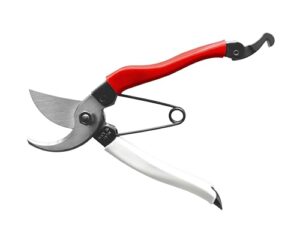 Forged garden shearsOkatsune, Yasugi steel
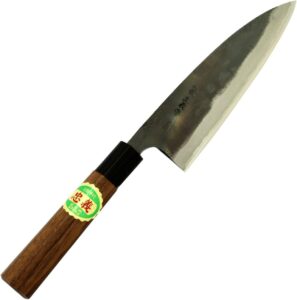 Kurouchi forged bladeTosa funayuki knife
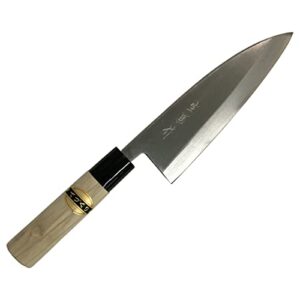 Hand-forged Echizen bladeEchizen santoku
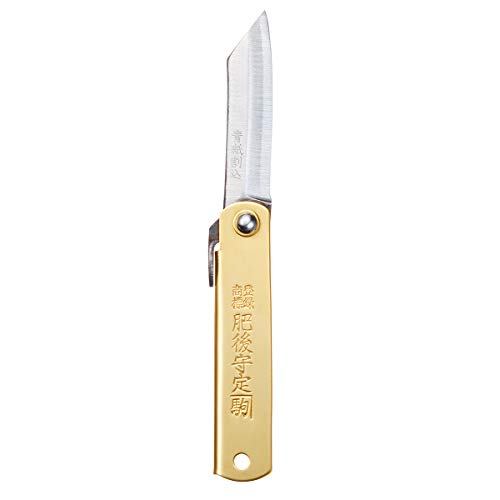 Folding carbon-steel knifeNagao Higonokami
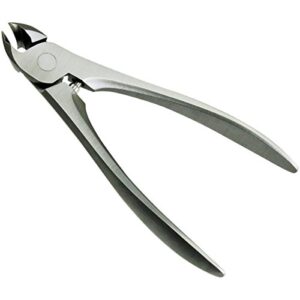 Forged Sanjo precision toolSuwada nail nipper
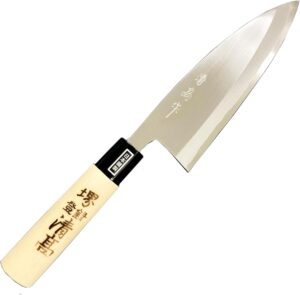 Single-bevel forged knifeSakai deba
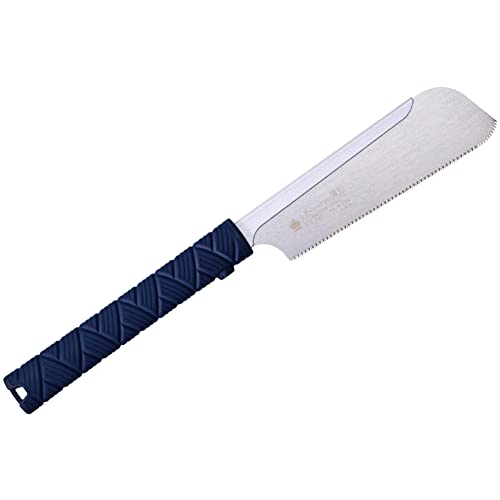 Forged hand toolGyokucho ryoba pull saw
📦 Shipping & where to buy from outside Japan
Authentic Chiba Koshogu pieces are sold mainly through Amazon JP’s Global Store, which lists the specific item in this guide and ships internationally to most major destinations. Based on the spec, the best buy marketplace for the genuine maker piece is Japan (JP).
- Shipping cost: typically in the range of about $15–$40 to the US and EU via Amazon JP Global Store; higher to more distant regions. Exact cost shows at checkout.
- Customs / duties: orders above your country’s de minimis threshold may incur import duty or VAT on arrival. This is a sharpened steel blade — check your local rules on importing bladed garden tools.
- Proxy option: if direct international shipping is unavailable, forwarding services such as Buyee or Tenso can re-ship from a Japanese address (extra fees apply).
- No voltage concern: this is a hand tool — no electrical certification or adapter issues.
Buying options
Japanese forged tools are commonly priced in JPY, while any USD amount is only an approximate conversion at a ¥150/USD baseline; exchange rates and maker prices change over time.
| Store | Item / variant | Price | Notes |
|---|---|---|---|
| 🇺🇸 Amazon.com (US) | Browse Japanese forged garden sickles & weeding tools | varies (USD) | Best if you are shopping from the US — Prime shipping, USD pricing, no international customs. Amazon US carries Japanese garden sickles and hori-hori weeders from various makers, useful for comparing shapes and steel types. The exact Chiba Koshogu piece ships from Japan (next row). |
| 🇯🇵 Amazon JP Global Store | Chiba Koshogu single-bevel grass sickle | — | International shipping from Japan may be available; confirm the current total before ordering. |
| Maker direct | Chiba Koshogu workshops | — | No direct-to-overseas storefront is stated in the spec; many small forges sell domestically only. Not a confirmed international path here. |
| Proxy services (Buyee / Tenso) | Re-ship from a Japanese address | item + proxy fee | Fallback when direct international shipping is unavailable. Adds handling and forwarding fees. |
Prices in USD are approximate and depend on the current exchange rate. Always verify the live price at the retailer before purchasing.
What it does well
Weaknesses and things to verify before buying
- Carbon steel rusts. The high-carbon edge will spot and patina if left wet. It needs wiping dry and a light oil after use — not a set-and-forget stainless tool.
- Grass and weeds, not woody brush. A thin single-bevel grass sickle is for soft growth and harvesting; using it on saplings, thick stems, or wire risks chipping the edge.
- Confirm the current total and fit before ordering. Allow for any shipping or forwarding fees.
- Handedness. Single-bevel blades are handed. The standard is right-bevel; left-handed buyers must confirm a left option exists, which is not stated here.
- Sharpened blade import rules. Some countries restrict or tax imported bladed tools. Check your local customs and any age-of-buyer rules before ordering.
- Sharpening skill required. Getting full value means maintaining a single-bevel edge on a whetstone; buyers expecting a pull-through sharpener may be frustrated.
Conclusion — which buyer type are you?
Other ways to approach this purchase
❓ Frequently Asked Questions
Does Amazon ship this Chiba Koshogu sickle internationally?
How do I care for the carbon-steel blade?
What is this sickle actually for?
Is there a left-handed version?
How is it different from a hardware-store sickle?
Why is no price shown in this guide?
Does it make a good gift?
Affiliate disclosure: jpmono.com may earn a commission on qualifying purchases made through links on this page, at no additional cost to you.