![Tanegashima Hand-Forged Nigiri Scissors: Japanese U-Shaped Blades Where to Buy [2026]](https://jpmono.com/wp-content/uploads/2026/05/japan-map-regions-and-prefectures-800x1050.png)
The island where Japan first met the gun also taught Japan how to forge one. In 1543, two Portuguese aboard a Chinese junk came ashore on Tanegashima, a long, low island off the southern tip of Kagoshima, carrying the matchlock arquebus — the firearm Japan still calls, simply, the tanegashima. The local lord ordered his swordsmiths to copy it, and the barrel-forging knowledge that resulted seeded a concentrated metalworking tradition that has never fully left the island.
The nigiri-basami (握り鋏, “grip scissors”) covered in this guide is a direct descendant of that lineage. It is a U-shaped, one-piece spring scissor — no rivet, no pivot screw, just a single continuous loop of hand-forged carbon steel that springs open and snaps shut. Tanegashima smiths hammer-weld and temper the blades the way the gun-barrel smiths once worked iron, and the result is the clean, decisive closing action prized for cutting thread, trimming herbs, and fine craft work.
This article is written from a Japan-based editor’s desk (we work out of Toyama in the Hokuriku region and Nara in Kansai), for international readers who want to understand what they are buying before they compare prices. We cover where Tanegashima sits on the map, the gun-to-scissors craft story, how the one-piece spring design behaves, who should buy it and who should not, and exactly how to order it from outside Japan.
🔄 Updated: June 2, 2026
⏱️ Read time: ~9 min
- Who this is for — and who should skip it
- Product overview (from published specs)
- Where this comes from
- 📦 Shipping & where to buy from outside Japan
- Where to buy
- What it does well
- Weaknesses and things to verify before buying
- Conclusion — which buyer type are you?
- Other ways to approach this purchase
- ❓ Frequently Asked Questions
Who this is for — and who should skip it
- Do hand-sewing, embroidery, quilting, or fine textile work and want a thread snip with a crisp closing action
- Cut herbs, scallions, or small kitchen tasks and prefer a single-hand squeeze tool
- Value hand-forged carbon steel and are willing to dry and oil a blade to prevent rust
- Want an object with a documented regional craft lineage rather than a commodity import
- Are comfortable buying from Amazon Japan’s Global Store and waiting for international shipping
- Want a stainless, dishwasher-safe, zero-maintenance scissor
- Need ring-handled shears for heavy fabric, paper, or all-day cutting (the U-grip tires some hands)
- Expect Prime-style next-day delivery; this typically ships from Japan
- Are uncomfortable hand-sharpening or stropping a carbon-steel edge over time
- Need a confirmed price and stock before committing
Product overview (from published specs)
Tanegashima nigiri-basami are hand-forged scissors; maker traditions establish the tool’s basic form, while dimensions, weight, and price vary by piece. The table therefore focuses on the craft category and treats maker-specific details separately.
| Attribute | Detail | Source |
|---|---|---|
| Item | Tanegashima hand-forged nigiri-basami (U-shaped spring scissor) | Product title |
| Construction | One continuous piece — single spring loop, no rivet or pivot screw | Craft tradition (data notes) |
| Material | Hand-forged carbon steel (hagane), hammer-welded and tempered | Craft tradition (data notes) |
| Origin | Tanegashima island, Kagoshima Prefecture, Kyūshū | Spec / data notes |
| Typical use | Thread, herbs, and fine craft cutting | Spec / category |
| Blade length / overall size | Unconfirmed | — |
| Weight | Unconfirmed | — |
| Price | — | — |
📖 Glossary — key terms in this article
- nigiri-basami (握り鋏) — “grip scissors.” A U-shaped, one-piece spring scissor squeezed in one hand; the loop itself acts as the spring. The oldest scissor form in Japan, used for sewing and thread work.
- tanegashima (種子島) — both the island in southern Kagoshima and the Japanese word for the matchlock arquebus introduced there in 1543.
- hagane (鋼) — carbon steel. Takes a very keen edge and is favored by Japanese smiths, but can rust if left wet.
- yakiire (焼き入れ) — the quench-and-temper step that hardens a forged blade.
- Satsuma (薩摩) — the old domain (now Kagoshima) ruled by the Shimazu clan, known for its metal and ceramic crafts.
- shokunin (職人) — a skilled craftsperson working within a defined trade tradition.
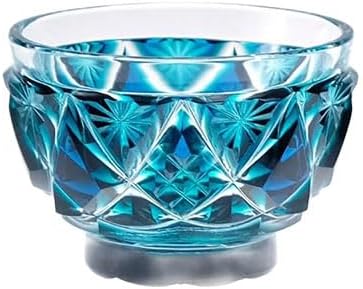 Satsuma Kiriko Glass
Same Shimazu-era Kagoshima craft economy →
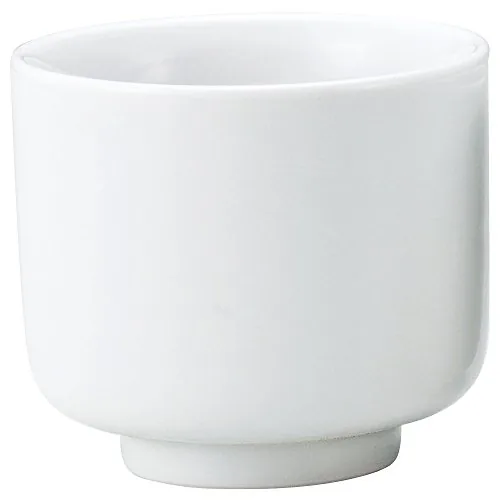 Shiro-Satsuma Sake Cup
Kagoshima ceramics under the Shimazu →
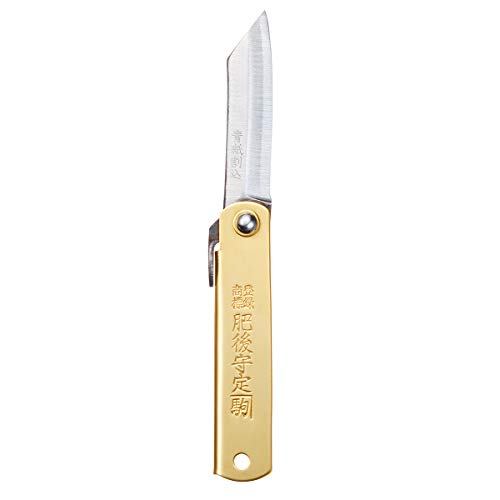 Higonokami Folding Knife
Another carbon-steel hand tool →
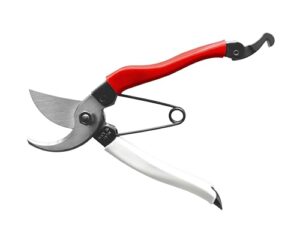 Okatsune Pruning Shears
Ring-handled cutting compared →
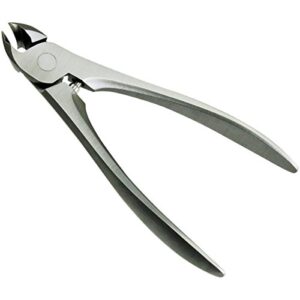 Suwada Nail Nipper
Precision one-piece forged cutting →
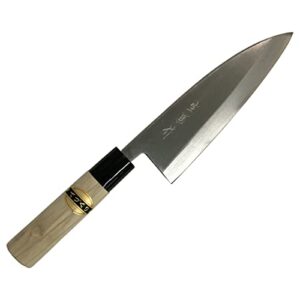 Echizen Santoku Knife
Hand-forged Japanese kitchen blade →
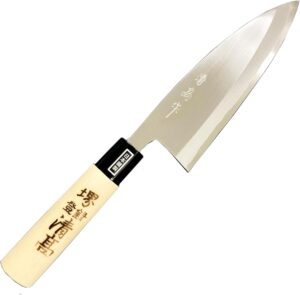 Sakai Deba Knife
Traditional single-bevel forging →
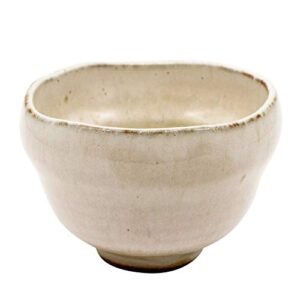 Shodai-yaki Yunomi
Kyūshū folk-craft tableware →
Where this comes from

Kagoshima sits at the southern tip of Kyūshū, the southwesternmost of Japan’s four main islands. Tanegashima is one of the Ōsumi Islands, a narrow strip of land lying roughly 40 km south of the mainland across the Ōsumi Strait, washed by the warm Kuroshio current. Its low profile and exposed position made it the natural first landfall for ships drifting in from the south — which is exactly how the island earned its place in Japanese history.

In 1543, two Portuguese aboard a Chinese junk came ashore here and introduced the matchlock arquebus to Japan. The weapon was so closely identified with the place that the Japanese name for the matchlock became, and remains, tanegashima. The island’s lord, Tanegashima Tokitaka, ordered a local swordsmith named Yaita Kinbei to reverse-engineer the barrel and firing mechanism — a demand that forced the island’s smiths to master the gun-barrel forging and welding that European armorers had spent generations developing.
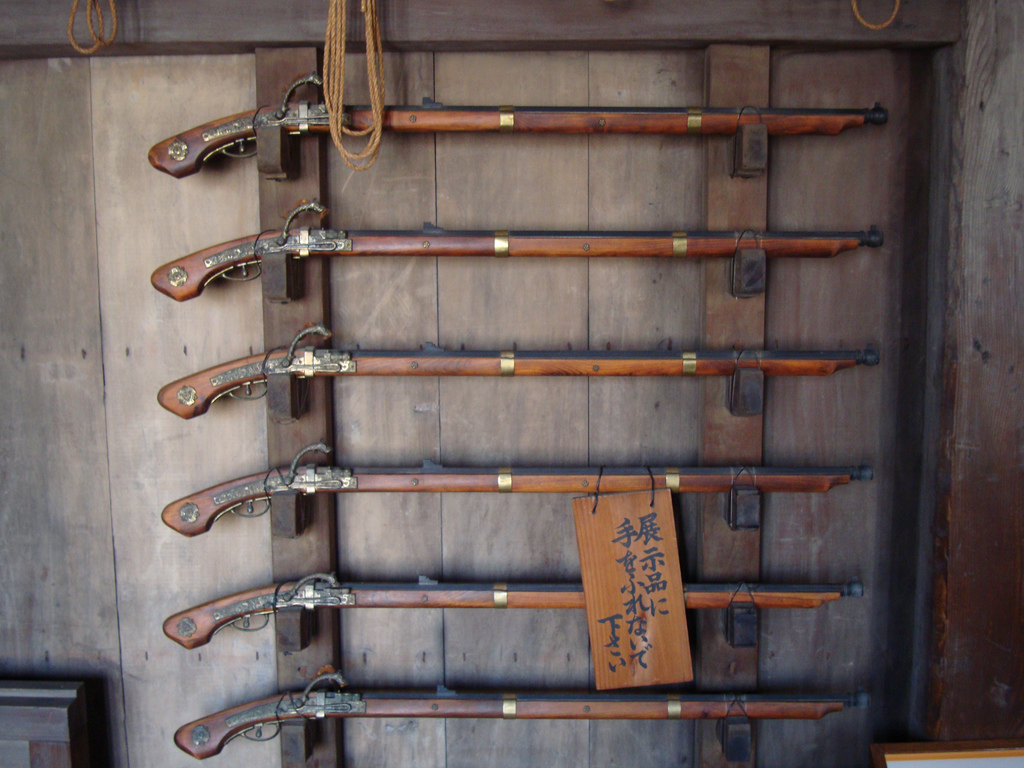
- 1543 — Two Portuguese aboard a Chinese junk land on Tanegashima and introduce the matchlock arquebus to Japan.
- 1543 onward — Lord Tanegashima Tokitaka orders swordsmith Yaita Kinbei to reverse-engineer the barrel and firing mechanism.
- Edo period — As firearm demand fades, the island’s forging lineages turn to edged tools: kitchen knives, sickles, and nigiri-basami.
- Shimazu era — Kagoshima’s wider artisan economy (Satsuma ware, Satsuma Kiriko) develops under the Shimazu clan at Iso / Sengan-en.
- Today (2026) — Tanegashima smiths still hand-forge carbon-steel nigiri-basami, hammer-welded and tempered by hand.
As the demand for firearms faded over the long peace of the Edo period, those forging lineages did what skilled metalworking communities everywhere do: they turned their hands to the tools a farming and fishing island actually needed. Kitchen knives, sickles, and — most enduringly — the nigiri-basami, the U-shaped spring scissor. The craft never depended on the gun; the gun simply concentrated the metalworking skill in one place, and the place kept it.
“The island that taught Japan to forge a gun barrel kept the skill long after the guns went quiet — and bent it, eventually, into a scissor you can hold in one hand.”
This craft sits within Kagoshima’s wider Shimazu-era artisan economy. Under the Shimazu clan, the domain of Satsuma developed a dense culture of metal and ceramic work — Satsuma ware (Satsuma-yaki) and the famously layered Satsuma Kiriko cut glass among them — much of it nurtured around the Iso district and the Sengan-en garden in Kagoshima city. The nigiri-basami is the humblest member of that family, but it shares the lineage.
The single most important thing to understand about a Tanegashima nigiri-basami is the one-piece spring. There is no rivet and no pivot screw joining two halves; the whole tool is forged from one continuous length of carbon steel, bent into a U so that the loop itself stores the spring energy. Squeeze, and the blades close; release, and the steel’s own memory springs them open. That is why a well-forged example gives the clean, decisive closing snap that thread-cutters and craft workers prize — the action comes from the metal, not from a joint that can loosen.

📦 Shipping & where to buy from outside Japan
Small hand-forged scissors are light tools, but international orders may still involve carrier charges, customs duties, or VAT depending on destination.
Prices for Tanegashima nigiri-basami vary with forging, steel, handle work, and finish. Compare the craft characteristics and the shipping or import costs shown by the seller before buying.
USD figures are approximate and depend on the exchange rate; JPY is the usual reference currency.
Where to buy
| Store | Item / variant | Price (JPY + USD est.) | Notes |
|---|---|---|---|
| 🇺🇸 Amazon.com (US) | Browse Japanese craft & sewing scissors | varies (USD) | Best if you’re shopping from the US — Prime shipping, USD pricing, no international customs. Amazon US carries Japanese thread snips and craft scissors from various makers, useful for comparing grip styles and steel types. The exact Tanegashima piece is sourced from Japan (next row). |
| 🇯🇵 Amazon JP Global Store | Tanegashima hand-forged nigiri-basami | — | International availability depends on the seller. |
| Maker direct | Tanegashima smith / workshop | — | Many island smiths sell through regional outlets rather than international e-commerce; direct overseas ordering is often not available. |
| Proxy services (Buyee / Tenso) | Forwarding from Japan-only sellers | Store price + forwarding fee | Useful for Japan-only stores; adds a handling fee and a second shipping leg. |
What it does well
Weaknesses and things to verify before buying
- Carbon steel rusts. It must be wiped dry after contact with moisture (especially when cutting herbs or damp thread) and lightly oiled for storage. This is not a stainless, leave-it-wet tool.
- The U-grip is not for everyone. Some hands tire during long cutting sessions, and people with limited grip strength may prefer ring-handled shears.
- Details are unconfirmed. Confirm the tool’s suitability and current offer before ordering.
- Hand-forged means variation. Edge geometry, spring tension, and finish can differ between individual pieces; this is inherent to the craft, not a defect.
- International shipping and lead time. Expect days-to-weeks delivery from Japan rather than Prime-speed, plus possible customs duty above your local threshold.
- Not a heavy-duty cutter. Designed for thread, herbs, and fine work — not for thick fabric stacks, cardboard, or all-day industrial cutting.
Conclusion — which buyer type are you?
Other ways to approach this purchase
❓ Frequently Asked Questions
What is a nigiri-basami, and how is it different from regular scissors?
Why is it associated with Tanegashima and guns?
Does it ship internationally?
How do I care for the carbon-steel blade?
How much does it cost?
Is it a good gift?
How does it compare to ring-handled scissors?
jpmono.com is curated by a Japan-based editorial team (working out of Toyama in the Hokuriku region and Nara in Kansai) and is independent. We do not take payment from the makers we feature; income comes from affiliate links. Read more about our editorial standards.
This article was prepared with AI assistance and reviewed against craft references. Specifications and prices vary by maker and should be confirmed before purchase.
Affiliate disclosure: jpmono.com may earn a commission on qualifying purchases made through links on this page, at no additional cost to you.