![Yokohama Silk Scarf: Where to Buy Hand-Printed Nassen Silk [2026]](https://jpmono.com/wp-content/uploads/2026/06/yokohama-silk-scarf-nassen-where-to-buy-2026-featured-2.jpg)
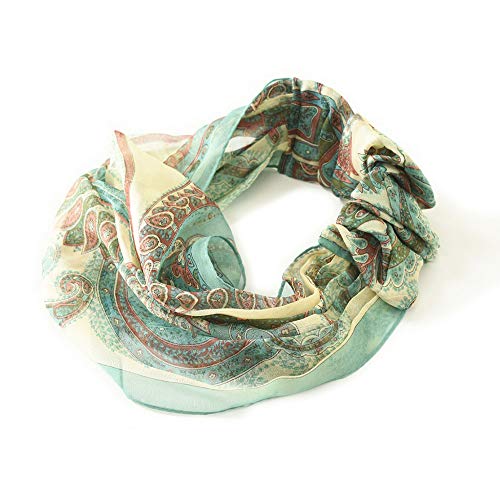
The Yokohama silk scarf is one of those objects whose biography is larger than its size. It is a length of pure silk, surface-printed by hand through a sequence of screens — one screen per color — in the port city that opened Japan to foreign trade in 1859. The technique is called nassen (捺染), screen dye-printing, and the result is bright, layered color registered panel by panel rather than woven or resist-dyed into the cloth.
What makes the scarf notable for an international reader is not novelty but lineage. Within a decade of the port opening, raw silk (kiito) had become Japan’s single largest export, and almost all of it moved through Yokohama on its way to Lyon, London, and New York. After the Second World War, that deep silk-trade infrastructure — the brokers, the dyers, the finishing houses — pivoted from shipping raw thread to producing finished goods, and the hand-screen silk scarf became a signature Yokohama industry. At its peak the city printed the large majority of Japan’s domestic silk scarves.
This guide is written from a Japan-based editor’s perspective for readers buying from outside Japan. It covers what the craft actually is, how the Yokohama scarf differs from woven and resist-dyed alternatives, where the specific listed item can be purchased and shipped abroad, and who should consider a different piece instead. Note up front: for this article only a listing reference was available — see the data note in the price section before you treat any figure as current.
🗓 Published:
🔄 Updated:
⏱ Read time: ~9 min

- Who this is for — and who should skip it
- Product overview (from published specs)
- Where this comes from — place, era, and the craft tradition
- Price snapshot across stores
- What it does well
- Weaknesses and things to verify before buying
- Conclusion — which buyer type are you?
- Other ways to approach this purchase
- 🏆 Editor’s Pick
- ❓ Frequently Asked Questions
Who this is for — and who should skip it
- Want a lustrous, gift-ready silk accessory with a documented regional craft story.
- Prefer bright, layered, multi-color print designs over woven texture or muted resist-dye tones.
- Care that the piece is hand-screen printed in Japan rather than mass roller-printed abroad.
- Are buying for a gift occasion where presentation and provenance matter.
- Appreciate the trade-port history of Yokohama and Kanagawa as part of the object’s value.
- Need a machine-washable, low-maintenance everyday scarf — silk requires care.
- Want the woven-cloth texture of tsumugi or meisen, which printing cannot replicate.
- Prefer the hand-dyed irregularity of shibori or the painted line of yuzen.
- Are price-sensitive and want a budget synthetic-fiber scarf.
- Require confirmed live pricing before committing — see the data note below.
Product overview (from published specs)
The table below reflects what is stated on the source listing and the craft category. Where the fetched data did not include a value, the cell reads “Check listing” rather than a guessed figure.
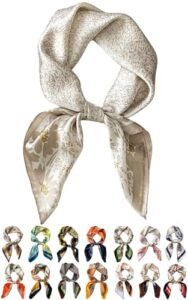
Yokohama Silk Scarf
KINU flawless (キヌ フローレス) 横浜 スカーフ シルク 100 レディース リングスカーフ ワンタッチ 日本製 高級 手捺染 春夏 シフォン アラベスク ヴェローナ ブルー 青 ヘアアクセ ヘアバンド シュシュ 上品 華やか 薄手
残り1点 ご注文はお早めに · Sold by シンフーライフ · ASIN B0833BZYC8
Price and availability as of 2026-09-01 05:22 JST. The Amazon listing at the time of purchase is authoritative. jpmono.com earns a commission on qualifying purchases at no extra cost to you.
| Attribute | Detail (per source listing) |
|---|---|
| Item | Yokohama silk scarf — hand-screen nassen printed |
| Material | 100% silk (絹) |
| Technique | Nassen (捺染) — hand-screen dye-printing, one screen per color |
| Origin | Yokohama, Kanagawa Prefecture, Japan |
| Format | Large square or long stole (varies by listing variant) |
| Dimensions / weight | Check listing — not stated in fetched data |
| Source ASIN | B0833BZYC8 (Amazon JP Global Store) |
| Price | Check listing — live pricing unavailable in fetched data |
Spec sheets indicate the defining feature is the surface print, not the weave: the cloth is plain silk, and the design lives in registered layers of dye applied through screens. Based on listings, exact dimensions and the square-versus-stole format depend on the specific variant.
📖 Glossary — key terms
- Nassen (捺染) — “pressed dyeing,” i.e., screen dye-printing. A design is split into colors, and each color is pushed through its own stencil screen onto the cloth and registered to align with the others.
- Kiito (生糸) — raw silk thread. Japan’s leading export good in the late 19th century, shipped largely through Yokohama.
- Hand-screen printing — screens are placed and squeegeed by hand rather than by automated rotary machine, which limits volume but allows finer color work on silk.
- Yuzen (友禅) — a paste-resist hand-painting dye method (Kyoto, Kanazawa); produces painted, flowing lines. Distinct from print.
- Shibori (絞り) — resist dyeing by binding, stitching, or folding the cloth; produces soft, irregular pattern edges. Distinct from print.
- Kantō — the eastern region of Honshū that includes Tokyo, Kanagawa, and the surrounding prefectures.
Where this comes from — place, era, and the craft tradition

Yokohama lies on the western shore of Tokyo Bay, in Kanagawa Prefecture, at the southern edge of the Kantō plain. Before 1859 it was a small fishing village. Its deep, sheltered harbor and its proximity to the capital made it the logical choice when Japan was compelled to open treaty ports to foreign commerce, and the village was transformed almost overnight into the country’s principal window onto the outside world.
The export that built the modern city was silk. Within roughly a decade of the port opening, raw silk thread had become Japan’s leading export commodity, drawn from the sericulture districts inland and funneled down to Yokohama for shipment to the silk-weaving centers of Europe and the United States. The customs houses, brokerages, and finishing trades that grew up around this traffic are the direct ancestors of the city’s later scarf industry.
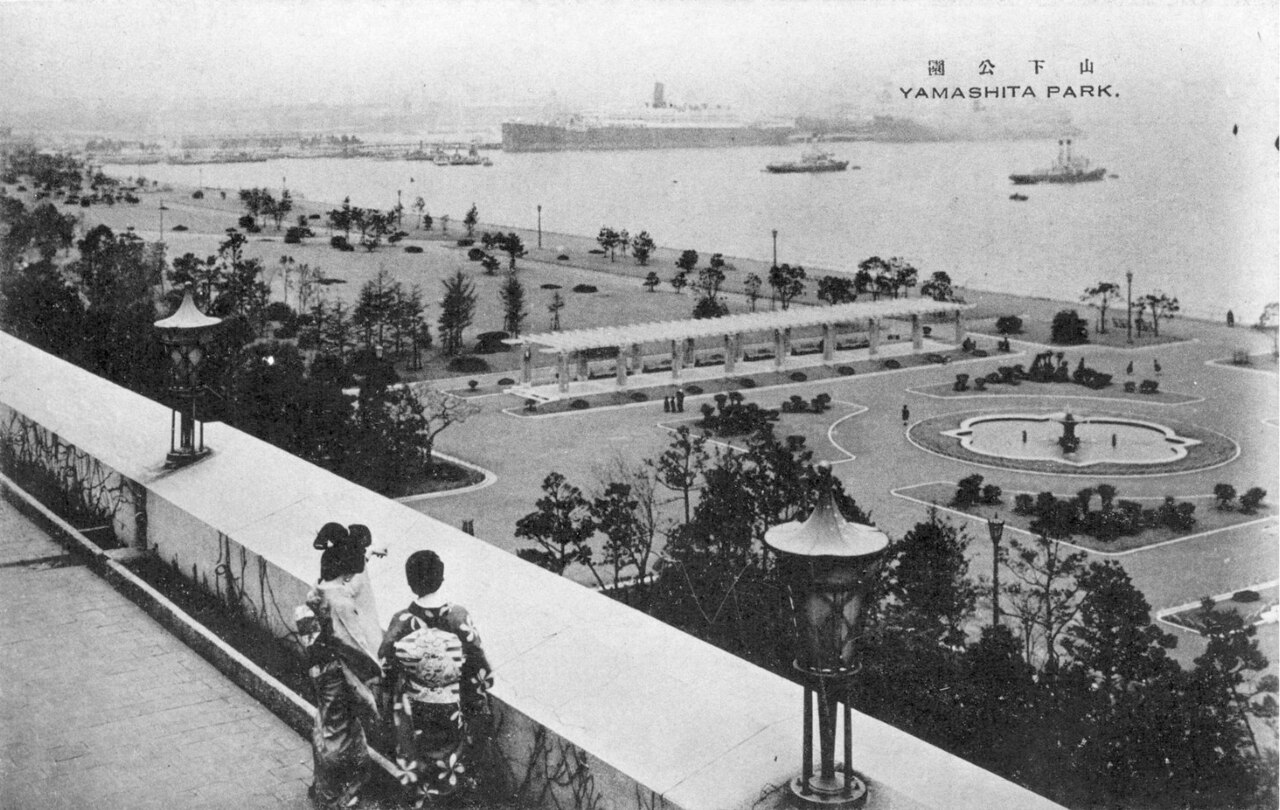
- 1859 — Yokohama opens as a treaty port, ending its life as a fishing village.
- 1860s–1870s — Raw silk (kiito) becomes Japan’s leading export, shipped through Yokohama to Europe and the US.
- early 1900s — The Akarenga (Red Brick Warehouse) is built as a customs facility for the trade port.
- post-1945 — The city’s silk-trade infrastructure pivots from raw thread to finished goods; hand-screen nassen scarf printing takes root.
- late Shōwa — At its peak, Yokohama prints the large majority of Japan’s domestic silk scarves.
- 2026 — Yokohama remains a center of hand-screen nassen scarf printing in Japan.
What “still being made here” means in Yokohama is less about a single multi-generation workshop and more about a surviving cluster of finishing trades — screen-makers, dye-printers, and steaming and finishing houses — concentrated in the old port district. The continuity is industrial as much as artisanal: the same city that learned to handle silk for export learned, in turn, to print it.
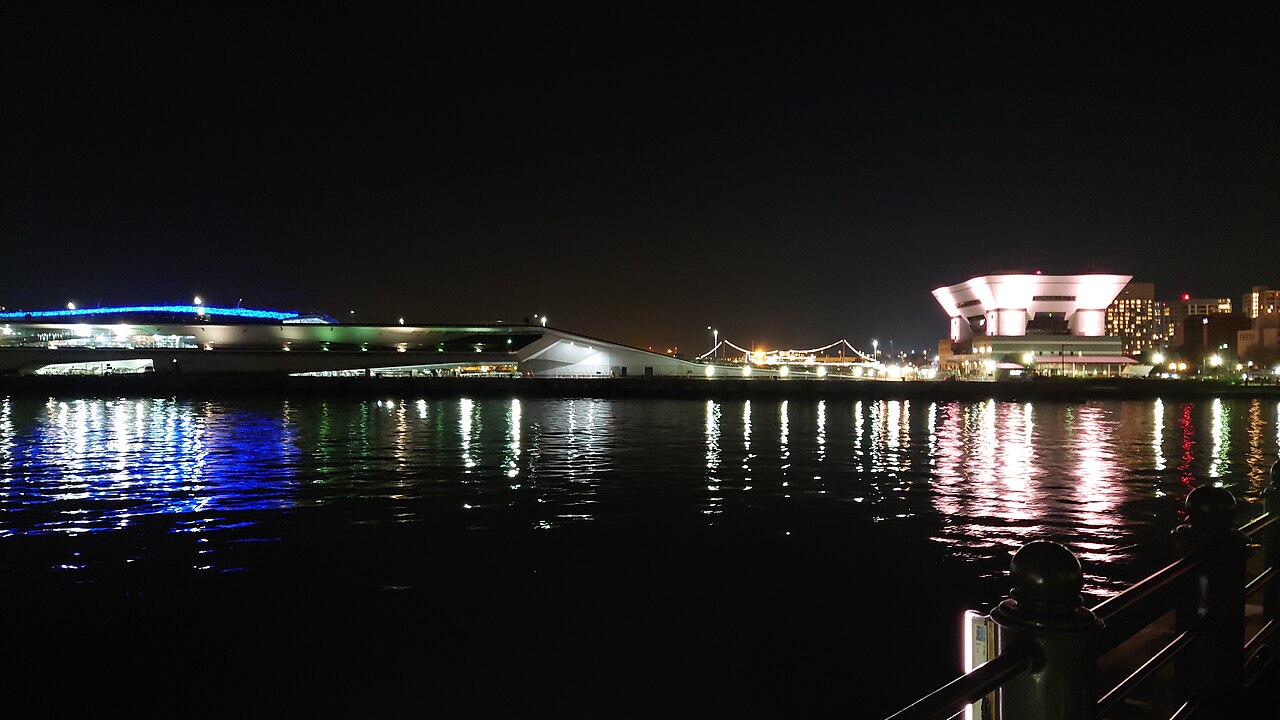
“The same port that carried Japan’s raw silk to Lyon and New York later learned to print it — the Yokohama scarf is a trade route folded into an accessory.”
The craft is inseparable from Kanagawa’s identity as Japan’s gateway to overseas trade. Where a Kyoto yuzen scarf carries the painterly tradition of a former imperial capital, and an Arimatsu shibori scarf carries a Tōkaidō post-town dyeing lineage, the Yokohama scarf carries the 19th-century export economy that opened the country. That is its distinct claim.
Other Japanese textile and dyeing crafts we have covered. The Yokohama scarf is defined by surface screen-printing on silk; these alternatives differ by technique, fiber, or format.
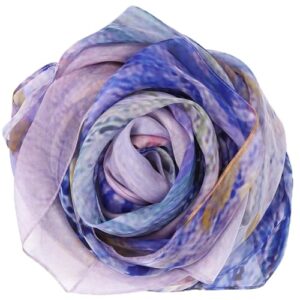 Kaga Yuzen silk scarf
Painted resist-dye, Kanazawa
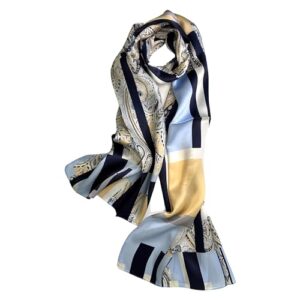 Arimatsu shibori scarf
Bound resist-dye, Aichi
Johana shike-ginu scarf
Slub-silk weave, Toyama
 Chichibu Meisen stole
Ikat-woven silk, Saitama
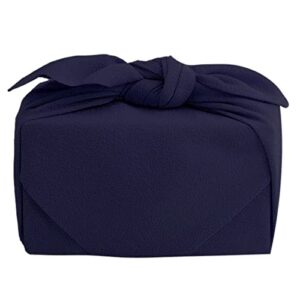 Kyo Yuzen furoshiki
Resist-dye wrapping cloth, Kyoto
Hamamatsu chusen tenugui
Pour-dye cotton cloth, Shizuoka
Kiryu-ori silk necktie
Woven silk, Gunma
Buaisou indigo tenugui
Natural indigo dye, Tokushima
Price snapshot across stores
| Store | Item / Variant | Price | Notes |
|---|---|---|---|
| 🇺🇸 Amazon US (search) | Browse Japanese silk scarves | varies (USD) | Best if you are shopping from the US — Prime shipping, USD pricing, no international customs. Amazon US carries Japanese silk scarves from various makers; the specific Yokohama-printed piece is sourced from Japan (next row). |
| Amazon JP Global Store | Yokohama nassen silk scarf (ASIN B0833BZYC8) | Check listing (price unavailable in data) | The sourced listing for the specific item. Ships internationally from Japan to most major destinations. JPY is the authoritative price; confirm before buying. |
| Maker direct | Yokohama scarf makers / port-district shops | varies | Some Yokohama printers and the Silk Museum area sell directly; many sites are Japanese-language and may not ship abroad. |
| Proxy services (Buyee / Tenso) | Forwarding from JP-only retailers | item price + fee | Useful when a listing does not ship internationally. Adds a service fee and a forwarding leg; customs duties may apply at your local threshold. |
Prices in USD shown elsewhere in this guide are approximate and depend on the current exchange rate (¥150/USD baseline as of mid-2026). The JPY price on the specific listing is the authoritative one.
What it does well
Weaknesses and things to verify before buying
- Live price not confirmed. The fetched data contained no current price; verify on the Amazon JP listing before ordering.
- Format ambiguity. “Square” versus “long stole” varies by variant. Check the listed dimensions so you receive the shape you expect.
- Silk care. Silk is not machine-washable as a rule; expect hand-wash or dry-clean care. Printed dyes can be sensitive to friction and moisture.
- Colorfastness. Bright multi-color prints can be vulnerable to prolonged direct sunlight; store folded and out of strong light.
- “Made in Yokohama” needs checking. Some silk scarves are printed elsewhere; confirm the listing states Yokohama / Kanagawa nassen if origin matters to you.
- International shipping and duties. Confirm the listing ships to your country, and budget for possible customs duty above your local threshold.
Conclusion — which buyer type are you?
Other ways to approach this purchase
🏆 Editor’s Pick
❓ Frequently Asked Questions
Does Amazon JP Global Store ship a Yokohama silk scarf internationally?
Amazon JP Global Store ships many household and textile items to most major destinations. Availability is item-specific, so confirm that the listing shows international shipping to your country before ordering. If it does not, a proxy service such as Buyee or Tenso can forward it.
How do I care for a silk nassen scarf?
Treat it as a delicate silk item: hand-wash gently in cool water or dry-clean, avoid wringing, and dry away from direct sunlight. Printed dyes can be sensitive to friction and heat, so follow the care label on the specific listing.
What is the difference between nassen printing and yuzen or shibori dyeing?
Nassen is surface screen-printing: each color is pushed through its own stencil and registered onto plain silk, producing crisp, layered, multi-color designs. Yuzen is hand-painted paste-resist dyeing with flowing painted lines, and shibori is resist dyeing by binding or stitching the cloth, which yields soft, irregular pattern edges. The difference is print versus dye.
Is the scarf a large square or a long stole?
It depends on the variant. Yokohama scarves are produced in both large square and long stole formats. Check the listed dimensions on the specific listing so you receive the shape you intend.
Will the printed colors fade?
Bright multi-color prints can fade under prolonged direct sunlight. Store the scarf folded and out of strong light, and avoid harsh detergents, to keep the color saturated over time.
Is this a good gift?
Yes — a lightweight, flat silk scarf packs and presents well, and the documented Yokohama trade-port story gives it provenance beyond generic decor. It suits gift occasions where presentation and a verifiable craft origin matter.
How much should I expect to pay?
Our fetched data did not include a live price for this item, so we cannot quote a figure responsibly. Check the current price on the Amazon JP listing; the JPY price shown there is the authoritative one, and any USD figure is an approximate conversion.
jpmono.com is curated by a Japan-based editorial team (working out of Toyama in the Hokuriku region and Nara in Kansai) and is independent. We don’t take payment from the makers we feature; income comes from affiliate links. Read more about our editorial standards.
This article was prepared with AI assistance and reviewed against the source listing data available at the time of writing. Specifications, prices, and availability should be verified on the retailer’s page before purchase.
Affiliate disclosure: jpmono.com may earn a commission on qualifying purchases made through links on this page, at no additional cost to you.