![Masamune Kamakura Hand-Forged Petty Knife: Soshu Blade Lineage [2026]](https://jpmono.com/wp-content/uploads/2026/05/japan-map-regions-and-prefectures-800x1050.png)
In Kamakura, the seaside city that served as the seat of Japan’s first warrior government, there is a workshop that still hammers steel the slow way. Masamune Kogei (正宗工芸, “Masamune craft works”) is run by smiths who trace their line back to the medieval sword tradition that made Kamakura’s name — the Soshu-den, the school whose most celebrated figure, Goro Nyudo Masamune, is traditionally regarded as the greatest swordsmith Japan ever produced. The piece covered here is a small, agile kitchen blade: a hand-forged petty knife with a carbon-steel core and a wooden handle.
What makes this object worth an international reader’s attention is not the romance of the samurai sword. It is the continuity of a manufacturing skill. When the wearing of swords was outlawed in the 1870s, the smiths who had folded and forged blades for warriors had to find new work — and many of them turned the same forging-and-folding discipline toward kitchen knives, scissors, and tools. A petty knife from this lineage is a way to hold that craft logic at a kitchen scale, for the price of a good chef’s knife rather than the price of a museum sword.
This guide is written for cooks and collectors weighing a carbon-steel Japanese knife against stainless alternatives, and for readers who want to understand where a Masamune-style Soshu blade comes from before they consider the price. We cover who it suits, who should skip it, how it sits against other Japanese knife traditions, the realities of buying it from outside Japan, and the honest caveats of owning carbon steel. Pricing for hand-forged petty knives varies sharply with the maker and the steel — we flag what to verify rather than invent a number.
📅 Published:
🔄 Last updated:
⏱️ Read time: about 9 minutes
- Who this is for — and who should skip it
- Product overview (from published specs)
- 📍 Where this comes from — place, era, and the craft tradition
- Buying options
- What it does well
- Weaknesses and things to verify before buying
- Conclusion — which buyer type are you?
- Other ways to approach this purchase
- ❓ Frequently Asked Questions
Who this is for — and who should skip it
- Want a small, nimble blade for peeling, trimming, and detail work, not a big chef’s knife.
- Prefer the sharpening response and edge feel of carbon steel and accept its upkeep.
- Value a documented craft lineage over a mass-produced brand finish.
- Already maintain Japanese knives and own a whetstone.
- Are buying a meaningful gift with a real story behind it.
- Want a zero-maintenance, dishwasher-safe stainless knife.
- Need one large knife to do everything — a petty is a supporting blade.
- Are unwilling to hand-wash, dry, and occasionally oil a carbon-steel edge.
- Expect mirror-uniform factory finishing rather than hand-forged character.
- Need confirmed availability today? Product details here are limited.
Product overview (from published specs)
The table below reflects what can be confirmed from the Sōshū tradition and the knife category at the time of writing. Where a value cannot be verified, it is marked rather than guessed; dimensions, price, and other specifications vary by individual knife.
| Attribute | Detail (per available sources) |
|---|---|
| Item | Hand-forged petty / utility knife |
| Maker | Masamune Kogei (正宗工芸), Kamakura |
| Tradition | Soshu-den (相州伝) blacksmith lineage |
| Blade material | Carbon steel core (hagane), hand-forged |
| Handle | Wood |
| Origin | Kamakura, Kanagawa Prefecture, Japan |
| Blade length | Petty-class (small) |
| Price | — |
📖 Glossary — Japanese craft and blade terms
Soshu-den (相州伝, “Sagami tradition”) — one of the five great medieval swordsmithing schools of Japan, centered in Sagami Province (today’s Kanagawa). Known for hard, brightly hardened edges and dramatic grain.
Goro Nyudo Masamune (五郎入道正宗) — the early-14th-century smith traditionally regarded as the pinnacle of the Soshu tradition, and one of the most famous names in Japanese sword history.
Petty knife (ペティナイフ) — a small all-purpose Japanese kitchen knife, typically a notch up in size from a paring knife, used for peeling, trimming, and detail cutting.
Hagane (鋼) — high-carbon steel. It takes and holds a very keen edge and is easy to resharpen, but it can rust and discolor if not dried and cared for.
Tanzo (鍛造) — forging by hammering heated steel, as opposed to stamping or grinding from stock. The folding-and-forging discipline is the through-line from swords to kitchen blades.
Haitorei (廃刀令) — the 1876 government edict that prohibited most people from wearing swords, which collapsed sword demand and pushed many smiths toward tools and kitchen blades.
📍 Where this comes from — place, era, and the craft tradition

Kamakura is a small coastal city in Kanagawa Prefecture, on the Sagami Bay side of the Kantō plain, roughly 50 kilometers southwest of present-day Tokyo and a short distance south of Yokohama. The city sits in a natural bowl: open to the sea on one side, enclosed by wooded ridges on the other three. That defensible geography is exactly why a warrior government chose it.
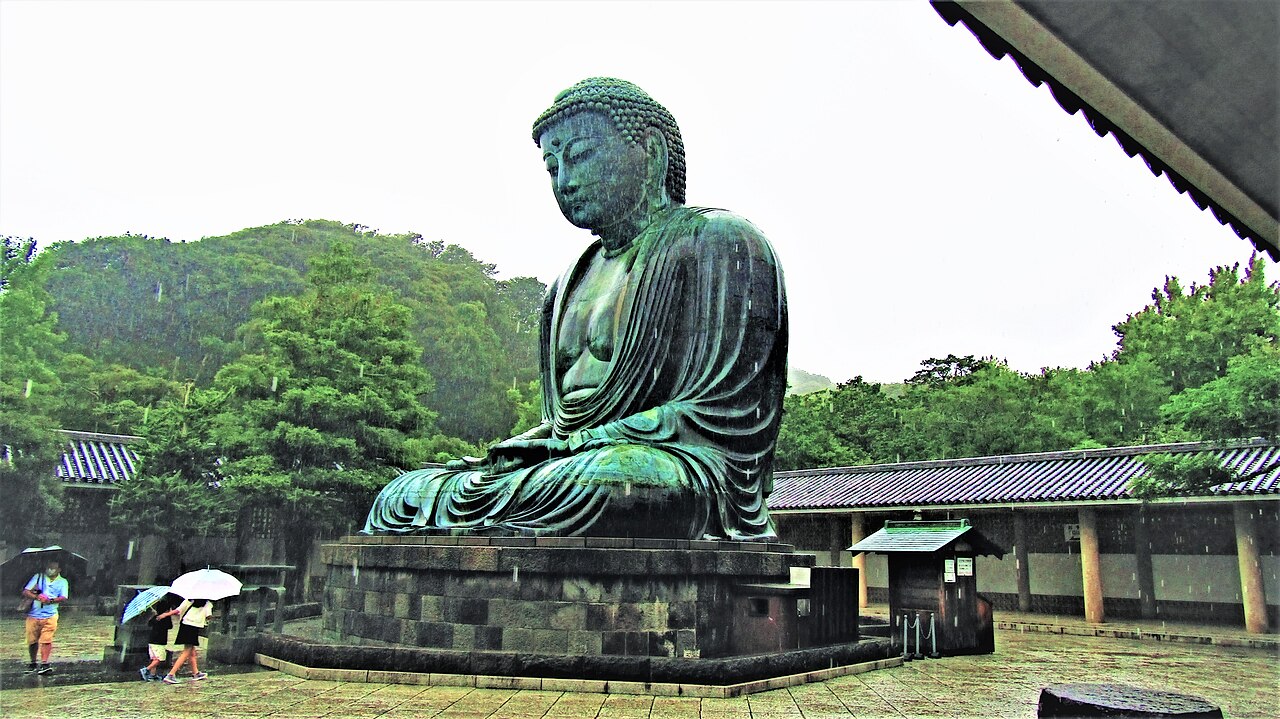
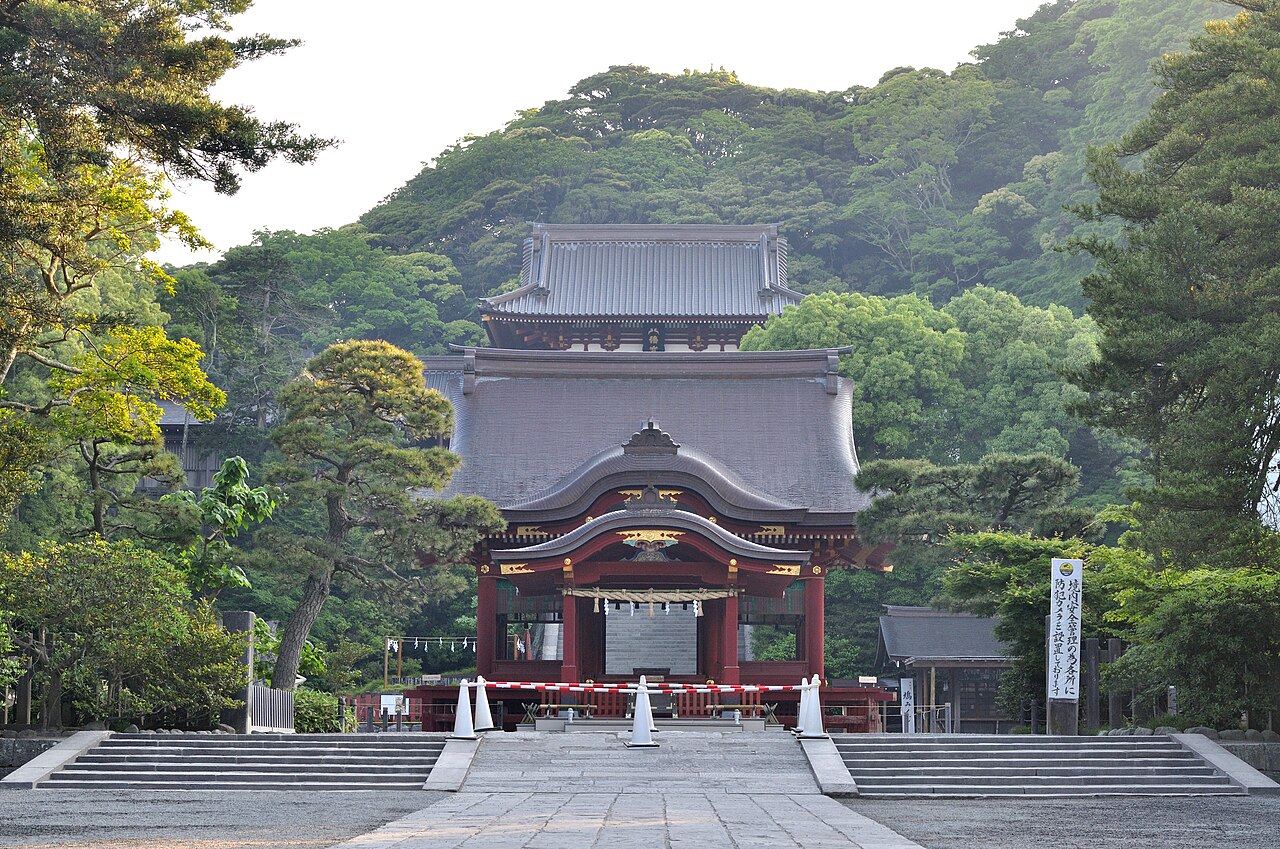
Kamakura was the capital of Japan’s first shogunate from 1185 to 1333 — the era that gives the period its name. For roughly a century and a half, this was where the country’s military power concentrated, and with that concentration came demand: armorers, smiths, and craftsmen clustered around the warrior class and its temples. The spiritual center of that society was Tsurugaoka Hachimangu, the shrine to the god of war, around which the city was literally planned.
It was in this environment that the Soshu-den — the Sagami tradition of swordmaking — took shape. The school is traditionally credited to the smith Shintogo Kunimitsu in the late 13th century, and it reached its height under his pupil Goro Nyudo Masamune in the early 14th century. Masamune’s blades are traditionally held to be the finest ever forged in Japan, so renowned that his name became shorthand for the apex of the craft and seeded the enduring Masamune-versus-Muramasa folklore. Whether or not every legend holds, the historical fact is that Kamakura was a genuine center of blade-making excellence.
- 1185 — Minamoto no Yoritomo establishes Japan’s first shogunate at Kamakura.
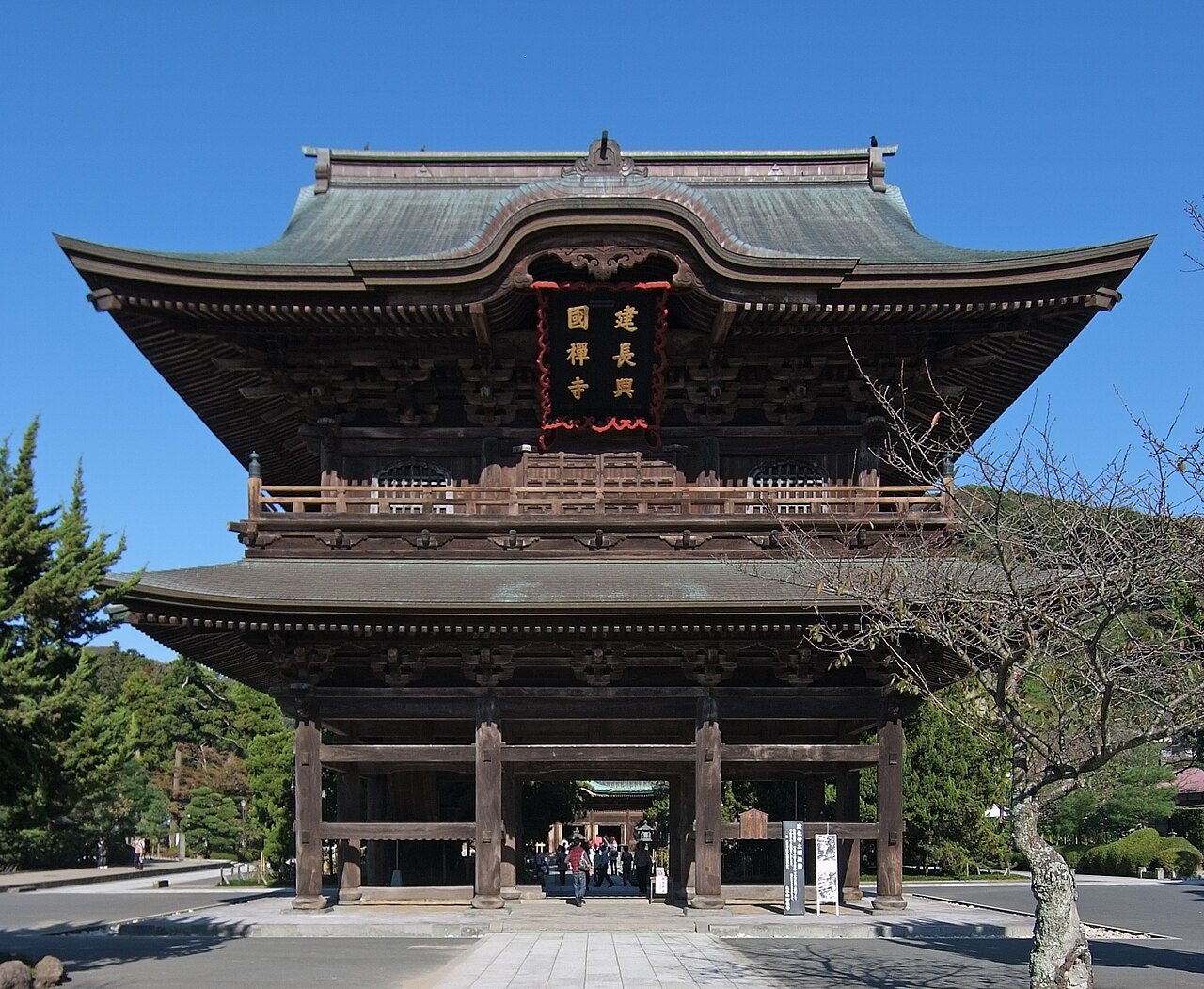
- 1253 — Kencho-ji founded — Japan’s oldest dedicated Zen training monastery, anchoring Kamakura’s disciplined culture.
- late 13th c. — Shintogo Kunimitsu establishes the Soshu-den swordmaking tradition.
- early 14th c. — Goro Nyudo Masamune perfects the Soshu tradition, producing blades held to be the pinnacle of the craft.
- 1333 — The Kamakura shogunate falls; the city’s political primacy ends, but its smithing reputation endures.
- 1876 — The Haitorei edict bans sword-wearing; sword demand collapses and smiths redirect their skills.
- 20th c. — Descendant smiths channel forging discipline into knives, scissors, and tools — the path Masamune Kogei follows.
- 2026 — Masamune Kogei still hand-forges carbon-steel blades in Kamakura.
The continuity case is the part that matters for a buyer. When the Haitorei edict of 1876 ended the era of sword-wearing, the practical skill at the heart of the tradition — heating, hammering, folding, and hardening high-carbon steel — did not disappear. It migrated. Smiths applied it to the tools people still needed: kitchen knives, scissors, garden implements. Masamune Kogei in Kamakura is part of that redirected current, hand-forging blades today that descend, in technique and in name, from the Soshu line.
“The hands that once folded steel for a warrior’s sword now fold it for a cook’s knife — the demand changed, but the discipline did not.”
A petty knife is the most everyday expression of that discipline. It is small, light, and meant for the work most cooking actually involves: peeling, paring, trimming fat, sectioning citrus, the dozens of small jobs where a full chef’s knife is too much blade. Owning one from this lineage is a way to keep a 700-year-old craft argument alive on a cutting board, without paying sword-collector prices.
Other Japanese blade and knife traditions we have covered — useful for comparing geometry, steel, region, and use case.
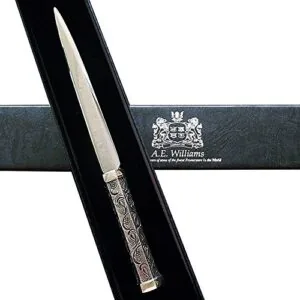 Bizen Osafune sword heritageOkayama — the other great sword province, in letter-opener form.
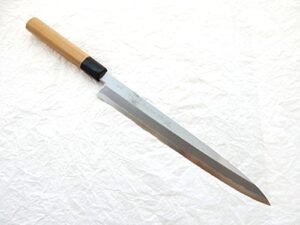 Tokyo Tsukiji yanagibaSingle-bevel sashimi knife — a specialist next to this generalist petty.
 Echizen hand-forged santokuFukui’s forging tradition in a larger all-purpose blade.
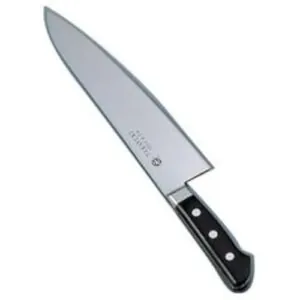 Sakai Takayuki gyutoOsaka’s Sakai chef’s knife — the big blade to this petty’s small one.
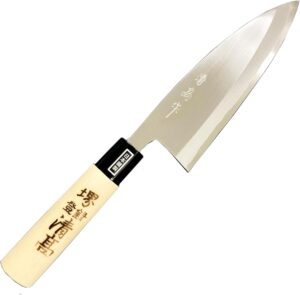 Sakai deba knifeHeavy single-bevel fish knife — a study in opposite geometry.
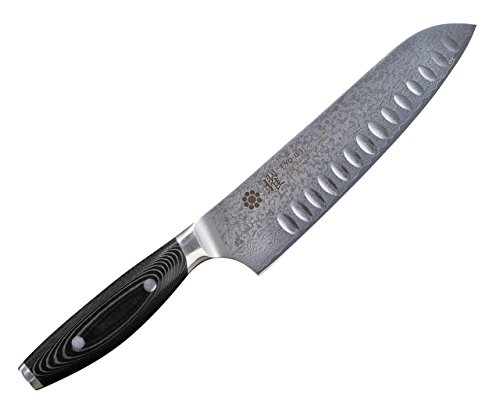 Seki Damascus santokuGifu’s stainless Damascus — the low-maintenance counterpoint.
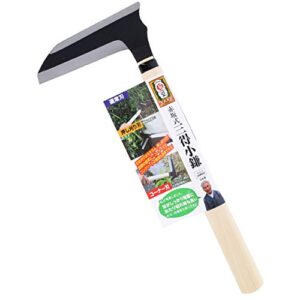 Chiba hand-forged sickleThe same forging skill turned toward a garden tool.
Buying options
Masamune Kamakura petty-knife pricing varies with steel — white paper steel, blue aogami, and the harder aogami #2 each sit at different points — and with handle material and finishing. As a rough range, a stainless-clad petty sits well below a fully hand-forged, single-skin piece, while a longer or aogami-finished knife climbs further still. Treat any listed figure as the seller’s current quote rather than a fixed market price.
| Store | Item / variant | Price | Notes |
|---|---|---|---|
| 🇺🇸 Amazon.com (US) | Browse Japanese kitchen knives | varies (USD) | Best if you are shopping from the US — Prime shipping, USD pricing, no international customs. Amazon US carries hand-forged Japanese kitchen knives from many makers for comparing geometry, steel, and price tiers. This exact Kamakura piece is sourced from Japan (next row). |
| 🇯🇵 Amazon JP Global Store | Masamune Kogei hand-forged petty knife | — | Ships internationally from Japan to most major destinations. |
| Maker direct | Masamune Kogei, Kamakura | Varies | The workshop sells its blades directly; the full line and bespoke options may not appear on Amazon. International ordering support varies. |
| Proxy services (Buyee / Tenso) | Any Japan-only source | Item price + forwarding fee | Use when direct international shipping is unavailable. Adds a service fee and consolidates a Japanese address; expect customs duties over local thresholds. |
What it does well
Weaknesses and things to verify before buying
- Carbon steel rusts. It must be hand-washed, dried immediately, and occasionally wiped with oil. It will also patina (discolor) with use — expected, but not for everyone.
- Not dishwasher-safe. Heat, moisture, and detergent will damage both the carbon-steel blade and a wooden handle. Treat it as hand-wash only.
- It is a supporting blade. A petty does not replace a chef’s knife or santoku for large-volume chopping; budget for it as a second knife, not a only knife.
- Product details are limited. Confirm the blade and steel details before buying.
- Hand-forged finish varies. Expect some unit-to-unit variation in surface and grind. That is the nature of forged work, not a defect, but buyers wanting factory-perfect uniformity may be disappointed.
- International shipping and customs. Confirm that the item ships to your country and budget for possible import duties over your local threshold.
Conclusion — which buyer type are you?
Other ways to approach this purchase
❓ Frequently Asked Questions
Does Amazon JP Global Store ship this knife internationally?
Is the blade carbon steel or stainless steel?
How do I care for a carbon-steel petty knife?
What is a petty knife actually used for?
Is this the same Masamune who made famous samurai swords?
Will I owe customs duties when importing it?
Can it go in the dishwasher?
jpmono.com is curated by a Japan-based editorial team (working out of Toyama in the Hokuriku region and Nara in Kansai) and is independent. We do not take payment from the makers we feature; income comes from affiliate links. We read maker specifications and public craft references rather than physically testing every product. Read more about our editorial standards.
This article was prepared with AI assistance and reviewed by the jpmono editorial team. Facts about regional history and craft tradition are drawn from the available editorial notes; individual specifications and prices can vary, so use the information supplied with the knife before purchase.
Affiliate disclosure: jpmono.com may earn a commission on qualifying purchases made through links on this page, at no additional cost to you.