![Taketa Hime Daruma: Oita’s Hand-Painted Doll of Resilience [2026]](https://jpmono.com/wp-content/uploads/2026/06/taketa-hime-daruma-papier-mache-doll-where-to-buy-2026-featured.jpg)
Most people picture a daruma as a scowling red sphere modeled on Bodhidharma, the Zen patriarch. The hime daruma (姫だるま, “princess daruma”) of Taketa, a small castle town in Oita Prefecture on the island of Kyushu, breaks that mold entirely. It is a gently smiling, hand-painted papier-mâché figure modeled not on a monk but on Ayame, the wife of a samurai of the Oka domain — a “wise wife” whose story made the doll a household emblem of perseverance and domestic harmony.
One workshop has carried the tradition: the Goto Hime Daruma Workshop, which has shaped and painted these dolls in Taketa since the Edo era, generation after generation, from forming the hariko (papier-mâché) body to drawing the face by hand. The doll is an okiagari — a self-righting figure. Tip it over and it returns upright, which is the entire point: the local custom of buying a new one each New Year is a quiet annual restatement of “fall down seven times, get up eight.”
This guide is written for international readers from a Japan-based editorial desk (Toyama and Nara). We cover what the doll is, the castle-town history behind it, where Taketa sits on the map, how the available purchase paths compare for buyers outside Japan, and who should — and should not — order one. Source data for this article is thin: the Amazon US search returned no individually listed result for this item, and live pricing for the Amazon JP listing was unavailable at the time of writing, so treat all availability notes as a snapshot dated June 10, 2026.
🔄 Last updated: June 10, 2026
⏱ Read time: about 12 min

- Who this is for — and who should skip it
- Product overview (from published specs)
- 📍 Where this comes from — Taketa, the Oka domain, and one workshop
- 📦 Shipping & where to buy from outside Japan
- Price snapshot across stores
- What it does well
- Weaknesses and things to verify before buying
- Conclusion — which buyer type are you?
- Other ways to approach this purchase
- 🏆 Editor’s Pick
- ❓ Frequently Asked Questions
Who this is for — and who should skip it
- Collect Japanese folk craft (mingei) and want a piece that is still made by the original family workshop, not a factory reproduction
- Want a daruma with a story beyond the standard Bodhidharma figure — this one is modeled on a samurai’s wife and reads as a women’s resilience emblem
- Are looking for a meaningful gift for a new household, a new year, a new job, or someone restarting after a setback
- Appreciate visible handwork — each face is drawn by hand, so no two dolls are identical
- Are comfortable ordering from Amazon JP’s Global Store or via a proxy service, with the customs paperwork that can entail
- Want the classic eye-painting ritual — the hime daruma’s face arrives fully painted, so there is no blank eye to fill in when a wish comes true
- Need exact dimensions or weight before ordering; the fetched listing data does not confirm them
- Expect machine-perfect symmetry — hand-formed hariko shows slight individual variation by design
- Live in a humid environment with no climate control; papier-mâché dislikes damp rooms
- Want a low-friction domestic purchase — this item was not individually listed on amazon.com at the time of writing
Product overview (from published specs)
The table below is compiled from the article’s source spec and the Amazon JP listing reference (ASIN B0D325CN5J). The Amazon US product search returned no individually listed result for this exact item, and several physical specs were not stated in the data we fetched — those rows are marked accordingly rather than guessed.
Taketa Hime Daruma
姫だるま 竹田 開運 ごとう姫だるま工房
通常9~10日以内に発送します。 · Sold by TONA store · ASIN B0D325CN5J
Price and availability as of 2026-08-31 02:30 JST. The Amazon listing at the time of purchase is authoritative. jpmono.com earns a commission on qualifying purchases at no extra cost to you.
| Item | Detail |
|---|---|
| Product | Hime daruma (princess daruma), self-righting okiagari design |
| Maker | Goto Hime Daruma Workshop, Taketa, Oita Prefecture — sole workshop, in the family since the Edo era |
| Material | Hariko (papier-mâché), hand-formed; face hand-drawn |
| Motif | Ayame, wife of an Oka-domain samurai — emblem of the wise wife, household harmony, and “fall seven times, rise eight” |
| Dimensions / weight | Unconfirmed in fetched data — check the listing before ordering |
| Listing reference | Amazon JP ASIN B0D325CN5J (Global Store); not individually listed on amazon.com as of June 10, 2026 |
| Price | Live pricing was unavailable at the time of writing — verify ¥ price on the listing; USD figures elsewhere are estimates at a ¥150/USD baseline |
📖 Glossary — terms used in this article
- hime daruma (姫だるま)
- “Princess daruma” — Taketa’s distinctive daruma modeled on a woman, the samurai’s wife Ayame, rather than the monk Bodhidharma.
- hariko (張子)
- Japanese papier-mâché: layers of paper pasted over a form, dried, and painted. Light, hollow, and surprisingly durable when kept dry.
- okiagari (起き上がり)
- A self-righting figure with a weighted base — knock it over and it stands back up. The physical embodiment of resilience.
- nanakorobi yaoki (七転八起)
- “Fall down seven times, get up eight” — the proverb attached to daruma figures across Japan.
- Oka domain (岡藩)
- The Edo-period feudal domain governed by the Nakagawa clan (roughly 70,000 koku), with its seat at Oka Castle above Taketa.
- Oku-Bungo (奥豊後)
- The inland southwestern part of old Bungo Province (today’s Oita Prefecture) — the basin-and-gorge country around Taketa.
📍 Where this comes from — Taketa, the Oka domain, and one workshop

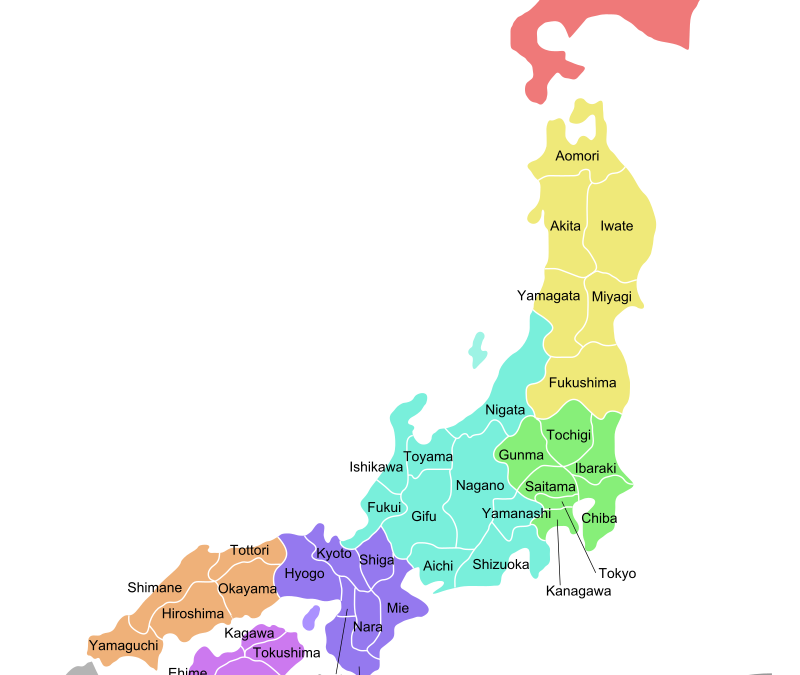
Oita Prefecture occupies the northeastern corner of Kyushu, Japan’s southwestern main island. Taketa sits in the prefecture’s inland southwest — the Oku-Bungo country — a basin walled in by the Kuju highlands and cut by volcanic river gorges. That geography matters for this object: an inland basin holds the cold, and winters here bite harder than the “subtropical Kyushu” image suggests. The local rhythm of renewing the household daruma at New Year grew out of exactly those cold-month rituals.
Taketa is a castle town. Through the Edo period it was the seat of the Oka domain, governed by the Nakagawa clan at roughly 70,000 koku, and the domain’s stronghold — Oka Castle — stood on a sheer-walled plateau above the town. The castle had a reputation as an impregnable yamajiro (mountain castle); its stone ramparts still ride the clifftop today, even though the buildings are long gone.
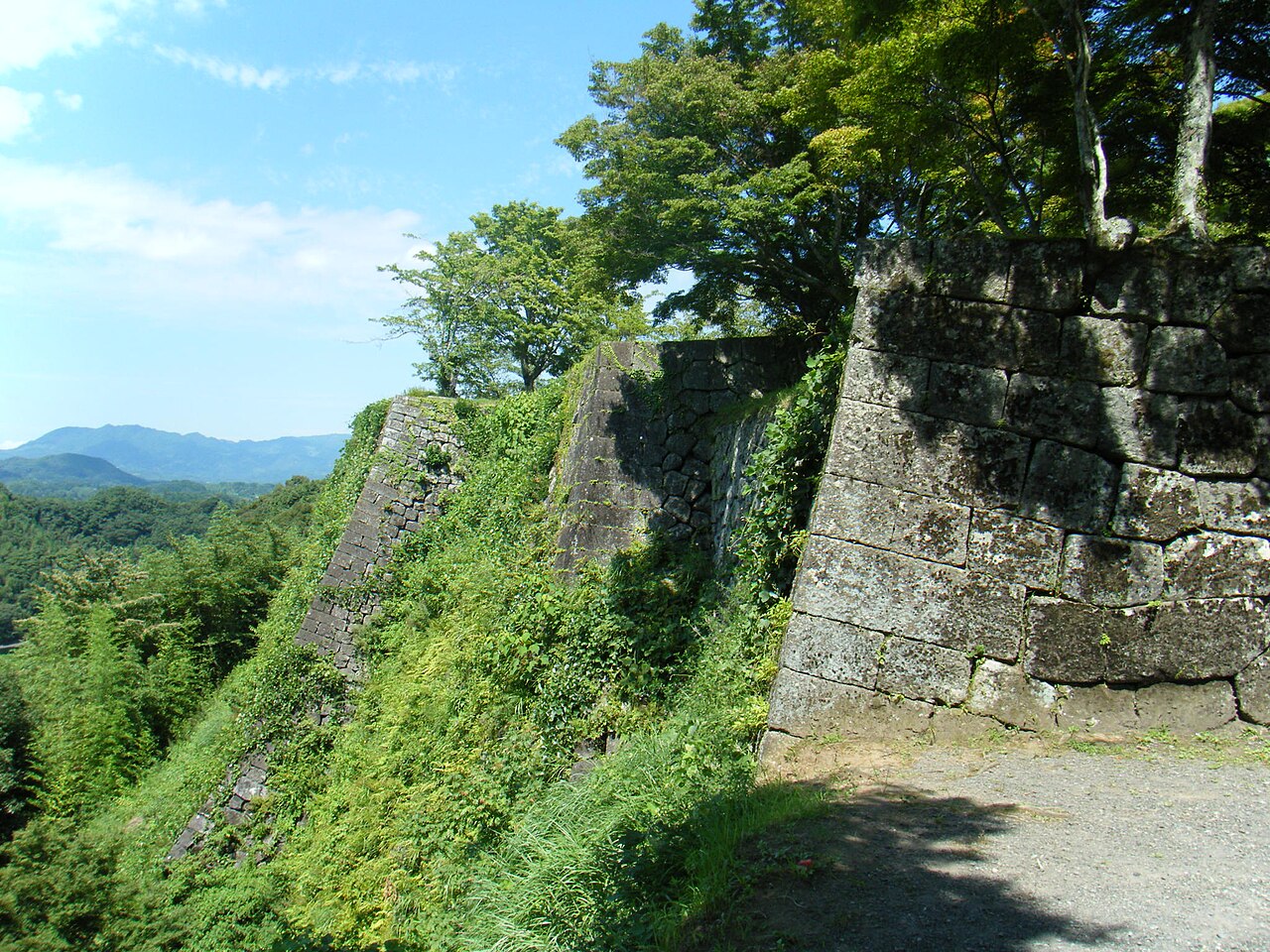
The hime daruma was born inside that samurai town. Its model is Ayame, the wife of an Oka-domain retainer, remembered locally as a paragon of the wise, steadfast wife. Where the rest of Japan rounded Bodhidharma into a wishing doll, Taketa rounded a real woman of its own castle town into one — a self-righting figure standing for the good of the household, marital harmony, and the stubborn habit of getting back up. Households here renew the doll at New Year, a custom that continues today.
“Taketa’s daruma does not model the Zen patriarch. It models a samurai’s wife — and one family has been painting her face by hand since the Edo era.”
That last point deserves emphasis, because it is rare even by Japanese craft standards. The hime daruma is not a regional industry with dozens of competing kilns or studios. Production has been carried by a single house — the Goto Hime Daruma Workshop — handed down within the family from the Edo period to now, and every stage stays in their hands: forming the hariko body, building up the layers, and finally drawing the face, stroke by stroke. When production is one family deep, every doll on the market is, in a literal sense, from the source.
- 1603 — The Edo period begins; Taketa serves as the castle town of the Oka domain under the Nakagawa clan (roughly 70,000 koku), below the cliff-top fortress of Oka Castle.
- Edo era — Ayame, the wife of an Oka-domain samurai, becomes the model for Taketa’s hime daruma; the Goto family begins shaping and painting the dolls.
- Edo era — The self-righting okiagari form and the custom of renewing the household doll at New Year take root in Oku-Bungo’s cold winters.
- 1868 — The Edo period ends and the domain system is dissolved soon after; Oka Castle falls into ruin, but the Goto workshop carries on.
- Late 1800s — Composer Rentaro Taki spends his boyhood in Taketa; the ruined castle above the town later inspires his song “Kojo no Tsuki” (Moon over the Ruined Castle).
- 2026 — The Goto Hime Daruma Workshop remains the tradition’s sole maker, still forming the hariko and drawing each face by hand.
Taketa’s castle-town memory did not survive only in craft. Rentaro Taki, one of Meiji Japan’s defining composers, spent his boyhood here, and the desolate beauty of the ruined Oka Castle is credited as the inspiration for “Kojo no Tsuki” — one of the most widely known melodies in Japan. The same town kept its memory twice: once in a song about a ruined castle, and once in a doll that refuses to stay down.
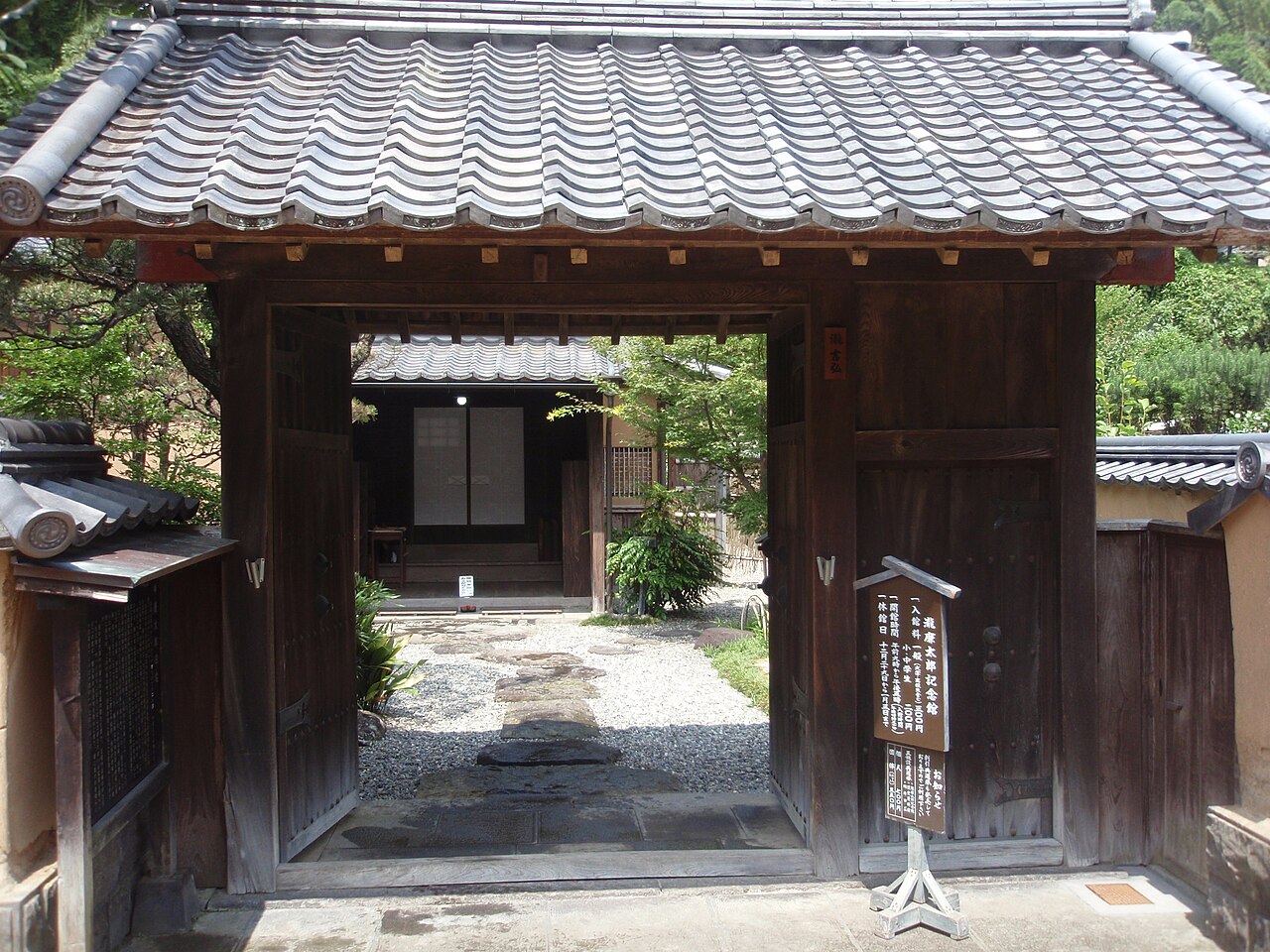
Seasonally, the doll belongs to winter. North of town the Kuju highlands rise, and the basin’s January cold frames the New Year reset: out with last year’s daruma, in with a freshly painted one, and the year begins with the household’s resilience formally renewed. It is a domestic ritual rather than a temple one — traditionally believed to invite a harmonious home and a “good wife, wise mother” spirit, in the idiom of its samurai-era origin.
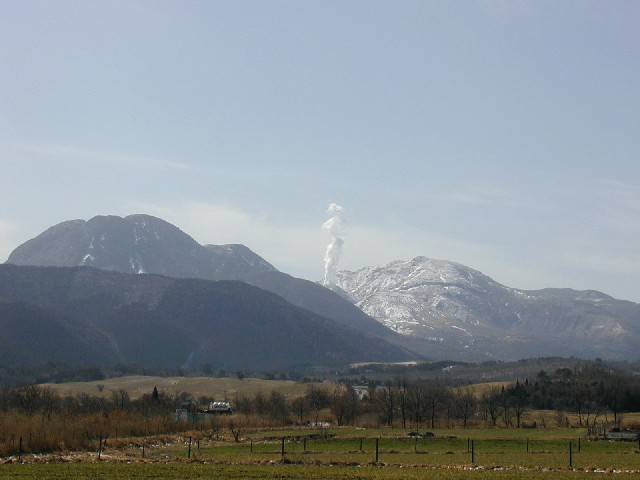
The surrounding Oku-Bungo landscape is volcanic through and through — gorge country, with waterfalls like Harajiri Falls carving the plateau a short distance from the castle town. For readers planning a Kyushu itinerary, Taketa rewards a detour; for everyone else, the doll itself is the portable piece of this geography.

 🔪 Oita Bungo Petty Knife — the same prefecture’s hand-forged blade tradition
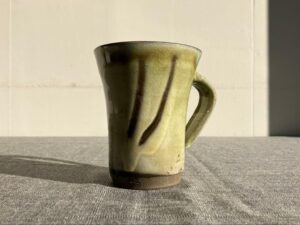 ☕ Onta-yaki Mug — Oita’s famous folk-kiln pottery village
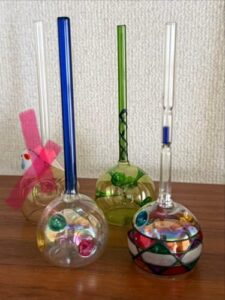 🫧 Nagasaki Poppen Glass — Kyushu’s port-town glass toy
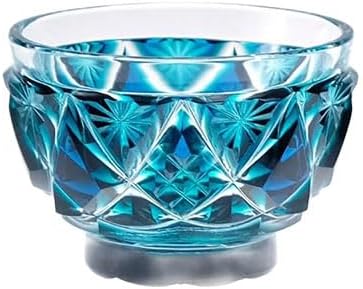 🍶 Satsuma Kiriko Sake Cup — cut glass from southern Kyushu
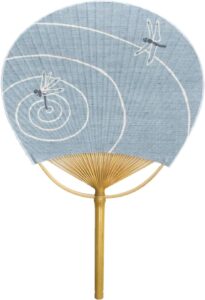 🪭 Marugame Uchiwa Fan — bamboo-and-paper handwork from Shikoku
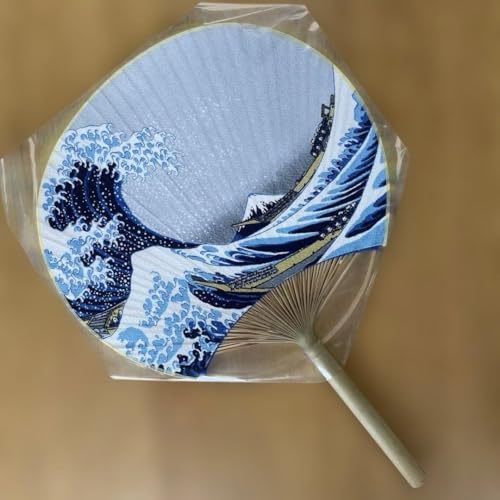 🌬 Boshu Uchiwa Fan — hand-split bamboo, another living paper craft
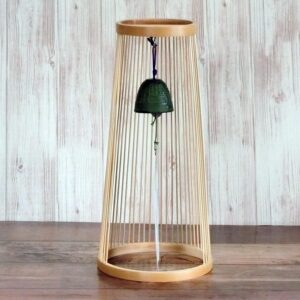 🎐 Suruga Bamboo Wind Chime — seasonal charm for the other half of the year
📦 Shipping & where to buy from outside Japan
The specific Goto-workshop doll covered here is sourced from an Amazon JP listing (ASIN B0D325CN5J). Amazon JP’s Global Store ships many household and decorative items internationally; whether this exact listing offers international checkout to your address can only be confirmed on the listing page itself, since eligibility varies by item and destination. As a general guide for light decorative goods, international shipping from Japan to the US or EU tends to run in the $15–$40 range, higher for other regions.
If you prefer shopping in USD with domestic returns, Amazon US carries a range of Japanese daruma and lucky dolls from various makers — though, per our June 2026 search snapshot, not this specific Taketa piece.
Price snapshot across stores
Per the data fetched on June 10, 2026, live pricing for this item was unavailable — the table below records purchase paths rather than confirmed prices. Always verify the current ¥ price on the listing; USD figures on this site are approximate (¥150/USD baseline).
| Store | Item / variant | Price | Notes |
|---|---|---|---|
| 🇺🇸 Amazon.com (US — search) | Browse Japanese daruma & lucky dolls | varies (USD) | Best if you are shopping from the US — Prime shipping, USD pricing, no international customs. Amazon US carries daruma and Japanese folk dolls from several makers, useful for comparing sizes and price tiers. The Goto workshop’s Taketa piece ships from Japan (next row). |
| 🇯🇵 Amazon JP Global Store | Goto workshop hime daruma (ASIN B0D325CN5J) | ¥ — see listing (live price unavailable at writing) | The sourced listing for the specific doll in this guide. Confirm international shipping eligibility at checkout. |
| Maker direct | Goto Hime Daruma Workshop, Taketa | Unconfirmed — check maker | No verified international e-commerce storefront in our data; a small family workshop with limited annual output. |
| Proxy services (Buyee / Tenso) | Forwarding of JP-domestic listings | Item price + service & shipping fees | Fallback if the JP listing does not ship to your country directly; adds fees and transit time. |
What it does well
Weaknesses and things to verify before buying
- Pricing data was unavailable at the time of writing. The fetched snapshot contained no live price for the Amazon JP listing — verify the current ¥ figure before deciding, and treat any USD figure as an estimate.
- Dimensions and weight are unconfirmed. Our source data did not state the doll’s size class; check the listing photos and spec block so you are not surprised by scale.
- Not individually listed on amazon.com. Per our June 2026 search, US buyers must use the JP Global Store path or a proxy service, with international shipping cost and transit time attached.
- Humidity is the enemy of hariko. Papier-mâché softens and warps in damp environments; bathrooms, unconditioned coastal rooms, and steamy kitchens are poor display spots.
- Hand variation is inherent. Each face is drawn by hand, so the doll you receive will not exactly match the listing photo. If you want pixel-perfect consistency, this is the wrong product category.
- No eye-painting ritual. Buyers expecting the goal-setting daruma ritual (paint one eye now, the other on success) should note the hime daruma arrives with a completed face — its custom is New Year renewal, not eye-filling.
- Supply is structurally limited. A single family workshop means stock can lapse, particularly around New Year demand; if the listing is out of stock, there is no second maker to fall back on.
Conclusion — which buyer type are you?
Other ways to approach this purchase
🏆 Editor’s Pick
❓ Frequently Asked Questions
Does Amazon JP ship the hime daruma internationally?
Amazon JP’s Global Store ships many household and decorative items to most major destinations, but eligibility is set per listing and per country. Open the listing for ASIN B0D325CN5J and check whether your address appears at checkout; if it does not, a proxy service such as Buyee or Tenso can forward it.
How is a hime daruma different from a regular daruma?
A conventional daruma is modeled on Bodhidharma, the Zen patriarch, and is usually sold with blank eyes for the goal-setting ritual. The Taketa hime daruma is modeled on Ayame, the wife of an Oka-domain samurai, arrives with a fully hand-painted face, and is traditionally renewed at New Year as an emblem of household harmony and resilience.
What is it made of, and how do I care for it?
It is hariko — Japanese papier-mâché — hand-formed and hand-painted. Keep it in a dry room away from direct sunlight and humidity, and dust it gently with a soft, dry cloth. Don’t wash it or use cleaning sprays.
When do Japanese households buy a hime daruma?
In Taketa the custom is to buy a new doll at New Year, renewing the household’s wish for harmony and perseverance for the year ahead. There is no rule against buying one at any other time — as a gift for a new home, a wedding, or a fresh start, the symbolism works year-round.
Will my doll look exactly like the listing photo?
Not exactly. The body is hand-formed and the face is hand-drawn at the Goto workshop, so each doll varies slightly in expression and finish. Most buyers consider that the point — it’s the visible proof of handwork.
How much does it cost?
Live pricing was unavailable in the data fetched for this article (June 10, 2026), so we can’t quote a figure. Check the current ¥ price on the Amazon JP listing; any USD figure you compute from it is approximate and depends on the exchange rate.
Can I buy directly from the Goto workshop?
Our data did not confirm an international e-commerce storefront for the workshop. If you visit Taketa in person, the workshop is the tradition’s single source; from abroad, the practical paths are the Amazon JP Global Store listing or a proxy-forwarding service.
jpmono.com is a Japan-based curation site with editorial centers in Toyama (Hokuriku region) and Nara (Kansai region), introducing Japanese household objects with verifiable craft heritage and clear international shipping paths to readers worldwide. We do not physically test every product; we read maker specs and source listings, and affiliate links support the editorial work.
jpmono.com is curated by a Japan-based editorial team (working out of Toyama in the Hokuriku region and Nara in Kansai) and is independent. We do not take payment from the makers we feature; income comes from affiliate links. Read more about our editorial standards.
✍️ This article was drafted with AI assistance and reviewed by the jpmono editorial team. Historical and regional facts follow the source notes compiled for this article; product details follow the listing data snapshot dated June 10, 2026.
Affiliate disclosure: jpmono.com may earn a commission on qualifying purchases made through links on this page, at no additional cost to you.