![Miike Uchihamono Hand-Forged Kurouchi Nakiri Knife (Fukuoka) [2026]](https://jpmono.com/wp-content/uploads/2026/05/japan-map-regions-and-prefectures-800x1050.png)
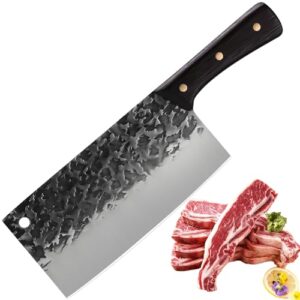
A nakiri finished in raw black forge scale is a tool that wears its making on the outside. The piece covered here is a Miike Uchihamono (三池打刃物, “Miike forged blades”) hand-forged kurouchi nakiri — a double-bevel vegetable knife hammered out by smiths in Ōmuta, on the southern edge of Fukuoka Prefecture, where the land meets the tidal flats of the Ariake Sea. It is not a polished showpiece. The matte black kurouchi (黒打ち) surface left by the forge is the point, and Miike Uchihamono was designated a national traditional craft by Japan’s Ministry of Economy, Trade and Industry in 2005.
For an international reader, this is the working-tool end of the Japanese knife world. Where a mirror-polished urban knife signals refinement, a Miike kurouchi nakiri carries the plain, everyday-tool aesthetic of a forge that grew up alongside farm implements and an industrial coal town. The carbon-steel core takes a thin, keen edge; the unpolished cheeks shrug off the cosmetics. That honesty is the appeal.
This guide is written for buyers deciding whether a Miike kurouchi nakiri is worth it, how it compares to the cleaner-finished Kaga nakiri and to other Kyūshū blades, and how to obtain a Japanese forged knife from outside Japan. Dimensions, weight, and handle materials vary by maker, so this article keeps those details general rather than inventing them.
🔄 Updated
⏱️ ~10 min read
- Who this is for — and who should skip it
- Product overview (from published specs)
- 📍 Where this comes from — place, era, and the craft tradition
- 📌 How does it compare?
- Buying considerations
- 📦 Shipping & where to buy from outside Japan
- What it does well
- Weaknesses and things to verify before buying
- Conclusion — which buyer type are you?
- Other ways to approach this purchase
- ❓ Frequently Asked Questions
Who this is for — and who should skip it
- Want a designated traditional craft (dentō kōgeihin) rather than a generic factory knife
- Prefer a thin, keen carbon-steel edge and accept the maintenance that comes with it
- Like the rustic kurouchi look and read forge scale as character, not as a flaw
- Chop vegetables often and want a flat-profile blade built for that one job well
- Are buying a gift with a verifiable place-of-origin story (Ōmuta, the Miike forge region)
- Want a dishwasher-safe, zero-maintenance knife you never have to dry or oil
- Need exact weight, handle material, and steel grade confirmed before you commit (not in our data)
- Expect a flawless mirror polish — kurouchi blades are deliberately matte and uneven
- Want one knife for everything; a nakiri is a vegetable specialist, not a meat-and-fish all-rounder
- Cannot accept that carbon steel rusts if left wet and develops a patina with use
Product overview (from published specs)
The table below combines the general craft facts in our source notes with what is typically stated for Miike uchihamono kurouchi nakiri. Weight, handle material, exact steel grade, and live price vary by maker, so they are marked rather than guessed. Confirm them at the retailer before buying.
| Attribute | Detail |
|---|---|
| Item | Hand-forged nakiri (vegetable knife) |
| Craft name | Miike Uchihamono (三池打刃物) |
| Blade type | Double-bevel (ryōba), flat vegetable profile |
| Steel | Forged carbon-steel core |
| Finish | Kurouchi (黒打ち, black forge scale left on the blade flanks) |
| Blade length | — |
| Origin | Ōmuta, Fukuoka Prefecture, Kyūshū |
| Designation | National traditional craft (METI), designated 2005 |
| Handle / weight | Varies by maker |
International buyers may compare US, Japanese, or maker-direct channels, but pricing and several specifications can change over time. Where a detail is not confirmed, it is left open rather than estimated.
📖 Glossary — key terms
- Uchihamono (打刃物) — hand-forged bladed tools; literally “struck blades,” made by hammering heated steel rather than stamping it.
- Kurouchi (黒打ち) — the matte black forge scale left on a blade’s flanks; an unpolished, rustic finish typical of working knives.
- Nakiri (菜切り) — a flat-profiled, double-bevel knife made specifically for chopping and slicing vegetables.
- Ryōba (両刃) — a double-bevel edge ground on both sides, usable by right- and left-handed cooks (as opposed to single-bevel kataba).
- Hagane (鋼) — carbon steel; takes a very keen edge but reacts with moisture and needs drying and occasional oiling.
- Dentō kōgeihin (伝統的工芸品) — a craft officially designated as traditional by Japan’s Ministry of Economy, Trade and Industry (METI).
- Shokunin (職人) — a skilled craftsperson or artisan.
📍 Where this comes from — place, era, and the craft tradition

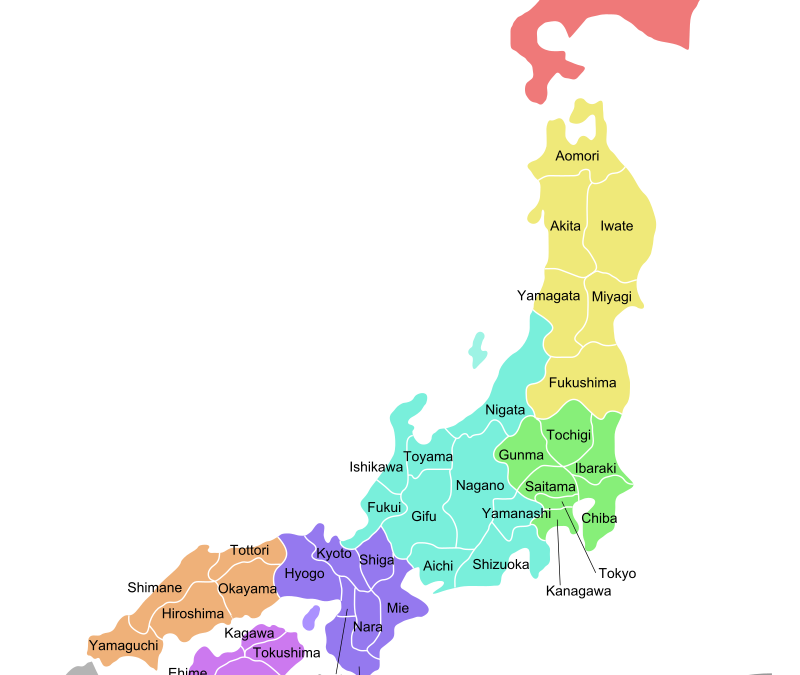
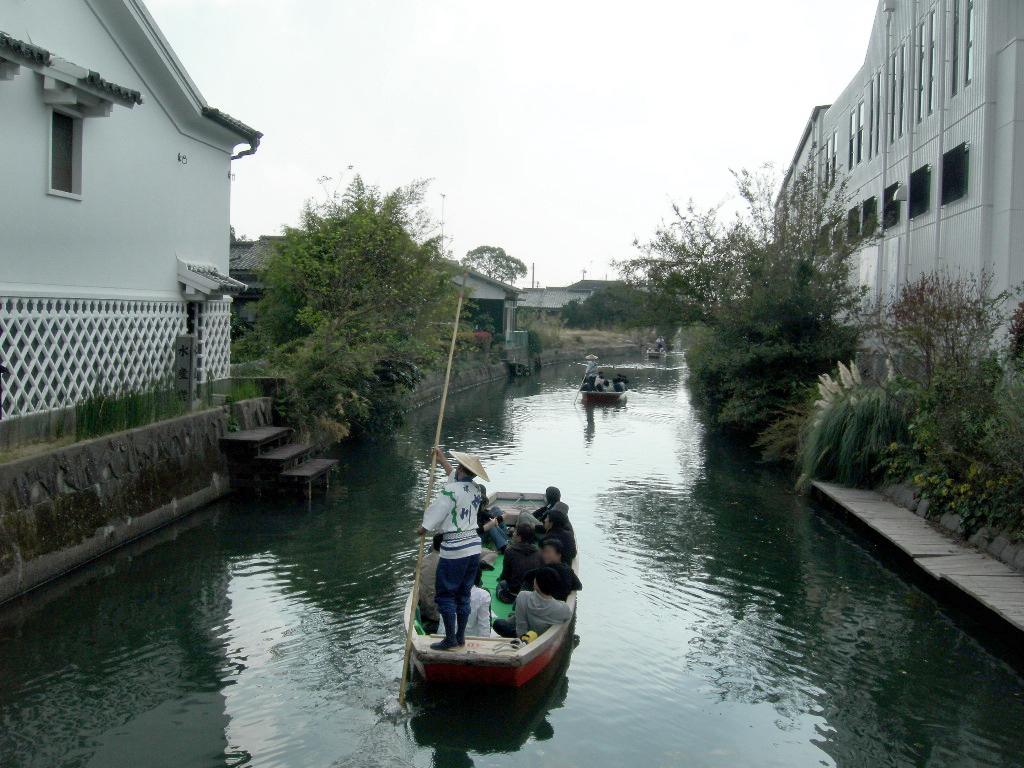
Ōmuta sits at the southern tip of Fukuoka Prefecture, where the Chikugo plain runs down to the tidal flats of the Ariake Sea. This is one of Kyūshū’s great farming and reclamation landscapes — flat, river-laced, and historically dependent on hand tools for rice, vegetables, and the sticky mudflat work of the Ariake. A region that lives by sickles, hoes, and knives is a region that keeps smiths in business, and that agricultural demand is the older half of the Miike forge story.

The blade tradition here traces back to the Muromachi and Sengoku eras, when sword- and tool-smiths worked the Miike district and the surrounding Chikugo region. As Japan moved out of the age of the sword, those skills turned toward the implements a farming district actually needed — sickles, shears, and kitchen knives. The craft is, in other words, a direct descendant of weapons-grade smithing redirected to the kitchen and the field.
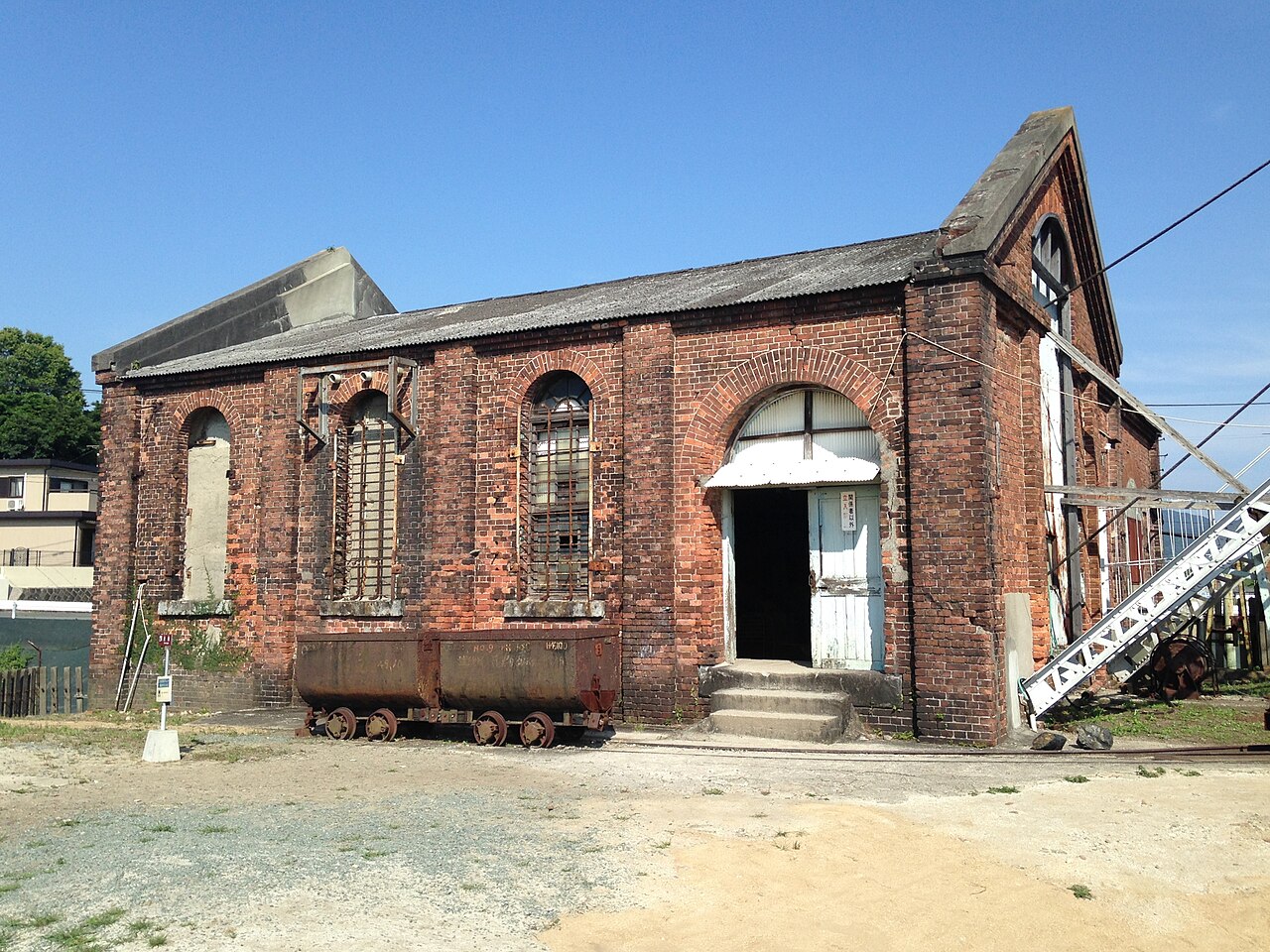
Then came coal. From the Meiji period onward, the Miike coal mine made Ōmuta one of the engines of Japan’s industrialization, and an industrial town needs a dense supply of metalwork and tools. The mine’s demand, layered on top of the older agricultural demand, sustained a thick community of smiths — which is why a relatively small southern city became a recognized blade center rather than a scattering of village forges.
- Muromachi–Sengoku eras (1336–1603) — Sword- and tool-smiths work the Miike district and surrounding Chikugo region.
- Edo period (1603–1868) — Smithing skill shifts toward farm implements and kitchen knives for the Chikugo agricultural plain.
- Meiji period (1868–1912) — The Miike coal mine booms; industrial demand thickens the local community of smiths.
- 2005 — Miike Uchihamono is designated a national traditional craft (dentō kōgeihin) by METI.
- 2015 — The Miike coal mine sites are inscribed as a UNESCO World Heritage industrial site.
- 2026 — Ōmuta smiths continue to hand-forge kurouchi kitchen knives, sickles, and shears.
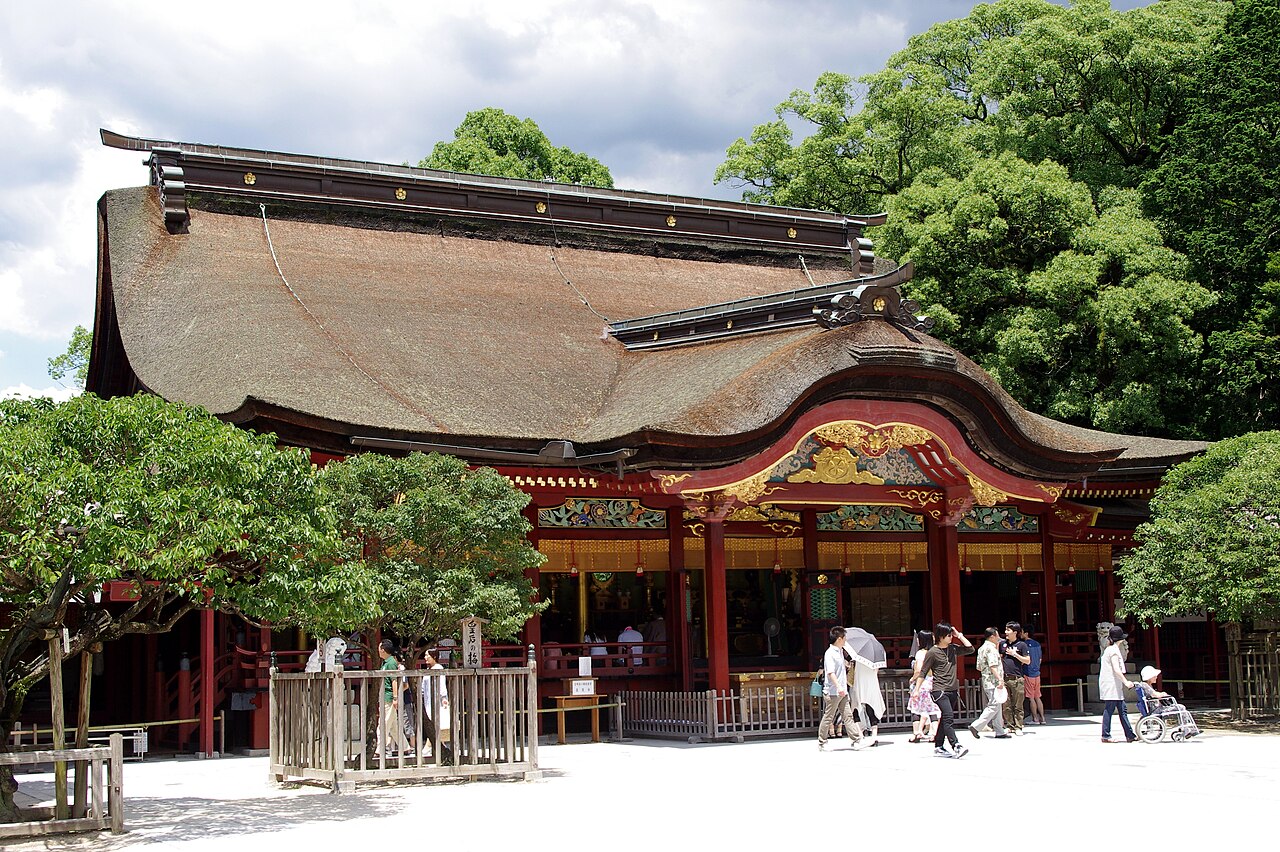
Fukuoka’s cultural lineage runs far deeper than its industry, and the prefecture has long been the gateway between the Japanese mainland and the Asian continent. Dazaifu, just north of Ōmuta, was the seat of the regional government in the ancient and medieval periods, and Dazaifu Tenmangū remains one of Kyūshū’s defining shrines. That depth of settled culture is the backdrop against which a designated craft like Miike Uchihamono earns its standing.
“Miike did not refine its knives into showpieces. It forged them for fields and coal pits — and left the black forge scale on as proof of the work.”
That working-tool DNA is the cleanest way to understand the difference between a Miike kurouchi nakiri and a more genteel, polished knife such as the Kaga nakiri. Both are hand-forged Japanese vegetable knives; the Miike piece simply keeps the rustic, everyday-tool aesthetic of an industrial coal-region forge, while the Kaga line leans toward a cleaner, more finished face. Neither is “better” — they are two honest answers to the same question, shaped by two very different local economies.
📌 How does it compare?
Related pieces and the wider Japanese blade world on jpmono.com:
 Kaga nakiri (nakiri comparison) →
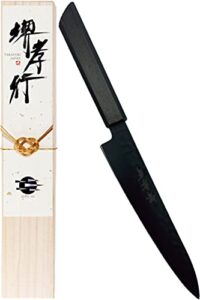 Oita Bungo petty knife (Kyushu blade) →
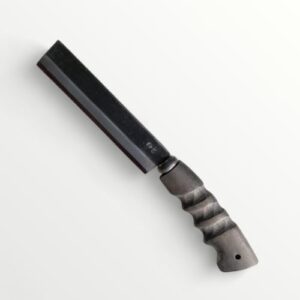 Miyakonojo nata hatchet (Kyushu blade) →
Okinawa hand-forged knife (Kyushu blade) →
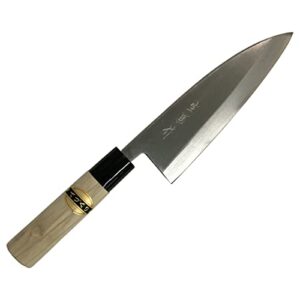 Echizen santoku (hand-forged blade) →
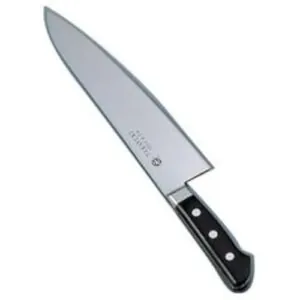 Sakai Takayuki gyuto (kitchen blade) →
Buying considerations
Live pricing for Miike uchihamono kurouchi nakiri knives varies by maker and by finish, and not every workshop publishes a current figure online, so the figures below are marked as unconfirmed rather than estimated. Hand-forged, designated-craft kitchen knives generally sit above mass-market factory knives. Prices and stock fluctuate — confirm at the retailer before buying.
| Store | Item / Variant | Price | Notes |
|---|---|---|---|
| 🇺🇸 Amazon.com (US) | Browse Japanese hand-forged kitchen knives | varies (USD) | Best if you are shopping from the US — Prime shipping, USD pricing, no international customs. Amazon US carries hand-forged Japanese kitchen knives from various makers, useful for comparing geometry, steel types, and price tiers. The specific Miike Uchihamono nakiri is sourced from Japan (next row). |
| 🇯🇵 Amazon JP Global Store | Miike Uchihamono kurouchi nakiri | — | International shipping option from Japan; confirm destination coverage and fees before ordering. |
| Maker direct | Ōmuta / Miike forge workshops | varies | Some Miike smiths sell direct or through Japanese craft retailers; English support and international shipping vary by workshop. |
| Proxy services (Buyee / Tenso) | Forwarding for Japan-only shops | item price + forwarding fee | Use only when a Japan-only shop ships within Japan; adds forwarding and handling fees. |
JPY (¥) is the authoritative price for Miike uchihamono kurouchi nakiri bought from Japanese sources; any USD figure is an approximate estimate at roughly ¥150/USD.
📦 Shipping & where to buy from outside Japan
International shipping for a Japanese kitchen knife depends on destination, seller, and carrier. Customs rules in some countries restrict bladed items, so verify that a knife can be imported to your destination before ordering.
What it does well
Weaknesses and things to verify before buying
- Carbon steel rusts. The blade reacts with moisture and acidic foods; it must be hand washed, dried immediately, and oiled occasionally. It is not a leave-it-wet knife.
- Specifications vary. Handle material and steel grade may differ; choose a knife whose specifications suit your use.
- Vegetable specialist. A nakiri is purpose-built for produce; it is not designed for breaking down meat, slicing fish off the bone, or rock-chopping like a Western chef’s knife.
- Patina and forge-mark cosmetics. Carbon steel darkens with use and the kurouchi finish is deliberately uneven — buyers expecting a flawless mirror surface will read this as imperfection.
- International shipping and blade-import rules. Confirm the Global Store ships to your country, that knives can be imported, and whether your import threshold triggers duty or tax.
Conclusion — which buyer type are you?
Other ways to approach this purchase
❓ Frequently Asked Questions
Does the Miike Uchihamono nakiri ship internationally?
What is kurouchi, and is the black finish a defect?
How do I care for a carbon-steel knife?
How is a nakiri different from a santoku or chef’s knife?
How does it compare to a Kaga nakiri?
What does it cost?
Is Miike Uchihamono really a designated traditional craft?
jpmono.com is curated by a Japan-based editorial team (working out of Toyama in the Hokuriku region and Nara in Kansai) and is independent. We do not take payment from the makers we feature; income comes from editorial work. We do not physically test every product — we read maker specifications and craft sources.
This article was prepared with AI assistance and reviewed against the available source data. Where the data feed did not return a value (live price, weight, handle material, steel grade), the article states that plainly rather than estimating.
Affiliate disclosure: jpmono.com may earn a commission on qualifying purchases made through links on this page, at no additional cost to you.