![Sanuki Udon-Kiri: Kagawa Hand-Forged Udon Noodle-Cutting Knife [2026]](https://jpmono.com/wp-content/uploads/2026/05/japan-map-regions-and-prefectures-800x1050.png)
The udon-kiri (うどん切り, “udon-cutting knife”) is one of the most single-minded tools in a Japanese kitchen. It does one thing: it cuts a folded sheet of rolled wheat dough into long, even strands. The blade is wide, heavy, and flat-edged, with a square heel that reaches the cutting board so a full sheet is sliced cleanly in one downward stroke. There is no curve to rock, no point for detail work — it is a guillotine for noodles, and nothing else.
It comes from Kagawa, the smallest prefecture in Japan and, by a wide margin, its udon heartland. Kagawa has the country’s highest per-capita udon consumption, a noodle culture deep enough that the prefecture half-jokingly rebranded itself “Udon Prefecture.” That demand — generations of households and noodle shops rolling, folding, and cutting dough by hand — is what kept the men-kiri (麺切り, “noodle knife”) in production long after most kitchens switched to a single all-purpose blade.
This guide uses the Sanuki-style single-bevel udon-kiri as a lens on the category: what the tool is for, who genuinely needs one, how it compares with a general-purpose Japanese knife, and where international readers can look. Because makers and availability vary, figures should be treated as category guidance rather than fixed promises.
🔄 Last updated: June 12, 2026
⏱️ Read time: ~11 min
- Who this is for — and who should skip it
- Product overview (from published specs)
- Where this comes from — Sanuki, the udon heartland
- Price information
- What it does well
- Weaknesses and things to verify before buying
- Conclusion — which buyer type are you?
- Other ways to approach this purchase
- ❓ Frequently Asked Questions
Who this is for — and who should skip it
- Make hand-cut noodles — udon, soba, or wide kishimen — more than occasionally and want even strands
- Already roll and fold your own dough and are bottlenecked at the cutting step
- Appreciate single-purpose carbon-steel tools and are comfortable with the care they demand
- Want a Kagawa-anchored object tied to a living food culture, not a generic kitchen gadget
- Have the counter space and a wide cutting board for a long, heavy blade
- Want one versatile knife — a santoku or gyuto handles 95% of home tasks and this does not
- Buy dried or fresh pre-cut noodles and rarely make dough from scratch
- Are not prepared to wipe a carbon blade dry after every use to prevent rust
- Cook on a small board or cramped counter where a wide square heel cannot land flat
Product overview (from published specs)
Sanuki udon-kiri knives vary by maker. The defining traits of the type are more reliable than dimensions for any one knife; treat the table as category guidance and confirm measurements, steel, and handle details before purchase.
| Attribute | Detail (per category) | Source |
|---|---|---|
| Type | Udon-kiri / men-kiri — single-purpose noodle-cutting knife | Category |
| Edge geometry | Wide, flat single-bevel (kataba) blade with a square heel for full-length cuts | Category |
| Blade material | Carbon steel (typical for this type) | Category |
| Blade length | Not confirmed | — |
| Weight | Not confirmed | — |
| Origin / anchor | Kagawa (Sanuki), Shikoku — udon food culture + castle-town smithing | Editorial anchor |
| Price | — | — |
Kagawa is not a METI-designated cutlery region. The udon-kiri’s place here is anchored to food culture and castle-town blacksmithing, not to a single registered knife brand. Maker, imagery, and availability can vary between sellers.
📖 Glossary — key terms in this guide
udon-kiri (うどん切り) — literally “udon-cutting”; a wide, heavy knife made specifically to slice folded sheets of noodle dough.
men-kiri (麺切り) — “noodle-cutting”; the broader term covering knives used for udon, soba, and other hand-cut noodles. Often used interchangeably with udon-kiri.
Sanuki (讃岐) — the old province name for present-day Kagawa Prefecture. “Sanuki udon” is the regional noodle style.
kataba (片刃) — single-bevel; the edge is ground on one side only, common in Japanese task-specific blades for clean, straight cuts.
komaita (駒板) — the wooden guide board placed on folded dough; the knife rides against its edge so each cut steps over by an even width.
shokunin (職人) — a skilled craftsperson or tradesperson; here, the smiths who forge the blade.
Where this comes from — Sanuki, the udon heartland

Kagawa occupies the northeast corner of Shikoku, facing the Seto Inland Sea. It is the smallest of Japan’s 47 prefectures, with a mild, low-rainfall climate that historically favored wheat over rice in the dry uplands. That agricultural fact matters: wheat is the raw material of udon, and the Sanuki plain has been growing and milling it for centuries. The same Setouchi trade routes that carried wheat, salt, and iron also moved whetstones and tools between Shikoku and the Honshu castle towns.
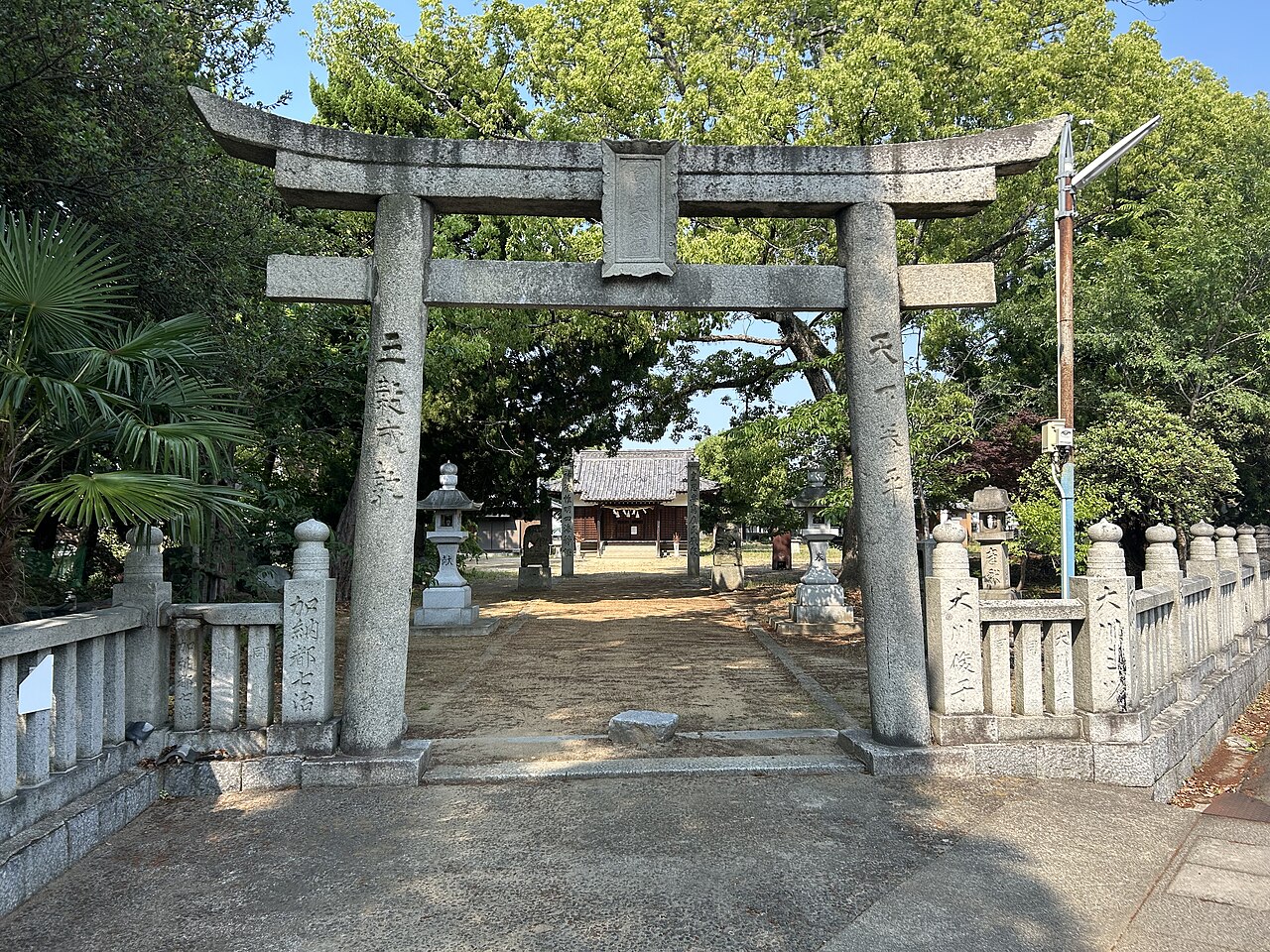
Local lore credits the monk Kobo Daishi (Kukai, 弘法大師) — born in 774 at Zentsu-ji in western Kagawa — with bringing wheat-noodle technique back from Tang China. This is a folk-traditional attribution rather than a documented supply chain, and it should be read that way. But it captures something true about the region’s self-image: in Sanuki, udon is not a dish, it is an identity.
- 774 — Kobo Daishi (Kukai) born at Zentsu-ji; later traditionally credited with bringing wheat-noodle technique from Tang China.
- 1587 — The Ikoma clan begins ruling Sanuki; castle-town economies and craft trades take shape.
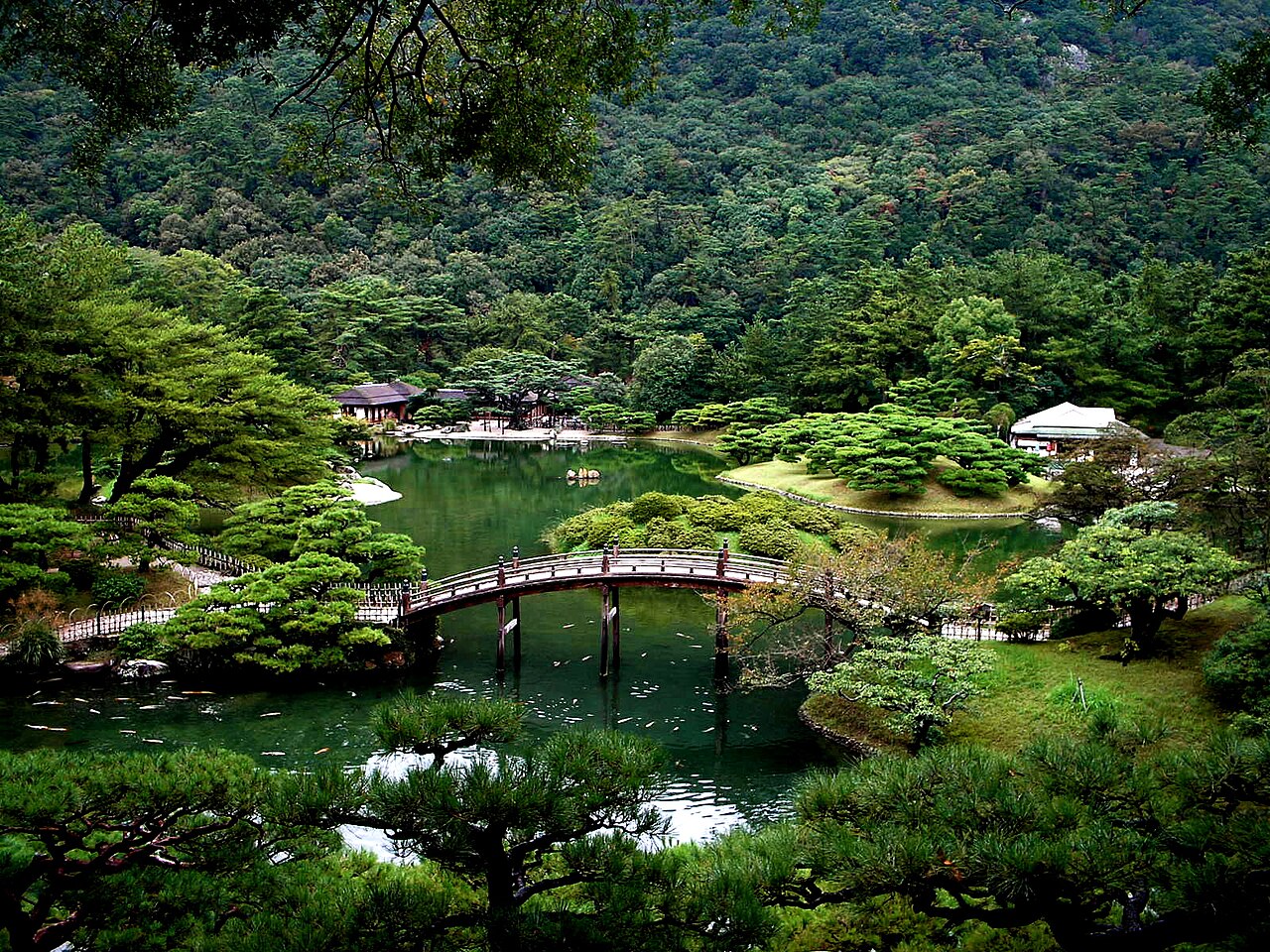
- 1642 — The Matsudaira lords are installed at Takamatsu; Ritsurin Garden is developed and the castle town nurtures food culture and skilled trades.
- 1658 — The Kyogoku family takes Marugame; its castle-town craftsmen work iron and tools alongside the region’s famed fan-making.
- 18th c. — Pilgrimage traffic to Kotohira-gu (Konpira-san) spreads Sanuki udon to travelers across the country.
- 1988 — The Great Seto Bridge opens, linking Shikoku to Honshu and widening the national appetite for Sanuki udon.
- 2011 — Kagawa promotes itself as “Udon Prefecture,” formalizing the noodle as regional identity.
- 2026 — Sanuki noodle shops and home cooks still cut dough by hand; the udon-kiri remains a working tool.
The two castle towns of Edo-period Sanuki shaped the toolmaking side of the story. Takamatsu, under the Matsudaira branch of the Tokugawa family from 1642, developed the gardens, kitchens, and merchant trades of a prosperous domain — Ritsurin Garden is the surviving emblem of that patronage. Marugame, under the Kyogoku domain from 1658, became known for its craftsmen, most famously for Marugame uchiwa (round fans) but also for the iron and tool work that a castle town requires.
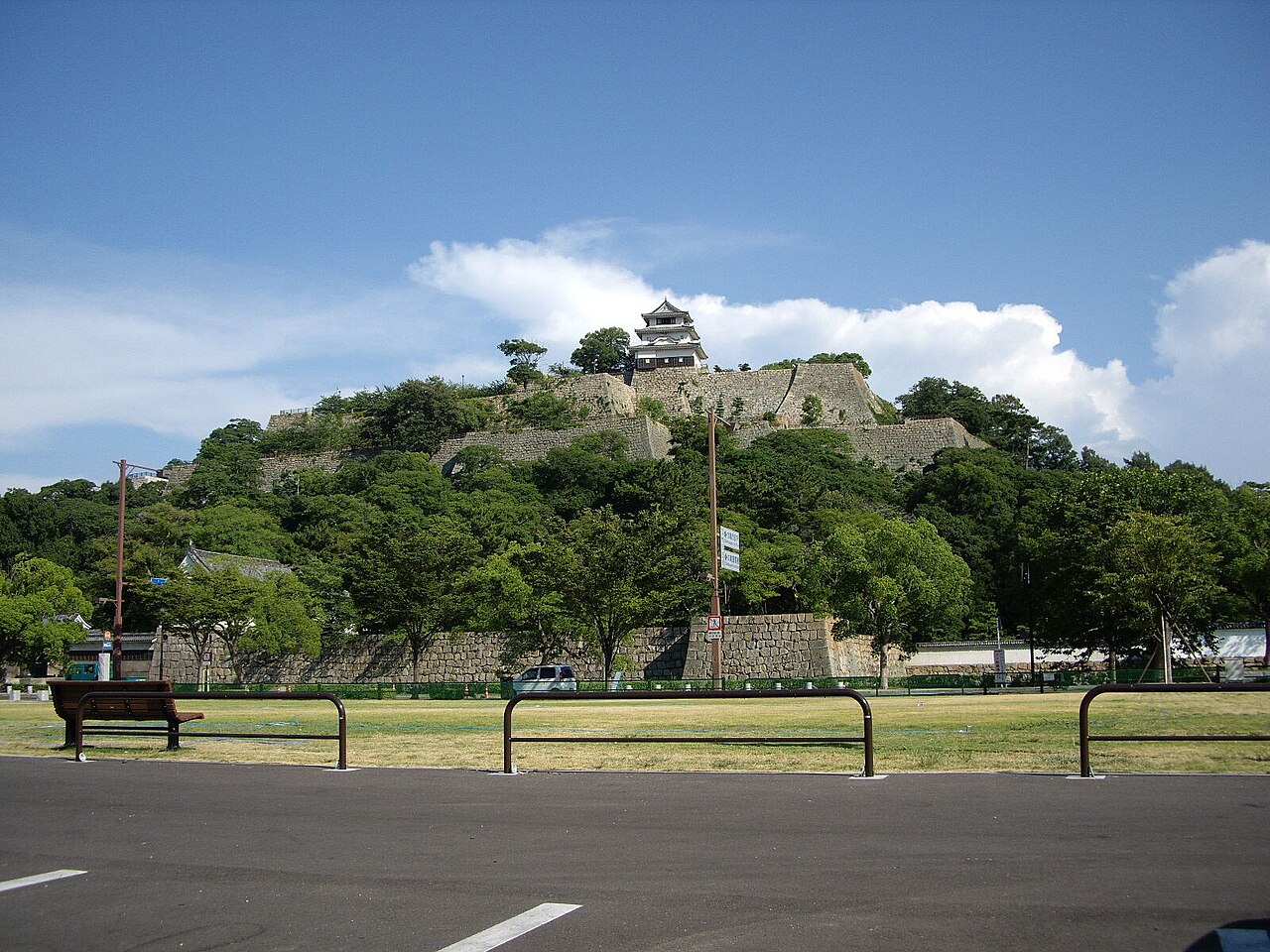
What kept a single-purpose knife like the udon-kiri alive was demand, not nostalgia. A region that eats this much hand-cut udon needs a tool that cuts a folded sheet into even strands quickly and repeatedly — and a santoku cannot do that well. The pilgrimage economy reinforced it: Kotohira-gu, the great Konpira shrine in the Sanuki hills, drew travelers for centuries, and the udon they ate on the road carried the dish’s reputation home with them.
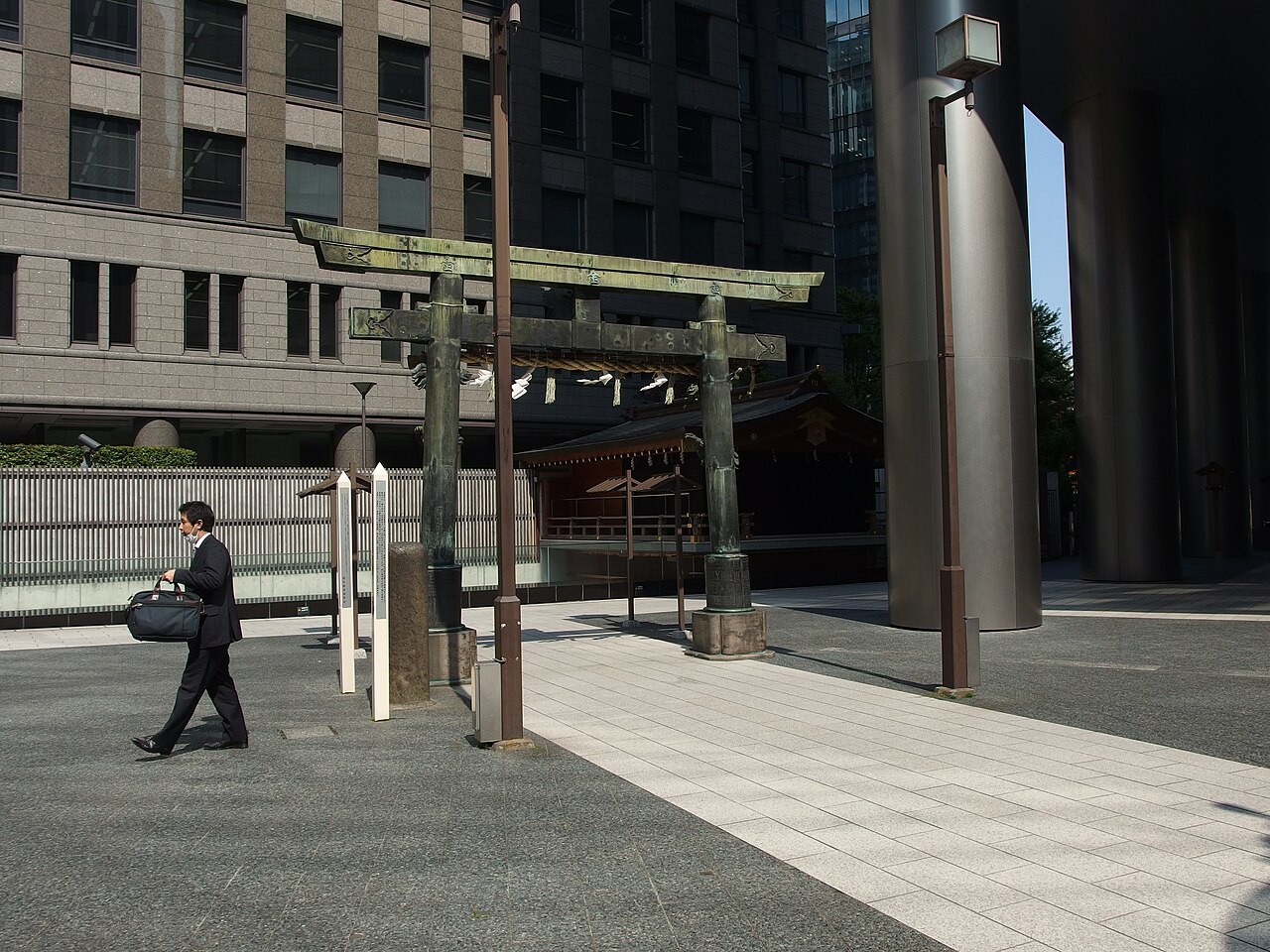
“In Sanuki, the udon-kiri survived for the plainest reason a tool can: people kept cutting noodles by hand, and a general-purpose knife was never going to do it well.”
Related jpmono guides — other Kagawa and Shikoku crafts, and other Japanese blades worth weighing against a single-purpose noodle knife.
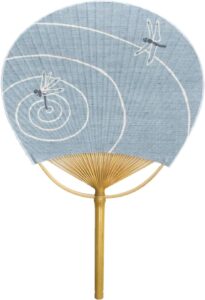 🪭 Marugame Uchiwa (Kagawa)
 🍵 Sanuki Kinma Natsume (Kagawa)
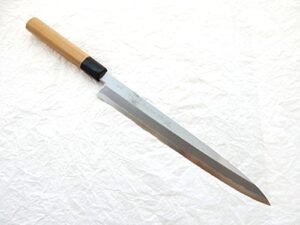 🔪 Tsukiji Yanagiba Knife
 🔪 Sakai Takayuki Gyuto
✂️ Hakata Hand-Forged Scissors
 🏺 Otani-yaki (Shikoku)
🎍 Iyo Sudare (Shikoku)
 🔪 Sendai Hand-Forged Kiritsuke
Price information
USD figures for Japanese craft tools are approximate and depend on the exchange rate. Prices for udon-kiri vary by size, steel, and workmanship, so treat any currency conversion as a comparison aid.
| Store | Item / variant | Price (JPY → USD est.) | Notes |
|---|---|---|---|
| 🇺🇸 Amazon.com (US) | Browse Japanese noodle & kitchen knives | varies (USD) | Best if you are shopping from the US — Prime shipping, USD pricing, no international customs. Amazon US carries Japanese kitchen knives from several makers for comparison; this exact Sanuki udon-kiri ships from Japan (next row). |
| 🇯🇵 Amazon JP Global Store | Sanuki udon-kiri | — | Where this specific item is sourced. Ships internationally from Japan to most major destinations; confirm price and stock on the page. |
| Maker direct | Workshop / regional cutler | Unconfirmed | A specific Sanuki workshop is not confirmed in the dataset. If you want a named maker, contact a Kagawa cutlery shop directly; many do not ship abroad. |
| Proxy services (Buyee / Tenso) | Forwarding from Japan domestic stores | Item price + forwarding fee | Useful if the item appears only on Japan-domestic stores. Adds a forwarding fee and consolidates customs; expect longer transit. |
What it does well
Weaknesses and things to verify before buying
- Single-purpose only. This knife cuts noodles and little else. If you want one versatile blade, a santoku or gyuto is the better buy and this is a poor fit.
- Carbon steel demands care. Carbon blades rust if left wet. You must wipe it dry after every use and store it dry; this is not a dishwasher tool.
- Fit matters. Confirm that the blade suits your board width.
- Maker not named in the data. A specific Sanuki workshop is not confirmed. The Kagawa anchor here is editorial — food culture plus castle-town smithing — rather than a single registered cutlery brand.
- Needs space and a wide board. The square heel must land flat on the board to cut cleanly; a small cutting surface defeats the design.
- International availability varies. Amazon JP Global Store ships many items abroad, but shipping destinations can differ. Confirm that it ships to your country before ordering.
Conclusion — which buyer type are you?
Other ways to approach this purchase
❓ Frequently Asked Questions
Do I really need a dedicated udon-kiri, or can a chef’s knife do it?
Does Amazon JP ship this knife internationally?
How do I care for a carbon-steel blade?
What is the confirmed price?
Is this a METI-designated traditional craft of Kagawa?
Can I use it for soba and other noodles too?
Would this make a good gift?
jpmono.com is curated by a Japan-based editorial team (working out of Toyama in the Hokuriku region and Nara in Kansai) and is independent. We do not take payment from the makers we feature; income comes from affiliate links.
This article was prepared with AI assistance. Specifications, prices, and availability can vary among makers and over time; category descriptions are offered as guidance.
Affiliate disclosure: jpmono.com may earn a commission on qualifying purchases made through links on this page, at no additional cost to you.