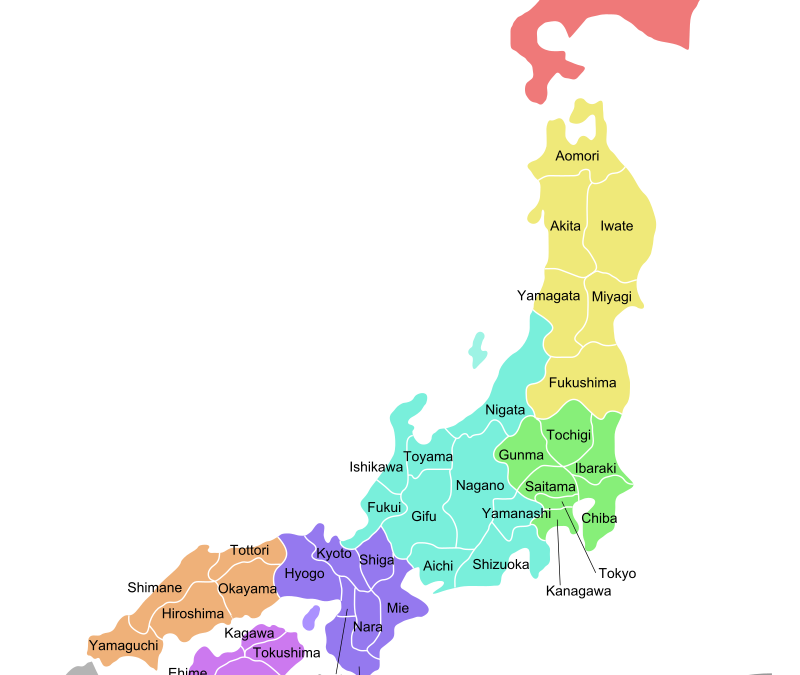
![Aizu Momen Indigo-Stripe Cotton Apron: Fukushima’s Sturdy Snow-Country Weave [2026]](https://jpmono.com/wp-content/uploads/2026/05/japan-map-regions-and-prefectures-800x1050.png)
Aizu Momen (会津木綿, “Aizu cotton”) is the thick, indigo-striped workcloth of the Aizu basin, woven in and around Aizuwakamatsu in western Fukushima Prefecture. Tradition credits its founding to Gamō Ujisato, the daimyō installed at Aizu in the 1590s, who is said to have brought cotton cultivation and weaving from his former Ise-Matsusaka lands. The Aizu domain later protected and promoted the cloth as a local industry, and for centuries it clothed farming families through the region’s long, deep winters.
What reaches international buyers today is most often a practical object rather than a wall hanging: a maekake-style kitchen apron cut from the same heavy, tightly woven, deeply dyed cotton. The vertical stripe (tate-jima) is rustic and unfussy, the weave dense enough to take years of washing. This is cloth designed first for wear, and only second for looking at — which is precisely why it tends to outlast lighter, prettier aprons.
This guide is written for readers comparing a genuine Aizu Momen apron against generic cotton aprons and against other Japanese indigo textiles. We cover what the weave actually is, where it comes from, how to buy it from outside Japan, its honest weaknesses, and which buyer it suits. Where the data is thin, we say so rather than guess.
🔄 Updated:
⏱️ Read time: ~10 min
Who this is for — and who should skip it
- Want a kitchen or workshop apron built for years of washing, not a season
- Prefer honest, rustic indigo stripe over printed patterns
- Appreciate cloth with a documented regional tradition behind it
- Are comfortable with cotton that starts stiff and softens with use
- Like the idea of indigo that fades slowly into its own character
- Want a soft, pre-washed apron straight out of the package
- Need guaranteed colorfastness against bleach or heavy stains
- Expect a precise, uniform stripe with zero weave irregularity
- Are shopping purely on price against mass-market aprons
- Cannot accommodate possible indigo transfer onto light clothing early on
Product overview (from published specs)
Source data for Aizu Momen indigo-stripe aprons varies by retailer: live pricing was unavailable at the time of writing. The table below records what can be stated from the documented Aizu Momen tradition, and marks anything unconfirmed rather than guessing.
| Attribute | Detail | Source |
|---|---|---|
| Craft | Aizu Momen (会津木綿) — indigo-striped cotton, Aizu basin, Fukushima | Maker tradition |
| Item type | Maekake-style kitchen apron | Amazon JP Global Store |
| Material | 100% cotton, thick plain weave (per the Aizu Momen tradition) | Maker tradition |
| Pattern | Indigo vertical stripe (tate-jima) | Maker tradition |
| Origin | Aizuwakamatsu area, Fukushima Prefecture, Tōhoku | Maker tradition |
| Dimensions / weight | Confirm with the maker | — |
| Price | Confirm before buying | — |
The Amazon US path is a search link for comparable Japanese cotton aprons and kitchen textiles. Prices and stock fluctuate; compare current options before purchasing.
📖 Glossary — key terms
- Aizu Momen (会津木綿) — the thick, indigo-dyed striped cotton woven in the Aizu region of Fukushima.
- Momen (木綿) — cotton cloth.
- Maekake (前掛け) — a traditional Japanese waist apron, historically worn by shopkeepers and farmers.
- Tate-jima (縦縞) — vertical stripe, the characteristic Aizu Momen pattern.
- Noragi (野良着) — farmers’ everyday field workwear, the cloth’s original purpose.
- Aizome (藍染め) — indigo dyeing, the deep blue that defines the cloth.
- Daimyō (大名) — a feudal domain lord; here, Gamō Ujisato of Aizu.
Related jpmono guides on Japanese indigo textiles, regional cloth, and other Fukushima craft — useful for placing this apron in context.
🟦 Buaisou Indigo Tenugui
🧵 Yumihama-gasuri Indigo Runner
 👛 Iyo-Gasuri Indigo Coin Purse
 🧣 Yonezawa-ori Silk Stole
 🐑 Iwate Homespun Wool Scarf
🟦 Hirosaki Kogin Coaster Set
Buying options compared
USD figures are approximate estimates at a ¥150/USD baseline as of mid-2026; prices and stock may change over time.
| Store | Item / Variant | Price (JPY + USD est.) | Notes |
|---|---|---|---|
| 🇺🇸 Amazon US (search) | Browse Japanese cotton aprons & kitchen textiles | varies (USD) | Best if you are shopping from the US — Prime shipping, USD pricing, no international customs. Amazon US carries Japanese indigo cotton aprons and kitchen linens for comparison; this exact Aizu Momen apron ships from Japan (next row). |
| 🇯🇵 Amazon JP Global Store | Aizu Momen indigo-stripe apron | Check current availability | Ships internationally from Japan to most major destinations. |
| Maker direct | Aizu Momen weaving houses (Aizuwakamatsu) | varies (JPY) | A handful of surviving weaving houses sell directly; most ship within Japan only. Confirm international options before ordering. |
| Proxy services (Buyee / Tenso) | Forwarding from JP-only shops | item + forwarding fee | Useful when a maker ships domestically only. Adds a service fee and a second shipping leg; watch customs thresholds. |
Where this comes from

Aizuwakamatsu sits in the Aizu basin in the western corner of Fukushima Prefecture, in the southern Tōhoku region of northern Honshū. It is inland and mountain-ringed, far from the prefecture’s Pacific coast, and the encircling ranges trap heavy winter snow. The basin’s cold, clear winters and self-contained castle-town economy shaped both the need for hard-wearing cloth and the local industry that supplied it.
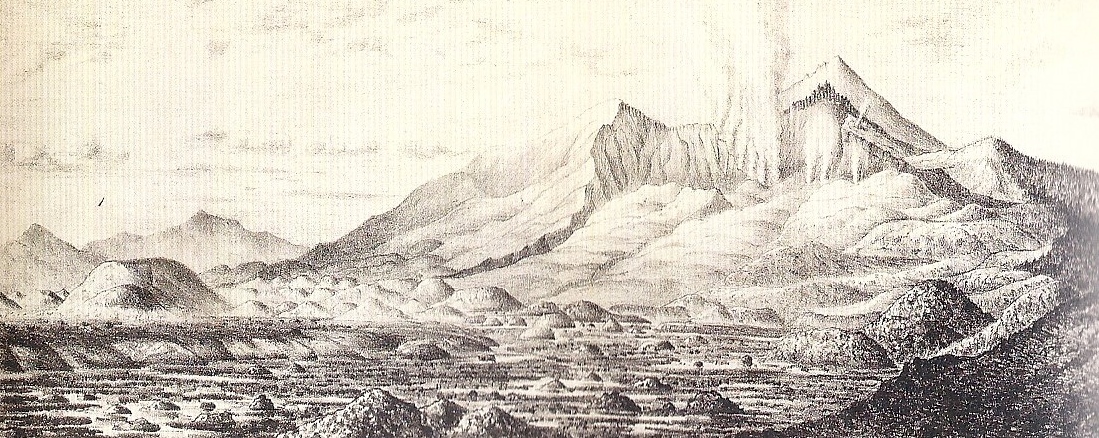
The historical anchor is the castle town. Tradition credits Aizu Momen’s founding to Gamō Ujisato, the daimyō installed at Aizu in the 1590s, who is said to have brought cotton cultivation and weaving techniques from his former Ise-Matsusaka domain. The Aizu clan that followed protected and promoted the cloth as a domain industry, and Tsuruga Castle (Wakamatsu Castle) anchored the town economy that let weaving take root and persist.
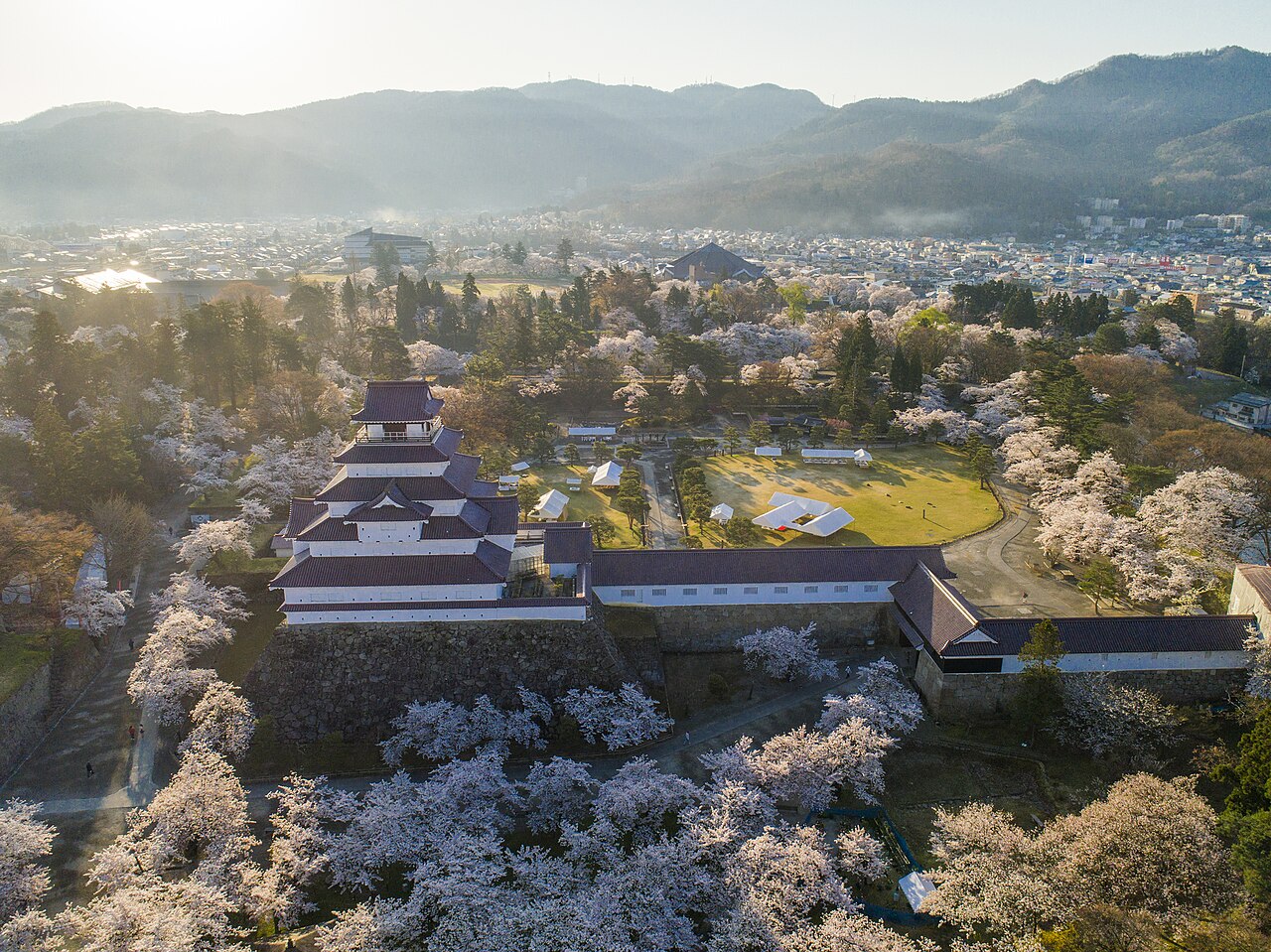
- 1384 — Ashina clan builds the early castle that becomes Tsuruga Castle, seeding the Aizu castle town.
- 1590s — Gamō Ujisato installed at Aizu; traditionally credited with bringing cotton cultivation and weaving from Ise-Matsusaka.
- Edo period — The Aizu domain protects and promotes the cloth; Aizu Momen becomes everyday field workwear (noragi) for snow-country farmers.
- 1868 — The Boshin War’s Battle of Aizu devastates the castle town; the region rebuilds around its established trades.
- 20th century — Industrial cloth displaces hand-woven workwear; Aizu Momen weaving houses dwindle to a small number.
- 2026 — A handful of weaving houses keep the rustic vertical stripe in production, supplying aprons, bags, and yardage.
The continuity case for Aizu Momen is real but modest. Where it once clothed an entire farming region, today only a handful of weaving houses survive, keeping the rustic vertical stripe alive on shuttle looms. That scarcity is part of why a genuine Aizu Momen apron carries more weight than a generic striped one: the cloth still comes from the place that defined it, in a tradition the local domain once underwrote.
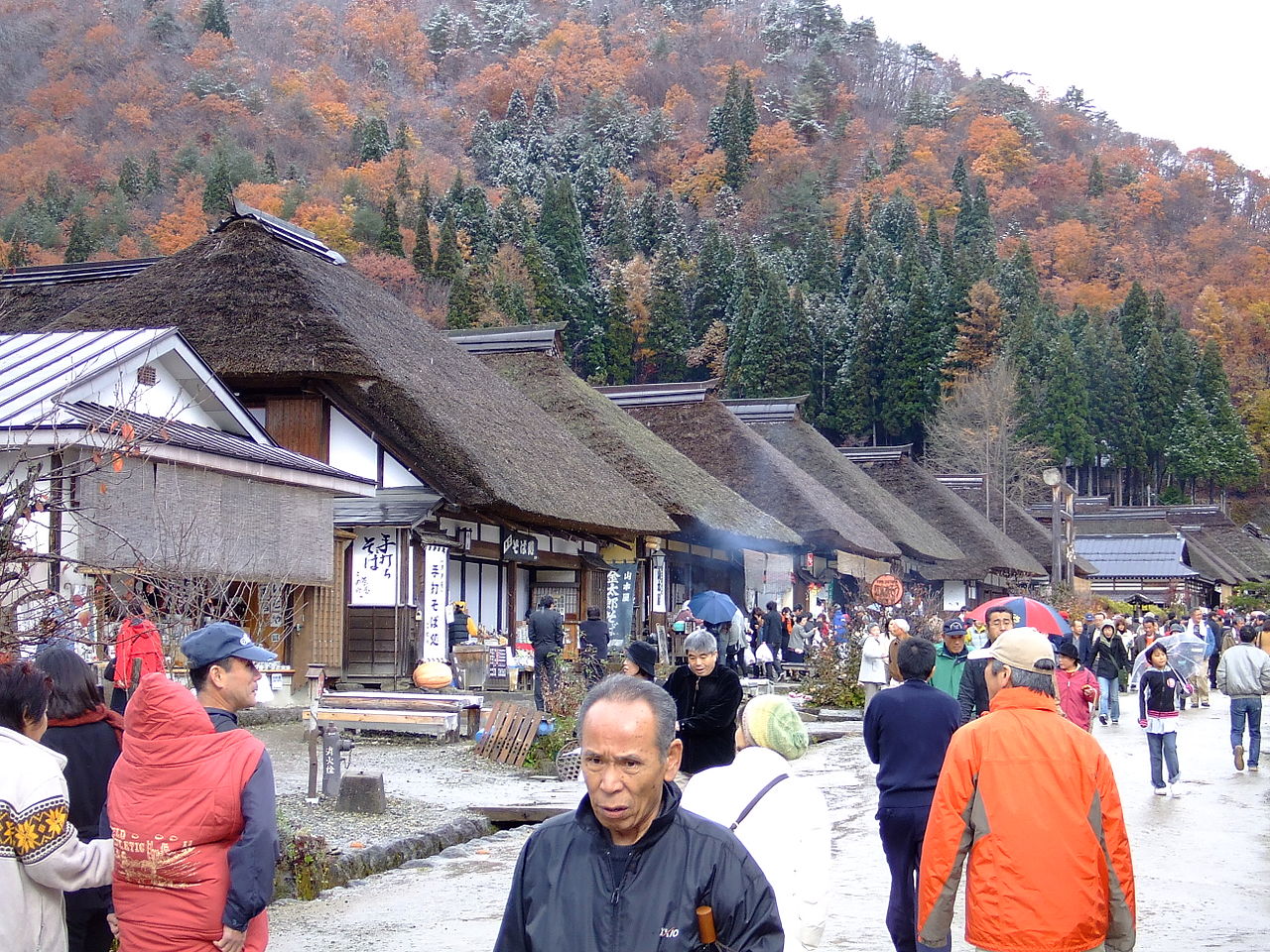
“Aizu Momen was woven for people who worked outdoors in deep snow — which is exactly why it survives the comparatively gentle life of a kitchen.”
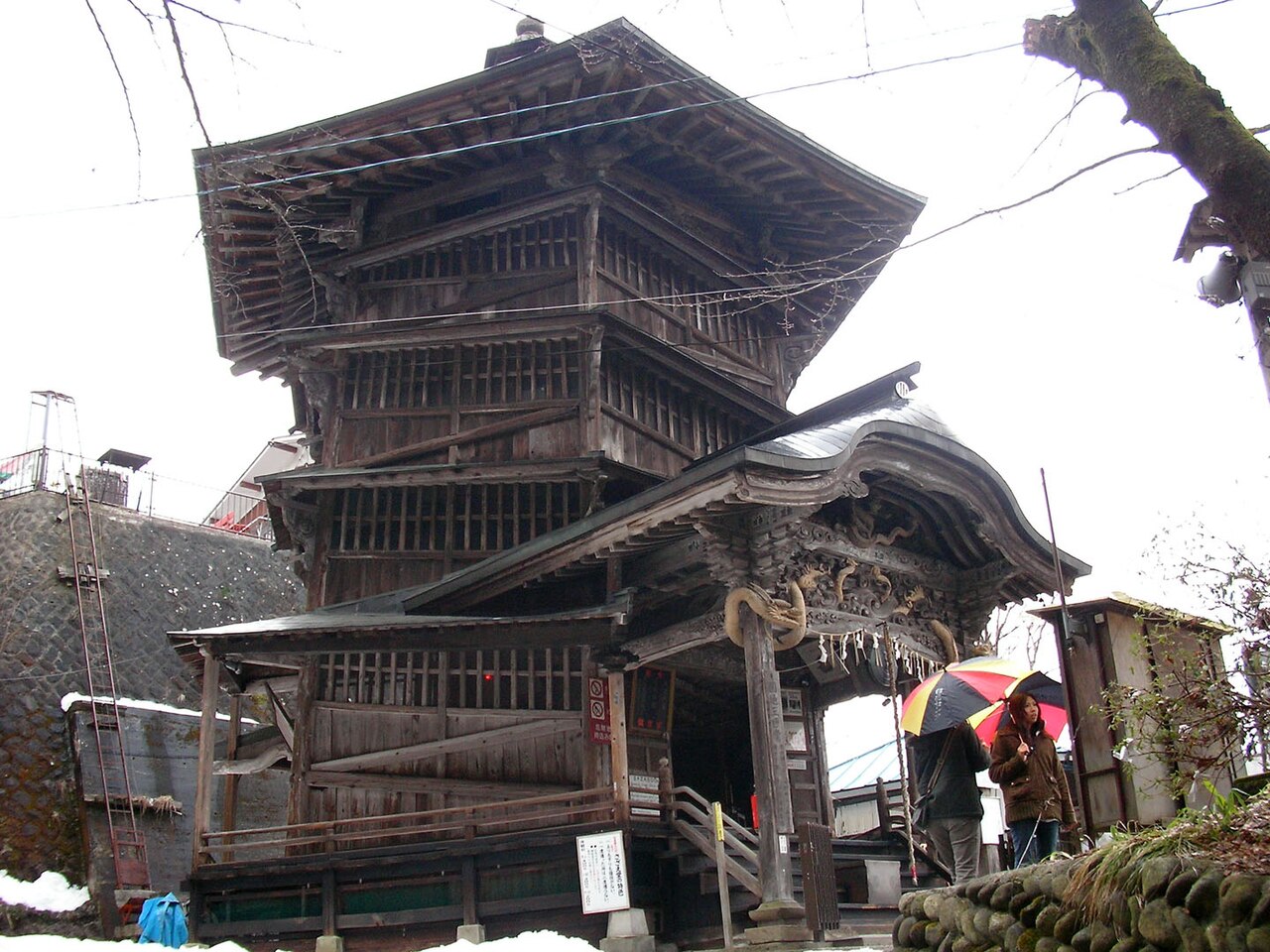
The wider Aizu region carries the same ingenuity into its other landmarks. The double-helix wooden Sazaedo temple in Aizuwakamatsu — climbed up one spiral and down another without retracing a step — is a small monument to the craft thinking that runs through the basin. Set against Mount Bandai and the snow-country winters, the region’s textiles, lacquer, and timber traditions share one logic: make it well, and make it last.
What it does well
Weaknesses and things to verify before buying
- Starts stiff. Heavy Aizu Momen cotton is firm out of the package and softens only with use and washing; it is not a pre-washed, drapey apron.
- Indigo transfer. Deep indigo cotton can bleed or rub off color, especially in early washes. Wash separately at first and keep it away from light-colored clothing until the dye stabilizes.
- Colorfastness limits. Indigo is not engineered for bleach or aggressive stain treatment; harsh laundering can lift the color unevenly.
- Weave irregularity. Shuttle-woven cloth from small houses can show minor stripe and weave variation — character to some buyers, a defect to others.
- Shipping and customs. If bought from a JP-only maker or via proxy, expect added fees, a longer wait, and possible customs duty above your local threshold.
Conclusion — which buyer type are you?
Other ways to approach this purchase
❓ Frequently Asked Questions
Does Amazon JP ship the Aizu Momen apron internationally?
The Amazon JP Global Store ships textile items internationally from Japan to many major destinations. Confirm shipping availability and cost to your country at checkout, since coverage and fees vary by item and region.
Why is no price shown for the apron?
Prices may change over time. JPY is the standard currency; any USD figures elsewhere are estimates at a ¥150/USD baseline.
Will the indigo dye bleed onto my clothes?
Deep indigo cotton can transfer color, especially in the first few washes. Wash it separately initially, avoid pairing it with light-colored clothing early on, and skip bleach. The dye stabilizes with use, and the cloth fades gradually into its own character.
Why does the apron feel stiff at first?
Aizu Momen is a thick, tightly woven cotton made originally as field workwear (noragi). That density is what makes it durable, and it is not pre-washed for softness. It loosens and softens with repeated use and washing.
How is this different from other Japanese indigo textiles?
Aizu Momen is specifically the heavy, vertically striped workcloth of Fukushima’s Aizu basin, woven for snow-country durability. It differs from kasuri ikat cloths such as Yumihama-gasuri or Iyo-gasuri, and from artisanal indigo tenugui such as Buaisou’s, in weave weight, pattern, and regional origin. See the comparison box above for related guides.
Is it a good gift?
Yes, for a recipient who cooks or works with their hands and appreciates durable, traceable craft over disposable goods. It is a practical object with a real regional story, which tends to land well as a gift. Set expectations about the stiff break-in period and possible early dye transfer.
jpmono.com is curated by a Japan-based editorial team (working out of Toyama in the Hokuriku region and Nara in Kansai) and is independent. We do not take payment from the makers we feature; income comes from affiliate links. We do not physically test every product — we read maker specifications and craft references.
Affiliate disclosure: jpmono.com may earn a commission on qualifying purchases made through links on this page, at no additional cost to you.