![Ashikaga Meisen Silk Card Case — Where to Buy Tochigi Silk [2026]](https://jpmono.com/wp-content/uploads/2026/05/japan-map-regions-and-prefectures-800x1050.png)
Ashikaga meisen (足利銘仙, “Ashikaga everyday silk”) is the bold, pattern-forward cloth that dressed ordinary Japanese women through the first decades of the 20th century — a hard-wearing, pre-dyed silk woven into vivid geometric ikat in the town that gave its name to a shogunate. The card case covered here takes that same flat, lustrous patterned cloth and re-cuts it into a slim bifold meishi-ire (名刺入れ, “business-card holder), small enough to live in a jacket pocket yet loud enough to be remembered at a handshake.
Ashikaga sits in Tochigi Prefecture, in the inland Kantō region a little under 80 km north of central Tokyo, and it has been weaving silk for roughly 1,200 years. The town is the ancestral home of the Ashikaga clan, the birthplace of the Muromachi shogunate, and the seat of the Ashikaga Gakkō — often called Japan’s oldest school. Meisen is the everyday face of that long textile lineage: not the formal kimono silk of the court, but the cloth real households actually wore.
This guide helps international readers assess an Ashikaga-meisen silk accessory. It explains the cloth, the place and history behind it, and how this regional silk compares with other Japanese heritage textiles.
🔄 Updated:
⏱️ Read time: ~10 min
Who this is for — and who should skip it
- Want a daily-carry accessory with a genuine regional textile story, not a generic “Japan” print
- Like bold, graphic kasuri (ikat) patterns rather than muted minimalism
- Appreciate silk that was historically made to be used hard, not babied
- Are shopping for a distinctive, lightweight gift that ships flat and cheap
- Collect prefecture-by-prefecture Japanese crafts and do not yet have a Tochigi textile
- Need a rigid metal or leather card case that protects RFID chips
- Want a high-capacity wallet — meisen card cases are slim, holding a modest number of cards
- Expect machine-washable, abuse-proof material; this is silk-faced fabric
- Confirm the exact dimensions and capacity before buying; these details may vary by piece.
- Pattern variability. Goods cut from patterned cloth rarely match a product photo exactly; the colorway and motif placement may differ.
Product overview (from published specs)
Source data for Ashikaga meisen silk card cases varies by maker and pattern. The table below states only what can be supported for the documented craft; unverified fields are marked rather than guessed.
| Attribute | Detail | Source |
|---|---|---|
| Item | Card case / business-card holder (meishi-ire), slim bifold | Product page |
| Material (face) | Ashikaga-ori meisen silk cloth, kasuri (ikat) pattern | Product page |
| Origin | Ashikaga, Tochigi Prefecture, Japan | Product page / region |
| Pattern | Bold geometric ikat; exact colorway varies by cut | Product page |
| Dimensions / capacity | Unconfirmed — check the maker or product page before buying | — |
📖 Glossary — key terms
- Meisen (銘仙) — an affordable, hard-wearing everyday silk woven from pre-dyed yarns; the casual kimono cloth of the early 20th century.
- Kasuri (絣) / ikat — a resist-dye technique where yarns are dyed before weaving so the pattern emerges from the threads themselves, giving the soft-edged, blurred geometric look.
- Ashikaga-ori (足利織) — textiles woven in the Ashikaga district of Tochigi, a silk-weaving region for roughly 1,200 years.
- Meishi-ire (名刺入れ) — a business-card holder; in Japan, card-exchange etiquette makes this a everyday-carry staple.
- Shokunin (職人) — a craftsperson; here, the weavers and cut-and-sew makers who turn meisen cloth into small goods.
Other Japanese heritage textiles reviewed on jpmono — useful for comparing region, fiber, and technique before you commit.
 Chichibu Meisen silk (Saitama) →
 Kiryu-ori silk (Gunma) →
 Edo Komon silk (Tokyo) →
 Yonezawa-ori silk stole →
Johana Shike-Ginu silk scarf →
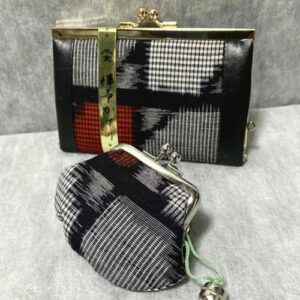 Iyo-Gasuri coin purse →
Hirosaki Kogin coaster set →
Where this comes from

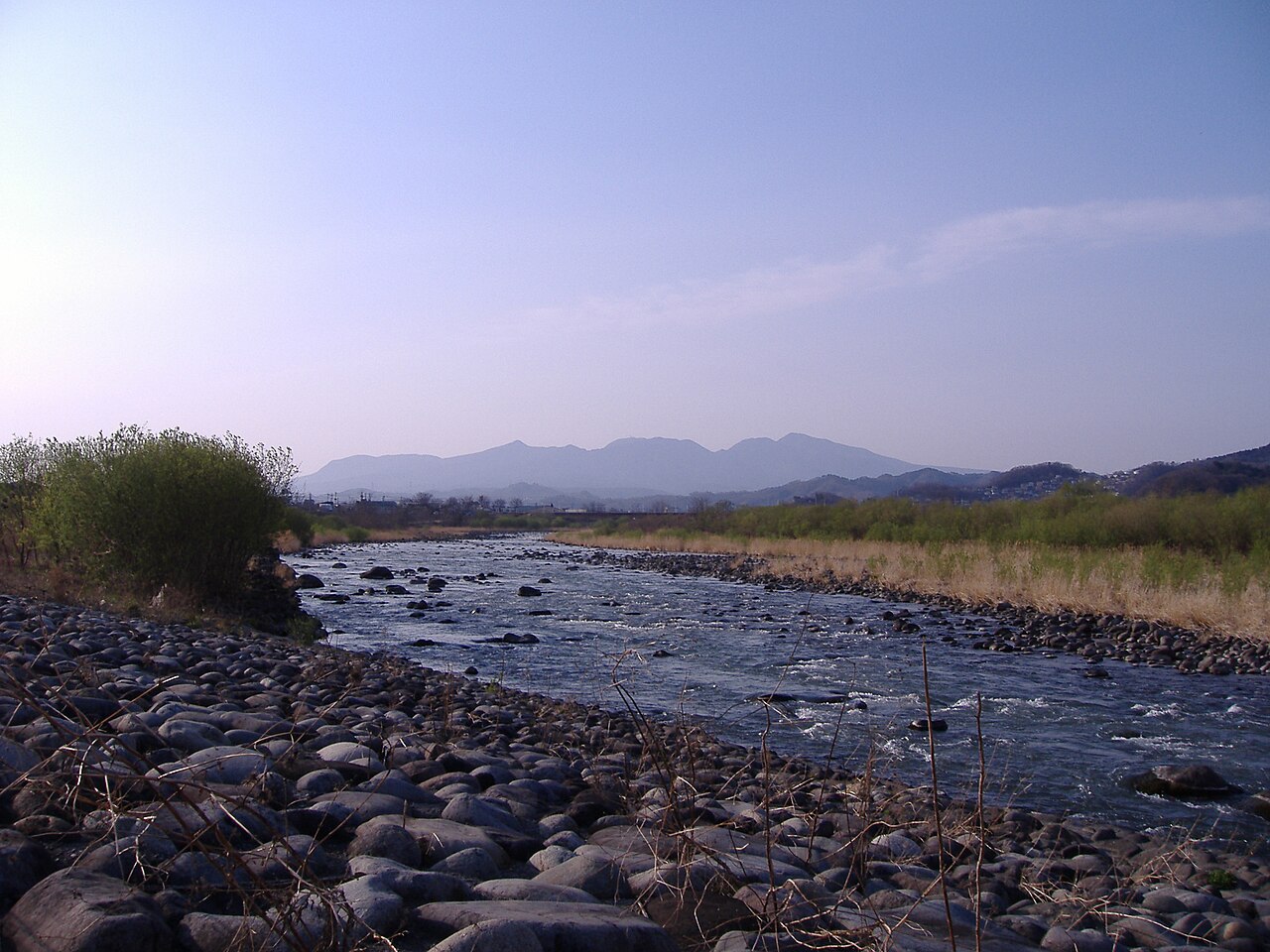
Ashikaga is a river town in the south of Tochigi Prefecture, pressed against the border with Gunma in the flat northern reaches of the Kantō plain. The Watarase River basin gave it two things a silk economy needs: soft water for dyeing and processing yarn, and trade routes that connected its looms to the broader Kantō cloth market. The surrounding district — Ashikaga, Kiryū just across the river, Isesaki, Chichibu to the south — formed one of Japan’s densest silk-weaving belts, and Ashikaga has been recorded as a tribute-cloth (mitsugi) silk region since the Nara and Heian eras.
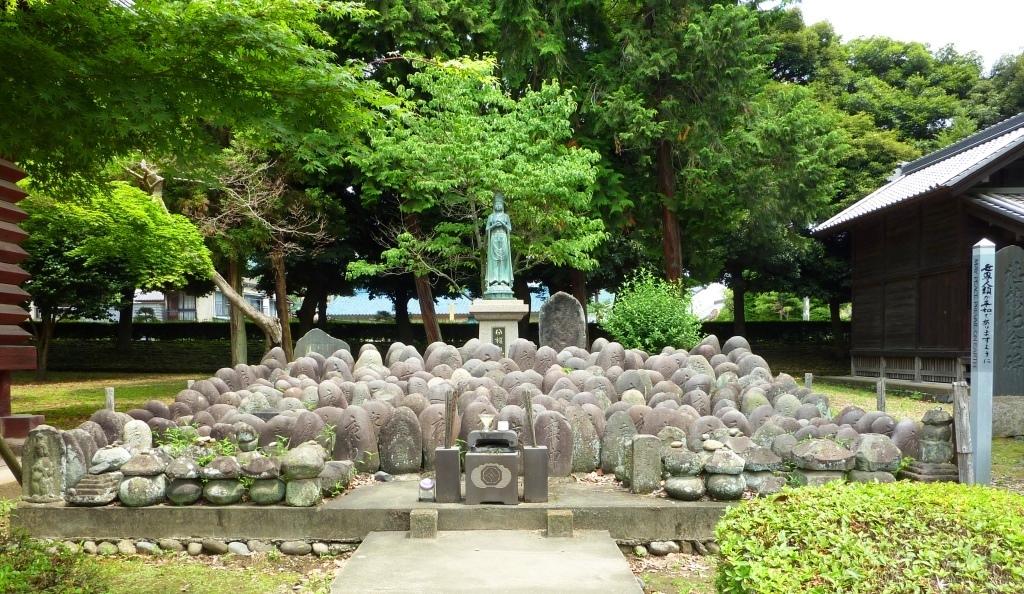
The town’s name carries unusual historical weight. Ashikaga is the ancestral home of the Ashikaga clan, and Ashikaga Takauji founded the Muromachi shogunate here in 1336 — the line of shoguns that ruled Japan for more than two centuries took its name from this place. Banna-ji, the clan’s family temple, still stands at the town’s center with a main hall designated a National Treasure.
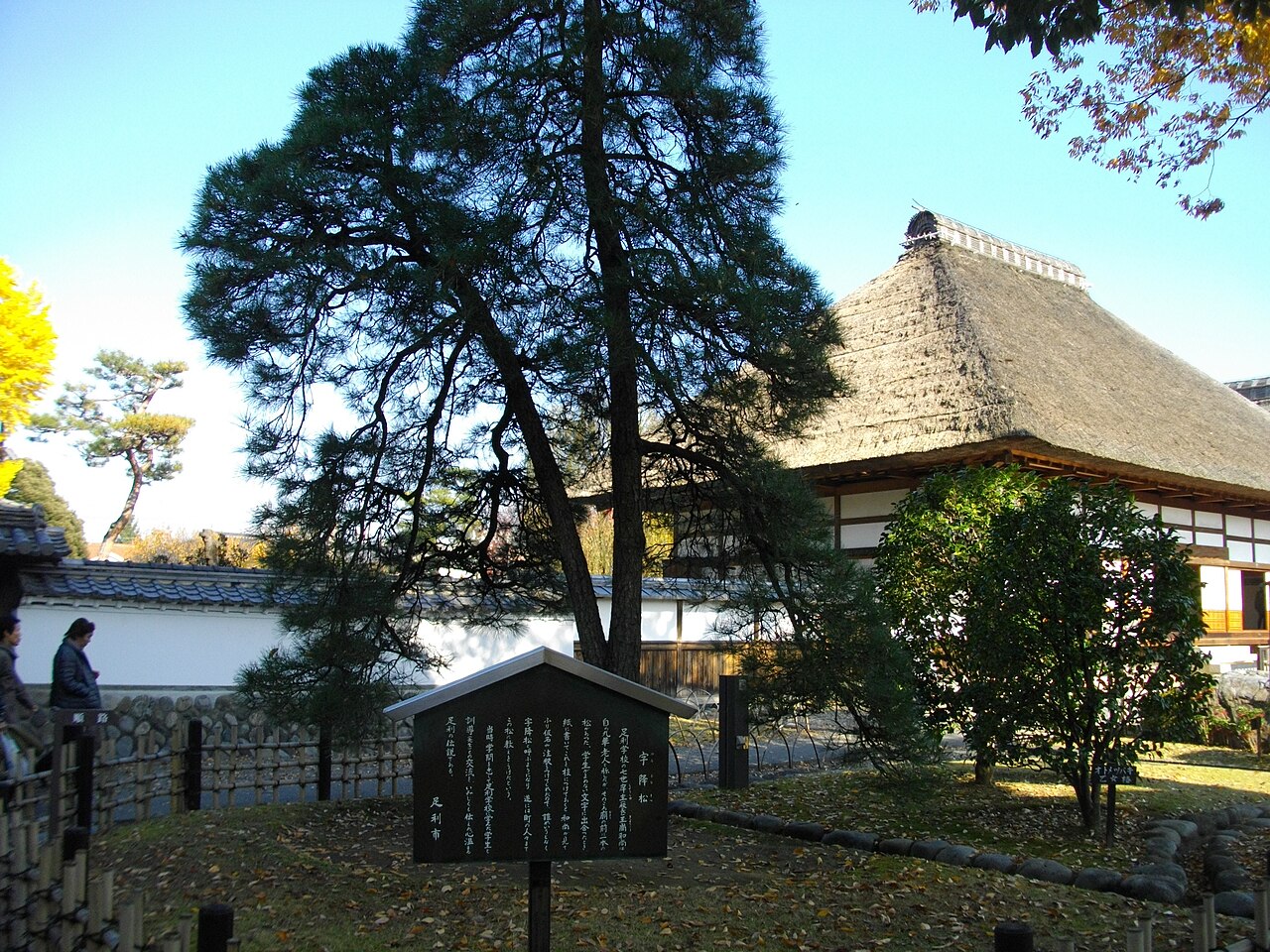
It is also a town of learning. The Ashikaga Gakkō, often called Japan’s oldest school, drew students from across the country; when the Jesuit missionary Francis Xavier reached Japan in 1549, he described it as “the largest university of eastern Japan.” Centuries of scholarship and centuries of weaving grew side by side here.
- 710–794 — Nara period: Ashikaga is recorded as a tribute-cloth (mitsugi) silk region, the start of a roughly 1,200-year weaving lineage.
- 1336 — Ashikaga Takauji founds the Muromachi shogunate; the ruling line takes its name from this town.
- 1432 — The Ashikaga Gakkō is revived under Uesugi Norizane, growing into the country’s foremost school.
- 1549 — Francis Xavier calls the Ashikaga Gakkō “the largest university of eastern Japan.”
- 1910s–1930s — Meisen booms: Ashikaga becomes one of Japan’s great producers of affordable, boldly patterned everyday silk for women’s casual kimono.
- Postwar — Daily kimono wear declines; meisen production contracts sharply as Western clothing takes over.
- Today — Surviving meisen cloth and its revival weavers feed small goods — card cases, pouches, glasses cases — carrying the pattern into modern daily use.
Meisen is the everyday chapter of this story. From the 1910s through the 1930s, Ashikaga was one of the country’s great producers of meisen — silk woven from pre-dyed yarns into bold geometric ikat and stencil patterns, affordable and hard-wearing, the cloth of casual women’s kimono rather than formal court dress. Its look is unmistakable: large, blurred-edge motifs in confident colors, designed to be seen across a room. The same flatness and luster that made meisen practical as clothing make it photograph beautifully when re-cut into a card case.
“Meisen was never heirloom silk meant for a museum drawer — it was the cloth ordinary women actually wore, made to be used. A card case keeps that promise.”
Buying options across stores
Prices for Ashikaga meisen silk card cases vary by pattern, lining, and retail channel, so no single figure is universal. Currency conversions use a ¥150/USD baseline (mid-2026).
| Store | Item / Variant | Price (JPY → USD est.) | Notes |
|---|---|---|---|
| 🇺🇸 Amazon US (search) | Browse Japanese silk card cases & meisen goods | varies (USD) | Best if you are shopping from the US — Prime shipping, USD pricing, no customs handling. Amazon US carries Japanese silk accessories from various makers for comparison; this exact Ashikaga-meisen piece is sourced from Japan (next row). |
| 🇯🇵 Amazon JP Global Store | Ashikaga-meisen silk card case | Check the current product page for details | The product page for this item. Ships internationally from Japan to most major destinations. |
| Maker direct | Ashikaga-ori workshops / regional makers | Varies | Some Ashikaga weavers sell small goods directly; selection and English support vary. Verify shipping before ordering. |
| Proxy services (Buyee / Tenso) | Forwarding from JP-only sellers | Item + service fee + shipping | Useful when a product page does not ship abroad directly; adds a handling fee and a second postage leg. |
Prices in USD are approximate and depend on the current exchange rate. Prices and stock fluctuate — verify at the retailer through the link before purchasing.
What it does well
Weaknesses and things to verify before buying
- Thin product information. Exact dimensions, card capacity, and interior construction were not provided. Confirm them with the seller before buying.
- Pattern variability. Goods cut from patterned cloth rarely match the product photo exactly; the colorway and motif placement may differ.
- Silk is delicate. The face is silk-based fabric, not leather or metal. It is not machine-washable and will show wear faster than a hard case.
- Modest capacity. Slim meisen card cases hold a limited number of cards; they are not a substitute for a full wallet.
- No RFID or rigid protection. If you need chip-shielding or crush resistance for your cards, a fabric case will not provide it.
- Price not confirmed here. Live pricing was unavailable at the time of writing — check the current figure at the retailer rather than relying on an estimate.
- Shipping path varies. Confirm whether the seller ships to your country directly, or whether you will need a proxy forwarder.
Conclusion — which buyer type are you?
Other ways to approach this purchase
❓ Frequently Asked Questions
What exactly is Ashikaga meisen?
Meisen is an affordable, hard-wearing everyday silk woven from pre-dyed yarns into bold geometric ikat (kasuri) and stencil patterns. Ashikaga, in Tochigi Prefecture, was one of Japan’s great meisen producers from the 1910s through the 1930s, when it was the casual kimono cloth of ordinary women.
Does this card case ship internationally?
Ashikaga meisen silk items are typically sourced through the Amazon JP Global Store or directly from Tochigi textile workshops, both of which ship internationally from Japan to most major destinations. If a particular retailer does not ship to your country directly, a proxy forwarder such as Buyee or Tenso can receive and re-ship it for a handling fee.
How much does it cost?
Prices for individual pieces can change with pattern, lining, and retail channel; any USD conversion is approximate at roughly ¥150 to the dollar (mid-2026) and shifts with the exchange rate.
Will the pattern match the photo?
Not necessarily. Because the case is cut from patterned cloth, the exact colorway and motif placement vary from piece to piece. Product images should be treated as representative rather than an exact preview of a particular piece.
How do I care for it?
It is a silk-faced fabric item, so it is not machine-washable. Keep it dry, avoid abrasion against rough surfaces, and spot-clean gently if needed. Treated as an accessory rather than a workhorse wallet, it will hold up well.
How is meisen different from other Japanese silks like Kiryu-ori or Edo Komon?
Meisen is defined by pre-dyed ikat yarns and bold, blurred-edge geometric patterns, and it was historically the affordable everyday cloth. Kiryu-ori (Gunma) is a broader weaving tradition known for fine figured silks; Edo Komon (Tokyo) uses tiny stencil-resist patterns that read as solid from a distance. See the comparison box above for jpmono reviews of each.
Is it a good gift?
Yes — it is small, light, and carries an easily explained story: the cloth comes from the town that named the Muromachi shogunate and produced everyday silk for early-20th-century Japan. For card-exchange cultures and design-minded recipients, it makes a distinctive present.
jpmono.com is curated by a Japan-based editorial team (working out of Toyama in the Hokuriku region and Nara in Kansai) and is independent. We do not take payment from the makers we feature; income comes from affiliate links. We do not physically test every product — we review maker specifications and craft references, and flag where information is thin.
🤖 This article was prepared with AI assistance and reviewed against the craft information available to the editorial team. Where details were incomplete, the gaps are noted rather than filled by guesswork.
Affiliate disclosure: jpmono.com may earn a commission on qualifying purchases made through links on this page, at no additional cost to you.