![Kojima Denim Selvedge Tote Bag: Kurashiki’s Japanese Denim Birthplace [2026]](https://jpmono.com/wp-content/uploads/2026/06/kojima-denim-selvedge-tote-bag-where-to-buy-2026-featured.jpg)
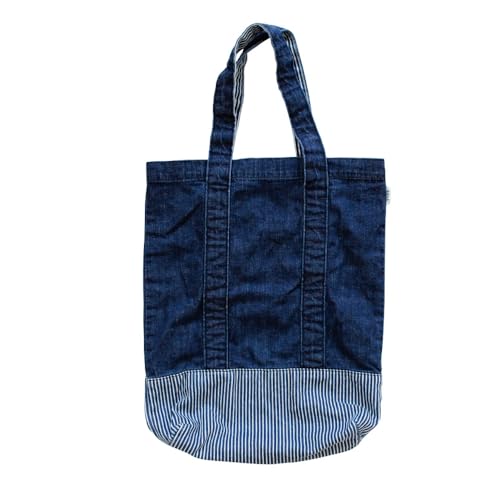
A selvedge denim tote is a deceptively simple object: a flat panel of heavyweight indigo cotton, woven on a narrow vintage shuttle loom, folded and stitched into a bag with no zippers, no sizing chart, and no seasonal expiry. This one comes from Kojima, a coastal district of Kurashiki City in Okayama Prefecture — the place the Japanese denim industry calls its birthplace. Per the Amazon listing snapshot (ASIN B0D25W99JB), it is a made-in-Okayama piece built from the same cloth tradition that produced Japan’s first domestically manufactured jeans in 1965.
What makes Kojima denim interesting to an international reader is not nostalgia but continuity. The cotton heartland here was reclaimed from Kojima Bay, where salt-tolerant cotton thrived on new saline fields; that crop fed a tabi (足袋, split-toe sock) weaving trade, which fed Japan’s school-uniform industry, which in turn gave Maruo Clothing (the maker behind the Big John label) the indigo-dyeing and heavy-cotton know-how to build jeans. The tote is the everyday, sizing-free end of that same lineage — you do not have to fit it, you simply carry it.
This guide is written for readers shopping from outside Japan who want to understand what they are buying before they compare prices. We cover who the bag suits and who should pass, the published specs, the regional craft context behind Kojima, how it compares to other Japanese indigo-cotton goods, where to buy it, and the honest caveats. The data available for this specific listing is limited, so we flag thin spots rather than fill them with guesses.
🔄 Updated:
⏱️ Read time: ~10 min
- Who this is for — and who should skip it
- Product overview (from published specs)
- Where this comes from — place, era, and the craft tradition
- Price snapshot across stores
- What it does well
- Weaknesses and things to verify before buying
- Conclusion — which buyer type are you?
- Other ways to approach this purchase
- 🏆 Editor’s Pick
- ❓ Frequently Asked Questions
Who this is for — and who should skip it
- Want a daily-carry bag that ages with you rather than wearing out
- Appreciate selvedge (self-edge) denim woven on vintage shuttle looms
- Like indigo (aizome) goods that fade and patina with use
- Prefer a sizing-free piece over apparel that has to fit
- Value a documented regional origin — here, the birthplace of Japanese jeans
- Want a lightweight bag — heavyweight denim is, by definition, heavy
- Dislike indigo crocking (color transfer onto light clothes early on)
- Need a structured laptop bag with padding and compartments
- Expect a confirmed live price before buying (listing data is thin)
- Want a wipe-clean synthetic — raw cotton denim needs gentler care
Product overview (from published specs)
Spec sheets for this individual listing are limited. The table below reports what the Amazon listing snapshot and the maker context support; where a value is not confirmed in the fetched data, it is marked rather than guessed. Only the Amazon JP Global Store listing reference is available for this item, and live pricing was unavailable at the time of writing — verify current price and dimensions at the retailer before purchasing.
Kojima Denim Selvedge Tote Bag
[SOAS] 中商事(Naka) 児島デニムトートバッグ Mサイズ
在庫あり。 · Sold by インテリアと雑貨のお店fofocaフォフォカ · ASIN B0D25W99JB
Price and availability as of 2026-08-31 02:30 JST. The Amazon listing at the time of purchase is authoritative. jpmono.com earns a commission on qualifying purchases at no extra cost to you.
| Attribute | Detail | Source |
|---|---|---|
| Item | Kojima selvedge denim tote bag | Amazon listing (ASIN B0D25W99JB) |
| Material | Heavyweight indigo-dyed cotton denim, selvedge (self-edge) woven | Listing + maker context |
| Weave | Narrow vintage shuttle loom; closed self-edge seam | Kojima craft tradition |
| Dye | Indigo (aizome, 藍染め) | Kojima craft tradition |
| Origin | Kojima, Kurashiki City, Okayama Prefecture, Japan | Listing + data notes |
| Dimensions / weight | Unconfirmed — check listing | Not in fetched data |
| Price | Live pricing unavailable at time of writing — verify at retailer | Not in fetched data |
Sourcing note. The primary shopping path in this guide is an Amazon US (search) link for readers in the US and EU; the specific Kojima tote is sourced from the Amazon JP Global Store listing, which ships internationally. Maker-direct and proxy services (Buyee / Tenso) are listed as fallbacks in the price snapshot below.
📖 Glossary — key terms
Selvedge / self-edge denim — fabric woven on a narrow shuttle loom so the cloth’s edge is “self-finished” (a closed, clean band rather than a cut, frayed edge). Prized by denim enthusiasts for its tight, durable weave.
Aizome (藍染め, “indigo dyeing”) — natural or natural-style indigo dyeing. The color starts deep and fades gradually with wear, producing a personal patina.
Kojima (児島) — a coastal district of Kurashiki City, Okayama, recognized as the birthplace of Japanese-made jeans.
Tabi (足袋) — traditional split-toe socks. Kojima’s tabi-weaving trade was a key step from cotton farming to denim manufacturing.
Shuttle loom — an older, slower loom that passes a shuttle back and forth, producing narrow-width selvedge fabric. Most modern denim uses faster projectile looms that do not create a self-edge.
Crocking — the rubbing-off of surface indigo onto skin or light-colored clothing, common with raw indigo cotton until the dye settles.
Where this comes from — place, era, and the craft tradition

Kojima sits on the southern, sea-facing edge of Kurashiki City in Okayama Prefecture, looking out over the Seto Inland Sea toward Shikoku across the Great Seto Bridge. This is the Chūgoku region of western Honshū — a sheltered, mild coastal belt where the inland sea moderates the climate and where, historically, land and salt were both made by hand. The single most important geographic fact about Kojima is that much of its farmland did not exist naturally: it was reclaimed from Kojima Bay over the Edo period and after.
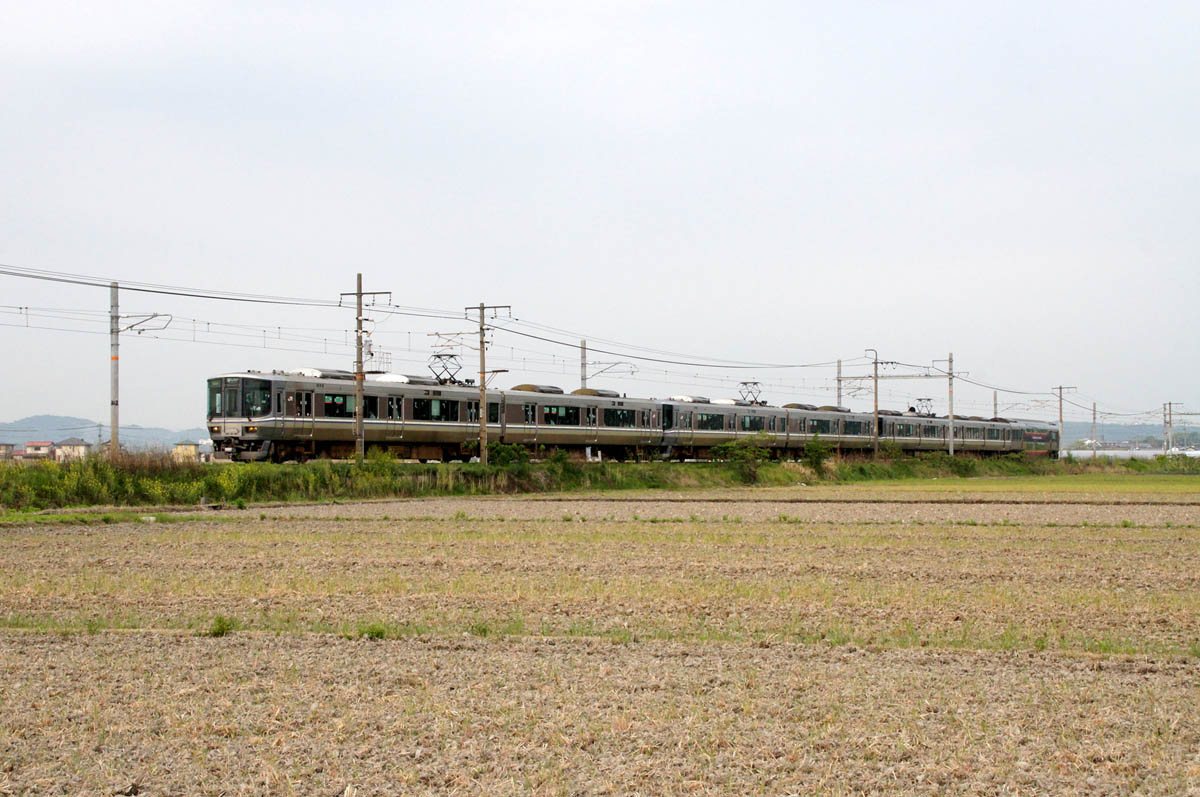
That reclaimed land was salty. Ordinary crops struggled, but cotton — relatively salt-tolerant — did not, and so cotton became the foundation crop of the new fields. This is the origin point of the whole chain. The fudo (風土, “land and climate”) of Kojima did not lend itself to rice; it lent itself to fiber. From cotton came thread, from thread came cloth, and from cloth came an unbroken sequence of textile trades that runs straight to the denim sold today.
- Edo period onward — Kojima Bay reclamation creates new saline fields where salt-tolerant cotton thrives.
- 18th–19th c. — Local cotton feeds a thriving tabi (split-toe sock) weaving trade.
- Early–mid 20th c. — Kojima and nearby Ibara become Japan’s school-uniform manufacturing capital.
- 1965 — Maruo Clothing (Big John) produces the first domestically made jeans in Kojima.
- Late 20th c. — Kojima develops a reputation for indigo dyeing and slow, vintage shuttle-loom selvedge weaving.
- Today — Kojima Jeans Street draws denim pilgrims worldwide; the district anchors Japan’s premium denim trade.
The intermediate steps matter because they explain the skill base. Tabi weaving demanded tightly woven, durable cotton. School uniforms — Kojima and the neighboring Ibara area became Japan’s uniform-making capital — demanded indigo-dyed, heavy, hard-wearing cloth produced at scale. When American jeans arrived in postwar Japan, Kojima already had the dye houses, the heavy-cotton looms, and the sewing trade. In 1965, Maruo Clothing, the company behind the Big John brand, used that base to produce the first jeans manufactured in Japan.
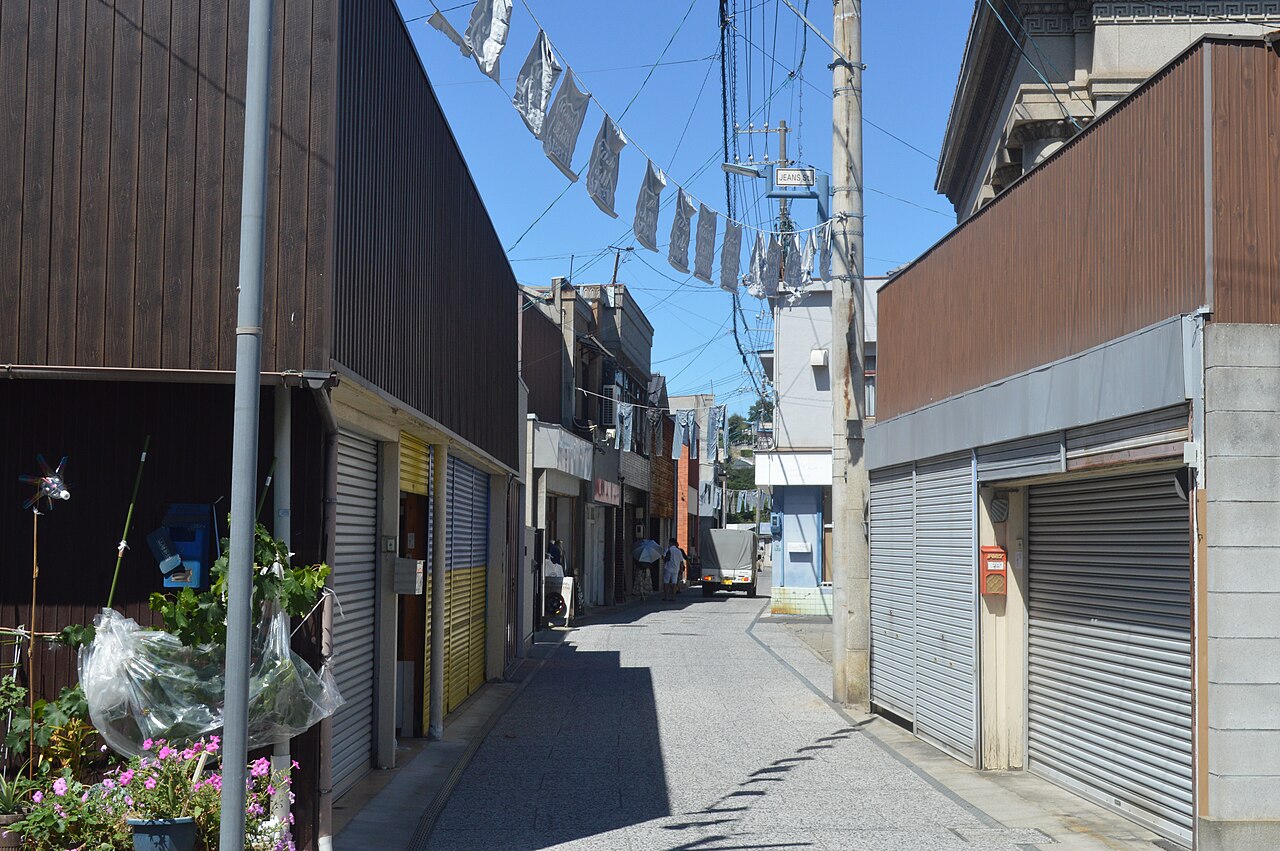
“Cotton, tabi, uniform, denim — in Kojima these are not four industries but one continuous thread, spun on the same salt-reclaimed ground for two centuries.”
The broader city is worth knowing too. Kurashiki’s Bikan Historical Quarter — a preserved district of white-walled storehouses (kura, 倉, the source of the city’s name) along a willow-lined canal — is the visible face of the merchant wealth that cotton trading built. Kurashiki grew rich handling and storing the region’s cotton and textiles; the same commercial fudo that filled those warehouses is what eventually filled Kojima’s denim workshops.
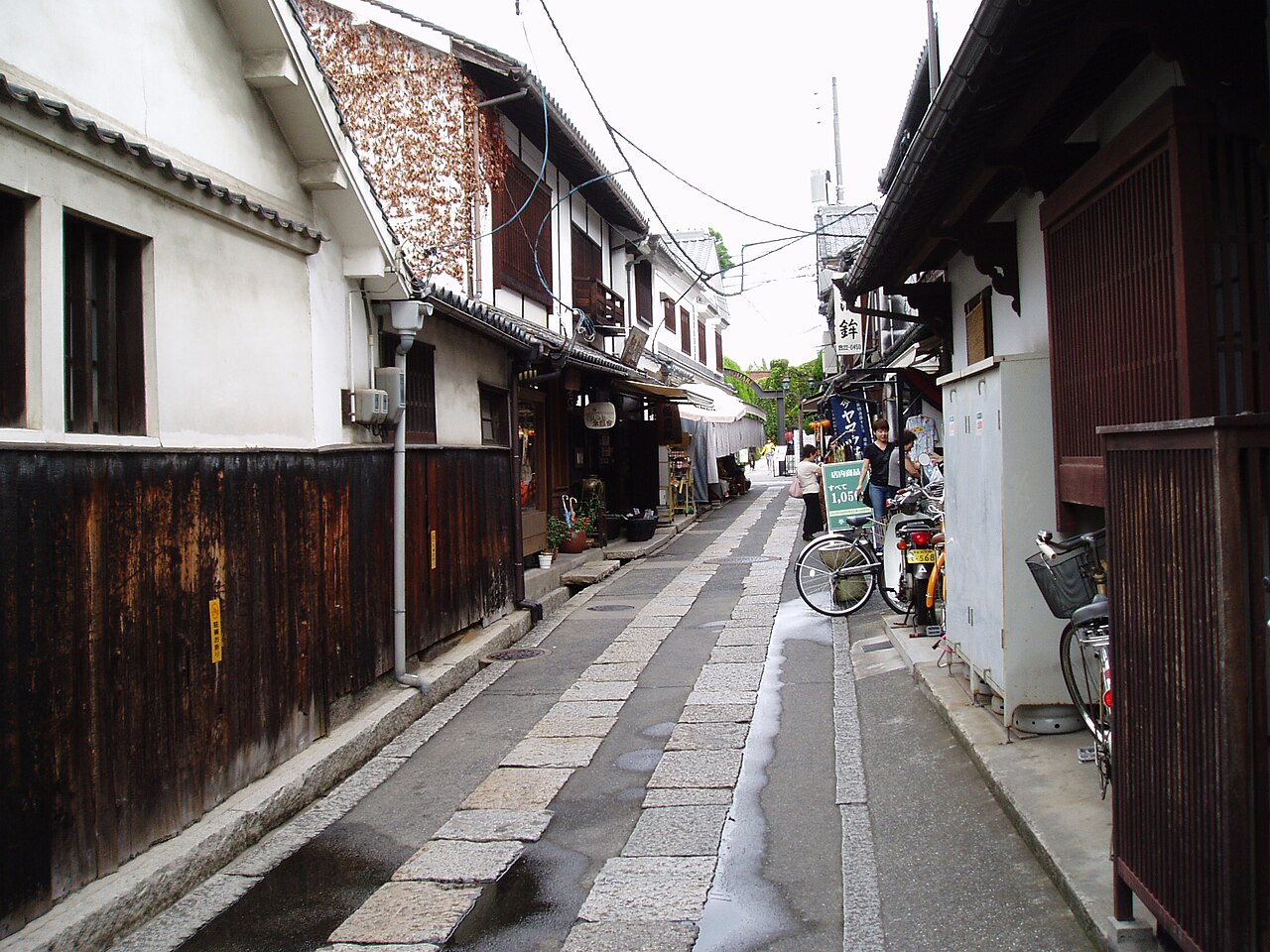
What “still being made here” means in Kojima is unusually concrete. Kojima Jeans Street — a stretch of denim workshops, dye houses, and brand storefronts — is today a genuine pilgrimage destination for denim enthusiasts from the US, Europe, and elsewhere, precisely because the weaving, dyeing, and sewing remain local. The vintage shuttle looms that produce selvedge cloth are slow and narrow by modern standards, which is exactly why the resulting fabric is prized. A heavyweight selvedge tote is the most accessible way into that tradition: no fit to get right, no break-in waistband, just the cloth itself.
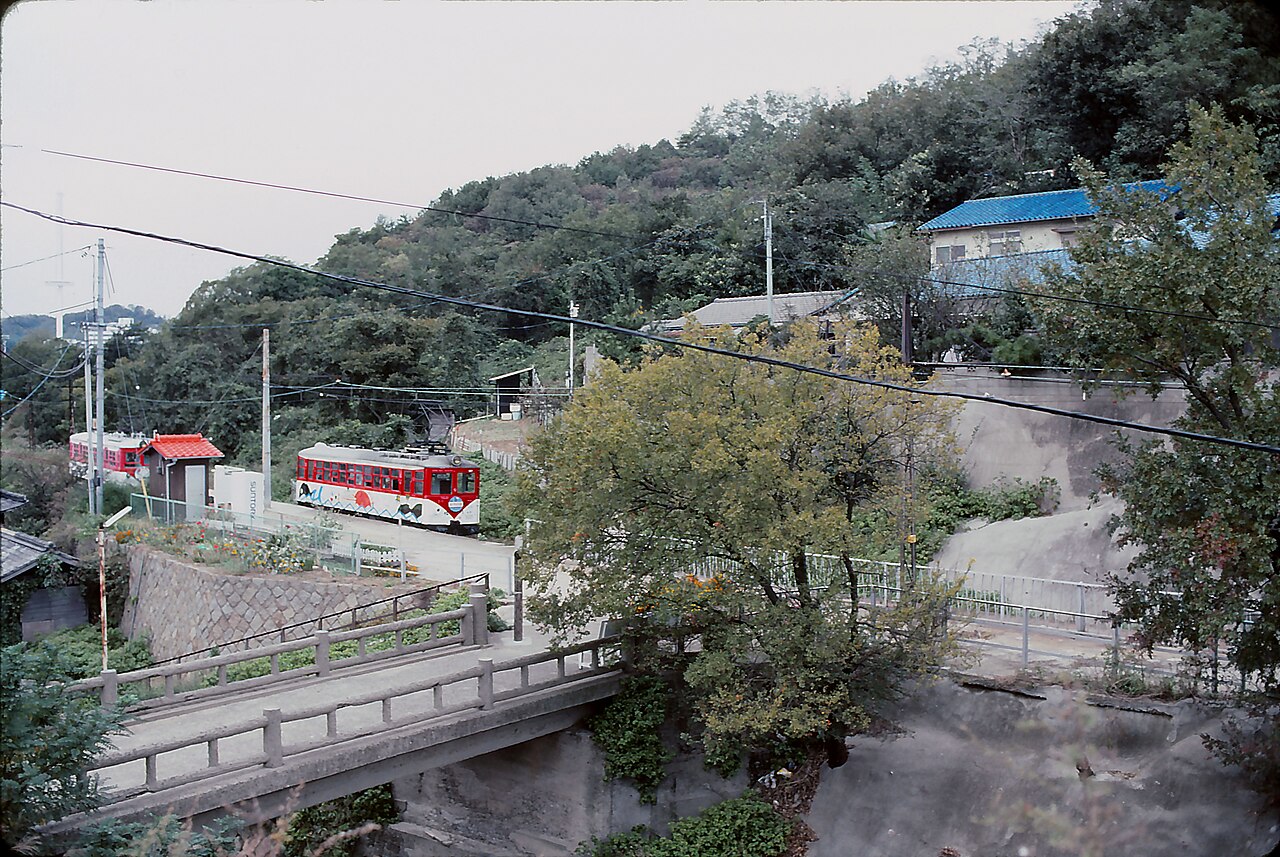
Other Japanese indigo-cotton and regional textiles we have covered — useful for placing this Kojima denim tote in context. The first is from the same prefecture (Okayama); the indigo-dyeing pieces share the aizome lineage.
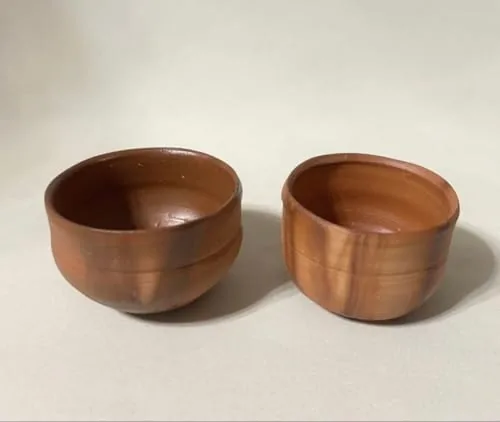
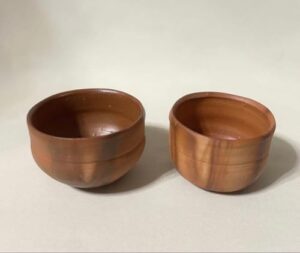 Bizen-yaki Guinomi (same prefecture)
Yumihama-gasuri Indigo Cotton (Chugoku)
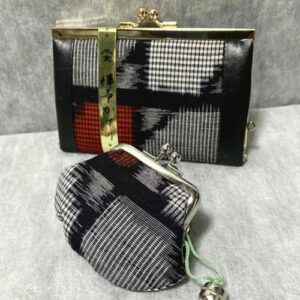 Iyo-Gasuri Indigo Cotton Purse
Buaisou Awa Aizome Indigo
 Kishu Nel Cotton Flannel
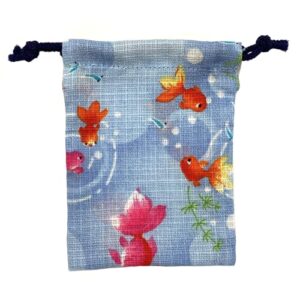 Yanai-jima Cotton Pouch
 Chichibu Meisen Textile
Price snapshot across stores
Prices and stock fluctuate. The JPY price is the authoritative figure for the specific listed item; USD figures are approximate estimates at a ¥150/USD baseline as of mid-2026. Live pricing for this listing was unavailable at the time of writing — confirm at the retailer before buying.
| Store | Item / Variant | Price (JPY + USD est.) | Notes |
|---|---|---|---|
| 🇺🇸 Amazon US (search) | Browse Japanese selvedge denim bags | varies (USD) | Best if you are shopping from the US — Prime shipping, USD pricing, no international customs. Amazon US carries Japanese selvedge denim bags and accessories from several makers, useful for comparing weight and price tiers. This exact Kojima tote is sourced from Japan (next row). |
| 🇯🇵 Amazon JP Global Store | Kojima selvedge denim tote (ASIN B0D25W99JB) | Live price unavailable — verify at listing | Where the specific item is sourced. Ships internationally from Japan to most major destinations. |
| Maker direct | Kojima / Kurashiki denim workshops | varies | Some Kojima Jeans Street brands sell direct; international shipping varies by maker. Confirm before ordering. |
| Proxy services (Buyee / Tenso) | Forwarding for JP-only listings | item + forwarding fee | Useful if a Kojima maker ships only within Japan. Adds a forwarding fee and possible customs duties. |
Prices in USD are approximate and depend on the current exchange rate. International orders may incur customs duties above local thresholds.
What it does well
Made in Kojima, the recognized birthplace of Japanese jeans — a verifiable regional lineage, not heritage marketing.
Woven on narrow vintage shuttle looms for a tight, durable self-edge — the trait premium denim buyers seek.
Indigo (aizome) fades and patinas with use, so the bag becomes personal rather than worn-out.
A tote translates denim heritage into a piece anyone can carry — no fit chart, no break-in waistband.
Weaknesses and things to verify before buying
- Live price not confirmed. The fetched data did not include a current price for this listing. Check the Amazon JP Global Store page before committing.
- Dimensions and weight unconfirmed. Capacity, strap drop, and exact weight are not in the available data — confirm on the listing, especially if you need it for a laptop or daily commute.
- Heavyweight denim is heavy. The very quality that makes it durable also makes an empty bag heavier than a nylon tote. Not ideal if you prioritize minimal carry weight.
- Indigo crocking. Raw indigo cotton can rub color onto light-colored clothing or pale interiors until the dye settles. Expect some transfer early on.
- Care is gentler than synthetics. Denim is not wipe-clean; spot-clean and avoid harsh washing to preserve the indigo fade. Read any care notes on the listing.
- International shipping and customs. Ordering from the JP Global Store or via proxy can add shipping cost and possible duties above your local threshold.
- Structure is minimal. A tote is an open carry-all, not a padded, compartmentalized bag. If you need organization and device protection, look elsewhere.
Conclusion — which buyer type are you?
You want selvedge denim from its Japanese birthplace and care about the weave and indigo. This bag is squarely for you — buy from the source and verify the spec.
You want one durable, good-looking everyday tote that lasts years. A solid fit — just be ready for the weight and early crocking.
If price is the deciding factor and the live cost is high, compare with the indigo-cotton pouches and runners in the cross-link box, or wait for a sale.
If you need a lightweight, structured, wipe-clean bag with compartments, raw selvedge denim is the wrong material. Pass.
Other ways to approach this purchase
Amazon JP Global Store pricing shifts. If the live price is high, set a watch and revisit during sale events.
Several Kojima Jeans Street brands sell direct. Useful for confirming exact specs, though international shipping varies by maker.
If you already buy on Amazon, applying points or reward balances can offset the international order cost.
If raw denim’s weight and care needs do not suit you, a lighter indigo-cotton pouch or runner from the cross-link box may be a better match.
🏆 Editor’s Pick
❓ Frequently Asked Questions
Where is this denim tote actually made?
What does “selvedge” mean and why does it matter?
Will the indigo rub off on my clothes?
Can I buy it from outside Japan?
How should I care for a heavyweight denim tote?
What is the price?
How is this different from other Japanese indigo-cotton goods?
jpmono.com is curated by a Japan-based editorial team (working out of Toyama in the Hokuriku region and Nara in Kansai) and is independent. We do not take payment from the makers we feature; income comes from affiliate links. We do not physically test every product — we read maker specs and source listings.
🤖 This article was prepared with AI assistance and reviewed against the source listing data. Specs and prices reflect the data available at the time of writing and may have changed.
Affiliate disclosure: jpmono.com may earn a commission on qualifying purchases made through links on this page, at no additional cost to you.