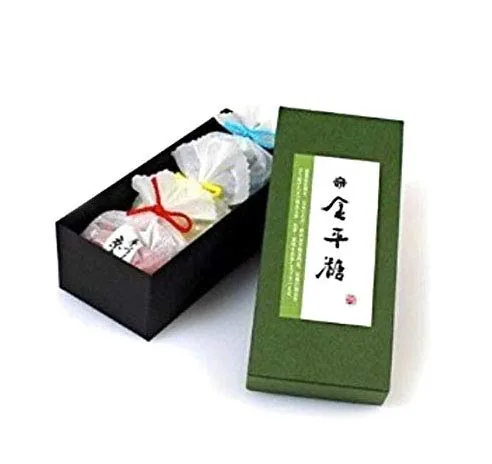
![Baikodo Wasanbon Higashi Pressed-Sugar Sweets (和三盆 干菓子, assorted seasonal-shape gift box) — Hand-pressed in Higashikagawa from Sanuki’s centuries-old fine-grained sugar [2026 Guide for International Readers]](https://jpmono.com/wp-content/uploads/2026/06/baikodo-wasanbon-higashi-where-to-buy-2026-featured.jpg)
Wasanbon (和三盆) is the most refined sugar in the Japanese kitchen — milled and hand-kneaded until the grain is fine enough to dissolve the instant it touches the tongue. It has only two historic homes, both on the island of Shikoku: Sanuki, which is modern Kagawa Prefecture, and neighboring Awa, which is modern Tokushima. Baikodo (ばいこう堂), an established maker in Higashikagawa City on the eastern edge of Kagawa, presses this sugar into higashi (干菓子) — tiny dry sweets shaped like plum blossoms, maple leaves, chrysanthemums, and other seasonal motifs, formed in carved wooden molds called kashigata.
For an international reader, the interesting part is what these sweets are not. A Baikodo higashi assortment is essentially compacted sugar with a small amount of starch binder — no cream, no dairy, no egg, no chocolate, and no fresh or raw filling. That makes the box shelf-stable at room temperature, indifferent to summer heat in a way chocolate never is, and carried by a long best-by window. Among Japanese sweets, few travel across a border as easily.
This guide explains what Sanuki wasanbon actually is, why Baikodo’s assorted gift box is one of the most cross-border-friendly wagashi you can order, how it fits the matcha tea table it was designed for, and — practically — how to confirm AmazonGlobal shipping to your country before you pay. It is written from a Japan-based editor’s desk, not from a tourist’s notebook.
🔄 Last updated: June 29, 2026
⏱️ Read time: ~9 min

- Who this is for — and who should skip it
- Product overview (from published specs)
- Which finish should you choose?
- Where this comes from — place, era, and the craft tradition
- 📌 How does it compare?
- Price snapshot across stores
- What it does well
- Weaknesses and things to verify before buying
- Conclusion — which buyer type are you?
- Other ways to approach this purchase
- 🏆 Editor’s Pick
- ❓ Frequently Asked Questions
Who this is for — and who should skip it
- Want an authentic Japanese sweet that survives a long shipment and summer heat without melting
- Need a plant-based, dairy-free, egg-free gift (the ingredients are essentially just sugar and a little starch)
- Drink matcha or sencha and want the traditional dry sweet served alongside it
- Are shopping for a photogenic, individually-shaped gift box rather than a single bulk slab
- Prefer a clean, fast-dissolving sweetness over rich, heavy confectionery
- Want a moist, filled wagashi — higashi are dry pressed sugar, not soft confections
- Are avoiding sugar entirely; this is, by design, almost pure sugar
- Need a large dessert portion — higashi are small, tea-ceremony-scale bites
- Live where AmazonGlobal does not ship food, or where customs rules on foodstuffs are strict (confirm at checkout)
- Expect chocolate-like or fruit-forward flavor — the taste is a restrained, mineral-clean sweetness
Product overview (from published specs)
The fetched dataset for this item is thin: the Amazon US search index returned no individually listed match, and at the time of writing no live price snapshot was captured. The values below come from the spec, the product listing, and the maker category. Treat anything not stated as unconfirmed rather than assumed.
Baikodo Wasanbon Higashi Pressed-Sugar Sweets (和三盆 干菓子, assorted seasonal-shape gift box)
干菓子 落雁 和三盆 ばいこう堂 百景 感謝ギフトセット
現在在庫切れです。 · ASIN B0GNTM31W7
Price and availability as of 2026-08-31 02:30 JST. The Amazon listing at the time of purchase is authoritative. jpmono.com earns a commission on qualifying purchases at no extra cost to you.
| Attribute | Detail | Source |
|---|---|---|
| Product | ばいこう堂 和三盆 干菓子 詰め合わせ — assorted seasonal-shape pressed-sugar sweets | Listing |
| Maker | Baikodo (ばいこう堂), Higashikagawa City, Kagawa | Maker direct |
| Type | Higashi (干菓子) — dry pressed wagashi made in carved kashigata molds | Spec / data notes |
| Ingredients | Essentially wasanbon sugar plus a small amount of starch/binder; no dairy, egg, meat, chocolate, or fresh filling | Spec / data notes |
| Dietary | Plant-based, dairy-free, egg-free (confirm allergen statement on the actual package) | Spec / data notes |
| Storage | Shelf-stable at room temperature; does not melt; carries a best-by date | Spec / data notes |
| Pairing | Traditionally served with matcha or sencha | Spec / data notes |
| ASIN | B0GNTM31W7 | Spec |
| Price | Not captured in fetched data — check the live listing (do not rely on a fixed figure) | — |
Sources used in this overview: Amazon US search (primary, moonill-20) returned no direct match; Amazon JP Global Store (secondary, moonill-22) is the sourced listing for ASIN B0GNTM31W7; maker category facts are from Baikodo / general wasanbon documentation. No price was available at time of writing.
📖 Glossary — key terms
Wasanbon (和三盆) — A fine-grained traditional Japanese sugar made only in Sanuki and Awa on Shikoku. Cane juice is boiled down, then the damp crystals are repeatedly kneaded and pressed by hand to produce an exceptionally fine, pale, melt-in-the-mouth sugar.
Higashi (干菓子) — “Dry sweets.” A category of wagashi with very low moisture; wasanbon is lightly dampened, pressed into molds, and dried. Distinct from namagashi (fresh, moist sweets).
Kashigata (菓子型) — The carved wooden molds that give higashi their seasonal shapes: plum, cherry, maple, chrysanthemum, gourd, and so on.
Togi (研ぎ) — The hand-kneading-and-pressing step that refines raw wasanbon crystals into their characteristic ultra-fine grain.
Sanuki (讃岐) / Awa (阿波) — The old province names for, respectively, today’s Kagawa and Tokushima prefectures — the two historic homes of wasanbon, sitting side by side on Shikoku.
Wagashi (和菓子) — Traditional Japanese confectionery, typically served with tea.
Which finish should you choose?
This piece is listed in 10 options. The photos below are the actual サイズ options on the listing right now — pick the one you want and confirm it on the product page before ordering, since hand-finished wares vary slightly piece to piece.
![Baikodo Wasanbon Higashi Pressed-Sugar Sweets (和三盆 干菓子, assorted seasonal-shape gift box) — Hand-pressed in Higashikagawa from Sanuki's centuries-old fine-grained sugar [2026 Guide for International Readers] — 百景+春だよりセット finish](https://m.media-amazon.com/images/I/4116PwcLDYL._SL500_.jpg)
![Baikodo Wasanbon Higashi Pressed-Sugar Sweets (和三盆 干菓子, assorted seasonal-shape gift box) — Hand-pressed in Higashikagawa from Sanuki's centuries-old fine-grained sugar [2026 Guide for International Readers] — 干支 午 finish](https://m.media-amazon.com/images/I/319SrZS3SgL._SL500_.jpg)
![Baikodo Wasanbon Higashi Pressed-Sugar Sweets (和三盆 干菓子, assorted seasonal-shape gift box) — Hand-pressed in Higashikagawa from Sanuki's centuries-old fine-grained sugar [2026 Guide for International Readers] — 百景+千代箱セット finish](https://m.media-amazon.com/images/I/41zk2tWkg7L._SL500_.jpg)
![Baikodo Wasanbon Higashi Pressed-Sugar Sweets (和三盆 干菓子, assorted seasonal-shape gift box) — Hand-pressed in Higashikagawa from Sanuki's centuries-old fine-grained sugar [2026 Guide for International Readers] — 春セット finish](https://m.media-amazon.com/images/I/41qK-s7YalL._SL500_.jpg)
![Baikodo Wasanbon Higashi Pressed-Sugar Sweets (和三盆 干菓子, assorted seasonal-shape gift box) — Hand-pressed in Higashikagawa from Sanuki's centuries-old fine-grained sugar [2026 Guide for International Readers] — 百景 2箱 finish](https://m.media-amazon.com/images/I/41mGIqbAstL._SL500_.jpg)
![Baikodo Wasanbon Higashi Pressed-Sugar Sweets (和三盆 干菓子, assorted seasonal-shape gift box) — Hand-pressed in Higashikagawa from Sanuki's centuries-old fine-grained sugar [2026 Guide for International Readers] — 寄り添い雛 finish](https://m.media-amazon.com/images/I/31vnbF0VjFL._SL500_.jpg)
![Baikodo Wasanbon Higashi Pressed-Sugar Sweets (和三盆 干菓子, assorted seasonal-shape gift box) — Hand-pressed in Higashikagawa from Sanuki's centuries-old fine-grained sugar [2026 Guide for International Readers] — 百景 さんぴん茶 finish](https://m.media-amazon.com/images/I/41GhE1rwXmL._SL500_.jpg)
![Baikodo Wasanbon Higashi Pressed-Sugar Sweets (和三盆 干菓子, assorted seasonal-shape gift box) — Hand-pressed in Higashikagawa from Sanuki's centuries-old fine-grained sugar [2026 Guide for International Readers] — 千代箱 春の琴(メジロ) finish](https://m.media-amazon.com/images/I/410z1h-6mIL._SL500_.jpg)
![Baikodo Wasanbon Higashi Pressed-Sugar Sweets (和三盆 干菓子, assorted seasonal-shape gift box) — Hand-pressed in Higashikagawa from Sanuki's centuries-old fine-grained sugar [2026 Guide for International Readers] — 百景+七福神セット finish](https://m.media-amazon.com/images/I/41SxAXvl75L._SL500_.jpg)
![Baikodo Wasanbon Higashi Pressed-Sugar Sweets (和三盆 干菓子, assorted seasonal-shape gift box) — Hand-pressed in Higashikagawa from Sanuki's centuries-old fine-grained sugar [2026 Guide for International Readers] — 春だより(桜総柄) finish](https://m.media-amazon.com/images/I/41BmDtuNpYL._SL500_.jpg)
Where this comes from — place, era, and the craft tradition

Higashikagawa sits at the eastern end of Kagawa Prefecture, on Shikoku — the smallest of Japan’s four main islands, lying across the Seto Inland Sea from Honshu. Kagawa is itself the smallest prefecture in the country, a band of mild, low-rainfall coast between the sea and the mountains. That climate matters: warm summers and relatively dry weather suited sugarcane, a crop that does not thrive across most of Japan’s wetter regions.
The city presses against the border with Tokushima Prefecture, and that geography is the whole story of wasanbon. The old province names were Sanuki (today’s Kagawa) and Awa (today’s Tokushima), and these two neighbors are the only two historic producers of wasanbon sugar in Japan. Higashikagawa is, in effect, on the Sanuki side of a tradition that straddles a single provincial line.
- Edo period (1603–1868) — Tea-ceremony culture spreads; dry pressed sweets are served alongside matcha.
- Mid-1700s — Sugarcane cultivation takes hold on Shikoku under domain encouragement, in the warm, dry Sanuki–Awa climate.
- Late 18th century — The hand-kneading togi refining process is perfected in Sanuki and Awa, yielding the ultra-fine pale sugar now called wasanbon.
- Late Edo period — Wasanbon higashi, pressed in carved kashigata molds, become a standard tea-table sweet.
- Meiji period (1868–1912) — Cheap imported refined sugar arrives; Sanuki and Awa wasanbon survives as a premium, hand-made specialty rather than a commodity.
- 2026 — Baikodo continues to press wasanbon higashi by hand in Higashikagawa using carved wooden molds.
What lifts wasanbon above ordinary sugar is the togi step. After the cane juice is boiled down, the still-damp raw sugar is kneaded and pressed by hand, again and again, until the crystal is broken to a powder so fine it feels less like a granule than a dust. That refinement is also why the sweets dissolve almost the moment they reach the tongue, and why their sweetness reads as clean and quick rather than syrupy. It is labor that machines have never fully replaced — which is exactly why the late-18th-century process is described as still essentially the same one in use today.
“A wasanbon higashi is nothing but compacted sugar and air — no cream, no egg, no filling — which is precisely why it can cross an ocean that would ruin a chocolate.”
There is a cultural logic to the seasonal shapes, too. Because a higashi has no flavor narrative beyond clean sweetness, its form carries the meaning: a plum blossom signals late winter, a maple leaf signals autumn, a chrysanthemum signals the imperial season. Served beside a bowl of matcha, the small dry sweet is eaten first; its quick-dissolving sweetness coats the palate so the tea’s bitterness lands as balance rather than shock. The object was designed for that table, and it still belongs there.
📌 How does it compare?

Sanuki Shikki Kinma Lacquer Natsume Tea Caddy: Where to Buy

Sanuki Rihei-yaki Yunomi: Takamatsu’s Oldest Domain Kiln Tea

Toraya Small Yokan (Ko-gata Yokan, 10-Bar Assorted Box) — Ja
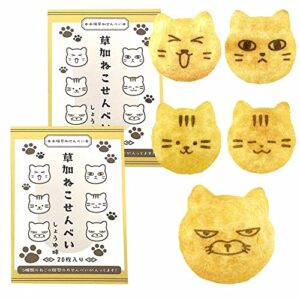

Soka Senbei (草加煎餅, individually-wrapped assortment box) — Sa
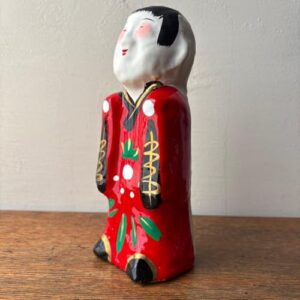

Takamatsu Hariko Hoko-san Papier-Mache Doll: Sanuki Talisman
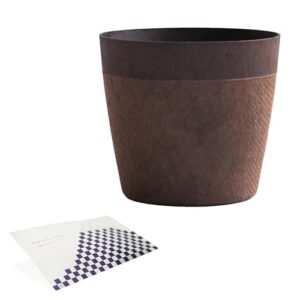

Sanuki Shikki Lacquer Cup: Where to Buy Kagawa Urushi Ware [
Price snapshot across stores
No live price was captured for this item at the time of writing. The table records where to buy and how shipping works rather than a fixed figure — always confirm the current price on the listing before paying.
| Store | Item / variant | Price | Notes |
|---|---|---|---|
| 🇺🇸 Amazon.com (US) | Browse Japanese wasanbon & dry sweets | varies (USD) | Best if you are shopping from the US — Prime shipping, USD pricing, no international customs. Amazon US carries assorted Japanese wasanbon, higashi, and matcha-pairing sweets from various makers; Baikodo’s exact box is sourced from Japan (next row). |
| 🇯🇵 Amazon JP Global Store | Baikodo 和三盆 干菓子 詰め合わせ (ASIN B0GNTM31W7) | Check live price (¥ varies) | The sourced listing for the exact item. Ships internationally from Japan via AmazonGlobal to most major destinations — confirm food eligibility for your country at checkout. |
| Maker direct | Baikodo (Higashikagawa, Kagawa) | Unconfirmed — check maker site | A maker storefront may carry a wider seasonal range, but direct international food shipping is not confirmed. |
| Proxy services (Buyee / Tenso) | Forwarded from a JP retailer | Item price + forwarding fee | A fallback if AmazonGlobal will not ship food to your country. Note that proxy services often restrict perishable or food items — verify before ordering. |
USD figures, where shown elsewhere, are approximate (¥150/USD baseline as of mid-2026); the JPY price on the actual listing is authoritative. Prices and availability fluctuate — verify at the retailer before buying.
What it does well
Weaknesses and things to verify before buying
- It is, by design, almost pure sugar. Anyone limiting sugar should treat this as an occasional sweet, not an everyday snack.
- Dry, not moist. If you are expecting a soft, filled wagashi, higashi will feel surprisingly austere — they dissolve rather than chew.
- Small portions. These are tea-ceremony-scale bites; do not expect a dessert-sized serving.
- Shipping eligibility for food varies. AmazonGlobal does not ship food to every country, and customs rules on foodstuffs differ. Confirm eligibility for your address at checkout before assuming it will arrive.
- No live price was captured. The fetched dataset had no price snapshot, so check the current listing price yourself rather than relying on any figure quoted elsewhere.
- Best-by date, not indefinite. It is shelf-stable, but it is still a food item with a finite best-by window — order in personal quantities you will actually use.
- Confirm the allergen statement. Although the category is dairy- and egg-free, always read the actual package’s allergen line, especially for a gift.
Conclusion — which buyer type are you?
Other ways to approach this purchase
🏆 Editor’s Pick
❓ Frequently Asked Questions
What exactly is wasanbon, and how is it different from ordinary sugar?
Will it melt or spoil during international shipping?
Can it ship to my country?
Is it suitable for vegetarian, vegan, or dairy-free diets?
How are higashi traditionally eaten?
How much does it cost?
What if AmazonGlobal will not ship food to my country?
jpmono.com is curated by a Japan-based editorial team (working out of Toyama in the Hokuriku region and Nara in Kansai) and is independent. We do not take payment from the makers we feature; income comes from affiliate links. We do not physically test every product — we read maker specs and source listings.
This article was drafted with AI assistance and reviewed against the source listing data before publication. Specifications, prices, and shipping eligibility should be confirmed on the retailer’s live listing.
Affiliate disclosure: jpmono.com may earn a commission on qualifying purchases made through links on this page, at no additional cost to you.