![Enshu Cotton Stripe Kinchaku Pouch: Hamamatsu Weaving Guide [2026]](https://jpmono.com/wp-content/uploads/2026/07/enshu-momen-cotton-stripe-kinchaku-pouch-where-to-buy-2026-featured.jpg)
- What it is: A small lined drawstring pouch (kinchaku) in Enshu momen tsumugi — yarn-dyed striped cotton woven in Hamamatsu, Shizuoka.
- Made in: Hamamatsu, Shizuoka Prefecture — the Enshu cotton belt, historically ranked with Mikawa and Izumi as one of Japan’s three great cotton regions.
- Price band: Entry-level for Japanese textile craft; a pouch is the cheapest way into this cloth. Live pricing was not in our snapshot — see the listing.
- Best for: Readers who want a small, genuinely usable piece of a working textile region rather than a display object.
- Skip if: You want crisp, uniform, printed-looking stripes — yarn-dyed shuttle-loom cotton is deliberately slightly uneven.
- Shipping: ships internationally from Amazon Japan — jump to our pick ↓
Enshu momen is dyed before it is woven, not after. The yarn goes into the indigo, the browns, the faded reds while it is still thread on a cone, and only then does it climb onto the loom — which is why the stripes on this pouch read as soft blocks of color rather than lines printed onto a surface, and why the cloth will fade evenly over years instead of going patchy at the folds.
The technique is called sakizome (先染め, “dyed first”), and it is the whole argument for this fabric. Enshu — the old provincial name for western Shizuoka, centered on Hamamatsu — sat on the alluvial flats of the Tenryu River with a dry, windy winter, a combination that suited cotton so well the region became one of Japan’s three great cotton belts alongside Mikawa and Izumi. That industry was consequential far beyond textiles: in the Meiji era, Toyoda Sakichi, born in what is now Kosai in the same prefecture, developed his power looms to serve these cotton sheds, and the mechanization that grew out of them became Toyota Industries.
This guide is written for a reader outside Japan deciding whether a small yarn-dyed cotton pouch is worth ordering across an ocean. We cover what the cloth actually is and how it behaves, where it comes from and why that place mattered, how it compares to the other Japanese cotton and indigo goods we have covered, what to verify on the listing before you buy, and the honest reasons to pass.
🔄 Updated: July 21, 2026
⏱️ Read time: about 11 minutes

ℹ️ Live pricing and several dimensional specs were not in our snapshot — the linked listing is authoritative, and unconfirmed attributes are marked as such below.
- Who this is for — and who should skip it
- Product overview (from published specs)
- 📍 Where this comes from — place, era, and the craft tradition
- 📌 How does it compare?
- 📦 Shipping & where to buy from outside Japan
- Price snapshot across stores
- What it does well
- Weaknesses and things to verify before buying
- Conclusion — which buyer type are you?
- Other ways to approach this purchase
- 🏆 Editor’s Pick
- ❓ Frequently Asked Questions
Who this is for — and who should skip it
- Want an inexpensive, low-risk entry point into a named Japanese textile region rather than a ¥40,000 obi.
- Actually carry small things loose — cables, coins, a lens cloth, tea, hanko stamps — and will use a lined pouch daily.
- Prefer yarn-dyed cloth that fades evenly and reads better after two years than it does new.
- Are assembling a Japanese-craft gift set and want a textile alongside pottery or lacquer.
- Like the specific hand of narrow shuttle-loom cotton — slightly uneven, breathable, soft rather than crisp.
- Need exact interior dimensions before ordering — confirm them on the listing, not from this guide.
- Expect the machine-perfect stripe registration of printed cotton; this cloth is intentionally irregular.
- Want a structured, self-standing case — a drawstring kinchaku is soft-bodied and collapses.
- Are shopping purely on price. Plain cotton pouches cost a fraction of this; you are paying for provenance and cloth.
- Need something waterproof or protective. Lined cotton is not padding.
Product overview (from published specs)
Enshu Cotton Stripe Kinchaku Pouch
祭すみたや 腰下げ巾着袋 鰹縞(遠州綿紬)
通常9~10日以内に発送します。 · Sold by 祭すみたや · ASIN B07GNDY1PK
Price and availability as of 2026-09-01 05:22 JST. The Amazon listing at the time of purchase is authoritative. jpmono.com earns a commission on qualifying purchases at no extra cost to you.
| Attribute | Value | Source |
|---|---|---|
| Item | Kinchaku (巾着) drawstring pouch, accessory size | Amazon JP Global Store listing |
| Fabric | Enshu momen tsumugi (遠州綿紬) — yarn-dyed (sakizome) cotton stripe | Amazon JP Global Store listing |
| Weave | Plain weave, soft-finished | Amazon JP Global Store listing |
| Construction | Lined | Amazon JP Global Store listing |
| Woven in | Hamamatsu, Shizuoka Prefecture (Enshu region) | Amazon JP Global Store listing |
| ASIN | B07GNDY1PK | Amazon JP Global Store |
| Exterior dimensions | Unconfirmed — check the listing | — |
| Lining material | Unconfirmed — check the listing | — |
| Weight | Unconfirmed — check the listing | — |
| Price | Not captured in our snapshot — the live listing is authoritative | — |
Per the spec sheet available to us, this is deliberately a simple object: one cloth, one lining, one drawstring channel. The interest is entirely in the cloth, which is why the weave and the dye order matter more here than any hardware.
📖 Glossary — the Japanese terms used in this article
- Enshu (遠州) — the old provincial name for the western part of present-day Shizuoka Prefecture, centered on Hamamatsu.
- momen (木綿) — cotton, as a cloth.
- tsumugi (紬) — a soft, slightly textured cloth woven from spun yarn; here it describes the hand of the fabric rather than a silk category.
- sakizome (先染め) — “dyed first”: the yarn is dyed before weaving, so the pattern is structural rather than printed.
- kinchaku (巾着) — a soft drawstring pouch, a Japanese carrying form in continuous use since the Edo period.
- Tenryu (天竜) — the river running from Nagano down through western Shizuoka to the Pacific.
📍 Where this comes from — place, era, and the craft tradition

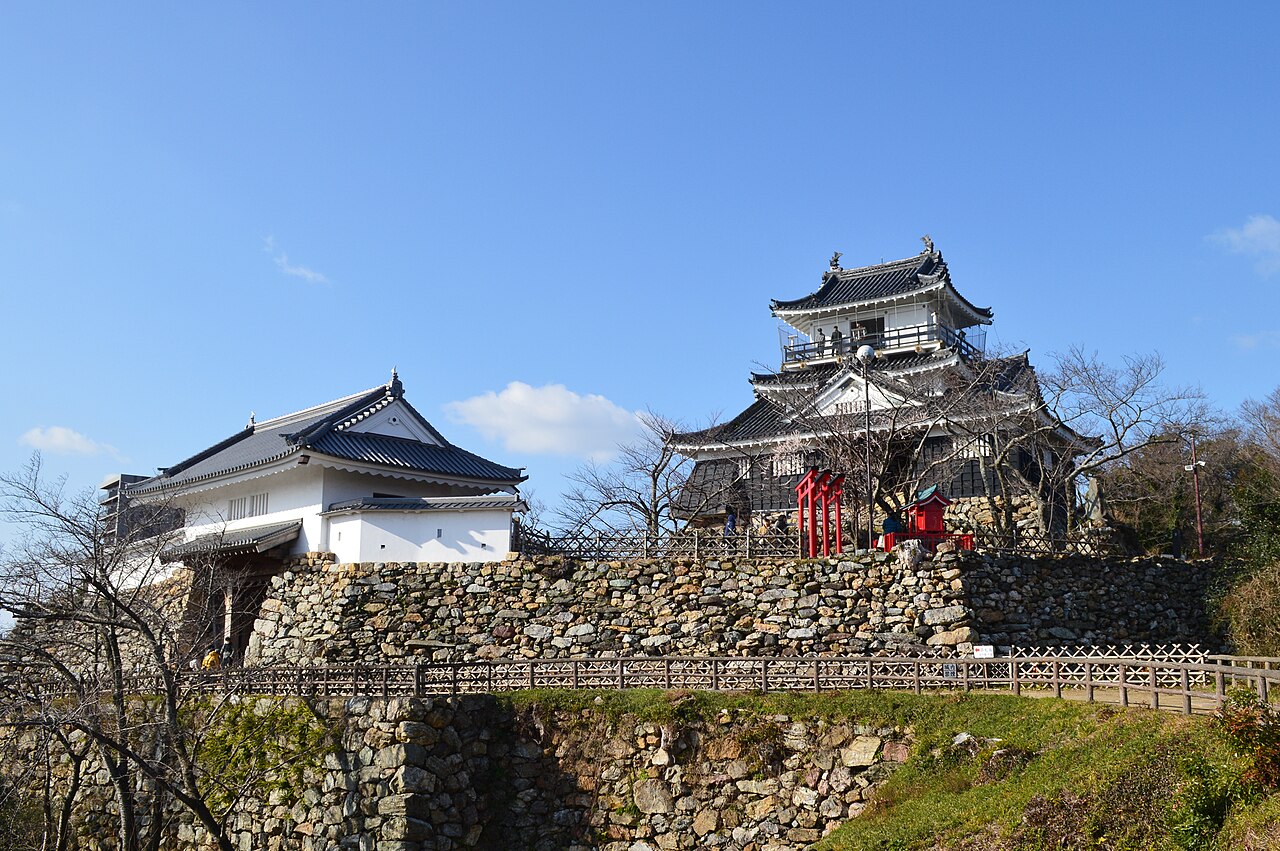
Enshu is not a modern administrative unit. It is the old provincial name for western Shizuoka, and people in Hamamatsu still use it — for the local dialect, the coastal winds, the railway, and the cloth. Geographically it occupies the flat delta where the Tenryu River, having run south out of the Shinano mountains, spreads out and meets the Pacific.
Two features of that landscape decided what got made here. The Tenryu carried timber and water down from the interior, giving the region both a transport artery and a processing resource. And the winters are dry and windy — the Enshu no karakkaze, the region’s famously hard seasonal wind, sweeps in off the Pacific and across those flats. Cotton likes exactly that: alluvial soil, sun, and a dry finishing season.
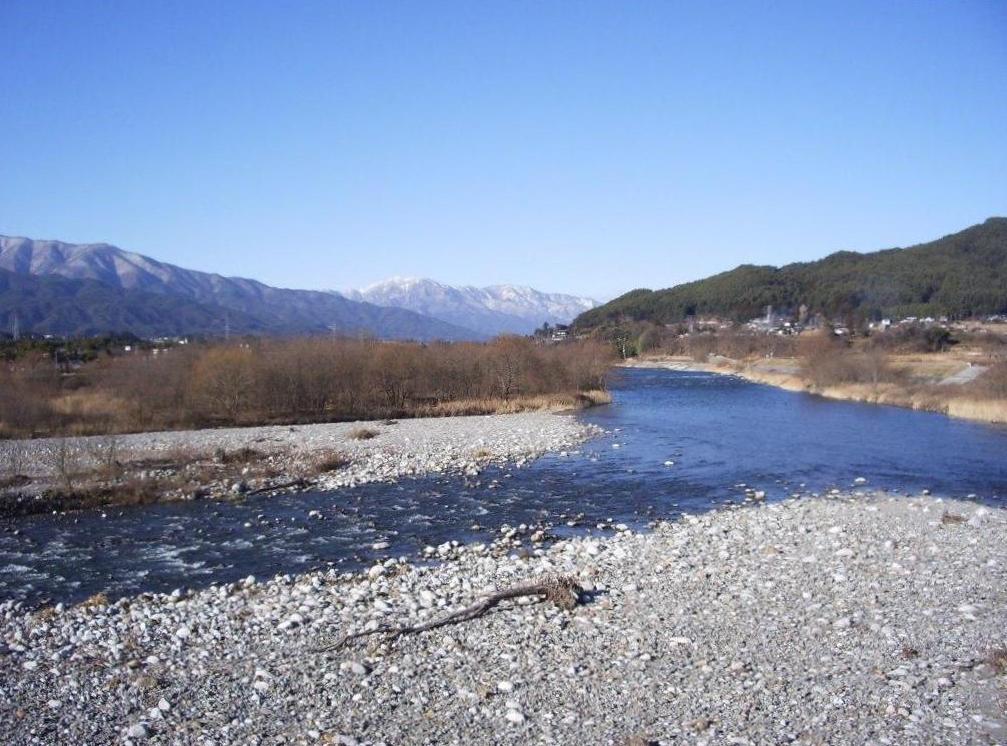
The political layer came next. Hamamatsu was Tokugawa Ieyasu’s base for seventeen years before he moved east, and a castle town of that consequence grows a merchant class, a road-side economy, and a demand for cloth. By the Edo period, Enshu was ranked with Mikawa (in present-day Aichi) and Izumi (in present-day Osaka) as one of the three great cotton belts of Japan.
“The looms that mechanized Japanese industry were not invented in a laboratory. They were invented in a cotton shed, to solve a cotton shed’s problem.”
- 1570 — Tokugawa Ieyasu takes up residence at Hamamatsu Castle.
- 1587 — Ieyasu moves east after seventeen years; the castle town he leaves behind keeps growing.
- Edo period (1603–1868) — Enshu becomes one of Japan’s three great cotton belts, alongside Mikawa and Izumi.
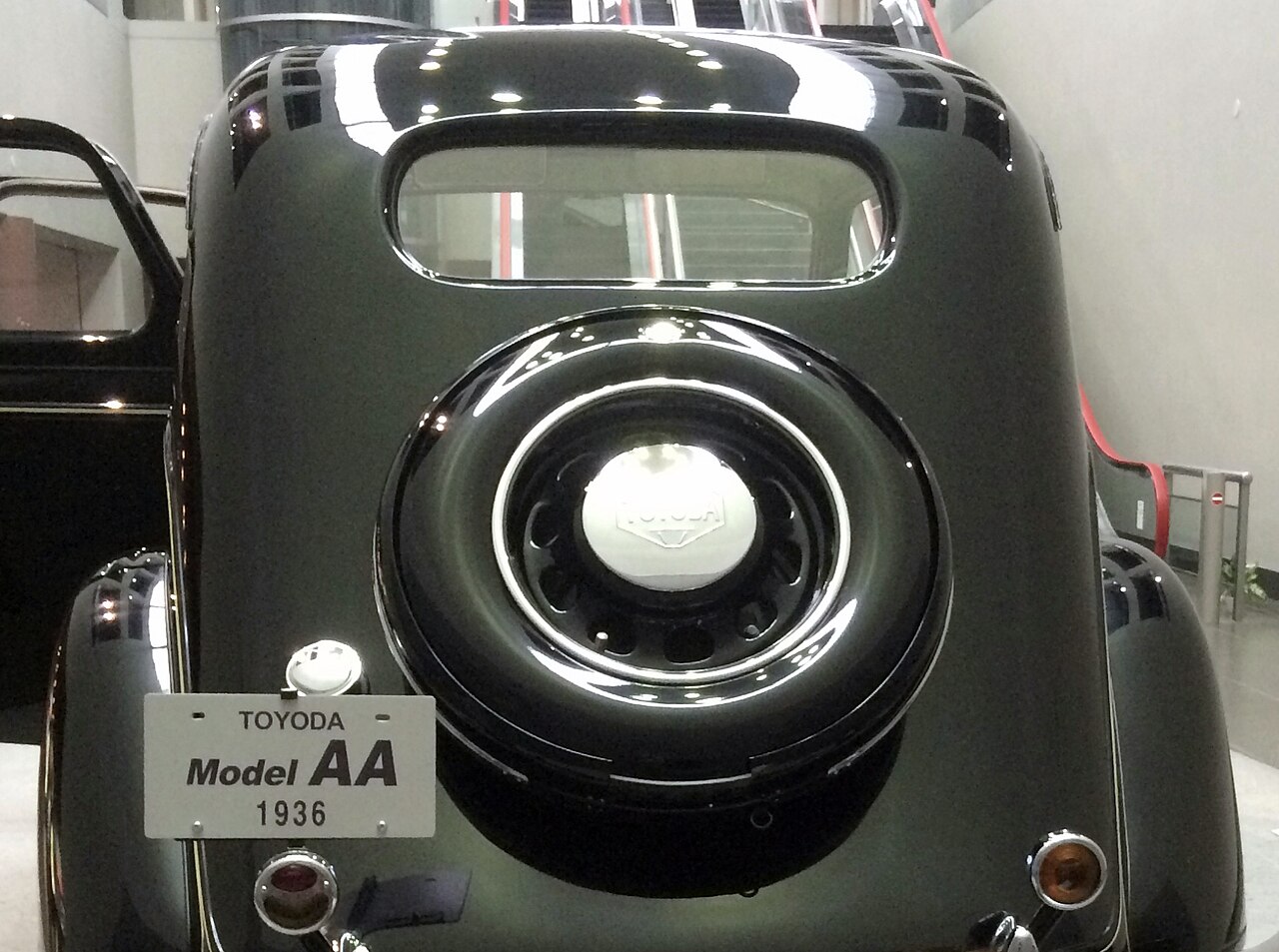
- Meiji era (1868–1912) — Toyoda Sakichi, born in what is now Kosai, Shizuoka, develops power looms serving the Enshu cotton sheds.
- 20th century — That loom-building business becomes Toyota Industries; the region’s mechanization outgrows its textile origin.
- 2026 — Only a handful of small mills still run the narrow shuttle looms that give Enshu momen its hand.
That last line is the one that matters for anyone deciding whether to buy this pouch. Enshu’s cotton industry succeeded so thoroughly at mechanizing that it mechanized itself out of its own craft scale. The wide, fast, modern looms went to industry; what remains of the traditional cloth is made on narrow shuttle looms by a small number of surviving mills.
Those narrow looms are the reason the fabric behaves the way it does. A shuttle loom runs slower and beats the weft in less uniformly than a modern air-jet machine, which leaves the cloth with a slightly irregular surface and more air in it. That is not a defect tolerance; it is the property people buy the cloth for. It is also why a small object shows it well — at pouch scale, you handle the whole surface, and the unevenness registers in the hand rather than getting lost across a bolt.
📌 How does it compare?
Other guides on this site covering Shizuoka crafts, Japanese cotton and indigo textiles, and small carried goods.
 Shitoro-yaki Yunomi (Shizuoka)
 Suruga Takesensuji Bamboo Vase (Shizuoka)
Tateyama Tozan Cotton Book Cover
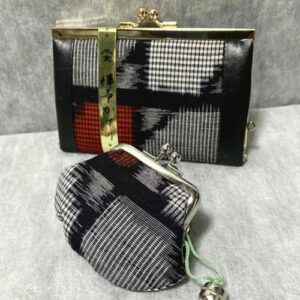 Iyo-Gasuri Gamaguchi Coin Purse
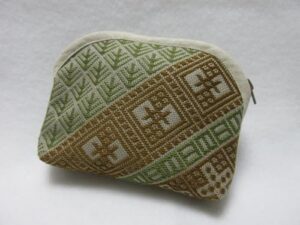 Tsugaru Kogin-zashi Pouch
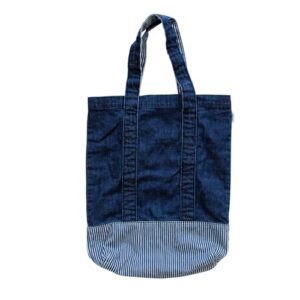 Kojima Selvedge Denim Tote
Awa Aizome Indigo Tenugui
 Gifu Wagasa Paper Umbrella
Two of those are worth a sentence of orientation. The Tateyama Tozan book cover is the closest relative in the list — another yarn-dyed Japanese striped cotton, but from a different region with its own stripe vocabulary. The Iyo-Gasuri coin purse and the Awa Aizome tenugui both sit on the indigo side of the family: patterned by resist-dyeing and kasuri binding rather than by stripe arrangement, which is a different craft logic applied to the same fiber.
📦 Shipping & where to buy from outside Japan
The specific pouch covered here is sourced from the Amazon Japan Global Store, which ships to 65+ countries — including Canada, the UK, and Australia, not only the United States. For textiles at this size and weight, shipping is at the low end of the usual range and the parcel is small enough that duties are frequently below local de minimis thresholds. Amazon estimates and collects import fees at checkout for most destinations, so the figure you see at the cart is generally the figure you pay.
If you are ordering from outside the US, we maintain destination-specific guides for Canada, the UK, and Australia covering thresholds, typical transit times, and carrier handling.
Expect roughly $15–$40 in international shipping to the US, EU, Canada, the UK, or Australia, depending on whether the order consolidates with other items. Proxy services such as Buyee or Tenso remain an option if you want to combine this with purchases from Japanese domestic shops that do not ship abroad, though they add a service fee and a second leg of freight.
- 🧺 Washing: hand-wash cool and dry in shade. Yarn-dyed cotton fades evenly over time — that even fade is the intended behavior, not damage.
- 🌀 Shrinkage: cotton woven on narrow shuttle looms is prone to some initial take-up. Avoid hot water and machine drying if interior capacity matters to you.
- 🧴 Daily care: the cloth softens with handling. No conditioning, oiling, or special treatment is needed.
- 🔧 Repairs: a drawstring channel and a lining seam are both straightforward for any tailor, which is a genuine advantage over glued or riveted small goods.
Price snapshot across stores
| Store | Item / Variant | Price | Notes |
|---|---|---|---|
| 🇺🇸 Amazon.com (US) | Browse Japanese cotton pouches & textile small goods | varies (USD) | Best if you are shopping from the US — Prime shipping, USD pricing, no international customs. Amazon US carries Japanese cotton pouches, tenugui, and indigo small goods from a range of makers, useful for comparing size and price tiers. The Enshu-woven pouch in this guide ships from Japan (next row). |
| 🇯🇵 Amazon JP Global Store | Enshu momen tsumugi kinchaku pouch (ASIN B07GNDY1PK) | Not captured in our snapshot — see listing | Ships internationally from Japan to 65+ countries — including Canada, the UK, and Australia — with import fees estimated at checkout. This is where the exact item covered in this guide is sourced. |
| Maker direct | Enshu momen goods, full line | Unconfirmed — check manufacturer site | Hamamatsu mills and their retail partners often carry a wider stripe selection than any marketplace listing, but most sell domestically only. |
| Proxy services (Buyee / Tenso) | Domestic-only Japanese shops | Item price + service fee + freight | Worth it mainly for consolidating several Japanese purchases into one shipment; unnecessary for a single pouch already on the Global Store. |
Prices and stock fluctuate. Where a JPY figure is available, it is the authoritative one; USD figures elsewhere on this site are approximate estimates at a ¥150/USD baseline and depend on the current exchange rate. Follow the links above for current data at the time you read this.
What it does well
Weaknesses and things to verify before buying
- No confirmed dimensions in our snapshot. “Small accessory size” is not a measurement. If you are buying this to hold a specific object — a camera lens, a passport, a set of brushes — confirm the interior dimensions on the listing before ordering.
- No confirmed price at the time of writing. Our data capture returned no pricing record. Treat the live listing as the only authority and do not assume a band from other pouches on this site.
- Stripe placement varies piece to piece. Cutting a striped cloth means every unit lands differently on the pattern. The product photo shows one example, not a guaranteed layout.
- Cotton shrinks and fades. Both are normal here and arguably desirable, but if you want a pouch that looks identical in three years, this is the wrong fabric category entirely.
- Soft-bodied and unprotective. A drawstring kinchaku collapses when empty and offers no impact padding. It organizes; it does not protect.
- Lining material unconfirmed. Worth checking if you have fiber sensitivities or intend to store anything that reacts to synthetics.
- Returns across borders are impractical. On a low-value item shipped internationally, the return freight can approach the item cost. Decide before you order, not after.
Conclusion — which buyer type are you?
Other ways to approach this purchase
🏆 Editor’s Pick
❓ Frequently Asked Questions
What is Enshu momen tsumugi?
It is a yarn-dyed striped cotton woven in the Enshu region of western Shizuoka, centered on Hamamatsu. The yarn is dyed before weaving (sakizome), which is why the stripes read as soft color blocks rather than printed lines, and it is typically woven on narrow shuttle looms that give the cloth a slightly uneven, breathable hand.
Does this ship outside Japan?
Yes. The item is sourced from the Amazon Japan Global Store, which ships to 65+ countries including Canada, the UK, and Australia as well as the United States. Amazon estimates and collects import fees at checkout for most destinations, and a pouch is small enough that duties often fall below local thresholds.
How do I wash it?
Hand-wash cool and dry in the shade. Yarn-dyed cotton fades evenly over time, which is the intended behavior of the cloth rather than damage. Avoid hot water and machine drying, since narrow-loom cotton is prone to some initial shrinkage.
Will the stripe pattern match the product photo exactly?
Not necessarily. Cutting a striped cloth means each finished piece lands differently on the pattern repeat, so stripe placement varies unit to unit. The listing photo shows one representative example.
How is this different from indigo kasuri goods like Iyo-Gasuri?
Both are yarn-dyed cottons, but the patterning logic differs. Kasuri binds sections of yarn before dyeing so that the woven image emerges with characteristically blurred edges, while Enshu momen arranges solid-dyed yarns into stripes. Enshu also uses a broader color range rather than being centered on indigo.
Is there really a connection between this cotton region and Toyota?
Yes. Toyoda Sakichi, born in what is now Kosai in Shizuoka, developed his power looms in the Meiji era to serve the Enshu cotton sheds. The loom-making business that grew out of that work became Toyota Industries, so the region’s mechanization has its origin in this textile industry.
What does it cost?
Live pricing was not captured in our data snapshot at the time of writing, so this guide does not quote a figure. Pouches are the entry-level form for this cloth, but the linked listing is the only authoritative source for the current price and availability.
jpmono.com is a Japan-based curation site, with editorial centers in Toyama (Hokuriku region) and Nara (Kansai region), introducing Japanese household objects to international readers. We focus on items with verifiable craft heritage and clear international shipping paths. We do not physically test every product — we read makers’ specifications and source listings — and affiliate links support the editorial work.
jpmono.com is curated by a Japan-based editorial team and is independent. We do not take payment from the makers we feature; income comes from affiliate links.
This article was drafted with AI assistance and reviewed by a human editor before publication. Product specifications are drawn from published listings and maker sources; where data was unavailable, that is stated explicitly rather than estimated.
Affiliate disclosure: jpmono.com may earn a commission on qualifying purchases made through links on this page, at no additional cost to you.