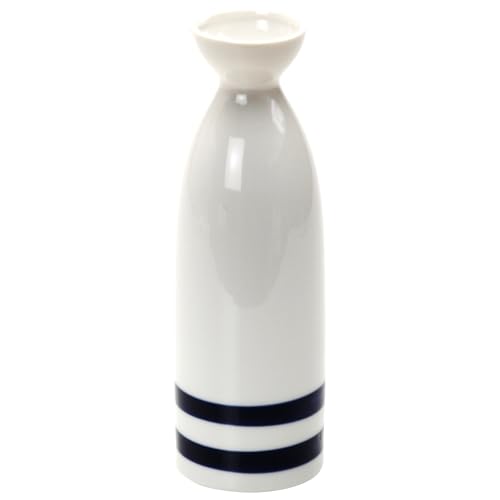
- What it is: a two-gō Mino-yaki tokkuri, the narrow-necked flask used to warm and pour sake, listed at approx. 260 ml and 17.5 cm tall
- Made in: Japan — Mino ware country around Tajimi, Toki and Kani in eastern Gifu, a kiln district with more than a thousand years of firing history
- Price band: budget — under ¥1,000 for the single listed flask (¥869 as of 2026-10-27; verify on the listing)
- Best for: a first Shino-adjacent sake flask, or a host who wants one honest working vessel rather than a boxed set
- Skip if: you need the Shino glaze confirmed in writing, a named workshop, or a gift box
- Shipping: ships internationally from Amazon Japan — jump to our pick ↓
The white on a Shino vessel is not paint. It is feldspar, ground fine and held in suspension, laid on thick, then fired until it pools, breaks, and settles into a surface somewhere between snow and stone. That single material decision is why a sake flask from eastern Gifu can carry the look of a Momoyama tea room onto an ordinary dinner table.
The vessel here is a tokkuri (徳利), the narrow-necked flask that holds sake while it is warmed and poured. This one is a two-gō (二合) Mino-yaki flask, listed at approximately 260 ml and 17.5 cm tall, made in Japan and offered through Amazon Japan at ¥869 (≈ $6 USD as of October 27, 2026). It comes out of the kiln district around Tajimi, Toki and Kani in eastern Gifu Prefecture — the towns that have supplied Mino ware for over a millennium.
This guide is for readers outside Japan who want one inexpensive, honest entry point into that tradition, and who want to know exactly what the listing says and what it leaves out. It covers who the flask suits, the specs that are actually published, how Shino sits inside Mino ware, what shipping from Japan involves, and how this single piece compares with the other routes into the same shelf.
🔄 Updated
⏱️ 8 min read

- Who this is for — and who should skip it
- Product overview (from published specs)
- 📍 Where this comes from — place, era, and the craft tradition
- Price snapshot across stores
- 📦 Shipping & where to buy from outside Japan
- What it does well
- Weaknesses and things to verify before buying
- Conclusion — which buyer type are you?
- Other ways to approach this purchase
- 🏆 Editor’s Pick
- ❓ Frequently Asked Questions
Who this is for — and who should skip it
- You want a working tokkuri, not a display piece — something that goes from warm water to the table without ceremony.
- You are curious about Mino ware and would rather start with one ¥869 flask than a signed, boxed set costing many times more.
- You pour sake for one or two people and prefer the slower rhythm of a flask over a large bottle on the table.
- You want a vessel the listing explicitly says is microwave and dishwasher safe.
- You are building a mixed table of Japanese ceramics and need a light-toned accent that is not precious.
- You need a documented Shino glaze. The listing names Mino ware and does not name a glaze.
- You want a named workshop or a potter’s mark. The listing gives neither.
- You are buying a gift that must arrive boxed, with a paper wrapper and a noshi envelope.
- You need four flasks and eight cups for a party — this is a single vessel.
- You expect the irregular lip and thumb marks of a hand-thrown piece; nothing in the listing promises them.
Product overview (from published specs)
ℹ️ The listing is thin on material detail — glaze type, body composition and maker are not stated. The linked listing is authoritative; unconfirmed attributes are marked below.
Mino-yaki Shino Tokkuri
美濃焼 徳利 二合 きき酒 とっくり 2号 容量約260ml 直径約6×高さ17.5cm 冷酒器 熱燗 電子レンジ対応 食洗機対応 日本製 410-6-41E
在庫あり。 · Sold by Amazon.co.jp · ASIN B01LXDA5H7
Price and availability as of 2026-10-27 09:15 JST. The Amazon listing at the time of purchase is authoritative. jpmono.com earns a commission on qualifying purchases at no extra cost to you.
| Attribute | Listed value |
|---|---|
| Item | Mino-yaki tokkuri (sake flask), two-gō / size 2 |
| Capacity | Approx. 260 ml |
| Dimensions | Diameter approx. 6 cm × height approx. 17.5 cm |
| Set contents | One tokkuri (the title describes a single flask; no cups or box) |
| Glaze / finish | Not stated — Shino is not named in the listing |
| Material | Not stated (Mino ware is fired stoneware as a category) |
| Microwave | Yes, per the listing |
| Dishwasher | Yes, per the listing |
| Made in | Japan |
| Maker / brand | Not stated; seller is Amazon.co.jp |
| Item code | 410-6-41E |
| Condition | New |
| Price | ¥869 (≈ $6 USD as of 2026-10-27; verify on the listing) |
📖 Glossary — the words used in this guide
- Tokkuri (徳利)
- A narrow-necked sake flask. Sake is poured in, warmed (often standing in hot water), and poured out into small cups.
- Mino-yaki (美濃焼)
- Pottery made in the Mino district of eastern Gifu Prefecture, centered on Tajimi, Toki and Kani.
- Shino (志野)
- A Mino tea-ware style identified with a thick white feldspar glaze, developed in the Momoyama period.
- Momoyama period
- The late 16th century, when the tea ceremony drove a burst of new Mino glaze styles.
- Gō (合)
- A traditional volume unit, about 180 ml. A two-gō flask is nominally around 360 ml, though this listing states approx. 260 ml — the listed figure is the practical one.
- Kikizake (きき酒)
- Sake tasting — comparing several sakes side by side, the use named in the listing title.
- Feldspar glaze
- A glaze built on feldspar rather than clay or ash; fired thick, it gives Shino its opaque white.
📍 Where this comes from — place, era, and the craft tradition
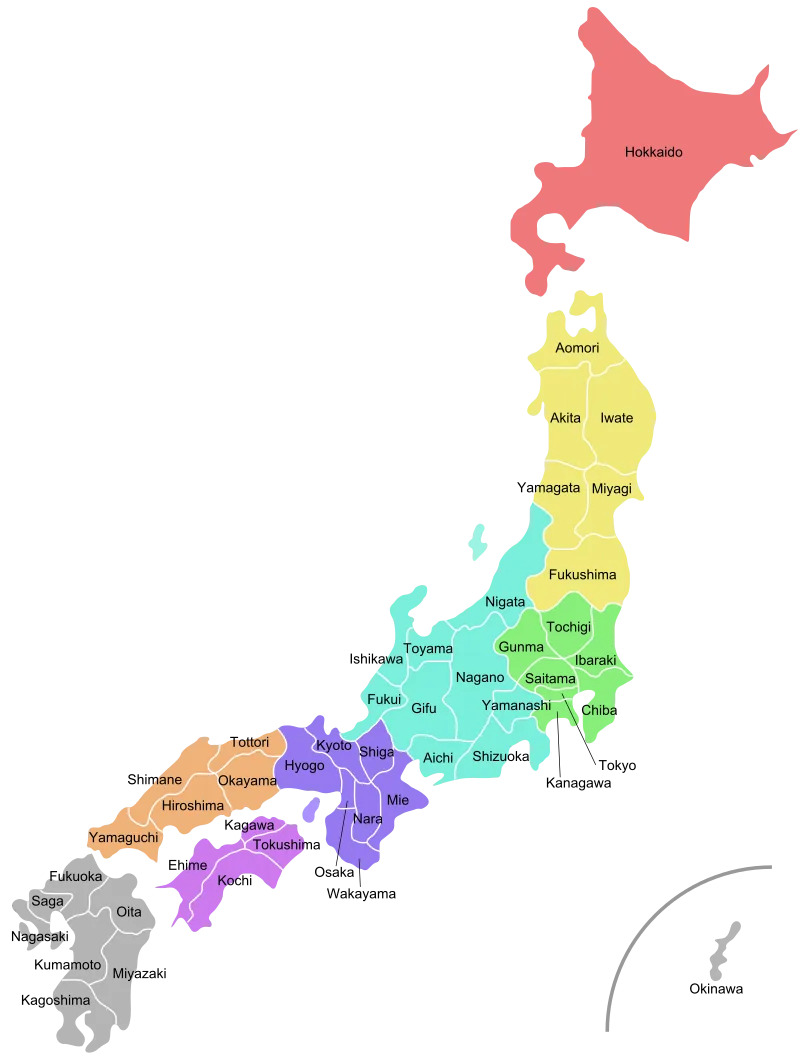
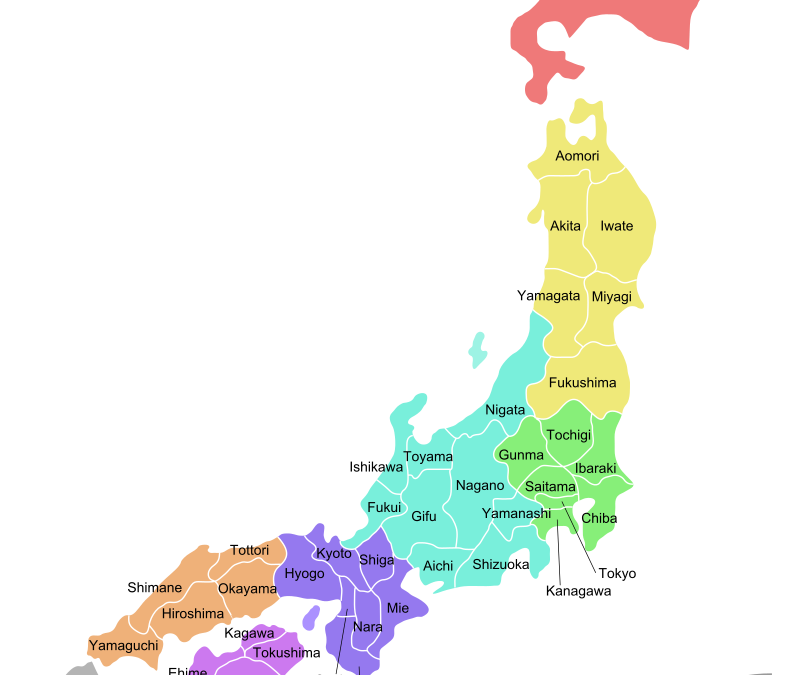
Gifu is one of Japan’s inland prefectures: no coast, no port, and no obvious reason for a ceramics industry to have taken root except the ground itself. The prefecture stretches a long way north to south. Its northern half is mountain country — the Hida range, the thatched villages of Shirakawa-go, snow deep enough to shape the architecture. Its southern half, the Mino district, is where the kilns are, and it looks like a different place: lower, warmer, and crisscrossed by rivers that drain toward Ise Bay.
The Nagara River runs through the prefecture’s capital city, also called Gifu, where cormorant fishing has been practiced for centuries along the castle town at its heart. Tajimi, Toki and Kani lie east and northeast of Nagoya, connected to it by the same river plain that made the region easy to supply and easy to ship from. A potter in Tajimi is working in a basin that has been firing clay for a very long time and selling it into a dense market.

The historical anchor for any Mino vessel is the Momoyama period. In the late 16th century, Mino potters produced Shino, Oribe, Ki-Seto and Setoguro wares for the tea ceremony, and those four names still organize how the district’s output is described. Shino is the one identified with a thick white feldspar glaze — an opaque white that hides the clay beneath it and turns every crack, pool and thin patch into part of the surface.

- More than 1,000 years ago — Kiln sites are firing in eastern Mino, the district that still holds Tajimi, Toki and Kani.
- Early 13th century — A fortification goes up on Mount Kinka above the Nagara; the castle site later becomes Gifu Castle, watching over the province.
- Late 16th century — The Momoyama period: Mino potters make Shino, Oribe, Ki-Seto and Setoguro wares for the tea ceremony.
- Late 16th century onward — Shino becomes identified with the thick white feldspar glaze, and that identification holds into the present.
- 20th century — Tajimi, Toki and Kani consolidate as the working towns of the Mino ware industry, supplying both tea ware and everyday tableware.
- 2026 — A two-gō Mino-yaki tokkuri, approx. 260 ml, is listed on Amazon Japan at ¥869.
What “still made here” means for Mino ware is different from the single-workshop continuity story told about smaller Japanese crafts. The district is a cluster, not a family. Tajimi, Toki and Kani hold the kilns, the suppliers, the mold makers and the glaze labs, and the output runs from tea bowls priced like cars to rice bowls stacked in a hundred shops. The Shino white is still the reference point — a potter working in the district can fire it, sell it, and be understood without a paragraph of explanation.


A tokkuri sits at the working end of all this. It is filled, warmed, carried, poured, and refilled, which is a harder life than a tea bowl’s. In winter the flask goes into a pan of hot water; in summer the same flask holds chilled sake. The form is old enough that the proportions are settled: a narrow neck to slow the pour, a body wide enough to warm evenly, a mouth small enough to keep the aroma in. A Shino tokkuri is the same object with a tea-room glaze on it — the Momoyama vocabulary applied to a vessel that gets used on a Tuesday.
“Shino’s white is feldspar, fired thick — the same family of glaze the Mino kilns were using in the late 16th century, still doing the same work on a sake flask.”
Other pieces in the same Mino and Japanese-ceramic orbit — the comparison set for anyone choosing a first vessel or building a table around one.
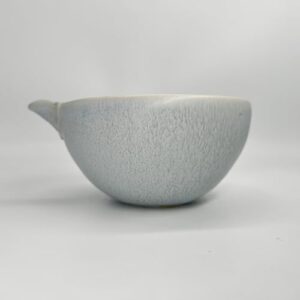 Mino Shino Chawan →
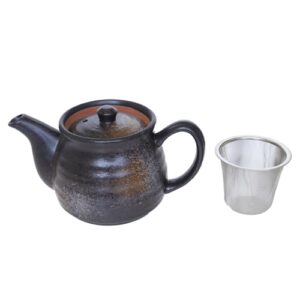 Mino-yaki Kyusu →
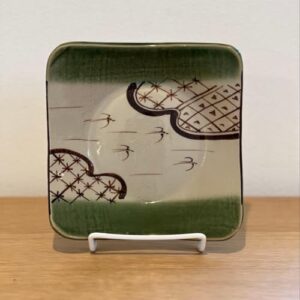 Oribe Serving Dish →
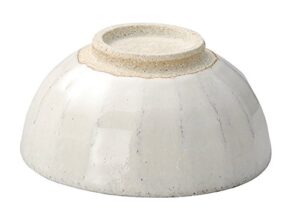 Shino Donburi →
Seto Sometsuke Bowl →
Tokoname Bonsai Pot →
 Hida Shunkei Tray →
 Kutani Guinomi →
Price snapshot across stores
| Store | Item / variant | Price (JPY, USD est.) | Notes |
|---|---|---|---|
| 🇺🇸 Amazon US (search) | Browse Japanese sake ware | varies (USD) | Best if you are shopping from the US — Prime shipping, USD pricing, no customs. Amazon US carries Japanese ceramics from other makers; this exact Mino-yaki flask ships from Japan (next row). |
| 🇯🇵 Amazon JP Global Store | Mino-yaki tokkuri, two-gō, approx. 260 ml — 410-6-41E | ¥869 (≈ $6 USD as of 2026-10-27) | Ships internationally from Japan to 65+ countries — including Canada, the UK and Australia — with import fees estimated at checkout. In stock; sold by Amazon.co.jp. Verify the price on the listing. |
| Maker direct | Workshop not identified | — | The listing does not name a maker, so there is no workshop page to order from. Check the seller information on the listing. |
| Proxy services (Buyee / Tenso) | Same item, forwarded | ¥869 + forwarding fees | Only worth it if the Global Store will not ship to your address; forwarding and consolidation add cost and time. |
Prices in USD are approximate and depend on the current exchange rate (¥150/USD baseline). The JPY figure is the authoritative one for the listed item. Prices and stock fluctuate — confirm on the retailer page before buying.
📦 Shipping & where to buy from outside Japan
Amazon Japan’s Global Store ships internationally on a large share of household ceramics, and the listing shows stock as available. Shipping usually runs $15–$40 to the US and the EU, with similar bands to Canada, the UK and Australia. Shipping cost can exceed the price of a ¥869 flask, which is the honest arithmetic of buying one inexpensive ceramic from Japan.
- Confirm the destination is served by the Global Store — not every listing ships to every country.
- Check the import-fee estimate at checkout; Amazon collects or estimates duties for most destinations.
- Orders above your local customs threshold may attract duty or handling charges on delivery.
- One flask in one box is cheap to ship; consolidating with other items is where the economics improve.
If the Global Store will not ship to you, a proxy such as Buyee or Tenso will forward the parcel from a Japanese address, at added cost. The item itself is not rare, so it is also worth checking whether a local Japanese-goods shop or a ceramics importer near you stocks Mino ware before paying for a single-flask shipment.
What it does well
Weaknesses and things to verify before buying
- The Shino attribution is not in the listing. The title says Mino-yaki and does not name a glaze. If the white feldspar glaze is the reason you are buying, ask the seller before ordering.
- No maker is named. There is no workshop, no kiln mark, and no potter attached to the item code 410-6-41E. You are buying the category, not a name.
- One piece, no accessories. The listing describes a single flask. No cups, no box, and no gift packaging are stated.
- 260 ml is small for a group. Nominally two-gō, the listed capacity is 260 ml — roughly three small cups. For four or more drinkers you will be refilling constantly.
- Body material and weight are unstated. There is no gram figure and no clay description, so you cannot judge heft or wall thickness before the parcel arrives.
- Direct-flame use is not stated. Microwave is listed; a flame or an open brazier is not. Warm the sake in a water bath or the microwave, not over a burner.
- Shipping can cost more than the flask. For a single ¥869 item, freight and import fees dominate the total. Consolidate the order if you can.
- 🍽️ Dishwasher: yes, per the listing
- ♨️ Microwave: yes, per the listing
- 🧴 Daily care: empty and rinse after use, then let the flask dry mouth-down so no water sits in the base; avoid moving it straight from hot water to a cold surface
Conclusion — which buyer type are you?
The four branches below are the honest split. The same ¥869 flask is the right answer for one reader and the wrong one for the next, and the difference is what you expect the object to prove.
Other ways to approach this purchase
🏆 Editor’s Pick
Mino-yaki Tokkuri — 二合 (approx. 260 ml), 6 × 17.5 cm, 410-6-41E. Sold by Amazon.co.jp, in stock, new.
- The proportions are the standard working ones — 17.5 cm tall, approx. 260 ml, a neck narrow enough to control the pour.
- Microwave and dishwasher compatibility are both declared, so it can live in a normal kitchen rather than a display cabinet.
- At ¥869 (≈ $6 USD as of 2026-10-27; verify on the listing) it is the lowest-risk way to try a Mino flask.
❓ Frequently Asked Questions
Is this actually a Shino piece?
The listing says Mino-yaki and does not name a glaze, so Shino is unconfirmed for this flask. Mino is where Shino comes from, but the listing itself only claims the region and the made-in-Japan origin.
How much does it cost?
¥869 (≈ $6 USD at a ¥150/USD baseline) as of 2026-10-27. Verify the price on the listing, since Amazon JP pricing and stock move.
Can it go in the dishwasher and the microwave?
Yes — the listing states both are supported. Hand-washing still tends to be gentler on any glaze over time.
The title says two-gō but the capacity is 260 ml. Which is right?
Two-gō is the nominal size class, around 360 ml on paper. The listing’s own capacity figure is approx. 260 ml — treat that as the working volume, about three small cups.
Will it ship to Canada, the UK or Australia?
Amazon JP’s Global Store ships to 65+ countries, including Canada, the UK and Australia. Import fees are usually estimated at checkout; confirm your destination is served before ordering.
Is it suitable as a gift?
Only as a casual gift. The listing describes a single flask and mentions no box, paper wrapping or gift service, so a presentation box would have to be sourced separately.
Can I warm sake directly over a flame in it?
The listing does not state direct-flame use. Microwave is stated; for a water bath, stand the flask in hot water rather than putting it over a burner.
jpmono.com is curated by a Japan-based editorial team (working out of Toyama in the Hokuriku region and Nara in Kansai) and is independent. We do not take payment from the makers we feature; income comes from affiliate links. We do not physically test every product — we read maker specifications and source listings. Read more about our editorial standards.
Note: this article was drafted with the help of AI tools and reviewed by our editorial team before publication.
Affiliate disclosure: jpmono.com may earn a commission on qualifying purchases made through links on this page, at no additional cost to you.