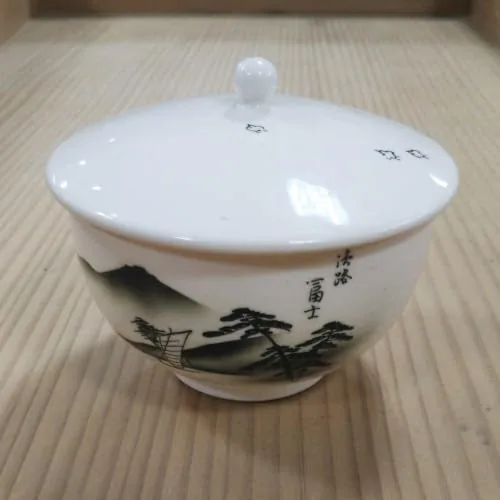
- What it is: A lidded yunomi — a handle-less Japanese tea cup with its own lid — in Minpei-yaki, the pottery tradition of Awaji Island, described on the listing as an antique (骨董) piece.
- Made in: Awaji Island, Hyogo Prefecture, Kansai region — a ware commonly traced to the late Edo period, when the potter Minpei is said to have opened a kiln using island clay.
- Price band: No price was shown on the listing, and it was marked out of stock at the time of writing — see the live listing before planning a purchase.
- Best for: A tea drinker or collector who specifically wants a vintage Awaji cup and is willing to confirm condition with the seller.
- Skip if: You need a new cup with a stated size, capacity, glaze, and a named maker, or a matched set of several.
- Shipping: Ships internationally from Amazon Japan to 65+ countries including Canada, the UK and Australia — jump to our pick ↓
Awaji Island’s clay has been dug, thrown, and fired on the same ground for generations — long before the Akashi Kaikyo Bridge put the island a short drive from Kobe. The object in this guide is what that history looks like in miniature: a lidded yunomi (湯呑, a handle-less Japanese tea cup) in Minpei-yaki (珉平焼), the island’s own ware.
Minpei-yaki is the name most often used for Awaji ware, the pottery of Awaji Island in Hyogo Prefecture, and it is commonly traced to the late Edo period, when a potter named Minpei is said to have opened a kiln using clay dug on the island. The tradition’s reputation rests on two things that travel well: warm amber and blue-green glazes, and a slightly rustic surface that sits comfortably in the hand.
This page looks at one specific listing — a lidded yunomi that the seller describes as antique, retro Minpei-yaki with an “Awaji Fuji” motif. The listing carried no price and was marked out of stock when it was checked on November 17, 2026, so the practical advice below is about how to read the piece itself: what the ware name means, what a vintage cup like this asks of its owner, and the routes that carry Japanese ceramics to Canada, the UK, Australia and the rest of the world.
🔄 Updated
⏱️ About 9 minutes

- Who this is for — and who should skip it
- Product overview (from published specs)
- 📍 Where this comes from — Awaji Island, the Seto Inland Sea, and the Minpei tradition
- 📌 How does it compare?
- 📦 Shipping & where to buy from outside Japan
- Price snapshot across stores
- What it does well
- Weaknesses and things to verify before buying
- Conclusion — which buyer type are you?
- Other ways to approach this purchase
- 🏆 Editor’s Pick — the Awaji lidded yunomi we would start with
- ❓ Frequently Asked Questions
Who this is for — and who should skip it
- You want a genuine vintage Awaji cup rather than a new reproduction.
- You drink sencha, bancha or hojicha slowly and like a lid holding the heat in.
- You collect Minpei-yaki or Awaji-yaki and want an example documented by a live listing.
- You are used to buying secondhand ceramics and will ask the seller about chips and crazing.
- You want a small, giftable piece of Kansai pottery heritage that does not need a cabinet.
- You need a new-condition cup with a stated size and capacity.
- You want four or six matching cups for a household.
- You expect dishwasher and microwave use as a matter of course.
- You will not buy anything without a live price and confirmed stock.
- You need a signed piece attributable to a named workshop.
Product overview (from published specs)
ℹ️ The snapshot for this listing was thin: no price, no size, no glaze color. The linked listing is authoritative, and every point it does not cover is marked as not stated below.
The table below separates what the listing actually says from what a reader might reasonably want to know. The Japanese title is quoted first so you can match it against the retailer page word for word.
Awaji Minpei-yaki Yunomi Teacup
珉平焼 蓋付湯呑 ふり平 淡路富士 淡路焼 湯のみ 骨董 レトロ 茶器
現在在庫切れです。 · ASIN B0HQBYNTGY
Price and availability as of 2026-11-17 10:27 JST. The Amazon listing at the time of purchase is authoritative. jpmono.com earns a commission on qualifying purchases at no extra cost to you.
| Attribute | What the listing states | How to read it |
|---|---|---|
| Listing title (JP) | 珉平焼 蓋付湯呑 ふり平 淡路富士 淡路焼 湯のみ 骨董 レトロ 茶器 | A Minpei-yaki lidded yunomi, in Awaji ware, sold as an antique tea utensil. |
| Ware name | 珉平焼 (Minpei-yaki) and 淡路焼 (Awaji-yaki) | Both names appear; they refer to the same island tradition. |
| Form | 蓋付湯呑 (futatsuki yunomi) | A tea cup supplied with its own lid. |
| Set contents | Cup and lid, as the title describes | No saucer or extra pieces are named. |
| Decoration | 淡路富士 (“Awaji Fuji”) | The motif is named in the title but not described in detail. |
| ふり平 (Furihei) | Appears in the title only | The listing does not explain the term; no maker or workshop is named. |
| Condition wording | 骨董 (antique), レトロ (retro) | Presented as a vintage secondhand piece, not new stock. |
| Glaze color | — not stated | Amber and blue-green are island characteristics, not a description of this cup. |
| Size / capacity | — not stated | Diameter, height and volume all have to come from the seller. |
| Signature / box | — not stated | No kiln mark, potter’s seal or tomobako (storage box) is claimed. |
| Price | None shown on the listing | This page therefore quotes no figure anywhere. |
| Availability | 現在在庫切れです (currently out of stock) | As of November 17, 2026; restock is not announced on the page. |
| Origin of the ware | Awaji Island, Hyogo Prefecture | The island tradition the title names; the individual piece’s age is not given. |
📖 Glossary — the words used on this page
Yunomi (湯呑) — A Japanese tea cup without a handle, usually cylindrical or slightly tapered, sized for green tea rather than matcha. The word literally ties the cup to hot water.
Minpei-yaki (珉平焼) — The ware name most often used for the pottery of Awaji Island, taken from the potter Minpei, who is commonly said to have opened a kiln there in the late Edo period.
Awaji-yaki (淡路焼) — “Awaji ware.” Used on the listing alongside Minpei-yaki; both point to the same island tradition.
Futatsuki (蓋付) — “With a lid.” The prefix on 蓋付湯呑 tells you the cup comes with its own cover, not that it is a lidded jar or a covered bowl.
Kottō (骨董) — Antique, in the dealer’s sense: an old object traded for its age and character. On a marketplace listing it signals secondhand, not new.
Kama (窯) — A kiln, and by extension the workshop that fires from it. A “Minpei kiln” means a workshop working in that tradition, not one surviving building.
Glaze (釉薬, yūyaku) — The glassy layer fused onto the fired clay. Awaji ware is generally described by its amber and blue-green glazes; the surface can show fine crazing with age, which is normal in vintage ceramics.
📍 Where this comes from — Awaji Island, the Seto Inland Sea, and the Minpei tradition
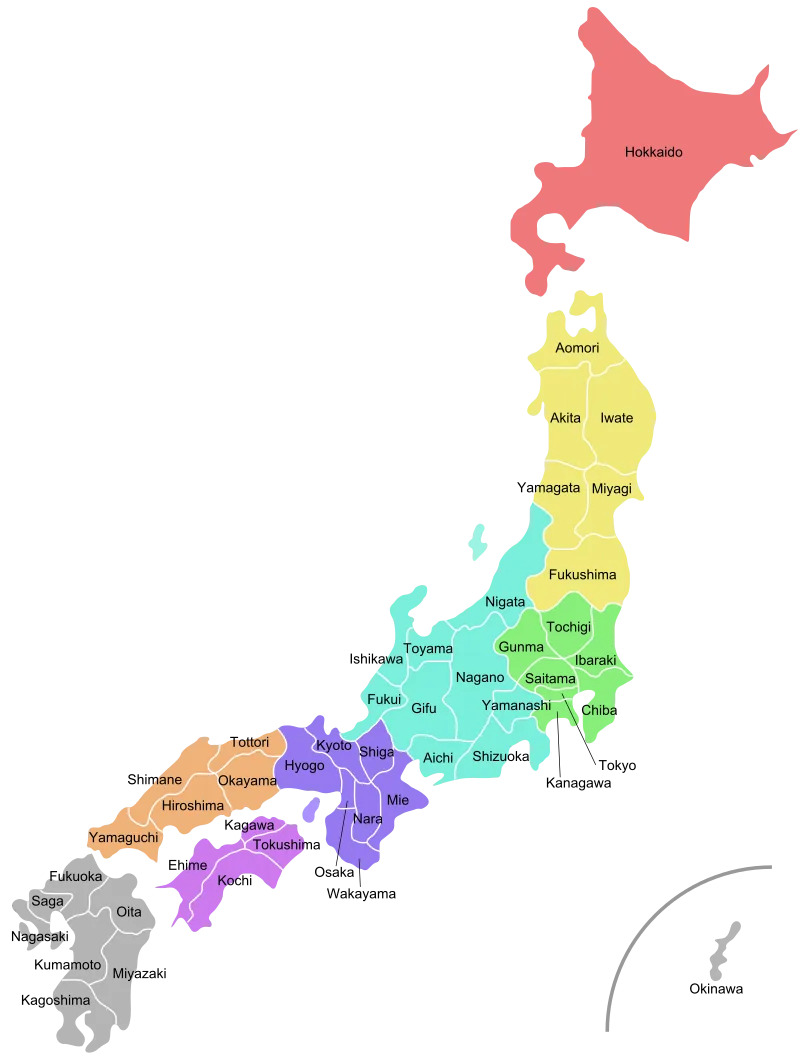
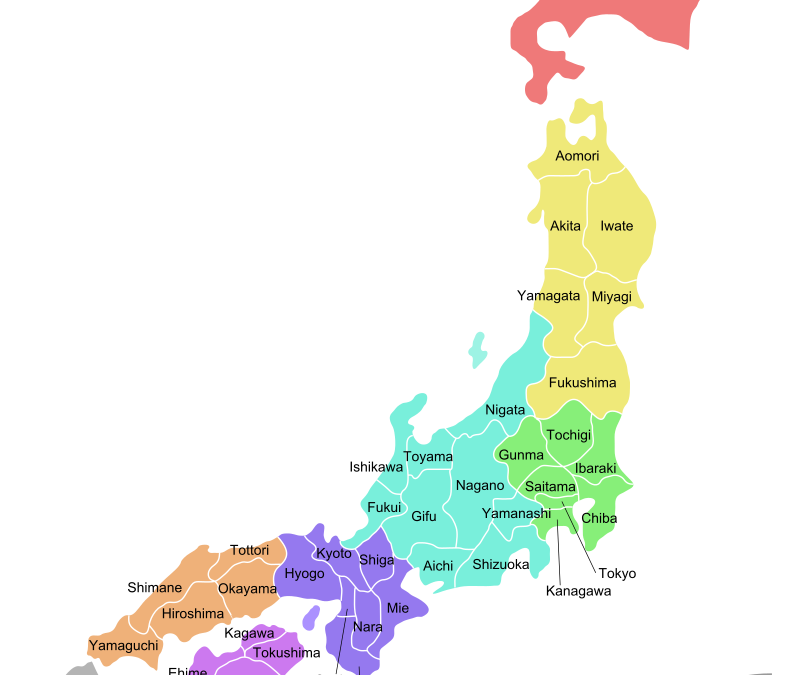
Awaji Island sits at the eastern end of the Seto Inland Sea, where that enclosed sea meets the open water between Honshu and Shikoku. To the north, the Akashi Strait separates it from Kobe; to the south, the Naruto Strait separates it from Shikoku, and the tidal race in that channel is what produces the Naruto whirlpools. The island belongs to Hyogo Prefecture, and its geography is unusually compact: the clay, the sea routes, and the mainland markets were all within reach of the same shoreline.

That combination — a clay bed, a coast, and shipping lanes — is the reason a pottery tradition took root here rather than somewhere inland. Island clay and sea trade shaped the local craft, and the same geography supported a second, less glamorous industry: Awaji was long a production center for roof tiles, the heavy ceramic work that building on a coastal island takes in quantity.
The oldest written frame
Awaji is named in the Kojiki and the Nihon Shoki as the first land the gods created — the island that came before the rest of Japan in the country’s oldest chronicles. Whatever a potter makes of a creation myth, it gives the island’s crafts an unusually deep frame: in the oldest written account of the country, this is where the land begins.

The pottery story itself is later and less certain in its details. Minpei-yaki is commonly traced to the late Edo period, when the potter Minpei is said to have opened a kiln using clay dug on the island — the commonly told story, repeated in local accounts, rather than a founding date that can be pinned to a single document. The wares that came out of that line are noted for amber and blue-green glazes and a warm, slightly rustic surface, the kind of finish that reads as handmade even when a workshop is producing at volume.
“In the oldest chronicles of Japan, Awaji is the first land the gods made. Its potters have been working the same island ground ever since the Edo period.”
-
8th century — The Kojiki and Nihon Shoki record Awaji as the first land created by the gods. -
Edo period — Island clay and sea trade support a local pottery economy, alongside the roof-tile works the island is known for. -
Late Edo period — The commonly told account places the potter Minpei’s kiln, working island clay, in this era; the ware takes his name. -
20th century — The island’s roof-tile works and pottery studios keep drawing on the same clay beds through the modern era. -
Late 1990s — The Akashi Kaikyo Bridge opens a road link to Kobe. -
2026 — A lidded Minpei-yaki yunomi with an “Awaji Fuji” motif is offered as an antique on Amazon JP, with no price shown.
What “still made here” means for this particular object is a slightly different question, because the cup itself is a vintage piece rather than new stock. No verified count of active kilns on the island was available for this page, and the listing does not identify a workshop, so the honest version of the continuity case is this: Minpei-yaki remains the identifying name for island pottery, the island’s clay is still the reference point for the ware, and amber and blue-green glazes are still how Awaji ceramics are described. Everything past that — which workshop, which decade, which firing — is something the object itself would have to answer.
The seasonal side is easy to picture. A lidded cup is winter logic: it holds heat on a cold morning, and its lid means the last third of a pot of sencha is still warm when you get to it. Tea ware of this kind also carries the gift-giving habit that runs through Japanese ceramics — a single cup, boxed, is a normal present for a move, a promotion, or a visit, which is one reason so many old cups survive in good condition.
📌 How does it compare?
If Awaji’s amber-and-blue-green tea ware is not quite the direction you want, these guides cover the neighboring options on the same site — other Kansai pottery traditions, a Hyogo incense craft, and a Hyogo textile.
 → Tamba Tachikui GuinomiA small sake cup from Hyogo’s Tamba kilns — the other great pottery name in this prefecture.
 → Tamba-yaki ChawanFor tea ceremony rather than daily tea — a matcha bowl in Tamba ware.
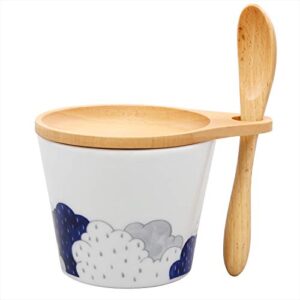 → Izushi-yaki CupWhite porcelain from northern Hyogo, if you want a clean café cup instead of rustic stoneware.
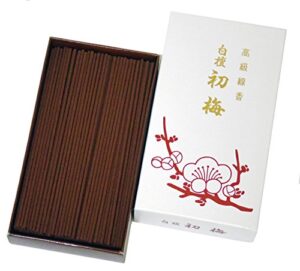 → Awaji-ko IncenseThe island’s other famous craft: incense sticks made on Awaji.
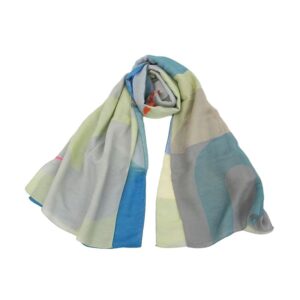 → Banshu-ori StoleA Hyogo textile for the same tea table — yarn-dyed cotton from the Banshu weaving district.
📦 Shipping & where to buy from outside Japan
The specific lidded cup in this guide is a Japanese listing, so the practical route is Amazon JP Global Store, which ships internationally from Japan. It is not a US-only fallback: the program reaches 65+ countries, including Canada, the UK and Australia, and import fees are estimated at checkout for most destinations.
Budget for shipping in the region of $15–$40 for a single cup, depending on destination and speed — a small parcel that is mostly air, packed as ceramics usually are. Amazon collects or estimates duties at checkout for many destinations; where it does not, the importing country’s threshold applies on arrival and is the buyer’s responsibility.

Two alternatives are worth knowing. Proxy services such as Buyee or Tenso will buy from Japanese sellers and forward the parcel to your address, which helps when a listing will not ship abroad directly; the trade-off is a second set of fees and slower handling. Specialist dealers of vintage Japanese ceramics in your own country are the third route, and the easiest if you want to see the piece before paying — with the caveat that the ware name, not the workshop, is what usually survives in their descriptions.
• Confirm the listing is in stock before relying on a price — this one was not.
• Ask about chips, crazing, and whether the lid fits evenly.
• Check whether the parcel is insured and how breakage claims are handled.
• Keep the order confirmation for customs.
Price snapshot across stores
ℹ️ No price was available for this listing at the time of writing, so no figure appears in this table. Treat the retailer pages as the only authoritative source.
| Store | Item | Price | Notes |
|---|---|---|---|
| 🇺🇸 Amazon.com (US) | Browse Japanese tea cups and yunomi | varies (USD) | Best if you are shopping from the US — Prime shipping, USD pricing, no international customs. Useful for comparing cup shapes and glaze styles; this specific vintage cup is listed in Japan (next row). |
| 🇯🇵 Amazon JP Global Store | 珉平焼 蓋付湯呑 ふり平 淡路富士 — one lidded cup, antique | No price shown; out of stock on November 17, 2026 | Ships internationally from Japan to 65+ countries — including Canada, the UK and Australia — with import fees estimated at checkout. Restock is not announced on the page. |
| Maker direct | — | — | No workshop is named on the listing, so there is no maker’s shop to order from for this specific piece. |
| Proxy services (Buyee / Tenso) | The same listing, bought on your behalf | Item price + service fee + forwarding | Useful when a seller will not ship abroad, or when the Global Store route is unavailable to your country. Expect two sets of handling and a longer wait. |
What it does well
- 🍽️ Dishwasher: not recommended for a vintage glazed cup — hand-wash with warm water and a soft sponge.
- ♨️ Microwave: avoid until the seller confirms the glaze; antique glazes are not formulated or tested for it.
- 🧴 Daily care: rinse soon after use, wipe dry with a soft cloth, and let the cup air fully before stacking the lid.
- 🔧 Repairs: no repair or re-glazing service is offered with the listing; chips and cracks on an antique have to be accepted or avoided at purchase.
Weaknesses and things to verify before buying
- No price, and out of stock. At the time of writing the listing showed no figure and read 現在在庫切れです. Any budget planning has to start from the page itself.
- Antique condition is not described. The title calls it 骨董 (antique) but the page gives no condition grade, no photographs of the rim or foot, and no note on crazing, chips, or lid fit.
- No size or capacity. A yunomi can range from a small sencha cup to a mug-sized vessel. Without numbers, you cannot tell whether it will feel right in the hand.
- No maker, no signature, no box. The word ふり平 sits in the title without explanation, and no kiln or potter is identified, so the piece cannot be attributed to a named workshop from the listing alone.
- The “Awaji Fuji” motif is named, not shown in words. How much of the design is figure, how much is glaze variation, is only visible in the listing photographs.
- One cup, no set. If you want matching cups for a household or a gift set of five, this listing will not get you there.
- Ceramics cross borders badly. Breakage in transit and customs handling are the two routine failure points for a single shipped cup.
⚠️ The single most useful message to send the seller before buying: ask for a photo of the rim, the foot ring, the inside of the lid, and a straight-on side view next to a ruler.
Conclusion — which buyer type are you?
Other ways to approach this purchase
🏆 Editor’s Pick — the Awaji lidded yunomi we would start with
This is the listing described throughout the page: a lidded yunomi in Minpei-yaki, the Awaji ware of Hyogo, titled 珉平焼 蓋付湯呑 ふり平 淡路富士 淡路焼 湯のみ 骨董 レトロ 茶器. It is sold as an antique piece — one cup with its lid — and no price was shown when it was checked on November 17, 2026. The listing also read 現在在庫切れです (currently out of stock) at that time.
- A named island ware. The title identifies both Minpei-yaki and Awaji-yaki, so the piece is anchored to a specific regional tradition.
- The form is clear. 蓋付湯呑 tells you exactly what arrives: a tea cup with its own lid, nothing more elaborate.
- A realistic entry point. One cup is the smallest commitment you can make to an island ceramic before buying a set.
What the listing does not give: price, size, glaze color, maker, or age. Ask the seller before ordering, and expect the Global Store route to be the one that ships to you.
❓ Frequently Asked Questions
Is this cup new or an antique?
The listing describes it as antique (骨董) and retro. It does not state the age, the decade of manufacture, or a condition grade, so treat it as a vintage piece whose condition you should confirm with the seller.
Why is no price shown?
At the time of writing the listing carried no price and was marked out of stock. Prices and availability on Amazon JP change often, so the listing itself is the authoritative source.
What is Minpei-yaki?
Minpei-yaki is the name most often used for Awaji ware, the pottery of Awaji Island in Hyogo Prefecture. The tradition is commonly traced to the late Edo period, when the potter Minpei is said to have opened a kiln using island clay.
Can I use it in a dishwasher or microwave?
The listing gives no care instructions. For an antique glazed cup, hand-washing and drying with a soft cloth is the safer routine, and a microwave is best avoided until the seller confirms the glaze.
Does Amazon JP ship this to Canada, the UK or Australia?
Amazon JP Global Store ships to more than 65 countries, including Canada, the UK and Australia, with import fees estimated at checkout. Availability of a specific listing can change by destination.
Is the amber or blue-green glaze on this cup?
The listing does not name a glaze color. Amber and blue-green glazes are noted characteristics of Awaji ware generally, not a description of this particular cup — the photographs on the listing are the reliable guide.
What does ふり平 in the title mean?
The listing does not explain the term, and no maker or workshop is named. Treat the maker as unidentified unless the seller provides documentation.
jpmono.com is curated by a Japan-based editorial team working out of Toyama in the Hokuriku region and Nara in Kansai, and is independent. We do not take payment from the makers we feature; income comes from affiliate links. Read more about our editorial standards.
This article was drafted with the help of AI tools from a Japan-based editorial desk and then reviewed and edited by our staff. Product details come from the linked retailer listing at the time of writing; availability, price and condition should be verified at the retailer.
Affiliate disclosure: jpmono.com may earn a commission on qualifying purchases made through links on this page, at no additional cost to you.