📢 PR: This article contains Amazon affiliate links (US primary, Japan secondary) (details).
A fude (筆, “writing brush”) is the first of the Four Treasures of the Study, and few places in Japan have a stronger claim to it than Nara. This guide looks at the traditional Nara calligraphy brush made by Akashiya (あかしや), a brushmaker founded in Nara in 1653 that still hand-binds graded animal hair onto bamboo handles for shodō (書道, “the way of writing”) and sumi-e (墨絵, “ink painting”).
What makes a Nara brush worth a foreign reader’s attention is not a single feature but a lineage. Nara was Japan’s first permanent capital, and the temple scriptoria that copied sutras there created the sustained demand that anchored the brush, ink, and paper crafts in one ancient city. Tradition credits Kūkai (空海, “Kōbō Daishi”) with carrying Tang-dynasty brushmaking technique back to Japan in the early ninth century, which is why Nara fude is often described as the wellspring of the Japanese writing-brush craft.
This article is written for international readers who want to understand what they are buying before they buy it: how hair grade and size change the writing experience, how a Nara brush fits alongside Nara ink and shodō paper, and the practical paths for purchasing one from outside Japan. A note on data up front — no specific Amazon listing snapshot (ASIN, price, or product photo) was captured for this piece, so the buying guidance below is framed around search paths and verifiable category facts rather than a single listed unit. Where a number would normally appear, this guide says so plainly rather than guess.
📅 Published: 🔄 Last updated: ⏱️ Read time: about 11 min
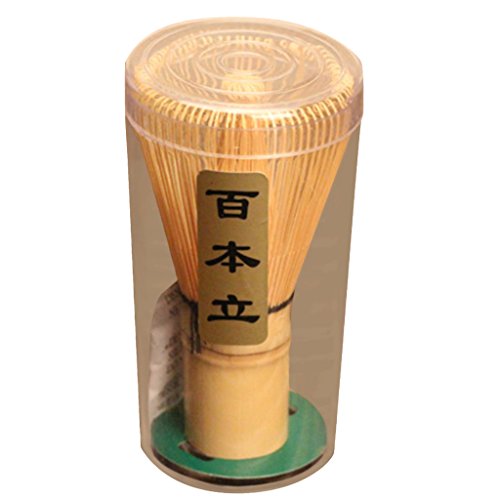
🖌️ 筆 No current listing photo captured
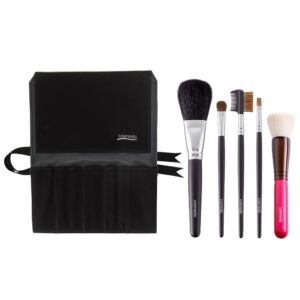
Akashiya traditional Nara fude — bamboo handle, goat/horse-hair blend, for shodō and sumi-e. Made in Nara (Kansai). No specific Amazon listing image was available at the time of writing.
🖌️ Are learning or practicing shodō and want a real Japanese fude, not a craft-store substitute
🎨 Work in sumi-e and want a brush that holds a tapered point through long strokes
🏯 Value provenance — a maker rooted in Japan’s first capital with a documented founding year (1653)
🎁 Want a meaningful gift that pairs naturally with Nara ink and shodō paper
🧧 Appreciate hand-bound animal-hair brushes and are willing to break one in properly
⚠️ Probably skip it if you…
💧 Want a self-inking or cartridge brush pen for everyday notes (a different Akashiya product line)
🧴 Are unwilling to rinse and reshape a natural-hair brush by hand after each use
💴 Need a confirmed price before ordering — none was captured for this guide (verify at checkout)
🚫 Avoid animal-hair products on ethical grounds (these are goat/horse hair)
⏱️ Want guaranteed fast domestic US delivery of this exact maker (it ships from Japan)
Landscape byobu attrib Sesshu (Nara Prefectural Museum of Art).jpg — Photo: Wikimedia Commons (Public domain)
Product overview (from published specs)
👉 The table scrolls horizontally. No Amazon listing snapshot (ASIN/price) was captured for this article, so listing-specific cells read “not captured.” Verify all current details at the retailer before buying.
Attribute
Akashiya traditional Nara fude ★ this guide
Notes / source
Maker
Akashiya (あかしや), founded 1653, Nara
Per data notes
Craft category
Nara fude — traditional writing brush
Per data notes
Handle
Bamboo
Per recommendation hint
Bristle material
Goat / horse hair blend (graded animal hair)
Per recommendation hint
Intended use
Shodō (calligraphy) and sumi-e (ink painting)
Per recommendation hint
Size / brush number
Unconfirmed — varies by listing
Not captured; check listing
ASIN
Not captured
No listing snapshot available
Price
Not captured — verify at retailer
JPY is authoritative when listed
Origin
Nara, Kansai region, Japan
Per data notes
Only general category facts and the maker’s founding history were available for this article; no live Amazon listing was captured, so spec sheet values may differ by individual brush. USD figures elsewhere in this guide are approximate at a ¥150/USD baseline (mid-2026); JPY is the authoritative price whenever a listing shows one.
📖 Glossary — Japanese terms used in this article
fude (筆) — a Japanese writing/painting brush; the first of the Four Treasures of the Study.
shodō (書道) — “the way of writing,” Japanese brush calligraphy.
sumi-e (墨絵) — ink-wash painting done with brush and sumi ink.
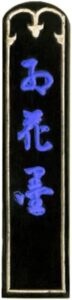
sumi (墨) — solid ink, ground on an inkstone with water; Nara is its historic center (see Kobaien below).
Four Treasures of the Study (文房四宝) — brush, ink, inkstone, and paper, the core tools of East Asian calligraphy.
shakyō (写経) — the practice of hand-copying Buddhist sutras; the temple scriptoria of Nara drove early demand for fine brushes.
Heijō-kyō (平城京) — Nara’s name as the imperial capital, 710–784.
Kūkai / Kōbō Daishi (空海・弘法大師) — the early-9th-century monk traditionally credited with bringing Tang brushmaking technique to Japan.
Scenery of Nara (52124482007).jpg — Photo: Wikimedia Commons (CC BY 2.0)
Which finish should you choose?
This piece is listed in 9 options. The photos below are the actual スタイル options on the listing right now — pick the one you want and confirm it on the product page before ordering, since hand-finished wares vary slightly piece to piece.
Where this comes from — place, era, and the craft tradition
Nara Kansai
📍 Nara is in Nara Prefecture — western Honshū, the historic heartland around Kyoto, Osaka and Nara.
📍
Where this is made
Nara (Nara Prefecture, Kansai region)
Inland in the Yamato Basin — roughly 370 km west-southwest of Tokyo and about 40 km south of Kyoto. Japan’s first permanent capital.
Nara is not a coastal craft town that grew up around a port; it is an inland former capital, and that is exactly why its writing-tool tradition runs so deep. When the imperial court settled at Heijō-kyō in 710, it concentrated administration, scholarship, and — above all — Buddhist institutions into one planned city. Temples such as Tōdai-ji and Kōfuku-ji became centers of learning as much as worship.
Nara was Japan’s first permanent capital, from 710 to 784.
The historical anchor for the brush specifically is the practice of shakyō, the hand-copying of sutras. Temple scriptoria copied scripture at scale, and that work demanded a steady supply of fine brushes, ink, and paper. The demand did not come and go with a single ruler; it was institutional and sustained, and it is what fixed the Four Treasures of the Study in this one ancient city rather than scattering them across the country.
📜 Timeline — the Nara brush lineage
710 — Heijō-kyō established as Japan’s first permanent capital.
710–784 — The Nara period; temple scriptoria (Tōdai-ji, Kōfuku-ji) drive large-scale sutra copying (shakyō), creating sustained demand for fine brushes, ink, and paper.
early 9th century — Tradition credits Kūkai (Kōbō Daishi) with bringing Tang-dynasty brushmaking technique to Japan, giving Nara fude its claim as the craft’s wellspring.
1653 — Akashiya founded in Nara, hand-binding brushes from graded animal hair on bamboo handles.
2026 — Akashiya continues the craft; Nara remains a center for the Four Treasures of the Study, alongside its sister trade in Nara sumi ink.
Tradition credits Kūkai, the monk also known as Kōbō Daishi, with carrying Tang-dynasty brushmaking technique back to Japan in the early ninth century. This is a folk-traditional attribution rather than a documented commercial record, and it is worth stating that way — but it is the story Nara’s brushmakers themselves point to, and it explains why the city is described as the source of the Japanese writing-brush craft.
“Nara did not adopt the brush, the ink, and the paper one at a time — they matured together inside the same temple economy, which is why the city holds all four treasures at once.”
Against that backdrop, Akashiya’s continuity case is concrete. The firm was founded in Nara in 1653 and still hand-binds brushes from graded animal hair on bamboo handles — the same basic method, refined rather than replaced. The pairing with Nara sumi ink, made by houses such as Kobaien, is not a marketing coincidence; brush, ink, and paper traditions all grew up together within the former capital’s temple culture, which is why a Nara brush, a Nara inkstick, and good shodō paper still belong on the same desk.
Price snapshot across stores
👉 The table scrolls horizontally. No specific listing price was captured for this article; prices and stock fluctuate, so confirm at the retailer. JPY is the authoritative price; USD figures are approximate at ¥150/USD (mid-2026).
Browse Japanese calligraphy brushes & shodō supplies
varies (USD)
Best if you are shopping from the US — Prime shipping, USD pricing, no international customs. Amazon US carries Japanese calligraphy brushes, sumi ink, and shodō paper from several makers, useful for comparing hair grades and sizes. The Akashiya Nara brush itself is sourced from Japan (next row).
Where the specific item is sourced; ships internationally from Japan to most major destinations. No ASIN or price snapshot was captured for this guide — use the search link to find the current listing.
Maker direct (Akashiya)
Full Akashiya brush catalog
Unconfirmed — check maker site
Akashiya operates its own catalog; international shipping policy and pricing should be confirmed on the official site before ordering.
Proxy services (Buyee / Tenso)
Any Japanese listing forwarded abroad
item price + forwarding fee
For listings that do not ship internationally directly, a forwarding proxy can buy domestically and re-ship. Adds a service fee and a second shipping leg; factor in customs duty above local thresholds.
What it does well
🏯
Documented provenance
A maker founded in 1653, in the city that anchors the Japanese brush tradition. Provenance you can name and date, not vague heritage language.
✍️
Made for real practice
A traditional fude built for shodō and sumi-e — not a decorative object. The goat/horse blend targets both ink capacity and resilience.
🧩
Part of a complete set
Pairs naturally with Nara sumi ink and shodō paper — brush, ink, and paper from the same regional tradition.
🌏
Obtainable from abroad
Reachable through Amazon JP Global Store or a forwarding proxy, so international readers are not limited to in-person Japanese shops.
Weaknesses and things to verify before buying
No price was captured. This guide has no listing snapshot, so confirm the current price at the retailer before committing — do not assume a figure.
No confirmed size or brush number. Fude come in many sizes; the specific size/grade is unconfirmed here, so read the listing carefully (small practice brushes and large character brushes behave very differently).
Natural-hair brushes need care. Goat/horse hair must be rinsed, reshaped, and dried hanging after use; neglect ruins the point. Not a wipe-and-forget tool.
Break-in and sizing of the tip. A new fude’s tip is often starched; it must be softened correctly. Buyers expecting a ready-to-write felt-tip experience may be surprised.
Ships from Japan. Via the Global Store or a proxy, expect longer transit than domestic US orders and possible customs duty above local thresholds.
Animal-hair material. These are goat/horse hair; buyers who avoid animal products should look at synthetic brushes instead.
Maker-direct international shipping is unconfirmed. If buying from Akashiya’s own site, verify whether it ships to your country before relying on it.
Conclusion — which buyer type are you?
🏆 Premium / serious practitioner
You practice shodō or sumi-e regularly and want a real Nara fude with documented provenance. Choose the goat/horse blend and pair it with Nara sumi ink — confirm size on the listing.
🎯 Mainstream / learner
You are learning and want one good all-rounder. A firmer (horse-leaning) brush is more forgiving for defined strokes; the blend is the flexible middle.
💴 Budget-conscious
Compare Japanese brushes on Amazon US first for USD pricing and Prime shipping, then decide whether the specific Akashiya piece from Japan is worth the wait.
🚫 Skip it
If you want a no-maintenance brush pen, avoid animal hair, or need a confirmed price and fast domestic delivery, this is not the right pick right now.
Other ways to approach this purchase
⏳
Wait for a listing snapshot
Because no price was captured here, it can pay to wait until you can see a live Global Store listing with size, grade, and current price before ordering.
🏬
Maker direct
Akashiya’s own catalog is the most complete source for sizes and grades; confirm international shipping before relying on it.
🧧
Points & rewards
If buying through Amazon, stacking your usual card or Amazon points offsets part of the cross-border shipping cost.
🚚
Proxy services (Buyee / Tenso)
For listings that do not ship abroad directly, a forwarding proxy buys domestically and re-ships — at the cost of a service fee and a second shipping leg.
🏆 Editor’s Pick
🏆 Editor’s Pick — the Akashiya Nara fude we’d start with
For a first Nara brush, the data suggests starting with the goat/horse blend on a bamboo handle — the profile in the recommendation hint. It balances ink capacity and resilience, and it is serviceable for both shodō and sumi-e, which makes it the most flexible single choice. Based on the available information, no specific listing (ASIN or price) was captured, so use the search paths below and confirm size, grade, and price on the page before buying.
Made by Akashiya, a Nara brushmaker founded in 1653 — documented provenance in the craft’s home city.
Goat/horse blend aims to suit both calligraphy and ink painting, a sensible all-rounder.
Pairs directly with Nara sumi ink and shodō paper from the same regional tradition.
Price not captured for this guide — verify the current JPY price at the listing (USD is approximate at ¥150/USD).
❓ Frequently Asked Questions
What is a Nara fude, and why is Nara associated with brushes?
A Nara fude is a traditional Japanese writing brush made in Nara, Japan’s first permanent capital (710–784). The temple scriptoria there copied Buddhist sutras at scale, which created sustained demand for fine brushes, ink, and paper. Tradition also credits the monk Kūkai with bringing Tang-dynasty brushmaking technique to Japan in the early ninth century, so Nara is often described as the source of the Japanese brush craft.
Goat hair or horse hair — which should a beginner choose?
Goat hair is softer, holds more ink, and gives more variable lines, which rewards control. Horse hair is firmer, with more spring and crisper strokes, so it is generally more forgiving for beginners. The goat/horse blend this guide highlights aims for a balance of both. Confirm the exact grade on the listing, since it varies by product.
Can I buy an Akashiya Nara brush from outside Japan?
Yes. Amazon JP Global Store ships many items internationally to most major destinations, and a forwarding proxy such as Buyee or Tenso can re-ship listings that do not offer direct international delivery. Expect longer transit than a domestic US order, plus possible customs duty above your local threshold.
How do I care for a natural-hair calligraphy brush?
Rinse the brush in clean water after each use until no ink remains, gently reshape the tip to a point, and hang it bristles-down to dry. Don’t leave it standing in water or store it wet. A new brush often has a starched tip that must be softened correctly before first use.
What ink and paper pair with a Nara brush?
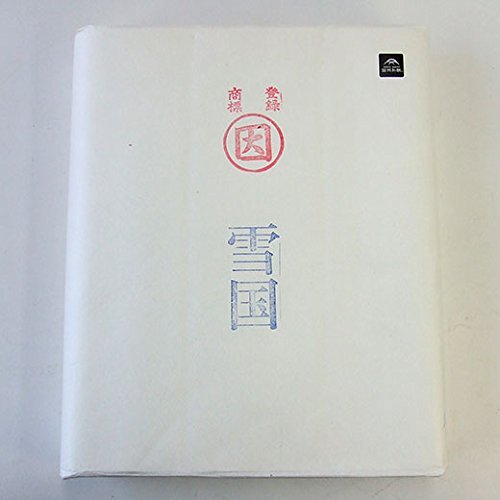
A Nara sumi inkstick (for example from Kobaien) and dedicated shodō paper complete the set — brush, ink, and paper all matured together in Nara’s temple culture. See the related guides linked above for Nara sumi ink and shodō calligraphy paper.
Why doesn’t this guide show a specific price?
No Amazon listing snapshot (ASIN or price) was captured for this article, so rather than guess a figure, the guide uses search links and asks you to confirm the current JPY price on the listing. JPY is the authoritative price; any USD figure is approximate at a ¥150/USD baseline as of mid-2026.
jpmono.com is curated by a Japan-based editorial team (working out of Toyama in the Hokuriku region and Nara in Kansai) and is independent. We don’t take payment from the makers we feature; income comes from affiliate links. We don’t physically test every product — we read makers’ specs and source listings.
📢 Affiliate Disclosure — This article contains affiliate links from the Amazon Associates Program. The primary path is Amazon US (amazon.com) via search — many of these hand-forged Japanese craft items are not individually listed on amazon.com, but Amazon US carries comparable Japanese kitchen and home goods, and commissions on whatever the visitor purchases through the search link go to support this site. The secondary path is Amazon JP Global Store (amazon.co.jp), which is where the specific items covered in this guide are sourced from and which ships internationally to most major destinations. If you make a purchase through either of these links, we may earn a commission at no extra cost to you. Prices and availability shown are based on data at the time of writing and may have changed — always verify at the retailer before purchasing. USD figures shown alongside JPY are approximate (¥150/USD baseline as of mid-2026); the JPY price is the authoritative one for the specific listed item.
🤖 This article was drafted with AI assistance and reviewed against the source data available at the time of writing. Where listing data (ASIN, price, size) was not captured, the article states so plainly rather than estimating. Verify all current details at the retailer before purchasing.
Affiliate disclosure: jpmono.com may earn a commission on qualifying purchases made through links on this page, at no additional cost to you.
![Akashiya Nara Fude Calligraphy Brush, From the Old Capital [2026]](https://jpmono.com/wp-content/uploads/2026/05/akashiya-nara-fude-calligraphy-brush-where-to-buy-2026-featured.jpg)
![Akashiya Nara Fude Calligraphy Brush, From the Old Capital [2026]](https://m.media-amazon.com/images/I/21hlojytSjL._SL500_.jpg)


![Akashiya Nara Fude Calligraphy Brush, From the Old Capital [2026] — 3号 千里 finish](https://m.media-amazon.com/images/I/31wmtHtPBeL._SL500_.jpg)
![Akashiya Nara Fude Calligraphy Brush, From the Old Capital [2026] — 4号 楽山 finish](https://m.media-amazon.com/images/I/31guAKo0pPL._SL500_.jpg)
![Akashiya Nara Fude Calligraphy Brush, From the Old Capital [2026] — 3号 守中 finish](https://m.media-amazon.com/images/I/31eeId0xtyL._SL500_.jpg)
![Akashiya Nara Fude Calligraphy Brush, From the Old Capital [2026] — 3号 長城 finish](https://m.media-amazon.com/images/I/31DFwtrCRrL._SL500_.jpg)
![Akashiya Nara Fude Calligraphy Brush, From the Old Capital [2026] — 3号 祥花 finish](https://m.media-amazon.com/images/I/21ttRH-JwzL._SL500_.jpg)
![Akashiya Nara Fude Calligraphy Brush, From the Old Capital [2026] — 3号 草経 finish](https://m.media-amazon.com/images/I/21aEA4XREsL._SL500_.jpg)
![Akashiya Nara Fude Calligraphy Brush, From the Old Capital [2026] — 3号 桂林 finish](https://m.media-amazon.com/images/I/21PDBkWCJ6L._SL500_.jpg)
![Akashiya Nara Fude Calligraphy Brush, From the Old Capital [2026] — 3号 和楽 finish](https://m.media-amazon.com/images/I/212T6+THWqL._SL500_.jpg)