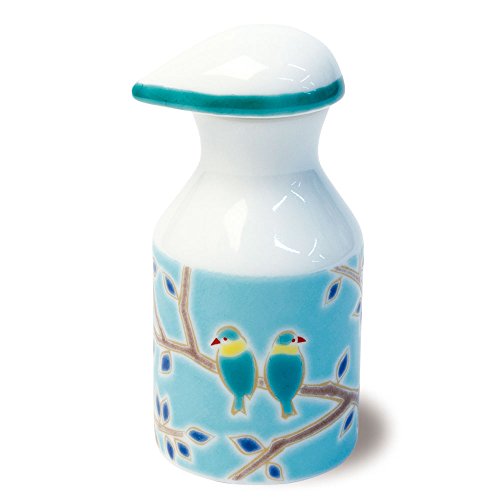
- What it is: A porcelain soy sauce dispenser in Kutani ware, decorated in overglaze enamel with a small-bird motif and listed as drip-resistant.
- Made in: Ishikawa Prefecture, Japan — Kutani ware, the porcelain tradition of the Hokuriku region.
- Price band: ¥3,030 (≈ $20 USD) — entry-to-mid range for a decorated Kutani tabletop piece; confirm on the live listing.
- Best for: Households that keep soy sauce on the table every day and want a decorated porcelain dispenser instead of a plastic bottle.
- Skip if: You need a stated capacity, a confirmed dishwasher-safe piece, or a named kiln — none of these appear on the listing.
- Shipping: ships internationally from Amazon Japan — jump to our pick ↓
The glaze on a Kutani piece is fired twice: once to fuse the porcelain, then again to set the painted enamel on top of it. That second firing is the reason the reds, greens and yellows sit so brightly on the surface instead of sinking into it. A soy sauce dispenser is a small canvas for that technique, and it is the piece of tableware most households actually touch three times a day.
Kutani ware comes from the Kutani district of Ishikawa Prefecture, on the Sea of Japan coast in the Hokuriku region. The tradition is porcelain rather than earthenware, and its reputation rests on bold overglaze enamel decoration — often the five-color palette known as gosai, built from red, green, yellow, purple and blue. Where Arita ware tends to be admired for fine blue underglaze painting, Kutani is usually read as the louder, more graphic porcelain of Japan.
This article looks at one listing in detail: a Kutani ware soy sauce dispenser with a small-bird motif, sold on Amazon Japan for ¥3,030 at the time of writing. It covers what the listing does and does not state, how the piece fits the wider craft, what to check before ordering from abroad, and how it compares with other Japanese tableware guides on this site.
Updated
~8 min read

- Who this is for — and who should skip it
- Product overview (from published specs)
- 📍 Where this comes from — place, era, and the craft tradition
- 📌 How does it compare?
- Price snapshot across stores
- What it does well
- Weaknesses and things to verify before buying
- 📦 Shipping & where to buy from outside Japan
- Conclusion — which buyer type are you?
- Other ways to approach this purchase
- 🏆 Editor’s Pick
- ❓ Frequently Asked Questions
Who this is for — and who should skip it
- You keep soy sauce on the table and want a small, decorated porcelain dispenser rather than a plastic pour bottle.
- You are building a table setting around Japanese porcelain and want one Kutani accent piece at a modest price.
- You like figurative decoration — the listing describes a small-bird motif — rather than abstract or floral patterns.
- You are buying a small gift for someone who cooks Japanese food at home.
- You are comfortable ordering from Amazon Japan and having the parcel forwarded internationally.
- You need to know the exact capacity before buying — the listing gives no volume figure.
- You want a named kiln or a signed piece — the listing does not identify the workshop.
- You expect machine-safe care instructions; none are stated.
- You want a large dispenser for a big household or restaurant service.
- You need guaranteed next-day delivery in the US or EU; this ships from Japan.
Product overview (from published specs)
ℹ️ Only the Amazon JP listing snapshot is available; live pricing may have shifted since the writing date. Attributes the listing does not state are marked unconfirmed below.
Kutani Ware Soy Sauce Dispenser
液だれしない 醤油さし 九谷焼 小鳥
残り2点 ご注文はお早めに · Sold by 和座の蔵 · ASIN B01N8WRKHW
Price and availability as of 2026-11-25 09:13 JST. The Amazon listing at the time of purchase is authoritative. jpmono.com earns a commission on qualifying purchases at no extra cost to you.
| Attribute | As stated on the listing |
|---|---|
| Item | Soy sauce dispenser (醤油さし), listed as drip-resistant |
| Craft | Kutani ware (九谷焼), Ishikawa Prefecture |
| Material | Porcelain, with overglaze enamel decoration |
| Motif | Small bird (小鳥) |
| Set contents | One dispenser, as titled |
| Capacity | Unconfirmed — not stated on the listing |
| Kiln / maker | Unconfirmed — the listing does not name a workshop or artist |
| Hand-painted or transfer | Unconfirmed — the listing does not specify the decoration method |
| Care instructions | Unconfirmed — no dishwasher or microwave guidance stated |
| Condition | New |
| Seller | 和座の蔵 (Waza no Kura) |
| Price | ¥3,030 (≈ $20 USD) — as of 2026-11-25; verify on the listing |
| Availability | Only 2 left at the time of writing |
📖 Glossary — the Japanese terms in this article
- Kutani ware (九谷焼, Kutani-yaki)
- Porcelain made in the Kutani district of Ishikawa Prefecture, known for overglaze enamel painting.
- Overglaze enamel (釉上彩, iroe)
- Enamel colors painted onto an already fired glaze, then refired at a lower temperature to fuse the decoration to the surface.
- Gosai (五彩)
- The five-color Kutani palette — red, green, yellow, purple and blue — the combination most associated with the ware.
- Shoyu sashi (醤油さし)
- A soy sauce dispenser; the small pourer kept on the dining table in Japanese homes.
- Porcelain (磁器, jiki)
- Vitrified, non-porous ceramic fired at high temperature; it rings when tapped and stays impermeable even before glazing.
- Kiln (窯, gama)
- A workshop-and-furnace operation; in Kutani ware the term also stands for the studio that decorates and fires the pieces.
📍 Where this comes from — place, era, and the craft tradition
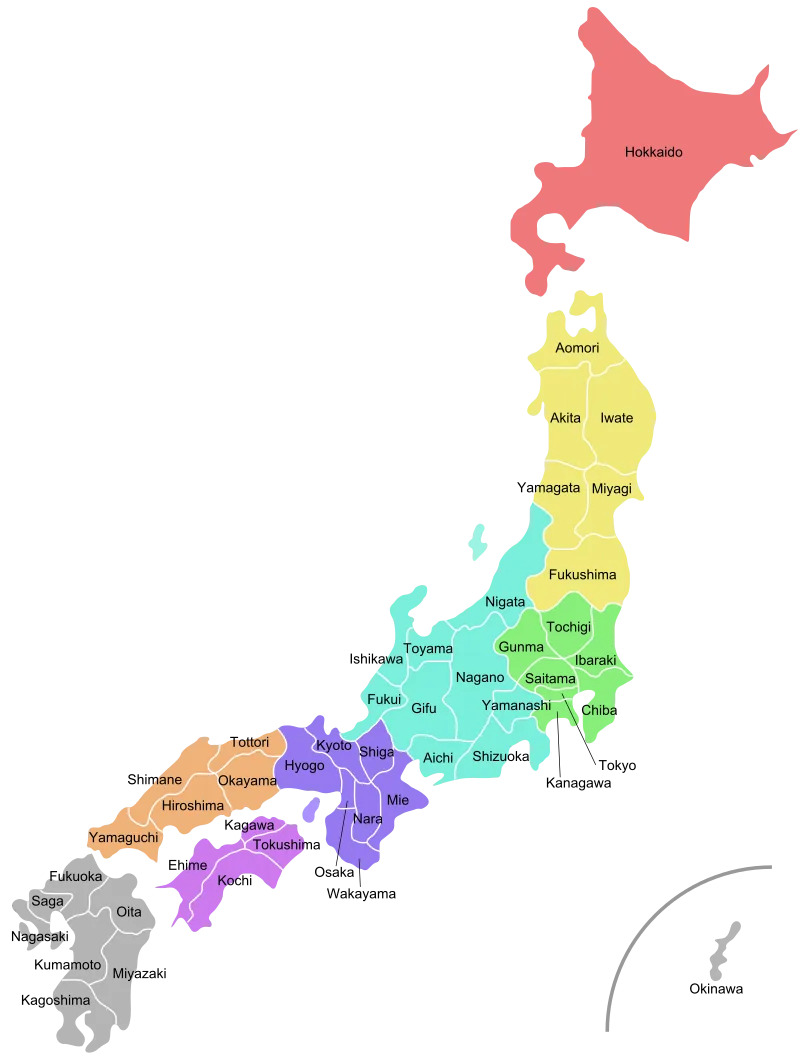
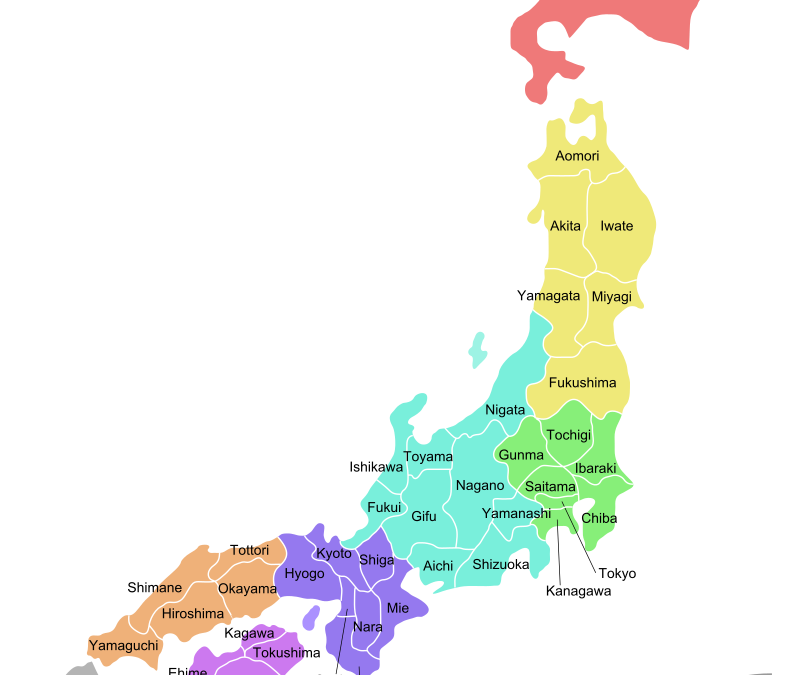
Ishikawa Prefecture occupies a narrow band of the Sea of Japan coast in the Hokuriku region, with the Noto Peninsula reaching north into the sea and the Hakusan mountains closing the landward side. Kanazawa, the capital, grew as a castle town and still carries the craft infrastructure of one. The Kutani district sits inland to the south, in the hills around the hot-spring town of Yamanaka Onsen.
The region’s ceramic history runs through the Kaga domain, the large feudal territory ruled by the Maeda family from Kanazawa Castle. Domain patronage supported lacquer, metalwork, gold leaf and ceramics, and the Kutani kilns were established within that orbit in the early modern period. Kanazawa Castle and the Maeda garden, Kenrokuen, are the surviving physical markers of that patronage system.

-
Mid-17th century — the first porcelain kilns are opened in the Kutani district during the early Edo period. -
Early 18th century — the founding kilns go silent and production lapses for a long interval. -
19th century — several kilns revive the tradition and re-establish Kutani decoration. -
20th century — Kutani ware is recognized under Japan’s traditional-craft designation. -
2026 — Kutani ware is still produced in and around Kanazawa and the Kutani district.
Kutani ware’s break in production is the part of its history that outsiders rarely hear. The early workshops did not simply evolve into today’s kilns; they stopped, and the ware was revived in the 19th century by several kilns working in the old manner. That gap is why the tradition is usually described in two arcs — an early phase and a revival — rather than one unbroken line.
What survived the gap was the decoration. Kutani’s identity is not a body shape or a clay type but a way of painting on top of the glaze: dense, confident enamel work in the five-color palette, often covering most of the visible surface. The technique requires a second firing at a lower temperature, which is why Kutani colors hold their brightness rather than melting into the glaze.
“Kutani’s signature is not a shape but a palette: red, green, yellow, purple and blue, painted over the glaze and fired a second time.”
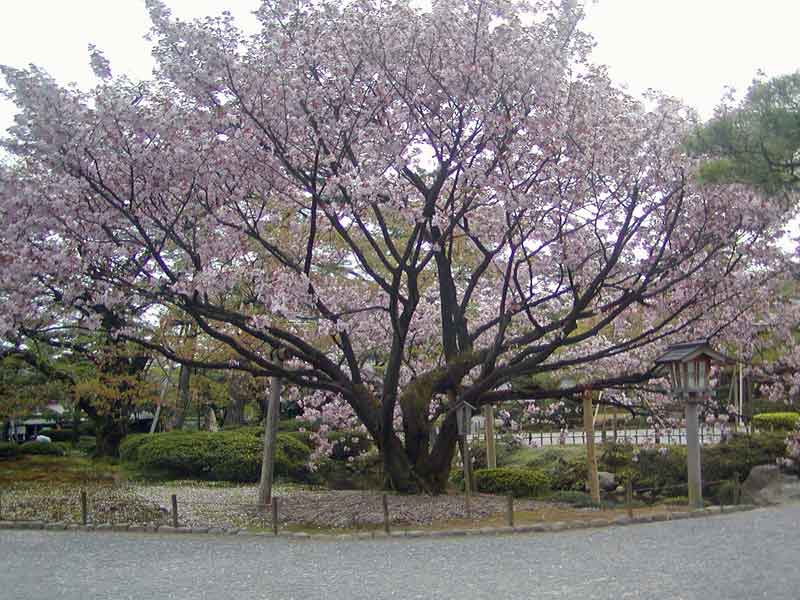
The tea culture of the Kaga court gave ceramics a use beyond display. Tea utensils, serving dishes and table pieces were commissioned and used within the domain’s hospitality life, and that demand is part of why the region sustained several craft industries at once — porcelain, lacquer, metal casting and gold leaf. Kanazawa’s teahouse districts are the built record of that hospitality economy.

Continuity today is a workshop story rather than a single-company story. Production continues in and around Kanazawa and the Kutani district across a number of independent kilns, some decorating blanks thrown elsewhere and some working the whole process in-house. Because the ware is defined by its enamel painting, a Kutani piece can be a studio production with several hands on it — thrower, painter, firer — without any one of them signing the base.
On the table, the craft lands in ordinary use. Soy sauce is poured at almost every Japanese meal, and the dispenser is the one Kutani object a household handles daily rather than keeping in a cupboard. A small-bird motif is a conventional choice for that scale of object: a single figure on a small body, readable across a dinner table without needing a large flat surface.
📌 How does it compare?
Other Japanese tableware pieces worth reading alongside this one, from lacquer bowls to Arita porcelain and the rest of the Kutani range.
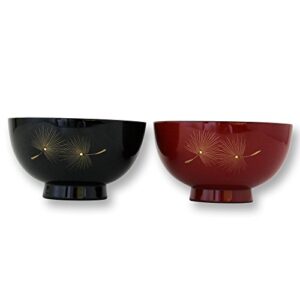 Wajima Lacquer Soup Bowl
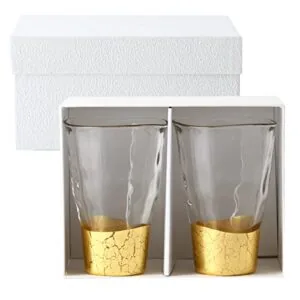 Kanazawa Gold-Leaf Tumbler
 Arita Soy Sauce Dispenser
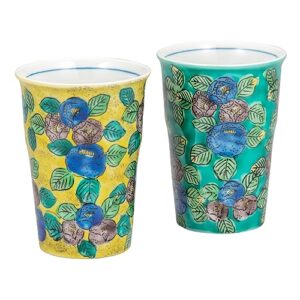 Kutani Ware Gosai Guinomi: Hand-Painted Japanese Sake Cup [2026]
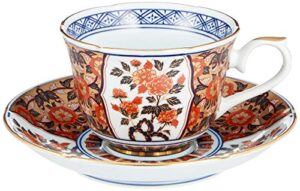 Kutani Ware Gosai Overglaze Coffee Cup & Saucer: Where to Buy [2026]
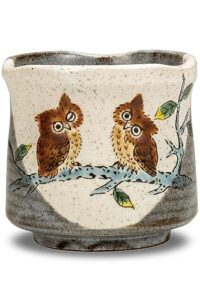 Kutani Ware Gosai Hand-Painted Coffee Mug — Where to Buy [2026]
Price snapshot across stores
The specific Kutani piece is sourced from the Amazon Japan listing. USD figures are approximate estimates at a ¥150/USD baseline; the yen price is the authoritative one. Prices and stock move, so verify at the retailer.
| Store | Item / variant | Price (JPY + USD est.) | Notes |
|---|---|---|---|
| 🇺🇸 Amazon US (search) | Browse Japanese porcelain soy sauce dispensers | varies (USD) | Best if you are shopping from the US — Prime shipping, USD pricing, no international customs. Amazon US carries Japanese porcelain from several makers; this specific Kutani piece ships from Japan (next row). |
| 🇯🇵 Amazon JP Global Store | Kutani ware soy sauce dispenser, small-bird motif (1 piece) | ¥3,030 (≈ $20 USD) | Ships internationally from Japan to 65+ countries — including Canada, the UK and Australia — with import fees estimated at checkout. Only 2 left at the time of writing. |
| Maker direct | — | — | No confirmed maker page for this piece: the listing does not name the kiln or workshop. |
| Proxy services (Buyee / Tenso) | Same Amazon JP listing, forwarded | Listing price + proxy fees | Useful if your country is not covered by Amazon JP Global Store, or to consolidate several orders; proxy and forwarding fees apply. |
What it does well
Weaknesses and things to verify before buying
- Capacity is not stated. The listing gives no volume, so check the dimensions and fill before ordering if size matters.
- The kiln is not named. Kutani ware covers many independent workshops; without a named studio, the piece cannot be attributed to a specific line.
- Decoration method is unconfirmed. The listing does not say whether the bird is hand-painted or applied by transfer, and both exist within Kutani ware.
- No care guidance. Nothing is stated about dishwasher or microwave use; decorated porcelain is often hand-washed, so confirm before buying.
- Stock is thin. Only 2 units were listed at the time of writing, so availability may change quickly.
- Import costs are extra. Shipping and any duties or import fees are calculated at checkout and vary by destination.
📦 Shipping & where to buy from outside Japan
Amazon JP Global Store ships this kind of household ceramic to 65+ countries, including Canada, the UK and Australia. Shipping on a small parcel typically runs about $15–$40 depending on destination and speed, and Amazon estimates import fees at checkout for most countries.
Two practical notes. First, ceramics are packed for international transit by the marketplace, but breakage claims are easier if you keep the unboxing photos. Second, orders above your country’s low-value threshold can attract duty or handling fees; the checkout estimate covers most of this, but local rules differ. If your country is not served by Amazon JP Global Store, a proxy such as Buyee or Tenso can forward the same listing.
Conclusion — which buyer type are you?
Other ways to approach this purchase
🏆 Editor’s Pick
❓ Frequently Asked Questions
Does this dispenser ship outside Japan?
Amazon JP Global Store ships to 65+ countries, including Canada, the UK and Australia. Shipping typically costs about $15–$40, and import fees are estimated at checkout for most destinations.
Is ¥3,030 the final cost?
No. ¥3,030 (≈ $20 USD) is the listing price as of 2026-11-25; shipping and any import fees are added at checkout and vary by destination. Verify the current price on the listing.
Is it really Kutani ware?
The listing title identifies it as Kutani ware (九谷焼), and the description matches the craft’s porcelain body and overglaze enamel. The listing does not name the kiln, so the specific workshop is unconfirmed.
Is the bird hand-painted?
The listing does not say. Kutani decoration can be hand-painted or applied by transfer, and without a statement from the seller the method cannot be confirmed.
How much soy sauce does it hold?
The listing gives no capacity figure. Check the product dimensions and any fill information on the page before ordering if volume matters.
Can it go in the dishwasher?
No care instructions are stated. Decorated porcelain is often hand-washed to protect the enamel, so confirm with the seller before relying on a dishwasher.
Is it a good gift?
It is a small, decorated piece from a recognized porcelain tradition, which suits a housewarming or a gift for someone who cooks Japanese food. The listing does not mention gift packaging, so check that separately.
jpmono.com is curated by a Japan-based editorial team (working out of Toyama in the Hokuriku region and Nara in Kansai) and is independent. We don’t take payment from the makers we feature; income comes from affiliate links. Read more about our editorial standards.
This article was drafted with AI assistance and edited against the published listing details. Product attributes are reported as the listing states them; anything not stated there is marked unconfirmed.
Affiliate disclosure: jpmono.com may earn a commission on qualifying purchases made through links on this page, at no additional cost to you.