![Shinshu Uchihamono Nakiri Knife: Kawanakajima-Forged Nagano Vegetable Blade [2026]](https://jpmono.com/wp-content/uploads/2026/05/japan-map-regions-and-prefectures-800x1050.png)
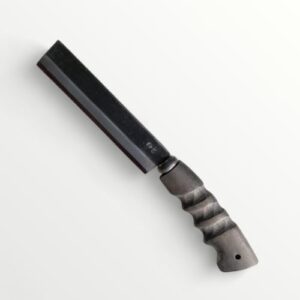
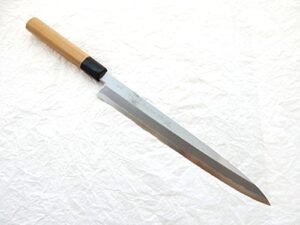
The Shinshu Uchihamono nakiri is a hand-forged, double-bevel vegetable knife from the smiths of Nagano Prefecture — the mountainous inland province still known by its old name, Shinshu. It belongs to a working-tool tradition rather than a decorative one: the same lineage of forges that once beat out sickles, hatchets, and farm blades for the Shinshu plain now turns the same free-hand fire-forging toward the kitchen. A nakiri is the flat, rectangular knife Japanese home cooks reach for when the board is full of cabbage, daikon, or scallions.
What makes the Shinshu version notable internationally is the method behind the blade. The signature technique is hizukuri (火造り, “fire-making”) — free-hand forging that draws the steel out thin and light rather than grinding it down from a thick bar. The result is a blade that is keen and quick in the hand. Many pieces are built warikomi (割込, “insert-lamination”): a hard cutting steel sandwiched into softer jacket layers, so the edge takes a fine polish while the body stays forgiving. Nagano’s cutlery was designated a METI Traditional Craft in 1982.
This guide is written for the international reader deciding whether a Shinshu Uchihamono nakiri belongs in their kitchen. We cover who it suits and who should pass, what the published specifications say (and where the data is thin), how it compares to other Japanese blades we have profiled, the honest caveats of a carbon-core hand-forged knife, and the clearest paths to buy it from outside Japan.
📅 Published: July 3, 2026
🔄 Last updated: July 3, 2026
⏱️ Read time: ~9 min
Who this is for — and who should skip it
- Do a lot of vegetable prep and want a flat edge that meets the board fully
- Appreciate a thin, light, hand-forged blade over a thick factory-ground one
- Are willing to hand-wash, dry, and lightly oil a carbon-core knife
- Value a working-tool craft tradition with a documented regional lineage
- Already own a chef’s knife and want a dedicated vegetable specialist
- Want a single do-everything knife (a nakiri does not rock-chop or carve meat)
- Will put it in a dishwasher or leave it wet — carbon steel will spot and rust
- Expect a rocking motion; the flat profile favors straight up-and-down cuts
- Need confirmed exact steel type, weight, and dimensions before buying (data is thin)
- Prefer a fully stainless, zero-maintenance blade
Product overview (from published specs)
Published specification data for hand-forged Shinshu Uchihamono nakiri is uneven across retailers. The table below draws on the general characteristics of the Shinshu Uchihamono tradition as documented by its METI craft designation. Where a value is not confirmed at the source, it is marked as unconfirmed rather than guessed.
| Attribute | Detail | Source |
|---|---|---|
| Item type | Nakiri (菜切) — double-bevel vegetable knife | Product / craft category |
| Tradition | Shinshu Uchihamono (信州打刃物), Nagano hand-forged cutlery | Maker tradition / METI |
| Forging method | Hizukuri free-hand fire-forging; often warikomi laminated construction | Craft tradition |
| Blade steel | Laminated carbon-steel core (some pieces stainless-clad) — exact grade unconfirmed | Unconfirmed — check manufacturer site |
| Blade length / weight | Unconfirmed — check product details | Not in fetched data |
| Origin | Nagano Prefecture, Chūbu region, Japan | Craft tradition |
| Designation | METI Traditional Craft (designated 1982) | Public record |
Steel grade, exact dimensions, and weight vary by maker and are shown as unconfirmed where the craft information does not specify them.
📖 Glossary — key terms
- Nakiri (菜切) — a flat, rectangular double-bevel knife for vegetables. Both faces are sharpened, so it suits right- and left-handed cooks alike.
- Shinshu (信州) — the historical name for Nagano Prefecture, an inland, mountainous province of central Japan.
- Uchihamono (打刃物) — “struck blade,” i.e., hand-forged bladeware, as opposed to stamped or machine-ground blades.
- Hizukuri (火造り) — free-hand fire-forging that draws the heated steel out thin and light rather than grinding it from a thick bar.
- Warikomi (割込) — “insert-lamination,” a hard cutting steel sandwiched into softer jacket steel for a keen edge with a forgiving body.
- METI Traditional Craft — a designation by Japan’s Ministry of Economy, Trade and Industry recognizing a regional craft with documented technique and history.
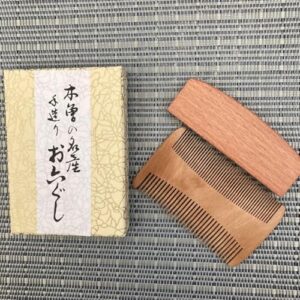
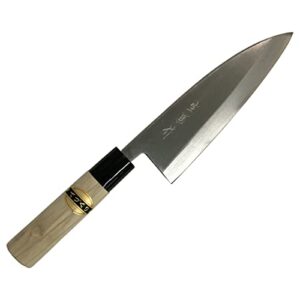
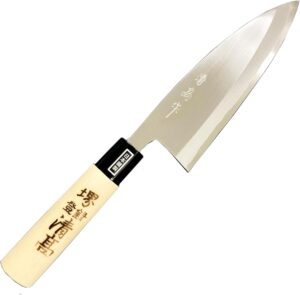
Related jpmono guides — other Nagano crafts and other Japanese blades worth weighing against this nakiri.
Where this comes from

Nagano is Japan’s roof: a landlocked, mountainous prefecture in the Chūbu region, cut through by the Northern, Central, and Southern Japanese Alps and drained by the Chikuma River. The Shinshu Uchihamono forges cluster on the Kawanakajima plain and the Shinonoi and Shinkō districts near present-day Nagano City, where the river valleys meet. It is cold country — long winters, hard water, and a farming economy that for centuries needed tough, reliable edged tools far more than ornamental ones.
That practical need is exactly what seeded the craft. The blades of Shinshu were born from war, then repurposed for the field.
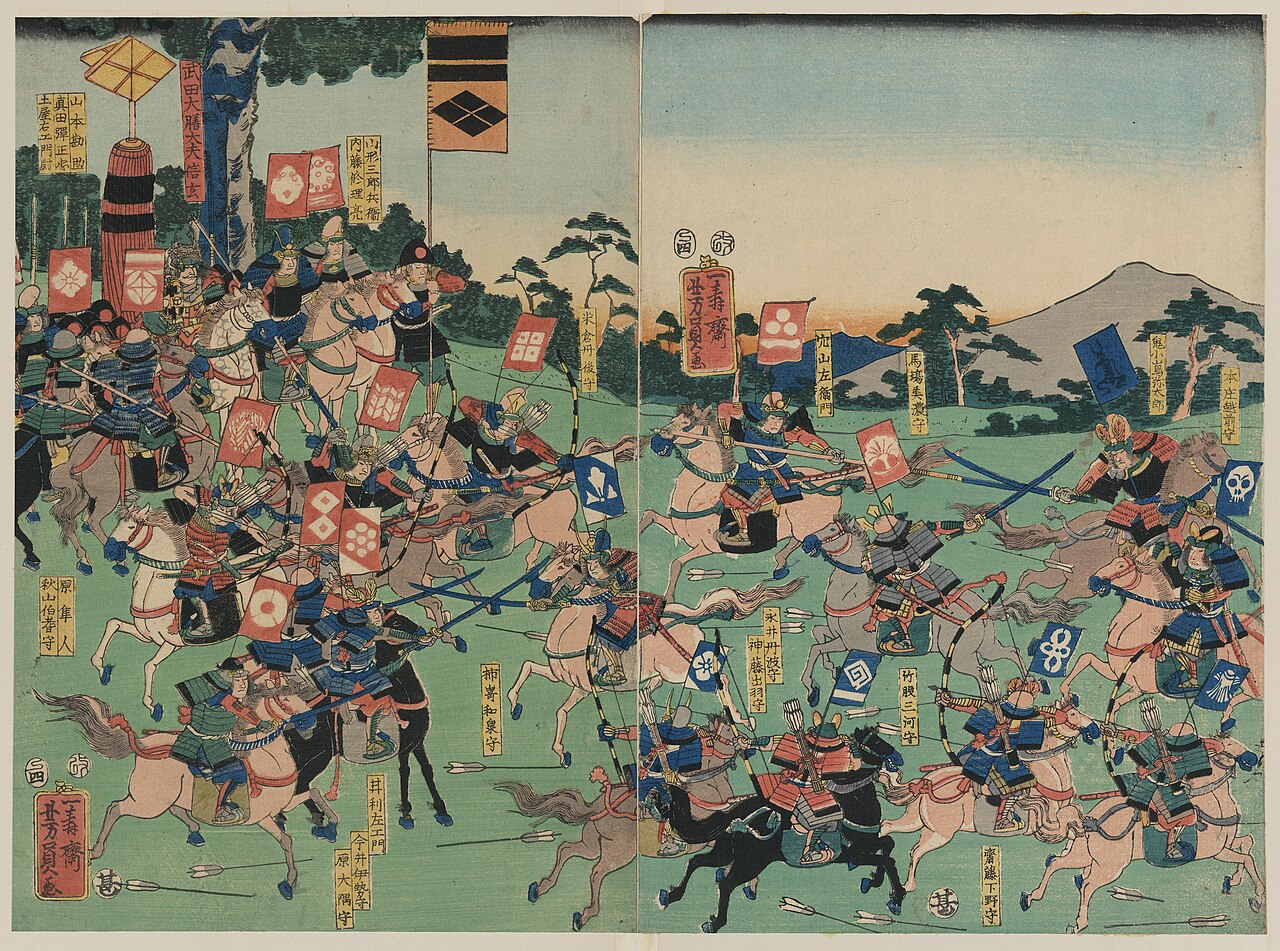
Between 1553 and 1564, the warlords Takeda Shingen and Uesugi Kenshin fought a series of battles on the Kawanakajima plain — five confrontations that became some of the most storied clashes of Japan’s Sengoku (Warring States) period. Sustained warfare on this scale drew swordsmiths and armorers into the region to supply and repair weapons. When the fighting finally ended, those smiths remained, and their skills had to find a new purpose.
They turned to the land. Swordmaking know-how became sickle-, hatchet-, and knife-making, and the Shinshu forges settled into a farm-and-kitchen tradition that has run continuously ever since.
- 1553 — First Battle of Kawanakajima; Takeda–Uesugi rivalry begins on the Shinshu plain.
- 1561 — The fourth, fiercest clash, source of the famous single-combat legend; swordsmiths active in the region.
- 1564 — Fifth and final Kawanakajima battle; the wars wind down.
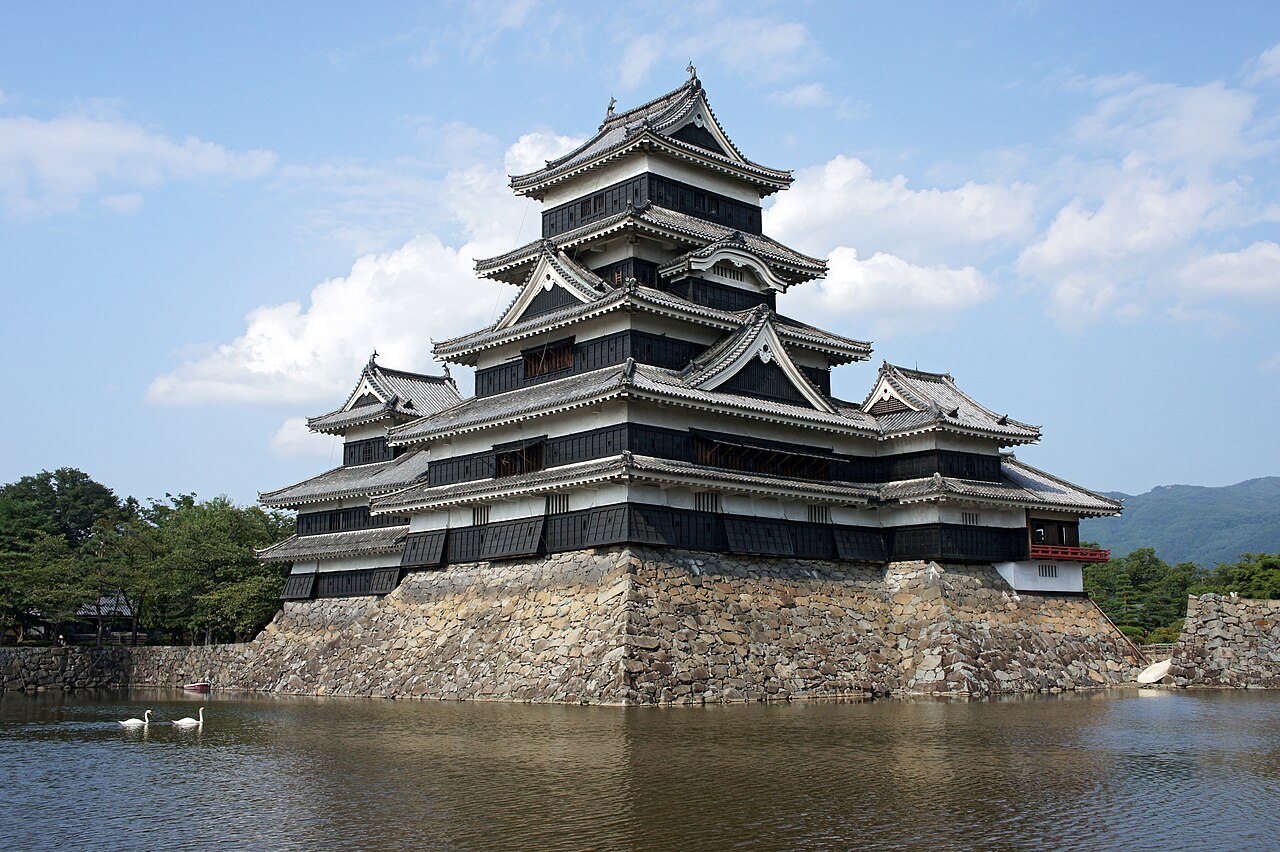
- Late 1500s — Matsumoto Castle’s black-walled donjon rises; smiths shift from weapons to farm and kitchen blades.
- Edo period — Shinshu forges settle into sickles, hatchets, and knives for the farming plain.
- 1982 — Shinshu Uchihamono designated a METI Traditional Craft.
- 2026 — Nagano smiths still fire-forge nakiri and other working blades by hand.
“The Shinshu blade began as a weapon and ended as a tool — the same hands that armed a Sengoku army later kept a farming village fed.”
The Shinshu plain around Nagano City has long been more than farmland. Zenko-ji, one of Japan’s oldest and most important pilgrimage temples, anchors the city and for centuries drew travelers, markets, and the craftsmen who served them. A steady stream of pilgrims and merchants gave the local smiths a reliable demand for everyday edged goods, reinforcing a tradition built on utility rather than display.
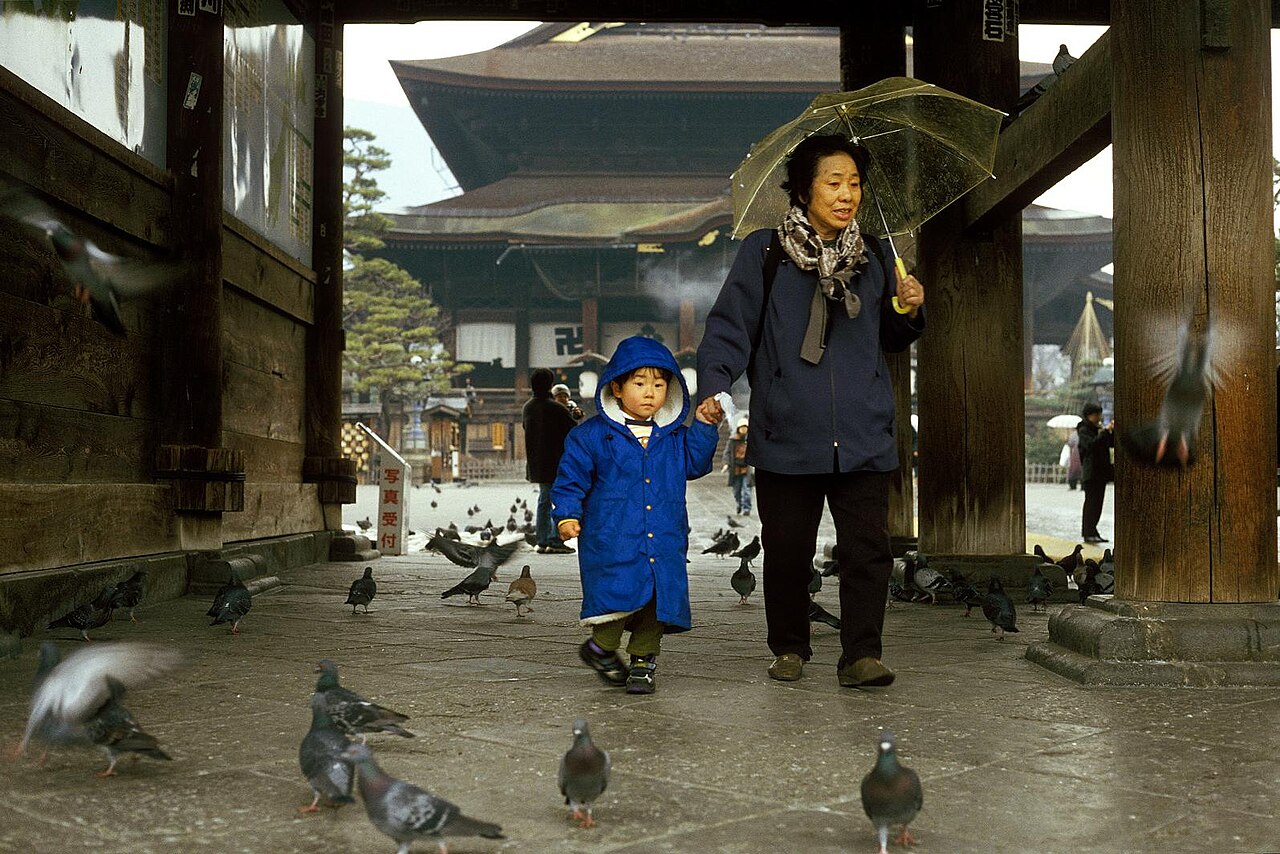
What “still being made here” means today is a small but living cohort of forges keeping the hizukuri method going. The technique rewards a knife made for use: thin, light, quick to sharpen, and easy to bring back to a keen edge on a whetstone. That is a different value proposition from a heavy, thick, once-and-done stainless blade — and it is why a Shinshu nakiri reads as a daily driver rather than a display piece. The mark of authenticity, in the Nagano tradition, is that the blade is meant to be worn down and resharpened for years.

Buying options across stores
Prices and stock fluctuate. Live pricing was unavailable in the fetched data at the time of writing, so figures below are shown as “varies” rather than estimated. JPY (¥) is the authoritative currency for the specific listed item; USD figures, where shown, are approximate at a ¥150/USD baseline as of mid-2026.
| Store | Item / Variant | Price (JPY + USD est.) | Notes |
|---|---|---|---|
| 🇺🇸 Amazon US (search) | Browse Japanese kitchen knives | varies (USD) | Best if you’re shopping from the US — Prime shipping, USD pricing, no international customs. Amazon US carries hand-forged Japanese nakiri and vegetable knives from various makers; the specific Shinshu piece is sourced from Japan (next row). |
| 🇯🇵 Amazon JP Global Store | Shinshu Uchihamono nakiri | Terms vary — check product details | The product page for the item. Ships internationally from Japan to most major destinations; additional shipping and possible customs duties may apply. |
| Maker direct | Shinshu forge / cutlery cooperative | varies | Some Nagano makers sell direct; international shipping is not guaranteed and often Japan-domestic only. |
| Proxy services (Buyee / Tenso) | Forwarding from Japan-only shops | item price + fees | Useful when a maker or shop ships only within Japan; adds a service fee and consolidated forwarding. |
What it does well
Weaknesses and things to verify before buying
- Published details are limited. Exact steel grade and blade size need confirmation. Verify the relevant information on the current product page before ordering.
- Carbon-core maintenance. If the core is carbon steel (common in this tradition), it will discolor and can rust if left wet. It must be hand-washed, dried immediately, and occasionally oiled.
- Single-purpose tool. A nakiri is a vegetable specialist. It does not rock-chop herbs, carve roasts, or fillet fish. Pair it with a santoku or gyuto for general work.
- Flat cutting motion required. Cooks accustomed to a rocking chef’s knife will need to adjust to straight up-and-down push cuts.
- Purchase terms can change. Availability and current terms may shift. Confirm them before committing.
- International purchase friction. Buying from Japan means shipping cost, possible customs duty, and longer delivery than a domestic Amazon order.
Conclusion — which buyer type are you?
Other ways to approach this purchase
❓ Frequently Asked Questions
What is a nakiri knife used for?
A nakiri is a double-bevel vegetable knife with a flat, rectangular blade. Its straight edge meets the cutting board along its full length, making clean push-cuts through cabbage, daikon, greens, and other produce. It is not designed for meat, fish, or rock-chopping.
Is the blade carbon steel or stainless?
The Shinshu tradition commonly uses laminated (warikomi) construction with a hard cutting core. The exact steel grade depends on the maker: some pieces use a carbon core, while others use a stainless-clad build.
How do I care for a hand-forged Japanese knife?
Hand-wash and dry it immediately after use, and never leave it soaking or put it in a dishwasher. If the core is carbon steel, wipe it dry and apply a light food-safe oil periodically to prevent rust. Sharpen on a whetstone rather than a pull-through sharpener.
Can I buy this from outside Japan?
International shipping for Japanese knives varies by destination, and customs duty may apply above local thresholds. US shoppers may also compare similar Japanese knives through domestic retailers.
How is a nakiri different from a santoku?
A santoku is a general-purpose knife with a gently curved belly that handles vegetables, meat, and fish. A nakiri is flatter and dedicated to vegetables, giving cleaner full-length push-cuts on produce but no rocking motion. Many cooks own both.
Why is it called “Shinshu”?
Shinshu (信州) is the historical name for Nagano Prefecture. Shinshu Uchihamono refers to the hand-forged cutlery tradition of that inland, mountainous province, centered on the Kawanakajima plain near Nagano City and designated a METI Traditional Craft in 1982.
jpmono.com is curated by a Japan-based editorial team working out of Toyama in the Hokuriku region and Nara in Kansai, and is independent. We do not take payment from the makers we feature; income comes from affiliate links. We do not physically test every product — we review maker specifications and craft references.
🤖 This article was drafted with AI assistance and reviewed against the available craft information. Specifications not confirmed in the source material are marked as unconfirmed rather than estimated.
Affiliate disclosure: jpmono.com may earn a commission on qualifying purchases made through links on this page, at no additional cost to you.