![Muraoka Sohonpo Ogi Yokan (小城羊羹, sugar-crusted hon-neri adzuki block, sealed gift box) — from Ogi in Saga, the castle town known as “the town of yokan” on Kyushu’s old Sugar Road [2026 Guide for International Readers]](https://jpmono.com/wp-content/uploads/2026/07/muraoka-ogi-yokan-where-to-buy-2026-featured.jpg)
- What it is: A firm hon-neri (本煉) block yokan — pressed adzuki-bean paste, sugar, and agar — sold as a sealed, individually wrapped gift box.
- Made in: Ogi (小城), Saga Prefecture, on the island of Kyūshū — a former castle town nationally nicknamed “the town of yokan,” by Muraoka Sohonpo (村岡総本舗), founded in 1899.
- Price band: boxed traditional yokan sits in the affordable gift range — see the live listing (no fixed figure invented here).
- Best for: a plant-based, room-temperature Japanese sweet you can carry or ship abroad and split among several people.
- Skip if: you want a soft, spoon-scooped jelly texture — cut-style yokan is dense and sliced, not wobbly.
- Shipping: ships internationally from Amazon Japan — jump to our pick ↓
On a single stretch of street in a small inland town in Saga, dozens of confectioners once pressed and cut firm bars of adzuki-bean paste, each shop competing on the same sweet. The town is Ogi (小城), and across Japan it carries a plain, earned nickname: yokan no machi — “the town of yokan.”
The reason is geography, not folklore. Ogi sat on the old “Sugar Road” (シュガーロード, Shugaa Roodo) — the overland Nagasaki Kaidō route that carried imported sugar inland from the port of Nagasaki during the Edo period. Refined sugar reached kitchens here generations before it was common elsewhere, and a firm, sugar-heavy confection took root. Muraoka Sohonpo (村岡総本舗), founded in 1899 (Meiji 32), is the best-known house still carrying that tradition.
This guide is for international readers who want a traditional Japanese sweet that actually survives a suitcase or an international parcel. We cover what Ogi yokan is, how its distinctive sugar-crust texture forms, how it compares to soft modern yokan and to other shelf-stable Japanese snacks, and how to find Muraoka Sohonpo’s boxed sets on Amazon Japan — written from a Japan-based editor’s desk in Toyama and Nara.
🔄 Updated:
⏱️ Read time: ~8 min
ℹ️ Live pricing and some listing specs weren’t in our snapshot — the linked Amazon listing is authoritative; unconfirmed attributes are marked “—” or “check listing” below.
- Who this is for — and who should skip it
- Product overview (from published specs)
- Which finish should you choose?
- Where this comes from — place, era, and the craft tradition
- 📦 Shipping & where to buy from outside Japan
- Price snapshot across stores
- What it does well
- Weaknesses and things to verify before buying
- Conclusion — which buyer type are you?
- Other ways to approach this purchase
- 🏆 Editor’s Pick
- ❓ Frequently Asked Questions
Who this is for — and who should skip it
- Want a plant-based Japanese sweet (no dairy, egg, or meat) to gift or carry abroad.
- Prefer a dense, sliceable sweet over a soft, jelly-like one.
- Like the idea of a crisp sugar crust (shari) over a smooth, cool interior.
- Need something shelf-stable with a long best-by date for travel or shipping.
- Want individually wrapped bars to split among several people.
- Want a soft, spoon-scooped mizu-yokan jelly texture.
- Avoid sugar-forward sweets — cut yokan is deliberately sugar-heavy.
- Need refrigerated or freshly made wagashi with a short shelf life.
- Are shopping for a low-sugar or diet product (we make no health claims).
- Want a single small serving rather than a boxed assortment.
Product overview (from published specs)
Muraoka Sohonpo’s core product is hon-neri (本煉) yokan: adzuki-bean paste, sugar, and agar (kanten, 寒天) cooked down and set into a firm block, then cut into bars. It is fully plant-based. In the traditional cut-bar (kiri-yokan) style, the surface slowly recrystallizes into a thin, crisp sugar shell.
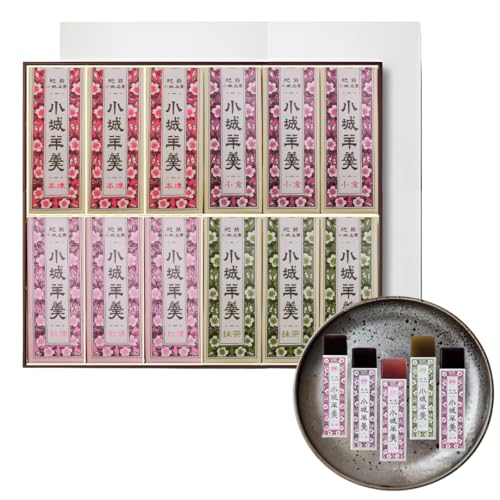
Muraoka Sohonpo Ogi Yokan (小城羊羹, sugar-crusted hon-neri adzuki block, sealed gift box)
村岡総本舗 小城ようかん 小型24本入り(つるんと食感)
残り16点 ご注文はお早めに · Sold by 北野商事(通販事業部) · ASIN B0DMJKW8BX
Price and availability as of 2026-08-31 02:30 JST. The Amazon listing at the time of purchase is authoritative. jpmono.com earns a commission on qualifying purchases at no extra cost to you.
| Attribute | Detail | Source |
|---|---|---|
| Product type | Ogi yokan (小城羊羹), firm hon-neri block, sealed gift box of individually wrapped bars | Maker / listing |
| Core ingredients | Adzuki-bean paste, sugar, agar (kanten) — plant-based, no dairy/egg/meat | Maker |
| Signature texture | Crisp sugar crust (shari) outside, smooth cool interior | Maker |
| Maker / founded | Muraoka Sohonpo (村岡総本舗), founded 1899 (Meiji 32) | Maker |
| Origin | Ogi City (小城市), Saga Prefecture, Kyūshū | Maker |
| Storage / shelf life | Room temperature, sealed, long best-by date | Maker |
| ASIN (JP listing) | B0DMJKW8BX | Amazon JP Global Store |
| Net weight / bar count | — (varies by box; check listing) | Unconfirmed — check listing |
| Price | — (not in snapshot; see live listing) | Unconfirmed — check listing |
- 🌡️ Storage: keep at room temperature — no refrigeration needed; sealed with a long best-by date.
- 🔪 Serving: firm block — slice into thin pieces; the sugar crust gives a light crackle as you cut.
- 🎁 Sharing: individually wrapped bars split cleanly for gifting or portioning.
- 🍵 Pairing: traditionally served with green tea (sencha, matcha, or roasted bocha) to offset the sweetness.
📖 Glossary — key terms
- Yokan (羊羹) — a set confection of red-bean paste, sugar, and agar; one of the oldest categories of Japanese sweets.
- Hon-neri (本煉) — the “fully cooked” style: a dense, firm block, as opposed to soft water-yokan.
- Kiri-yokan (切り羊羹) — the traditional cut-bar style, air-dried and sliced, which develops the sugar crust.
- Nagashi (流し) — modern poured yokan, set soft in a mold; smoother and moister, with no crust.
- Shari (シャリ) — the thin, crisp layer of recrystallized sugar on a cut yokan’s surface; the crackle-outside, cool-inside contrast.
- Kanten (寒天) — agar, a plant-based setting agent made from seaweed; the reason yokan needs no gelatin.
- Sugar Road (シュガーロード) — the Edo-period Nagasaki Kaidō route along which imported sugar traveled inland from Nagasaki.
Which finish should you choose?
This piece is listed in 2 options. The photos below are the actual サイズ options on the listing right now — pick the one you want and confirm it on the product page before ordering, since hand-finished wares vary slightly piece to piece.
Other shelf-stable Japanese sweets and teas we’ve covered for international readers — useful for building a gift box or comparing textures.

Toraya Small Yokan (Ko-gata Yōkan, 10-Bar Assorted Box) — Ja

Kameda Kaki no Tane (亀田の柿の種, 6-bag box) — Niigata’s rice-cou

Iwate-ya Nanbu Senbei (南部せんべい, Sesame & Peanut Assortment Bo

Hoshino Seichaen Yame Matcha (星野製茶園 八女抹茶, sealed 30–40g tin)
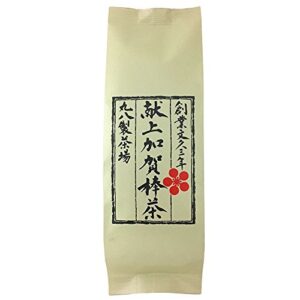

Maruhachi Seichajo Kenjo Kaga Bocha (献上加賀棒茶, sealed bag/tin)
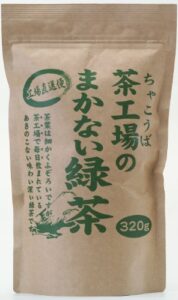

Ooigawa Chaen Fukamushi Sencha (大井川茶園 深蒸し煎茶, sealed foil bag
Where this comes from — place, era, and the craft tradition

Ogi is a small city in Saga Prefecture, in the northwest of Kyūshū — the southernmost of Japan’s four main islands. It sits inland from the Ariake Sea, at the foot of the Tenzan range, on the plain that spreads north of Saga city. This is not a coastal trading port and not a former capital; it is a modest castle town. Its claim on Japanese food history comes from a single accident of routing.
During the Edo period, Japan’s only steady supply of imported sugar entered the country through the port of Nagasaki, on the far western tip of Kyūshū. From there it traveled overland along the Nagasaki Kaidō toward Kokura — a route that later generations nicknamed the “Sugar Road” (シュガーロード) precisely because of the trade it carried. Ogi lay along that inland corridor, and so its confectioners had early, steady access to refined sugar long before it was ordinary elsewhere in Japan.
“A small inland town became a yokan capital for one concrete reason: the sugar got there first.”
That head start compounded. Sugar-heavy confections need reliable sugar, and Ogi had it. Over time a cluster of rival yokan makers grew up along a single district, competing shop-to-shop on the same firm bean-paste bar — enough of them that the town earned its nationwide nickname, yokan no machi, “the town of yokan.” Muraoka Sohonpo, founded in 1899 (Meiji 32), became one of the best-known houses to carry the style forward.
-
1641 — The Dutch trading post is moved to Dejima in Nagasaki; imported sugar begins flowing into Kyūshū through the port. -
Edo period (1600s–1800s) — The Nagasaki Kaidō overland route toward Kokura becomes known as the “Sugar Road,” carrying refined sugar inland. -
Edo period — Ogi, a castle town on the route, gains early, steady access to sugar; local confectioners begin making firm cut yokan. -
1899 (Meiji 32) — Muraoka Sohonpo is founded in Ogi. -
20th century — At its peak, a single Ogi district holds many rival yokan shops, cementing the nickname “the town of yokan.” -
Today — Muraoka Sohonpo remains among the best-known Ogi yokan houses; the cut-bar shari texture is still made in the old style.
The texture is what separates Ogi’s cut yokan from the smooth poured yokan most people picture. A firm hon-neri bar is left to air, and a thin layer of sugar slowly recrystallizes on its surface into a crisp shell — the shari (シャリ). Slice into an old-style bar and you get a light crackle at the edge, then a cool, dense, smooth interior. Modern poured (nagashi) yokan, set soft in a mold, never forms that crust.
📦 Shipping & where to buy from outside Japan
Ogi yokan is one of the easier traditional Japanese sweets to move across a border. It is plant-based, sealed, kept at room temperature, and carries a long best-by date — no refrigeration and no fragile packaging. A boxed set of individually wrapped bars travels well in a suitcase or an international parcel.
The specific boxed set covered here is sourced from the Amazon JP Global Store, which ships internationally to 65+ countries — including Canada, the UK, and Australia. As a room-temperature food item bought in small personal quantities, it is generally straightforward to import; Amazon estimates and collects any import fees at checkout, and AmazonGlobal eligibility for your specific country and address is confirmed at that step. Because it is a food product, always verify the current AmazonGlobal International Shipping eligibility for your destination before ordering.
If a particular box is not eligible to your country, proxy-forwarding services such as Buyee or Tenso can receive a domestic-Japan order and re-ship it onward, though that adds handling fees and a second shipping leg. Shipping cost for a single boxed set typically lands in the rough $15–$40 range to the US, EU, Canada, the UK, and Australia, depending on weight and speed.
Price snapshot across stores
| Store | Item / variant | Price | Notes |
|---|---|---|---|
| 🇺🇸 Amazon.com (US) | Browse Japanese yokan & sweets | varies (USD) | Best if you’re shopping from the US — Prime shipping, USD pricing, no international customs. Amazon US carries yokan and Japanese sweets from various makers; Muraoka Sohonpo’s exact Ogi box ships from Japan (next row). |
| 🇯🇵 Amazon JP Global Store | Muraoka Sohonpo Ogi yokan boxed set (ASIN B0DMJKW8BX) | See live listing (not in snapshot) | Ships internationally from Japan to 65+ countries — including Canada, the UK and Australia — with import fees estimated at checkout. This is where the specific item is sourced. |
| Maker direct | Muraoka Sohonpo assortments | — | The maker sells its full range domestically; international shipping options vary — verify on the maker’s site. |
| Proxy services (Buyee / Tenso) | Any domestic-JP box | Item price + fees | Useful if a box isn’t AmazonGlobal-eligible to your country; adds handling and a second shipping leg. |
JPY (¥) is the authoritative price for the specific listed item; any USD figures are approximate estimates at a ¥150/USD baseline as of mid-2026 and depend on the current exchange rate. No fixed price was in our data snapshot — the linked listing is authoritative.
What it does well
Weaknesses and things to verify before buying
- Sweet by design. Cut yokan is deliberately sugar-forward; if you dislike very sweet confections, this is not the one to start with.
- Firm, not soft. If you were expecting a wobbly, spoonable jelly, the dense sliced block will feel like a different food entirely.
- Box contents vary. Net weight, bar count, and which varieties (e.g., hon-neri, matcha) are included differ by set — confirm the exact contents on the listing.
- Price not in our snapshot. We did not capture a live figure; check the current price on the listing before ordering, and note it can shift.
- Shipping eligibility is per-country. As a food item, AmazonGlobal eligibility and any import fees depend on your destination and are confirmed only at checkout.
- Best-by is long but finite. It is shelf-stable, not indefinite — check the printed best-by date, especially if you plan to hold it as a gift.
Conclusion — which buyer type are you?
Other ways to approach this purchase
🏆 Editor’s Pick
❓ Frequently Asked Questions
What is Ogi yokan, and how is it different from regular yokan?
Ogi yokan is the cut-bar (kiri-yokan) style from Ogi in Saga. The firm hon-neri block is air-dried so a thin, crisp sugar crust (shari) forms on the surface, giving a crackle outside and a smooth, cool interior. Most modern yokan is poured soft in a mold and has no crust.
Is it vegan or plant-based?
Yes. It is made from adzuki-bean paste, sugar, and agar (kanten), with no dairy, egg, or meat. Always check the specific box’s ingredient list for any variety-specific additions.
Does it need refrigeration, and how long does it keep?
No refrigeration is needed. It is sealed, kept at room temperature, and carries a long best-by date, which is why it travels and ships well. Check the printed best-by date on the box.
Can it be shipped internationally?
The boxed set is sourced from the Amazon JP Global Store, which ships to 65+ countries including Canada, the UK, and Australia. As a food item, AmazonGlobal eligibility and any import fees are confirmed at checkout for your destination. If a box isn’t eligible, a proxy service like Buyee or Tenso can forward it.
Why is Ogi called “the town of yokan”?
Ogi sat on the Edo-period “Sugar Road,” the Nagasaki Kaidō route that carried imported sugar inland from Nagasaki. Early, steady access to refined sugar let a cluster of rival yokan makers grow up along a single district, earning the town its nationwide nickname.
What does it cost?
We did not capture a live price in our data snapshot, so we don’t quote a figure here. Boxed traditional yokan generally sits in an affordable gift range; check the current price on the linked Amazon listing, which is authoritative.
How should I serve it?
Slice the firm bar into thin pieces and serve with green tea — sencha, matcha, or roasted bocha — which balances the sweetness. The bars are individually wrapped, so you can open only what you need.
jpmono.com is curated by a Japan-based editorial team (working out of Toyama in the Hokuriku region and Nara in Kansai) and is independent. We don’t take payment from the makers we feature; income comes from affiliate links. Read more about our editorial standards.
🤖 This article was drafted with AI assistance and edited against the maker’s and listing’s published information. Product specifications, prices, and shipping eligibility should be confirmed on the linked listing before purchase.
Affiliate disclosure: jpmono.com may earn a commission on qualifying purchases made through links on this page, at no additional cost to you.