![Nibutani Attus Ainu Woven Bark Coaster by Kaizawa Yukiko — Hand-Loomed Elm Inner-Bark from Hokkaido (¥4,980 / ≈$33 USD) [2026 Buyer’s Guide]](https://jpmono.com/wp-content/uploads/2026/05/nibutani-attus-ainu-coaster-where-to-buy-2026-featured-810x1050.jpg)
Nibutani Attus Ainu Woven Bark Coaster by Kaizawa Yukiko — Hand-Loomed Elm Inner-Bark from Hokkaido (¥4,980 / ≈$33 USD) [2026 Buyer’s Guide]
Nibutani attus (二風谷アットゥシ) is the woven inner-bark cloth tradition of the Ainu of Hokkaido — specifically the Saru River valley in Nibutani village, Biratori Town. The technique starts with the soft inner bark of the Japanese elm (オヒョウ ohyō, Ulmus laciniata), partially harvested in early summer, soaked for months in cool river water, boiled in wood-ash lye, split into fine threads by hand, then hand-loomed on a back-strap loom into a stiff, slightly fibrous cloth in natural beige-to-tan with a characteristic vertical wood-grain look. It is the textile the Ainu wore before cotton became widely available in northern Japan.
The coaster covered here is woven by Kaizawa Yukiko (貝澤雪子), a named Nibutani Ainu craftsperson from one of the central families in the modern attus revival. At ¥4,980 (≈$33 USD), it sits at the very bottom of the price range for real Nibutani attus — well below the ¥15,000–30,000 tier for sashes and table runners — which makes it the most accessible entry point into a craft that, in 2013, became the first Ainu tradition to receive METI Traditional Craft Product designation.
This guide is for international readers who want a real Ainu hand-woven object at impulse-purchase pricing, plus the centuries-deep context that makes it worth more than the per-gram fiber math suggests. We cover the geography of Nibutani, the post-1869 history of Ainu craft marginalization and recovery, the labor-intensity of attus production, what to expect of the coaster in use, and where to buy from outside Japan.
🔄 Last updated: May 16, 2026
⏱️ Read time: 13 min
🗾 Hokkaido · Nibutani

- Who this is for — and who should skip it
- Product overview (from published specs)
- 📍 Where this comes from — place, era, and the craft tradition
- 📌 How does it compare?
- 📦 Shipping & where to buy from outside Japan
- Price snapshot across stores
- What it does well
- Weaknesses and things to verify before buying
- Conclusion — which buyer type are you?
- Other ways to approach this purchase
- 🏆 Editor’s Pick
- ❓ Frequently Asked Questions
- 📌 Related Japanese Crafts
Who this is for — and who should skip it
- Want to own a real Ainu hand-woven object without committing to a ¥20,000+ sash
- Appreciate the texture and history of indigenous Pacific Rim textiles (Sami band-weaving, Pacific Northwest cedar-bark, etc.)
- Are buying a meaningful gift for someone interested in Hokkaido, indigenous craft, or natural-fiber textiles
- Will use it as a coaster for cool drinks or as a small wall/desk display piece
- Care that the maker is named and the lineage is documented (not anonymous “Ainu-style” production)
- Need a coaster that absorbs hot-mug condensation heavily — attus is stiff, fibrous, and water-resistant rather than absorbent
- Want a uniform machine-perfect finish — every coaster differs in fiber density and grain
- Live in a persistently humid climate without climate control and plan to leave it on a sweating glass daily
- Are buying for high-volume café or commercial use — the soft elm-bark fiber is delicate and not commercial-grade
- Expect under-$20 / under-¥3,000 craft pricing — true Nibutani attus is labor-intensive and priced accordingly
Product overview (from published specs)
The table below pulls the Amazon JP listing snapshot as of May 16, 2026. Only the Amazon JP Global Store carries this exact piece; Amazon US (.com) has near-zero coverage of named Ainu craftspeople, so the US row points to the broader Japanese textile/craft category for shoppers who prefer a US-domestic checkout flow.
Nibutani Attus Ainu Woven Bark Coaster by Kaizawa Yukiko
二風谷アットゥシ コースター 貝澤雪子さん アイヌ
現在在庫切れです。 · ASIN B0G14VJF2Z
Price and availability as of 2026-08-31 02:30 JST. The Amazon listing at the time of purchase is authoritative. jpmono.com earns a commission on qualifying purchases at no extra cost to you.
| Spec | Detail (per Amazon JP listing, May 16, 2026) |
|---|---|
| ASIN | B0G14VJF2Z |
| Product name | 二風谷アットゥシ コースター 貝澤雪子さん アイヌ (Nibutani Attus Coaster by Kaizawa Yukiko) |
| Material | Hand-loomed inner bark of Japanese elm (ohyō, Ulmus laciniata) |
| Size | Approximately 10 × 10 cm |
| Weight | Approximately 15 g |
| Color / finish | Natural beige-to-tan, slightly stiff, visible vertical wood-grain texture (no dye) |
| Made by | Kaizawa Yukiko (貝澤雪子), Nibutani, Biratori Town, Hokkaido |
| Craft designation | Nibutani attus — METI Traditional Craft Product since 2013 (first Ainu craft) |
| Listed price | ¥4,980 (≈ $33 USD as of May 2026, ¥150/USD baseline) |
| International shipping | Amazon JP Global Store, ~15 g item, ~$5–15 USD shipping; plant-fiber textile is unrestricted personal import (no CITES) |
Only the Amazon JP listing snapshot is available; live pricing may have shifted since the writing date. The Amazon listing as of the writing date is the source of truth for pricing and availability.
📖 Glossary — key Japanese and Ainu terms used in this article
- Attus (アットゥシ, attushi)
- The canonical Ainu woven cloth, made from the inner bark of the Japanese elm. The fabric and the garments made from it (the attushi-amip robe) share the name.
- Ohyō (オヒョウ)
- The Japanese elm (Ulmus laciniata), the source tree for attus fiber. Trees are typically 30–50 years old when partially harvested; only one bark strip is taken per tree, preserving the tree’s life.
- Ainu (アイヌ)
- The indigenous people of Hokkaido, southern Kuril Islands, southern Sakhalin, and the northern tip of Honshu. Recognized as indigenous people of Hokkaido by the 2019 Ainu Indigenous Recognition Act.
- Nibutani (二風谷)
- Village in Biratori Town (平取町), Saru-gun, central Hokkaido. One of the densest Ainu populations in modern Japan and the cultural anchor of Ainu craft preservation.
- METI Traditional Craft Product (経済産業大臣指定伝統的工芸品)
- A national designation by Japan’s Ministry of Economy, Trade and Industry recognizing crafts with documented historical continuity, traditional materials, and traditional techniques. Nibutani attus received it in 2013.
- Atspeppe (アッペッペ)
- The traditional Ainu back-strap hand-loom used for weaving attus. The weaver sits on the floor with tension provided by their own body.
- Ita (イタ)
- The companion Nibutani craft — hand-carved wooden trays with characteristic Ainu pattern motifs. Received METI designation alongside attus in 2013.
📍 Where this comes from — place, era, and the craft tradition


The region. Nibutani is a village within Biratori Town (平取町), Saru-gun, in central Hokkaido — Japan’s northernmost prefecture and its largest by land area. The village sits in the Saru River valley, sheltered by the Hidaka Mountains to the north and opening southward toward the Pacific coast. For practical orientation: it is about 100 km southeast of Sapporo (Hokkaido’s prefectural capital), about 80 km southwest of Tomakomai port, and the closest rail station is Tomikawa on the JR Hidaka Line, roughly 20 km from the village center. The Saru River was historically Ainu hunting and fishing territory — its salmon runs, deer paths, and ohyō elm stands made the valley one of the densest pre-modern Ainu settlements on Hokkaido, and that density has carried into the present.
The people. The Ainu (アイヌ) are the indigenous people of Hokkaido, the southern Kuril Islands, southern Sakhalin, and the northern tip of Honshu. Their language is unrelated to Japanese; their pre-modern economy was hunting, fishing, and gathering rather than rice agriculture; their religion is animistic, with spirit-veneration of bears, salmon, and natural features. For an international reader, the relationship of Ainu culture to mainland Japanese culture parallels in some respects the relationship of Sami to Scandinavian populations, or Native Americans to European-descended Americans — a long history of marginalization followed by, in recent decades, formal recognition and revival. The 2019 Ainu Indigenous Recognition Act was the first Japanese law to formally recognize the Ainu as indigenous people of Hokkaido. Modern Ainu population estimates range from roughly 13,000 to 30,000 depending on self-identification criteria, concentrated in Hokkaido with diaspora communities in Tokyo and other major cities.
-
Pre-1869 — Attus is the everyday Ainu textile; every Ainu household produces cloth, sashes, and ceremonial robes from ohyō bark. -
1869 — The Meiji government formalizes Hokkaido jurisdiction; rapid Japanese settler colonization begins, marginalizing Ainu culture and language. -
1899 — The Hokkaido Former Aborigines Protection Act — an assimilation-oriented law that suppressed Ainu craft and language well into the 20th century. -
1992 — The Nibutani Ainu Cultural Museum opens, anchored by Kayano Shigeru’s collection and decades of language and oral-history preservation work. -
1994 — Kayano Shigeru (萱野茂), born in Nibutani in 1926, becomes Japan’s first Ainu member of the National Diet. -
1997 — The Ainu Cultural Promotion Act replaces the 1899 law and recognizes Ainu as an indigenous people; the Nibutani Forum Supreme Court ruling is the first Japanese court recognition of Ainu indigenous status. -
2013 — Nibutani attus and Nibutani ita (carved wooden trays) become the first Ainu crafts designated as METI Traditional Craft Products. -
2019 — The Ainu Indigenous Recognition Act — the first Japanese law to formally recognize the Ainu as indigenous people of Hokkaido. -
2026 — Roughly a dozen designated attus craftspeople still active in Nibutani; the Kaizawa family among the central production lineages.
The historical anchor. Two events make Nibutani specifically (rather than, say, Asahikawa or Akan) the modern cultural anchor of Ainu craft. The first is the Kayano Shigeru legacy. Kayano (1926–2006) was a Nibutani-born Ainu scholar, linguist, and politician whose decades of work — recording oral traditions, preserving the Ainu language, advocating for cultural protection, and ultimately becoming Japan’s first Ainu Diet member in 1994 — turned Nibutani into the de facto center of modern Ainu identity. The second is the 1997 Nibutani Forum case: a Supreme Court ruling, named for the same village, that for the first time formally acknowledged Ainu as an indigenous people of Hokkaido. That legal recognition is the foundation on which the 1997 Cultural Promotion Act and the 2019 Indigenous Recognition Act were later built.
“A single attus piece represents six to twelve months of intermittent work — bark harvested in early summer, soaked through autumn, boiled and dried over winter, split into thread and finally woven on the back-strap loom. The coaster is small. The labor compressed into it is not.”
What “still being made here” actually means. Nibutani is unusual among Japanese craft villages because its continuity rests not on an unbroken master-apprentice chain — that chain was deliberately severed between 1869 and the late 20th century by assimilation policy — but on a documented, named revival. Modern Nibutani attus practitioners learn the technique through formal channels: the Nibutani Ainu Cultural Museum, the Kayano Shigeru Memorial Museum (萱野茂二風谷アイヌ資料館), and the Ainu Cultural Promotion Foundation operate workshops where craftspeople like Kaizawa Yukiko produce designated pieces. Roughly a dozen attus craftspeople in Nibutani currently work to the METI specification — making each named-craftsperson piece, including this coaster, traceable to a specific maker in a specific workshop rather than to anonymous “Ainu-style” production.
The Kaizawa family (貝澤) is one of the central Nibutani lineages — Kaizawa Yukiko in attus weaving, Kaizawa Toru (貝澤徹) in wood carving — and has been associated with the Nibutani Ainu Cultural Museum since its 1992 founding. The 2013 METI designation specified the materials (ohyō bark, traditional dyes) and tools (hand-loom, hand-carving knives) as part of the formal definition, and recognized members of the Kaizawa family among the authorized practitioners. That is the lineage standing behind the ¥4,980 coaster.
Visiting Nibutani. For readers planning a Hokkaido itinerary, the village is best approached from Sapporo by rental car — roughly two hours via Route 237. The Nibutani Ainu Cultural Museum (二風谷アイヌ文化博物館) is open daily 9:00–16:30 with ¥400 admission and holds the most comprehensive Ainu craft and culture collection in Japan. The neighboring Kayano Shigeru Memorial Museum, a private institution dedicated to Kayano’s personal collection of language and ethnographic materials, sits within walking distance. The annual Nibutani Ainu Cultural Festival, typically held in August, features live attus-weaving demonstrations and Ainu performing arts.
📌 How does it compare?
For readers building a broader picture of Japanese regional craft — Hokkaido in the far north, Kansai and Tōhoku and Kyūshū elsewhere — these other jpmono guides cover the closest comparable craft categories. Each item is the small-format, named-maker entry piece for a different prefecture’s tradition.

Echizen Washi Goshuincho (Fukui)
Handmade paper, parallel METI-designated craft
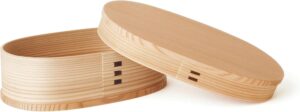

Ōdate Magewappa Bento (Akita)
Tōhoku bent-cedar craft — closest geographic neighbor
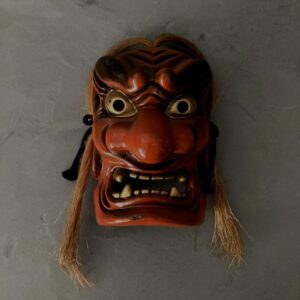

Takachiho Kagura Mask (Miyazaki)
Regional ritual craft from southern Kyūshū
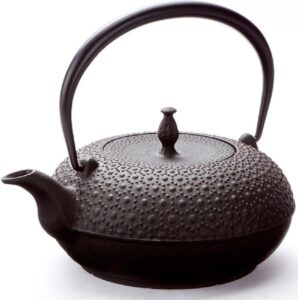

Oigen Nambu Tetsubin (Iwate)
Tōhoku cast iron — the nearest mainland craft tradition

Kobaien Nara Sumi (Nara)
Kansai’s centuries-old material craft — same METI category
📦 Shipping & where to buy from outside Japan
Nibutani attus is a niche category outside Japan. Amazon US (.com) carries no individually listed pieces from Kaizawa Yukiko or other Nibutani craftspeople as of the writing date — the practical paths are Amazon JP Global Store, direct museum shipping, and a small handful of indigenous-craft specialty retailers.
- Amazon JP Global Store — ships the 15 g coaster to most major destinations (US, EU, UK, AU, much of Asia). Estimated shipping $5–15 USD; transit typically 5–10 business days for North America. Plant-fiber textile is an unrestricted personal import; no CITES concerns apply.
- Direct from Nibutani Ainu Cultural Museum gift shop — ships internationally on request via the Biratori Town tourism office. Useful for larger pieces (sashes, table runners) that are not on Amazon. Quote international shipping by email.
- Specialty indigenous-craft retailers (US / EU) — a small number of retailers focused on Pacific Rim indigenous craft occasionally carry Nibutani attus at higher markup. Useful if you want a USD-domestic checkout but expect a premium over Amazon JP pricing.
- Customs — under US de minimis ($800), most personal Amazon JP attus orders clear without duty. EU thresholds are lower; expect VAT on import. The textile itself carries no special permits.
Price snapshot across stores
| Store | Item / Variant | Price | Notes |
|---|---|---|---|
| 🇺🇸 Amazon.com (US) | Browse Japanese Ainu textiles & indigenous craft | varies (USD) | Best if you’re shopping from the US — Prime shipping, USD pricing, no international customs. Amazon US has very limited Nibutani attus coverage; the specific Kaizawa Yukiko piece is sourced from Japan (next row), but the US search surfaces comparable Japanese textiles and indigenous-craft items from other makers. |
| 🇯🇵 Amazon JP Global Store | Kaizawa Yukiko attus coaster (B0G14VJF2Z) | ¥4,980 (≈ $33 USD) | Ships internationally from Japan, ~$5–15 USD shipping for the 15 g item. Authoritative listing for this specific piece. |
| Maker direct | Nibutani Ainu Cultural Museum gift shop | ¥4,500–6,000 (varies by piece) | Best path for larger attus (sashes, runners) not on Amazon. International shipping quoted by email via Biratori Town tourism office. |
| Proxy services (Buyee / Tenso) | Forwarding from Japan if the item is unavailable on Amazon JP Global Store for your country | ¥4,980 + proxy fees + shipping | Adds 10–20% in handling fees, but useful as a fallback. Most readers will not need this for a 15 g textile item. |
Prices in USD are approximate (¥150/USD baseline, May 2026) and depend on the current exchange rate. JPY is the authoritative price for the Amazon JP-sourced piece. Live pricing may have shifted since the writing date — always verify at the retailer before purchase.
What it does well
Weaknesses and things to verify before buying
- Stiff and fibrous, not absorbent. Attus is a structural cloth, not a soft absorbent textile. Heavy condensation from a sweating iced-tea glass will sit on top rather than wicking in. The coaster’s job is to protect a surface from the glass, not to soak up water.
- Visible variation between pieces. Hand-loomed elm-bark cloth varies in fiber density, grain spacing, and exact dimensions. The image on the listing shows one example; the piece you receive will be visibly similar but not identical. If you want machine-uniform, this is the wrong category.
- Humidity is the long-term enemy. Plant-fiber textiles do not love persistent damp. In humid climates without climate control, expect slow color shift and some fiber softening over years. Store flat, ideally indoors, away from continuous moisture exposure.
- Not commercial-grade. The soft elm-bark fiber is fine for everyday personal use but will not survive a café’s daily wash-and-dry cycle. Buy this as a home object or display piece, not a hospitality consumable.
- Hand-wash only, air-dry flat. No machine wash, no dry cleaning, no tumble dryer. Spot-clean with cool water if needed. The care notes from the listing are explicit on this and worth following.
- Listing snapshot is a single point in time. Only the Amazon JP listing snapshot is available; live pricing and stock may have shifted since the writing date. Independent attus producers like Kaizawa Yukiko stock the channel in small batches — if it shows as unavailable, check the Nibutani Ainu Cultural Museum gift shop directly.
- The price is for the craft, not the size. If you compare ¥4,980 to a generic 10 cm cotton coaster, the math will not make sense. The price reflects six-to-twelve months of intermittent labor compressed into a 10 cm square, plus METI-designated provenance. Buyers who want cheap should buy cheap; this is something different.
Conclusion — which buyer type are you?
Other ways to approach this purchase
🏆 Editor’s Pick
Nibutani Attus Coaster by Kaizawa Yukiko (B0G14VJF2Z) — ¥4,980
Recommended over larger attus pieces (sashes and table runners at ¥20,000+) because:
- It is the smallest finished attus product — the most accessible entry point into the tradition without committing collector-tier money.
- Kaizawa Yukiko is a named Nibutani Ainu craftsperson from one of the central attus families, with documented production lineage tied to the Nibutani Ainu Cultural Museum.
- The coaster format shows the characteristic attus texture and color at a manageable scale for first-time buyers, with no commitment to integrating a large textile into your home.
- At ¥4,980 (≈ $33 USD) it sits at the bottom-tier price for real Nibutani attus — well below the ¥30,000+ named-craftsperson tier for sashes and panels.
❓ Frequently Asked Questions
Is this a real Ainu hand-woven piece, or a machine-made “Ainu-style” item?
Real. The listing identifies Kaizawa Yukiko (貝澤雪子), a named Nibutani Ainu craftsperson from one of the central attus families, as the maker. Nibutani attus received METI Traditional Craft Product designation in 2013, which specifies the materials (ohyō elm inner bark, traditional dyes) and tools (hand back-strap loom) as part of the formal definition. Roughly a dozen designated attus craftspeople in Nibutani currently produce pieces to this standard.
Will Amazon JP ship this to my country?
For most major destinations (US, EU, UK, AU, much of Asia) — yes, via Amazon JP Global Store. The coaster is ~15 g and ships in a flat envelope, so shipping cost is typically $5–15 USD with 5–10 business-day transit to North America. The textile is plant-fiber and not CITES-restricted; under US de minimis ($800) most personal orders clear without duty. EU customers should expect VAT on import.
How do I care for an attus coaster?
Hand-wash gently with cool water if needed; do not machine-wash or dry-clean. Air-dry flat — attus retains its shape better when not hung. Avoid prolonged direct sunlight to prevent fading of the natural fiber color. The cloth is stiff when new and softens slightly with use over years; that softening is part of the material’s character, not damage.
Why is a 10 cm coaster ¥4,980? That seems high.
A single attus piece represents six to twelve months of intermittent labor — bark harvest in early summer, three-to-six months of soaking, wood-ash boiling, sun-drying, one to two months of hand-splitting fibers into thread, and one to two days of weaving on the back-strap loom for a coaster. A trained craftsperson produces roughly 100 g of finished thread per week. The price reflects the labor and the METI-designated provenance, not the size of the finished object.
If I want a larger attus piece, where do I look?
The Nibutani Ainu Cultural Museum gift shop is the most reliable path for sashes (¥15,000–30,000), table runners (¥10,000–25,000), and wall-art panels (¥30,000–100,000+). The museum ships internationally on request via the Biratori Town tourism office. A small number of US/EU specialty retailers in indigenous Pacific Rim craft also occasionally carry Nibutani attus at a markup.
Is the coaster appropriate as a gift to someone interested in indigenous craft?
Yes, with context. For a recipient familiar with Sami band-weaving, Pacific Northwest cedar-bark work, or other indigenous fiber traditions, a Nibutani attus coaster from a named Ainu craftsperson reads clearly as a meaningful object rather than a souvenir. Pair it with a short note on the METI 2013 designation and the 2019 Indigenous Recognition Act so the recipient understands where it sits in modern Ainu cultural recognition.
Can I visit the workshop where this is made?
Not the private workshop, but the Nibutani Ainu Cultural Museum (二風谷アイヌ文化博物館) — open daily 9:00–16:30, admission ¥400 — runs the most comprehensive Ainu craft exhibition in Japan, including live attus-weaving demonstrations at certain times of year. The annual Nibutani Ainu Cultural Festival in August features named craftspeople demonstrating the technique in public. The village is about two hours by car from Sapporo via Route 237.
jpmono.com is curated by a Japan-based editorial team (working out of Toyama in the Hokuriku region and Nara in Kansai) and is independent. We don’t take payment from the makers we feature; income comes from affiliate links. Read more about our editorial standards.
🤖 This article was drafted with AI assistance from product listing data and the jpmono editorial style guide, then reviewed by our editorial team before publication. Specs and pricing reflect the Amazon JP listing snapshot as of May 16, 2026, and may have changed since.
Affiliate disclosure: jpmono.com may earn a commission on qualifying purchases made through links on this page, at no additional cost to you.