![Shinshu Tsumugi Silk Card Case: Where to Buy Nagano Weave [2026]](https://jpmono.com/wp-content/uploads/2026/07/shinshu-tsumugi-silk-card-case-where-to-buy-2026-featured.jpg)
- What it is: a slim business-card case faced with hand-woven Shinshu Tsumugi silk, plant-dyed before weaving.
- Made in: Nagano Prefecture (Ueda and Matsumoto weaving districts) — Shinshu Tsumugi was designated a national traditional craft in 1975.
- Price band: entry-level for hand-woven silk — small goods are the cheapest way into a fabric that otherwise sells by the kimono bolt (check the live listing).
- Best for: readers who want a hand-woven textile they will actually use daily, not store in a drawer.
- Skip if: you want a hard-shell case that protects cards from bending, or a high-contrast printed pattern.
- Shipping: ships internationally from Amazon Japan to Canada, the UK, Australia, and 60-plus other destinations — jump to our pick ↓
The color in this fabric is not on the cloth. It is inside the thread.
Shinshu Tsumugi (信州紬, “Shinshu pongee”) is the umbrella name for hand-woven silks produced across Nagano Prefecture — in Ueda, Iida, Matsumoto, Iiyama, and the Ina valley. The defining technique is kusaki-zome (草木染め), plant dyeing: hand-spun or floss silk yarn is dyed with local plant matter — walnut husk, chestnut burr, madder root, indigo, onion skin — before it ever reaches the loom. The result is a cloth whose color sits in the fiber rather than on the surface, which is why the fabric ages by softening rather than by wearing through. The tradition was designated a national traditional craft in 1975.
For most of its history this cloth existed only as kimono bolts, which made it effectively unbuyable for anyone outside Japan. Small leather-goods-format objects — card cases, coin pouches, glasses cases — have become the modern entry point: the same hand-woven, plant-dyed fabric, cut and mounted over card stock, at a price that does not require committing to a garment. This guide covers what the fabric actually is, where in Nagano it comes from, how a woven-silk case differs from leather or printed alternatives, and the realistic paths for buying one from outside Japan.
🔄 Last updated: July 22, 2026
⏱️ Read time: about 11 minutes

ℹ️ Live pricing and several dimensional specs were not in our data snapshot — the linked listing is authoritative, and unconfirmed attributes are marked as such below.
- Who this is for — and who should skip it
- Product overview (from published specs)
- 📍 Where this comes from — place, era, and the craft tradition
- 📌 How does it compare?
- 📦 Shipping & where to buy from outside Japan
- Price snapshot across stores
- What it does well
- Weaknesses and things to verify before buying
- Conclusion — which buyer type are you?
- Other ways to approach this purchase
- 🏆 Editor’s Pick
- ❓ Frequently Asked Questions
Who this is for — and who should skip it
- Want a hand-woven textile you will handle every working day, rather than one you frame or store.
- Prefer muted, low-contrast color — plant dyes produce restrained tones, not saturated ones.
- Exchange business cards regularly and want an object that reads as considered rather than corporate.
- Are shopping for a gift that carries a documented regional tradition and a 1975 national designation.
- Accept — and want — irregularity: hand-spun yarn produces visible slubs and small weave variations.
- Need a rigid case that keeps cards perfectly flat — fabric-over-card-stock construction is semi-flexible.
- Carry your case loose in a pocket with keys; silk faces abrade against hard objects.
- Want bright, high-contrast graphics — kusaki-zome palettes stay in the earth-tone and indigo range.
- Expect every unit to look identical to the listing photo; hand-woven cloth is cut from varying bolts.
- Want a documented capacity figure before buying — card counts are not confirmed in our snapshot.
Product overview (from published specs)
Shinshu Tsumugi Silk Card Case
信州長野 上田紬 伝統工芸 名刺入れ カードケース パスケース 赤
通常7~8日以内に発送します。 · Sold by オンラインショップ楓 · ASIN B0GYFLK6WR
Price and availability as of 2026-08-31 02:30 JST. The Amazon listing at the time of purchase is authoritative. jpmono.com earns a commission on qualifying purchases at no extra cost to you.
| Attribute | Value | Source |
|---|---|---|
| Object type | Meishi-ire (business card case) | Amazon JP Global Store listing |
| Face material | Hand-woven Shinshu Tsumugi silk | Amazon JP Global Store listing |
| Dyeing method | Kusaki-zome — yarn plant-dyed before weaving | Craft tradition documentation |
| Construction | Woven fabric mounted over card stock | Amazon JP Global Store listing |
| Origin | Nagano Prefecture (Ueda / Matsumoto districts), Japan-made | Amazon JP Global Store listing |
| Craft designation | National traditional craft, designated 1975 | Craft tradition documentation |
| Dimensions / weight | Unconfirmed — check the live listing | Not in snapshot |
| Card capacity | Unconfirmed — check the live listing | Not in snapshot |
| Price | Not captured in our snapshot — the listing is authoritative | Not in snapshot |
Stores consulted for this guide, in order: Amazon US (search) as the primary consumer path, Amazon JP Global Store as the sourced listing for this specific item, maker direct where a weaving workshop publishes its own storefront, and proxy services (Buyee / Tenso) for pieces that never leave the Japanese domestic market.
📖 Glossary — the terms used in this article
- Tsumugi (紬) — pongee: silk woven from hand-spun or floss silk yarn rather than smooth reeled filament. Matte, slightly nubby, durable.
- Shinshu (信州) — the historical name for the province that is now Nagano Prefecture. Still used constantly in product and place names.
- Kusaki-zome (草木染め) — plant dyeing. Yarn is colored with plant matter such as walnut husk, chestnut burr, madder, indigo, or onion skin.
- Meishi-ire (名刺入れ) — a business card case. Card exchange remains a standard part of Japanese professional introductions.
- Ueda-jima (上田縞) — the striped Ueda cloth that became known in Edo for its durability.
- Sericulture — the raising of silkworms on mulberry leaves; the agricultural base beneath every silk-weaving district in Japan.
📍 Where this comes from — place, era, and the craft tradition

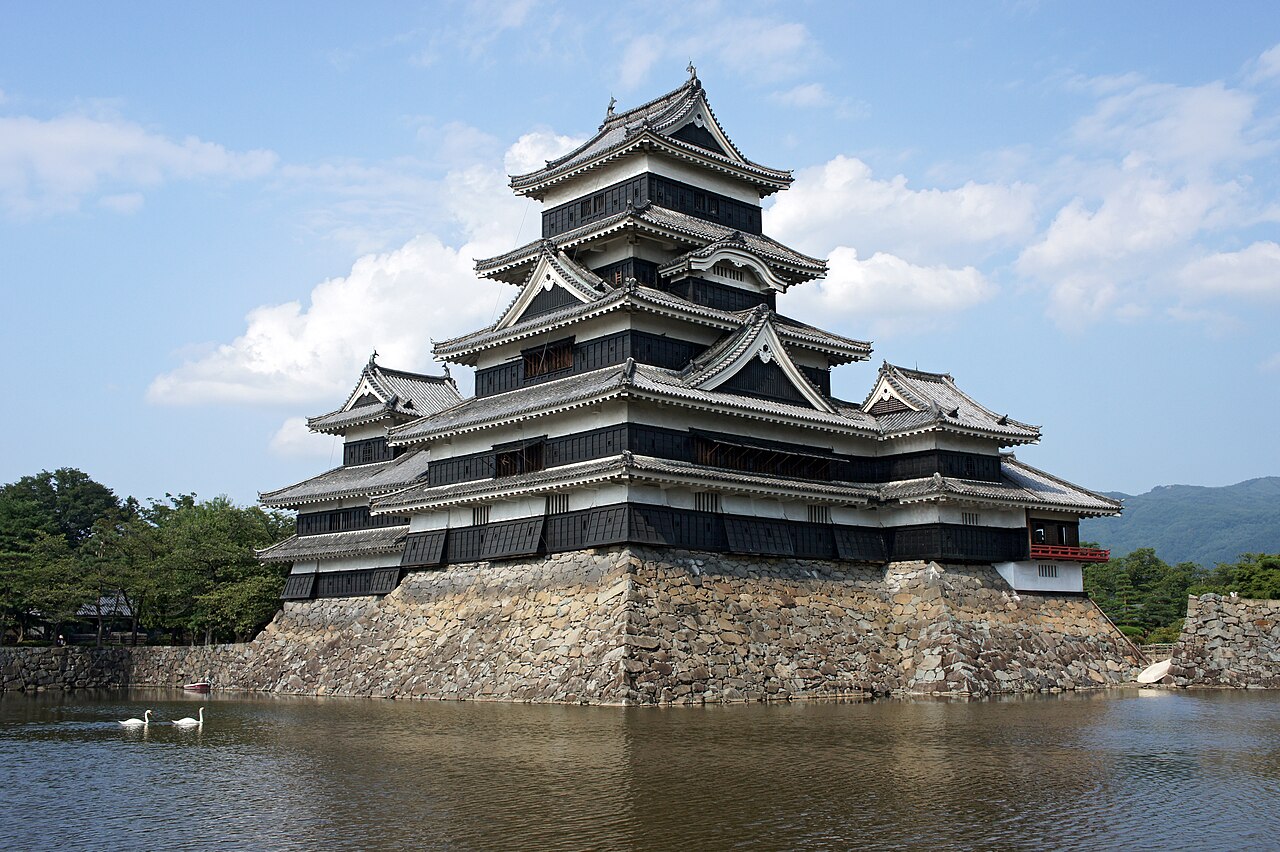
Nagano is landlocked, high, and cool. It has no coastline, and the Japan Alps cut across it, which meant that for centuries a great deal of its arable land was poorly suited to rice. What that terrain did suit was mulberry — and mulberry means silkworms. The prefecture’s basins, terraced with mulberry rather than paddy, made Nagano the base of a silk economy rather than a grain one, and every weaving district discussed here sits on top of that agricultural fact.
Shinshu Tsumugi is not one town’s product. It is the collective name for hand-woven pongee silks made across the prefecture — Ueda, Iida, Matsumoto, Iiyama, and the Ina valley each weaving under the same umbrella designation.

The historical anchor
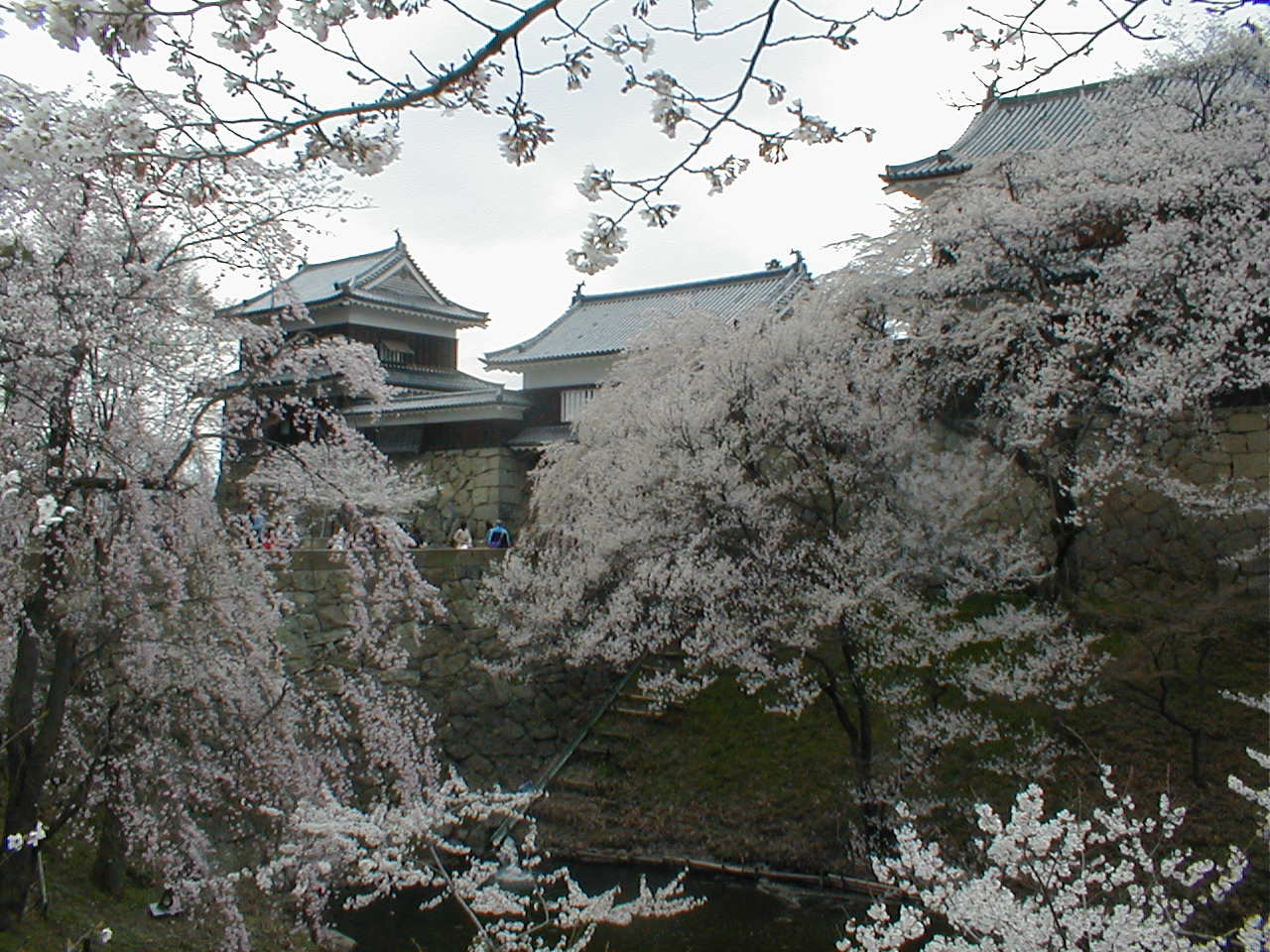
The Ueda strand has the clearest documented origin. From the 17th century, the Sanada lords of Ueda domain promoted sericulture and weaving deliberately, as domain industry policy — not as a folk activity that happened to persist, but as an economic program. The striped cloth that came out of it, Ueda-jima, became known in Edo specifically for durability. That reputation is worth noting: the cloth’s selling point in its own era was not delicacy but toughness.
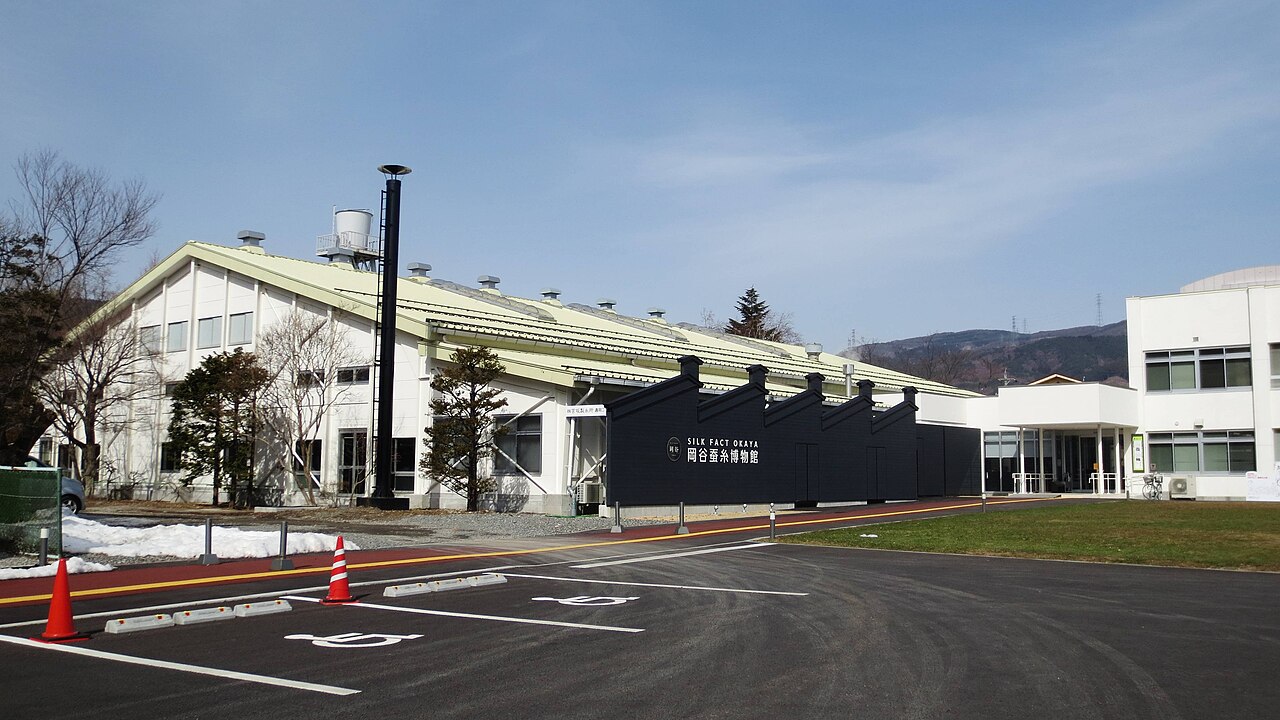
That domain-era base became a national one in the modern period. Through the Meiji and Taishō eras, Nagano was Japan’s top raw-silk producing prefecture, and the filatures at Okaya reeled the prefecture’s cocoons into raw silk bound for the Yokohama export trade. For several decades, a meaningful share of the silk that reached Western markets passed through Nagano machinery first.
“The cloth’s original selling point was not delicacy. Ueda-jima was known in Edo for outlasting the person wearing it.”
- 17th century — The Sanada lords of Ueda domain promote sericulture and weaving as a domain industry.
- Edo period — Striped Ueda-jima cloth earns a reputation in Edo for durability.
- Meiji era (1868–1912) — Nagano becomes Japan’s top raw-silk producing prefecture; Okaya filatures feed the Yokohama export trade.
- Taishō era (1912–1926) — The prefecture holds its position at the top of national raw-silk production.
- 1975 — Shinshu Tsumugi is designated a national traditional craft, covering Ueda, Iida, Matsumoto, Iiyama, and Ina valley weaving.
- Present day — Card cases, pouches, and other small goods become the entry point to a fabric that once existed only as kimono bolts.
What “still being made here” actually means
The continuity claim here is narrower and more honest than the marketing version. Nagano’s mass silk economy is gone — the export filature era ended, and the prefecture is no longer the engine of national raw-silk supply that it was a century ago. What survived is the hand-weaving practice, protected by the 1975 designation and carried by workshops across the five named districts.
The technique that survived is specifically the dyeing order. In kusaki-zome, plant matter — walnut husk, chestnut burr, madder, indigo, onion skin — colors the yarn before it is woven. That sequence is the whole point. A surface-printed fabric loses its pattern as the top layer abrades; a yarn-dyed fabric has nothing to lose, because the pigment goes all the way through the fiber cross-section.
This is why the cloth wears in rather than out. The matte, slightly nubby hand of hand-spun tsumugi silk softens with handling instead of degrading, and the color stays where it started — inside the thread.
📌 How does it compare?
📦 Shipping & where to buy from outside Japan
Amazon Japan’s Global Store ships to more than 65 destinations — including Canada, the UK, and Australia — and estimates import fees at checkout for most of them, so the total shown at payment is usually the total you pay. Readers in those markets should not read the Japan row of the table below as an American-only fallback; it is the direct path for every destination Amazon Japan serves. We maintain country-specific guides for Canada, the UK, and Australia.
For a small, light object like a card case, international shipping typically lands in the $15–$40 range to the US, EU, Canada, the UK, and Australia, depending on service level. That is a large percentage of a small-item order, which is the main argument for consolidating a card case with other purchases in one shipment.
Two alternative paths exist. Some Nagano weaving workshops sell direct from their own storefronts, which is the only way to reach pieces that never enter a marketplace listing — though most of those sites ship domestically only. Proxy services such as Buyee and Tenso bridge that gap by giving you a Japanese forwarding address, at the cost of an added handling fee and a second shipping leg. No voltage or certification issues apply to a textile object, and customs treatment for a low-value fabric accessory is straightforward in most jurisdictions.
Price snapshot across stores
| Store | Item / variant | Price | Notes |
|---|---|---|---|
| 🇺🇸 Amazon.com (US) | Browse Japanese silk card cases & textile accessories | varies (USD) | Best if you’re shopping from the US — Prime shipping, USD pricing, no international customs. Amazon US carries Japanese silk and textile accessories from a range of makers, useful for comparing construction and price tiers. The specific Nagano-woven piece in this guide ships from Japan (next row). |
| 🇯🇵 Amazon JP Global Store | Shinshu Tsumugi kusaki-zome silk card case (ASIN B0GYFLK6WR) | Not captured in our snapshot — see live listing | Ships internationally from Japan to 65+ countries — including Canada, the UK, and Australia — with import fees estimated at checkout. This is the sourced listing for the exact item. |
| Maker direct | Workshop storefronts in Ueda / Matsumoto | Varies by workshop | Widest selection of weave patterns, but most workshop sites ship domestically only. Pair with a proxy service if needed. |
| Proxy services (Buyee / Tenso) | Any Japan-only listing | Item price + handling fee + forwarding | The fallback for domestic-only sellers. Adds a handling fee and a second shipping leg; best value when consolidating several items. |
Prices and stock fluctuate. JPY is the authoritative currency for the listed item; any USD figures elsewhere on this site are approximate estimates at a ¥150/USD baseline. Follow the store link for current data.
What it does well
- 🎨 Color fastness to handling: good — kusaki-zome dye penetrates the yarn, so daily friction does not strip the pattern the way it does a surface print.
- 🧶 Everyday wear: the fabric wears in rather than out; the matte, nubby hand softens with use rather than degrading.
- 🪨 Abrasion risk: silk faces scuff against hard objects — keep it out of a pocket shared with keys or coins.
- 💧 Washing: not stated in our snapshot. Fabric-over-card-stock construction is not immersible; follow the maker’s instructions on the listing.
Weaknesses and things to verify before buying
- Card capacity is unconfirmed. Our snapshot does not include a stated card count. If you carry more than a working handful, verify on the listing before ordering.
- Dimensions and weight are unconfirmed. Business card sizes differ between Japan and most Western markets; check the internal dimension against your own cards.
- The unit you receive will not match the photo exactly. Hand-woven cloth is cut from bolts that vary in tone and slub distribution. This is inherent to the method, not a defect.
- The palette is limited by chemistry. Walnut husk, chestnut burr, madder, indigo, and onion skin produce muted earth tones and blues. If you want a saturated or high-contrast case, this is the wrong category.
- Fabric over card stock is semi-rigid, not rigid. It will not protect cards from bending the way a metal or hard-shell case does.
- Silk is vulnerable to water and abrasion. A leather case tolerates rain and rough pockets better. This is a trade for texture and provenance, not a free upgrade.
- No live price was captured. Verify the current figure and stock status at the listing before treating any budget assumption as settled.
Conclusion — which buyer type are you?
Other ways to approach this purchase
🏆 Editor’s Pick
❓ Frequently Asked Questions
What is the difference between tsumugi and ordinary silk?
Tsumugi is woven from hand-spun or floss silk yarn rather than smooth reeled filament. That gives it a matte surface with visible slubs, a slightly nubby hand, and more body than glossy silk. Historically it was the everyday, hard-wearing silk rather than the formal one — Ueda’s striped cloth was known in Edo for durability.
Does Shinshu Tsumugi come from one specific town?
No. Shinshu Tsumugi is an umbrella designation covering hand-woven pongee silks made across Nagano Prefecture — in Ueda, Iida, Matsumoto, Iiyama, and the Ina valley. It was designated a national traditional craft in 1975.
Will the plant-dyed color fade with daily use?
Kusaki-zome dyes the yarn before weaving, so the pigment sits inside the fiber rather than on the woven face. Handling friction therefore does not lighten the pattern the way it does with a surface print. The cloth is generally described as wearing in rather than out.
Can I have it shipped to Canada, the UK, or Australia?
Yes. Amazon Japan’s Global Store ships to more than 65 destinations including Canada, the UK, and Australia, and estimates import fees at checkout for most of them. Shipping for a small item like a card case typically falls in the $15–$40 range.
How many cards does it hold?
Card capacity was not stated in our data snapshot, and neither were exterior dimensions. Because Japanese business cards differ in size from many Western formats, check both figures on the live listing before ordering if capacity matters to you.
Why did Nagano become a silk region in the first place?
Nagano is a landlocked, cool, mountainous prefecture whose basins suited mulberry terraces better than rice paddies. That agricultural base made it Japan’s top raw-silk producing prefecture through the Meiji and Taisho eras, when filatures at Okaya reeled local cocoons into raw silk for the Yokohama export trade.
Is a woven silk case durable enough for daily carry?
For normal use in a bag or jacket pocket, yes — the fabric is built to soften rather than degrade. But silk abrades against hard objects, so don’t share a pocket with keys or coins, and be aware that fabric over card stock is semi-flexible rather than rigid. If you need bend protection or water resistance, leather or metal is the better choice.
jpmono.com is curated by a Japan-based editorial team working out of Toyama in the Hokuriku region and Nara in Kansai, and is independent. We do not take payment from the makers we feature; income comes from affiliate links. We do not physically test every product — we read maker specifications and source listings, and we mark unverified attributes as unverified.
This article was drafted with AI assistance and reviewed by a human editor before publication. Craft-tradition facts are drawn from documented sources; product attributes are drawn from published listing data, with unconfirmed attributes marked as such.
Affiliate disclosure: jpmono.com may earn a commission on qualifying purchases made through links on this page, at no additional cost to you.