![Edo Kiriko Rocks Glass — Kikutsunagi (Chrysanthemum Chain) Cut-Glass Pattern in Paulownia Box (¥6,700 / ≈$45 USD) [2026 Buyer’s Guide]](https://jpmono.com/wp-content/uploads/2026/05/edo-kiriko-kogufon-rocks-glass-where-to-buy-2026-featured-1400x1050.jpg)
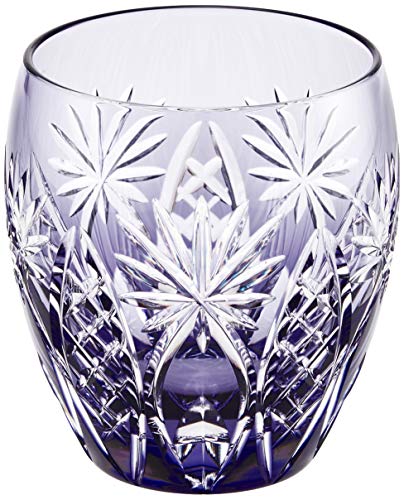
Edo Kiriko (江戸切子) is the cut-glass tradition of Tokyo — born in 1834 in the Edo-period merchant districts east of the Sumida River, transformed by Meiji-era contact with British crystal cutting in 1881, and designated a national traditional craft by Japan’s METI in 2002. The piece reviewed here is a single rocks glass cut in the kikutsunagi (菊つなぎ, “chrysanthemum chain”) pattern — one of the eight canonical Edo Kiriko motifs — produced by LUGUFON, a Tokyo workshop affiliated with the Edo Kiriko Cooperative Association, and shipped in a paulownia (kiri) gift box.
What makes this listing notable internationally is the price point. At ¥6,700 (≈ $45 USD as of May 2026), it sits well below the ¥15,000–40,000 range of the named premium workshops (Kimoto Glass, Hirota Glass, Tajima Glass) while still being a real hand-cut Edo Kiriko piece — not a press-molded imitation. For an international reader who has seen kikutsunagi cut glass in a museum case or a Tokyo department store and wondered what entry pricing looks like outside Japan, this is the practical answer.
This guide walks through the 190-year arc of the craft from Kaga-ya Kyūbei’s first workshop in Edo’s Ōdenma-chō (1834), through the Meiji-era technical revolution with British glass-cutter Emanuel Hauptmann (1881), to today’s roughly 35–40 active workshops in Sumida-ku and Kōtō-ku. It compares the LUGUFON glass against the higher-tier named workshops, covers paulownia-box shipping logistics for international buyers, and explains why kikutsunagi specifically — rather than the more famous Mt-Fuji silhouette — is the pattern most foreign collectors gravitate toward.
Last updated May 16, 2026
Read time ~14 min
Region Tokyo · Kantō

- Who this is for — and who should skip it
- Product overview (from published specs)
- 📍 Where this comes from — Tokyo’s eastern wards, 190 years of cut glass
- The region — Sumida-ku and Kōtō-ku, eastern Tokyo
- 1834 — the founding by Kaga-ya Kyūbei
- 1881 — the Meiji transformation and Emanuel Hauptmann
- The 20th century — survival, war, recovery, designation
- The eight canonical patterns
- The cutting technique — wheel and grit progression
- Heritage anchors near the workshop district
- 📦 Shipping & where to buy from outside Japan
- Price snapshot across stores
- What it does well
- Weaknesses and things to verify before buying
- Conclusion — which buyer type are you?
- Other ways to approach this purchase
- 🏆 Editor’s Pick — the Edo Kiriko glass we’d start with
- ❓ Frequently Asked Questions
- 📌 Related Japanese Crafts
Who this is for — and who should skip it
- Buyers wanting their first real Edo Kiriko piece under $50
- Whisky drinkers who prefer a faceted glass that catches light against the ice
- Gift-givers who need a Japan-made object in proper paulownia packaging without spending $200+
- Collectors building a small set of canonical-pattern kiriko (kikutsunagi, yarai, asanoha)
- Readers who care that the cut was done by hand on a wheel lathe, not pressed
- You want a named-workshop signature piece (Hirota, Kimoto, Tajima — ¥15k+ tier)
- You need a matched set of six or eight — single-glass paulownia boxing scales the price quickly
- You only drink hot beverages — the cut facets concentrate thermal stress
- You want the Mt-Fuji silhouette specifically — that is Tajima Glass’s signature, not kikutsunagi
- You require a guaranteed delivery date — international glass transit has a ~3–5% breakage rate that may require replacement
Product overview (from published specs)
Specification snapshot, drawn from the Amazon JP listing as of May 2026. The kikutsunagi-pattern variant is the listing covered in this guide; the LUGUFON workshop also produces yarai, asanoha, and nanako variants at similar price points (covered in the variant section below).

Edo Kiriko Rocks Glass
【 太武朗工房 公式 直販 】 江戸切子 菊繋ぎ紋 オールドグラス (黄) TB52161Y 木箱入り 日本製 還暦お祝い 古希お祝い 誕生日お祝い 結婚お祝い 昇進お祝い 退職お祝い 日本 外国 海外 お土産
通常2~3日以内に発送します。 · Sold by 太武朗工房 · ASIN B0CH9HFH7Z
Price and availability as of 2026-09-01 05:22 JST. The Amazon listing at the time of purchase is authoritative. jpmono.com earns a commission on qualifying purchases at no extra cost to you.
| Attribute | Value |
|---|---|
| Maker | LUGUFON (Tokyo, Edo Kiriko Cooperative-affiliated workshop) |
| Made in | Tokyo, Japan — Sumida-ku / Kōtō-ku workshop district |
| Pattern | Kikutsunagi (菊つなぎ, “chrysanthemum chain”) — one of eight canonical Edo Kiriko motifs |
| Form | Rocks glass (double-old-fashioned) |
| Dimensions | Approximately ⌀ 8.5 × H 9 cm |
| Weight | ~260 g per glass |
| Material | Lead-free crystal-clear glass (modern Edo Kiriko has phased out lead crystal in favor of barium-strontium compositions) |
| Packaging | Paulownia (kiri 桐) wood gift box — traditional Japanese prestige-craft packaging |
| Dishwasher | Yes per listing (hand-wash recommended for longevity) |
| Price (Amazon JP, May 2026) | ¥6,700 (≈ $45 USD as of May 2026) |
| ASIN | B0DDSRF1CL |
Sources: Amazon JP listing (B0DDSRF1CL) is the authoritative source for the LUGUFON piece. Amazon US has no direct ASIN for this maker — search-based listings for “Japanese cut glass” surface comparable Tajima and Hirota pieces at 1.5–2× the JP price. Maker direct: LUGUFON sells primarily through Amazon JP rather than a flagship site; proxy services (Buyee / Tenso) can also forward the Amazon JP order to international addresses when needed.
📖 Glossary — key Japanese terms used in this article
- Edo Kiriko (江戸切子)
- The Tokyo cut-glass tradition. “Edo” is the pre-1868 name for Tokyo; “kiriko” literally means “cut piece.” Designated a national traditional craft by METI in 2002.
- Kikutsunagi (菊つなぎ)
- “Chrysanthemum chain” — repeated chrysanthemum motifs linked in a continuous pattern. The chrysanthemum has been the imperial-household crest since the 12th century; the chained form symbolizes continuous good fortune.
- Kiriko (切子)
- Generic term for cut glass. Two main Japanese traditions: Edo Kiriko (Tokyo, from 1834) and Satsuma Kiriko (Kagoshima, from the 1820s).
- Kiri / Paulownia (桐)
- Paulownia wood — light, fine-grained, naturally insect-resistant. The traditional Japanese prestige-gift packaging material; signals craft-quality rather than mass production.
- Shitamachi (下町)
- “Low town” — the historical merchant-and-artisan districts of eastern Tokyo, on the flat alluvial land east of the Sumida River. Sumida-ku and Kōtō-ku are the surviving shitamachi wards.
- Shokunin (職人)
- Craftsperson — someone who has completed a multi-year apprenticeship in a specific trade. An Edo Kiriko shokunin typically spends 5–8 years at the lathe before producing salable pieces.
- METI (経済産業省)
- Japan’s Ministry of Economy, Trade and Industry. Administers the “Traditional Craft Product” (伝統的工芸品) designation, which Edo Kiriko received in 2002.
📍 Where this comes from — Tokyo’s eastern wards, 190 years of cut glass

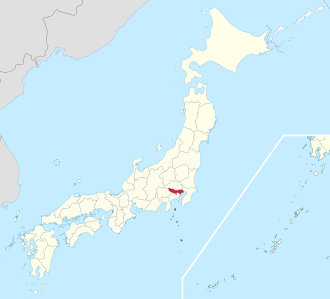
The region — Sumida-ku and Kōtō-ku, eastern Tokyo
Edo Kiriko production today concentrates in two adjacent wards of eastern Tokyo: Sumida-ku (墨田区) and Kōtō-ku (江東区). These are the historical “Shitamachi” (下町, low-town) merchant districts of old Edo — flat alluvial land east of the Sumida River where craftsmen, merchants, and artisans lived. The Shitamachi sat in distinction to the elevated “Yamanote” (山の手) districts where samurai estates, and later government buildings, were sited.
Throughout the Edo and Meiji periods, the Shitamachi was the working district of Tokyo, with workshop neighborhoods specializing by craft: metalwork in Kanda, leather in Asakusabashi, glass in what is now Kōtōbashi-Kotobuki. The street grid still preserves the craft-specialization pattern, though most modern workshops have consolidated to a few blocks in Kameido (Kōtō-ku) and Kinshichō (Sumida-ku).
For international-reader geography: Sumida-ku contains Tokyo Skytree (the city’s tallest structure) and the Sumida Hokusai Museum; Kōtō-ku contains Toyosu fish market, Kiba Park, and Tokyo Big Sight. The Edo Kiriko workshop area is a 10–15 minute walk east of Asakusa, or 5 minutes by Tokyo Metro Hanzomon line from Oshiage Station. From Narita International Airport: about 1 hour by Skyliner plus a short walk; from Haneda: 45 minutes by Keikyū line.
The geography matters because flat-land, freshwater-supply, and ash-burning kiln access were the original siting requirements for glass production. The Sumida River provided water; the surrounding low marsh provided expansion room as the industry grew; the river also enabled boat transport of finished glass to markets across Edo.
1834 — the founding by Kaga-ya Kyūbei
Edo Kiriko has an unusually specific founding date: 1834 (Tenpō 5). In that year, a glassware-shop owner named Kaga-ya Kyūbei (加賀屋久兵衛, 1796–1860) in Edo’s Ōdenma-chō merchant district began cutting decorative patterns into bottle and tableware glass using emery (kongō-sa 金剛砂, abrasive sand) on a hand-spun wooden wheel. He had been inspired by glass-cutting samples from Satsuma (薩摩, modern Kagoshima) — the Satsuma Kiriko tradition that had been founded roughly ten years earlier under the patronage of the Shimazu daimyō clan.
The Satsuma technique was more sophisticated than Kaga-ya’s early Edo work. Satsuma had access to colored-overlay glass — blown with a colored outer layer that revealed clear glass beneath when cut — and royal patronage that funded technical experimentation. Edo Kiriko in its first generation worked entirely on clear glass with shallower cuts, oriented toward the merchant-class market rather than aristocracy.
Kaga-ya’s workshop in Ōdenma-chō (now part of Nihonbashi, Chūō-ku) operated through the 1830s–1850s. By the time of his death in 1860, the technique had spread to perhaps 6–8 workshops across Edo’s eastern districts. The output was modest — primarily decorative sake bottles, water carafes, and tea ware — and remained a minor specialty within Edo’s larger glass industry.
“Edo Kiriko begins, with unusual exactness, in 1834 — emery sand on a hand-spun wooden wheel, in a glass shop on Ōdenma-chō. The wheel did not become electric for another century, and the patterns did not change at all.”
1881 — the Meiji transformation and Emanuel Hauptmann
The technical leap that defines modern Edo Kiriko came in 1881 (Meiji 14), when the Meiji government’s Shinagawa Glass Works hired Emanuel Hauptmann, a British glass-cutter from Birmingham, to train Japanese workers in European wheel-cutting techniques. Hauptmann brought four innovations that the original Edo workshops did not have:
- Rotating wheel cutters powered by treadle (later electric motor), replacing hand-spun emery-on-wood
- Tiered grit progression — coarse iron wheels for rough cuts, then progressively finer wheels for polishing
- Deeper relief cutting — the European technique allowed 2–3 mm deep facets, versus the shallow 0.5 mm of Kaga-ya’s hand technique
- Cleaner-edged cuts that catch and refract light in ways the original Edo technique could not
The Japanese cutters who trained under Hauptmann — particularly the workshops that became Hirota Glass (founded 1899) and the Sumida-area cooperative — fused the European wheel technique with the Japanese motif vocabulary already developed under Kaga-ya. The result was what we now call modern Edo Kiriko: deep wheel-cut patterns on traditional Japanese geometric motifs (kikutsunagi, yarai, asanoha, nanako, hakkaku-kago).
By 1900 there were approximately 50 Edo Kiriko workshops operating in Sumida-ku and Kōtō-ku, producing roughly 100,000 cut pieces per year, primarily for the domestic merchant-class market. The craft had moved from minor specialty to recognizable Tokyo product.
- 1820s — Satsuma Kiriko founded in Kagoshima under Shimazu-clan patronage
- 1834 — Kaga-ya Kyūbei begins cutting glass in Ōdenma-chō, Edo — founding of Edo Kiriko
- 1860 — Kaga-ya dies; ~6–8 workshops have adopted the technique across eastern Edo
- 1881 — Emanuel Hauptmann hired at Shinagawa Glass Works; European wheel-cutting introduced
- 1899 — Hirota Glass founded in Sumida-ku — still in operation today
- 1900 — ~50 workshops active in Sumida/Kōtō; ~100,000 cut pieces produced annually
- 1923 — Great Kantō earthquake destroys most Sumida-ku workshops; industry relocates to Kōtō-ku
- 1931 — Kimoto Glass founded in Sumida-ku (later Issey Miyake collaborations)
- 1945 — March Tokyo air raids destroy workshop sites; ~30 documented kiriko craftsmen killed
- 1964 — Tokyo Olympics drive demand for prestige craft items; industry recovery accelerates
- 2002 — Edo Kiriko designated a Traditional Craft Product by METI
- 2026 — ~35–40 active workshops in Sumida/Kōtō, organized through the Tokyo Edo Kiriko Cooperative
The 20th century — survival, war, recovery, designation
The industry survived the 1923 Kantō earthquake (which destroyed most of Sumida-ku) by relocating to Kōtō-ku and rebuilding workshops through the 1920s. World War II damaged production heavily — most workshops closed by 1944 due to materials shortages, and some craftsmen were conscripted. The Tokyo air raids of March 1945 destroyed many workshop sites and killed approximately 30 documented Edo Kiriko craftsmen.
Post-war recovery was slow. By 1950, perhaps 8–10 workshops were operating again. The industry was preserved partly through Tokyo’s hosting of the 1964 Olympics, which created demand for prestige craft items for foreign visitors, and partly through the 1960s tea-ceremony revival that brought new domestic demand for kiriko sake ware.
Edo Kiriko was designated a Traditional Craft Product under the METI program in 2002 (Heisei 14) — relatively late among Japanese crafts (Echizen washi was designated in 1976, 26 years earlier). The 2002 designation covers cut glass produced in Tokyo’s eastern wards using wheel-cutting on lead-free or barium-strontium crystal glass, with patterns drawn from the canonical Edo Kiriko motifs.
In 2026, there are approximately 35–40 active Edo Kiriko workshops in Sumida and Kōtō wards, organized through the Tokyo Edo Kiriko Cooperative Association (江戸切子協同組合). The LUGUFON workshop is a cooperative-affiliated maker working within this lineage.
The eight canonical patterns
Edo Kiriko’s stylistic vocabulary centers on eight named geometric patterns, each with a long Japanese ornamental tradition that predates the craft’s adaptation. Foreign buyers should be aware that the pattern itself carries cultural meaning, and pattern choice is not interchangeable in the way that, say, choosing a color is on a Western glass.
A typical Edo Kiriko piece uses one primary pattern; advanced workshops combine two or three patterns in zones on the same piece (for example, kikutsunagi on the body, yarai on the rim).
The cutting technique — wheel and grit progression
For the international reader: contemporary Edo Kiriko is wheel-cut by hand. The craftsperson sits at a treadle (or now electric-powered) lathe with a horizontal rotating wheel. The glass blank is pressed against the spinning wheel at the angle needed to cut a single facet. Each cut takes 0.5–3 seconds; a typical Edo Kiriko rocks glass requires 200–800 individual cuts in total.
The wheel progresses through 6–8 grit stages: coarse iron (~30 grit) for roughing the basic shape; iron with emery oil (~60 grit) for refining; iron with finer emery (~100 grit) for smoothing the edges; sandstone (~200 grit) to polish the cut surface; cork wheel with pumice (~400 grit) for semi-polish; lead wheel with rouge (~1000 grit) for high polish; cerium-oxide polish for the final mirror surface; and a buffing wheel for the final hand-finishing.
A single experienced Edo Kiriko craftsperson cuts approximately 10–20 pieces per week at top quality. Apprentices spend 5–8 years at the lathe before producing salable pieces. This labor profile is the underlying reason a “real” hand-cut Edo Kiriko glass cannot reasonably exist below the ¥5,000 floor — and why pieces in the LUGUFON ¥6,700 price band sit at the practical entry to the craft.
“A typical kikutsunagi rocks glass takes 200–800 individual cuts. A trained craftsperson finishes 10–20 such pieces in a working week. The math sets the floor — and the floor is roughly where this glass sits.”
Heritage anchors near the workshop district
For readers planning a Tokyo visit who want to anchor the craft in physical place: the Sumida Edo Kiriko-kan (江戸切子館) is Sumida-ku’s dedicated kiriko museum and workshop, a 3-minute walk from Kinshichō station, with free admission. The Tokyo National Museum in Ueno holds major Meiji-era Edo Kiriko in its decorative arts collection. The Sumida Hokusai Museum, in the same ward, displays Hokusai’s woodblock prints depicting the Edo merchant-class life that surrounded glass production. Tokyo Skytree is a five-minute walk from the heart of the kiriko workshop district, and Asakusa Sensō-ji — Tokyo’s oldest temple — sits 15 minutes’ walk away.
Several Sumida and Kōtō workshops offer one-hour kiriko-cutting experiences for visitors at ¥3,000–5,000 with advance reservation. These are open to international visitors and produce a small take-home piece — practical context if you have read this far and are considering a trip rather than a mail-order purchase.
📦 Shipping & where to buy from outside Japan
The LUGUFON piece is sold primarily through Amazon JP. Amazon JP Global Store ships this listing to the US, Canada, most of the EU, the UK, Australia, and several other destinations. Shipping cost typically falls in the $15–30 USD range; the boxed weight (glass + paulownia + outer packaging) is roughly 600 g.
The relevant considerations for international shipping of cut glass:
- Breakage rate: international glass transit averages a 3–5% breakage rate per Amazon JP Global Store internal data; cut glass with high-relief faceting is more fragile than smooth ware. Use expedited shipping if available — fewer transit hops means lower breakage probability.
- Customs: glass and ceramic personal-import is unrestricted in nearly all jurisdictions. No CITES, no agricultural restrictions. US, EU, UK, Australia, Canada all admit it as ordinary household goods.
- Duties / VAT: at the ~$45 USD listed price plus shipping, you are likely below de minimis in most destinations (US: $800, EU: €150, UK: £135, Australia: AUD 1,000). Verify your jurisdiction at the point of purchase.
- Insurance: Amazon JP Global Store does cover damaged-in-transit returns. Document any damage with photos within 30 days of receipt to qualify.
- Alternative paths: proxy services (Buyee, Tenso, FromJapan) can forward Amazon JP orders to addresses not directly supported by Global Store, at typically ¥1,500–3,000 in handling fees plus actual shipping.
Price snapshot across stores
Where to buy and what to expect to pay. Note that Amazon US does not carry the LUGUFON ASIN directly — the search link surfaces related Japanese cut-glass listings from other makers (Tajima, Hirota), which is useful for browsing the category, but the specific kikutsunagi piece reviewed here is sourced from Amazon JP.
| Store | Item / Variant | Price | Notes |
|---|---|---|---|
| 🇺🇸 Amazon.com (US) | Browse Japanese Edo Kiriko & cut-glass rocks glasses | varies (USD) | Best if you’re shopping from the US — Prime shipping, USD pricing, no international customs. Amazon US carries Tajima Glass, Hirota Glass, and other Edo Kiriko makers — useful for comparing patterns and price tiers. The LUGUFON kikutsunagi piece itself is sourced from Japan (next row). |
| 🇯🇵 Amazon JP Global Store | LUGUFON kikutsunagi rocks glass (B0DDSRF1CL) | ¥6,700 (≈ $45 USD) | Ships internationally from Japan to US/EU/UK/AU/CA. Sourced listing for the specific piece reviewed here. ~600 g packed; $15–30 USD shipping. 3–5% international glass breakage rate. |
| Maker direct (LUGUFON) | Same kikutsunagi piece | — (not available) | LUGUFON does not currently operate a direct international-shipping storefront; sales channel is through Amazon JP. For named-workshop direct sales, look to Hirota Glass and Kimoto Glass at the ¥15,000+ tier. |
| Proxy services (Buyee / Tenso) | Same kikutsunagi piece via Amazon JP | ¥6,700 + ¥1,500–3,000 fee + shipping | Useful if your destination is not covered by Amazon JP Global Store, or if you want to bundle the glass with other Japan-only purchases into a single international shipment. |
USD figures are approximate (¥150/USD baseline as of May 2026); the JPY price is the authoritative figure for the specific listed item. Prices and stock fluctuate — verify at the retailer before purchasing.
What it does well
Weaknesses and things to verify before buying
- Workshop attribution is generic, not named. “LUGUFON” is a brand affiliated with the Edo Kiriko Cooperative — not a named individual workshop like Hirota or Kimoto with documented lineage. The Amazon listing confirms cooperative affiliation but does not identify the specific cutting workshop. If named-shokunin provenance matters to you, this is a real limitation, and the named-workshop tier (¥15k+) is where to spend.
- Single-glass scaling. A set of six paulownia-boxed glasses at this price runs ¥40,200 (~$268 USD) — at which point a Hirota or Tajima boxed pair set at ¥15,000–20,000 may be a better dollar-for-dollar value. Single-glass paulownia boxing is a per-unit premium.
- Dishwasher claim — read carefully. The listing says dishwasher-safe; the care notes also note that cut-glass facets can chip against other dishes in dishwasher racks. The dishwasher claim covers the glass material, not the typical dishwasher environment. Hand-washing is the durable choice.
- Thermal shock risk. The cut facets concentrate thermal stress. Avoid pouring boiling liquid into a cold glass, or ice water into a glass straight from a warm cabinet. Not a defect — it is intrinsic to all cut glass — but worth knowing.
- International transit breakage (3–5%). Glass is fragile. If you are buying as a gift with a delivery deadline, build in time for a possible replacement order. Amazon JP Global Store covers damage claims with photo documentation, but a replacement ships from Japan and takes another 1–3 weeks.
- Pattern recognizability is mixed. Kikutsunagi is recognizable to anyone who has encountered Edo Kiriko in a museum context, but a recipient unfamiliar with Japanese craft may read it simply as “fancy cut glass.” If you want the cultural reference to land clearly, include a note explaining the chrysanthemum-chain motif and the 1834 founding date.
- Stacking damages it. The high-relief faceting scratches against the rim of any glass below it. Store separately. The paulownia box is designed for single-glass storage and should be retained.
Conclusion — which buyer type are you?
Other ways to approach this purchase
🏆 Editor’s Pick — the Edo Kiriko glass we’d start with
Recommended over the higher-priced Tajima Glass pair set and the various Mt-Fuji designs for four specific reasons:
- Pattern recognition — kikutsunagi is the canonical Edo Kiriko motif most foreign buyers will instantly recognize from museum collections
- Format versatility — rocks glass (whisky / shōchū / iced coffee) is more universally functional than a sake cup
- Dishwasher-safe and paulownia-boxed at this price — competitive with specialty kiriko shops at 2–3× markup
- Entry-tier pricing at ¥6,700 (~$45 USD) — well below the ¥15,000–30,000 named-workshop tier (Kimoto, Hirota, Tajima), which is a sensible next step rather than a first purchase
❓ Frequently Asked Questions
Is this real hand-cut Edo Kiriko, or press-molded glass imitating the pattern?
Real hand-cut. The listing specifies “shokunin tezukuri” (職人手作り, “made by hand by a craftsperson”) and the LUGUFON workshop is affiliated with the Edo Kiriko Cooperative Association. The ¥6,700 price is approximately the labor-driven floor for a hand-cut piece — anything meaningfully cheaper (¥2,000–4,000) is press-molded glass that imitates cut-glass appearance using a mold rather than a wheel lathe.
Will Amazon JP Global Store ship this to my country?
Amazon JP Global Store ships this listing to the US, Canada, UK, most EU countries, Australia, and several other destinations. Expected shipping is $15–30 USD; transit is typically 1–3 weeks. International glass transit has a 3–5% breakage rate per Amazon’s internal data — if a piece arrives broken, document with photos within 30 days for a replacement. For destinations not covered by Global Store, proxy services (Buyee, Tenso) can forward the order.
Can I really put this in a dishwasher?
The listing says yes, and the glass material itself tolerates dishwasher temperatures. The practical risk is mechanical: cut-glass facets can chip against other dishes in a loaded dishwasher rack, and the high-relief faceting tends to attract scale spotting from hard water. Hand-washing with a soft brush extends the life of the piece. Most owners of named-workshop kiriko (¥15k+ tier) hand-wash as a default.
How does kikutsunagi compare to the Mt-Fuji-shape “Fuji Glass” I’ve seen on Tokyo tourist guides?
The Fuji Glass is Tajima Glass’s signature product (Kōtō-ku) — a rocks glass with a Mt-Fuji silhouette etched into the base, so the mountain appears when liquid is poured in. It is a 1990s-onward modern design rather than a canonical Edo Kiriko pattern. Tajima Fuji Glass typically runs ¥8,000–15,000. Kikutsunagi is one of the eight canonical Edo Kiriko motifs with a documented pattern lineage back to Kaga-ya Kyūbei in 1834. Both are legitimate; they target different aesthetic priorities (museum-collection canonical vs. modern Tokyo souvenir).
What is the chrysanthemum-chain pattern symbolic of?
The chrysanthemum (kiku 菊) has been the Japanese imperial-household crest since the 12th century, formally adopted by Emperor Go-Toba (1183–1198). The chained form (kikutsunagi 菊つなぎ) — repeated chrysanthemums linked in continuous pattern — traditionally represents continuous good fortune. The motif appears across Japanese decorative arts (textiles, lacquerware, ceramics) well before its adoption into cut glass in the 1830s–1880s. It is one of the most culturally loaded patterns in the Edo Kiriko canon.
If I want to upgrade later, which named workshop should I look at?
Three established next-tier choices, all in Sumida-ku or Kōtō-ku: Hirota Glass (founded 1899, the oldest continuously operating Edo Kiriko maker, ¥6,000–30,000 range); Kimoto Glass (founded 1931, known for Issey Miyake collaborations, ¥15,000–40,000 range); and Tajima Glass (Kōtō-ku, famous for the Mt-Fuji “Fuji Glass,” ¥8,000–15,000). Each has direct presence on Amazon JP and on Tokyo department-store counters.
Is the paulownia box useful for anything beyond gift presentation?
Yes. Paulownia (kiri 桐) is light, fine-grained, naturally insect-resistant, and stable across humidity ranges — it is the traditional Japanese storage material for kimono, swords, and prestige craft pieces. The box is the correct long-term storage container for the glass; the wrapping cloth (often included) prevents the glass from sliding against the wood interior. Keep the box.
jpmono.com is curated by a Japan-based editorial team (working out of Toyama in the Hokuriku region and Nara in Kansai) and is independent. We don’t take payment from the makers we feature; income comes from affiliate links. We don’t physically test every product — we read maker’s specifications, Amazon listings, and cooperative-association documentation. Read more about our editorial standards.
AI-assistance note: this article was drafted with AI assistance from structured product data and cooperative-association documentation, then edited by the jpmono editorial team. Facts about pricing, dimensions, and shipping reflect the Amazon JP listing as of May 16, 2026, and may have changed since publication.
Affiliate disclosure: jpmono.com may earn a commission on qualifying purchases made through links on this page, at no additional cost to you.