![Kaga Yuzen Silk Scarf: Kanazawa’s Hand-Painted Dyeing, Where to Buy [2026]](https://jpmono.com/wp-content/uploads/2026/05/japan-map-regions-and-prefectures-800x1050.png)
Kaga Yuzen (加賀友禅, “Kaga-style yuzen dyeing”) is the hand-painted silk dyeing of Kanazawa, in Ishikawa Prefecture on the Sea of Japan coast. Where Kyoto’s yuzen leans on gold leaf and embroidery, the Kaga school keeps the dye itself the star: realistic bird-and-flower scenes, an earthy five-color palette, and soft graded shading that moves from a deep outer edge inward. The piece covered here is a hand-dyed silk scarf and stole carrying that tradition in a form you can actually wear.
What makes it notable to an international reader is the lineage behind it. Kaga Yuzen grew up under the Maeda clan’s Kaga Domain — the wealthiest “million-koku” han in Edo-era Japan — whose patronage funded a dense craft economy in Kanazawa that also produced Wajima lacquer, Kanazawa gold leaf, and Kutani ware. The style was systematized in the early eighteenth century by the fan-painter Miyazaki Yuzensai, who lent his name to both the Kyoto and Kanazawa traditions. It is designated a Traditional Craft (dentō kōgeihin) by Japan.
This guide is for readers deciding whether a hand-dyed Kaga Yuzen silk scarf is worth the asking price, and how to get one shipped outside Japan. We cover the Kaga style, how it differs from its Kyoto sibling, the care a silk dye-piece needs, the honest caveats, and practical ways to buy from abroad.
🔄 Updated:
⏱️ Read time: ~9 min
- Who this is for — and who should skip it
- Product overview (from published specs)
- 📍 Where this comes from — place, era, and the craft tradition
- 📌 How does it compare?
- Buying options
- What it does well
- Weaknesses and things to verify before buying
- Conclusion — which buyer type are you?
- Other ways to approach this purchase
- ❓ Frequently Asked Questions
Who this is for — and who should skip it
- Want a wearable piece of a designated Japanese Traditional Craft, not a souvenir print
- Prefer restraint — painterly nature motifs over gold leaf and glitter
- Like the earthy Kaga gosai palette (indigo, crimson, ochre, deep green, royal purple)
- Are buying a meaningful gift and want a clear cultural story behind it
- Are comfortable with hand-finished variation rather than mass-printed uniformity
- Want a low-maintenance accessory you can machine wash and forget
- Need an exact, repeatable pattern — hand dyeing varies piece to piece
- Are shopping purely on price; printed lookalikes cost a fraction
- Need it delivered domestically in days (this is sourced from Japan)
- Dislike silk’s care demands (water spotting, dry-clean or careful hand wash)
Product overview (from published specs)
Based on publicly available reference data for Kaga Yuzen silk dyeing, the table below summarizes what is confirmed for the craft in general. Where a figure varies by maker or piece, it is marked rather than guessed; verify current price and stock with the seller before ordering.
| Attribute | Detail |
|---|---|
| Craft | Kaga Yuzen (加賀友禅) hand-painted silk dyeing |
| Origin | Kanazawa, Ishikawa Prefecture (Hokuriku region) |
| Form | Scarf / stole (long wrap) |
| Material | 100% silk |
| Dimensions | Unconfirmed — ask the seller |
| Motif | Kachō (bird-and-flower), gosai five-color palette |
| Technique notes | Hand dyeing with bokashi graded shading; mushikui (“insect-eaten leaf”) detailing characteristic of the style |
| Weight | Unconfirmed — ask the seller |
| Designation | Traditional Craft (dentō kōgeihin) |
| Price (at writing) | — |
Kaga Yuzen silk dyeing is the main craft reference for this guide; maker-direct sources may also be useful. Any USD figures elsewhere on jpmono are approximate estimates at a ¥150/USD baseline, and JPY prices vary by maker and piece.
📖 Glossary — key Kaga Yuzen terms
- Kaga Yuzen (加賀友禅) — the Kanazawa school of yuzen resist-dyeing, known for realistic, painterly designs.
- Kyo-yuzen (京友禅) — the Kyoto school; the “sister” tradition, typically more decorative, often with gold leaf and embroidery.
- Gosai (五彩, “five colors”) — the Kaga palette: indigo, crimson, ochre/yellow, deep green, and royal purple — earthier than Kyoto’s brighter range.
- Bokashi (ぼかし) — graded shading; in Kaga Yuzen the color characteristically deepens toward the outer edge of a motif and fades inward.
- Mushikui (虫食い, “insect-eaten”) — a signature Kaga detail: leaves painted as if nibbled by insects, a nod to realism in nature.
- Kachō-fūgetsu (花鳥風月) — “flowers, birds, wind, moon”; the bird-and-flower nature themes the Kaga style favors.
- Dentō kōgeihin (伝統工芸品) — a craft officially designated as a Traditional Craft by Japan.
- Kaga Domain / hyakumangoku (加賀藩・百万石) — the Maeda clan’s “million-koku” domain, the richest in Edo-era Japan, whose patronage seeded Kanazawa’s crafts.
- Stole — a long, wide wrap that sits between a neck scarf and a shawl.
📍 Where this comes from — place, era, and the craft tradition

Kanazawa is the castle town at the heart of what was once the Kaga Domain. Tucked between the Sea of Japan and the mountains, it is a city of canals, old samurai and geisha districts, and one of Japan’s three great gardens, Kenroku-en. The damp Hokuriku climate — heavy winter snow, humid summers — suited textile work, and the domain’s wealth supplied the patrons who could commission it.
That wealth was extraordinary. The Maeda clan governed the richest domain in Edo-era Japan, rated at over a million koku of rice — the “hyakumangoku” that still names Kanazawa’s annual festival.
Rather than spend that surplus on military display, the Maeda lords poured it into culture and craft. The same patronage economy that funded Kaga Yuzen also raised Wajima lacquer, Kanazawa gold leaf, and Kutani porcelain — a concentration of living crafts unusual for a single region. Yuzen dyeing itself was systematized in the early eighteenth century by the fan-painter Miyazaki Yuzensai, whose name attached to both the Kyoto and Kanazawa schools.
- 1583 — Maeda Toshiie enters Kanazawa Castle; the Kaga Domain (“million-koku” han) begins consolidating its craft economy.
- 17th century — Maeda patronage funds a dense Kanazawa craft cluster: Wajima lacquer, gold leaf, and Kutani ware grow alongside dyeing.
- early 18th century — Fan-painter Miyazaki Yuzensai systematizes the yuzen method, lending his name to both Kyo- and Kaga-yuzen.
- 18th–19th century — The Kaga school develops its realistic kachō motifs, the earthy gosai palette, edge-to-center bokashi shading, and mushikui detailing.
- 20th century — Kaga Yuzen is designated a Traditional Craft (dentō kōgeihin), recognizing the hand-dyeing lineage.
- 2026 — Still hand-painted in Kanazawa workshops; wearable pieces like scarves reach international buyers via the Amazon JP Global Store.
What separates Kaga Yuzen from its Kyoto sibling is a matter of temperament. Kyo-yuzen is decorative and courtly, often finished with gold leaf and embroidery. Kaga Yuzen stays painterly and grounded — birds and flowers rendered with botanical realism, the famous mushikui leaves, and colors drawn from soil and dusk rather than the jewel box.
“Kyoto reaches for gold; Kanazawa keeps the dye itself the star — a painter’s restraint, worn around the neck.”
For a piece “still being made here,” that lineage is the value. A hand-dyed scarf is a small, more affordable doorway into a tradition whose full kimono can run into many thousands of dollars — the same hands, the same gosai logic, scaled to something you can wear on an ordinary Tuesday.
📌 How does it compare?
Related jpmono guides — yuzen siblings, Ishikawa neighbors, and other Japanese textile scarves:
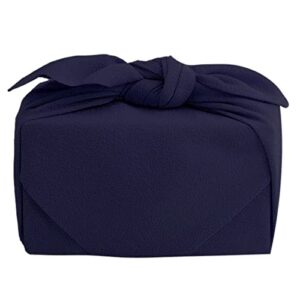 Kyoto’s Yuzen sister craft
Kyo-yuzen furoshiki wrapping cloth
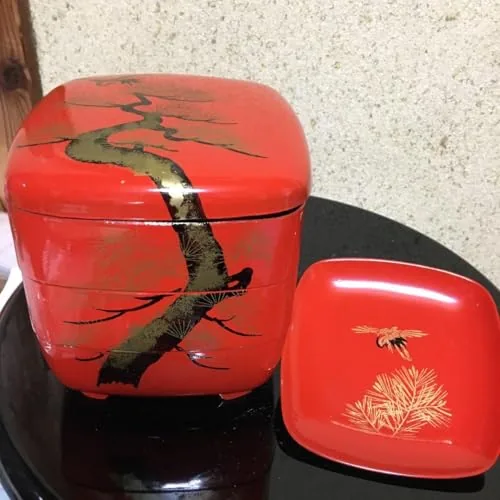
Ishikawa lacquer (Wajima)
Wajima-nuri meoto sakazuki
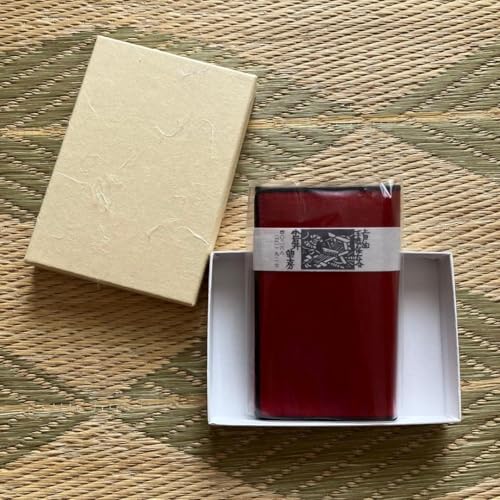
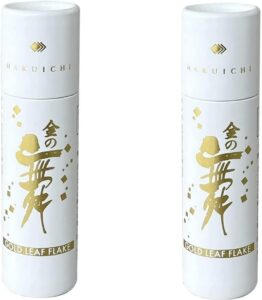 Kanazawa gold leaf
Hakuichi kinpaku
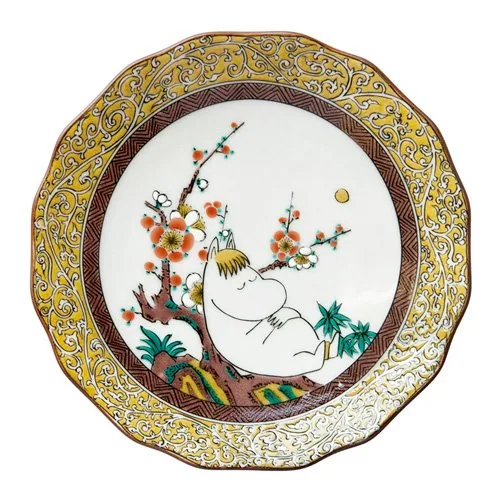
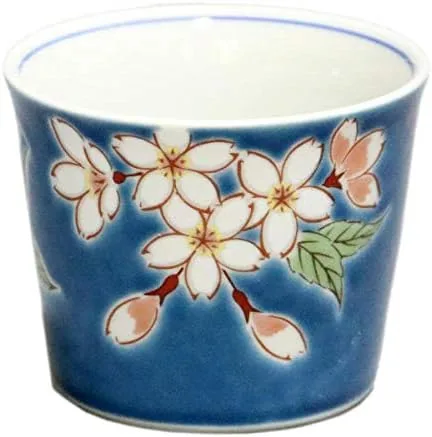 Kutani ware, Ishikawa
Kutani-yaki soba choko
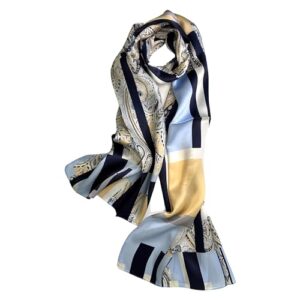 Arimatsu shibori scarf
Shibori tie-dye, Aichi
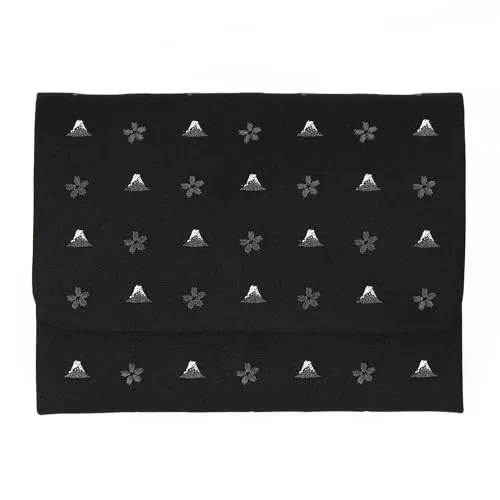 Nishijin silk weaving
Nishijin-ori card case
Kiryu silk
Kiryu-ori silk necktie
Buying options
Prices and stock fluctuate. Kaga Yuzen silk scarves vary widely by dye work, fabric weight, and edition, so a USD figure is useful only as an approximate conversion at a ¥150/USD baseline.
| Store | Item / variant | Price | Notes |
|---|---|---|---|
| 🇺🇸 Amazon.com (US) | Browse Japanese silk scarves & stoles | varies (USD) | Best if you are shopping from the US — Prime shipping, USD pricing, no international customs. Amazon US carries Japanese silk and yuzen-style scarves for comparing colors and price tiers; this exact Kaga Yuzen piece is sourced from Japan (next row). |
| 🇯🇵 Amazon JP Global Store | Kaga Yuzen kachō silk scarf | — | The selected Japanese source. Ships internationally from Japan to most destinations; customs and duties may apply over local thresholds. |
| Maker direct | Kaga Yuzen workshops / Kanazawa galleries | varies | Some Kanazawa ateliers and craft cooperatives sell scarves directly; selection and international shipping vary by workshop. |
| Proxy services (Buyee / Tenso) | Japan-only sources forwarded abroad | item + forwarding fee | Useful if you find a Japan-only source; adds a service fee and a second shipping leg. Verify silk import rules for your country. |
What it does well
Weaknesses and things to verify before buying
- Product details are limited. Confirm the scarf’s specifications and current purchase terms with the seller before ordering.
- Hand-dyed variation. Because each piece is dyed by hand, exact pattern placement and color depth will differ from the catalog photo. That is the nature of the craft, not a defect — but it means no two are identical.
- Silk care. Silk water-spots easily and generally needs dry cleaning or careful cold hand washing. If you want wash-and-wear convenience, this is the wrong material.
- Premium over lookalikes. A hand-dyed Kaga Yuzen scarf costs many times more than machine-printed “yuzen-style” scarves. Verify you are paying for hand dyeing, which is the point of the price.
- Confirm “hand-dyed,” not “inspired by.” The Kaga Yuzen name is used loosely by some sellers. Check the seller’s wording for hand-dyeing and, where stated, a maker or cooperative attribution.
- International shipping & customs. Shipping from Japan adds cost and time, and orders above your country’s de minimis threshold may incur duties. Factor this into the total.
- No US-domestic option. The specific item is sourced from Japan; the Amazon US link is a category search, not this exact scarf.
Conclusion — which buyer type are you?
Other ways to approach this purchase
❓ Frequently Asked Questions
Is this a genuine Kaga Yuzen piece, or just printed to look like it?
A hand-dyed Kaga Yuzen silk scarf uses a traditional dyeing approach. Because the ‘Kaga Yuzen’ name is sometimes used loosely, verify the wording with the seller and look for a clear description of hand dyeing. Hand dyeing distinguishes the textile from machine-printed lookalikes.
Will Amazon JP Global Store ship a Kaga Yuzen scarf internationally?
Yes — Amazon JP Global Store ships many household and apparel items internationally to most major destinations. Kaga Yuzen silk scarves reach international buyers through that channel, through Kanazawa-based craft cooperatives and exhibition sales, and through specialist Japanese textile exporters. Shipping cost and delivery time vary by country, and orders above your local de minimis threshold may incur customs duties.
How do I care for a hand-dyed silk scarf?
Silk water-spots easily and generally needs dry cleaning or careful cold hand washing with a gentle detergent, then drying flat away from direct sun. Avoid wringing. Always follow the care label on the specific item, since hand-dyed pieces can be more sensitive than printed synthetics.
How is Kaga Yuzen different from Kyo-yuzen?
Both descend from the yuzen method systematized by Miyazaki Yuzensai. Kyo-yuzen (Kyoto) is decorative and often finished with gold leaf and embroidery. Kaga Yuzen (Kanazawa) is realistic and painterly — bird-and-flower motifs, the earthy gosai five-color palette, edge-to-center bokashi shading, and mushikui detailing, with the dye itself kept as the focus.
Is silk a good gift choice, and how should I present it?
A hand-dyed silk scarf travels well as a gift because it is light, broadly flattering, and carries a clear cultural story. The data suggests pairing it with a short note on Kaga Yuzen’s Kanazawa lineage; many buyers also add simple furoshiki cloth wrapping for presentation.
Why does the Editor’s Pick send me to an Amazon US search instead of the exact item?
A Kaga Yuzen silk scarf is sourced through a Kanazawa craft cooperative or through a specialist Japanese textile retailer, and not always individually listed on amazon.com. The US search link is offered first because it is the easiest path for US and EU shoppers to compare Japanese silk scarves with Prime shipping; a JP-based craft channel orders through the Kanazawa maker or gallery, shipped from Japan.
Will the colors and motif match the photo exactly?
Not exactly. Because the piece is hand-dyed, pattern placement and color depth vary from one scarf to the next, and screen calibration affects how the gosai palette appears. Treat the catalog image as representative of the style rather than a precise promise.
jpmono.com is a Japan-based curation site, curated by an independent editorial team working out of the Toyama (Hokuriku) and Nara (Kansai) regions. We introduce high-quality Japanese household objects to international readers and focus on items with verifiable craft heritage and clear international shipping paths. We do not physically test every product — we read maker specifications and textile references — and we don’t take payment from the makers we feature; income comes from affiliate links.
🤖 This article was drafted with AI assistance and reviewed against craft references before publishing. Specifications and prices vary by maker and piece, so confirm current details with the retailer or maker.
Affiliate disclosure: jpmono.com may earn a commission on qualifying purchases made through links on this page, at no additional cost to you.