![Kyo-yaki Kiyomizu Matcha Chawan: Kyoto Tea Ceremony Bowl Guide [2026]](https://jpmono.com/wp-content/uploads/2026/06/kyo-yaki-kiyomizu-matcha-chawan-tea-bowl-where-to-buy-2026-featured.jpg)
A Kyo-yaki (京焼, “Kyoto ware”) matcha chawan is not a rustic farmhouse bowl that happens to come from Kyoto. It is the opposite — a hand-painted tea bowl from the city that wrote the rulebook for the tea ceremony itself. The specific stream covered here, Kiyomizu-yaki (清水焼, “Kiyomizu ware”), takes its name from the Gojozaka and Kiyomizu-zaka slopes in Higashiyama that climb toward Kiyomizu-dera, lined for centuries with kilns and pottery shops.
What sets these bowls apart is decoration rather than dirt. Kyoto never had a native clay bed like Bizen or Tamba; as the imperial capital and the headquarters of the tea schools, it became a refinery of taste — importing clays and elevating surface design to an art. In the seventeenth century Nonomura Ninsei (野々村仁清) perfected iro-e (色絵, “colored overglaze enamel”) and Ogata Kenzan (尾形乾山) brought a painter’s hand to ceramics, giving Kyo-yaki its signature polychrome, gold-accented elegance.
This guide is written for an international reader deciding whether a Kyo-yaki / Kiyomizu-yaki chawan is the right tea bowl to buy, and where to buy it from outside Japan. We cover who it suits, how it differs from a Hagi or Mino chawan, what to verify before purchasing, and the two affiliate paths — an Amazon US search route and the Amazon JP Global Store listing the specific item is sourced from.
🔄 Updated:
⏱️ Read time: ~10 min

- Who this is for — and who should skip it
- Product overview (from published specs)
- 📍 Where this comes from — place, era, and the craft tradition
- Price snapshot across stores
- 📦 Shipping & where to buy from outside Japan
- What it does well
- Weaknesses and things to verify before buying
- Conclusion — which buyer type are you?
- Other ways to approach this purchase
- 🏆 Editor’s Pick
- ❓ Frequently Asked Questions
Who this is for — and who should skip it
- Want a tea bowl tied to where chanoyu (茶の湯, “the way of tea”) was actually codified, not a generic mug
- Prefer decorative, painterly ceramics — color, motif, and gold accents over plain glaze
- Are buying a gift and value the boxed, presentation-ready format
- Whisk matcha at home and want a wide-mouthed bowl suited to a chasen (tea whisk)
- Appreciate a METI-designated traditional craft with a documented Kyoto lineage
- Want the rustic, glaze-driven wabi look of a Hagi or Mino chawan — that is a different aesthetic
- Need a daily coffee mug or a dishwasher-and-microwave everyday vessel
- Are shopping purely on price; hand-painted Kyoto ware is not a budget category
- Expect a precise factory-standardized size and pattern — hand-work means piece-to-piece variation
- Cannot accommodate careful hand-washing and storage of a decorated, sometimes gold-accented surface
Product overview (from published specs)
The fetched dataset for this keyword returned no live Amazon US or eBay listings at the time of writing, so the table below combines the sourced Amazon JP Global Store listing (ASIN B0FVDH55Y3) with the category facts in our editorial notes. Treat the dimensions as approximate: these are hand-made bowls and the listing describes a representative piece rather than a factory-standardized unit.
Kyo-yaki Kiyomizu Matcha Chawan
京焼 清水焼 抹茶碗 茶碗 茶道 約12cm 色絵錦葉 紅葉 赤 日本製 TIY785
通常1~2か月以内に発送します。 · Sold by Amazon.co.jp · ASIN B0FVDH55Y3
Price and availability as of 2026-09-01 05:22 JST. The Amazon listing at the time of purchase is authoritative. jpmono.com earns a commission on qualifying purchases at no extra cost to you.
| Attribute | Detail | Source |
|---|---|---|
| Craft | Kyo-yaki / Kiyomizu-yaki (Kyoto ceramics), METI-designated traditional craft | Editorial notes |
| Form | Matcha chawan (抹茶茶碗, “tea-ceremony bowl”) | Spec hint |
| Decoration | Hand-painted iro-e colored overglaze, in the Ninsei / Kenzan tradition | Spec hint |
| Diameter | ~12 cm (approx.; hand-made variation expected) | Spec hint |
| Packaging | Boxed (presentation / gift format) | Spec hint |
| Origin | Kyoto, Kansai region (Gojozaka / Higashiyama kiln district) | Editorial notes |
| Listed price | Not present in fetched data — verify on the listing before buying | Amazon JP Global Store |
Only the Amazon JP Global Store listing reference was available; live pricing and exact dimensions may have shifted since the writing date. Always confirm at the retailer before purchasing.
📖 Glossary — key terms
- Kyo-yaki (京焼) — “Kyoto ware,” the umbrella term for ceramics made in Kyoto.
- Kiyomizu-yaki (清水焼) — the best-known stream of Kyo-yaki, named for the Kiyomizu-zaka / Gojozaka kiln district below Kiyomizu-dera.
- Chawan (茶碗) — a tea bowl; the matcha chawan is the wide bowl used to whisk and drink powdered green tea.
- Iro-e (色絵) — colored overglaze enamel painting, fired onto an already-glazed surface.
- Chanoyu / sadō (茶の湯 / 茶道) — “the way of tea,” the Japanese tea ceremony.
- Chasen (茶筅) — the bamboo whisk used to froth matcha in the bowl.
- Wabi (侘び) — the rustic, understated aesthetic associated with Hagi and Mino wares — a contrast to Kyoto’s decorative refinement.
- METI — Japan’s Ministry of Economy, Trade and Industry, which designates official traditional crafts (dentō kōgeihin, 伝統工芸品).
📍 Where this comes from — place, era, and the craft tradition

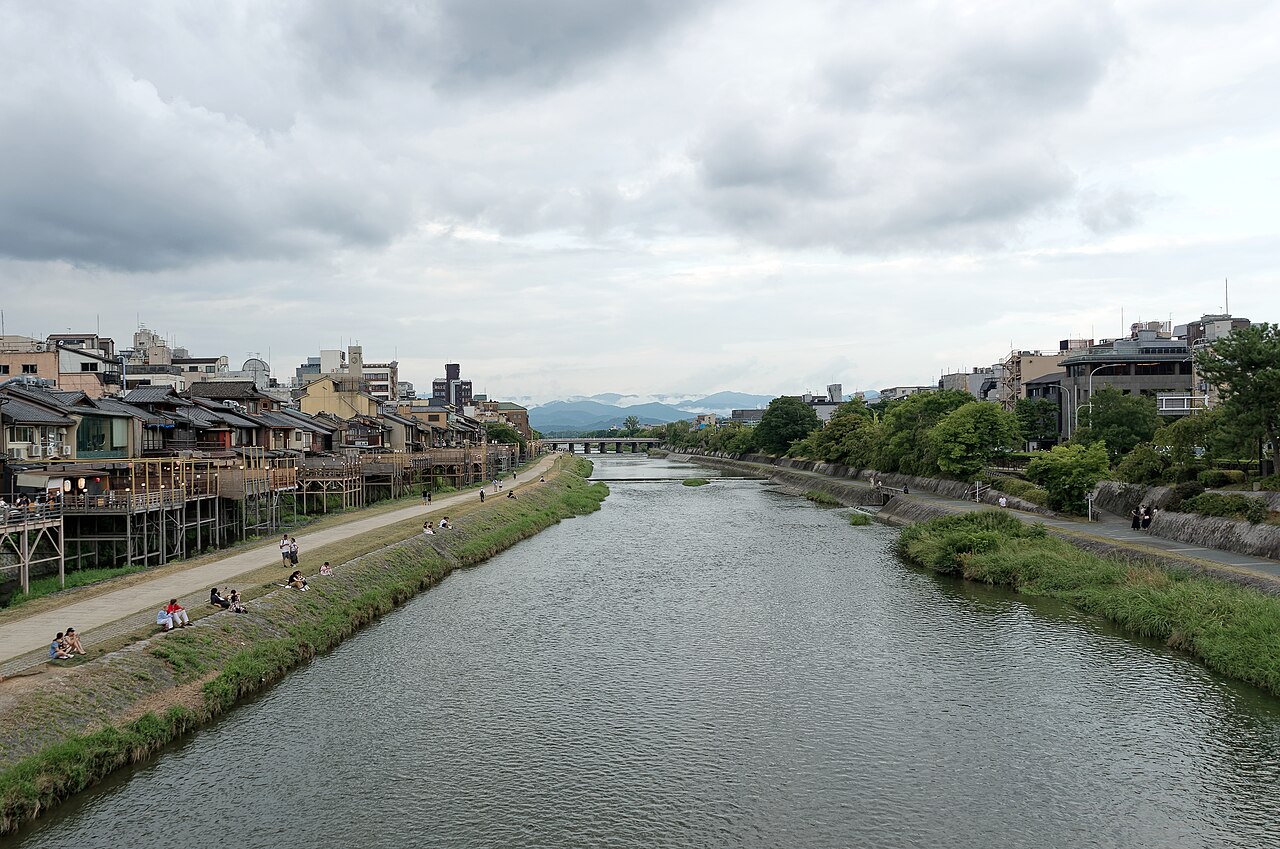
Kyoto sits in a basin ringed by mountains on three sides, with the Kamo River running through it. The pottery quarter is in the eastern Higashiyama district, on the Gojozaka and Kiyomizu-zaka slopes that rise toward Kiyomizu-dera. Crucially, Kyoto had no native clay bed of its own. The craft did not take root here because of geology — it took root because of who lived here.
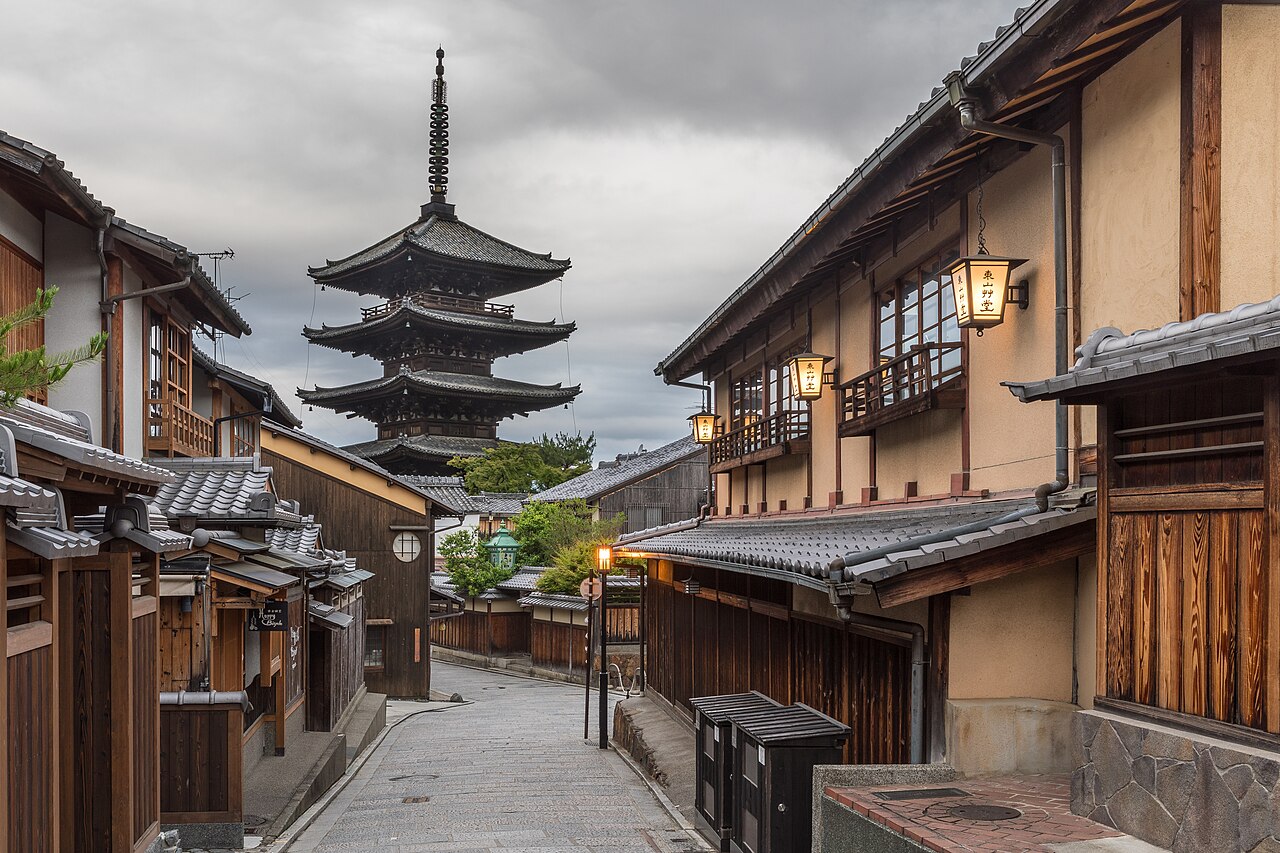
Kyoto was the imperial capital of Japan from 794 until 1869 — close to eleven centuries. That single fact explains the ware. The imperial court, the great temples, and the tea schools concentrated here, and with them the most demanding customers in the country. A city full of aristocratic and clerical patrons did not want rough farmhouse pots; it wanted refinement, and it had the money to pay for it.
- 794 — Heian-kyo (Kyoto) is established as Japan’s imperial capital.
- Late 16th c. — Sen no Rikyu’s lineage codifies the tea ceremony in Kyoto; the school later splits into Omotesenke, Urasenke, and Mushakojisenke.
- 17th c. — Nonomura Ninsei perfects iro-e colored overglaze enamels, defining Kyo-yaki’s polychrome look.
- Late 17th–early 18th c. — Ogata Kenzan brings a painter’s design sense to Kyoto ceramics.
- Edo period — The Gojozaka / Kiyomizu-zaka kiln district forms below Kiyomizu-dera in Higashiyama.
- 1869 — Kyoto’s reign as imperial capital ends as the court moves to Tokyo; its craft culture remains.
- Modern era — Kyo-yaki / Kiyomizu-yaki is recognized as a METI-designated traditional craft; kilns continue in Higashiyama and the Yamashina / Kiyomizu-danchi area.
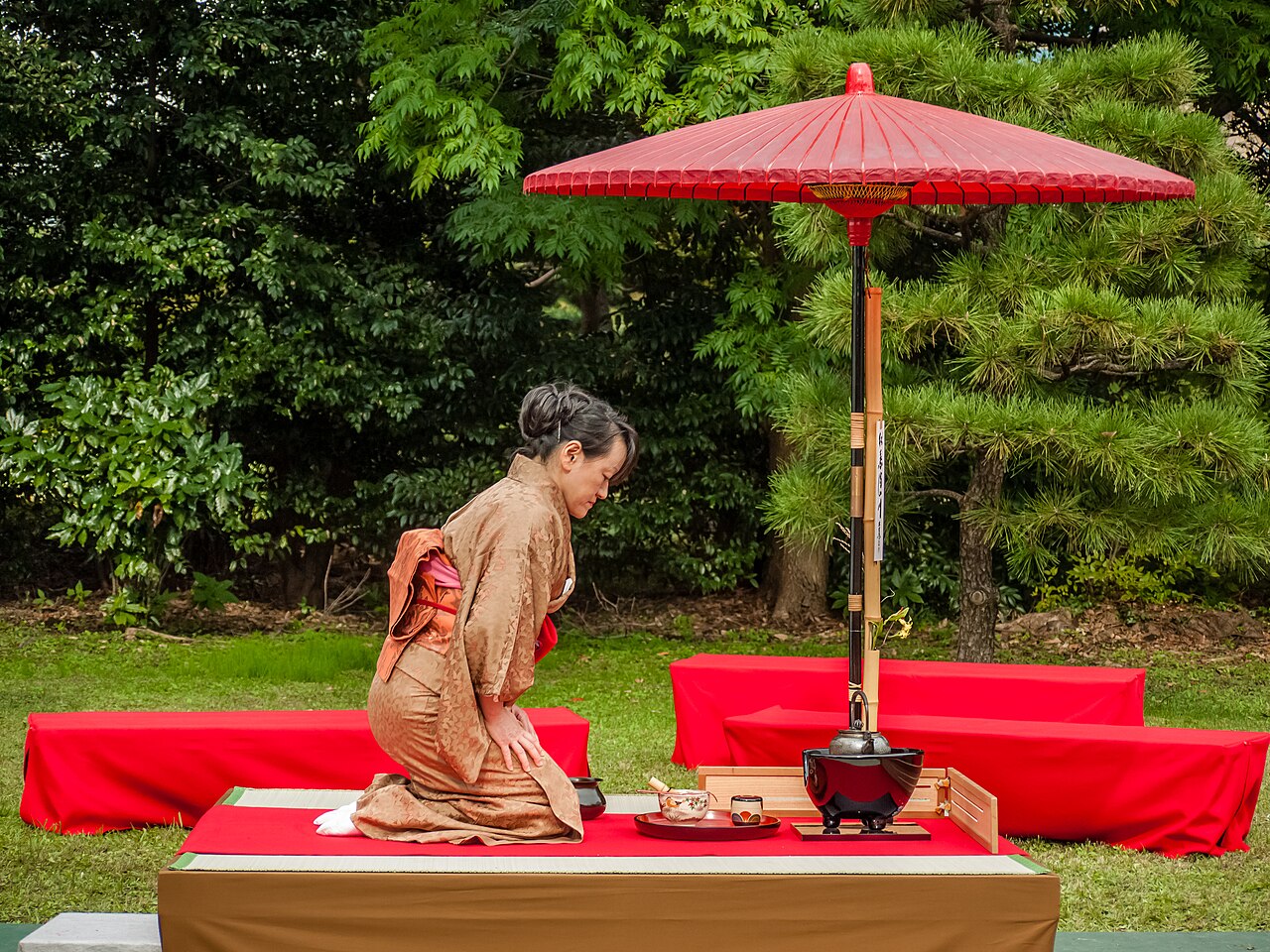
The tea ceremony is the hinge. Its aesthetics were codified in Kyoto under Sen no Rikyu’s lineage, and the three head families that descend from it — Omotesenke, Urasenke, and Mushakojisenke — are still headquartered in the city. That is why the matcha chawan, of all the forms a Kyoto potter could make, is the one most bound to the place. The bowl and the ceremony grew up in the same streets.
“Kyoto had no clay of its own. It had something rarer — the customers who decided what good taste was, and the artists willing to fire it.”
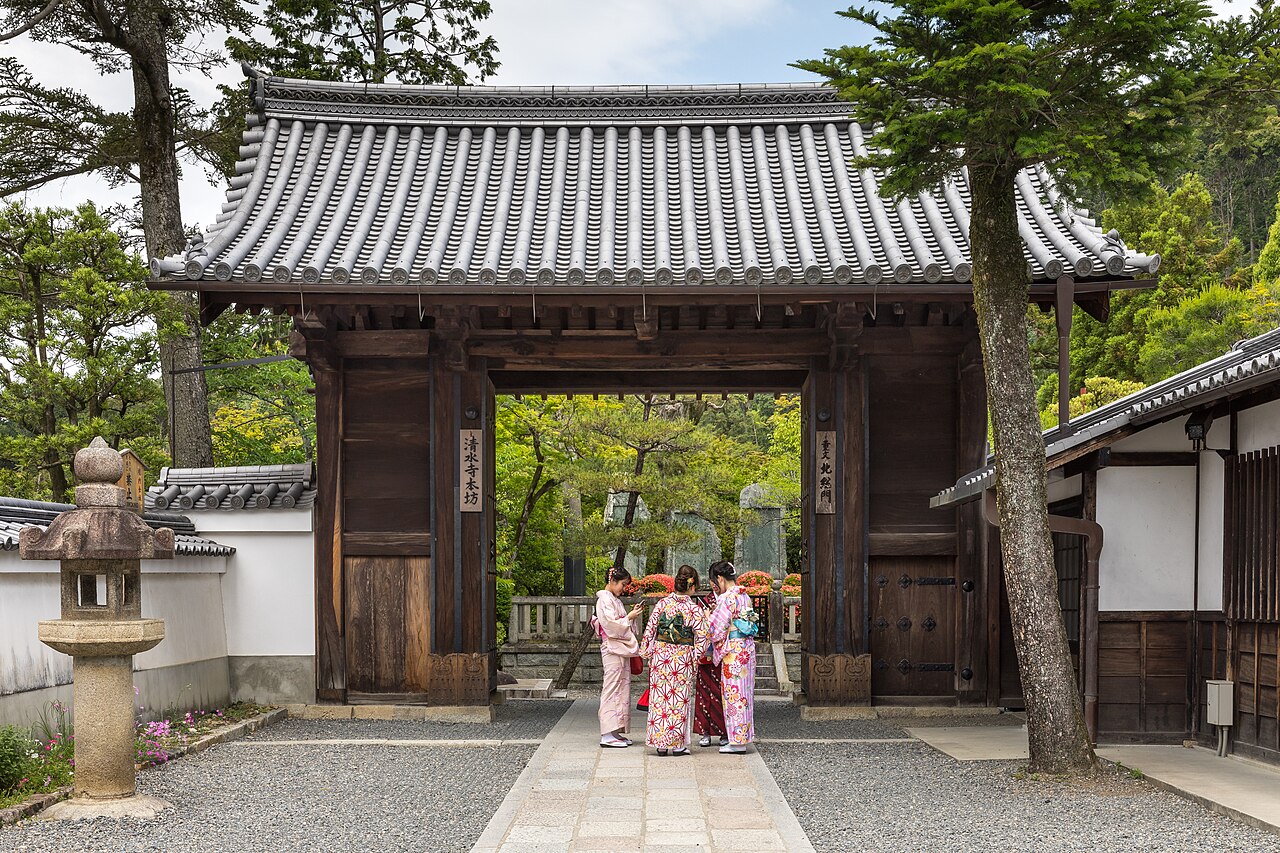
Because Kyo-yaki was always a decorator’s craft rather than a clay-bound one, its continuity rests on workshops and lineages rather than a single quarry. Kilns remain active in Higashiyama and have spread to the Yamashina and Kiyomizu-danchi districts as the historic slopes filled in. The defining technique is still hand-painted overglaze enamel applied to imported or blended clay bodies — the same logic of “buy the clay, sell the painting” that Ninsei and Kenzan established centuries ago.
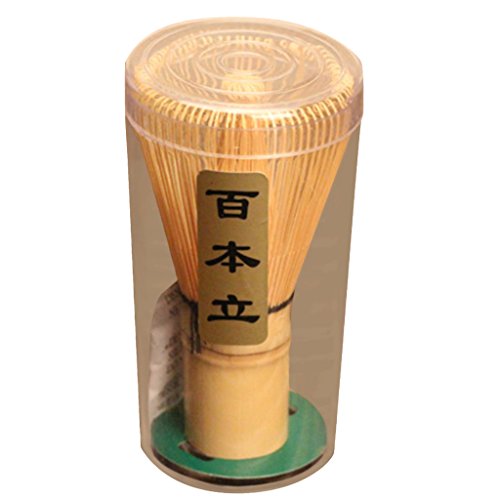
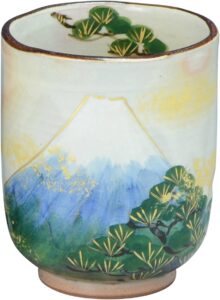
Related Kyoto, Kansai, and Japanese-craft guides on jpmono.com — useful for building a full tea setup or comparing across regions.
Price snapshot across stores
JPY is the authoritative price; USD figures are approximate estimates at a ¥150/USD baseline as of mid-2026. The fetched dataset did not return a live price for this listing, so confirm the current figure on the retailer page before buying.
| Store | Item / Variant | Price (JPY + USD est.) | Notes |
|---|---|---|---|
| 🇺🇸 Amazon.com (US) | Browse Japanese matcha chawan & tea-ceremony bowls | varies (USD) | Best if you are shopping from the US — Prime shipping, USD pricing, no international customs. Amazon US carries Japanese matcha bowls, chasen whisks, and tea sets from various makers, useful for comparing styles and price tiers; this exact Kiyomizu-yaki piece is sourced from Japan (next row). |
| 🇯🇵 Amazon JP Global Store | Hand-painted Kiyomizu-yaki matcha chawan, ~12 cm, boxed (ASIN B0FVDH55Y3) | Price not shown in fetched data — verify on listing | The sourced listing for the specific item in this guide. Ships internationally from Japan to most major destinations. |
| Maker direct | Higashiyama / Gojozaka kiln and gallery shops | varies | Widest selection and provenance, but most kiln shops do not ship internationally without arrangement. |
| Proxy services (Buyee / Tenso) | Forwarding for Japan-only listings | item + service fee + forwarding | Useful when a specific piece is listed only on Japan-domestic shops; adds fees and a consolidation step. |
📦 Shipping & where to buy from outside Japan
The specific item is listed on the Amazon JP Global Store, which ships internationally from Japan to most major destinations. International shipping on a single boxed bowl typically runs in the range of about $15–$40 to the US and EU, and higher to other regions; exact cost is shown at checkout. Orders above your country’s de minimis threshold may incur customs duty or import VAT on arrival — budget for that separately.
If you would rather buy from a US storefront, the Amazon US search route above lists Japanese matcha bowls and tea-ceremony supplies with Prime shipping and USD pricing, though the exact Kiyomizu-yaki piece in this guide is the Japan-sourced listing. For pieces sold only on Japan-domestic shops, proxy forwarders such as Buyee or Tenso can receive and re-ship the parcel for an added fee. As ceramics, these bowls carry no voltage or electrical-certification concerns.
What it does well
Weaknesses and things to verify before buying
- No live price in the dataset. The fetched data did not return a current price; confirm the figure on the listing before committing.
- Hand-made variation. The ~12 cm diameter and the painted motif are representative, not guaranteed-identical specs. Expect piece-to-piece differences in size, color, and pattern.
- Care requirements. Decorated and sometimes gold-accented surfaces are best hand-washed; avoid dishwashers, abrasive scrubbing, and microwaves where metallic accents are present.
- Not a wabi bowl. If you want the rustic, glaze-driven look of a Hagi or Mino chawan, Kyo-yaki’s decorative refinement is the wrong aesthetic — this is a deliberate difference, not a flaw.
- Price tier. Hand-painted Kyoto ware is not a budget category; a comparable everyday bowl from a non-designated maker will cost far less.
- Shipping & duties. International shipping and possible customs duty add to the JPY price; factor both in before comparing against domestic options.
- Listing specificity. Verify the maker, kiln, exact dimensions, and whether the box is included on the listing itself — these vary across Kiyomizu-yaki sellers.
Conclusion — which buyer type are you?
Other ways to approach this purchase
🏆 Editor’s Pick
❓ Frequently Asked Questions
What is the difference between Kyo-yaki and Kiyomizu-yaki?
Kyo-yaki (京焼) is the umbrella term for ceramics made in Kyoto. Kiyomizu-yaki (清水焼) is its best-known stream, named for the Kiyomizu-zaka and Gojozaka kiln district below Kiyomizu-dera in Higashiyama. In everyday use the two terms are often paired or used interchangeably.
How is a Kyo-yaki chawan different from a Hagi or Mino chawan?
Kyo-yaki is a decorator’s craft: its appeal is hand-painted color, motif, and gold accents — capital-city refinement. Hagi and Mino chawan lean on the rustic, glaze-driven wabi aesthetic. They are different traditions, not better-or-worse versions of the same thing.
Does it ship internationally?
Yes. The specific item is listed on the Amazon JP Global Store, which ships from Japan to most major destinations. Shipping a single boxed bowl typically runs roughly $15–$40 to the US and EU, with the exact cost shown at checkout; orders over your country’s threshold may incur customs duty.
How do I care for a hand-painted chawan?
Hand-wash with mild soap and avoid abrasive scrubbing. Pieces with gold or metallic accents should not go in a dishwasher or microwave. Dry fully before storing, ideally in the original box.
Why does the price not appear here?
The dataset fetched for this guide did not return a live price for the listing, so we have not quoted one rather than risk an outdated figure. JPY is the authoritative price; check the current amount on the listing before buying.
Do I need a separate whisk and tea?
Yes. The bowl is just the vessel; to prepare matcha you also need a chasen (bamboo whisk) and matcha powder. See our Takayama Chasen guide linked in the compare box above for the whisk side of the setup.
jpmono.com is curated by a Japan-based editorial team (working out of Toyama in the Hokuriku region and Nara in Kansai) and is independent. We do not take payment from the makers we feature; income comes from affiliate links. We do not physically test every product — we read maker specs and source listings. Read more about our editorial standards.
🤖 This article was prepared with AI assistance and reviewed against the source listing data. Specifications and pricing reflect the data available at the time of writing and may have changed; verify details on the retailer page before purchasing.
Affiliate disclosure: jpmono.com may earn a commission on qualifying purchases made through links on this page, at no additional cost to you.