![Edo Komon Silk Pocket Square: Tokyo Stencil-Dyed Handkerchief Where to Buy [2026]](https://jpmono.com/wp-content/uploads/2026/05/japan-map-regions-and-prefectures-800x1050.png)
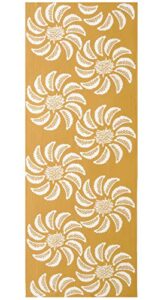
Edo Komon (江戸小紋, “Edo fine-pattern”) is a stencil-dyed textile born in the shogun’s city, and a silk pocket square cut from it is one of the quietest pieces of Japanese craft you can fold into a jacket. From across a room the cloth reads as a single calm color. Lean in, and the surface dissolves into thousands of minute repeating motifs — shark-skin dots, marching grids, pin-fine crosses — held in perfect registration by a hand-cut Ise stencil and rice-paste resist.
That tension between distance and detail is the whole point. Edo Komon grew out of the kamishimo formalwear that feudal lords wore in Edo, where rival domains competed not by adding gold or color but by making their patterns ever smaller and more controlled. The townsmen of the merchant city absorbed the same instinct under the shogunate’s sumptuary laws, and turned restraint into a style now called iki — plain on the surface, intricate underneath.
This guide helps international readers decide whether an Edo Komon silk pocket square belongs in a wardrobe or gift list. It explains the craft, the fine same (shark-skin) komon pattern, the cloth’s origin, and who it may suit.
🔄 Updated:
⏱️ Read time: ~12 min
Who this is for — and who should skip it
- Like accessories that look plain at a glance and reward a closer look
- Want a Japanese craft gift that is light, flat, and easy to ship internationally
- Appreciate the iki aesthetic — restraint over ornament
- Prefer a stencil-dyed silk with documented Tokyo provenance over generic printed cloth
- Are building a small collection of regional Japanese textiles
- Want a bold, high-contrast, instantly visible pocket square
- Need machine-washable, low-care fabric for daily rough use
- Expect a budget-priced item — true stencil-dyed silk is not cheap
- Compare current offers before buying
- Prefer larger formats such as a scarf, stole, or furoshiki (see the cross-links below)
Product overview (from published specs)
| Attribute | Detail (craft category) |
|---|---|
| Item | Edo Komon silk pocket square / handkerchief |
| Craft | Edo-zome komon — Ise-katagami stencil + rice-paste resist dyeing |
| Pattern | Fine same (shark-skin) komon (one of the “three classics”) |
| Material | Silk (typical of the category – check the maker’s details) |
| Origin | Tokyo (Kantō) — designated “Tokyo Some Komon” by METI, 1976 |
| Size / weight | Unconfirmed – check the maker’s details |
📖 Glossary — key terms
Edo Komon (江戸小紋) — “Edo fine-pattern”: a stencil-dyed cloth whose minute, evenly repeated motifs read as solid color from a distance.
Kamishimo (裃) — the formal winged over-garment worn by samurai; the original canvas for ever-finer komon.
Sankin-kotai (参勤交代) — the shogunate’s “alternate attendance” system requiring lords to reside periodically in Edo, which concentrated finely patterned formalwear in the city.
Iki (粋) — an Edo townsman aesthetic of understated chic: plain on the outside, intricate within.
Ise-katagami (伊勢型紙) — paper stencils hand-cut in Ise province, used to register the komon pattern onto cloth.
Same / gyogi / kaku-toshi (鮫・行儀・角通し) — the “three classics” of komon: shark-skin arcs, orderly diagonal dots, and right-angle grids.
Other Japanese textile and craft guides on jpmono.com — useful for comparing region, weave, and format.
Where to buy
| Store | Item / Variant | Price (JPY + USD est.) | Notes |
|---|---|---|---|
| 🇺🇸 Amazon US (search) | Browse Japanese silk pocket squares & scarves | varies (USD) | Best if you are shopping from the US — Prime shipping, USD pricing, no international customs. Amazon US carries Japanese silk accessories from various makers for comparison; the exact Edo Komon piece is sourced from Japan (next row). |
| 🇯🇵 Amazon JP Global Store | Edo-zome komon silk pocket square | Varies by seller; compare current offers | Ships internationally from Japan to most major destinations. |
| Maker direct | Tokyo Some Komon dye houses | Varies — typically higher | Some Tokyo dye houses sell finished accessories direct; most are Japanese-language only and may not ship abroad. |
| Proxy services (Buyee / Tenso) | Forwarding for Japan-only orders | Item price + fee + forwarding | Useful when a maker or marketplace will not ship internationally; adds a handling fee and a second shipping leg. |
Prices in USD are approximate and depend on the current exchange rate. The JPY price is the authoritative one for the specific listed item.
Where this comes from

Edo Komon is a Tokyo craft in the most literal sense: it is the dyeing tradition of Edo, the city that became Tokyo. When Tokugawa Ieyasu established his shogunate here in 1603, Edo grew from a marsh-side castle town into one of the largest cities in the world, and with it grew a dense quarter of dyers, stencil-cutters, and cloth merchants whose descendants still work the same trade today.
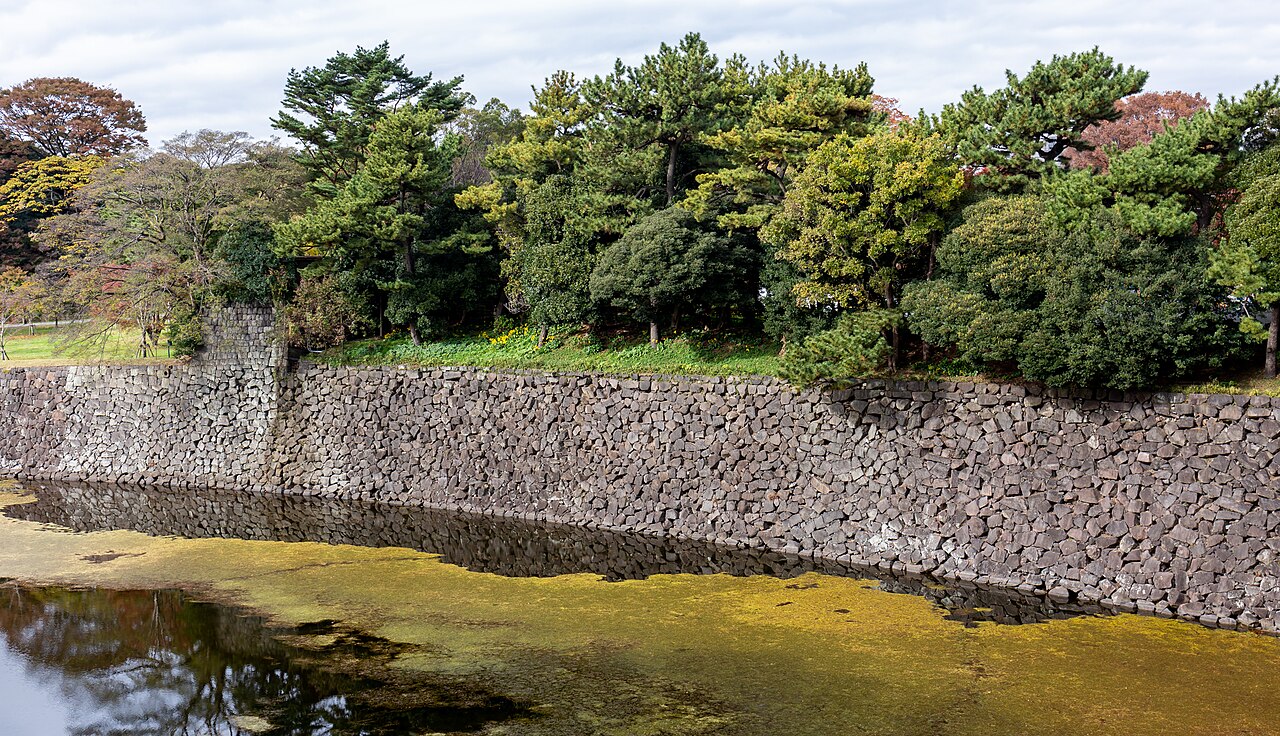
The craft’s defining habit — extreme fineness read as calm from a distance — comes directly from the politics of the period. Under the sankin-kotai (“alternate attendance”) system, feudal lords were required to spend part of each cycle resident in Edo, and they appeared in formal kamishimo over-garments dyed with their domain’s komon. Because overt extravagance was discouraged, rival domains competed in the one dimension still open to them: the pattern, made ever smaller, ever more controlled, until from across a room the cloth looked like solid color.
- 1603 — Tokugawa Ieyasu establishes the shogunate in Edo; the city’s dyeing quarter begins to grow.
- 1635 — Sankin-kotai is codified; daimyo rotate to Edo wearing komon-dyed kamishimo.
- 17th century — Domains compete to refine komon into ever-finer repeats; the “three classics” emerge.
- 18th century — Sumptuary laws push Edo townsmen toward the restrained iki aesthetic.
- 19th century — Dye workshops concentrate along the Kanda and Ochiai/Shinjuku rivers in Tokyo.
- 1976 — METI designates “Tokyo Some Komon” a traditional craft (dentō kōgeihin).
What began as samurai formalwear was adopted by the merchant class of Nihonbashi and the surrounding wards. The shogunate’s repeated sumptuary edicts limited what commoners could openly wear, so wealth and taste went inward — a sober outer color over a pattern so fine it could only be appreciated up close. That is the essence of iki: chic that does not announce itself.
“Solid from afar, intricate up close — Edo Komon turned a sumptuary restriction into a national idea of taste.”
Technically, the effect rests on two exacting steps. The pattern lives in an Ise-katagami stencil — paper hand-cut in Ise province with thousands of identical perforations — and the dyer presses rice-paste resist through it onto the cloth, panel after panel, keeping the repeat in perfect registration over a full bolt. A single misalignment shows. The work is unforgiving, which is why a genuine Edo Komon silk reads differently from a printed lookalike even before you can name the difference.
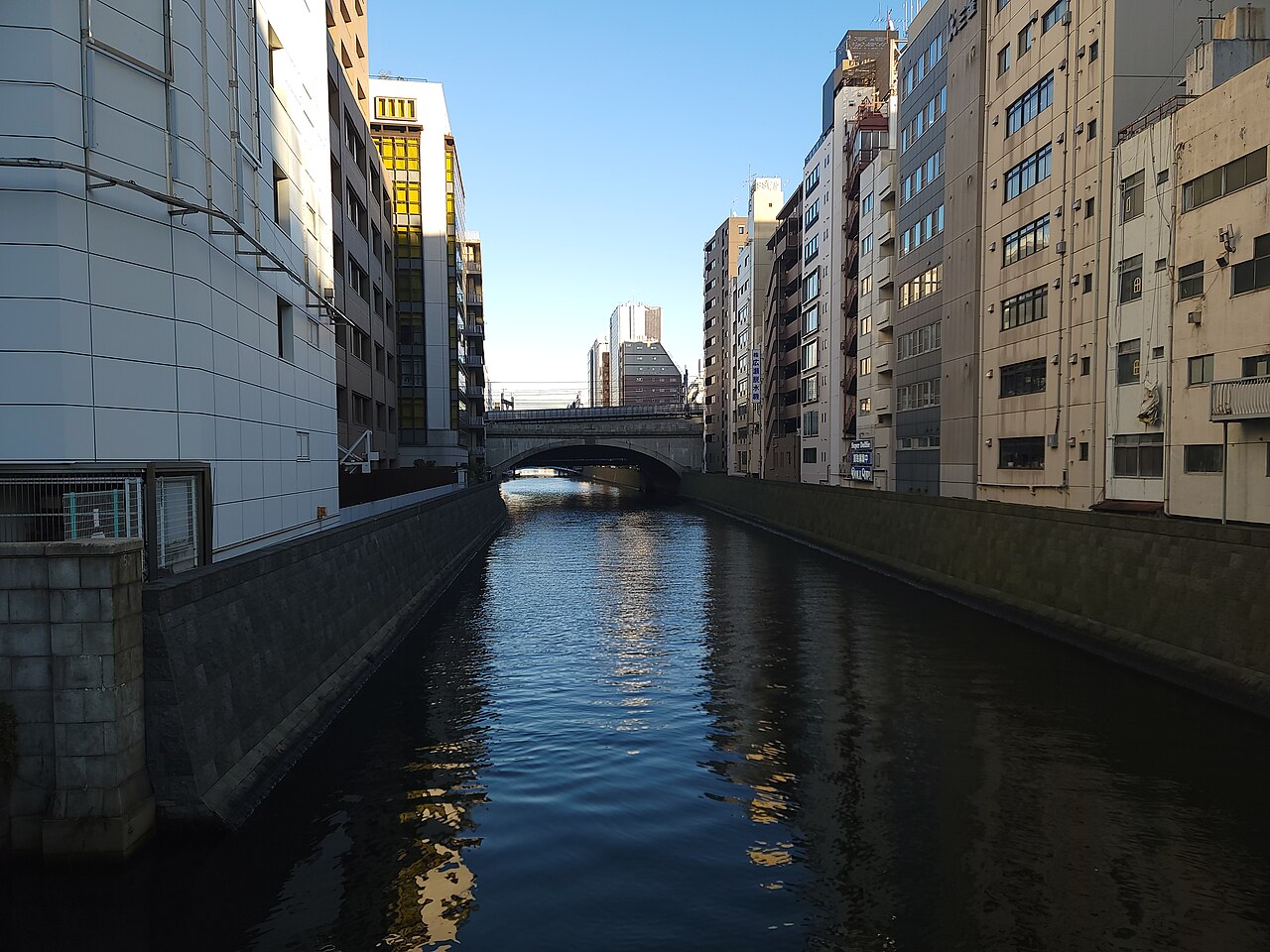
The dyeing trade needed running water, and it found it along the Kanda River and the Ochiai/Shinjuku stretches of the Kanda system, where long bolts of resist-dyed cloth were rinsed in the current. Those waterways anchored a craft cluster that survived the city’s transformation into modern Tokyo, and the descendant workshops there carry the METI-designated name “Tokyo Some Komon” — recognized in 1976. To call this a “Tokyo” craft is not branding; it is geography.
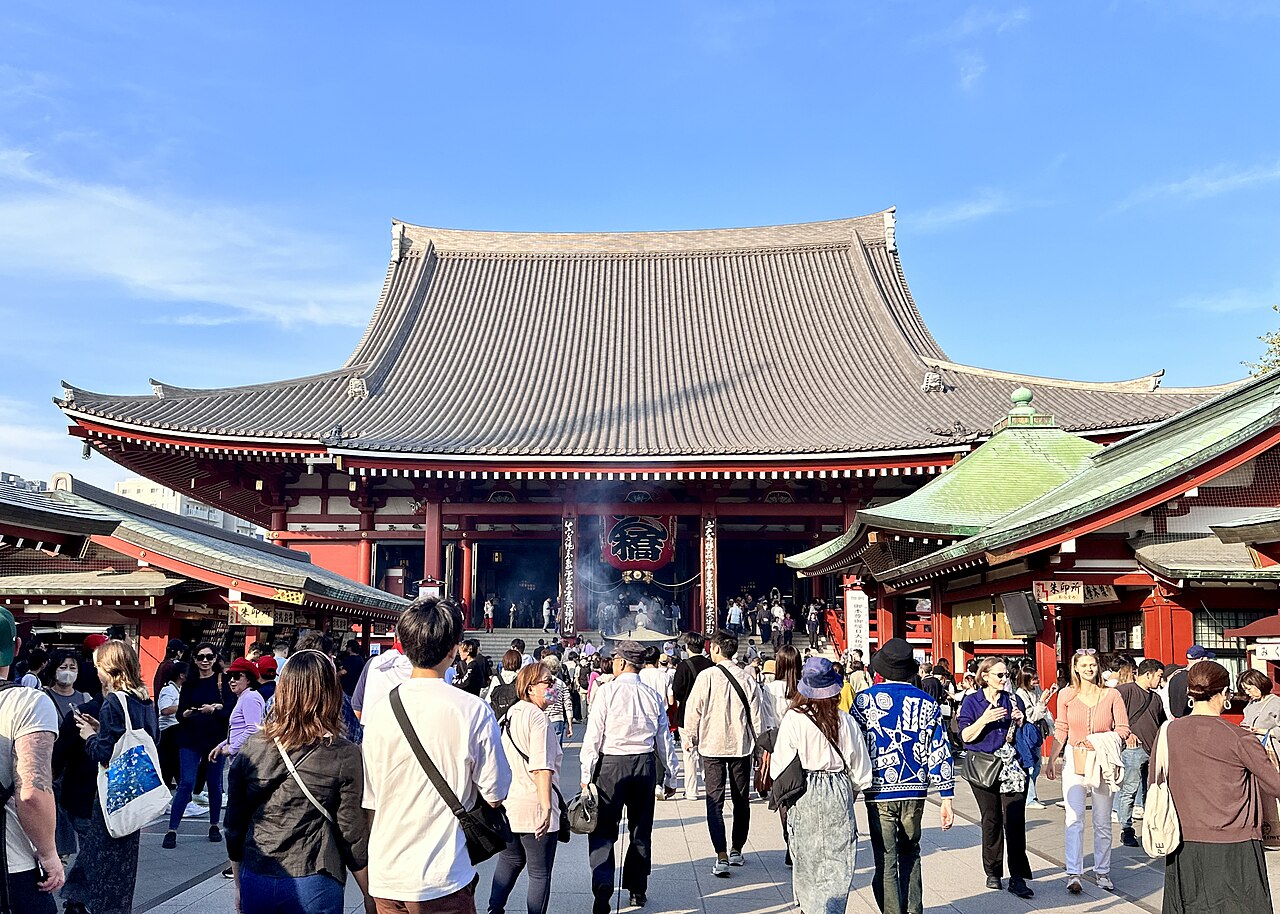
Folded into a modern jacket, an Edo Komon pocket square carries that whole lineage in miniature. It is the smallest practical format of a textile that once dressed lords and merchants — easy to ship, easy to gift, and quietly legible to anyone who looks closely enough to notice the pattern is not printed but resolved, dot by dot, through a stencil.
What it does well
Reads as a calm solid tone across a room, then resolves into a minute komon up close — the signature Edo Komon experience.
Belongs to the METI-designated “Tokyo Some Komon” tradition (1976), with a clear lineage to Edo-period kamishimo dyeing.
Flat, light, and small — among the easiest Japanese textiles to ship internationally and present as a gift.
The understated iki palette pairs with most jacket colors without competing, suiting both formal and relaxed tailoring.
Weaknesses and things to verify before buying
- Seller details vary. Confirm the current offer and shipping terms before buying.
- Specs unconfirmed. Material, size, and finishing vary by maker; check the maker’s details.
- Subtle by design. If you want a bold, high-contrast pocket square, the muted komon effect will read as too quiet for you.
- Care requirements. Stencil-dyed silk generally needs gentle handling; hand care is a safe default. It is not a machine-wash, daily-abuse fabric.
- Authenticity varies. “Komon” and “Edo Komon” are used loosely in the market; printed lookalikes exist. Look for stencil-dyed (Edo-zome / Ise-katagami) wording rather than “komon-print.”
- International shipping and duties. Amazon JP Global Store ships many textiles abroad, but availability and customs charges vary by destination — confirm both at checkout.
Conclusion — which buyer type are you?
You want verified stencil-dyed silk and value provenance. Look for clear information about the Edo-zome dye method and the cloth’s origin.
You want an Edo Komon pocket square with easy international shipping. Compare specialist Japanese textile sellers and their shipping terms.
You like the look but not the price. Compare Japanese silk accessories on Amazon US, accepting that many are printed rather than stencil-dyed.
You want a bold, washable, low-cost square. This restrained, hand-care silk is the wrong tool — look at the cross-linked scarves and tenugui instead.
Other ways to approach this purchase
Textile accessories may vary with seasonal demand, especially around gift seasons.
Tokyo Some Komon dye houses sometimes sell finished accessories direct, with the clearest provenance — though usually in Japanese and not always shipping abroad.
If you buy through Amazon regularly, stacking points or gift-card balances can offset the cost. Check current promotions before checkout.
If a maker or marketplace will not deliver to your country, Buyee or Tenso can forward the parcel — for an added fee and a second shipping leg.
❓ Frequently Asked Questions
What is the difference between Edo Komon and ordinary komon?
Does Amazon JP ship an Edo Komon pocket square internationally?
How do I care for stencil-dyed silk?
Is this a good gift for someone who does not know Japanese craft?
How can I tell genuine Edo Komon from a printed imitation?
What does the price of the featured item look like?
Why does the buy section show an Amazon US search instead of the exact item?
jpmono.com is curated by a Japan-based editorial team working out of Toyama in the Hokuriku region and Nara in Kansai, and is independent. We do not take payment from the makers we feature; income comes from affiliate links. We do not physically test every product.
Affiliate disclosure: jpmono.com may earn a commission on qualifying purchases made through links on this page, at no additional cost to you.