![Nambu Tekki Cast Iron Wind Chime (Furin) from Iwate: Where to Buy [2026]](https://jpmono.com/wp-content/uploads/2026/06/nambu-tekki-cast-iron-wind-chime-furin-where-to-buy-2026-featured.jpg)
Iwate’s Nambu ironware (南部鉄器, nambu tekki, “Nambu ironware”) is best known abroad as the heavy black tetsubin kettle. But the same dense cast iron is poured into a much lighter object that most international buyers never hear about: the cast iron wind chime, or furin (風鈴). Hung under the eaves through a Japanese summer, it answers the smallest breeze with a clear, metallic note that lingers far longer than glass or bamboo.
The reason is the metal itself. Cast iron has a dense, fine grain, and a well-cast iron bell rings with a single pure tone and a long decay — the quality Japanese listeners describe as ne ga sumu (“the tone is clear”). This guide looks at one specific piece — an Iwachu (岩鋳) Nambu cast iron furin with a short paper tanzaku strip — and at how an international reader can actually buy a Nambu iron wind chime from outside Japan.
It is written from a Japan-based editor’s desk (we work out of Toyama in the Hokuriku region and Nara in Kansai), with no claim to have personally tested this unit. Where the data is thin, we say so. The comparison axes we cover: what the cast iron tone actually buys you, how the furin differs from the famous Nambu tetsubin kettle, how it compares to a bamboo Suruga wind chime, and the realistic purchase paths and shipping costs from abroad.
🔄 Updated: June 15, 2026
⏱️ Read time: ~11 min

- Who this is for — and who should skip it
- Product overview (from published specs)
- Price snapshot across stores
- 📦 Shipping & where to buy from outside Japan
- Where this comes from — place, era, and the craft tradition
- What it does well
- Weaknesses and things to verify before buying
- Conclusion — which buyer type are you?
- Other ways to approach this purchase
- 🏆 Editor’s Pick
- ❓ Frequently Asked Questions
Who this is for — and who should skip it
- Want a clear, long-lingering metallic tone rather than the soft, brief clink of a glass wind chime
- Like the idea of a small, durable iron object you keep for decades, not a season
- Already own or admire Nambu tetsubin ironware and want a lighter, lower-cost piece in the same craft
- Are buying a tactile, sound-based gift that does not depend on electricity, screens, or apps
- Appreciate that the maker and region are verifiable, not vague “artisan” marketing
- Want a quiet ornament — a furin is made to be audible, and neighbors in dense housing may not share your taste
- Live somewhere humid and coastal with no covered, dry spot to hang it (bare cast iron can rust)
- Prefer the bright, delicate sound of glass or the dry rattle of bamboo
- Need a guaranteed price and stock right now — listings for this exact piece are thin (see caveats)
- Want a large statement object; a furin is small and understated by design
Product overview (from published specs)
The data available for this exact piece is limited. The fetched Amazon US search returned no individual listing, and no live price snapshot was captured at the time of writing. The values below combine the spec sheet for this guide, the maker context (Iwachu of Iwate), and general, verifiable properties of Nambu cast iron. Cells we cannot confirm are marked plainly rather than guessed.
Nambu Tekki Cast Iron Wind Chime (Furin) from Iwate
岩鋳 Iwachu 風鈴 松 あお ⌀4cm 南部鉄器 27020
在庫あり。 · Sold by Amazon.co.jp · ASIN B0087ND5LS
Price and availability as of 2026-08-31 02:30 JST. The Amazon listing at the time of purchase is authoritative. jpmono.com earns a commission on qualifying purchases at no extra cost to you.
| Attribute | Value | Source |
|---|---|---|
| Item | Cast iron wind chime (furin) with paper tanzaku strip | Spec sheet |
| Material | Cast iron (nambu tekki); typically lacquer / baked finish | Maker context |
| Maker | Iwachu (岩鋳), Iwate | Spec sheet |
| Origin | Iwate Prefecture, Tōhoku, Japan | Spec sheet |
| Sound character | Clear, single tone with long decay (dense iron grain) | Material property |
| Dimensions / weight | Unconfirmed — check listing before buying | — |
| ASIN (JP Global Store) | B0087ND5LS | Spec sheet |
Spec-snapshot sources: Amazon US search (primary, moonill-20) returned no individual listing; Amazon JP Global Store (secondary, moonill-22) is the sourced listing for ASIN B0087ND5LS; maker direct (Iwachu) for craft and material context. Only catalog-level data is available; live pricing was unavailable at time of writing and may have shifted.
📖 Glossary — key terms
- Nambu tekki (南部鉄器) — “Nambu ironware,” cast iron goods from Iwate Prefecture, named after the Nambu clan that ruled the Morioka domain.
- Furin (風鈴) — a Japanese wind chime: a small bell with a clapper and a paper strip that catches the breeze. A summer fixture, hung under the eaves.
- Tanzaku (短冊) — the narrow paper or cloth strip that hangs below the clapper; the wind moves it, which swings the clapper against the bell.
- Tetsubin (鉄瓶) — the cast iron kettle that made Nambu ironware famous. Same craft and metal as the furin, but a different object.
- Mizusawa / Ōshū — the southern Iwate casting district near Hiraizumi, one of the two historical centers of Nambu ironware.
- Hiraizumi — the Fujiwara family’s 12th-century capital in Iwate, home to Chūson-ji’s golden Konjikidō hall (UNESCO World Heritage, 2011).
Related guides on jpmono.com — other Japanese cast metal, bell, and craft objects worth weighing against a Nambu iron furin.
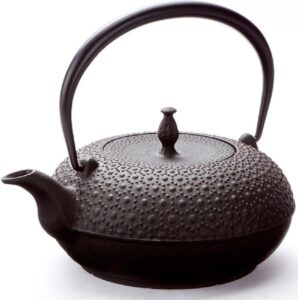 🫖 Nambu Tetsubin Iron Kettle
 🍳 Kuwana Cast Iron Skillet
 🔔 Awa Bronze Orin Bell
🎎 Takasaki Daruma Brass Bell
♨️ Sendai Iron Trivet
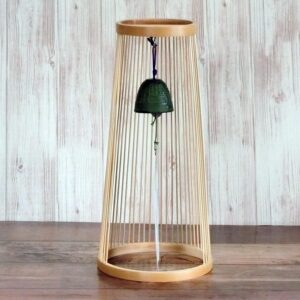 🎐 Suruga Bamboo Wind Chime
🍴 Tsubame Steel Cutlery
 🧣 Iwate Homespun Wool Scarf
Price snapshot across stores
No live price was captured for this exact ASIN at the time of writing. Treat the figures below as placeholders to verify at the retailer. JPY is the authoritative currency for the specific listed item; USD figures are approximate at a ¥150/USD baseline.
| Store | Item / Variant | Price (JPY + USD est.) | Notes |
|---|---|---|---|
| 🇺🇸 Amazon US (search) | Browse Japanese cast iron wind chimes | varies (USD) | Best if you are shopping from the US — Prime shipping, USD pricing, no international customs. Amazon US carries Japanese iron furin and home goods from several makers, useful for comparing tone and price tiers. The Iwachu piece itself is sourced from Japan (next row). |
| 🇯🇵 Amazon JP Global Store | Iwachu Nambu cast iron furin (ASIN B0087ND5LS) | Price unavailable at time of writing — verify on listing | The sourced listing for the exact piece. Ships internationally from Japan to most major destinations via the Global Store. |
| Maker direct (Iwachu) | Full furin range, multiple finishes | Varies (JPY) | Widest selection and authoritative product data; most Japanese maker sites do not ship abroad directly, so pair with a proxy. |
| Proxy services (Buyee / Tenso) | Any JP domestic listing forwarded abroad | Item price + forwarding fee | Use when a finish is only sold on Japan-domestic stores. Adds a service fee and a second shipping leg; watch customs thresholds. |
Prices in USD are approximate and depend on the current exchange rate. Prices and stock fluctuate — verify at the affiliate link before purchasing.
📦 Shipping & where to buy from outside Japan
Amazon JP’s Global Store ships many household iron goods internationally, and a small furin is light and compact, which keeps freight modest relative to a heavy tetsubin kettle. Expect roughly $15–$40 in shipping to the US or EU, with higher rates to other regions; the exact figure depends on weight and destination and is shown at checkout.
If the specific finish you want is only on a Japan-domestic store, a proxy service (Buyee or Tenso) can forward it — at the cost of a service fee and a second shipping leg. Orders above your country’s de minimis threshold may attract customs duty and import tax, so factor that into the total.
“Iron rusts where it is wet and rings where it is dry. Hang a Nambu furin somewhere covered, and it will outlast the summers you bought it for.”
Where this comes from — place, era, and the craft tradition

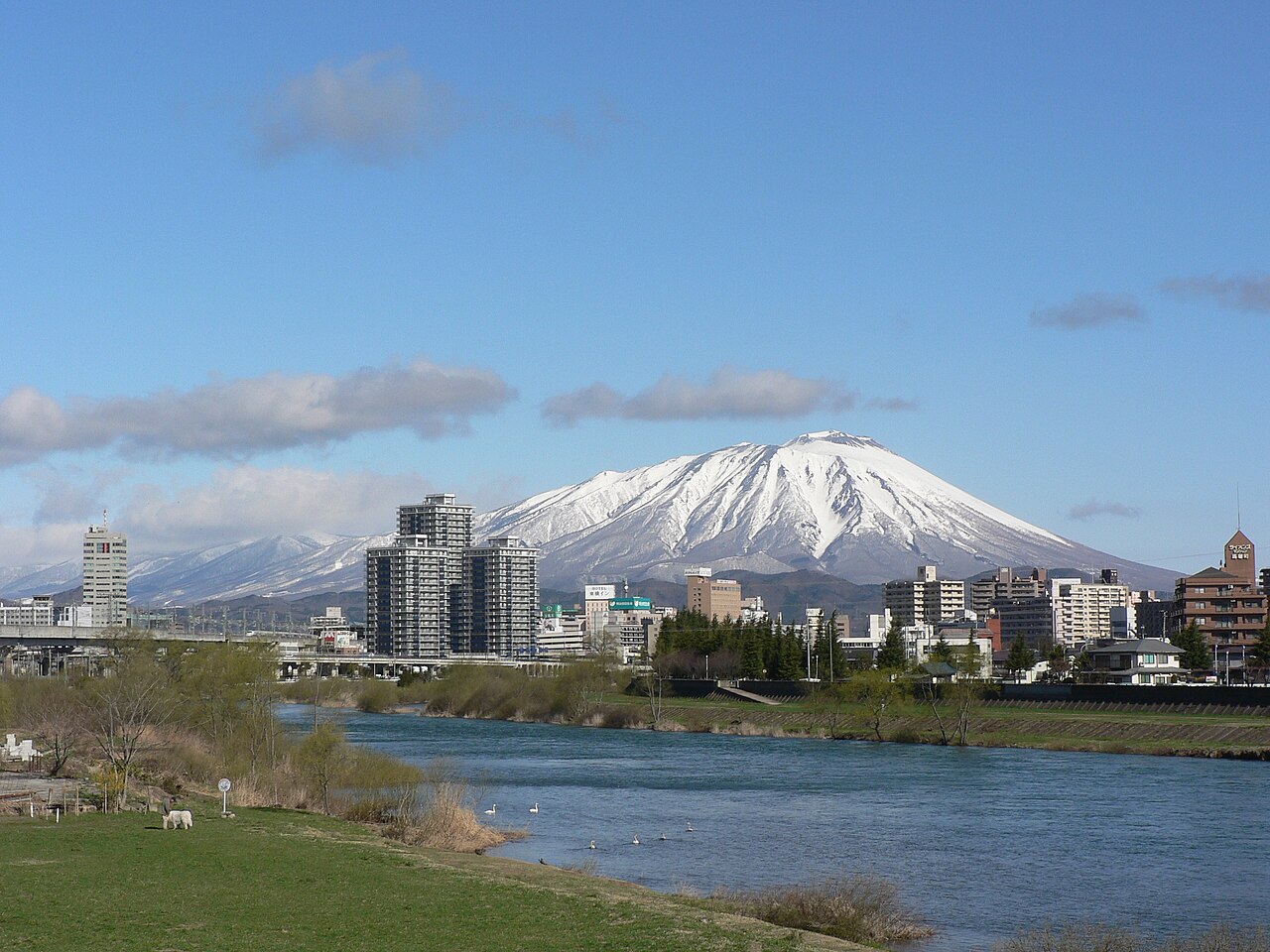
Iwate is the second-largest prefecture in Japan and one of the least densely populated, a country of mountains, rivers, and long winters in the north of the main island of Honshū. Mount Iwate — locally called Nambu Fuji for its near-symmetrical cone — presides over the Morioka basin. The cold, the clean river water, and good local sources of iron sand and casting clay are exactly the conditions that let an iron-casting industry take root and stay.
Nambu ironware did not grow from a single root. It grew from two.
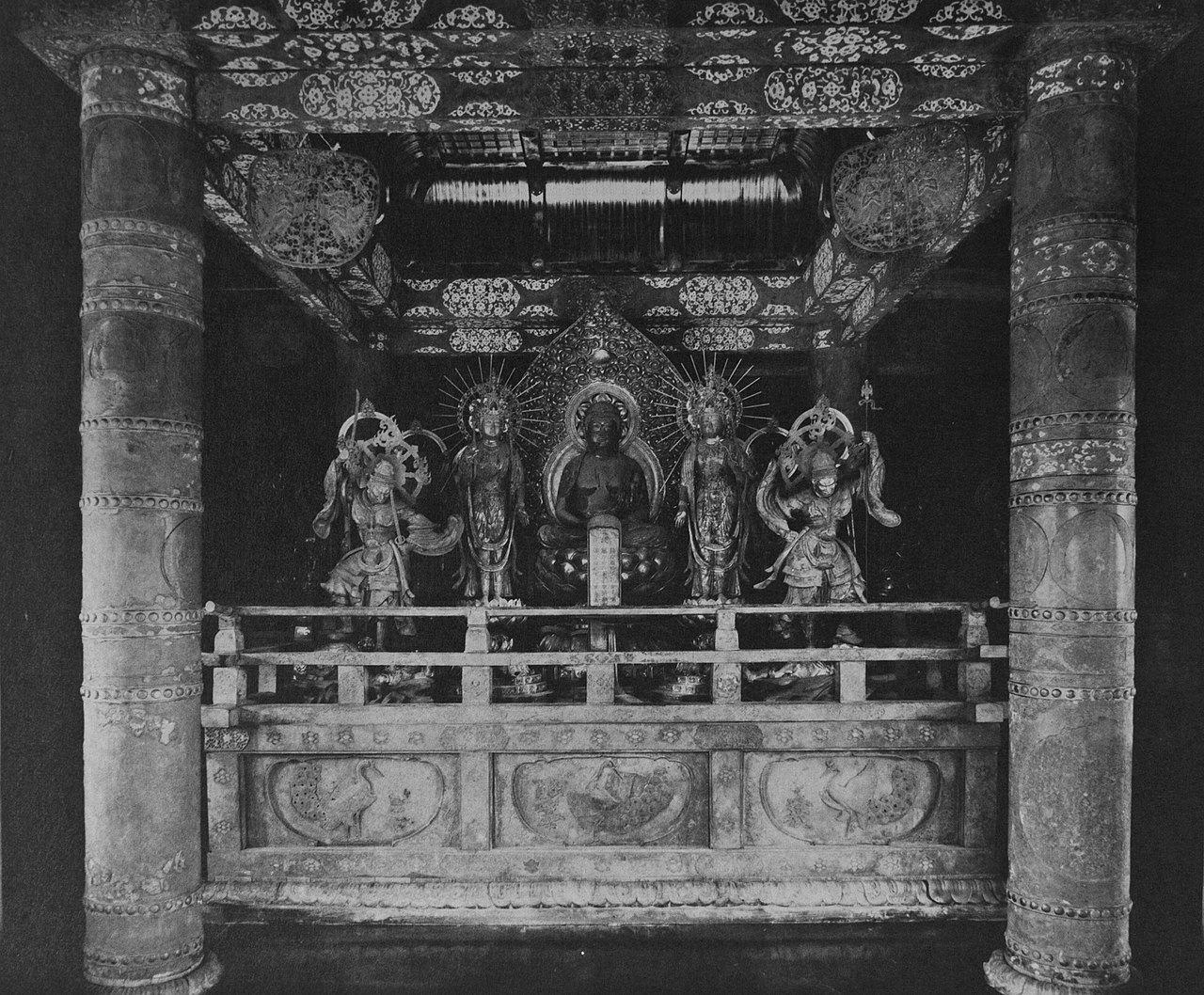
The southern center, Mizusawa (now part of Ōshū city), is the older of the two. Its casting tradition reaches back to the late Heian period, when Fujiwara no Kiyohira brought founders from Ōmi province to support the golden Buddhist culture of nearby Hiraizumi. That culture left behind one of Japan’s most extraordinary buildings: Chūson-ji’s Konjikidō, the “Golden Hall,” completed in 1124 and now part of the Hiraizumi UNESCO World Heritage Site (inscribed in 2011). The bronze and iron skills drawn north to ornament that world settled into the local ground and stayed for centuries after Hiraizumi’s power faded.
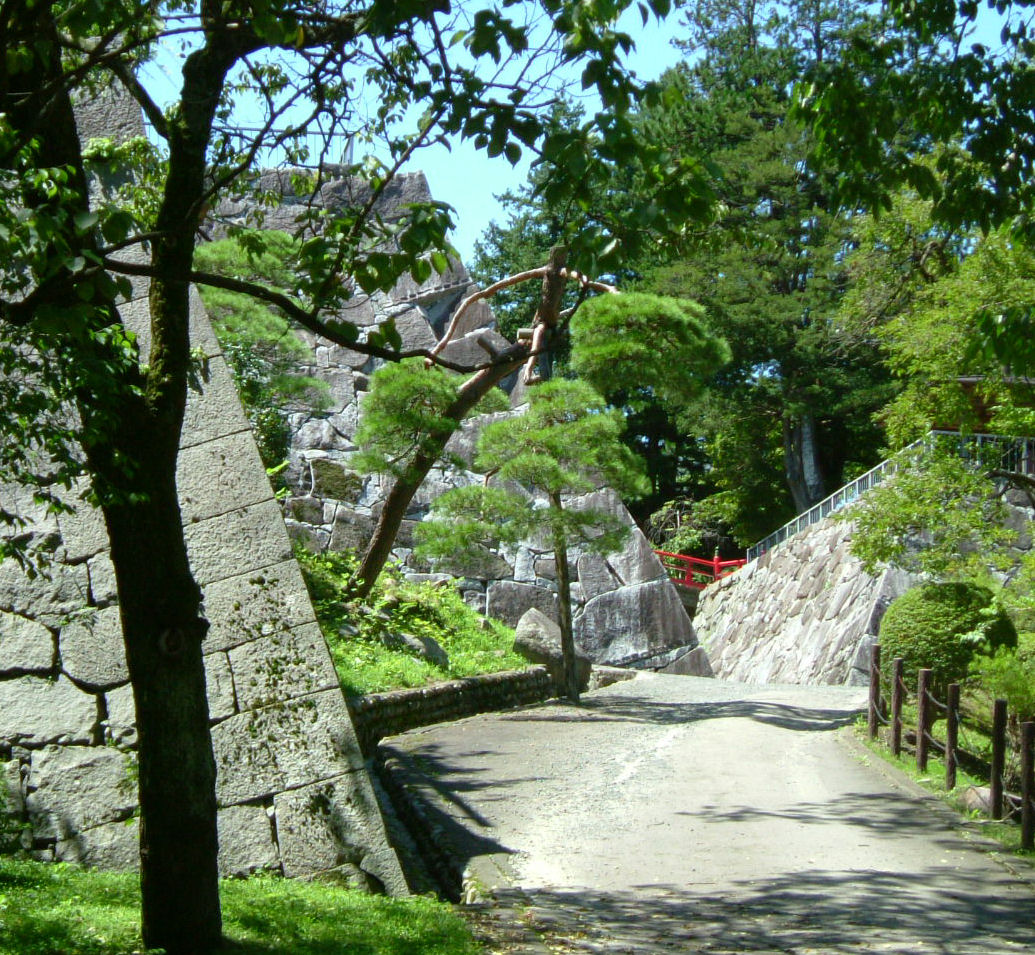
The northern center, Morioka, is the one that gave the craft its name. In the 17th century the Nambu clan, who ruled the Morioka domain, invited master kettle-makers from Kyoto to settle under the domain’s patronage. The driving demand was the tea ceremony: the lords wanted fine iron kettles for chanoyu, and the casters who supplied them built the reputation that the word “Nambu” still carries. The same workshops that perfected the tetsubin kettle also cast smaller iron objects — trivets, paperweights, and the furin wind chime.
- 1124 — Chūson-ji’s Konjikidō golden hall completed at Hiraizumi, the Fujiwara golden age.
- late 12th c. — Ōmi founders brought to Mizusawa to support Hiraizumi’s culture, seeding Ōshū iron casting.
- 17th c. — The Nambu clan invites Kyoto kettle masters to Morioka under tea-ceremony patronage.
- Edo period — Tetsubin kettles and smaller cast iron objects, including furin, become established Nambu products.
- 1975 — Nambu tekki designated a Traditional Craft by Japan’s METI.
- 2011 — Hiraizumi, including Chūson-ji’s Konjikidō, inscribed as a UNESCO World Heritage Site.
- 2026 — Iwate foundries, Iwachu among them, are still casting iron goods daily.
What does “still made here” actually mean for a furin? It means the wind chime is not a novelty spun off a heritage brand; it is a small product of the same foundries, using the same iron and the same casting logic that produce the kettles. Iwachu is one of the larger active Iwate houses, and its iron goods reach the international market — which is precisely why a buyer outside Japan can find this piece at all. The continuity is the point: the technique that gives the bell its clear ring is the technique that gave the tea-ceremony kettles their reputation four centuries ago.
Seasonally, the furin belongs to summer. In a Japanese house it is hung out when the heat arrives, under the eaves or by an open window, and taken in when autumn comes. The sound is doing cultural work: a clear, cool note is traditionally felt to make the heat more bearable — a learned association between that ring and a passing breeze. It is the opposite season to the tetsubin kettle, which earns its place in winter.
What it does well
Weaknesses and things to verify before buying
- Thin listing data. The fetched data returned no individual US listing and no live price for this exact ASIN. Confirm price, availability, and current photos on the listing before you commit.
- Rust risk if hung wet. Bare cast iron will rust in sustained damp. It needs a covered, dry hanging spot; a fully exposed, rain-hit location outdoors is a poor fit.
- It is meant to be heard. A furin makes sound by design. In dense housing or shared walls, the ring may not suit everyone within earshot.
- Dimensions unconfirmed. The exact size and weight were not in the available data. If you have a specific spot in mind, verify measurements on the listing first.
- Finish and tone vary by piece. Pitch and finish differ across furin in the line; the listing photo and description are your best guide to the specific item — described here only in general terms, not as a fixed set of purchasable colors.
- International shipping and duties. The Global Store path adds shipping and may add customs duty above your country’s threshold. Budget the all-in cost, not just the item price.
Conclusion — which buyer type are you?
Other ways to approach this purchase
🏆 Editor’s Pick
❓ Frequently Asked Questions
How is a Nambu iron furin different from a Nambu tetsubin kettle?
They share the same craft, the same Iwate foundries, and the same cast iron, but they are different objects. The tetsubin is a kettle for heating water; the furin is a small wind chime hung for its sound. This guide is about the furin. For kettles, see our Nambu tetsubin guide.
Does an iron furin sound different from a glass or bamboo one?
Yes. Cast iron produces a clear, single, high note with a long decay. Glass furin give a brighter, briefer chime, and bamboo furin a softer, drier, woodier sound. The iron’s dense grain is what sustains the ring.
Will it rust if I hang it outdoors?
Bare cast iron can rust in sustained damp. Hang it somewhere covered and dry, such as under eaves or by an open window, rather than fully exposed to rain. Kept dry, it lasts for many seasons.
Can I buy it from outside Japan?
Yes. The piece is sourced from Amazon JP’s Global Store, which ships internationally to most major destinations. You can also browse comparable Japanese iron furin on Amazon US, or use a proxy service such as Buyee or Tenso for Japan-domestic listings.
What does the paper tanzaku strip do?
The tanzaku is the narrow strip that hangs below the clapper. The wind catches the strip, which swings the clapper against the bell — so the strip is what makes the chime respond to a breeze. It can be replaced if it wears.
Why is the price not shown?
The fetched data returned no individual US listing and no live price snapshot for this exact ASIN at the time of writing. Rather than guess, we direct you to verify the current price on the Amazon JP Global Store listing before buying.
Is this a good first piece of Nambu ironware to own?
For many buyers, yes. A furin is smaller, lighter, and lower in cost than a tetsubin kettle, and it requires no maintenance routine beyond keeping it dry — a low-risk way to experience the same iron and the same foundries before committing to a kettle.
jpmono.com is curated by a Japan-based editorial team (working out of Toyama in the Hokuriku region and Nara in Kansai) and is independent. We do not take payment from the makers we feature; income comes from affiliate links. We do not physically test every product — we read maker specs and source listings — and we say so where the data is thin.
This article was prepared with AI assistance and reviewed against the source listing data. Facts about place and craft history are drawn from the editorial brief; where listing data was incomplete, the gaps are stated rather than filled by guessing.
Affiliate disclosure: jpmono.com may earn a commission on qualifying purchases made through links on this page, at no additional cost to you.