![Shodai-yaki Katakuchi: Kumamoto Straw-Ash Folk Pottery Pourer [2026]](https://jpmono.com/wp-content/uploads/2026/07/shodai-yaki-nagashi-gusuri-katakuchi-where-to-buy-2026-featured.jpg)
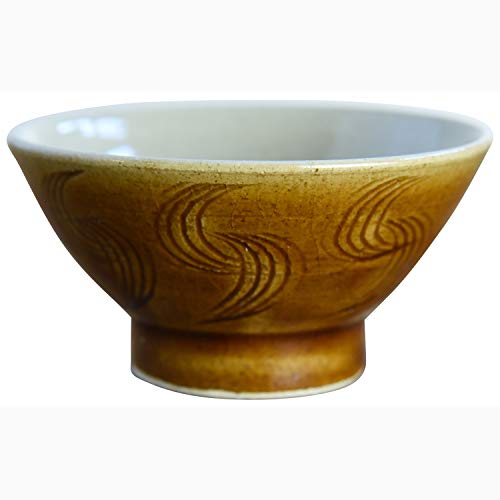
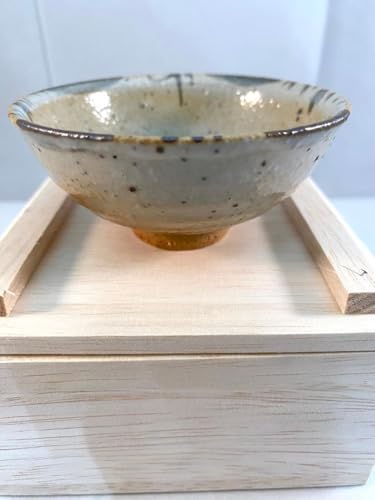
Shodai-yaki (小代焼) is the reduction-fired folk stoneware of Arao and Nankan, two towns at the foot of Mount Shodai in the far northwest of Kumamoto Prefecture, on the western edge of Kyūshū. The katakuchi (片口, “single-spouted bowl”) covered in this guide is a pouring vessel — a wide, open bowl with one pinched lip — finished in the technique that defines the tradition: nagashi-gusuri (流し掛け), a straw-ash glaze poured over dark, iron-rich clay so it runs down the side in vertical streaks of white, blue-white, and amber.
The kiln line traces to 1632. When Hosokawa Tadatoshi was transferred from Kokura in Buzen to govern the Higo-Kumamoto domain that year, potters of the Agano-yaki lineage — recorded as Genshichi and Hachizaemon — followed him and opened a kiln on the Shodai foothills. That single fact places Shodai-yaki in unusually good company: it shares the Korean-trained continental potter heritage of Karatsu ware, and it shares the exact Hosokawa-clan arrival that also seeded Higo Zogan damascene metalwork in the same domain. Shodai-yaki was designated a Traditional Craft Product by Japan’s Ministry of Economy, Trade and Industry (METI) in 2003.
This article is written from a Japan-based editor’s desk — working out of Toyama in the Hokuriku region and Nara in Kansai — for an international reader. We cover what the katakuchi format is actually for, how the nagashi-gusuri surface reads against other Kyūshū and folk-craft wares, who this piece suits and who should pass, and how to have it shipped outside Japan.
🔄 Updated: July 3, 2026
⏱️ ~11 min read

- Who this is for — and who should skip it
- Product overview (from published specs)
- Where this comes from — the foot of Mt. Shodai, Kumamoto
- Price snapshot across stores
- What it does well
- Weaknesses and things to verify before buying
- Conclusion — which buyer type are you?
- Other ways to approach this purchase
- 🏆 Editor’s Pick
- ❓ Frequently Asked Questions
Who this is for — and who should skip it
- Want a genuine Kyūshū folk-pottery pourer with a documented four-century lineage, not a souvenir imitation.
- Like the dramatic vertical drip of straw-ash glaze over dark, iron-rich clay.
- Serve sake, dashi, dressings, or small dishes and want one versatile spouted bowl for the job.
- Appreciate folk-craft (mingei) surfaces over factory-uniform porcelain.
- Are comfortable hand-washing and letting the surface patina with use.
- Need dishwasher-safe, oven-safe, perfectly identical pieces — this is hand-thrown, hand-glazed stoneware.
- Expect the glaze streaks and color to match a photo exactly — every piece varies.
- Want translucent white porcelain (Arita, Hasami); this is matte, earth-toned stoneware.
- Cannot accommodate international shipping cost on top of the item price.
- Need confirmed capacity and dimensions before buying — see the caveats section on thin listing data.
Product overview (from published specs)
The spec sheet below is drawn from the maker tradition and the item description for ASIN B0HBR1K41G. The data suggests this is a single sourced Amazon JP Global Store listing; at the time of writing, the fetched data returned no live price or dimensional snapshot for this ASIN, so those cells are marked accordingly. Live pricing and stock may have shifted — confirm on the listing page before purchase.
Shodai-yaki Katakuchi
小代焼 片口 井上泰秋 ふとも窯
通常6~7日以内に発送します。 · Sold by タナカショップ! · ASIN B0HBR1K41G
Price and availability as of 2026-09-01 05:22 JST. The Amazon listing at the time of purchase is authoritative. jpmono.com earns a commission on qualifying purchases at no extra cost to you.
| Attribute | Detail |
|---|---|
| Item | Katakuchi (片口) — single-spouted bowl / pourer |
| Tradition | Shodai-yaki (小代焼) — METI Traditional Craft Product, designated 2003 |
| Origin | Arao / Nankan area, foot of Mt. Shodai, northern Kumamoto Prefecture, Kyūshū |
| Material | Reduction-fired iron-rich Shodai stoneware |
| Glaze | Nagashi-gusuri (流し掛け) — poured straw-ash glaze (white / blue-white / amber streaks) |
| Dimensions / capacity | Unconfirmed — not stated in fetched data; verify on listing page |
| Country of origin | Kumamoto Prefecture, Japan |
| Listing price | Unavailable at time of writing — check current price on the listing (JPY is authoritative) |
| Listed on | Amazon JP Global Store (ships internationally; ASIN B0HBR1K41G) |
| Care | Hand-wash with hot water; avoid thermal shock; surface patinas with use |
Data note: only limited listing information was available at the time of writing — pricing and exact dimensions were not present in the fetched data. Where a value could not be verified, this guide marks it “unconfirmed” rather than guessing.
📖 Glossary — key terms used in this article
- Shodai-yaki (小代焼)
- Reduction-fired folk stoneware from the foot of Mt. Shodai in Arao and Nankan, northern Kumamoto. Iron-rich dark body, poured straw-ash glazes. METI-designated traditional craft (2003).
- Katakuchi (片口)
- Literally “single spout.” An open bowl with one pinched pouring lip. Used to decant sake, transfer dashi and dressings, or serve dressed dishes; also used in ikebana.
- Nagashi-gusuri (流し掛け)
- “Poured / flowing glaze.” A ladle of straw-ash glaze is poured over the piece and allowed to run vertically; firing locks in the trail. The signature surface of Shodai-yaki, seen in white (shiro), blue-white (ao), and amber (ame).
- Reduction firing
- Kiln atmosphere starved of oxygen during firing. Iron in the clay reads darker and richer; straw ash on the surface fluxes into glassy runs. Common across Kyūshū stoneware.
- Agano-yaki lineage
- The Korean-trained potter tradition Hosokawa brought from Buzen (Kokura). The Shodai founders came from this line, which is why Shodai shares heritage with Karatsu-type Kyūshū wares.
- Higo (肥後)
- The old provincial name for what is now Kumamoto Prefecture. The Hosokawa-ruled “Higo-Kumamoto domain” is the political frame in which Shodai-yaki and Higo Zogan metalwork both took root.
- Mingei (民芸)
- “Folk craft.” A 1920s–30s aesthetic movement (Yanagi Sōetsu, Hamada Shōji) that re-valued anonymous everyday-use ware. Shodai-yaki was embraced by this movement in the Shōwa era.
- METI Traditional Craft Product
- Designation under Japan’s Ministry of Economy, Trade and Industry (経済産業省) for crafts meeting continuity, material, technique, and regional-concentration criteria. Shodai-yaki was designated in 2003.
Where this comes from — the foot of Mt. Shodai, Kumamoto

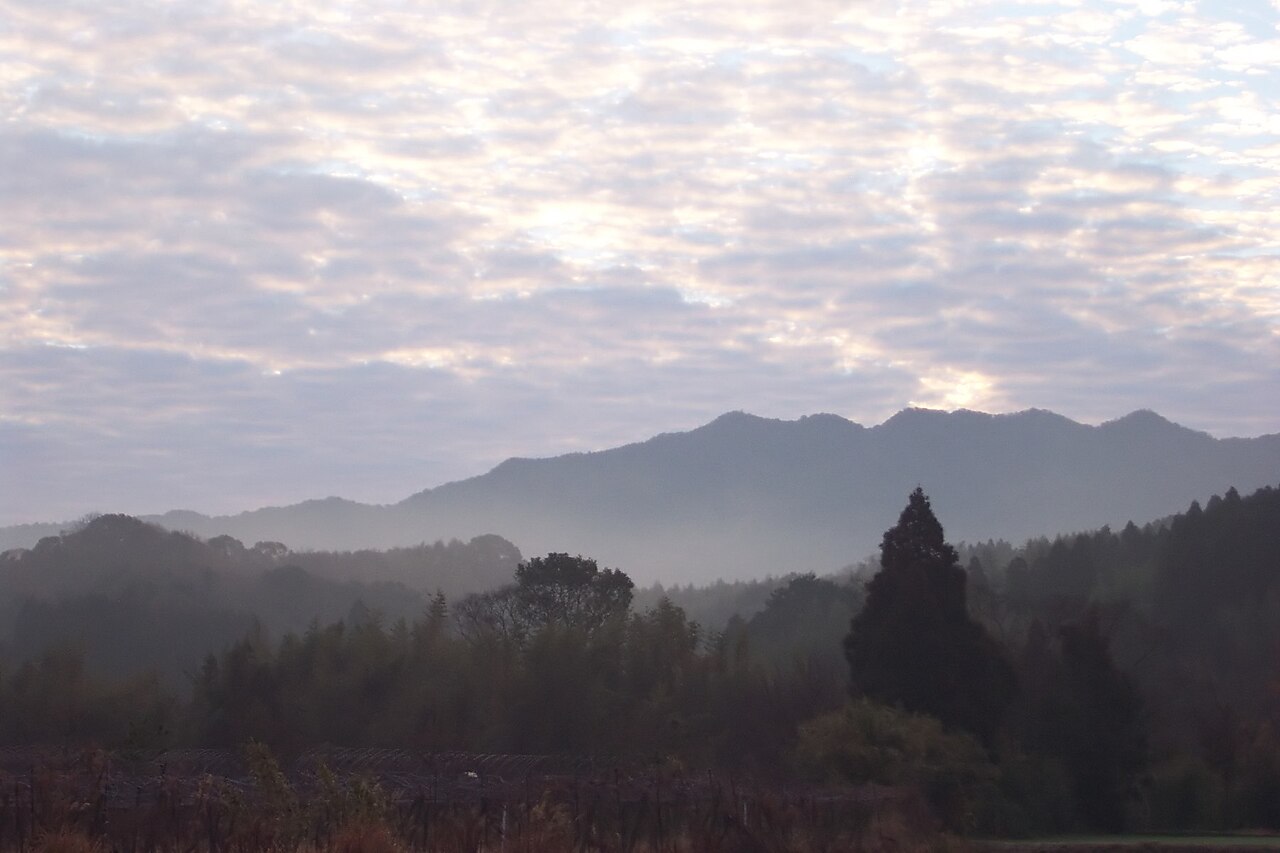
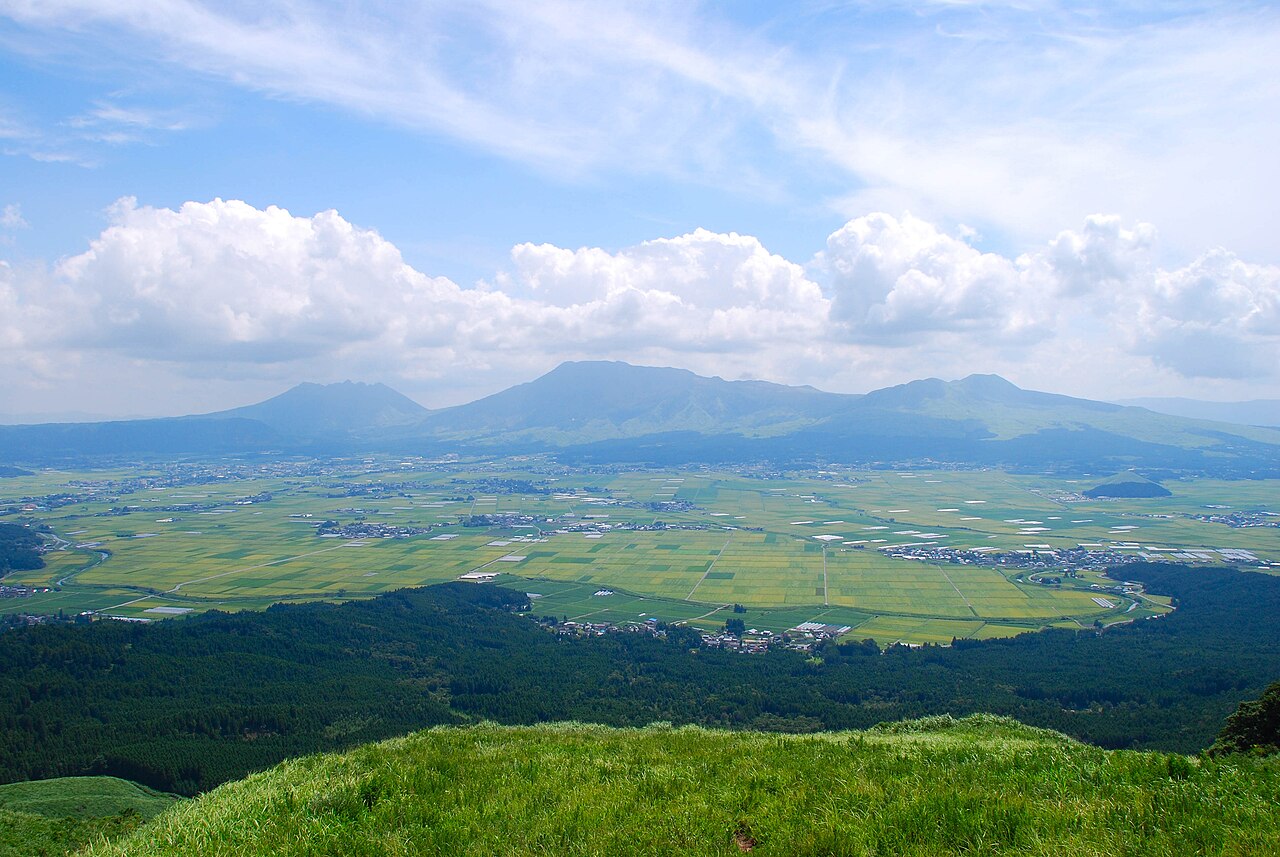
Kumamoto sits in the middle of Kyūshū, Japan’s southwesternmost main island. The Shodai kilns are not in the prefectural capital but in its far northwestern corner, where Kumamoto meets Fukuoka: the towns of Arao and Nankan lie at the foot of Mt. Shodai, a low forested ridge whose slopes hold the iron-rich clay seams the founding potters came to work. To the east rises Aso, one of the largest active volcanic calderas in the world; the same volcanic, iron-heavy geology that shapes the region’s landscape also gives the local clay its dark, robust body. That dark body is exactly what makes the poured straw-ash glaze read so vividly.
The historical anchor is 1632. That year the Hosokawa family was transferred from Kokura in Buzen Province (northern Kyūshū) to govern the Higo-Kumamoto domain, and Lord Hosokawa Tadatoshi brought with him potters of the Agano-yaki lineage — recorded as Genshichi and Hachizaemon — who opened a kiln on the Shodai foothills. Both had trained in the Korean-style high-fire stoneware tradition that had already taken root in northern Kyūshū in the late Sengoku and early Edo period. That is the same continental lineage behind Karatsu ware to the north, which is why a Shodai piece feels like a cousin of Karatsu rather than of Kyoto porcelain.
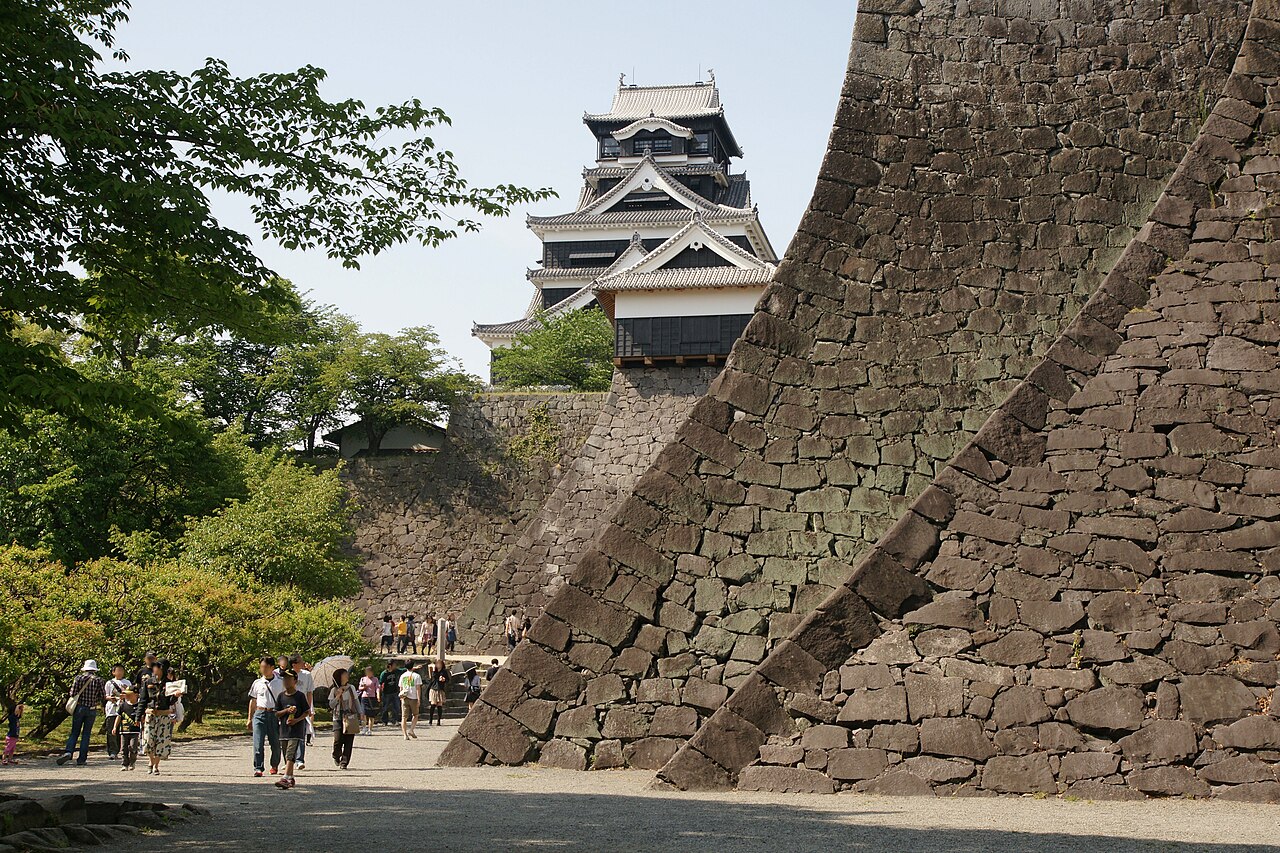
There is a second thread worth pulling. The same 1632 Hosokawa arrival that founded the Shodai kilns also brought the metalworkers who established Higo Zogan (肥後象嵌), the domain’s damascene inlay tradition. Pottery and metalwork in Higo therefore descend from one act of patronage — a rare case where a region’s ceramic and metal crafts can be traced to the same lord, the same decade, and the same castle town.
-
1632 — Hosokawa Tadatoshi is transferred from Kokura (Buzen) to Higo-Kumamoto; Agano-lineage potters Genshichi and Hachizaemon follow and open a kiln at the foot of Mt. Shodai. -
17th c. — Hosokawa-domain patronage; the poured straw-ash nagashi-gusuri glaze becomes the recognizable Shodai surface. -
18th–19th c. — Village-scale production of daily ware — jars, plates, tokkuri, and katakuchi — for the domain and local markets, not export. -
1920s–30s — The Shōwa-era mingei (folk-craft) movement re-values anonymous everyday ware; Shodai-yaki is championed for its rustic, functional aesthetic. -
2003 — METI designates Shodai-yaki a Traditional Craft Product. -
2020s — Kilns around Arao and Nankan continue the tradition; Shodai-yaki katakuchi and other daily ware reach international buyers through Amazon JP Global Store.
The continuity case is straightforward. The technique that defines the ware — pouring a straw-ash glaze over an iron-dark body and letting it run — has not fundamentally changed since the Edo period. A Shodai katakuchi today is therefore not a modern reinterpretation of a lost craft; it is the same procedure, on clay from the same hills, that the Hosokawa-era potters used.
“In Higo, the pottery and the metalwork share a birth date: 1632, the year the Hosokawa came to Kumamoto and brought both the Agano-lineage potters and the damascene smiths with them.”
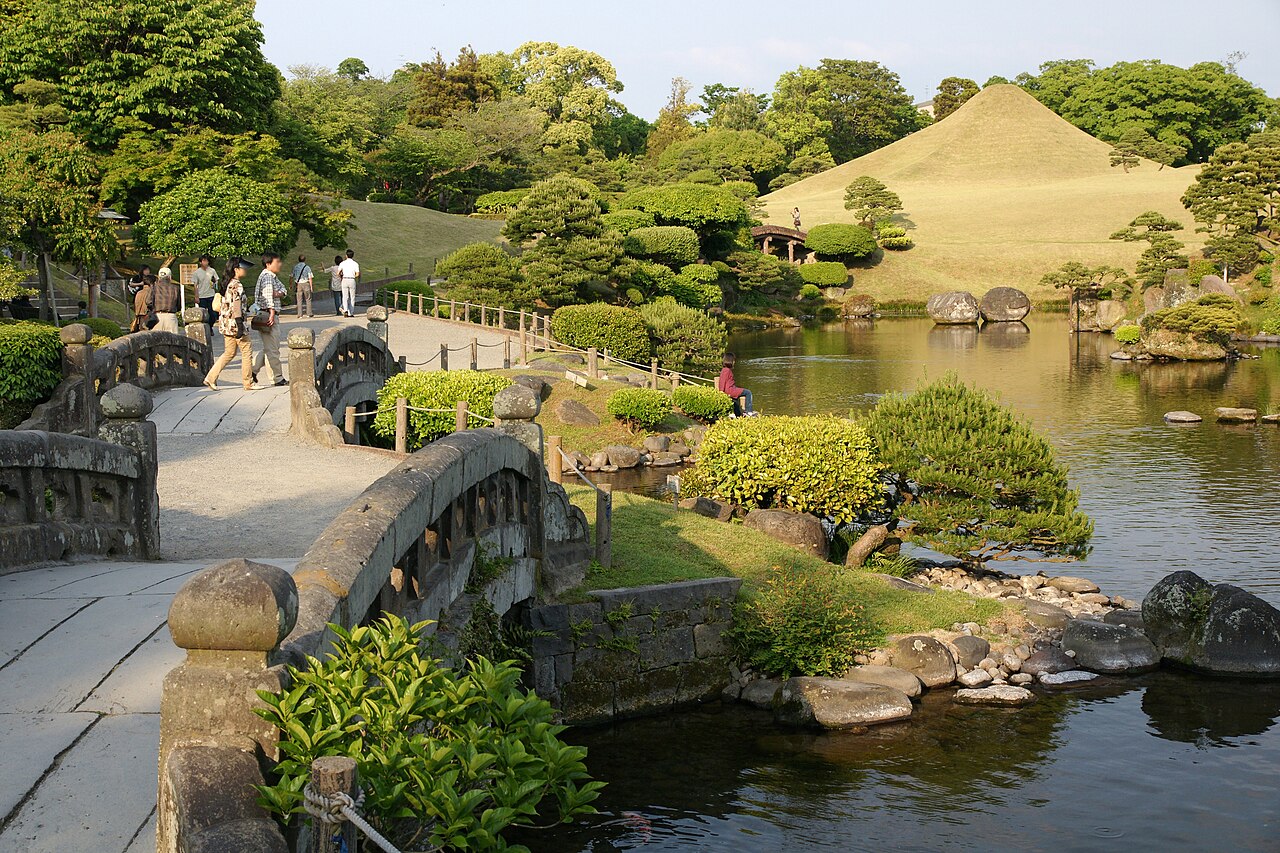
One cultural note: the katakuchi is a quietly versatile object in a Japanese kitchen. It decants sake from bottle to cup, transfers warm dashi, holds a dressing for pouring at the table, or serves an aemono (dressed vegetable dish) directly from the bowl. In Kumamoto it also sits comfortably beside regional specialties — from local sake to karashi-renkon (mustard-stuffed lotus root). It is a working vessel first and a decorative one second.
🍶
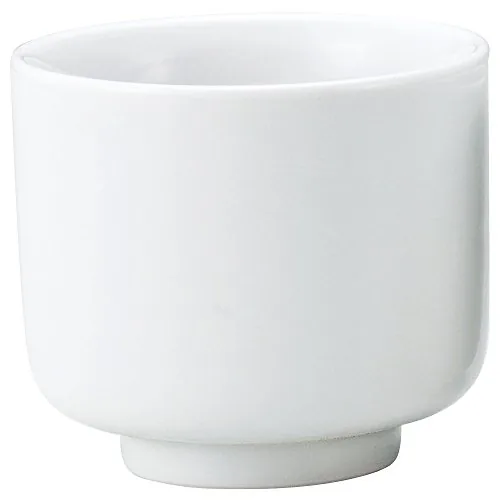
Karatsu E-Garatsu Guinomi
Saga · Kyūshū stoneware
🏺
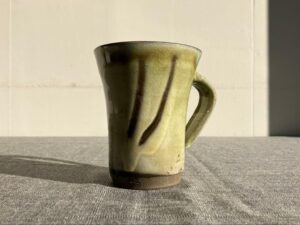
Shiro-Satsuma Sake Cup
Kagoshima · Kyūshū pottery
☕
Onta-yaki Folk Mug
Oita · mingei pottery
🟡
Fujina Slipware Plate
Shimane · yellow-glaze pottery
🥢
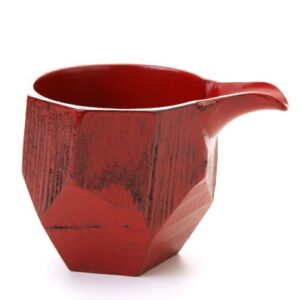
Tosa Lacquer Katakuchi
Kochi · lacquered pourer
🎎
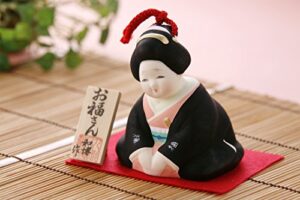
Hakata Ningyo Figurine
Fukuoka · bisque clay
🍵
Shigaraki Hechimon Mug
Shiga · stoneware
Price snapshot across stores
The piece is sourced specifically from Amazon JP Global Store. Amazon US carries comparable Japanese stoneware from other Kyūshū and folk-craft makers but does not individually list this exact Shodai-yaki katakuchi. The first row below is for US-based readers who want to browse the broader category in USD; the second is the actual listing for this article’s piece. At the time of writing, the fetched data returned no live price for this ASIN — confirm the current figure on the listing page.
| Store | Item / variant | Price | Notes |
|---|---|---|---|
| 🇺🇸 Amazon.com (US) | Browse Japanese stoneware pourers & katakuchi | varies (USD) | Best if you are shopping from the US — Prime shipping, USD pricing, no international customs. Amazon US carries hand-thrown Japanese stoneware from Karatsu, Hasami, Mino, and other lineages — useful for comparing glaze styles and price tiers. This exact Shodai-yaki katakuchi ships from Japan (next row). |
| 🇯🇵 Amazon JP Global Store | Shodai-yaki katakuchi (B0HBR1K41G) | Check listing (JPY authoritative) | Ships internationally from Japan. Live price was unavailable in the fetched data; confirm on the listing page. Expect international shipping on top of item price, plus possible customs duties depending on order subtotal. |
| Maker direct | Arao / Nankan kiln & Kumamoto gallery channels | Unconfirmed — check workshop site | Named Shodai kilns occasionally sell directly through Kumamoto and Fukuoka craft galleries; a Japanese-language address and JP-card or bank transfer are typically required, and international shipping is case-by-case. |
| Proxy services (Buyee / Tenso) | Forwarding for JP-only listings | Item price + proxy fee + shipping | Useful if you find a non-Global-Store JP listing of a Shodai katakuchi variant. Buyee and Tenso act as forwarders; expect a service fee on top of the item price and JP→destination shipping. |
Any USD figures elsewhere in this guide are approximate at a ¥150/USD baseline and depend on current exchange rates. JPY is the authoritative price for the listed item.
What it does well
Weaknesses and things to verify before buying
- Each piece is unique — the photo will not match exactly. Drip placement, glaze pooling, and the balance of white, blue-white, and amber vary from piece to piece. The listing image shows one example, not the piece you will receive. If you require visual uniformity, hand-thrown, hand-glazed stoneware is the wrong category.
- Capacity and dimensions are unconfirmed in the fetched data. “Katakuchi” spans small sake pourers to larger serving bowls. Because the listing snapshot did not include measurements, confirm the exact size and volume on the product page before buying, especially if you have a specific use (a two-cup sake pour versus a table dressing bowl).
- Price was unavailable at time of writing. The fetched data returned no live price for ASIN B0HBR1K41G. Verify the current price and stock directly on the Amazon JP listing before purchase; do not rely on any third-party price cache.
- Hand-wash only, and the surface will patina. Expect hot-water hand washing and avoidance of thermal shock. Reduction-fired stoneware also deepens in tone with use — desired behavior in the mingei aesthetic, but not what buyers of factory porcelain expect.
- International shipping cost is meaningful relative to a small item. Amazon JP Global Store adds international shipping on top of the item price, and rates climb for EU, AU, and other destinations. Factor shipping and possible customs duties into the true landed cost.
- Dishwasher and microwave behavior unconfirmed. The listing does not state dishwasher- or microwave-safety. Treat as hand-wash only and avoid microwave heating unless the maker confirms otherwise.
- Pouring performance varies with each spout. Because the lip is pinched by hand, drip-free pouring is not guaranteed across every piece. This is normal for handmade katakuchi, but worth knowing if a clean pour matters to you.
Conclusion — which buyer type are you?
Other ways to approach this purchase
🏆 Editor’s Pick
❓ Frequently Asked Questions
What is a katakuchi, and what do you use it for?
A katakuchi (片口) is an open bowl with a single pinched pouring lip. It is one of the most versatile vessels in a Japanese kitchen: decanting sake from bottle to cup, transferring warm dashi, holding a dressing or sauce for pouring at the table, or serving a dressed vegetable dish directly. Some are also used in ikebana. This Shodai-yaki example is a folk-pottery version of that everyday tool.
What is Shodai-yaki, and how is it different from Karatsu ware?
Shodai-yaki is the reduction-fired folk stoneware of Arao and Nankan at the foot of Mt. Shodai in northern Kumamoto, founded in 1632 under Hosokawa-domain patronage. It shares the Korean-trained Agano-lineage stoneware heritage with Karatsu (Saga), but the local Mt. Shodai clay is heavier in iron, and the signature surface is the poured straw-ash nagashi-gusuri glaze that runs down the body in white, blue-white, and amber streaks. METI designated Shodai-yaki a Traditional Craft Product in 2003.
Will my katakuchi look exactly like the listing image?
No — and this is intentional. Each piece is hand-thrown and hand-glazed, and the nagashi-gusuri glaze is poured by hand. The listing image is one example. The direction of the drips, the pooling of the glaze, and the balance of white, blue-white, and amber will vary from piece to piece. If you need matching pieces across a set, hand-thrown stoneware is the wrong category.
Does Amazon JP Global Store ship this to my country?
Amazon JP Global Store ships many ceramics internationally to most major destinations. International shipping is added on top of the item price, and rates are higher for EU, AU, and other regions than for the US. Customs duties may apply depending on your country’s import thresholds and the total order subtotal. Verify the destination is supported at checkout before paying.
Is it dishwasher- or microwave-safe, and how do I care for it?
The listing does not state dishwasher- or microwave-safety. Care guidance for Shodai-yaki is hand-wash with hot water and avoid thermal shock; treat it as hand-wash only and do not microwave unless the maker confirms otherwise. Reduction-fired stoneware also patinas and deepens in tone with use, which is desired behavior in the mingei aesthetic rather than a defect.
How much does it cost, and how do I check the price?
At the time of writing, the fetched data returned no live price for ASIN B0HBR1K41G, so this guide does not quote one. The JPY price shown on the Amazon JP Global Store listing is the authoritative figure; check it directly on the product page before purchase, and factor in international shipping and any customs duties for your destination.
Is it well packed for international transit?
Amazon JP Global Store fulfills fragile items with cushioned packaging, and a katakuchi is a relatively low-risk ceramic format compared with large bowls or teapots. That said, no ceramic is zero-risk in transit; if you intend to gift it, allow time to inspect it on arrival before wrapping.
jpmono.com is curated by a Japan-based editorial team (working out of Toyama in the Hokuriku region and Nara in Kansai) and is independent. We do not take payment from the makers we feature; income comes from affiliate links. Read more about our editorial standards.
🤖 This article was drafted with AI assistance and reviewed by the jpmono editorial team against the available Amazon JP listing data for ASIN B0HBR1K41G as of July 3, 2026. Where price and dimensions were not present in the source data, the article marks them unconfirmed rather than estimating.
Affiliate disclosure: jpmono.com may earn a commission on qualifying purchases made through links on this page, at no additional cost to you.