![Yokohama Scarf: Hand-Printed Silk Scarf from Japan’s Silk Port [2026]](https://jpmono.com/wp-content/uploads/2026/07/yokohama-scarf-hand-printed-silk-where-to-buy-2026-featured.jpg)
- What it is: A hand-screen-printed (te-nassen) pure-silk scarf finished with a hand-rolled maki-hem.
- Made in: Yokohama, Kanagawa — the port city that once shipped most of Japan’s raw silk to the world and became the heart of its scarf industry.
- Price band: mid-range for hand-printed pure-silk scarves — see the live listing for the current figure.
- Best for: Buyers who want a genuine Yokohama-printed silk scarf with documented port-city heritage, not a generic “silk scarf.”
- Skip if: You need a machine-washable, budget everyday scarf, or you dislike the care demands of pure silk.
- Shipping: ships internationally from Amazon Japan — jump to our pick ↓
In 1859, Yokohama was a fishing village of a few hundred people. Within a decade it was the mouth through which most of Japan’s raw silk left the country — bound for the looms of Lyon and the department stores of New York — and the port earned a nickname that stuck for a century: the Silk Port.
The scarf in this guide is a direct descendant of that trade. When the raw silk (kiito, 生糸) that fed the world’s weavers passed across Yokohama’s wharves, a local dyeing industry grew up beside it, and by the mid-20th century Yokohama dyers were printing a dominant share of the world’s silk scarves. The signature methods — te-nassen (手捺染, hand screen printing) and hikizome (引き染め, hand brush-dyeing) on thin habutae silk, finished with a hand-rolled hem — are still practiced in the city’s workshops today.
This article is written for readers outside Japan who want a scarf with a verifiable place of origin rather than a vague “made in Japan” label. We cover what the piece is, how hand printing differs from digital printing, where it comes from, how to buy it from abroad, and how it compares to other Japanese silk textiles we have reviewed.
ℹ️ Live pricing and some specs weren’t in our snapshot — the linked Amazon listing is authoritative; unconfirmed attributes are marked below.
📅 Published:
🔄 Updated:
⏱️ Read time: ~9 min

- Who this is for — and who should skip it
- Product overview (from published specs)
- Price snapshot across stores
- 📍 Where this comes from — place, era, and the craft tradition
- What it does well
- Weaknesses and things to verify before buying
- Conclusion — which buyer type are you?
- Other ways to approach this purchase
- 🏆 Editor’s Pick — the Yokohama scarf we’d start with
- ❓ Frequently Asked Questions
Who this is for — and who should skip it
- Want a scarf whose origin — Yokohama, the historic Silk Port — is documented, not decorative marketing.
- Value the hand of te-nassen printing and a hand-rolled silk hem over mass-produced uniformity.
- Appreciate pure silk’s drape, sheen, and warmth-to-weight against synthetic alternatives.
- Are buying a gift that carries a specific Japanese story you can actually explain.
- Are comfortable with hand-wash or dry-clean care for a delicate textile.
- Need a machine-washable, throw-in-the-bag everyday scarf.
- Are shopping purely on price and want the cheapest silk-look option.
- Dislike the upkeep pure silk demands (careful washing, no wringing, low-heat ironing).
- Expect a specific pattern or colorway — hand-printed runs vary, and stock rotates.
- Want a heavy winter wrap; these are thin habutae-weight accent scarves.
Product overview (from published specs)
The data below is compiled from the Amazon listing snapshot for the featured item plus the historical record of Yokohama’s scarf industry. Where a value was not present in our snapshot, it is marked as unconfirmed rather than guessed.
Yokohama Scarf
[レオナール] LEONARD レディース ハンカチ 横浜手捺染ハンカチーフ シルク混 ミニスカーフ 地模様 花柄 桜 ツバキ ピンクグレー
残り1点 ご注文はお早めに · Sold by grande shop · ASIN B0F83TN2BZ
Price and availability as of 2026-09-01 05:22 JST. The Amazon listing at the time of purchase is authoritative. jpmono.com earns a commission on qualifying purchases at no extra cost to you.
| Attribute | Detail | Source |
|---|---|---|
| Item | Marca (Maruka) Yokohama Scarf, ASIN B0F83TN2BZ | Amazon JP Global Store listing |
| Material | 100% silk | Maker / listing |
| Print method | Te-nassen (hand screen printing) | Maker / listing |
| Hem finish | Hand-rolled maki-hem | Maker / listing |
| Made in | Yokohama, Kanagawa, Japan | Maker / listing |
| Dimensions | Unconfirmed — check the live listing | — |
| Weight | Unconfirmed — check the live listing | — |
| Price | Not in snapshot — see live listing (JPY authoritative) | — |
📖 Glossary — key terms
- Te-nassen (手捺染, “hand screen printing”) — dye pushed through hand-cut or photo screens by hand, one color at a time; the human-registered alternative to digital inkjet printing.
- Hikizome (引き染め, “brush-dyeing”) — ground color laid onto stretched silk by hand with a wide brush, producing even, deep tones.
- Habutae (羽二重) — a light, smooth, plain-weave silk historically central to Japan’s export trade.
- Maki-hem (巻き縫い, “rolled hem”) — the scarf edge rolled and hand-stitched into a fine rounded finish rather than machine-serged.
- Kiito (生糸, “raw silk”) — reeled but unwoven silk thread; Japan’s number-one export good in the decades after 1859.
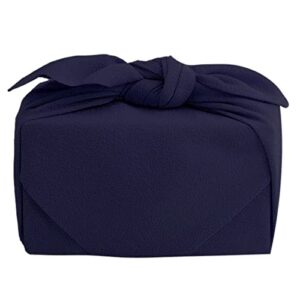
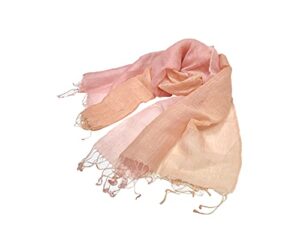
Other Japanese silk and dyed-textile pieces we have reviewed — useful for weighing region, technique, and price against this Yokohama scarf.
Price snapshot across stores
Prices and stock fluctuate; the linked listing is always authoritative. The featured scarf is sourced from the Amazon JP Global Store, which ships internationally.
| Store | Item / Variant | Price | Notes |
|---|---|---|---|
| 🇺🇸 Amazon.com (US) | Browse Japanese silk scarves | varies (USD) | Best if you’re shopping from the US — Prime shipping, USD pricing, no international customs. Amazon US carries Japanese silk scarves from various makers, useful for comparing patterns and price tiers. The exact Yokohama-printed piece ships from Japan (next row). |
| 🇯🇵 Amazon JP Global Store | Marca (Maruka) Yokohama Scarf, 100% silk, hand-printed | See live listing (JPY authoritative; USD ≈ JPY ÷ 150) | Ships internationally from Japan. This is the sourced listing for the specific item in this guide. |
| Maker direct | Marca (Maruka) Yokohama scarf line | Varies | Some Yokohama scarf makers sell through their own sites; international shipping is not always offered. |
| Proxy services (Buyee / Tenso) | Any JP domestic listing | Item price + proxy fee + forwarding | Useful for domestic-only listings, but adds cost and handling steps versus the Global Store. |
Prices in USD are approximate and depend on the current exchange rate (¥150/USD baseline as of mid-2026). The JPY price is the authoritative one for the specific listed item.
📍 Where this comes from — place, era, and the craft tradition

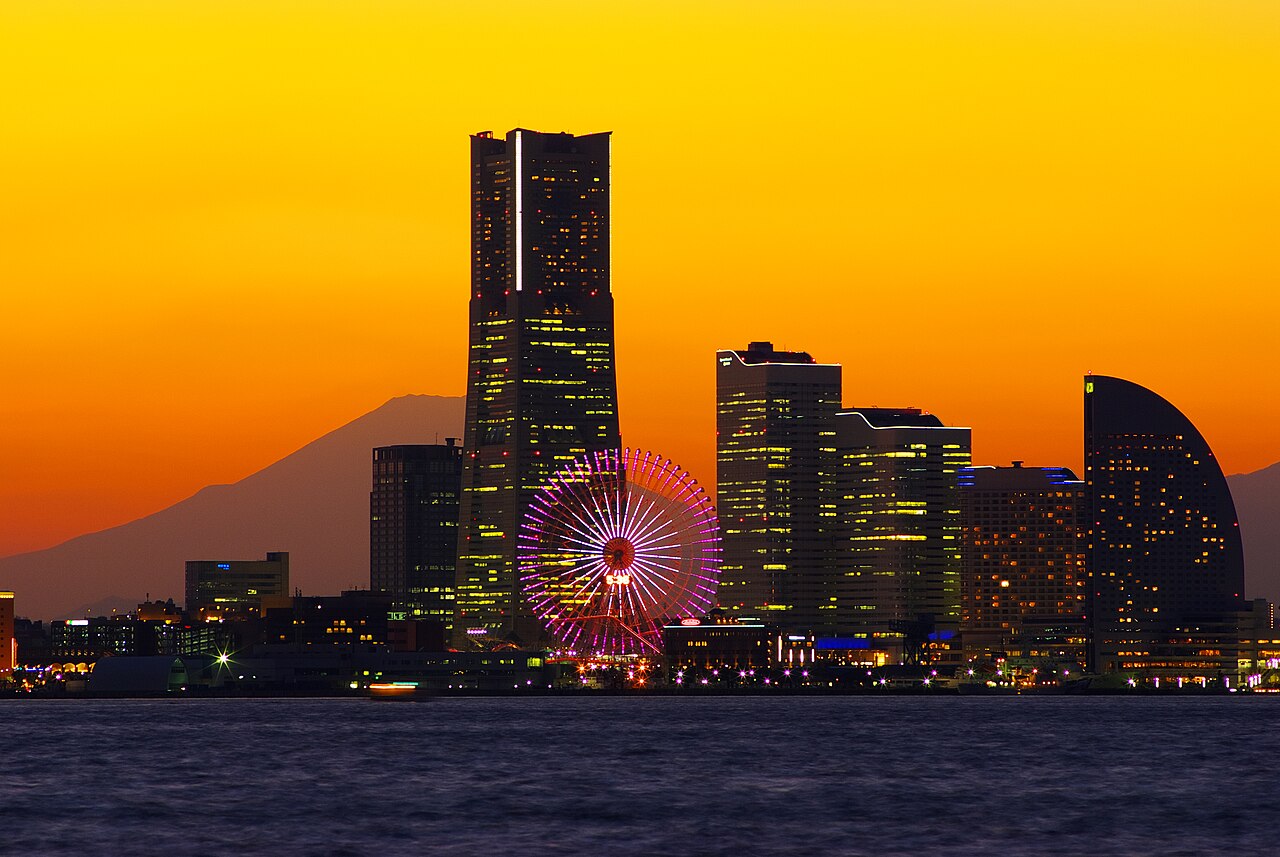
Yokohama sits on the western shore of Tokyo Bay in Kanagawa Prefecture, in the Kantō region, about 30 km south of central Tokyo. Before 1859 it was a small settlement; the arrival of foreign trade turned it, within a generation, into Japan’s principal gateway to the outside world. Its deep harbor and its position at the seaward edge of the northern Kantō sericulture belt — the silk-farming districts of Gunma, Nagano, and neighboring provinces — made it the natural export point for the one commodity the world wanted most from Japan.
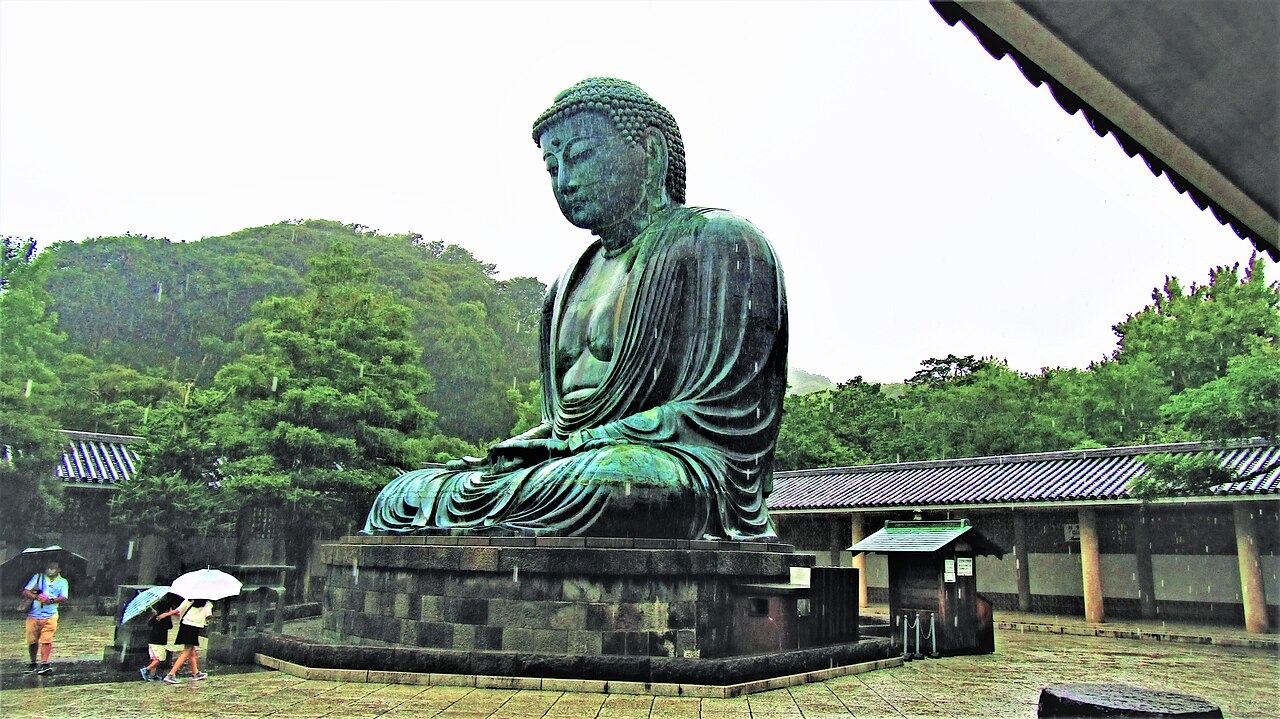
Kanagawa is not only a modern port prefecture. A short distance from Yokohama lies Kamakura, seat of Japan’s first military government (the Kamakura shogunate, 1185–1333) and home to the 13th-century Great Buddha of Kōtoku-in. That older layer of history is the counterweight to Yokohama’s youth: a prefecture where a medieval capital and a 19th-century international port sit within a train ride of each other.
- 1859 — Yokohama opens as one of Japan’s first international treaty ports.
- 1860s — Raw silk (kiito) from Gunma, Nagano, and northern Kantō becomes Japan’s number-one export, shipped through Yokohama to Lyon and New York.
- Early 1910s — The Aka-Renga (Red Brick Warehouse) customs complex is completed on the wharf, handling exported goods.
- Early-to-mid 20th c. — Local dyers build a silk scarf-printing industry on the port’s silk supply.
- Postwar peak — Yokohama produces a dominant share of the world’s silk scarves; the Silk Center opens on the waterfront to memorialize the trade.
- 2026 — Hand te-nassen scarf printing and hand-rolled hemming continue in Yokohama workshops.
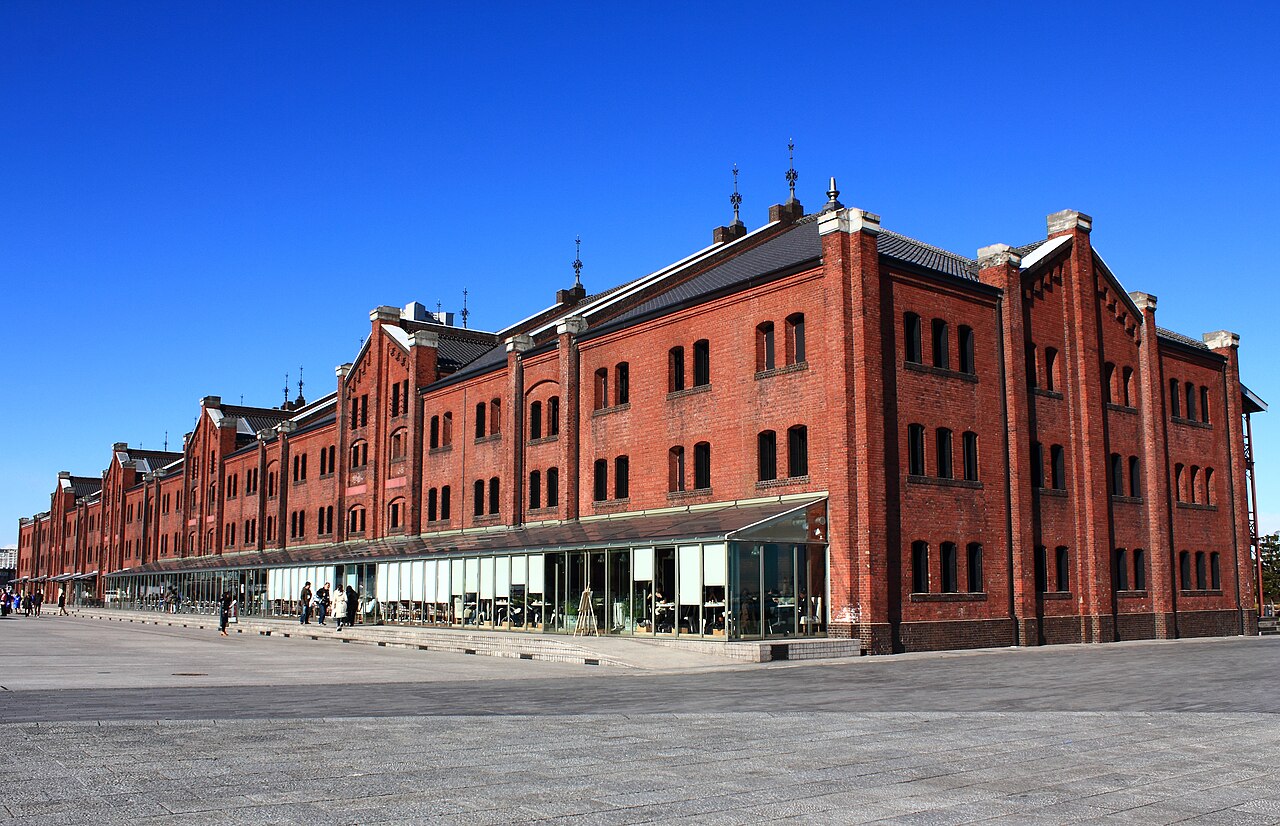
By the 1860s, raw silk was Japan’s number-one export good, and the overwhelming majority of it left the country through Yokohama. The brick customs sheds on the waterfront — the surviving Aka-Renga (赤レンガ, “red brick”) warehouses — were built to marshal that outbound trade. Silk moved from the sheds onto ships, and the ships carried it across the Pacific and around to Europe.
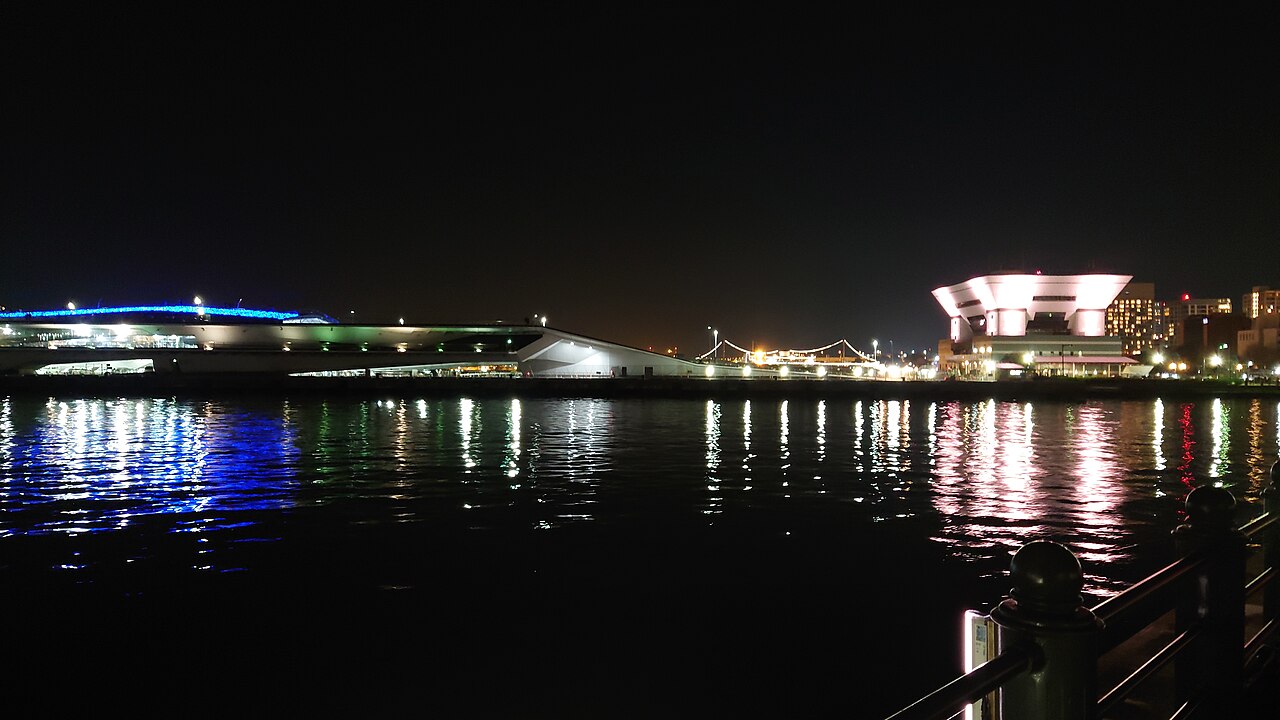
The scarf industry was the second act. Raw silk feeds looms elsewhere, but a port awash in silk also attracts dyers, and in the early-to-mid 20th century Yokohama’s dyers turned the local supply into printed silk scarves. At the postwar peak, the city produced a dominant share of the silk scarves worn around the world — an achievement built on te-nassen hand screen printing and hikizome brush-dyeing rather than on volume machinery alone.
“At its postwar peak, a dominant share of the silk scarves in the world’s wardrobes was printed in a single Japanese port city.”
What “still made here” means, today, is a smaller but continuous trade. Digital printing and overseas production have taken most of the volume, yet Yokohama workshops still hand-print silk by te-nassen and finish scarves with hand-rolled maki-hems — the same two operations that defined the city’s scarves a century ago. A hand-rolled hem, in particular, is a slow, human step that machine-serged edges skip; it is one of the plainest tells that a scarf was finished by hand.
What it does well
General silk-care guidance for a hand-printed scarf; always follow the maker’s care label, which is authoritative for this specific piece.
- 🧺 Washing: hand-wash cold or dry-clean; do not machine-wash a pure-silk scarf.
- 💧 Drying: do not wring; press flat in a towel and dry away from direct sun to protect the print.
- ♨️ Ironing: low heat on the reverse, ideally through a cloth.
Weaknesses and things to verify before buying
- Care demands. Pure silk needs hand-washing or dry-cleaning; it is not a low-maintenance everyday scarf.
- Price unconfirmed in our snapshot. The listing price was not captured; verify the current JPY figure on the live listing before ordering.
- Dimensions and weight unconfirmed. Scarf size and silk weight were not in our data — check the listing to be sure it is the shape you want (accent scarf vs. large wrap).
- Pattern and colorway vary. Hand-printed runs and stock rotate; the exact design shown may differ from what is available when you order.
- Delicacy. Thin habutae-weight silk snags and water-spots more easily than heavier textiles; it is an accent piece, not a rugged winter wrap.
- International shipping and duties. Buying from Japan means shipping time and possible customs charges above your local threshold — confirm before checkout.
Conclusion — which buyer type are you?
Other ways to approach this purchase
🏆 Editor’s Pick — the Yokohama scarf we’d start with
❓ Frequently Asked Questions
Does this scarf ship internationally from Japan?
Yes. The featured item is sold through the Amazon JP Global Store, which ships to most major destinations. Shipping typically runs in the $15–$40 range to the US and EU, and customs duties may apply above your local threshold.
What is te-nassen, and why does it matter?
Te-nassen (手捺染) is hand screen printing — dye pushed through screens by hand, one color at a time. It gives depth and human registration character that digital inkjet printing tends to flatten, and it is the technique that built Yokohama’s scarf reputation.
How do I care for a pure-silk scarf?
Hand-wash cold or dry-clean; do not machine-wash. Do not wring — press flat in a towel and dry away from direct sun. Iron on low heat on the reverse, ideally through a cloth. Always follow the maker’s care label, which is authoritative for the specific piece.
Why is Yokohama associated with silk?
After Yokohama opened as a treaty port in 1859, raw silk (kiito) became Japan’s number-one export, shipped through Yokohama to Lyon and New York — earning the port the nickname “Silk Port.” A local scarf-printing industry grew up on that silk supply and peaked after the war, producing a dominant share of the world’s silk scarves.
Is the price shown in this article current?
No live price was in our data snapshot, so we do not quote a figure. The linked Amazon listing is authoritative — check it for the current JPY price before ordering. USD figures elsewhere on the site are approximate estimates at a ¥150/USD baseline.
How does it compare to other Japanese silk scarves?
A Yokohama scarf’s distinction is its port-city printing heritage and hand finish. Woven pieces such as Chichibu Meisen or Yonezawa-ori emphasize the cloth itself, while Kyoto Yuzen emphasizes hand-painted dyeing. See the cross-link box above to weigh region, technique, and price.
jpmono.com is curated by a Japan-based editorial team (working out of Toyama in the Hokuriku region and Nara in Kansai) and is independent. We do not take payment from the makers we feature; income comes from affiliate links. We read maker specs and source listings rather than physically testing every product.
🤖 This article was drafted with AI assistance and edited against maker specifications and source listings. Facts on origin and technique are drawn from documented records of Yokohama’s silk trade; unconfirmed attributes are marked as such.
Affiliate disclosure: jpmono.com may earn a commission on qualifying purchases made through links on this page, at no additional cost to you.