![Imoya Kinjiro Imo Kenpi (芋屋金次郎 芋けんぴ, boxed sweet-potato sticks) — Kochi’s sugar-glazed fried tuber snack from a specialist confectioner [2026 Guide for International Readers]](https://jpmono.com/wp-content/uploads/2026/07/imoya-kinjiro-imo-kenpi-where-to-buy-2026-featured.jpg)
- What it is: Boxed, individually wrapped imo kenpi (芋けんぴ) — batons of Kochi sweet potato deep-fried and lacquered in a hard sugar glaze until they snap.
- Made in: Nangoku area, Kochi Prefecture (Tosa), on the island of Shikoku — by Imoya Kinjiro (芋屋金次郎), a specialist devoted almost entirely to kenpi.
- Price band: everyday-gift confection, not a luxury item — check the live listing for the current figure (no invented price here).
- Best for: readers who want a shelf-stable, plant-based Japanese sweet from a named regional maker that survives the post.
- Skip if: you dislike very hard, brittle, sugar-forward textures or want something soft and cake-like.
- Shipping: ships internationally from Amazon Japan — jump to our pick ↓
Bite one and it does not yield — it cracks, the way brittle or hard candy cracks, and only then does the sweet-potato flavor arrive underneath the glassy shell of sugar. That snap is the whole point of imo kenpi (芋けんぴ), a confection from Kochi Prefecture on the Pacific side of Shikoku, where cooks turned a humble root crop into a crisp, keepable sweet long before refrigeration reached rural kitchens.
Imoya Kinjiro (芋屋金次郎) is a Kochi maker devoted almost entirely to kenpi. It presses and fries its sticks in small batches and finishes them so the sugar sets glassy rather than sticky — the difference between an artisan kenpi and the softer, tackier bags sold on supermarket shelves. Because the potato is fully fried and sugar-sealed, the result is dry, dense, and shelf-stable: it does not melt, weep, or spoil quickly, which is exactly why it travels well by post.
This guide is written for international readers weighing whether to order the boxed assortment from abroad. We cover what the box contains, how the texture differs from ordinary supermarket kenpi, the Kochi sweet-potato heritage behind the recipe, and — most practically — how to confirm cross-border shipping before you buy. Facts here come from the product spec and the maker’s stated profile; where our snapshot is thin, we say so.
🔄 Last updated: July 12, 2026
⏱️ Read time: ~9 min

ℹ️ Live pricing and some pack details weren’t in our snapshot — the linked listing is authoritative; unconfirmed attributes are marked below.
- Who this is for — and who should skip it
- Product overview (from published specs)
- 📍 Where this comes from — Kochi, Tosa, and a root crop turned confection
- 📦 Shipping & where to buy from outside Japan
- Price snapshot across stores
- What it does well
- Weaknesses and things to verify before buying
- Conclusion — which buyer type are you?
- Other ways to approach this purchase
- 🏆 Editor’s Pick
- ❓ Frequently Asked Questions
Who this is for — and who should skip it
- Like hard, brittle, snappy textures — this is closer to candy-coated crisp than to soft cake.
- Want a plant-based Japanese sweet (sweet potato, sugar, vegetable oil — no dairy or meat).
- Value a named regional maker with a clear origin (Kochi) over an anonymous supermarket bag.
- Need a sweet that survives international post — dry, sealed, room-temperature, individually wrapped.
- Are buying a share-friendly gift or an assortment to sample the classic and lightly salted styles.
- Prefer soft, moist, or chocolate-based sweets — kenpi is dry and firm by design.
- Want a low-sugar snack; the glaze is a hard sugar coating and the sweetness is forward.
- Have dental sensitivity to very hard foods that must be bitten through.
- Need a guaranteed delivered price before ordering — cross-border cost varies by destination.
- Are shopping for something made near you; this ships from Japan and takes time in transit.
Product overview (from published specs)
The table below is a consolidated snapshot from the sources we could reference at the time of writing. Where a figure was not in our data, it is marked Unconfirmed — check the live listing rather than guessed.
Imoya Kinjiro Imo Kenpi (芋屋金次郎 芋けんぴ, boxed sweet-potato sticks)
芋屋金次郎 おつかいもの 中箱 6袋入×1箱 金次郎 芋けんぴ いもけんぴ 芋ケンピ 芋けんぴチップス 芋けんぴチップ 芋 かりんとう 小袋 個包装 ギフト お菓子 年賀 お年賀 御年賀
残り7点 ご注文はお早めに · Sold by FOODSELECT · ASIN B0BR9RYSZT
Price and availability as of 2026-08-31 02:30 JST. The Amazon listing at the time of purchase is authoritative. jpmono.com earns a commission on qualifying purchases at no extra cost to you.
| Attribute | Detail | Source |
|---|---|---|
| Product | Imo kenpi (芋けんぴ) — sweet-potato sticks in hard sugar glaze; boxed, individually wrapped assortment | Maker direct / listing |
| Maker | Imoya Kinjiro (芋屋金次郎), a kenpi specialist operated by the Shibuya Foods group | Maker direct |
| Origin | Nangoku area, Kochi Prefecture (Tosa), Shikoku | Maker direct |
| Main ingredients | Sweet potato, sugar, vegetable oil — plant-based; no dairy or meat listed | Listing / maker |
| Line styles | Classic 芋けんぴ and 塩けんぴ (a lightly salted version) commonly appear in the assortment | Maker direct |
| Texture | Hard, brittle, glassy — sets non-sticky rather than tacky | Maker direct |
| Format & storage | Dry, sealed, room-temperature; individually wrapped; carries a best-by date | Listing / maker |
| Net weight / count | Unconfirmed — check the live listing | — |
| Price | Unconfirmed — not in our snapshot; check the live listing | — |
📖 Glossary — key terms
- Imo kenpi (芋けんぴ) — a Kochi confection of sweet-potato batons deep-fried and coated in hardened sugar syrup until crisp.
- Shio kenpi (塩けんぴ) — a lightly salted version; the salt cuts the sweetness of the glaze.
- Tosa (土佐) — the historical province name for present-day Kochi Prefecture; still used as a regional label.
- Satsuma-imo (さつまいも) — Japanese sweet potato, the base ingredient; named for Satsuma, the region through which it entered Japan.
- Nangoku (南国市) — the city in Kochi Prefecture where the maker is based; literally “southern country.”
📍 Where this comes from — Kochi, Tosa, and a root crop turned confection

Kochi Prefecture occupies the southern, Pacific-facing quarter of Shikoku, the smallest of Japan’s four main islands. Historically it was Tosa Province, ruled from Kochi Castle by the Yamauchi clan from the beginning of the Edo period. The prefecture is walled off from the rest of Shikoku by mountains and opens instead onto the ocean, which gives it a warm, rain-heavy climate and long growing seasons — conditions that suit the sweet potato better than the rice paddies of cooler regions.
The sweet potato itself is not native to Japan. It arrived from the south, spreading up through the Ryukyu Islands and Satsuma in the early Edo period, and was later promoted nationwide as a famine-resistant crop that could grow where rice failed. In warm, well-drained provinces like Tosa, it took hold as a dependable food. Turning that root into imo kenpi — slicing it into sticks, frying it through, and sealing it in hardened sugar — was a way to make a perishable harvest keep for months, in an era with no refrigeration.
- 1601 — The Yamauchi clan is installed as lords of Tosa; the castle town of Kochi grows around Kochi Castle.
- early 1700s — Satsuma-imo (sweet potato) spreads into southern Japan via the Ryukyu Islands and Satsuma.
- 1735 — Scholar Aoki Konyō promotes sweet-potato cultivation across Japan as insurance against famine under shogun Tokugawa Yoshimune.
- Edo period — Tosa cooks fry sliced sweet potato and seal it in hard sugar syrup, creating the keepable confection now called imo kenpi.
- Meiji era (1868–1912) — Kochi’s warm climate and volcanic, free-draining soils establish it as a recognized sweet-potato growing region.
- Present day — Kochi makers, Imoya Kinjiro among them, specialize almost entirely in kenpi, frying in small batches for a glassy, non-sticky finish.
These are broad regional anchors for the ingredient and the province, not corporate records for the maker; treat the sweet-potato dates as the well-documented food history they are, and the imo kenpi origin as a folk-traditional Tosa practice rather than a single dated invention.
What “specialist” means here is narrow focus. Where a general confectioner might make kenpi as one line among many, Imoya Kinjiro is built around it — pressing and frying sticks in small batches, then finishing the sugar so it sets hard and clear. The stated signature is a glaze that turns glassy instead of sticky, which is the trait that separates a maker’s kenpi from the softer, tackier bags found in supermarkets.
“A supermarket kenpi bends; a specialist’s kenpi breaks. The whole craft is in getting the sugar to set glassy rather than sticky.”
Other Japanese pantry and sweets guides on jpmono.com, if you are assembling a care package or comparing regional makers:
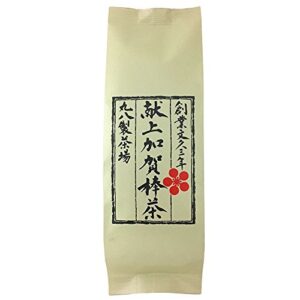

Maruhachi Seichajo Kenjo Kaga Bocha (献上加賀棒茶, sealed bag/tin)

Hoshino Seichaen Yame Matcha (星野製茶園 八女抹茶, sealed 30–40g tin)

Odo-yaki Tosa Sometsuke Yunomi Tea Cup: Where to Buy in Japan

Kameda Kaki no Tane (亀田の柿の種, 6-bag box) — Niigata’s rice-cracker classic

Toraya Small Yokan (Ko-gata Yōkan, 10-Bar Assorted Box) — Japanese sweets

Iwate-ya Nanbu Senbei (南部せんべい, Sesame & Peanut Assortment Box)
📦 Shipping & where to buy from outside Japan
Imo kenpi is one of the more forgiving Japanese sweets to order from abroad. It is dry, sealed, and kept at room temperature, so it does not need refrigeration or fast transit; the individually wrapped format holds crispness well even after the box is opened. Based on the listing type, the specific boxed assortment is sourced from the Amazon JP Global Store, which ships internationally to 65+ countries — including Canada, the UK and Australia.
Because this is a food item with a best-by date, order it in small personal quantities and check the AmazonGlobal International Shipping eligibility for your own country at checkout — some destinations restrict food imports, and eligibility is confirmed on the order screen, not in the listing. Amazon estimates and, for most destinations, collects any import fees at checkout, so the total you see should already fold in customs where applicable. As a rough guide, international shipping on a small parcel like this typically lands in the $15–$40 range to the US, EU, Canada, the UK, and Australia, though the exact figure depends on weight and destination.
If your country is not eligible at checkout, proxy services such as Buyee or Tenso can forward a domestic-Japan order onward, and the maker’s own channels may sell direct within Japan. For most readers, though, the Amazon Japan Global Store path is the simplest.
Price snapshot across stores
Prices and availability fluctuate; the figures to trust are on the live listings. JPY (¥) is the authoritative price for the specific item; any USD figure is an approximate estimate at a ¥150/USD baseline as of mid-2026.
| Store | Item / Variant | Price (JPY + USD est.) | Notes |
|---|---|---|---|
| 🇺🇸 Amazon.com (US) | Browse Japanese sweets & imo kenpi | varies (USD) | Best if you’re shopping from the US — Prime shipping, USD pricing, no international customs. Amazon US carries various Japanese sweets and snacks for comparison; Imoya Kinjiro’s exact boxed assortment is sourced from Japan (next row). |
| 🇯🇵 Amazon JP Global Store | Imoya Kinjiro imo kenpi — boxed, individually wrapped assortment | check live listing (¥ authoritative) | Ships internationally from Japan to 65+ countries — including Canada, the UK and Australia — with import fees estimated at checkout. This is the sourced listing for the exact item. |
| Maker direct | Imoya Kinjiro line (classic & salted) | Unconfirmed — check maker site | Maker’s own channels generally serve domestic Japan; useful for confirming the current lineup. |
| Proxy services (Buyee / Tenso) | Forward a domestic-Japan order abroad | item price + forwarding fee | A fallback if your country is not eligible on the Global Store; adds a handling fee and an extra hop. |
What it does well
- 🌡️ Storage: room temperature — no refrigeration needed; keep away from humidity for maximum crispness.
- 📅 Shelf life: carries a printed best-by date; the fully fried, sugar-sealed structure keeps it dry and stable.
- 🍽️ After opening: individually wrapped pieces resist moisture, so an opened box stays crisp longer than a single large bag.
Weaknesses and things to verify before buying
- Very hard, brittle texture. Kenpi is meant to snap; if you or a gift recipient dislike hard foods or have dental sensitivity, it is a poor fit.
- Sugar-forward. The glaze is a hard sugar coating and the sweetness is prominent — this is a treat, not a light snack. The 塩けんぴ (salted) style tempers but does not remove the sweetness.
- Price and pack size were not in our snapshot. Confirm the net weight, piece count, and current price on the live listing before ordering.
- Cross-border eligibility varies. As a food item, it may be restricted for some destinations; check AmazonGlobal eligibility for your country at checkout rather than assuming.
- Transit time and fees. Shipping from Japan takes time and adds cost; the delivered total depends on destination and any import fees estimated at checkout.
- Best-by window. Order in small personal quantities so it is enjoyed well within its date rather than stockpiled.
Conclusion — which buyer type are you?
Other ways to approach this purchase
🏆 Editor’s Pick
❓ Frequently Asked Questions
Does Imoya Kinjiro imo kenpi ship outside Japan?
Yes. The boxed assortment is sourced from the Amazon JP Global Store, which ships internationally to 65+ countries, including Canada, the UK, and Australia. Because it is a food item, confirm eligibility for your specific country at checkout — some destinations restrict food imports.
What is imo kenpi, and how is it different from potato chips?
Imo kenpi is a Kochi confection of sweet-potato batons deep-fried and then coated in a hardened sugar syrup, so it is sweet and brittle rather than salty and thin. Unlike a chip, it is cut into sticks and sealed in a glassy sugar glaze that makes it snap when bitten.
Is it vegetarian or vegan?
The listed ingredients are plant-based — sweet potato, sugar, and vegetable oil — with no dairy or meat noted. If you follow a strict diet or have allergies, check the ingredient panel on the live listing, since manufacturing details can change.
How long does it keep, and how should I store it?
It is shelf-stable at room temperature and carries a printed best-by date. Keep it dry and away from humidity for maximum crispness; the individually wrapped pieces help an opened box stay crisp longer than a single large bag.
What is the difference between 芋けんぴ and 塩けんぴ?
芋けんぴ is the classic sweet version, coated purely in hard sugar glaze. 塩けんぴ is a lightly salted variation; the salt cuts the sweetness for a more balanced flavor. Boxed assortments commonly include both so you can compare.
Will it arrive crushed or melted from shipping?
It will not melt — it is fully fried and sugar-sealed, so it stays dry and dense at room temperature. Individual wrapping and the box give some protection, though as with any brittle food, a small amount of breakage in transit is possible.
Can I buy it on Amazon US?
Amazon US carries a range of Japanese sweets and snacks, which is convenient if you are shopping domestically, but Imoya Kinjiro’s exact boxed assortment is sourced from Japan. Use the Amazon US search link to browse comparable sweets, or the Amazon Japan Global Store link for this specific item.
jpmono.com is curated by a Japan-based editorial team (working out of Toyama in the Hokuriku region and Nara in Kansai) and is independent. We don’t take payment from the makers we feature; income comes from affiliate links. We don’t physically test every product — we read maker’s specs and source listings. Read more about our editorial standards.
🤖 This article was drafted with AI assistance and reviewed against the maker’s stated specifications and source listings before publication. Facts not confirmed in our data are marked as unconfirmed rather than guessed.
Affiliate disclosure: jpmono.com may earn a commission on qualifying purchases made through links on this page, at no additional cost to you.