![Chiran-cha Deep-Steamed Sencha (知覧茶 深蒸し煎茶, sealed 100g bag) — Kagoshima’s Sun-Warmed Southern Green Tea [2026 Guide for International Readers]](https://jpmono.com/wp-content/uploads/2026/07/chiran-cha-kagoshima-fukamushi-sencha-where-to-buy-2026-featured.jpg)
- What it is: Chiran-cha (知覧茶) deep-steamed sencha — loose green tea leaves, sold sealed in a foil bag or tin of roughly 100 g
- Made in: Chiran, Minamikyushu City, Kagoshima Prefecture — a regionally branded tea protected as a 地域団体商標 (regional collective trademark)
- Price band: everyday-drinking tea rather than a ceremonial grade — see the live listing for the current figure
- Best for: readers who want a mellow, low-astringency daily green tea that survives a long international journey without refrigeration
- Skip if: you are shopping for matcha or gyokuro — this is neither, and it will not whisk into a bowl
- Shipping: shelf-stable and ships worldwide from Amazon Japan — jump to our pick ↓
Kagoshima picks its first tea of the year while much of Japan is still waiting for the season to arrive. The prefecture sits at the warm southern end of Kyushu, and that mild climate pulls the ichibancha (一番茶, “first flush”) harvest unusually early — early enough that Kagoshima leaf is often the first new-season tea to reach Japanese shelves. Somewhere in that southern crop is Chiran, a historic samurai town now part of Minamikyushu City, whose name has been attached to one of the prefecture’s most respected teas.
Chiran-cha is most often made as fukamushi (深蒸し, “deep-steamed”) sencha. The leaves are steamed longer than in standard processing, which breaks them down into finer particles and changes the cup completely: the infusion pours a deep, cloudy green rather than a clear pale yellow, and the flavor lands rounded, mellow, and gently sweet with very little sharp edge. It is a forgiving tea, which is a large part of why it travels well as a gift.
This guide is written for readers outside Japan who want an authentic regional Japanese tea without the cold-chain problem that follows most Japanese food purchases. Sealed sencha is dry, light, keeps at room temperature, and carries a printed best-by date — the practical opposite of fresh wagashi. Below we cover what deep-steaming actually does to the leaf, where Chiran sits on the map, how a sealed bag behaves on a long shipping route, what to verify on the label before you order, and how Chiran-cha compares to the other Japanese teas already covered on this site.
🔄 Updated:
⏱️ Read time: about 9 minutes

ℹ️ Live pricing and several listing-level specs were not in our data snapshot — the linked listing is authoritative, and every unconfirmed attribute is marked as such below.
- Who this is for — and who should skip it
- Product overview (from published specs)
- 📍 Where this comes from — place, era, and the craft tradition
- 📦 Shipping & where to buy from outside Japan
- Price snapshot across stores
- What it does well
- Weaknesses and things to verify before buying
- Conclusion — which buyer type are you?
- Other ways to approach this purchase
- 🏆 Editor’s Pick
- ❓ Frequently Asked Questions
Who this is for — and who should skip it
- Want a daily-drinking Japanese green tea rather than a ceremonial grade
- Prefer a rounded, mellow cup and actively dislike bitterness or a hard astringent finish
- Are ordering from outside Japan and need something that ships at room temperature
- Are buying a gift that has to survive weeks in transit and still arrive intact
- Want a regionally branded tea whose production area and producer are printed on the pack
- Are shopping for matcha — deep-steamed sencha is leaf tea and will not whisk into a bowl
- Are shopping for gyokuro, which is shade-grown and a different product entirely
- Want a crystal-clear infusion; deep-steamed tea pours deliberately cloudy
- Brew exclusively with a coarse mesh or open basket — the fine particles slip straight through
- Need a confirmed live price before committing, and do not want to check the listing yourself
Product overview (from published specs)
The table below draws on the Amazon US search path (primary, moonill-20), the Amazon JP Global Store listing this guide is sourced from (secondary, moonill-22), and the reference-maker notes in our spec. Where our snapshot did not carry a value, the row says so rather than guessing.
Chiran-cha Deep-Steamed Sencha (知覧茶 深蒸し煎茶, sealed 100g bag)
折尾茶園 知覧茶 深蒸し煎茶 100g
在庫あり。 · Sold by 折尾茶園 · ASIN B08JCDM9G4
Price and availability as of 2026-08-31 02:30 JST. The Amazon listing at the time of purchase is authoritative. jpmono.com earns a commission on qualifying purchases at no extra cost to you.
| Product | Chiran-cha deep-steamed sencha (知覧茶 深蒸し煎茶) |
|---|---|
| Type | Loose-leaf sencha, deep-steamed (fukamushi) — not matcha, not gyokuro |
| Production area | Chiran, Minamikyushu City, Kagoshima Prefecture, Kyūshū |
| Brand status | 知覧茶 is a 地域団体商標 (regional collective trademark) |
| Format | Sealed foil bag or tin, approximately 100 g — confirm the exact weight on the live listing |
| Ingredients | Green tea leaves only — single ingredient, plant-based |
| Storage | Room temperature, away from light, heat, moisture, and strong odors; no refrigeration required |
| Shelf life | Unopened: many months against the printed best-by date. The date on the pack is authoritative |
| Reference maker | お茶の美老園 (Birōen), a tea house in Kagoshima City founded in 1856 |
| ASIN (JP listing) | B08JCDM9G4 |
| Price | Not in our snapshot — check the live listing. We do not publish estimated figures for food items |
| Harvest timing | Kagoshima’s mild climate permits an unusually early first flush; exact harvest dates are not stated in our sources |
📖 Glossary — the Japanese tea terms used in this article
- sencha (煎茶) — steamed, rolled, dried green tea leaves, brewed by steeping in a pot. Japan’s everyday tea format.
- fukamushi (深蒸し, “deep-steamed”) — sencha steamed appreciably longer than standard. The extra steaming breaks the leaf into finer particles, producing a cloudy, deep-green infusion with a mellow, low-astringency character.
- Chiran-cha (知覧茶) — the regionally branded tea named for Chiran, now part of Minamikyushu City in Kagoshima Prefecture.
- 地域団体商標 (regional collective trademark) — a Japanese trademark category that ties a product name to its production region, restricting who may use the name commercially.
- ichibancha (一番茶, “first flush”) — the season’s first harvest. Kagoshima’s warm southern climate allows one of Japan’s earliest.
- matcha (抹茶) — stone-ground powdered green tea, whisked into water rather than steeped. A different product from sencha.
- gyokuro (玉露) — shade-grown leaf tea, also distinct from sencha. Neither term applies to the tea in this guide.
📍 Where this comes from — place, era, and the craft tradition

Kagoshima occupies the southern tip of Kyūshū, and its position does most of the work in this story. The prefecture is one of Japan’s largest green-tea producing regions — a fact that surprises readers who have only ever heard of Uji or Shizuoka — and the reason is climate rather than marketing. Warmth arrives early in the south, the growing season starts sooner, and the first flush can be picked while cooler regions are still weeks away from harvest.
Chiran sits within that tea country, now administratively part of Minamikyushu City. It is not primarily famous for tea. Chiran is known as a historic samurai town, and its preserved samurai residences and stone gardens are what most Japanese visitors go to see.
“The name on the bag belongs to a town better known for its samurai gardens than its tea fields — which is precisely how a regional collective trademark works: the place lends its reputation to the leaf.”
That borrowing is formalized. 知覧茶 is registered as a 地域団体商標, a regional collective trademark — a Japanese legal category that binds a product name to its production region and controls who may sell under it. The practical consequence for an international buyer is straightforward: the name is not decorative packaging language, and a bag that carries it is making a claim about where the leaf was grown.
- Edo period — Chiran develops as a samurai settlement; the residences and stone gardens that made its reputation still stand today.
- 1856 — お茶の美老園 (Birōen) is founded as a tea house in Kagoshima City, and remains a reference name for the prefecture’s tea today.
- Modern era — Kagoshima grows into one of Japan’s largest tea-producing prefectures, with the country’s earliest first-flush harvests.
- Modern era — Deep steaming (fukamushi) becomes the region’s dominant processing style, defining the mellow, cloudy cup Chiran-cha is known for.
- Year not in our sources — 知覧茶 is registered as a 地域団体商標 (regional collective trademark).
- Year not in our sources — Chiran is absorbed into the newly formed Minamikyushu City; the tea brand keeps the older town name.
- 2026 — Sealed 100 g bags reach international buyers through Amazon Japan’s Global Store, unrefrigerated and shelf-stable.
What deep steaming means in the cup is worth separating from what it means in the field. Steaming halts oxidation immediately after picking; that step is common to essentially all Japanese green tea. Fukamushi simply extends it. The leaf spends longer in steam, its cell structure breaks down further, and it fragments into finer pieces during rolling.
Those fragments are the whole story. Fine particles suspend in the water instead of staying in the leaf, so the infusion turns opaque and deep green, and compounds that would ordinarily read as sharp arrive softened and rounded instead. The result is a cup with a gentle sweetness and very little bitter edge — easy to drink, and hard to ruin.
The last piece of context is the packaging, and it matters more than it sounds. Much of Kagoshima’s crop is sealed straight into foil bags or tins at production. Sealing is what converts a perishable agricultural product into something a person in Toronto or Manchester can order without thinking about cold chains, and it is the single reason this tea qualifies for a guide like ours at all.
Other Japanese teas and shelf-stable pairings already covered on jpmono — useful for placing Chiran-cha against the alternatives, and for building a box that arrives in one piece.
 Ooigawa Chaen Fukamushi Sencha (大井川茶園 深蒸し煎茶, sealed foil bag) — the same deep-steamed style from a different region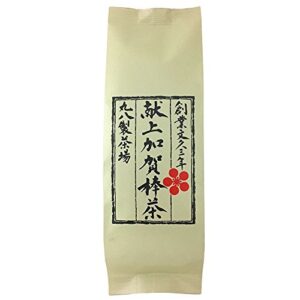
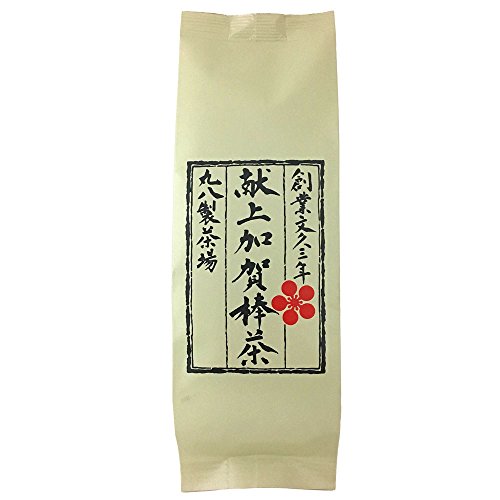
 Maruhachi Seichajo Kenjo Kaga Bocha (献上加賀棒茶, sealed bag/tin) — roasted twig tea, the low-caffeine end of the shelf
 Hoshino Seichaen Yame Matcha (星野製茶園 八女抹茶, sealed 30–40g tin) — if what you actually wanted was matcha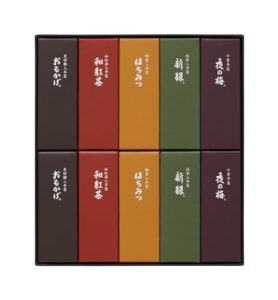
 Toraya Small Yokan (小形羊羹, 10-bar assorted box) — the classic sweet counterpart to a cup of sencha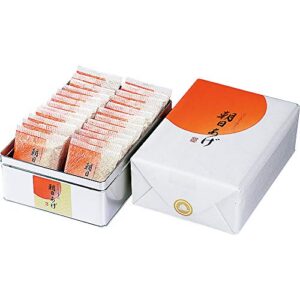
 Harimaya Honten Asahiage Okaki (朝日あげ, individually wrapped) — a savory pairing that ships as easily as the tea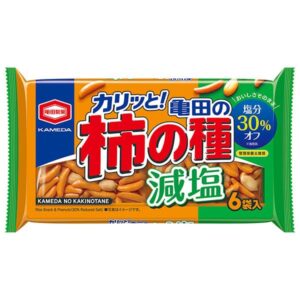
 Kameda Kaki no Tane (亀田の柿の種, 6-bag box) — Niigata’s rice-cracker staple, another shelf-stable box-filler
📦 Shipping & where to buy from outside Japan
Sealed Chiran-cha is about as easy as Japanese food exports get. It is dry, light, needs no refrigeration, and carries a printed best-by date — which means the usual obstacle to ordering Japanese food from abroad simply is not present here. The tea is sold through Amazon Japan’s Global Store, which ships to 65+ countries including Canada, the UK and Australia, with import fees estimated and collected at checkout for most destinations.
One caveat carries real weight, though: food items are not universally eligible for international shipping, and eligibility depends on your destination country’s import rules rather than on the seller. Confirm AmazonGlobal International Shipping eligibility for your own country at checkout before assuming the order will go through. Tea is generally intended in small personal quantities; commercial volumes are a different conversation with your customs authority.
Shipping cost for a single 100 g bag is modest by weight, but international shipping is rarely charged by weight alone; a lone bag can carry a shipping charge out of proportion to the item. Readers who intend to order tea at all are usually better served consolidating it with other shelf-stable items into one shipment. Proxy services such as Buyee or Tenso are the standard workaround for listings that will not ship directly, though they add their own fees and an extra handling step — and they do not override your country’s food-import rules.
Price snapshot across stores
Our snapshot returned no live price for this listing, so every price cell below points to the live source rather than to a figure we would have had to invent. Prices and stock fluctuate; the listing is authoritative at the moment you read it.
| Store | Item / Variant | Price | Notes |
|---|---|---|---|
| 🇺🇸 Amazon US (search) | Browse Japanese green tea & sencha | varies (USD) | Best if you are shopping from the US — Prime shipping, USD pricing, no international customs. Amazon US carries sencha, hojicha, and matcha from a range of Japanese producers, useful for comparing styles and price tiers. The Chiran-cha in this guide is sourced from Japan (next row). |
| 🇯🇵 Amazon JP Global Store | Chiran-cha deep-steamed sencha, sealed bag (approx. 100 g) — ASIN B08JCDM9G4 | Check live listing (JPY) | Ships internationally from Japan to 65+ countries — including Canada, the UK and Australia — with import fees estimated at checkout. This is the sourced listing for the item in this guide. Food eligibility varies by destination; confirm at checkout. |
| Maker direct | Birōen (お茶の美老園), Kagoshima City — reference maker | Unconfirmed — check maker site | Our snapshot did not include maker-direct pricing or an international shipping policy. Japanese tea houses commonly sell domestically only; treat overseas ordering as unconfirmed. |
| Proxy services (Buyee / Tenso) | Any Japanese listing that will not ship direct | Item price + service & forwarding fees | Useful for consolidating several Japanese purchases into one shipment. Adds fees and a handling step, and does not exempt food from your country’s import rules. |
JPY is the authoritative currency for the sourced listing. Where USD figures appear elsewhere on this site they are approximate estimates at a ¥150/USD baseline and depend on the current exchange rate.
What it does well
- 🌡️ Storage: room temperature — no refrigeration needed, before or after opening
- 🌤️ Keep away from: light, heat, moisture, and strong odors. Tea takes on smells from a shared cupboard readily
- 🔒 After opening: reseal the bag properly each time; an opened pack is on a shorter clock than the printed best-by suggests
- 📅 Shelf life: unopened, many months against the printed best-by date — that date, not this article, is authoritative
- 🫖 Brewing gear: use a fine-mesh strainer or a kyusu with a fine filter; deep-steamed particles pass through coarse baskets
Weaknesses and things to verify before buying
- No live price in our snapshot. We could not confirm a current figure for this listing, so this guide deliberately shows none. Check the linked listing before budgeting — and be aware that food pricing on cross-border listings moves more than most categories.
- The cloudy cup is not a defect, but some people want a clear one. Deep-steamed tea pours opaque and deep green by design. Readers who associate quality green tea with a pale, transparent infusion will find this visually wrong every single time.
- Your brewing equipment may not cope. The fine particles that make fukamushi mellow will slide straight through a coarse mesh basket or an open infuser, leaving sediment in the cup. A fine-mesh strainer is effectively a prerequisite, not an accessory.
- It is not matcha and not gyokuro. These names get used interchangeably in English-language listings, and they should not be. Buyers who wanted powdered tea for whisking, or the shade-grown sweetness of gyokuro, will be disappointed by leaf sencha regardless of its quality.
- Food shipping eligibility is destination-dependent. Shelf-stable does not mean universally importable. Some countries restrict tea and other plant products; confirm AmazonGlobal eligibility for your address at checkout rather than at the point of dispute.
- Verify the label, not the marketing. Our guidance is to buy only sealed sencha with the production area and producer stated on the pack. Loose, unbranded, or origin-vague “Kagoshima green tea” is a different purchase from Chiran-cha.
- Exact weight and harvest details are unconfirmed. Our sources describe an approximately 100 g sealed format and an unusually early harvest window, but not the exact pack weight or picking dates for this specific listing. Both are on the live listing.
Conclusion — which buyer type are you?
Other ways to approach this purchase
🏆 Editor’s Pick
❓ Frequently Asked Questions
Can Chiran-cha be shipped outside Japan?
Sealed Chiran-cha is shelf-stable and is sold through Amazon Japan’s Global Store, which ships to 65+ countries including Canada, the UK, and Australia, with import fees estimated at checkout for most destinations. It’s a food item, though, so eligibility depends on your destination country’s rules — confirm AmazonGlobal International Shipping eligibility for your own address at checkout. Tea is intended in small personal quantities.
What does “deep-steamed” (fukamushi) actually change?
The leaves are steamed longer than in standard sencha processing, which breaks them into finer particles. Those particles suspend in the water, so the tea pours a deep, cloudy green instead of a clear pale infusion, and the flavor reads rounded, mellow, and gently sweet with very little sharp edge or bitterness.
Is Chiran-cha the same thing as matcha or gyokuro?
No. Chiran-cha in this format is loose-leaf sencha, brewed by steeping. Matcha is stone-ground powder whisked into water, and gyokuro is shade-grown leaf tea. They’re distinct products, and English listings sometimes blur the terms — if you want powdered tea for whisking, deep-steamed sencha is not it.
How long does a sealed bag keep, and does it need refrigeration?
Unopened sencha keeps for many months at room temperature against the best-by date printed on the pack — no refrigeration needed. Store it away from light, heat, moisture, and strong odors, since tea picks up smells from a shared cupboard, and reseal the bag after each use. The printed date on your pack is the authoritative one.
What’s actually in it?
Green tea leaves, and nothing else. It’s a single-ingredient, plant-based product, which also makes it straightforward to declare accurately if your customs authority asks.
What should I check on the label before ordering?
Look for a stated production area and a named producer, a sealed foil bag or tin rather than loose packaging, and a legible best-by date. 知覧茶 is a registered regional collective trademark, so the name carries a claim about where the leaf was grown — origin-vague “Kagoshima green tea” is a different purchase.
Do I need special equipment to brew it?
A fine-mesh strainer or a kyusu with a fine filter is the practical requirement. The finer particles produced by deep steaming are exactly what makes the cup mellow, and they’ll pass straight through a coarse basket or open infuser and settle in your cup as sediment.
jpmono.com is a Japan-based curation site, with editorial centers in Toyama (Hokuriku region) and Nara (Kansai region), introducing Japanese household objects and regional foods to international readers. We focus on items with verifiable provenance and a clear international shipping path. We do not physically test every product — we read maker’s specs and source listings, and we say so when the data is thin. We take no payment from the makers we feature; income comes from affiliate links.
This article was drafted with AI assistance from source listings and editorial research notes, then reviewed by a human editor before publication. Facts our sources did not confirm are marked as unconfirmed rather than filled in.
Affiliate disclosure: jpmono.com may earn a commission on qualifying purchases made through links on this page, at no additional cost to you.