![Beppu Takezaiku Bamboo Fruit Basket: Where to Buy Oita’s Woven Madake Craft [2026]](https://jpmono.com/wp-content/uploads/2026/07/beppu-takezaiku-bamboo-fruit-basket-where-to-buy-2026-featured.jpg)
- What it is: A round, open-weave fruit basket (kago) hand-woven from split madake bamboo.
- Made in: Beppu, Oita Prefecture, Kyūshū — Beppu Takezaiku, a National Traditional Craft since 1979.
- Price band: Hand-woven bamboo sits well above machine-made rattan; check the live listing for the current figure.
- Best for: Buyers who want a daily-use fruit bowl that is a woven object rather than a molded one.
- Skip if: You want something dishwasher-safe, or you plan to keep wet produce in it.
- Shipping: ships internationally from Amazon Japan — jump to our pick ↓
ℹ️ Live pricing and several dimensional specs were not present in our source snapshot for this item — the linked listing is authoritative, and unconfirmed attributes are marked as such below.
Oita Prefecture grows more madake bamboo than anywhere else in Japan, and the reason a fruit basket from Beppu costs what it does is that every strip in it was split, planed, and bent by hand before it was ever woven. Madake does not arrive as a usable material. It arrives as a pole, and the work of turning a pole into a ribbon thin enough to curve without cracking is most of the craft.
Beppu Takezaiku (別府竹細工, “Beppu bamboo work”) is unusual among Japanese traditional crafts in that it is not defined by a single object. It is defined by a vocabulary of weaves — ajiro, mutsume, yotsume, matsuba, and rinko — applied to planed madake strips. A basket, a tray, and a flower vessel from the same workshop can share almost nothing in silhouette and still be the same craft. That makes the weave, not the shape, the thing to look at when you are deciding whether a listing is the real article.
This guide is for readers outside Japan who want a woven bamboo fruit basket that has a documented regional origin rather than an unnamed one. We cover where Beppu Takezaiku comes from and why it became commercial where it did, what to check before buying, how the international shipping path works from Amazon Japan, and how this basket compares with other bamboo and Kyūshū crafts we have written about.
🔄 Updated: July 20, 2026
⏱️ Read time: about 11 minutes

- Who this is for — and who should skip it
- Product overview (from published specs)
- Which finish should you choose?
- 📍 Where this comes from — place, era, and the craft tradition
- 📦 Shipping & where to buy from outside Japan
- Price snapshot across stores
- What it does well
- Weaknesses and things to verify before buying
- Conclusion — which buyer type are you?
- Other ways to approach this purchase
- 🏆 Editor’s Pick
- ❓ Frequently Asked Questions
Who this is for — and who should skip it
- Want a fruit bowl that is visibly hand-woven, with the weave pattern as the design
- Prefer an object with a named prefecture and a designated craft tradition behind it
- Keep dry fruit — apples, citrus, onions, garlic — on a counter and want airflow underneath
- Are buying a gift where the provenance story matters as much as the object
- Accept that hand-woven pieces vary slightly from one another
- Need something you can put in a dishwasher or leave soaking
- Want a sealed vessel — an open weave is not a container for small or wet items
- Are shopping strictly on price against machine-woven rattan imports
- Need an exact diameter to fit a specific shelf and cannot verify it on the listing first
- Live somewhere with sustained high humidity and no ventilation, where any untreated bamboo will struggle
Product overview (from published specs)
The table below reflects what our snapshot could confirm. Where a value was not present in the source data, it is marked rather than estimated — dimensional specs for hand-woven basketry vary between production runs, so a guessed figure would be worse than none.
| Attribute | Value | Source |
|---|---|---|
| Craft | Beppu Takezaiku (別府竹細工) | Craft designation record |
| Material | Madake bamboo, split and planed into strips | Craft definition |
| Form | Round open-weave fruit basket (kago) | Listing |
| Origin | Beppu, Oita Prefecture, Kyūshū | Craft designation record |
| Designation | National Traditional Craft, designated 1979 | Craft designation record |
| Construction | Hand-woven | Listing |
| Diameter / height | Unconfirmed — check the live listing | — |
| Weight | Unconfirmed — check the live listing | — |
| Weave pattern | Open weave; specific named weave unconfirmed on the listing | — |
| Finish / coating | Unconfirmed — check manufacturer or listing | — |
Spec sheets for basketry are thin by nature, and that is worth understanding rather than resenting. A weaver working to a traditional pattern is matching a form, not a tolerance.
📖 Glossary — terms used in this article
- Takezaiku (竹細工) — “bamboo work”; the general term for worked-bamboo craft.
- Madake (真竹) — a bamboo species prized for basketry because it splits cleanly along the grain into long, even strips. Oita is Japan’s largest producer.
- Kago (籠) — a woven basket. Historically a workaday kitchen and farm object before it was a decorative one.
- Ajiro (網代) — a plaited, twill-like weave in which strips pass over and under in staggered sequence, producing a dense diagonal surface.
- Mutsume (六つ目) — “six-eye” weave; strips cross in three directions to form open hexagonal holes.
- Yotsume (四つ目) — “four-eye” weave; a simple open grid of square holes.
- Matsuba (松葉) — “pine needle” weave, named for the paired-needle pattern the strips form.
- Rinko (輪弧) — a weave built from concentric arcs radiating from a center point.
- Tōji (湯治) — a hot-spring cure stay, historically weeks rather than days. The long-stay visitor is the economic reason Beppu’s basket trade became commercial.
- Onsen (温泉) — a hot spring, and by extension the bathing town built around one.
Which finish should you choose?
This piece is listed in 7 colours. The photos below are the actual colour options on the listing right now — pick the one you want and confirm it on the product page before ordering, since hand-finished wares vary slightly piece to piece.
![Beppu Takezaiku Bamboo Fruit Basket: Where to Buy Oita's Woven Madake Craft [2026] — ビスケット finish](https://m.media-amazon.com/images/I/41y9nN7-FgL._SL500_.jpg)
![Beppu Takezaiku Bamboo Fruit Basket: Where to Buy Oita's Woven Madake Craft [2026] — ビスケット finish](https://m.media-amazon.com/images/I/41fzFLETJ3L._SL500_.jpg)
![Beppu Takezaiku Bamboo Fruit Basket: Where to Buy Oita's Woven Madake Craft [2026] — キャラメル finish](https://m.media-amazon.com/images/I/41pQai8M-bL._SL500_.jpg)
![Beppu Takezaiku Bamboo Fruit Basket: Where to Buy Oita's Woven Madake Craft [2026] — キャラメル finish](https://m.media-amazon.com/images/I/419pHQ14XjL._SL500_.jpg)
![Beppu Takezaiku Bamboo Fruit Basket: Where to Buy Oita's Woven Madake Craft [2026] — ベージュ finish](https://m.media-amazon.com/images/I/314rtv3TD7L._SL500_.jpg)
![Beppu Takezaiku Bamboo Fruit Basket: Where to Buy Oita's Woven Madake Craft [2026] — ビスケット finish](https://m.media-amazon.com/images/I/51+huIORUPL._SL500_.jpg)
 🔪 Oita Bungo petty knife
 ☕ Onta-yaki mug (Oita)
 🎍 Suruga bamboo vase
🪟 Iyo bamboo sudare
 🍵 Takayama bamboo chasen
🍚 Miyajima shamoji
 🎎 Hakata ningyo (Kyushu)
 🪓 Miyakonojo nata hatchet
📍 Where this comes from — place, era, and the craft tradition

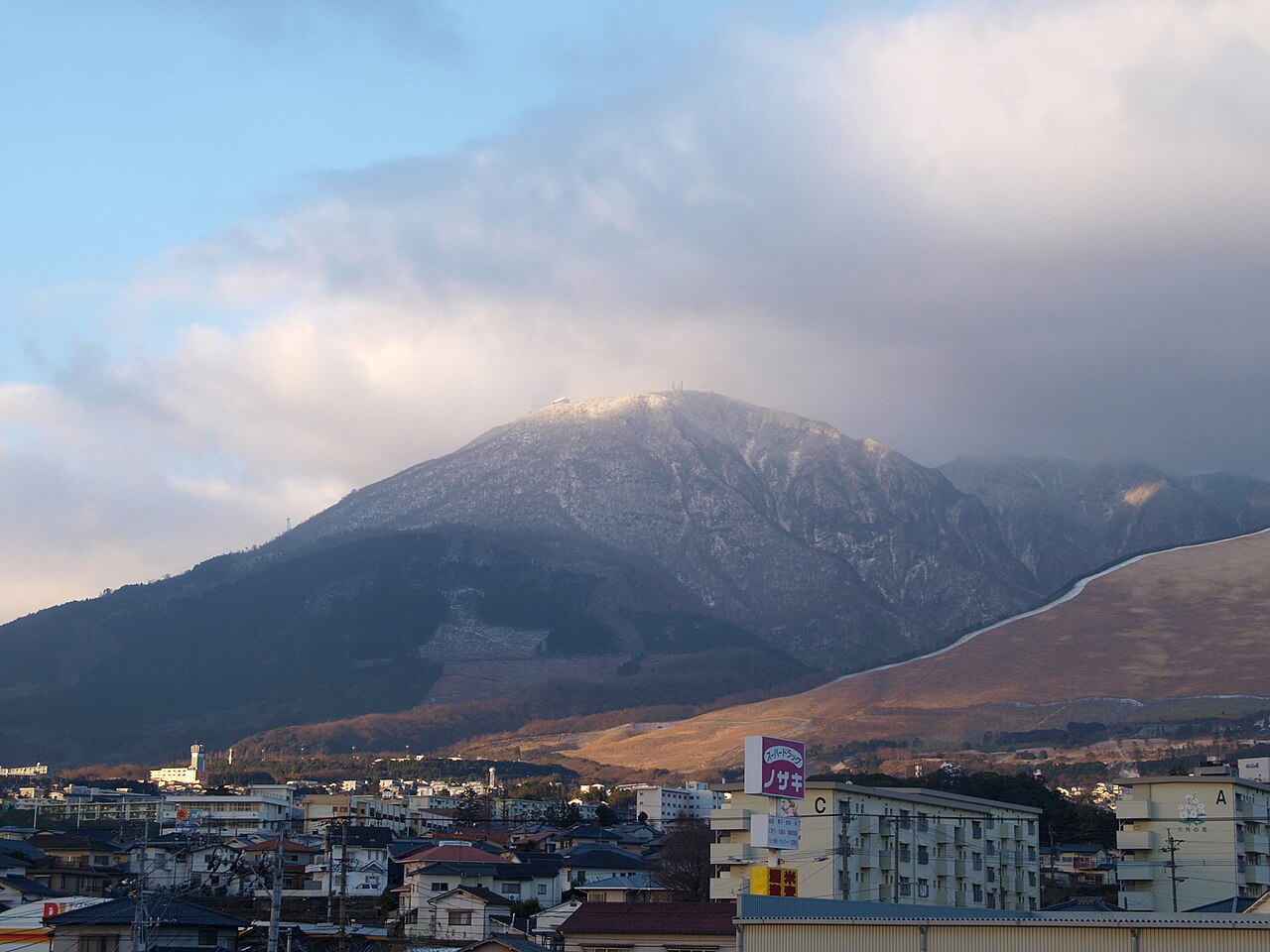
Oita sits on the eastern side of Kyūshū, Japan’s southwestern main island, facing the water that separates it from Honshū. It is warm and wet, and that matters more than it sounds: madake grows straight and tall on humid slopes, and Oita grows more of it than any other prefecture in Japan. The material did not have to be imported into the craft. The craft grew where the material already was.
The historical anchor
The province’s association with bamboo work is recorded remarkably early. The Nihon Shoki, Japan’s second-oldest chronicle, includes an account of a traveling emperor’s party weaving baskets locally — which places the region’s bamboo work in the written record roughly thirteen centuries ago. That is a chronicle entry, not a factory receipt, and it should be read as tradition rather than as documented industrial continuity. But it establishes that when later Beppu weavers described their work as old, they were not inventing the claim.
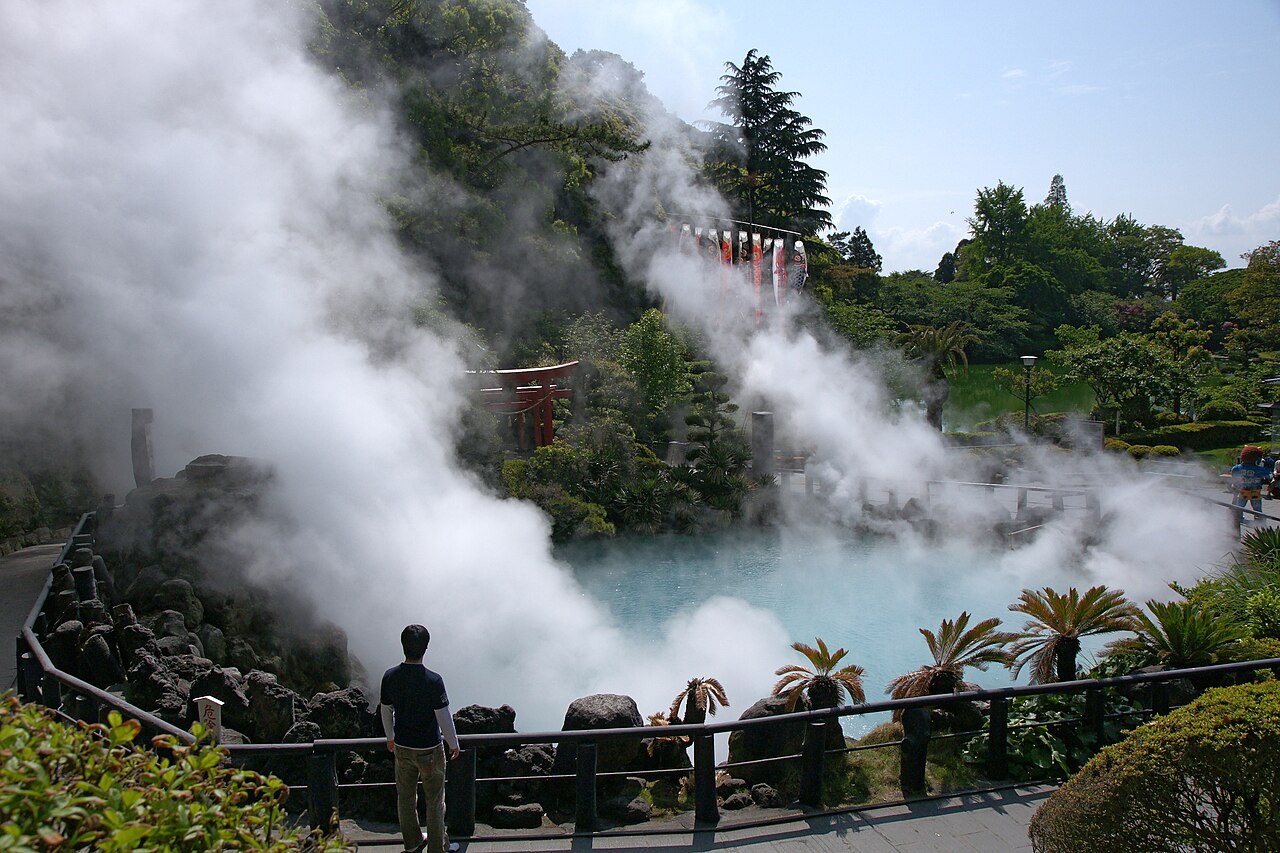
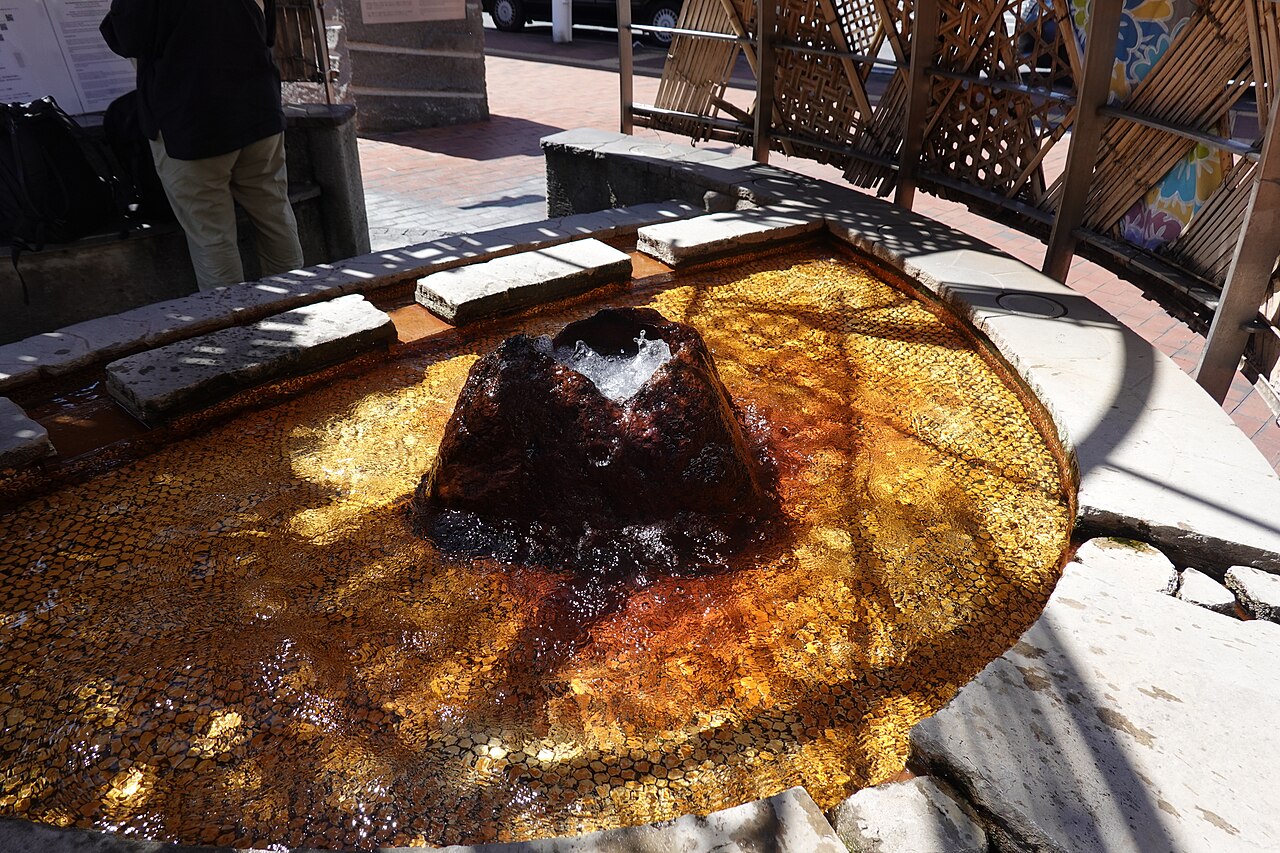
The craft took its modern commercial form much later, in the Edo and Meiji periods, and it did so for a specific and rather unromantic reason: hot water. Beppu is one of Japan’s great onsen towns, and the visitors who came for tōji — hot-spring cure stays measured in weeks, not nights — needed things. They bought woven rice baskets and kitchen kago as practical souvenirs, useful on the journey home and cheap enough to justify. Weaving that had been domestic work became a trade with customers.
“Beppu’s baskets did not become a craft industry because someone decided to preserve them. They became one because sick people stayed for a month and needed something to carry rice in.”
Through the Meiji and Taishō periods the workshops clustered along the bathing districts, close to the customers. That geography is the whole explanation for why Beppu, rather than any of the other bamboo-growing areas of Oita, became the name on the craft.
- 720 — The Nihon Shoki is compiled. It records a traveling emperor’s party weaving baskets in the region — the earliest written association of this province with bamboo work.
- Edo period — Long-stay tōji visitors to Beppu Onsen buy woven rice baskets and kitchen kago as practical souvenirs.
- Meiji period — Workshops cluster around the bathing districts to serve that demand; weaving shifts from domestic work to commercial trade.
- 1902 — A bamboo craft training program is established in Beppu, formalizing instruction that had been passed workshop to workshop.
- Later 20th century — That program becomes the prefectural bamboo craft training center, which still supplies most professional weavers in the tradition.
- 1979 — Beppu Takezaiku is designated a National Traditional Craft.
- 2026 — Oita remains Japan’s largest producer of madake bamboo, and the weaves are still taught as a defined set.
What “still being made here” actually means
The 1902 training program is the most important line in that timeline, and it is easy to skim past. Most Japanese craft traditions transmit through the workshop: a weaver takes an apprentice, the apprentice takes over, and when the line breaks the technique goes with it. Beppu built an institution instead. When the program became the prefectural bamboo craft training center, it created a path into the craft that did not require being born next to a weaver.
That is why Beppu Takezaiku still has professional weavers when comparable traditions elsewhere are down to a handful of aging hands.
Because the craft is defined by these weaves rather than by a product catalog, a fruit basket, a flower vessel, and a serving tray from Beppu are the same tradition expressed at different scales. When you evaluate a listing, the question is not “is this the official shape” — there is no official shape. It is whether the strips are evenly planed and the weave holds its geometry at the rim, where hand work is hardest to fake.
📦 Shipping & where to buy from outside Japan
- 📦 Amazon Japan Global Store ships to 65+ countries, including Canada, the UK, and Australia.
- 💵 Typical shipping cost: roughly $15–$40 to the US, Canada, the UK, the EU, and Australia, depending on parcel size. A basket is light but bulky, so volumetric weight tends to drive the figure.
- 🧾 Customs: Amazon estimates and collects import fees at checkout for most destinations, so the price you pay is usually the final one.
- 🔁 Alternative paths: proxy services such as Buyee or Tenso can forward domestic-only Japanese listings if the Global Store does not carry the exact piece.
- 📐 Before ordering: confirm the diameter on the live listing — our snapshot did not include dimensions, and basket sizes vary widely within the same craft.
Bamboo basketry has no voltage, battery, or certification concerns, which removes the usual friction of importing Japanese household goods. Some countries do apply plant-material import rules, but finished, dried, and worked bamboo articles are generally treated as manufactured goods rather than as plant matter. If you are importing to Australia or New Zealand, whose biosecurity regimes are the strictest among our readership’s destinations, it is worth a glance at the current rules before ordering.
Price snapshot across stores
Our snapshot returned no live price for this listing, so the Price column below is honest about that rather than filled with an estimate. Prices and stock fluctuate; the linked listing is authoritative.
| Store | Item / variant | Price | Notes |
|---|---|---|---|
| 🇺🇸 Amazon.com (US) | Browse Japanese bamboo baskets & woven kitchen storage | varies (USD) | Best if you are shopping from the US — Prime shipping, USD pricing, no international customs. Amazon US carries woven bamboo and rattan baskets from a range of makers, useful for comparing weave density and size tiers. The Beppu-woven piece in this guide is sourced from Japan (next row). |
| 🇯🇵 Amazon JP Global Store | Beppu Takezaiku hand-woven madake fruit basket (B09XXKS6VS) | Not in our snapshot — see live listing | Ships internationally from Japan to 65+ countries — including Canada, the UK, and Australia — with import fees estimated at checkout. This is where the specific item covered here is sourced. |
| Maker direct | Workshop pieces, made to order | Unconfirmed | Individual Beppu workshops sell directly, but most sites are Japanese-language and domestic-shipping only. Best route if you want a specific named weave. |
| Proxy services (Buyee / Tenso) | Domestic-only Japanese listings | Item price + service fee + forwarding | Adds cost and a step, but reaches workshop and gallery stock that never appears on the Global Store. Consolidation helps if you are ordering several pieces. |
Any USD figures elsewhere in this article are approximate, based on a ¥150/USD baseline as of mid-2026. Prices in USD depend on the current exchange rate; the JPY price on the listing is the authoritative one.
What it does well
- 🍽️ Dishwasher: no — heat and prolonged soaking will loosen a woven structure. Hand care only.
- ♨️ Microwave: no.
- 🧴 Daily care: wipe with a dry or barely damp cloth and let it air out; keep it out of standing water and away from a sink’s splash zone. Untreated bamboo darkens with light and handling over years.
- 🔧 Repairs: individual strips can sometimes be re-tucked or replaced by a weaver, which is one practical reason the open weaves are the forgiving ones. Confirm any service with the seller — our snapshot listed no maker repair program.
Weaknesses and things to verify before buying
- No confirmed dimensions in our data. Diameter and height were not present in the snapshot. “Fruit basket” spans a very wide size range in this craft — verify on the live listing before assuming it fits a particular counter or shelf.
- No confirmed price. We could not retrieve a live figure, so this guide gives you a qualitative band only. Do not treat any number you see elsewhere in this article as this item’s price, because there isn’t one.
- The specific weave is not stated. Beppu Takezaiku covers five standard weaves with quite different appearances. If you want mutsume specifically, confirm it from the listing photos rather than the title.
- Open weave is not a container. Small items fall through. Berries, cherry tomatoes, and anything that sheds will not stay put without a liner.
- Moisture is the enemy. Wet produce left sitting in an untreated bamboo basket will mark it and, over time, invite mold. This is a dry-goods object.
- Hand-woven means variable. The piece you receive will not be pixel-identical to the listing photo. That is inherent to the craft, but it is a genuine mismatch for buyers who want catalog consistency.
- Finish is unconfirmed. Some bamboo ware is left raw, some is oiled or lacquered, and the two age very differently. Our snapshot did not say which this is.
- Shipping cost is driven by volume. A basket weighs almost nothing and takes up a lot of box, so international shipping can be a meaningful fraction of the total. Factor it in before comparing against a domestic-market alternative.
Conclusion — which buyer type are you?
Other ways to approach this purchase
🏆 Editor’s Pick
❓ Frequently Asked Questions
Does Amazon Japan ship this basket outside Japan?
Yes. The Amazon Japan Global Store ships to more than 65 countries, including Canada, the UK, and Australia, and it estimates import fees at checkout for most destinations. Bamboo basketry has no voltage or certification restrictions, so it is one of the simpler categories to import.
What makes Beppu Takezaiku different from other Japanese bamboo craft?
It is defined by a set of standard weaves — ajiro, mutsume, yotsume, matsuba, and rinko — applied to split and planed madake strips, rather than by any single product shape. Oita is Japan’s largest madake-producing prefecture, and the craft was designated a National Traditional Craft in 1979.
How do I take care of a bamboo basket?
Keep it dry. Wipe it with a dry or barely damp cloth, let it air out, and don’t put it in a dishwasher or leave it soaking. Store dry produce in it rather than anything wet, and keep it out of a sink’s splash zone. Untreated bamboo darkens gradually with light and handling.
Why did basket weaving become a commercial craft in Beppu specifically?
Hot springs. Beppu drew long-stay tōji visitors who came for cure stays lasting weeks, and they bought woven rice baskets and kitchen kago as practical souvenirs. Workshops clustered around the bathing districts through the Edo and Meiji periods to serve that demand, which is why Beppu rather than another bamboo-growing part of Oita became the name on the craft.
Is this basket a good gift?
It works well as one for a recipient who cooks or values handmade objects, because it has a documented regional origin and a use. It is a poor gift for someone who wants low-maintenance homeware, since it cannot be machine-washed and needs to stay dry.
How large is this basket?
Our source snapshot did not include confirmed dimensions, so we can’t state a figure without guessing. Sizes vary widely within this craft — check the diameter and height on the live listing before ordering if it needs to fit a specific space.
Can a damaged bamboo basket be repaired?
Sometimes. Individual strips can be re-tucked or replaced by a weaver, and the open weaves are more forgiving than dense plaited ones. Our snapshot listed no maker repair program for this item, so confirm availability with the seller rather than assuming it.
jpmono.com is curated by a Japan-based editorial team (working out of Toyama in the Hokuriku region and Nara in Kansai) and is independent. We do not take payment from the makers we feature; income comes from affiliate links. We do not physically test every product — we read maker specs and source listings. Read more about our editorial standards.
This article was drafted with AI assistance and reviewed by a human editor before publication. Factual claims are drawn from the source listing data and craft-designation records available at the time of writing.
Affiliate disclosure: jpmono.com may earn a commission on qualifying purchases made through links on this page, at no additional cost to you.