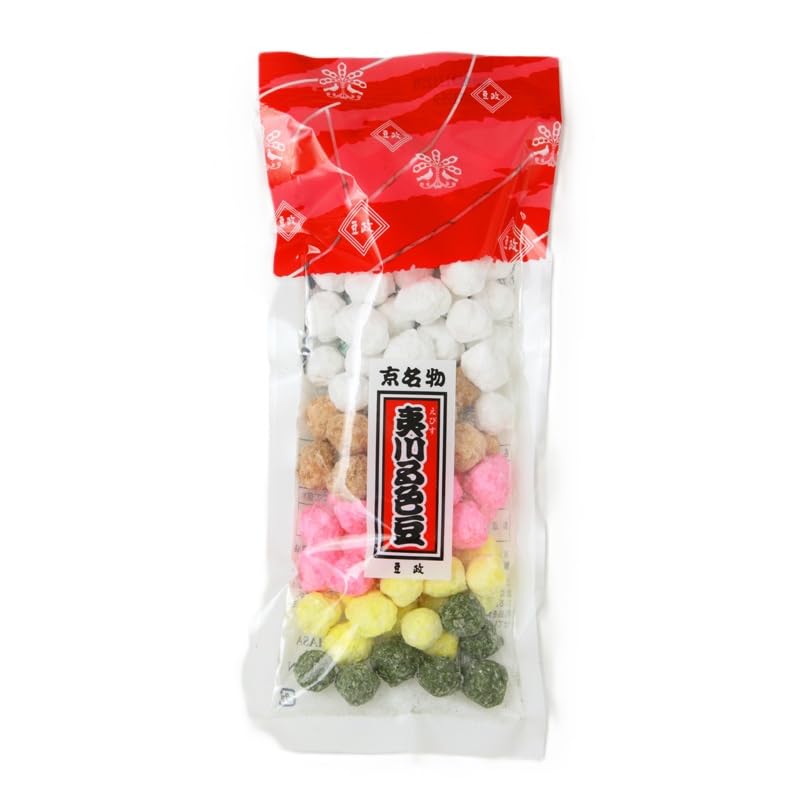
- What it is: Roasted peas coated in sugar in five colours — a boxed Kyoto wagashi known as Ebisugawa Goshiki Mame.
- Made in: Kyoto, Kyoto Prefecture — a long-established Kyoto confectioner.
- Price band: modest for a boxed Kyoto sweet — ¥1,553 (about $10 USD) for the 125 g box on the listing we checked.
- Best for: A tea-table sweet, or a light and distinctly Kyoto souvenir that travels in a paper box.
- Skip if: You want a soft, chewy sweet, or you need a pantry item that keeps for many months.
- Shipping: sold through Amazon Japan, which ships internationally — jump to our pick ↓
In a small paper box from Kyoto, roasted peas are dressed in five colours of sugar, and the brown ones carry the scent of Japanese cinnamon. The sweet is called Ebisugawa Goshiki Mame (夷川五色豆), literally “five-colour beans,” and it belongs to the quiet end of the wagashi shelf: no bean paste, no moulded shape, just a single pea and the sugar built around it.
Mame-masa (豆政) is the Kyoto confectioner behind it, and this is one of the sweets the company is known for. Its appeal outside Japan is easy to state. A five-colour box reads at a glance, it keeps without refrigeration for a defined period, and it pairs with the kind of tea most international readers already have in the cupboard. It is also lighter and less perishable than the fresh wagashi that dominate Kyoto souvenir counters, which makes it a realistic thing to carry home.
What follows is a buying guide rather than a tasting note. It sets out what the published specifications say, how the 125 g listing differs from the version the maker describes, how long the box actually keeps, what to confirm before ordering, and which of the six nearby Japanese sweets on this site would suit a different kind of buyer. Prices are given in yen first, with an approximate dollar figure, because the yen price is the one that governs the actual purchase.
🔄 Updated
⏱️ 10 min read

- Who this is for — and who should skip it
- Product overview (from published specs)
- 📍 Where this comes from — place, era, and the craft tradition
- 📦 Shipping & where to buy from outside Japan
- 📌 How does it compare?
- Price snapshot across stores
- What it does well
- Weaknesses and things to verify before buying
- Conclusion — which buyer type are you?
- Other ways to approach this purchase
- 🏆 Editor’s Pick
- ❓ Frequently Asked Questions
Who this is for — and who should skip it
- Want a Kyoto sweet that is visually distinct and easy to hand to a guest.
- Drink green tea, roasted tea or black tea and want something small to serve beside it.
- Are putting together a light souvenir that does not need refrigeration in transit.
- Prefer a crisp, sugary texture to soft mochi or bean paste.
- Buy in small quantities and will finish a 125 g box within a few weeks.
- Avoid hard, sugar-coated sweets or dislike the crunch of a roasted pea.
- Need a gift that will sit in a cupboard for half a year.
- Are buying for someone with a cinnamon aversion — the brown peas are the nikki ones.
- Want a large box for a party; the listing we checked is a single 125 g format.
- Need a guaranteed maker-direct purchase with a named artisan behind it.
Product overview (from published specs)
ℹ️ Specs beyond the listing title, price and availability are limited in the public record — the linked listing is authoritative; attributes we could not confirm are marked below.
The published record for this sweet is short, and it is worth separating what is stated from what is merely implied by a product photo. The maker describes a confection of roasted peas with a five-colour sugar coating, and names Japanese cinnamon for the brown colour. The live listing we checked supplies the pack size, price and seller, but not a full ingredient list or a photograph of the back of the box.
| Listing title | 夷川五色豆 125g 豆政 銘菓 お土産 (Ebisugawa Goshiki Mame, 125 g, Mame-masa, noted confection, souvenir) |
|---|---|
| Maker | Mame-masa (豆政), Kyoto |
| Type | Wagashi — roasted peas coated in sugar |
| Colours and flavour | Five colours; the brown coating is flavoured with nikki (ニッキ), Japanese cinnamon |
| Net weight | 125 g (listing); the maker also lists a 200 g paper box |
| Packaging | Paper box — confirm the exact box on the listing you buy from |
| Best-by | 60 days from manufacture for paper boxes, wooden measures and wooden boxes; the remaining time on delivery is shorter |
| Ingredients | Unconfirmed — check the package or listing |
| Seller / condition | レイブリックス / New |
| Availability | In stock (在庫あり) as of November 24, 2026, 09:05 JST |
| Price | ¥1,553 (about $10 USD at ¥150/USD) — as of 2026-11-24; verify on the listing |
The listing title names the sweet, the maker, the 125 g weight and the words 銘菓 (meika, a noted confection) and お土産 (omiyage, a souvenir). It does not state an ingredient list, an allergen table or a piece count. Read the package when it arrives if the number of pieces matters to you.
The 125 g figure is also smaller than the 200 g paper box the maker describes, so the two may be different pack sizes rather than the same item described twice.
📖 Glossary — the words on the label
- Wagashi (和菓子)
- Japanese confectionery, traditionally served with tea. It covers everything from fresh, soft sweets to dry, sugar-coated ones like this.
- Goshiki (五色)
- “Five colours.” Here it is a description of the coating, not a fixed list of five named hues.
- Mame (豆)
- “Bean” or “pea.” In this sweet the base is a roasted pea (えんどう豆, endō-mame) rather than a rice or wheat dough.
- Nikki (ニッキ)
- The Japanese cinnamon used to flavour the brown-coated peas. It is a familiar note in Kansai sweets, warmer and slightly sharper than the cinnamon in a Western bakery.
- Meika (銘菓)
- A “noted confection” — a sweet a region or maker is known for. The word appears in the listing title as a signal of standing, not a grade or certification.
📍 Where this comes from — place, era, and the craft tradition
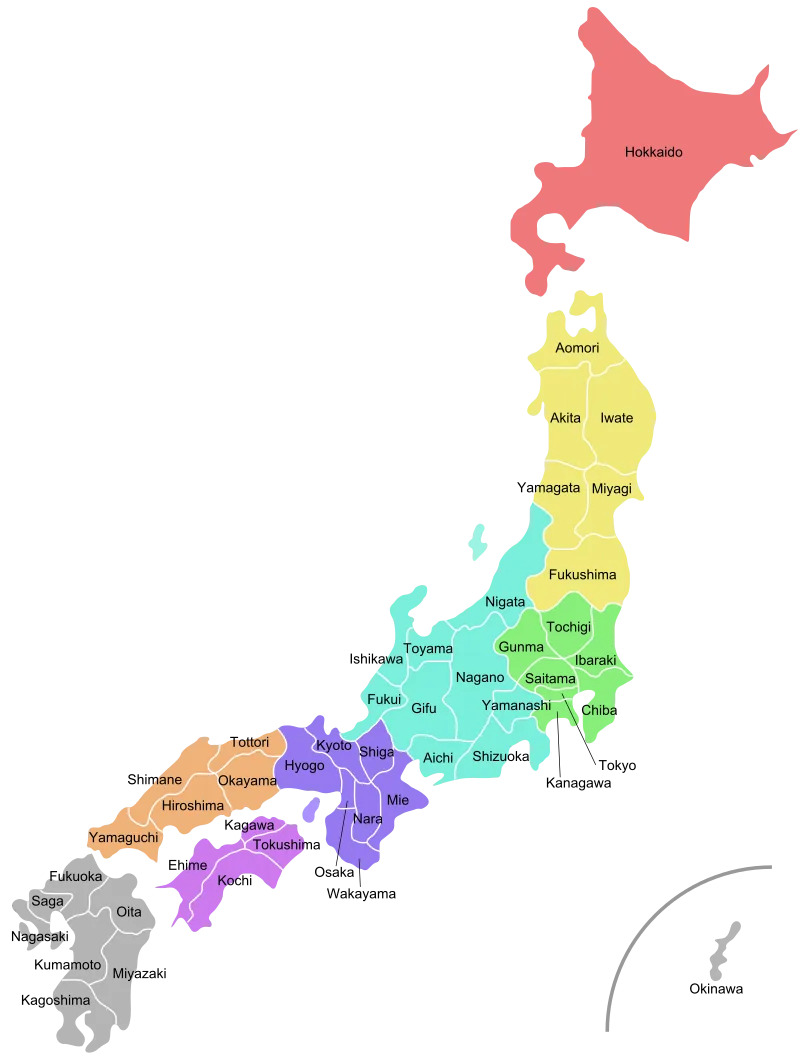
Kyoto sits in a basin, not on the coast. Mountains close in on three sides — the Higashiyama range to the east, the Kitayama hills to the north, the Nishiyama range to the west — and the Kamo River runs south through the city before joining the Katsura and Uji rivers. The basin is humid in summer and cold in winter, and the surrounding hills have long supplied the city with water, timber and farmland. For a confectioner, the practical geography is simple: Kyoto has always been a place where a great many people live close together, drink tea, and give gifts.
That gift culture is the reason a sweet like this exists at all. Kyoto was the imperial capital from 794 until 1869, and for those ten and a half centuries the city accumulated the institutions — temples, shrines, tea schools, and a court with an elaborate calendar of seasonal observances — that supported a large, specialised confectionery trade. Sweets were made for the tea room, for seasonal festivals, and for the formal exchange of gifts. A dry, sugar-coated sweet had an advantage in that world: it travelled, it kept, and it could be presented in a box.
“The colour is not painted on. It is the sugar coating itself, built up around a single roasted pea.”
Mame-masa was founded in Kyoto in 1884, in the middle of the Meiji era (1868–1912), when the capital had only recently moved to Tokyo and Kyoto was remaking its economy around tourism, manufacturing and its own reputation as the old cultural centre. According to the maker’s published history, the founder developed the predecessor of Ebisugawa Goshiki Mame in 1887. That places the sweet in the generation when Kyoto confectioners were turning courtly and temple sweets into boxed products that ordinary travellers could buy and carry home.
What continuity means here is narrower than the word “heritage” usually suggests. A single company has kept one sweet in production across more than a century of changes in packaging, retail and transport. The evidence for that continuity is the maker’s own published account and the fact that the product is still sold today; we have not independently examined workshop records. What can be said with confidence is that the format has survived — peas, sugar, five colours, a paper box — while the distribution has moved from Kyoto counters to international marketplaces.
-
794 — Kyoto becomes the imperial capital, beginning a long accumulation of court and temple culture. -
1869 — The capital moves to Tokyo; Kyoto’s confectioners increasingly look to travellers and gifts. -
1884 — Mame-masa is founded in Kyoto, during the Meiji era. -
1887 — The founder develops the predecessor of Ebisugawa Goshiki Mame, per the maker’s account. -
2026 — The sweet is still sold in a 125 g box through Amazon Japan, alongside the maker’s other formats.
On the Kyoto table, a sweet like this belongs to the everyday end of the tea service rather than the ceremonial one. It is the kind of thing set out in a small dish when someone visits, or packed as a modest souvenir after a trip. The brown, cinnamon-flavoured pieces give the box a second flavour without changing the texture, which is useful when several people are eating from the same dish and not all of them want the same thing.
📦 Shipping & where to buy from outside Japan
The listing we checked is on Amazon Japan, and Amazon Japan’s Global Store programme ships internationally to a wide set of destinations — Amazon describes it as 65+ countries, including Canada, the UK and Australia. Import fees are usually estimated and collected at checkout for the major destinations, which removes most of the surprise at the door, though the exact treatment depends on the destination and the order value.
If the listing will not ship to your address, the fallback routes are a proxy service such as Buyee or Tenso, which receives a Japanese parcel and forwards it, or a purchase in person in Kyoto. Both add cost: proxies charge a handling fee plus international postage, and a personal purchase means carrying the box. For a single 125 g item, the shipping can easily exceed the price of the sweet, so it makes sense to combine it with other items in one order.
📌 How does it compare?
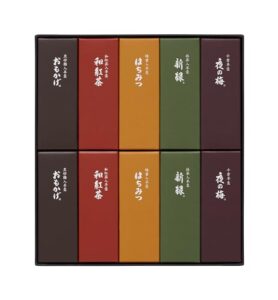
 Toraya Small Yokan (小形羊羹, 10-bar assorted box) — Kyoto
Ogura Sanso Yamashunju (をぐら山春秋, assortment box) — Kyoto ArashiyamaRice-cracker assortment with a stronger savoury note.
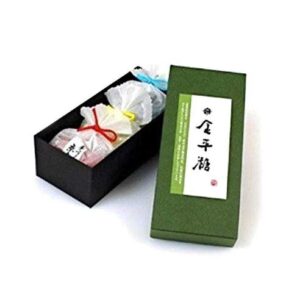
 Ryokujuan Shimizu Konpeito (緑寿庵清水 金平糖, sealed small gift jar)
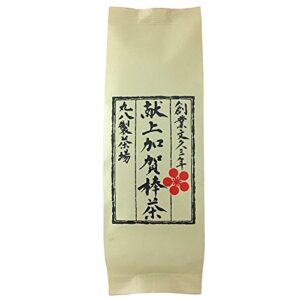
 Maruhachi Seichajo Kenjo Kaga Bocha (献上加賀棒茶, sealed bag or tin)
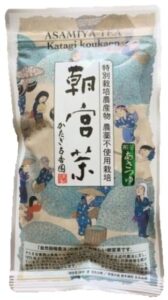
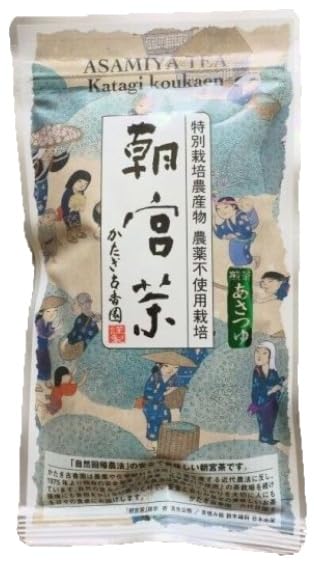
 Katagi Kokoen Asamiya-cha Sencha (朝宮茶 煎茶, sealed 100 g loose-leaf)
Price snapshot across stores
One sweet, three buying routes, and a fourth that only makes sense if you are already in Japan. The yen price is the one that governs the purchase; dollar figures are estimates at roughly ¥150 to the dollar and move with the exchange rate.
| Store | Item / variant | Price | Notes |
|---|---|---|---|
| 🇺🇸 Amazon.com (US) — search | Browse Japanese wagashi and boxed sweets | varies (USD) | Best if you are shopping from the US — USD pricing, Prime delivery and no customs paperwork. Amazon.com carries Japanese sweets from other makers; Mame-masa’s boxed sweet is sourced from Japan (next row). |
| 🇯🇵 Amazon JP Global Store | 夷川五色豆 125g 豆政 銘菓 お土産 | ¥1,553 (≈ $10 USD) |
In stock, new, seller レイブリックス — as of 2026-11-24 09:05 JST; verify on the listing. Ships internationally from Japan to 65+ countries — including Canada, the UK and Australia — with import fees estimated at checkout. |
| Maker direct | 200 g paper box (the maker’s published version) | Unconfirmed — check the maker | The maker lists a 200 g paper-box version, but no current price was confirmed for it. A visit to Kyoto is the practical route for this one. |
| Proxy services (Buyee / Tenso) | Japanese shop listings, forwarded | Item price + handling + postage | Useful when a Japanese retailer will not ship abroad. Fees and consolidation rules decide whether it is worth it for one small box. |
Prices and availability were checked on November 24, 2026, and change with stock and exchange rates. USD figures are approximate and depend on the current exchange rate; the yen price is authoritative for the listed item.
What it does well
A shallow dish of five colours is instantly legible as a Kyoto sweet. It needs no explanation and no plating skill, which is more than can be said for many wagashi.
The brown pieces are the nikki ones. Cinnamon against plain sugar gives the box a small internal contrast, so a mixed dish does not taste like one note repeated.
A sugar-coated pea is a tea sweet by design — small, dry, and meant to be eaten one at a time. It suits sencha and roasted teas as readily as a Western cup.
The maker’s packaging is a paper box, and the sweet itself is dry. That combination is why a Kyoto confectioner’s product can sit in an international parcel without cold storage.
- 📅 Best-by: 60 days from manufacture for paper boxes, wooden measures and wooden boxes; the remaining time on delivery is shorter.
- 📦 On arrival: check the printed date and that the box seal is intact before putting it away.
- 🌡️ Storage: follow the storage instructions printed on the package — the listing does not spell them out.
- 🎁 Before gifting: buy close to the date you will hand it over, since transit time is subtracted from the 60 days.
Weaknesses and things to verify before buying
- The seller is not the maker. The listing we checked names レイブリックス as the seller, a third-party marketplace seller rather than Mame-masa’s own storefront. Confirm that the box you receive is the one described.
- Pack size differs between sources. The listing is 125 g; the maker also describes a 200 g paper box. Check the net weight and the contents on the listing before ordering.
- The clock starts at manufacture. A 60-day best-by sounds generous until transit is subtracted. If the box is a gift for a date two months out, it may not last.
- Texture is not for everyone. A roasted pea under a sugar shell is hard and crunchy. Anyone expecting soft mochi or a chewy sweet will be disappointed.
- The sugar coating is the product. There is no low-sugar version in the published line, and the sweetness is the point. If that is not what the recipient wants, choose a different sweet.
- Food import rules vary. Some destinations restrict or inspect confectionery shipments. Check your country’s rules before ordering, and note that Amazon estimates import fees at checkout for most destinations.
- The listing title carries no ingredient or allergen table. If a nut, wheat or soy allergy is involved, read the package or ask the seller before ordering.
Conclusion — which buyer type are you?
You want a box that looks like Kyoto on a table. Buy the paper box, serve it in a shallow dish, and keep the brown pieces separate if you want the cinnamon to read.
You want something to put beside a pot of tea for a month of ordinary afternoons. The 125 g box is the right size; add a second box if you expect guests.
You want one modest box, not a hamper. Watch the listing for a dip, and combine it with tea or another sweet so the shipping is shared across the order.
You need a long shelf life, a soft texture, or a guaranteed maker-direct purchase. None of those is what this box offers, and the alternatives below will fit better.
Other ways to approach this purchase
Marketplace prices on boxed sweets move with stock. If the price sits above ¥1,553, add it to a wish list and check again in a few weeks.
If you are travelling, buy at the maker’s counter or a Kyoto department-store food hall. You can check the date in person and skip international shipping entirely.
Shipping one small box abroad rarely makes sense on its own. Add a sealed tea or a second sweet to the same order and the fixed cost is spread across both.
If the crunch, the sugar or the shelf life is wrong for you, konpeito or a yokan box from the comparison section solves the same gifting problem in a different texture.
🏆 Editor’s Pick
- The listing names the sweet, the maker and the 125 g weight — the three things a buyer needs to match this article to the box.
- It was in stock and listed as new at ¥1,553 as of November 24, 2026, 09:05 JST.
- Five colours, one cinnamon-flavoured brown, and a paper box make it a straightforward gift with no serving equipment required.
Two things to check on the page before you buy: the seller is a third-party marketplace seller rather than the maker’s own storefront, and the ingredients and best-by date are not shown in the title. Confirm both there.
Price as of 2026-11-24; verify on the listing.
❓ Frequently Asked Questions
What is in the box?
The listing describes 125 g of Ebisugawa Goshiki Mame: roasted peas coated in sugar in five colours, made by Mame-masa in Kyoto, at ¥1,553 as of 2026-11-24. The maker also lists a 200 g paper-box version, so check the net weight and contents on the listing you buy from.
Who makes it, and where?
Mame-masa (豆政), a confectioner based in Kyoto. The product name and the listing both name the maker, but the seller on the listing we checked is レイブリックス, a marketplace seller rather than the maker’s own storefront.
How long does it keep?
The maker states a best-by period of 60 days from manufacture for paper boxes, wooden measures and wooden boxes, and notes that the remaining time on delivery will be shorter. Check the printed date on the package.
Does it ship outside Japan?
Amazon Japan ships internationally to 65+ countries, including Canada, the UK and Australia, with import fees estimated at checkout for most destinations. Food import rules differ by country, so check what your customs authority allows before ordering.
What does it taste like?
A roasted pea inside a sugar coating, with five colours in the box. The brown-coated peas are flavoured with nikki, the Japanese cinnamon. The maker describes the confection as gently sweet.
Is it a good souvenir or gift?
It is sold as a boxed Kyoto sweet, and the listing presents it as a gift item (銘菓, a noted confection, and お土産, a souvenir). Because the best-by period runs from manufacture and shortens in transit, check the date before giving it.
Why does the weight differ between sources?
The listing we checked is 125 g. The maker’s published line also includes a 200 g paper box. These may be different pack sizes; confirm the net weight on the listing before ordering.
*jpmono.com is curated by a Japan-based editorial team, working out of Toyama in the Hokuriku region and Nara in Kansai, and is independent. We do not take payment from the makers we feature; income comes from affiliate links. Read more about our editorial standards.*
This article was prepared with AI-assisted drafting and reviewed by the jpmono editorial team. Product facts were checked against the maker’s published information and the retailer listing; details such as price, stock, ingredients and best-by dates should be verified on the listing before purchase.
Affiliate disclosure: jpmono.com may earn a commission on qualifying purchases made through links on this page, at no additional cost to you.