![Yuki Tsumugi Silk Gamaguchi Coin Purse: Where to Buy a UNESCO Tsumugi Accessory [2026]](https://jpmono.com/wp-content/uploads/2026/06/yuki-tsumugi-silk-gamaguchi-coin-purse-where-to-buy-2026-featured.jpg)
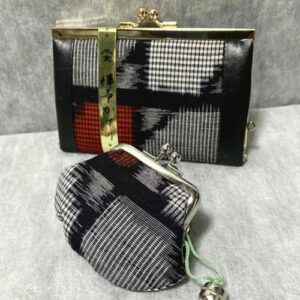
A gamaguchi (がま口, “frog-mouth” clasp purse) made from Yuki Tsumugi (結城紬, “Yuki pongee”) is one of the few ways an international buyer can own a piece of UNESCO-listed cloth without paying kimono-bolt prices. Yuki Tsumugi is a hand-spun silk woven in and around the town of Yuki, on the Kinugawa river plain at the Ibaraki–Tochigi border. A full bolt is among the most expensive tsumugi in Japan; a coin purse is not.
What makes the cloth unusual is the yarn. It begins as mawata — boiled silk floss opened by hand from cocoons — then drawn into thread with no twist at all (te-tsumugi, hand-spinning) and woven on a jiba-bata backstrap loom. The result is exceptionally light and warm, and famous for softening and conforming to its owner over years of use. Honba Yuki Tsumugi was named an Important Intangible Cultural Property in 1956 and inscribed on the UNESCO Representative List of Intangible Cultural Heritage in 2010.
This guide is written for a reader who wants the genuine cloth in a small, usable object — and who wants to understand what they are buying before they order from Japan. We cover where the cloth comes from, what to verify on a listing, how the price and shipping work from outside Japan, and which buyer this suits (and which it does not).
🔄 Updated:
⏱️ Read time: ~11 min

- Who this is for — and who should skip it
- Product overview (from published specs)
- Price snapshot across stores
- 📦 Shipping & where to buy from outside Japan
- What it does well
- Weaknesses and things to verify before buying
- 📍 Where this comes from — place, era, and the craft tradition
- Conclusion — which buyer type are you?
- Other ways to approach this purchase
- 🏆 Editor’s Pick
- ❓ Frequently Asked Questions
Who this is for — and who should skip it
- Want authentic UNESCO-listed Japanese cloth in an object you will actually use
- Like the idea of a textile that softens and conforms to you over years
- Prefer a small, giftable accessory over a costly kimono bolt
- Appreciate hand-tied kasuri patterning and indigo dye
- Are comfortable buying from Japan and verifying authenticity on the listing
- Need a large wallet with many card slots and a zip compartment
- Expect machine-washable, hard-wearing everyday-abuse durability
- Want a guaranteed specific color or pattern (handwoven stock varies)
- Are unwilling to confirm whether a listing is Honba Yuki Tsumugi or a tsumugi-style print
- Want next-day domestic delivery rather than an international order from Japan
Product overview (from published specs)
Public data on this specific listing is thin. The fetched search returned no live price or structured spec sheet, so the table below reflects the listing reference and the verified facts about the cloth itself, not a captured price snapshot. Treat dimensions and exact pattern as listing-dependent — handwoven accessories vary piece to piece.
Yuki Tsumugi Silk Gamaguchi Coin Purse
結城紬 がま口財布
通常6~7日以内に発送します。 · Sold by JIMMY Online Shop · ASIN B0GZF56SGX
Price and availability as of 2026-08-31 02:30 JST. The Amazon listing at the time of purchase is authoritative. jpmono.com earns a commission on qualifying purchases at no extra cost to you.
| Attribute | Detail (per listing reference / data notes) |
|---|---|
| Item | Gamaguchi clasp coin purse |
| Cloth | Yuki Tsumugi — hand-spun true-silk floss (mawata), no-twist yarn |
| Pattern | Kasuri (ikat) or stripe — varies by piece |
| Weave | Plain weave on a jiba-bata backstrap loom (traditional method) |
| Clasp | Metal snap frame (the “frog-mouth”) |
| Origin | Yuki district, Ibaraki Prefecture, Kantō region |
| Designation | UNESCO Intangible Cultural Heritage (2010); Important Intangible Cultural Property (1956) |
| Size / weight | Unconfirmed — check listing |
| Price | Not captured at time of writing — verify on listing |
Sources: Amazon US search (primary, moonill-20) + Amazon JP Global Store (secondary, moonill-22, sourced listing) + maker direct where available. Only the Amazon JP listing reference is available; no live price was captured, so figures may have shifted since the writing date.
📖 Glossary — key terms
- Yuki Tsumugi (結城紬) — hand-spun silk cloth from the Yuki district; “tsumugi” means a pongee woven from spun (not reeled) silk.
- Mawata (真綿) — silk floss made by boiling and opening cocoons by hand; the raw material drawn into Yuki Tsumugi yarn.
- Te-tsumugi (手紬ぎ) — hand-spinning the floss into thread with no added twist, which gives the cloth its softness and warmth.
- Jiba-bata (地機) — a body-tensioned backstrap loom; the weaver’s posture controls the warp tension.
- Kasuri (絣) — ikat; yarn is tie-resisted and dyed before weaving so the pattern emerges from the threads themselves.
- Gamaguchi (がま口) — a metal-clasp purse whose snap frame resembles a frog’s mouth.
- Honba (本場) — “the genuine production place”; Honba Yuki Tsumugi is the certified, traditionally made cloth as distinct from tsumugi-style prints.
Related jpmono guides — other Ibaraki crafts, other gamaguchi, and the wider family of Japanese silk weaving.
Price snapshot across stores
No live price was captured for this listing at the time of writing, so the table compares where to buy rather than exact figures. The JPY price on the Amazon JP listing is the authoritative one for this specific item; verify it before ordering.
| Store | Item / variant | Price (JPY + USD est.) | Notes |
|---|---|---|---|
| 🇺🇸 Amazon US (search) | Browse Japanese silk gamaguchi & tsumugi accessories | varies (USD) | Best if you are shopping from the US — Prime shipping, USD pricing, no customs paperwork. Amazon US carries silk coin purses and Japanese textile accessories from various makers, useful for comparing styles and price tiers; this exact Yuki Tsumugi piece is sourced from Japan (next row). |
| 🇯🇵 Amazon JP Global Store | Yuki Tsumugi gamaguchi coin purse (this listing) | Check listing (JPY authoritative) | Ships internationally from Japan to most major destinations. The sourced listing for the specific item in this guide. |
| Maker direct | Yuki-district weaver / cooperative shops | Varies | Some Yuki Tsumugi cooperatives and shops sell accessories directly; international shipping is not guaranteed and many are Japanese-language only. |
| Proxy services (Buyee / Tenso) | Forwarding for JP-only shops | Item + service fee + forwarding | Use when a maker or marketplace does not ship abroad; adds a service fee and a second shipping leg. |
Prices in USD are approximate and depend on the current exchange rate (≈¥150/USD baseline, mid-2026). The JPY price on the listing is authoritative.
📦 Shipping & where to buy from outside Japan
The specific item here is sourced from the Amazon JP Global Store, which ships many household and accessory items internationally to most major destinations. A small, light silk purse is an easy item to ship — expect roughly $15–$40 in international shipping to the US or EU, higher to other regions, with delivery typically in one to two weeks depending on the option chosen.
If you find a Yuki Tsumugi accessory only on a Japan-only shop or a maker’s own page, a proxy service such as Buyee or Tenso can forward it; this adds a service fee and a second shipping leg. Orders above your local duty threshold may incur customs charges on arrival — for a single low-value coin purse this is usually minor, but confirm your country’s threshold before ordering.
What it does well
Weaknesses and things to verify before buying
- “Yuki Tsumugi” vs. tsumugi-style print. Confirm the listing says Honba (本場) Yuki Tsumugi or carries a cooperative certification mark. Some accessories use a tsumugi-pattern fabric that is not the genuine hand-spun cloth.
- Pattern and color vary. Handwoven stock differs piece to piece; the kasuri or stripe you receive may not exactly match the photo. If a specific pattern matters, message the seller first.
- Silk care. Silk is not machine-washable and dislikes prolonged moisture; this is a dry-spot-clean accessory, not an all-weather wallet.
- Capacity is small. A gamaguchi coin purse holds coins, a few folded notes, or small items — not a full set of cards plus a phone.
- No live price was captured. Verify the current JPY price and stock on the listing before ordering; this guide could not snapshot it.
- International order, not domestic. Expect Japan-to-you shipping times and possible customs steps rather than next-day delivery.
“Yuki Tsumugi is one of the few cloths valued precisely because it gets better with age — it is woven to be lived in, not preserved behind glass.”
📍 Where this comes from — place, era, and the craft tradition


Ibaraki Prefecture occupies the northeastern corner of the Kantō plain, on the Pacific coast about 80 km north of central Tokyo. The town of Yuki sits inland, on the Kinugawa river plain right at the Ibaraki–Tochigi border — flat, well-watered farmland that historically grew mulberry for silkworms. This is sericulture country, and the cloth grew out of the silk that the land already produced.

The lineage of cloth from this region reaches back over a millennium. Hitachi Province — the old name for most of present-day Ibaraki — sent silk cloth (ashiginu) to the imperial court as tribute (cho) in the Nara period, the era when Japan’s capital was at Nara from 710 to 794, and examples of such provincial silk are tied to the Shōsō-in repository tradition. In other words, the place was supplying fine silk to the center of the country well before the Edo period.
- 8th c. — Hitachi Province sends silk cloth (ashiginu) as tribute in the Nara period; ties to the Shōsō-in tradition.
- Edo period — The Yuki domain promotes the cloth as a tax-in-kind and merchant trade good.
- 1657 (Mito domain era) — Kairakuen-era Mito culture surrounds and patronizes the region’s silk towns.
- 1956 — Honba Yuki Tsumugi designated an Important Intangible Cultural Property.
- 2010 — Inscribed on the UNESCO Representative List of Intangible Cultural Heritage.
- 2026 — Still hand-spun and woven in the Yuki district; accessories make the cloth accessible abroad.

In the Edo period the Yuki domain promoted the cloth deliberately — as a tax paid in kind and as a trade good moved by merchants. That patronage is why a specialized weaving district consolidated here rather than dispersing. The wider region was shaped by the Mito domain, whose cultivated taste is still visible in Kairakuen, the plum garden counted among Japan’s three great gardens. The silk towns of Ibaraki grew up inside that cultural orbit.
What “still being made here” means is specific. The defining method survives intact: cocoons are boiled and opened by hand into mawata floss, the floss is drawn into thread with no twist, the warp is tensioned on a body-held jiba-bata loom, and kasuri patterns are tie-resisted and indigo-dyed before a single pass of the weft. Because none of these steps is mechanized in the genuine cloth, a full bolt remains among the most expensive tsumugi in Japan. That cost is exactly why small accessories matter: a gamaguchi purse, a card case, or a pouch lets an international buyer own the real cloth at an accessible price.

The cloth is, traditionally, valued for how it ages. Owners say a Yuki Tsumugi garment becomes lighter and more pliant the longer it is worn, softening to the body until it feels like a second skin — a quality folk-traditionally summed up as cloth you can wear for three generations. A coin purse will not show that arc as dramatically as a kimono, but it carries the same thread, the same hand, and the same indigo.
Conclusion — which buyer type are you?
Other ways to approach this purchase
🏆 Editor’s Pick
❓ Frequently Asked Questions
Is this real Yuki Tsumugi or just a tsumugi-style print?
Check the listing wording. Genuine cloth is sold as Honba (本場) Yuki Tsumugi and often carries a cooperative certification mark. Some accessories use a tsumugi-pattern fabric that is not the hand-spun cloth — if certification matters to you, message the seller before buying.
Does Amazon JP ship this coin purse internationally?
The Amazon JP Global Store ships many accessory items to most major destinations. A small silk purse is light and easy to ship; expect roughly $15–$40 to the US or EU and delivery in one to two weeks depending on the option.
How do I care for a silk gamaguchi purse?
Treat it as a dry, spot-clean accessory. Silk is not machine-washable and dislikes prolonged moisture; keep it out of standing water and away from heavy abrasion, and it will hold up well.
Why is Yuki Tsumugi so expensive as a full bolt?
Because the genuine process is unmechanized: floss is opened by hand, spun with no twist, tie-dyed for kasuri, and woven on a backstrap loom. A full bolt is among the most expensive tsumugi in Japan, which is exactly why small accessories are a practical way to own the cloth.
Will the pattern match the photo exactly?
Not necessarily. The cloth is handwoven, so kasuri and stripe placement vary piece to piece. If a specific pattern or color is important, ask the seller to confirm or send a photo of the actual item before ordering.
Is it a good gift?
Yes — a UNESCO-listed cloth in a small, usable form is an easy gift to explain and to carry. It suits someone who appreciates craft but would not wear a full kimono accessory.
What if the maker I want does not ship abroad?
Use a proxy service such as Buyee or Tenso. They receive the item at a Japanese address and forward it to you, adding a service fee and a second shipping leg. This is the usual route for Japan-only shops and cooperatives.
jpmono.com is curated by a Japan-based editorial team (working out of Toyama in the Hokuriku region and Nara in Kansai) and is independent. We do not take payment from the makers we feature; income comes from affiliate links. We do not physically test every product — we read maker specs and source listings. Read more about our editorial standards.
This article was prepared with AI assistance and reviewed against the source listing and verified craft notes before publication. Specifications, pricing, and availability should be confirmed at the retailer before purchasing.
Affiliate disclosure: jpmono.com may earn a commission on qualifying purchases made through links on this page, at no additional cost to you.