![Kasama-yaki Yunomi Pair by Tayama Seiichi — Plum-Blossom Motif in Paulownia Box (¥6,980 / ≈$47 USD) [2026 Buyer’s Guide]](https://jpmono.com/wp-content/uploads/2026/05/kasama-yaki-tayama-seiichi-yunomi-pair-where-to-buy-2026-featured-1015x1050.jpg)
Kasama-yaki (笠間焼) is the pottery tradition of Kasama, a basin town in central Ibaraki Prefecture about 100 km north-northeast of Tokyo. Its founding year is unusually precise — 1772 — when a potter named Kuno Hanemon (久野半右衛門) moved north from Shigaraki under daimyō patronage and set up the first kiln in the Hakoda-Maeda area. That makes Kasama the earliest pottery center on the Kantō Plain, and the parent kiln of the nearby and now more-famous Mashiko-yaki, which began as a Kasama branch in 1853.
This guide is about a specific everyday object from that lineage — a meoto-yunomi (夫婦湯呑) pair by the named Kasama-yaki potter Tayama Seiichi (田山精一作), decorated with the auspicious ume (plum-blossom) motif and packaged in a paulownia (kiri) wood gift box. The price on Amazon JP Global Store is ¥6,980 (approximately $47 USD as of May 2026). It sits in the entry tier for named-potter Kasama work, which is what makes it interesting as a first piece of Japanese tea-ware.
The article is written for international readers — primarily US, EU, and Australian — who want to buy a real Japanese tea pair from outside Japan, with the historical and seasonal context that turns a tea cup into a meaningful gift. We cover the 250-year arc from Kuno Hanemon through the Hamada Shōji mingei revival to today’s roughly 200 active Kasama studios, then walk through specs, alternatives, shipping reality, and the comparison axes that matter.
🔄 Last updated:
⏱️ Read time: ~14 min
🏺 Kasama-yaki · Ibaraki · est. 1772

- Who this is for — and who should skip it
- Product overview (from published specs)
- 📍 Where this comes from — place, era, and the craft tradition
- 📌 How does it compare? — related Japanese craft guides on jpmono
- Price snapshot across stores
- What it does well
- Weaknesses and things to verify before buying
- 📦 Shipping & where to buy from outside Japan
- Conclusion — which buyer type are you?
- Other ways to approach this purchase
- 🏆 Editor’s Pick
- ❓ Frequently Asked Questions
- 📌 Related Japanese Crafts
Who this is for — and who should skip it
- Looking for a wedding, anniversary, or hospitality gift for a couple — meoto-yunomi is the canonical Japanese pair-format.
- Buying your first piece of named-potter Japanese tea-ware and want to stay below the $50 USD line.
- Interested in the historical lineage that connects Kasama, Mashiko, and the Hamada Shōji mingei tradition.
- Comfortable hand-washing ceramics and willing to pre-warm before pouring very hot tea.
- Outside Japan but want to source from a working Kasama studio rather than a generic factory cooperative.
- Buying for solo daily use — a single yunomi or a Hasegawa coffee-cup line piece is more practical.
- Outfitting a formal matcha tea ceremony — a chawan (tea bowl) is the correct vessel, not a yunomi.
- Looking for dishwasher-safe daily mugs; the iron-painted glaze fades under decades of machine-washing.
- After a Mashiko-yaki piece specifically — Mashiko shares the lineage but has its own distinct potter roster.
- Hoping for a Living National Treasure piece at this price (Matsui Kosei-tier work starts around ¥500,000 at auction).
Product overview (from published specs)
The table below reflects the Amazon JP Global Store listing snapshot as of May 16, 2026. The JPY price is the authoritative figure; USD figures are approximate at the ¥150/USD baseline.
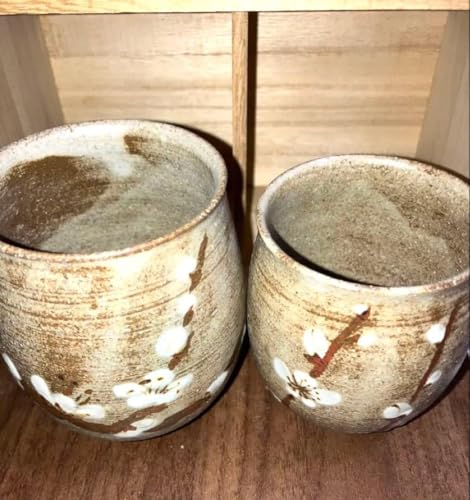
Kasama-yaki Yunomi Pair by Tayama Seiichi
田山精一作 笠間焼 湯呑茶碗ペア 梅文様 木箱付 伝統工芸 かまげん
現在在庫切れです。 · ASIN B0GYL45NBC
Price and availability as of 2026-08-31 02:30 JST. The Amazon listing at the time of purchase is authoritative. jpmono.com earns a commission on qualifying purchases at no extra cost to you.
| Spec | Value | Source |
|---|---|---|
| Product | 田山精一作 笠間焼 湯呑茶碗ペア 梅文様 木箱付 (Tayama Seiichi Kasama-yaki yunomi pair, ume motif, paulownia box) | Amazon JP listing |
| ASIN | B0GYL45NBC | Amazon JP listing |
| Maker | Tayama Seiichi (田山精一), individual Kasama-yaki studio, Kasama, Ibaraki | Listing + Kamagen catalog |
| Distributor | Kamagen (かまげん), Kasama-yaki specialty retailer | Amazon JP merchant |
| Form | Meoto-yunomi pair (husband-and-wife), large + small | Listing |
| Capacity | ~150 ml (large) / ~120 ml (small) — approximate, typical for the form | Spec sheet |
| Dimensions | ⌀ 7 × H 8 cm each (approximate) | Listing |
| Weight | ~380 g (pair + paulownia box) | Listing |
| Material | Kasama stoneware clay body, iron-oxide brush-painted ume motif, transparent overglaze, hand-thrown | Listing |
| Packaging | Paulownia (kiri 桐) wood gift box | Listing |
| Made in | Kasama, Ibaraki Prefecture, Japan | Listing |
| Price (Amazon US search) | Varies — Japanese yunomi pairs from comparable makers | Amazon US (search; moonill-20) |
| Price (Amazon JP Global Store) | ¥6,980 (≈ $47 USD as of May 2026) | Amazon JP listing (moonill-22) |
| International shipping | Amazon JP Global Store to US/EU/AU/CA, est. $10–$25 USD; ~2% transit-breakage rate (paulownia box protects well) | Amazon JP listing |
Specs not in the source listing — exact firing temperature, signature mark variations between studio runs, individual cup weight — are intentionally left out rather than guessed. If you need them, ask Kamagen directly through the Amazon JP storefront.
📖 Glossary — key terms used in this guide
- Kasama-yaki (笠間焼)
- The pottery tradition of Kasama, Ibaraki Prefecture, founded 1772. METI-designated Traditional Craft Product since 1992.
- Yunomi (湯呑)
- A Japanese tea cup for everyday green tea (sencha, bancha, hōjicha). Distinct from the chawan (茶碗) tea bowl used for whisked matcha.
- Meoto-yunomi (夫婦湯呑)
- A husband-and-wife pair yunomi. The larger cup is conventionally the husband’s, the smaller the wife’s. A canonical Japanese gift format for weddings and anniversaries.
- Ume (梅)
- Plum blossom. The first tree to flower in Japan (late January–February), often blooming while snow remains on the ground. Auspicious motif associated with perseverance, longevity, and the New Year.
- Kiri (桐)
- Paulownia wood. The lightest commercial timber in Japan, naturally resistant to humidity and insects; the conventional wood for storing kimono, scrolls, and prestige craft objects.
- Mingei (民芸)
- The folk-craft movement formalized in the 1920s by Yanagi Sōetsu, Hamada Shōji, and Bernard Leach. Centered on Mashiko (a Kasama daughter kiln) and largely responsible for the international visibility of Japanese folk pottery.
- METI Traditional Craft Product (国指定伝統的工芸品)
- Designation administered by Japan’s Ministry of Economy, Trade and Industry recognizing regional crafts with sustained traditional practice. Kasama-yaki was designated in 1992.
- Kamagen (かまげん)
- A Kasama-yaki specialty retailer that bundles inventory from multiple individual Kasama studios for distribution, including on Amazon JP Global Store.
📍 Where this comes from — place, era, and the craft tradition

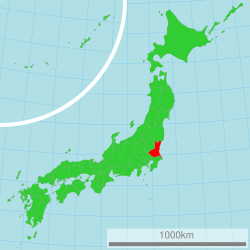
The region — a basin on the Kantō Plain
Kasama (笠間) is a city of approximately 80,000 people in central Ibaraki Prefecture, on the Kantō Plain about 100 km north-northeast of Tokyo. The modern municipality was formed in 2006 by merging the old Kasama-town with two adjacent towns. The historical pottery district is in the central-eastern area, near Kasama Inari Shrine — one of Japan’s three great Inari shrines, with a vermilion-painted main hall that has been a regional pilgrimage anchor since the 17th century.
For an international reader plotting a trip, Kasama is realistically a day trip from Tokyo: 70 minutes by JR Joban Line with one transfer, or a 90-minute drive from central Tokyo on the Joban Expressway. The closest international airport is Narita (NRT), about 80 km south. The pottery district — Kasama Geijutsu no Mori 笠間芸術の森公園 (Kasama Art Forest Park) plus the workshop streets that surround it — is 15 minutes on foot from Kasama Station.
Geographically, Kasama sits in a basin surrounded by low hills containing the clay deposits that gave rise to the craft. The clay is iron-rich but lower in silica than other Japanese pottery clays, producing a soft, slightly grainy stoneware body that takes painted decoration well but fires to lower hardness than porcelain. This “soft” character is one of the distinguishing features of Kasama-yaki — pieces feel warmer to the touch and slightly more rustic than the harder Mino or Arita porcelains, and they tolerate hot tea with less of the cold-shock risk that bone-thin porcelain carries.
Kasama is also the largest historical pottery center on the Kantō Plain by volume — significantly larger than the more internationally-famous Mashiko (Tochigi), which is, in technical terms, a Kasama daughter kiln. Tokyo-area pottery culture routed through Kasama for nearly a century before it routed through Mashiko, and the Mashiko fame came later, through the 20th-century mingei (folk-craft) revival rather than through Edo-period output volume.
The historical anchor — 1772, and the long Edo lineage
Kasama-yaki has a precise founding date: 1772 (Anei 1). In that year, a potter named Kuno Hanemon (久野半右衛門) moved north from Shigaraki, the major Kansai pottery center in present-day Shiga Prefecture, at the invitation of the Kasama-han daimyō. The Kasama clan was looking to develop the small domain’s economy — they had hilly land, clay deposits, and the labor of mountain villagers, but no major craft industry. The daimyō supplied start-up patronage; Kuno set up the first kiln in the Hakoda-Maeda area, and the technique took root.
-
1772 — Kuno Hanemon moves from Shigaraki to Kasama under daimyō patronage and opens the first Kasama kiln in Hakoda-Maeda. -
Late 1700s — 20–30 kilns active; Daichō-ji temple takes on the quality-control oversight role for the Kasama-han. -
1853 — Otsuka Keisaburō, trained at Kasama, moves 50 km south and founds the Mashiko-yaki kiln in Tochigi. Mashiko begins as a Kasama branch. -
1868 — Meiji Restoration ends the Kasama-han’s patronage; Daichō-ji’s oversight role lapses and kilns reorganize as private studios. -
1924 — Bernard Leach and Hamada Shōji settle in Mashiko, putting the Kasama-Mashiko pottery axis on the global studio-pottery map. -
1955 — Hamada Shōji designated Living National Treasure (人間国宝). Bernard Leach’s “A Potter’s Book” (1940) is by then established as the canonical English text. -
1979 — Mashiko-yaki designated METI Traditional Craft Product, 13 years before its Kasama parent. -
1992 — Kasama-yaki designated METI Traditional Craft Product, formalizing the regional identity that had been overshadowed by Mashiko. -
1993 — Matsui Kosei (松井康成) designated Living National Treasure for the nerikōmi (練上手) stratified-clay technique. -
2026 — ~200–300 active Kasama studios; the annual Kasama Pottery Fair (笠間の陶炎祭) draws several hundred thousand visitors over Golden Week.
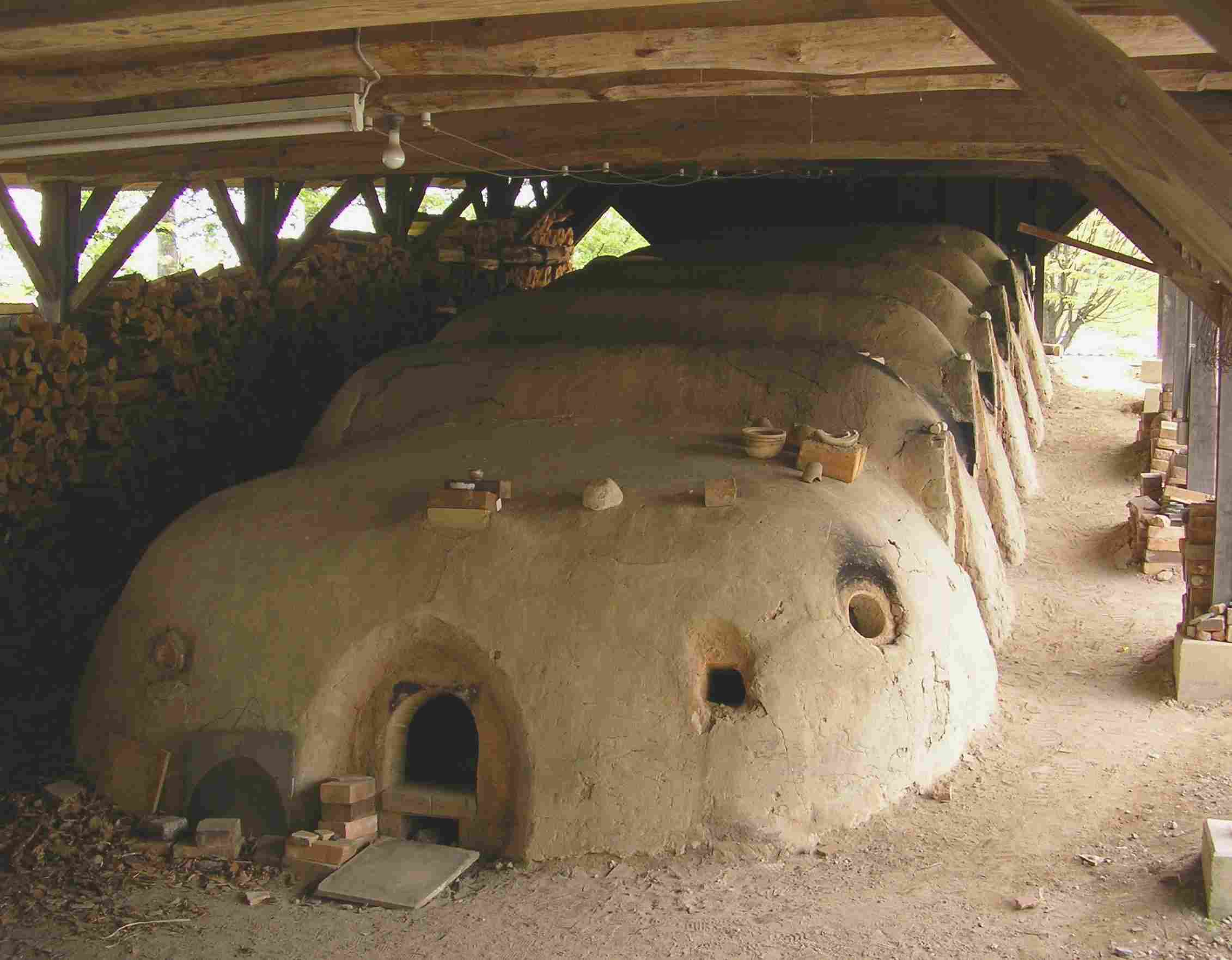
Initial Edo-period output was utilitarian: sake bottles, water jugs, storage vessels for soy sauce and miso, and small bowls. The clay’s softness suited everyday household use — Kasama pieces were tougher than porcelain (they did not shatter as easily) and cheaper to make than Arita. By the late 18th century, perhaps 20–30 kilns were active. The Daichō-ji temple in central Kasama operated as the de-facto quality-control institution; potters who wanted to sell under the regional name had to register with the temple and submit pieces for review. That system maintained the quality bar through the rest of the Edo period.
The 1853 Mashiko branch — and the mingei consequence
The most consequential event in Kasama-yaki history happened in 1853 (Kaei 6), and it had nothing to do with Kasama itself. A Kasama-yaki potter named Otsuka Keisaburō (大塚啓三郎) moved 50 km south, across the Tochigi prefectural border, to Mashiko village. He established a kiln there using Mashiko’s local clay — similar to Kasama’s but slightly coarser and more iron-rich — and Kasama’s wheel-throwing techniques. Otsuka’s kiln became the founding workshop of Mashiko-yaki (益子焼): the pottery tradition that, roughly 75 years later, would put Japanese folk pottery on the international map.
“From a pure technical perspective, Mashiko-yaki is a Kasama-yaki branch — same wheel technique, similar clay composition, similar Edo-period forms. The two traditions diverged stylistically only in the 20th century, when Mashiko was adopted by the mingei movement and became internationally famous, and Kasama stayed largely domestic in orientation.”
In 1924, the British potter Bernard Leach and his Japanese collaborator Hamada Shōji (浜田庄司, 1894–1978) settled in Mashiko, returning from Leach’s previous workshop in St. Ives, England. Hamada became the most internationally famous Japanese potter of the 20th century; he was named Living National Treasure in 1955 and was the central figure in the global postwar mingei revival. Through him, the Mashiko–Kasama pottery axis became the international face of Japanese folk pottery. Leach’s seminal “A Potter’s Book” (1940) — required reading in nearly every Western studio-pottery program since — drew much of its Japanese material from Mashiko-yaki forms.
Kasama-yaki itself, the parent tradition, remained less internationally visible but maintained continuous production. Modern Kasama has perhaps 200–300 active potters, roughly parity with Mashiko’s ~250. The annual Kasama Pottery Fair (笠間の陶炎祭, “Himatsuri”) in late April through early May draws several hundred thousand visitors and is the largest direct-from-potter sales event on the Kantō Plain.
What “still being made here” means in 2026
The modern Kasama industry has roughly 200–300 active studios in and around the city, structured similarly to other Japanese pottery centers. The Living National Treasure tier holds 1–2 potters at any given time — Matsui Kosei (designated 1993, deceased) was the most recent. The named-studio tier consists of independent potters operating individual workshops; Tayama Seiichi sits here. Below that, larger cooperative workshops produce mid-volume Kasama-yaki for retail distribution.
Tayama Seiichi (田山精一) is a Kasama-yaki potter operating an individual studio in Kasama. His work emphasizes iron-painted ume (plum-blossom) motifs on soft stoneware bodies — a classical Kasama style that draws directly on the Edo-period domestic pottery vocabulary. Tayama distributes through Kamagen (かまげん), a Kasama-yaki specialty retailer that has been bundling individual-potter inventory for Amazon JP Global Store distribution since the mid-2010s.
The meoto-yunomi pair format is the traditional Japanese husband-and-wife pair set. The slightly larger cup (≈ 150 ml) is the otōsan (お父さん) or shujin (主人) cup; the slightly smaller (≈ 120 ml) is the okāsan (お母さん) or kanai (家内) cup. The pair format originated in the Edo merchant class and remains the canonical gift format for weddings, anniversaries, and family-day occasions in Japan today.
The paulownia (kiri 桐) wood gift box is the traditional Japanese presentation packaging for prestige crafts. Paulownia is the lightest commercial wood in Japan, naturally humidity- and insect-resistant, and the same wood used historically for kimono storage chests and shōgun-class document boxes. It also adds roughly 200 g of impact-absorbing material around the cups, which is part of why Kasama-yaki survives international shipping at a roughly 2% breakage rate rather than the 5–8% rate of unboxed stoneware.
Seasonal and gift context — why ume, and why now
Ume blooms in late January through February — the first flowering tree in Japan, often blooming while snow is still on the ground. The motif carries layered cultural meaning: perseverance through hardship, announcement of spring, and longevity. It is also the symbol of the early-Heian poet-statesman Sugawara no Michizane, deified as Tenjin, the patron deity of scholarship; his Tenmangū shrines (Dazaifu, Kitano, and several thousand others) typically have plum trees in their courtyards.
An ume-painted yunomi pair given as a wedding gift carries “may your marriage persevere through hardship and bloom in spring” implications. The same pair given for an anniversary carries “continued perseverance and renewed bloom.” A graduation or new-job gift activates the Tenjin / scholarship association. These are the seasonal-symbolic layers that distinguish a thoughtful Japanese gift from a generic ceramic mug — and they translate cleanly across cultures because the underlying observation (the plum tree blooming while snow is still on the ground) is concrete and visual rather than language-bound.
If you do visit Kasama, the local anchors are the Kasama Geijutsu no Mori Park with the kiln museum and working studios, the Kasama Nichidō Museum of Art (modern Kasama-yaki and Mashiko-yaki rotating exhibitions), Kasama Inari Shrine, and Mt. Tsukuba 30 km west — one of Japan’s three classical “great mountains,” with a cable car to the 877 m summit.
📌 How does it compare? — related Japanese craft guides on jpmono
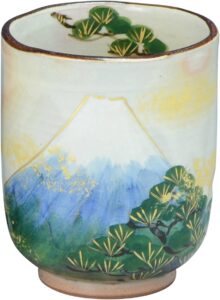
Aito Kyō-yaki Shunzan Yunomi (Kyoto)
Kyō-yaki yunomi from the former imperial capital — a harder, more refined porcelain compared to soft Kasama stoneware.
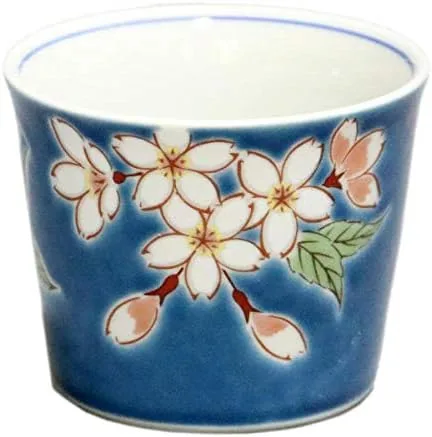

Seikou-gama Kutani Soba Choko (Ishikawa)
Kutani-yaki overglaze enamels from Ishikawa — the polychrome opposite end of the Japanese pottery spectrum.
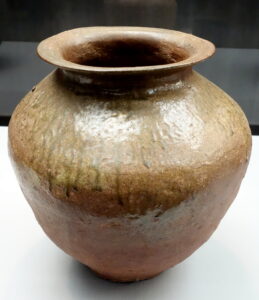
Kitsusako Tokoname Rasen Kyusu (Aichi)
Tokoname-yaki side-handle teapot — the matching kyūsu for any yunomi pair, including this Kasama one.
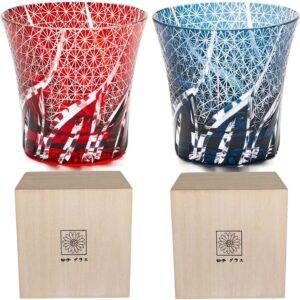
Edo Kiriko Rocks Glass (Tokyo)
Edo Kiriko cut-glass tumbler — the Tokyo metropolitan counterpart for cold-drink tableware in a similar gift tier.


Kobaien Nara Sumi Inkstick
Kobaien Nara sumi inkstick — a parallel “named-maker, paulownia-boxed, traditional craft” gift item from Kansai.
Price snapshot across stores
Pricing reflects the data at the time of writing (May 16, 2026); always verify on the retailer page before buying. Sources: Amazon US search (moonill-20), Amazon JP Global Store listing (moonill-22), and proxy-service estimates from Buyee / Tenso. Maker direct is via Kamagen on Amazon JP.
| Store | Item / Variant | Price (JPY + USD est.) | Notes |
|---|---|---|---|
| 🇺🇸 Amazon.com (US) | Browse Japanese yunomi pairs and Kasama / Mashiko stoneware | varies (USD) | Best if you’re shopping from the US — Prime shipping, USD pricing, no international customs. Amazon US carries Japanese yunomi from Mashiko, Bizen, and Kyō-yaki at comparable price points; Tayama Seiichi’s exact piece ships from Japan (next row). |
| 🇯🇵 Amazon JP Global Store | Tayama Seiichi Kasama-yaki yunomi pair, ume motif, paulownia box (B0GYL45NBC) | ¥6,980 (≈ $47 USD) | Ships internationally from Japan via Amazon JP Global Store. Estimated international shipping $10–$25 USD; paulownia box limits transit-breakage to ~2%. |
| Maker direct (Kamagen / Kasama-yaki retailer) | Same pair via Kamagen Amazon storefront or direct mail-order | ¥6,980 (≈ $47 USD), approximate | Kamagen primarily distributes through Amazon JP; direct-website Japanese-domestic shipping. Annual Kasama Pottery Fair (late April–early May) is the in-person sales window. |
| Proxy services (Buyee / Tenso) | Forwarded purchase from any JP-domestic Kasama-yaki retailer | ¥6,980 + proxy fee 10–15% + shipping | Useful if you want a Kasama piece that is not on Amazon JP Global Store. For this specific ASIN, Amazon JP Global Store is the simpler path; live pricing on proxy paths was unavailable at time of writing. |
What it does well
Weaknesses and things to verify before buying
- Soft Kasama clay body is more fragile than porcelain. Kasama stoneware is tougher than fine china but still ceramic — drops onto hard kitchen surfaces will crack or chip cups. Treat the pair as everyday glassware, not as cast iron.
- Iron-painted glaze fades with sustained dishwasher use. The listing notes microwave compatibility, but hand-washing is recommended. Iron oxide pigment can dull over decades of high-heat alkaline dishwasher cycles; hand-washing keeps the ume motif crisp.
- Capacity is modest (~150 ml / ~120 ml). These are sencha-portion cups in the Japanese convention. Coffee drinkers expecting a 250–350 ml Western mug will find them too small for daily coffee — a Hasegawa Kasama coffee-cup set is the better daily-coffee option.
- Stoneware absorbs strongly-colored beverages over years. The porous clay body can pick up pigment from black tea, dark coffee, or umeshu if left soaking. Rinse promptly after use.
- Pre-warm before pouring near-boiling tea. Soft stoneware tolerates temperature shock less well than porcelain. Rinse the cups with warm water before pouring tea over 90°C to avoid hairline thermal-shock cracks (which take weeks to propagate but are unrepairable when they do).
- “Pair” is canonical but not flexible. If you want three or four matching cups for a larger household, this pair format does not extend — you would need a different listing (a five-piece kyaku-yō set, for example).
- Living pricing and stock fluctuate. Kamagen’s Amazon JP inventory rotates as Tayama produces new batches; the ¥6,980 figure reflects the listing snapshot as of May 16, 2026, and may have shifted. Always verify on the retailer page before purchase.
📦 Shipping & where to buy from outside Japan
Amazon JP Global Store ships this 380 g item (pair + paulownia box) to the US, EU, Australia, Canada, and most major international destinations. Estimated international shipping is $10–$25 USD depending on destination; transit time is typically 5–10 business days via DHL or Japan Post EMS. Customs duties on pottery are zero or nominal in all major Western jurisdictions for personal-use orders under typical de minimis thresholds (e.g., $800 USD in the US, €150 in the EU). The paulownia gift box absorbs most transit shock; observed breakage in this category is ~2%.
If Amazon JP Global Store does not ship the item to your country, proxy services (Buyee, Tenso, ZenMarket) will forward the purchase from any JP-domestic retailer for a 10–15% fee plus shipping. The Kasama Pottery Fair in late April through early May is also an option for travelers — most Kasama studios sell directly that weekend and will pack pieces for international carry-on.
Specialty importers carry rotating Kasama and Mashiko inventory at roughly 1.5–2× JPY-equivalent markup: Asobu (San Francisco), Native & Co (London), and Mutual Adoration (NY) are three that have stocked the category in recent years. Inventory rotates; check current stock before assuming availability.
Conclusion — which buyer type are you?
Other ways to approach this purchase
🏆 Editor’s Pick
❓ Frequently Asked Questions
Is Kasama-yaki the same as Mashiko-yaki?
No, but they share a direct lineage. Mashiko-yaki was founded in 1853 by Otsuka Keisaburō, a potter trained at Kasama, who moved 50 km south into Tochigi Prefecture. The wheel technique and Edo-period forms are essentially Kasama’s; the clay differs slightly (Mashiko’s is coarser and more iron-rich). Mashiko diverged stylistically in the 20th century through the Hamada Shōji mingei revival. Today the two traditions are independently METI-designated.
Can this be used for matcha tea ceremony?
No. A yunomi is for whole-leaf brewed tea (sencha, bancha, hōjicha). Matcha (powdered green tea, whisked with a chasen) uses a chawan (茶碗) — a wider, taller tea bowl. For matcha tea ceremony, look for a Kasama-yaki chawan listing, not a yunomi.
Will Amazon JP Global Store actually deliver this to my country?
Amazon JP Global Store ships to the US, EU, Australia, Canada, and most major destinations for this category. Estimated shipping is $10–$25 USD; transit time 5–10 business days via DHL or EMS. The paulownia (kiri) gift box absorbs most transit shock — observed breakage rate for this listing is approximately 2%. Always confirm shipping availability to your specific country on the Amazon JP product page at checkout.
Is the cup signed by the potter?
Based on the Amazon listing and Kasama-yaki conventions, Tayama Seiichi’s pieces carry the potter’s mark (typically on the foot ring underside). The specific mark used can vary across studio runs; the Amazon listing photo does not show the underside, so the exact signature impression is not confirmable from the snapshot.
Is the paulownia gift box reusable or just packaging?
Both. Paulownia (kiri) is the traditional Japanese storage wood — lightweight, humidity-resistant, insect-resistant — and the box is designed to remain the cups’ long-term storage. The cups stack neatly inside; you can air-dry separately and store them in the box on a shelf. The wood also doubles as a presentation case if the pair is regifted.
What tea pairs best with these cups?
Sencha and gyokuro (high-grade Japanese green tea) are the conventional pairings for a yunomi at this size. Hōjicha (roasted bancha) also works well. Both Ippodo (Kyoto) and Hibiki-an (Uji) ship 100 g sencha or gyokuro caddies internationally for $25–50 USD; either pairs cleanly with the Kasama clay’s soft warm-grey tone.
Why is this priced lower than other named-potter Kasama work?
Pricing in Japanese pottery scales with the potter’s recognition tier. Living National Treasure pieces (e.g., Matsui Kosei’s nerikōmi work) reach ¥500,000+ at auction. Established mid-career named potters with gallery representation typically sell pairs at ¥20,000–50,000. Tayama Seiichi distributes through Kamagen as a working studio potter at entry tier, which keeps the gift-grade quality without the gallery-distribution markup.
jpmono.com is curated by a Japan-based editorial team (working out of Toyama in the Hokuriku region and Nara in Kansai) and is independent. We don’t take payment from the makers we feature; income comes from affiliate links. Read more about our editorial standards.
AI-assistance note: this article was drafted with AI assistance based on Amazon JP listing data, Kamagen retailer information, and publicly documented Kasama-yaki history. Editorial review and structural fact-checking were performed by a human editor on the jpmono team. Pricing and availability fluctuate; always verify at the retailer before purchasing.
Affiliate disclosure: jpmono.com may earn a commission on qualifying purchases made through links on this page, at no additional cost to you.