![Kiso Lacquerware Pair Coffee Cup by Honyama Shikki — Negoro & Akebono Two-Tone Pair from Nagano (¥7,990 / ≈$53 USD) [2026 Buyer’s Guide]](https://jpmono.com/wp-content/uploads/2026/05/honyama-shikki-kiso-pair-coffee-cup-where-to-buy-2026-featured-1050x1050.jpg)
Kiso-shikki (木曽漆器) is the lacquerware tradition of the Kiso valley, in southwestern Nagano Prefecture — a 60-kilometer mountain corridor that once carried Edo-period travelers between Edo (Tokyo) and Kyoto along the Nakasendō inland highway. The craft emerged in the 1600s to serve those travelers: portable, water-resistant, lightweight wooden cups and boxes that could survive weeks of mountain travel and weeks more on the road. The Tokugawa post-station system turned the Kiso villages of Hirasawa, Honyama, and Narakawa into permanent lacquer towns, and they have not stopped working since. Kiso-shikki was designated a METI Traditional Craft Product in 1975.
This guide is about a specific everyday object from that lineage — a pair coffee cup set by Honyama Shikki (本山漆器店), a named Honyama-village workshop, distributed under the Asuka-dō (飛鳥堂) brand on Amazon JP Global Store. The set pairs the two canonical Kiso decorative finishes: Negoro-nuri (根来塗, “root-paste” — red urushi over a black ground that wears through to patina over years of use) and Akebono-nuri (曙塗, “dawn” — a red-to-orange gradient that mimics dawn sky). The price on Amazon JP Global Store is ¥7,990 (approximately $53 USD as of May 2026). It sits in the entry tier for a real Kiso lacquerware pair — well below the ¥30,000–100,000 named-craftsperson pieces and well above the ¥1,500–3,000 industrial-coated wood imitations.
The article is written for international readers — primarily US, EU, and Australian — buying their first piece of Japanese lacquerware from outside Japan, with the 400-year historical context that makes a coffee cup a small piece of Edo-period highway history. We cover the long arc from the Nakasendō post stations through the Meiji railway disruption to today’s roughly 50 active Kiso workshops, then walk through specs, finish comparisons, shipping reality, and the alternatives to consider.
🔄 Last updated:
⏱️ Read time: ~15 min
🎨 Kiso-shikki · Nagano · METI 1975

- Who this is for — and who should skip it
- Product overview (from published specs)
- 📍 Where this comes from — place, era, and the craft tradition
- 📌 How does it compare? — related Japanese craft guides on jpmono
- Price snapshot across stores
- 📦 Shipping & where to buy from outside Japan
- What it does well
- Weaknesses and things to verify before buying
- Conclusion — which buyer type are you?
- Other ways to approach this purchase
- 🏆 Editor’s Pick
- ❓ Frequently Asked Questions
- 📌 Related Japanese Crafts
Who this is for — and who should skip it
- Buying a first piece of Japanese lacquerware for a couple — coffee-cup form is more universally useful in Western kitchens than the traditional soup bowl.
- Drawn to historical resonance — Kiso-shikki has a direct lineage to the Nakasendō highway and the Edo-period traveler economy.
- Interested in seeing both canonical Kiso decorative finishes (Negoro-nuri and Akebono-nuri) in a single ¥7,990 purchase.
- Comfortable hand-washing and willing to keep lacquerware out of the dishwasher and microwave.
- Outside Japan but want to source from a named Kiso-village workshop rather than a generic factory line.
- Looking for dishwasher- or microwave-safe daily mugs; urushi lacquer is sensitive to heat and detergent.
- After Wajima-nuri specifically — the more famous Ishikawa lacquerware tradition is a different region and sits at ¥30,000+ pricing.
- Known to react to urushi or related tree saps — rare contact dermatitis cases occur with fresh lacquer (cured lacquer is generally inert).
- Hoping for a Living National Treasure piece at this price — named-craftsperson Kiso work starts at roughly ¥30,000.
- Buying for the traditional soup-bowl (shiruwan) form — Honyama Shikki also produces single bowls, but this listing is the coffee-cup pair.
Product overview (from published specs)
The table below reflects the Amazon JP Global Store listing snapshot as of May 16, 2026. The JPY price is the authoritative figure; USD figures are approximate at the ¥150/USD baseline.
Kiso Lacquerware Pair Coffee Cup by Honyama Shikki
飛鳥堂 本山漆器店 木曽漆器 ペアコーヒーカップ 根来塗 曙塗
通常6~7日以内に発送します。 · Sold by Still Nomad Shop · ASIN B0G33867QG
Price and availability as of 2026-08-31 02:30 JST. The Amazon listing at the time of purchase is authoritative. jpmono.com earns a commission on qualifying purchases at no extra cost to you.
| Spec | Value | Source |
|---|---|---|
| Product | 飛鳥堂 本山漆器店 木曽漆器 ペアコーヒーカップ 根来塗 曙塗 (Asuka-dō / Honyama Shikki Kiso Lacquerware Pair Coffee Cup, Negoro-nuri + Akebono-nuri) | Amazon JP listing |
| ASIN | B0G33867QG | Amazon JP listing |
| Maker | Honyama Shikki (本山漆器店), Honyama village, Shiojiri, Nagano | Listing + maker attribution |
| Distributor | Asuka-dō (飛鳥堂), Tokyo-area lacquerware retailer | Amazon JP merchant |
| Form | Pair coffee cups (Western handled-cup form) | Listing |
| Dimensions | ⌀ 8 × H 7 cm each | Listing |
| Capacity | ~200 ml each | Listing |
| Weight | ~200 g (pair) | Listing |
| Material | Hand-shaped wooden body (Kiso hinoki cypress) with multi-layer urushi (Japanese lacquer), 5–8 coats hand-applied | Listing |
| Finishes | One Negoro-nuri (red-over-black, wear-through patina) + one Akebono-nuri (red-orange dawn gradient) | Listing |
| Made in | Honyama village, Shiojiri City, Nagano Prefecture, Japan | Listing |
| Price (Amazon US search) | Varies — Japanese lacquerware pairs from comparable makers | Amazon US (search; moonill-20) |
| Price (Amazon JP Global Store) | ¥7,990 (≈ $53 USD as of May 2026) | Amazon JP listing (moonill-22) |
| International shipping | Amazon JP Global Store to US/EU/AU/CA; estimated $10–$20 USD shipping (200 g pair). Lacquerware is unrestricted personal import. | Amazon JP listing |
Specs not in the source listing — exact urushi cure time per coat, the precise hinoki batch’s growth-ring count, individual cup weight — are intentionally left out rather than guessed. Only the Amazon JP listing snapshot is available; live pricing may have shifted since the writing date.
📖 Glossary — key terms used in this guide
- Kiso-shikki (木曽漆器)
- Lacquerware tradition of the Kiso valley, southwestern Nagano Prefecture. METI Traditional Craft Product since 1975.
- Urushi (漆)
- Natural lacquer harvested as sap from the urushi tree (Toxicodendron vernicifluum). Cures through humidity rather than air-drying; cured film is water-resistant, food-safe, and durable for generations.
- Negoro-nuri (根来塗)
- A two-layer finish — black urushi base coat under a red urushi top coat — designed so the red wears through to the black underneath in patches at edges and high-contact areas. Named after Negoro-ji temple (Wakayama), a former Buddhist lacquer center.
- Akebono-nuri (曙塗)
- A graduated red-and-orange finish, named after akebono (曙, “dawn”), mimicking the sky’s color sequence from deep red below to orange above. Decorative; intended for new-piece appreciation.
- Nakasendō (中山道)
- The inland Edo-period highway between Edo (Tokyo) and Kyoto, with 69 official post stations. Eleven of these stations lay within the Kiso valley; their traveler economy is the historical engine of Kiso-shikki.
- Kiso hinoki (木曽檜)
- Japanese cypress from the Kiso valley. One of Japan’s three premier woods (alongside Akita-sugi and Yoshino-sugi). The dense, fine-grained timber is used for the wooden body (kiji 木地) under the urushi coats.
- Sabi-nuri (錆塗)
- An iron-rich brownish-red urushi ground coat that gives Kiso-shikki much of its visual signature, particularly under the decorative top finishes.
- METI Traditional Craft Product (国指定伝統的工芸品)
- Designation administered by Japan’s Ministry of Economy, Trade and Industry, recognizing regional crafts with sustained traditional practice and locally-sourced materials. Kiso-shikki was designated in 1975.
📍 Where this comes from — place, era, and the craft tradition

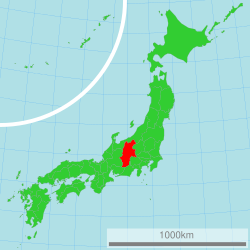
The region — Kiso valley, in southwestern Nagano
The Kiso valley (木曽谷) is a deep mountain corridor running north-south through the Japanese Alps, in southwestern Nagano Prefecture. The valley is approximately 60 km long, with the Kiso River (木曽川) flowing south toward the Pacific Ocean. The traditional Kiso lacquerware villages — Narakawa (楢川), Hirasawa (平沢), and Honyama (本山) — sit along the central valley in what is now Shiojiri City.
For an international reader plotting a trip, Honyama is realistically a day trip from Tokyo: roughly 3 hours by the JR Chūō Line, or about 3 hours by car on the Chūō Expressway. From Kyoto the trip is about 2 hours. From Nagano City, 90 minutes south. The closest international airport is Centrair Nagoya (NGO), approximately 150 km southwest. The Kiso Lacquer Museum (木曽漆器館) and the preserved Hirasawa village lacquer shops are the principal visitor destinations.
Geographically, the Kiso valley’s significance comes from the Nakasendō highway — the inland alternative to the coastal Tōkaidō, connecting Edo and Kyoto through the Japanese Alps. The Nakasendō passed directly through the Kiso valley; the eleven post stations (juku 宿) in the Kiso section — Niekawa, Narai, Yabuhara, Magome, Tsumago, and others — provided overnight lodging, food, and travel supplies for traders, pilgrims, daimyō processions, and ordinary travelers making the multi-week journey between the two cities.
This Nakasendō context is the foundation of Kiso lacquerware. Portable lacquered wooden ware was the standard travel container for food and drink in the Edo period: lightweight, water-resistant, durable enough to survive weeks of rough handling, and warmer to the lips and hands than ceramic. Travelers needed it. The Kiso valley happened to sit at the centre of that traveler corridor with the right wood (Kiso hinoki) and the right climate (the urushi tree thrives in the valley’s humid microclimate) to make it locally.
The historical anchor — Edo period, the Nakasendō post-station economy
Kiso-shikki’s origins are in the early-to-mid Edo period (1600s), when the Tokugawa shogunate formalized the post-station system along the major highways. The Kiso valley’s eleven Nakasendō post stations created constant traveler demand for portable food-and-drink ware. Local Kiso craftspeople — initially turners and woodworkers (kijishi 木地師) producing Kiso-hinoki bowls and trays — added urushi-lacquer finishing to make their pieces watertight and durable enough for road travel. The combination of local hinoki, locally-harvested urushi sap, and an existing wood-turning labor force produced Kiso-shikki.
-
Early 1600s — Tokugawa shogunate establishes the Nakasendō post-station system; eleven juku open in the Kiso valley. -
Mid-1600s — Kiso kijishi (wood turners) begin applying urushi lacquer to local hinoki ware to serve Nakasendō travelers; Kiso-shikki emerges as a recognized regional product. -
~1700 — Production consolidates in the Hirasawa–Honyama–Narakawa cluster; secondary markets in Edo and Kyoto buy Kiso-shikki at premium for its “mountain travel” provenance. -
1800s — Negoro-nuri and Akebono-nuri decorative finishes established in the Kiso vocabulary, differentiating Kiso from Wajima (Ishikawa) and Aizu (Fukushima). -
1880s — Meiji-era railways (the Chūō Main Line) supplant the Nakasendō; the post-station economy collapses and Kiso-shikki pivots to mass-market domestic department-store distribution. -
Early 1900s — Kiso workshops industrialize multi-layer urushi production and standardize the Negoro / Akebono decorative finishes for department-store catalogs. -
1975 — Kiso-shikki designated METI Traditional Craft Product (国指定伝統的工芸品), formalizing the regional designation that protects local production. -
1986 — Hirasawa lacquer-shop street designated a Preservation District for Groups of Traditional Buildings, freezing the Edo-period streetscape in place. -
2026 — ~50 active Kiso workshops in the Honyama–Hirasawa cluster; Honyama Shikki distributes its pair coffee cup on Amazon JP Global Store under the Asuka-dō label.
By 1700, Kiso-shikki was a recognized regional craft tradition. The Nakasendō traveler market was the primary outlet, and secondary markets in Edo and Kyoto bought Kiso pieces at a premium for their “mountain travel” associations — a marketing instinct that recurs in modern outdoor-gear branding. Production concentrated in three villages that became permanent lacquer towns: Hirasawa (the largest, with its preserved Edo-period shop street still walkable today), Honyama (the namesake of Honyama Shikki, this article’s maker), and Narakawa (now administratively absorbed into Shiojiri City).
“Kiso-shikki was always traveler ware first, household ware second. The Negoro-nuri wear-through patina — that aesthetic of accumulated damage as beauty — comes directly from the fact that an Edo-period traveler’s cup would be carried for weeks on a road that ground urushi off corners and handles one micrometer at a time.”
When the Meiji-era railway system arrived in the 1880s, it routed long-distance Tokyo–Kyoto traffic onto the coastal Tōkaidō Main Line and later the inland Chūō Main Line, both of which bypassed the Nakasendō’s pedestrian post stations. The post-station economy collapsed within a decade. Kiso-shikki’s traveler market disappeared and the industry was forced to pivot toward urban Japanese consumers — supplying Tokyo and Osaka department stores at mass-market price points.
This Meiji–Shōwa pivot was difficult. The competing Wajima-nuri (Ishikawa) and Aizu-nuri (Fukushima) traditions had stronger national reputations and larger distribution networks. Kiso’s response was practical: industrialize multi-layer urushi production with slightly simplified processes, formalize the regional-specific decorative finishes (Negoro-nuri and Akebono-nuri) as differentiators, and price slightly below Wajima. That positioning continues today — Kiso-shikki sits as the more affordable Japanese lacquerware tier, with Wajima above and Aizu adjacent.
The two Kiso finishes — Negoro and Akebono
The pair format presents both finishes in a single ¥7,990 purchase. The reasoning, from a household perspective: one cup becomes the patina cup (Negoro), getting daily use and developing the wear-through over years of holding the same handle in the same way; the other cup stays decorative (Akebono), the one you bring out when company visits and a brighter color is wanted. It is a deliberate Kiso pairing convention going back to the Edo period.
What “still being made here” means in 2026
The modern Kiso lacquerware industry has roughly 50 active workshops, concentrated in the Honyama–Hirasawa cluster. The tier structure is recognizable from other Japanese craft regions: a small named-craftsperson tier of 5–10 workshops producing pieces at ¥30,000–100,000 and up; a larger mid-tier of around 30 workshops producing daily-use lacquerware at ¥5,000–15,000 (where Honyama Shikki sits); and a smaller industrial tier of 10–20 workshops producing mass-market Kiso pieces at ¥1,500–5,000, often with sprayed rather than hand-applied urushi.
Honyama Shikki is a named Kiso lacquer workshop in Honyama village — one of the original Nakasendō post stations and the geographic centre of modern Kiso-shikki production. The workshop produces pair coffee cups, soup bowls (shiruwan), sake cups, and full dining sets using traditional multi-layer urushi techniques on hinoki bodies. The specific pair coffee cup in this article (B0G33867QG) is one of the workshop’s most-purchased products, partly because the Negoro+Akebono pair format presents both canonical Kiso finishes in a single accessible purchase.
The Asuka-dō (飛鳥堂) brand is the distribution label that takes Honyama Shikki’s pieces to the Amazon JP catalog. Asuka-dō is a Tokyo-area lacquerware retailer that aggregates inventory from multiple regional workshops — including Kiso producers — and handles the listing, packing, and Amazon JP Global Store fulfillment. The maker remains Honyama Shikki; Asuka-dō handles distribution.
Visiting the Kiso valley
If you do travel through Nagano on a craft-oriented trip, the Kiso anchors are walkable in a single day from a Shiojiri or Kiso-Fukushima base. Hirasawa lacquer village preserves an Edo-period lacquer-shop street with around 70 active workshops open to visitors, daily 9:00–17:00 for most shops. The Kiso Lacquer Museum (木曽漆器館) holds a comprehensive Kiso-shikki history collection and is free to enter. South of Hirasawa, the preserved Nakasendō post stations Tsumago-juku (妻籠宿) and Magome-juku (馬籠宿) are 30–40 km south of Honyama; the 8 km walk between them through cedar forests is one of Japan’s most-walked heritage routes. Narai-juku (奈良井宿), adjacent to Hirasawa, preserves a 1 km stretch of Edo-period inn buildings. Kiso-Fukushima, the central valley town, is the gateway to Mt. Ontake (御嶽山, 3,067 m), a sacred mountain with active Shintō pilgrimage routes.
📌 How does it compare? — related Japanese craft guides on jpmono

Echizen Washi Goshuincho (Fukui)
Echizen washi paper goshuincho for shrine seal collecting — the paper-craft counterpart to Kiso’s wooden lacquerware.
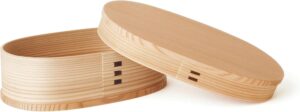

Ōdate Magewappa Bento (Akita)
Bent-cedar bento box from Akita — same wood-craft family as Kiso hinoki turning, but without the urushi finish.

Kobaien Nara Sumi (Nara)
Nara sumi inkstick from Kobaien (est. 1577) — a parallel “named-maker, region-anchored, multi-century tradition” gift item from Kansai.
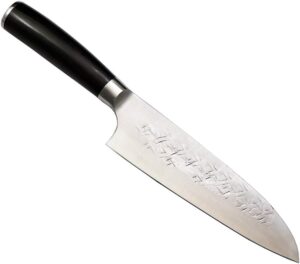

Saji Takeshi Echizen Santoku (Fukui)
Hand-forged Echizen santoku in SRS13 powdered steel — the cutting-tool counterpart from the Hokuriku side of the Japanese Alps.
Tayama Seiichi Kasama Yunomi (Ibaraki)
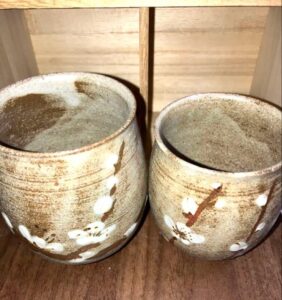
Kasama-yaki meoto-yunomi pair in paulownia gift box — the ceramic counterpart to this lacquered pair, at a similar entry-tier price.
Price snapshot across stores
Pricing reflects the data at the time of writing (May 16, 2026); always verify on the retailer page before buying. Sources: Amazon US search (moonill-20), Amazon JP Global Store listing (moonill-22), maker direct via the Kiso Shikki Cooperative, and proxy-service estimates from Buyee and Tenso.
| Store | Item / Variant | Price (JPY + USD est.) | Notes |
|---|---|---|---|
| 🇺🇸 Amazon.com (US) | Browse Japanese lacquerware pair coffee cups and Kiso / Wajima / Aizu sets | varies (USD) | Best if you’re shopping from the US — Prime shipping, USD pricing, no international customs. Amazon US carries Japanese lacquerware from Wajima, Aizu, and other regional makers; Honyama Shikki’s exact pair ships from Japan (next row). |
| 🇯🇵 Amazon JP Global Store | Honyama Shikki Kiso-shikki pair coffee cup, Negoro + Akebono (B0G33867QG) | ¥7,990 (≈ $53 USD) | Ships internationally from Japan via Amazon JP Global Store. Estimated shipping $10–$20 USD for the 200 g pair. Lacquerware is unrestricted personal import in major Western jurisdictions. |
| Maker direct (Kiso Shikki Cooperative / Hirasawa shops) | Honyama Shikki and other Kiso workshop pieces via the cooperative | ¥7,990 (≈ $53 USD), approximate | Hirasawa visitor village shops and the Kiso Shikki Cooperative ship internationally on request; live pricing on this path was unavailable at time of writing. In-person purchase at Hirasawa is the canonical alternative. |
| Proxy services (Buyee / Tenso) | Forwarded purchase from any JP-domestic Kiso-shikki retailer | ¥7,990 + proxy fee 10–15% + shipping | Useful for Kiso pieces that are not on Amazon JP Global Store (one-off named-craftsperson work, vintage Negoro patina pieces). For this specific ASIN, Amazon JP Global Store is the simpler path; live proxy pricing was unavailable at time of writing. |
📦 Shipping & where to buy from outside Japan
Amazon JP Global Store ships this 200 g pair (cup pair + standard packaging) to the US, EU, Australia, Canada, and most major international destinations. Estimated international shipping is $10–$20 USD depending on destination; transit time is typically 5–10 business days via DHL or Japan Post EMS. Lacquerware is unrestricted personal import in all major Western jurisdictions for under-de-minimis personal orders (e.g., $800 USD threshold in the US, €150 in the EU); customs duties on lacquerware are zero or nominal.
If Amazon JP Global Store does not ship the item to your country, proxy services (Buyee, Tenso, ZenMarket) will forward the purchase from any JP-domestic retailer for a 10–15% fee plus shipping. Specialty Japanese-craft importers in the West — Native & Co (London), Mutual Adoration (New York), and lacquerware-focused craft retailers — carry rotating Kiso-shikki inventory at roughly 1.5–2× JPY-equivalent markup; inventory rotates, so check current stock before assuming availability.
One caveat for urushi-sensitive individuals: fresh urushi lacquer can cause contact dermatitis (it is botanically related to poison ivy and poison oak). Cured urushi — the state in which any commercial lacquerware ships — is generally inert and safe for food contact, and contact-dermatitis reports for finished pieces are rare. If you know you react to urushiol-family compounds, hand-wash with gloves the first few times until you confirm there is no reaction.
What it does well
Weaknesses and things to verify before buying
- Not microwave or dishwasher safe. Urushi lacquer is sensitive to high heat and to alkaline detergents. Microwaving will craze the film; dishwasher cycles dull and eventually delaminate it. Hand-wash with warm water and mild soap; wipe dry promptly.
- Hot coffee is fine; near-boiling water is borderline. Lacquerware tolerates the 80–90 °C of brewed coffee or tea well. Repeatedly pouring 100 °C water directly onto fresh lacquer can stress the film over time. Pre-warm with hand-hot water instead.
- Prolonged acid contact dulls the finish. Citrus juice, vinegar, and tomato-based liquids left standing can mark the urushi surface. Empty and rinse promptly; do not use lacquerware as a fruit-soak bowl.
- The Negoro-nuri wear-through is intentional, not a defect. The red top coat is deliberately thin so that years of holding the cup wear it through to the black underneath in patches. This is the aesthetic. If you want a uniformly red cup that stays red forever, Akebono-nuri or a Wajima piece is the better option.
- Rare urushi contact dermatitis. Cured urushi is generally inert, but individuals known to react to urushiol-family compounds (poison ivy, poison oak, raw cashew) should test cautiously — hand-wash with gloves the first few uses to confirm no reaction.
- Direct sunlight fades pigments over decades. The bengara red and orange Akebono pigments fade slowly under prolonged direct sun exposure. Store in a cabinet or shaded shelf; daily window light is fine.
- Live pricing and stock fluctuate. Asuka-dō’s Amazon JP inventory rotates as Honyama Shikki produces new batches. The ¥7,990 figure reflects the listing snapshot as of May 16, 2026, and may have shifted. Verify on the retailer page before purchase.
Conclusion — which buyer type are you?
Other ways to approach this purchase
🏆 Editor’s Pick
❓ Frequently Asked Questions
Is lacquerware dishwasher or microwave safe?
No. Urushi lacquer is sensitive to high heat and to alkaline detergents. Microwaving will craze and crack the lacquer film over time; dishwashers will dull the finish and eventually cause delamination. Hand-wash with warm water and mild soap, and wipe dry promptly with a soft cloth. Standing water can also leave marks on the lacquer surface.
What is the difference between Negoro-nuri and Akebono-nuri?
Negoro-nuri (根来塗) is a two-layer finish with a black urushi base coat and a red urushi top coat, designed so the red wears through to the black over years of use — a deliberate patina aesthetic. Akebono-nuri (曙塗) is a graduated red-to-orange finish that mimics the colors of dawn, intended for new-piece decorative appreciation rather than long-term patina development. The Honyama Shikki pair includes one cup of each, presenting both canonical Kiso finishes in a single purchase.
Can I drink hot coffee from a lacquered cup?
Yes — coffee and tea at typical brewing temperatures (80–90 °C) are within lacquerware’s comfortable range, and the lacquer’s natural insulation actually keeps the cup body warm to the touch without scalding fingers. Pouring 100 °C boiling water directly onto fresh lacquer is borderline; pre-warming with hand-hot water first reduces thermal stress on the film over the long term.
Will Amazon JP Global Store actually deliver this to my country?
Amazon JP Global Store ships lacquerware to the US, EU, Australia, Canada, and most major international destinations. Estimated shipping is $10–$20 USD for the 200 g pair; transit time is typically 5–10 business days via DHL or Japan Post EMS. Lacquerware is unrestricted personal import in all major Western jurisdictions, and customs duties are zero or nominal for under-de-minimis personal orders. Always confirm shipping availability to your specific country on the Amazon JP product page at checkout.
How does Honyama Shikki compare to Wajima-nuri?
Wajima-nuri (Ishikawa Prefecture, Noto Peninsula) is the more famous of Japan’s major lacquerware traditions, with a heavier multi-layer technique and pricing that typically starts at ¥30,000 for a pair cup and reaches ¥100,000+ for named-craftsperson work. Kiso-shikki uses a similar multi-layer urushi technique at lower price tiers, with regional-specific decorative finishes (Negoro-nuri, Akebono-nuri) as its visual signature. Aizu-nuri (Fukushima) sits adjacent to Kiso in price and quality tier. For a first piece, Kiso is the more accessible entry point.
Will the red on the Negoro-nuri cup wear off — is that a defect?
The Negoro-nuri wear-through is intentional and is the aesthetic — not a defect. The red urushi top coat is deliberately applied just thin enough that years of holding the cup wear it through to the black underneath in patches at the rim, handle, and high-contact areas. Collectors prize old Negoro pieces precisely for the depth of their accumulated patina, which becomes a visible record of how the cup has been used. If you prefer a uniformly red cup that stays red, the Akebono-nuri cup in the pair is the one to use daily.
Is urushi lacquer allergenic?
Fresh, uncured urushi can cause contact dermatitis — it is botanically related to poison ivy and poison oak, all in the genus Toxicodendron. Cured urushi, the state in which any finished lacquerware ships, is generally inert and food-safe; contact-dermatitis cases for fully cured pieces are rare. Individuals known to react to urushiol-family compounds (poison ivy, poison oak, raw cashew, mango skin) should hand-wash with gloves the first few times to confirm no reaction before regular use.
jpmono.com is curated by a Japan-based editorial team (working out of Toyama in the Hokuriku region and Nara in Kansai) and is independent. We do not take payment from the makers we feature; income comes from affiliate links. Read more about our editorial standards.
AI-assistance note: this article was drafted with AI assistance based on Amazon JP listing data, Honyama Shikki / Asuka-dō distributor information, and publicly documented Kiso-shikki and Nakasendō history. Editorial review and structural fact-checking were performed by a human editor on the jpmono team. Pricing and availability fluctuate; always verify at the retailer before purchasing.
Affiliate disclosure: jpmono.com may earn a commission on qualifying purchases made through links on this page, at no additional cost to you.