![Hakone Yosegi-Zaiku Octagonal Pen Stand by Hakone Maruyama — 200-Year Wood Marquetry (¥3,200 / ≈$21 USD) [2026 Buyer’s Guide]](https://jpmono.com/wp-content/uploads/2026/05/hakone-yosegi-marquetry-octagonal-pen-stand-where-to-buy-2026-featured-1069x1050.jpg)
Hakone yosegi-zaiku (箱根寄木細工) is the wood-marquetry tradition of Hakone, a mountain hot-spring district in western Kanagawa Prefecture, about 90 km southwest of Tokyo. The technique was developed around 1830 by Ishikawa Nihei, who worked out a way to assemble small precisely-cut sections of differently-colored Hakone woods — keyaki, kuwa, sumiki, hōnoki and roughly fifty other native species — into geometric block patterns held together without dyes or stains. The blocks are then sliced or carved to produce decorative surfaces. The craft was designated a Traditional Craft Product by Japan’s Ministry of Economy, Trade and Industry (METI) in 1984.
This guide covers the Hakone Maruyama Bussan Octagonal Yosegi Pen Stand, an entry-tier yosegi piece listed on Amazon JP at ¥3,200 (approximately $21 USD as of May 2026). Among Hakone yosegi products — which range from ¥2,000 trays to ¥30,000 himitsu-bako (秘密箱, “secret box”) puzzle boxes — a small functional desk object at the bottom of the price ladder is the most common first-purchase format for buyers outside Japan.
What follows is a catalog-style summary: where the craft comes from, what the piece is and is not, who it fits, what to verify before checkout, and how to buy it from outside Japan. The spec data is drawn from a single Amazon JP listing snapshot taken on 2026-05-16; live pricing may have shifted since.
🔄 Updated:
⏱️ ~10 min read

- Who this is for — and who should skip it
- Product overview (from published specs)
- 📍 Where this comes from — Hakone, the Tōkaidō, and a craft born from tourist demand
- 📌 How does it compare?
- Price snapshot across stores
- What it does well
- Weaknesses and things to verify before buying
- Conclusion — which buyer type are you?
- Other ways to approach this purchase
- 🏆 Editor’s Pick
- ❓ Frequently Asked Questions
- 📌 Related Japanese Crafts
Who this is for — and who should skip it
- Want a verifiable METI-designated Japanese traditional craft object under $25.
- Use a daily desk and would rather hold pens in a small wooden cylinder than a plastic cup.
- Are buying a gift that needs to be unmistakably Japanese without being a tea-ceremony tier price.
- Like the visual logic of geometric pattern work — Islamic tile geometry, parquetry, Shaker boxes — and want a Japanese counterpart on the desk.
- Plan to start a yosegi collection and want a low-risk first piece before buying a higher-tier himitsu-bako puzzle box.
- Want a deep, dense yosegi pattern (the entry tier uses simpler block geometry — full-complexity 60-species pieces start higher).
- Need a heavy or oversized pen holder for many markers, brushes, or rulers — this is small (⌀ 7 cm).
- Need the piece to be dishwasher- or moisture-tolerant (it is unfinished wood; no oil, no resin).
- Want the famous Hakone himitsu-bako sliding-mechanism puzzle box specifically — this is a pen stand, not a puzzle.
- Are uncomfortable buying through Amazon JP Global Store and waiting for international shipping of around $8–$15 on top of the item price.
Product overview (from published specs)
The table below combines the Amazon JP Global Store listing for ASIN B01MRYRX7D with the maker’s published description. Amazon US carries a wide range of Japanese desk and writing goods, but this specific Hakone Maruyama Bussan piece is sourced from Japan — the US row is for shoppers who prefer to start their search domestically.

Hakone Yosegi-Zaiku Octagonal Pen Stand by Hakone Maruyama
寄木八角ペン立て(小) 小寄木
現在在庫切れです。 · ASIN B01MRYRX7D
Price and availability as of 2026-08-31 02:30 JST. The Amazon listing at the time of purchase is authoritative. jpmono.com earns a commission on qualifying purchases at no extra cost to you.
| Field | Value |
|---|---|
| Item | Hakone Yosegi-Zaiku Octagonal Pen Stand (small) — 寄木八角ペン立て(小) |
| Maker | Hakone Maruyama Bussan (箱根丸山物産), Hakone, Kanagawa |
| Craft category | Hakone yosegi-zaiku — METI Traditional Craft Product (designated 1984) |
| Material | Multiple natural-colored Hakone wood species, no dyes (typically keyaki / kuwa / sumiki / hōnoki and others) |
| Form | Octagonal cylinder, open-top pen stand |
| Dimensions | ⌀ approximately 7 cm × H 9 cm |
| Weight | ~120 g |
| Made in | Hakone, Kanagawa, Japan |
| Price (JPY authoritative) | ¥3,200 (approximately $21 USD as of May 2026 at ¥150/USD) |
| Care | Dust with soft cloth · avoid prolonged moisture · keep out of direct sunlight · no oil treatment required |
| International shipping | Amazon JP Global Store ships to most major destinations; estimated $8–$15 USD shipping at 120 g |
Data source: Amazon JP listing snapshot for ASIN B01MRYRX7D taken 2026-05-16. Live pricing and stock fluctuate; verify at the retailer link before purchasing. Only the Amazon JP listing snapshot is available — maker direct and proxy paths exist but are not separately price-listed in the fetched data.
📖 Glossary — Japanese craft terms used in this article
- Yosegi-zaiku (寄木細工)
- Literally “joined-wood work.” Geometric marquetry made by assembling small sections of natural-colored woods into pattern-blocks, then slicing or carving them into surfaces.
- Himitsu-bako (秘密箱)
- “Secret box” — a Hakone puzzle box opened by 5 to 72+ sequential sliding moves. The category that made Hakone yosegi internationally famous.
- Tōkaidō (東海道)
- The Edo-period coastal highway connecting Edo (Tokyo) to Kyoto. Hakone-juku was the tenth post station and the first overnight stop heading west from Edo.
- Shokunin (職人)
- Craftsperson; a specialist whose expertise comes from years of apprenticeship rather than formal academic training.
- METI Traditional Craft Product (経済産業大臣指定伝統的工芸品)
- A formal designation given by Japan’s Ministry of Economy, Trade and Industry to crafts meeting criteria for historical continuity, manual production, regional concentration, and use of traditional materials. Hakone yosegi-zaiku received the designation in 1984.
- Keyaki / kuwa / sumiki / hōnoki
- Four of the dozens of native Hakone wood species used in yosegi: zelkova, mulberry, sumac, and Japanese big-leaf magnolia, respectively — each contributing a distinct natural color from pale cream through deep brown.
📍 Where this comes from — Hakone, the Tōkaidō, and a craft born from tourist demand

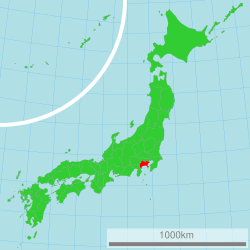
Hakone is a volcanic caldera in the western corner of Kanagawa Prefecture, roughly 90 km southwest of central Tokyo and a short distance east of Mount Fuji. The terrain is steep — wooded mountains, sulfur springs, the crater lake Ashinoko — and the local economy has, for centuries, depended on a single industry: hosting travelers passing through. During the Edo period (1603–1868) Hakone-juku was the tenth and most fortified post station on the Tōkaidō, the coastal highway between Edo (modern Tokyo) and Kyoto. Travelers were required to stop at the Hakone sekisho (関所) checkpoint, and many spent a night in the hot springs at Hakone-Yumoto before continuing west.
That continuous traveler flow created an unusual demand: souvenirs lightweight enough to carry the remaining 400 km on foot. Local woodworkers responded with small turned and inlaid wooden objects. Around 1830, a craftsman named Ishikawa Nihei, working in the village of Hatajuku just south of Hakone-Yumoto, refined a technique already practiced in modest form in the region: gluing strips of naturally-colored Hakone woods edge-to-edge into geometric patterns, then assembling those into larger blocks. Slicing across the blocks produced repeating ornamental surfaces; thin shaved sheets (called zuku) could be glued to the outside of trays, boxes, and small containers. The Hakone hills supplied the raw material — Kanagawa’s mountain forests held an unusual variety of wood species growing within a few kilometers of each workshop.
-
1601 — Hakone-juku is established as the tenth post station of the Tōkaidō and the first overnight stop heading west from Edo. -
circa 1830 — Ishikawa Nihei, working in Hatajuku village, develops the multi-species geometric block technique that becomes Hakone yosegi-zaiku. -
mid-1800s — Yosegi becomes the standard Hakone souvenir for Tōkaidō travelers; the himitsu-bako (sliding-mechanism puzzle box) emerges as a regional specialty. -
1868–1912 — Meiji-era international expositions introduce yosegi to Europe and North America; export production scales for the first time. -
1984 — METI designates Hakone yosegi-zaiku a Traditional Craft Product, formalizing standards for materials, technique, and regional origin. -
2020s — Hakone receives roughly 20 million visitors a year; yosegi workshops cluster along Hakone-Yumoto and Moto-Hakone, and modern pieces use 40–60 native wood species in a single block.
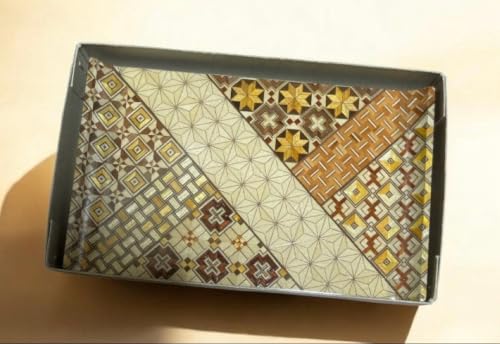
The technique used today is essentially the one Ishikawa Nihei established. There are no dyes — every color is the natural heartwood or sapwood color of a specific Hakone tree. Pale cream comes from mizuki (giant dogwood) or hōnoki, golden yellow from nigaki (mokumokuren), reddish browns from sumiki (sumac) and kuwa (mulberry), darker tones from aged keyaki (zelkova). A modern complex piece may combine 40 to 60 species in a single block. Each is selected for its natural color before cutting, dried, then planed and glued along precision grain lines. Where the wood comes from is, in a literal sense, what makes the pattern — substituting non-Hakone species would produce a different palette.
“There are no dyes. Every color you see — pale cream, ochre, deep brown — is the actual heartwood color of a specific Hakone tree species, planed thin and glued along a precise grain line.”
Hakone Maruyama Bussan is one of the named Hakone yosegi producers operating today, and its octagonal pen stand sits at the entry tier of the category. The workshop produces a range of yosegi pieces — coasters, trays, small boxes, and pen stands — generally aimed at the souvenir-shop and online-retail market rather than the gallery / collector market that handles higher-craft himitsu-bako and tea-ceremony accessories. The octagonal geometry of this pen stand is a typical Hakone yosegi form: eight flat faces give the marquetry pattern eight clean viewing surfaces, and the rounded interior fits standard pens, brushes, and small rulers. Today, an estimated several dozen yosegi workshops remain active in Hakone, with shops lining both Hakone-Yumoto (the rail terminus) and Moto-Hakone (the Lake Ashinoko side near the old Tōkaidō checkpoint).
📌 How does it compare?
Other Japanese-craft desk and home objects in similar price tiers, covered elsewhere on jpmono.com:




Price snapshot across stores
| Store | Item / Variant | Price | Notes |
|---|---|---|---|
| 🇺🇸 Amazon.com (US) | Browse Japanese yosegi marquetry and wooden desk goods | varies (USD) | Best if you’re shopping from the US — Prime shipping, USD pricing, no international customs. Amazon US carries Japanese wooden pen stands, himitsu-bako puzzle boxes, and yosegi coasters from various makers — useful for comparing geometry and price tiers. The specific Hakone Maruyama Bussan piece is sourced from Japan (next row). |
| 🇯🇵 Amazon JP Global Store | Octagonal Yosegi Pen Stand (small) — B01MRYRX7D | ¥3,200 (≈ $21 USD) | Ships internationally from Japan. This is the sourced listing for the specific item in this guide. International shipping estimated $8–$15 USD at 120 g. |
| Maker direct | Hakone Maruyama Bussan workshop / Hakone-area shops | — (unconfirmed) | In-person purchase at Hakone-Yumoto or Moto-Hakone is possible for visitors. Direct international shipping from the maker is not separately listed in the fetched data. |
| Proxy services (Buyee / Tenso) | Same listing forwarded via Japanese proxy buyer | ¥3,200 + proxy fees + forwarding | Fallback for destinations Amazon JP Global Store does not serve, or for bundling with other Japanese-only items in a single shipment. Typically adds 10–20% in fees plus forwarding postage. |
USD figures are approximate (¥150/USD baseline as of mid-2026). The JPY price is the authoritative one for the specific listed item. Prices and availability shown were captured 2026-05-16 and may have changed — verify at the retailer before purchasing.
What it does well
Weaknesses and things to verify before buying
- The pattern complexity is entry-tier. Hakone yosegi at the gallery / collector level uses 40–60 wood species in dense geometric blocks. A ¥3,200 piece will use a simpler block pattern with fewer species. Buyers expecting maximal density should look at higher-priced workshop pieces or himitsu-bako puzzle boxes.
- Wood is moisture-sensitive. The piece is unfinished or lightly finished wood. Prolonged humidity, dishwasher exposure, or direct sunlight will cause warping, fading, or pattern-line cracking. This is a dry-desk object, not a kitchen object.
- The dimensions are small. At ⌀ 7 × H 9 cm, the cylinder holds a modest cluster of pens. Heavy-pen-user readers (architects, illustrators, calligraphers with many brushes) should look for the larger format, which exists separately.
- Color and pattern vary by lot. Each piece is hand-assembled from naturally-colored wood, so visible patterns differ slightly between units. The product photo represents the type of pattern, not the exact unit you receive. This is typical for hand-crafted yosegi.
- International shipping adds cost and time. Amazon JP Global Store delivery times are typically 1–3 weeks to North America and Western Europe, with $8–$15 USD shipping at this weight and possible customs duties depending on local thresholds.
- Live pricing may have shifted. Only the Amazon JP listing snapshot of 2026-05-16 was available; ¥3,200 is the reference price at that date and may have changed. Verify at the listing before purchase.
Conclusion — which buyer type are you?
Other ways to approach this purchase
🏆 Editor’s Pick
Hakone Maruyama Bussan — Octagonal Yosegi Pen Stand (B01MRYRX7D)
For a first piece of Hakone yosegi-zaiku, this is the entry point. ¥3,200 (≈ $21 USD) puts a METI-designated Japanese traditional craft object on the desk every day, in the canonical octagonal Hakone geometry, from a named Hakone workshop.
- METI-designated craft category, designated 1984.
- Multiple natural-colored Hakone wood species, no dyes.
- Light enough (~120 g) to ship internationally at modest cost via Amazon JP Global Store.
❓ Frequently Asked Questions
Is this the same as the famous Hakone “puzzle box” (himitsu-bako)?
No. Both come from Hakone and use the same yosegi-zaiku marquetry technique on the exterior, but the himitsu-bako (秘密箱, “secret box”) is a sliding-mechanism puzzle box requiring 5 to 72+ sequential moves to open. This is a pen stand — open top, no mechanism. If you specifically want the puzzle box, search for “Hakone himitsu-bako” separately.
Does Amazon JP Global Store ship this to my country?
Amazon JP Global Store ships household items like this to most major destinations including the United States, Canada, the United Kingdom, Australia, and many EU countries. At ~120 g, shipping is typically $8–$15 USD on top of the item price. Confirm on the checkout page before purchase; a small number of countries are excluded. If yours is, a proxy service such as Buyee or Tenso will forward the order.
How do I care for it?
Dust with a soft dry cloth. Keep away from prolonged moisture (do not place near a window that gets condensation, do not wipe with a wet rag) and out of direct sunlight (UV fades the natural wood colors over time). No oil treatment is needed. The piece is intended as a dry-desk object, not a kitchen or bath object.
What woods are used in Hakone yosegi-zaiku?
Hakone yosegi uses native species found in the Hakone mountains — typically keyaki (zelkova) for browns, kuwa (mulberry) for reddish tones, sumiki (sumac) and hōnoki (Japanese big-leaf magnolia) for varied browns, mizuki (giant dogwood) and others for pale creams. Modern complex pieces can combine 40 to 60 species in a single block. No dyes are used; every color is the natural heartwood or sapwood color of a specific tree.
Is each piece individually different?
Yes — each unit is hand-assembled from naturally-colored wood, so the exact distribution of colors and the precise pattern alignment varies slightly between pieces. The product photo on the Amazon JP listing shows the type of pattern, not the specific unit you will receive. This is normal for hand-crafted yosegi and is typically considered part of the character of the piece rather than a flaw.
Is Hakone yosegi-zaiku officially recognized?
Yes. Hakone yosegi-zaiku was designated a Traditional Craft Product by Japan’s Ministry of Economy, Trade and Industry (METI) in 1984. The designation requires that pieces meet defined standards for materials, technique, historical continuity, and regional concentration within Kanagawa Prefecture.
Will it make a good gift?
It works well as a desk-themed gift for someone who appreciates Japanese craft, geometric pattern work, or souvenir history. At under $25 landed, it sits comfortably in the “small but meaningful” gift range. For a more formal gift, pair it with another small Japanese desk object (a brushpen, a sumi inkstick, washi notebook) for a curated set.
jpmono.com is curated by a Japan-based editorial team working out of Toyama (Hokuriku region) and Nara (Kansai region) and is independent. We don’t take payment from the makers we feature; income comes from affiliate links. We don’t physically test every product — we read maker’s specs and source listings. Read more about our editorial standards.
🤖 AI-assist note: This article was drafted with AI assistance from product-listing data captured on 2026-05-16. All factual claims about Hakone yosegi-zaiku — the 1830s technique development, the 1984 METI designation, the Tōkaidō post-station context — are drawn from the underlying spec data. A human editor based in Japan reviewed and approved the final text. No physical product testing was performed.
Affiliate disclosure: jpmono.com may earn a commission on qualifying purchases made through links on this page, at no additional cost to you.