![Mashiko-yaki Seiji-Glaze Mug by Tsukamoto — 175-Year Mingei Pottery from Tochigi (¥2,090 / ≈$14 USD) [2026 Buyer’s Guide]](https://jpmono.com/wp-content/uploads/2026/05/tsukamoto-mashiko-yaki-seiji-mug-where-to-buy-2026-featured-1400x1050.jpg)
Mashiko-yaki (益子焼) is the mingei-tradition pottery of Mashiko, a small town in southeastern Tochigi Prefecture about 100 km north of Tokyo. The kiln district was founded in 1853 by Otsuka Keisaburō, who carried clay-and-glaze knowledge over from nearby Kasama in Ibaraki — which makes Mashiko, in technical lineage terms, a Kasama daughter kiln. What put Mashiko on the international map a century later was the potter Hamada Shōji (浜田庄司, 1894–1978), who settled there in 1924 after collaborating with the English potter Bernard Leach in St. Ives, and went on to become Japan’s first pottery Living National Treasure in 1955.
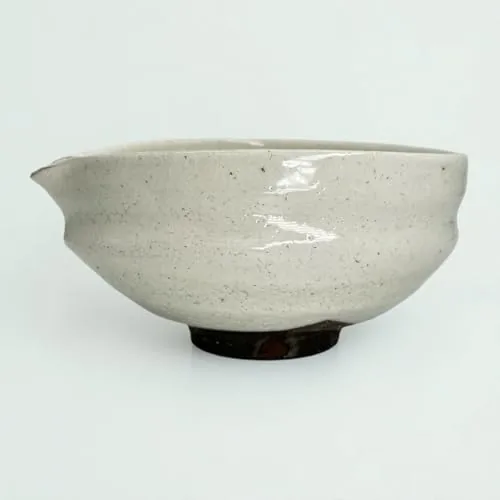
This guide covers the Tsukamoto (つかもと) Mashiko-yaki Seiji-Glaze Mug, 260 ml, ASIN B07CMRLWNL — a daily-use mug from one of Mashiko’s largest established kilns, finished in the traditional Mashiko-seiji (益子青磁) blue-grey celadon palette. Tsukamoto’s Dentō-Yū (伝統釉, “traditional glaze”) series is the kiln’s accessible everyday line: reduction-fired stoneware in the classical Mashiko colorways, priced for daily use rather than for the collector shelf.
At ¥2,090 (≈$14 USD as of 2026-05) this sits at the impulse-purchase entry tier — well below the ¥30,000–¥200,000 range of Hamada-lineage Mashiko collector ware. Below we cover who this is for, what the spec sheet says, how it compares to other Japanese pottery mugs on this site, and where to buy it from outside Japan. Prices in USD are approximate and depend on the current exchange rate.
🔄 Last updated:
⏱️ ~9 min read
🇯🇵 Made in Mashiko, Tochigi

- Who this is for — and who should skip it
- Product overview (from published specs)
- 📍 Where this comes from — Mashiko, Tochigi, and the mingei pottery tradition
- Price snapshot across stores
- What it does well
- Weaknesses and things to verify before buying
- Conclusion — which buyer type are you?
- Other ways to approach this purchase
- 🏆 Editor’s Pick
- ❓ Frequently Asked Questions
- 📌 Related Japanese Crafts
Who this is for — and who should skip it
- Readers who want an authentic, named-kiln Mashiko-yaki piece without spending collector-tier money
- Mingei-curious buyers who already know Hamada Shōji and want a daily-use entry point into the tradition
- Households that drink coffee or tea in 250 ml portions and want a single ceramic mug to commit to
- Gift-givers looking for a ¥2,000-tier Japanese-craft object that ships internationally
- Buyers who appreciate quiet blue-grey celadon over loud decorative glazes
- You want a Hamada-lineage or Living National Treasure-attributed piece — this is a production-line mug from a large kiln, not a single-potter studio piece
- You prefer 350–470 ml mugs for American-style coffee — 260 ml is closer to a Japanese tea-cup capacity
- You need machine-identical pieces — stoneware-with-celadon naturally shows kiln variation
- You want porcelain-white or food-photography-bright color — Mashiko-seiji is intentionally muted
- You need dishwasher-and-oven-safe; care notes indicate hand-wash and avoid thermal shock
Product overview (from published specs)
Spec sheet data is drawn from the Amazon JP Global Store listing for ASIN B07CMRLWNL as of . Only the Amazon JP listing snapshot is available; live pricing may have shifted since the writing date.

Mashiko-yaki Seiji-Glaze Mug by Tsukamoto
つかもと(Tsukamoto) マグカップ ブルー 260ml 益子焼 マグカップ 伝統釉シリーズ 益子青磁釉 PM-3
残り10点 ご注文はお早めに · Sold by Amazon.co.jp · ASIN B07CMRLWNL
Price and availability as of 2026-08-31 02:30 JST. The Amazon listing at the time of purchase is authoritative. jpmono.com earns a commission on qualifying purchases at no extra cost to you.
| Attribute | Value | Source |
|---|---|---|
| Kiln | Tsukamoto (つかもと), Mashiko, Tochigi | Amazon JP Global Store listing |
| Series / model | Dentō-Yū (伝統釉) “traditional glaze” series, model PM-3 | Maker direct |
| Material | Reduction-fired Mashiko stoneware | Amazon JP Global Store listing |
| Glaze | Mashiko-seiji (益子青磁) — blue-grey celadon | Amazon JP Global Store listing |
| Capacity | 260 ml | Amazon JP Global Store listing |
| Dimensions | ⌀ 8.5 × H 9 cm (approx.) | Amazon JP Global Store listing |
| Weight | ~250 g | Amazon JP Global Store listing |
| Origin | Mashiko, Tochigi, Japan | Amazon JP Global Store listing |
| Microwave | Safe per listing | Amazon JP Global Store listing |
| Care | Hand-wash recommended; avoid thermal shock; patina with use | Amazon JP Global Store listing |
| Price | ¥2,090 (≈ $14 USD as of 2026-05) | Amazon JP Global Store listing |
| METI craft designation | Mashiko-yaki — designated 1979 | Public record |
📖 Glossary — Japanese pottery terms used in this article
- Mashiko-yaki (益子焼)
- Stoneware tradition from Mashiko, Tochigi, founded 1853. Designated a METI Traditional Craft Product in 1979.
- Mashiko-seiji (益子青磁)
- “Mashiko celadon” — a quiet blue-grey reduction-fired glaze that is one of Mashiko’s classical color families. Different from Chinese Longquan celadon in palette and feel.
- Mingei (民芸)
- “Folk craft.” A 20th-century movement led by philosopher Yanagi Sōetsu (1889–1961) that revalued utilitarian craft objects made by unnamed artisans. Hamada Shōji, Bernard Leach, and Kawai Kanjirō were central figures.
- Hamada Shōji (浜田庄司)
- Potter (1894–1978) who collaborated with Bernard Leach in St. Ives, England, before settling in Mashiko in 1924. Designated Japan’s first pottery Living National Treasure (人間国宝) in 1955.
- Bernard Leach (1887–1979)
- English studio potter who founded the Leach Pottery in St. Ives in 1920 with Hamada. Through his book A Potter’s Book (1940), Leach helped introduce Japanese folk pottery aesthetics to Western studio ceramics.
- Dentō-Yū (伝統釉)
- Literally “traditional glaze.” The name of Tsukamoto’s accessible-tier daily-ware line, finished in the classical Mashiko glaze families (seiji, ame-yū, kaki-yū, jiro).
- Reduction firing (還元焼成)
- A kiln-atmosphere technique that limits oxygen during firing, pulling oxygen out of metal oxides in the glaze and producing the cooler grey-blue and green hues characteristic of Mashiko-seiji.
- METI Traditional Craft Product (経済産業大臣指定伝統的工芸品)
- A formal designation by Japan’s Ministry of Economy, Trade and Industry recognizing crafts with at least a century of continuous production using traditional materials and techniques. Mashiko-yaki received this designation in 1979.
📍 Where this comes from — Mashiko, Tochigi, and the mingei pottery tradition

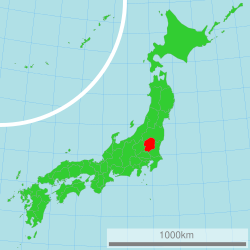
Tochigi is the prefecture directly north of Tokyo’s outer Kantō ring. Mashiko itself is a small town of about 21,000 in the prefecture’s southeast, on the inland side of the Hachiman Mountains, far enough from any major commuter line that it has retained its workshop-village character. The clay around Mashiko — a sandy, iron-rich, locally abundant stoneware body — is the geological reason the pottery industry took root here; the same clay band runs south into Ibaraki, which is why Kasama (today’s parent kiln district) and Mashiko share so much technical DNA.
The historical sequence is well documented. In 1853, the potter Otsuka Keisaburō moved from Kasama into Mashiko and began producing utilitarian stoneware — water jars, mortars, storage pots — for the surrounding farm communities and for shipment south into Edo (today’s Tokyo). For its first seventy years, Mashiko-yaki stayed a regional folk-pottery tradition with no particular national profile. That changed in 1924.
-
1853 — Otsuka Keisaburō moves from Kasama to Mashiko and founds the kiln district; production is utilitarian stoneware for local and Edo markets. -
1920 — Bernard Leach and Hamada Shōji co-found the Leach Pottery in St. Ives, England — a workshop that becomes a bridge between Japanese folk pottery and Western studio ceramics. -
1924 — Hamada Shōji returns to Japan and settles in Mashiko, joining the mingei circle around Yanagi Sōetsu and Kawai Kanjirō. -
1936 — The Japan Folk Crafts Museum (Mingei-kan) opens in Tokyo; Mashiko becomes one of the movement’s flagship craft towns. -
1955 — Hamada Shōji is designated Japan’s first pottery Living National Treasure (人間国宝). -
1979 — Mashiko-yaki is designated a METI Traditional Craft Product, formal recognition of its century-plus continuous production. -
Today — Roughly 250 active kilns operate in Mashiko, from one-person studios to large established makers like Tsukamoto. The spring and autumn pottery festivals (春・秋の陶器市) draw approximately 500,000 visitors combined.
That year, the 30-year-old Hamada returned to Japan after four years in St. Ives, where he had co-founded the Leach Pottery with the English potter Bernard Leach in 1920. He chose Mashiko as his base — partly because the clay suited the style he was developing, partly because the local pottery tradition was already strong but unselfconscious, the kind of working folk craft the mingei movement was reorienting around. Hamada joined the philosophical circle of Yanagi Sōetsu (the mingei movement’s founder) and Kawai Kanjirō, and through his decades of work and international travel — including return visits to St. Ives and tours in the United States — he made Mashiko, more than any other Japanese kiln town, the international face of Japanese folk pottery.
“Mashiko was a regional folk-pottery town for seventy years before Hamada arrived. It became the international face of Japanese mingei because one potter, one philosopher, and one English collaborator decided that unsigned utilitarian ware deserved to be taken as seriously as porcelain on a daimyō’s shelf.”
In 1955, Hamada was designated Japan’s first pottery Living National Treasure — Intangible Cultural Property holder for ceramic art. Mashiko-yaki itself received formal METI recognition as a Traditional Craft Product in 1979. Today the district contains roughly 250 active kilns, ranging from single-potter studios producing collector pieces in the ¥30,000–¥200,000 range to larger established kilns producing daily-use ware in the ¥1,000–¥5,000 range. The spring and autumn pottery festivals (春の陶器市・秋の陶器市) are among the largest pottery markets in Japan by attendance.
Tsukamoto (つかもと), the kiln that produced this mug, is one of Mashiko’s largest established makers — the kind of mid-scale, multi-generation kiln that occupies the productive middle ground between artist-studio Mashiko and commodity ceramics. Their Dentō-Yū (“traditional glaze”) series exists precisely to make the classical Mashiko glaze families — seiji (celadon), ame-yū (amber), kaki-yū (persimmon), jiro (white) — available at daily-use prices. The Mashiko-seiji on this 260 ml mug is reduction-fired, which is what pulls the iron in the glaze toward the cool blue-grey rather than letting it oxidize toward warmer tones. It is a quiet, intentionally restrained color — closer in feel to Korean Goryeo celadon than to the bright Longquan greens of Chinese export ware.
Price snapshot across stores
Prices were captured on from the Amazon JP Global Store listing for B07CMRLWNL. The Amazon US row is a category-browse search rather than a same-item listing — Tsukamoto’s Dentō-Yū PM-3 is not individually carried on amazon.com.
| Store | Item / variant | Price | Notes |
|---|---|---|---|
| 🇺🇸 Amazon US (search) | Browse Japanese pottery mugs & Mashiko-style ceramics | varies (USD) | Best if you’re shopping from the US — Prime shipping, USD pricing, no international customs. Amazon US carries Japanese mingei-style mugs from various makers; Tsukamoto’s exact PM-3 ships from Japan (next row). |
| 🇯🇵 Amazon JP Global Store | Tsukamoto Mashiko-seiji 260 ml, PM-3 (B07CMRLWNL) | ¥2,090 (≈ $14 USD) | Ships internationally from Japan. ~250 g item; international shipping typically $8–$15 USD to North America / EU; check customs threshold for your country. |
| Maker direct (Tsukamoto) | Dentō-Yū series at Tsukamoto’s Mashiko showroom and online store | ¥2,090 (JPY) | Tsukamoto operates a flagship showroom in Mashiko and a JP-language e-commerce site; international shipping handling varies by item. Useful for buyers who want the full Dentō-Yū glaze family side by side. |
| Proxy services (Buyee / Tenso) | Same B07CMRLWNL via JP-side retail or maker direct, forwarded internationally | ¥2,090 + service fee + shipping | Useful if Amazon JP Global Store doesn’t ship to your country or for batching multiple items. Expect a 7–15% service fee plus consolidated international shipping. |
Prices and stock fluctuate. USD figures shown alongside JPY are approximate (¥150/USD baseline as of mid-2026); the JPY price is the authoritative one for the specific listed item.
What it does well
¥2,090 puts this below the price of two specialty coffees in Tokyo, while still attaching the piece to a real, named, multi-generation Mashiko kiln. Most Mashiko at this tier is either anonymous mass-production or comes from larger ceramic-supply houses outside the kiln town.
Mashiko-seiji is one of the four core Mashiko glaze families; reduction-firing produces the cool blue-grey that defines the palette. The color is intentionally muted — built for daily handling rather than display.
Spec sheets indicate 260 ml — large enough for a single espresso, a small drip coffee, or a generous Japanese green-tea pour, and small enough that the cup doesn’t dominate the table. ⌀ 8.5 cm fits in most drawer-style shelving.
The Amazon JP listing notes microwave compatibility, which is uncommon for hand-shaped studio Mashiko at higher tiers. Hand-wash is still recommended to protect the glaze surface over the long term.
Weaknesses and things to verify before buying
- This is production-line Mashiko, not a Hamada-lineage studio piece. Tsukamoto’s Dentō-Yū series is the kiln’s accessible-tier daily ware. Collectors looking for a Hamada family workshop piece or a direct apprentice’s hand-thrown work should expect ¥30,000–¥200,000+ on those listings, not ¥2,090. The data suggests this mug is correctly priced for its tier; the warning is to align expectations.
- 260 ml is closer to a Japanese tea-cup than an American breakfast mug. Standard US mugs run 350–470 ml. If you fill a 16 oz pour-over with cold milk, this cup is too small. Verify capacity against your normal coffee setup before committing.
- Stoneware-with-celadon shows natural kiln variation. Color depth, glaze pooling at the foot, occasional kiln-spots — these are characteristic, not defects. Buyers who want food-photography-uniform pieces should consider porcelain (the HASAMI mug linked above is a different aesthetic that delivers that uniformity).
- Avoid thermal shock. Per the listing’s care notes, do not move the cup directly from refrigerator to microwave, or from boiling pour to cold counter. Stoneware tolerates daily use well, but rapid temperature transitions stress the glaze.
- Dishwasher and oven status is not explicitly stated. The listing confirms microwave-safe but does not confirm dishwasher-safe or oven-safe. Hand-wash is the recommended baseline; assume not oven-safe absent explicit confirmation.
- International shipping costs can approach the item price. The mug itself is ¥2,090, but Amazon JP Global Store shipping of a 250 g ceramic item to North America or the EU typically runs $8–$15 USD, with customs duty potentially applied above national thresholds. Consider batching with one or two other items to amortize shipping.
- Live pricing may have shifted. Only the Amazon JP listing snapshot from 2026-05-16 is available; verify the current price at the retailer link before purchase.
Conclusion — which buyer type are you?
If you want a Hamada-lineage or single-potter studio Mashiko piece, this mug is not it. Look at Hamada family workshop listings or attend the spring/autumn Mashiko pottery festival in person — that is the right channel for the ¥30,000+ collector tier.
If you want named-kiln Mashiko-yaki, classical Mashiko-seiji palette, and daily-use durability — this is exactly the entry point. The mug is correctly priced for its tier, ships internationally, and lets you commit a small budget to a real Mashiko piece.
At ¥2,090 this is the budget tier for named-kiln Mashiko. Anonymous mass-production Mashiko-style mugs from Amazon listings under ¥1,000 exist, but the kiln attribution and Dentō-Yū series provenance are what distinguishes this purchase from a generic ceramic mug.
If you want a 350+ ml breakfast mug, a dishwasher-safe everyday cup, or a uniform porcelain piece, the Mashiko-seiji stoneware aesthetic is wrong for your kitchen. Consider the HASAMI porcelain mug or a domestically sourced larger ceramic mug instead.
Other ways to approach this purchase
Amazon JP runs periodic Global Store sales (Prime Day in July, year-end events). At ¥2,090 the absolute savings are small (~¥200–¥400) but shipping discounts during these windows can be more meaningful than the unit price cut.
If you are ever in Tochigi, Tsukamoto operates a showroom in Mashiko; the twice-yearly Mashiko pottery festivals (spring late April / early May, autumn early November) bring most active kilns to public stalls — about 500,000 visitors attend annually across both events.
Amazon JP Global Store purchases earn Amazon Points on the JP side; international card-issuer rewards (cashback or travel points) also apply normally. For a ¥2,090 purchase the effective discount from stacked rewards is typically 2–5%.
If 260 ml is too small or stoneware-with-celadon is the wrong aesthetic for your kitchen, do not buy a piece you’ll set aside. The most economical move is to commit to a different category entirely — porcelain, Bizen unglazed, or a different volume — rather than buy something that lives in the cupboard.
🏆 Editor’s Pick
❓ Frequently Asked Questions
Is this an authentic Mashiko-yaki piece?
Yes. Tsukamoto is one of the larger established kilns operating inside the Mashiko kiln district in Tochigi Prefecture. The Dentō-Yū (“traditional glaze”) series is produced in Mashiko using Mashiko-tradition stoneware and the classical Mashiko-seiji celadon glaze. The Amazon JP listing identifies the maker, the model number (PM-3), and the production location.
How does this compare to a Hamada Shōji-lineage Mashiko piece?
Different tiers entirely. Hamada Shōji was Japan’s first pottery Living National Treasure, and pieces from his family workshop and direct-apprentice lineage typically sell from ¥30,000 up into six figures. The Tsukamoto Dentō-Yū series is production-line daily ware from a different kiln, at ¥2,090. Both are legitimately Mashiko-yaki; they sit at opposite ends of the kiln town’s price spectrum.
Will Amazon JP Global Store ship this internationally?
Yes, per the listing. Mashiko stoneware is a permitted category for Amazon JP Global Store international shipping. For a ~250 g item, expect shipping of approximately $8–$15 USD to North America and the EU, with higher rates to other regions. Some countries apply import duty above national thresholds — confirm before checkout.
Is the 260 ml capacity too small for American-style coffee?
It depends on your normal pour. 260 ml is roughly a Japanese tea-cup-plus capacity — fine for an espresso, a small pour-over, or a generous green tea, but smaller than a 350–470 ml American breakfast mug. If you typically fill a 12 oz or 16 oz mug with coffee and milk, this cup will be too small for that use.
Is it dishwasher- and microwave-safe?
The Amazon JP listing confirms microwave compatibility but does not explicitly confirm dishwasher safety. Hand-wash is the recommended baseline per the care notes; the listing also advises avoiding thermal shock (no refrigerator-to-microwave moves). Assume not oven-safe absent explicit confirmation.
Will the color and surface look exactly like the photo?
Approximately, not identically. Mashiko-seiji is reduction-fired stoneware, which produces natural variation in glaze depth, pooling at the foot, and occasional small kiln spots. This is characteristic of the tradition, not a defect. Buyers who want machine-uniform color and surface should consider porcelain instead — the HASAMI mug linked in the cross-reference box is one alternative.
When are the Mashiko pottery festivals?
Mashiko holds two pottery festivals (陶器市) annually: a spring festival around the late-April / early-May Golden Week period, and an autumn festival in early November. Combined attendance is approximately 500,000 visitors, making it one of Japan’s largest pottery markets by volume. Most active Mashiko kilns participate with on-site stalls.
jpmono.com is curated by a Japan-based editorial team (working out of Toyama in the Hokuriku region and Nara in Kansai) and is independent. We do not take payment from the makers we feature; income comes from affiliate links. We do not physically test every product (we read maker specs and source listings); affiliate links support the editorial work. Read more about our editorial standards.
Editorial note: this article was drafted with AI assistance from product spec sheets and curated source notes, then reviewed by the jpmono editorial team for accuracy and tone. Specs, prices, and historical claims are drawn from the source data referenced inline; do not substitute this guide for the live retailer listing when purchasing.
Affiliate disclosure: jpmono.com may earn a commission on qualifying purchases made through links on this page, at no additional cost to you.