![Imado-yaki Maneki-neko: Edo’s Original Lucky Cat, Where to Buy [2026]](https://jpmono.com/wp-content/uploads/2026/06/imado-yaki-maneki-neko-lucky-cat-where-to-buy-2026-featured.jpg)
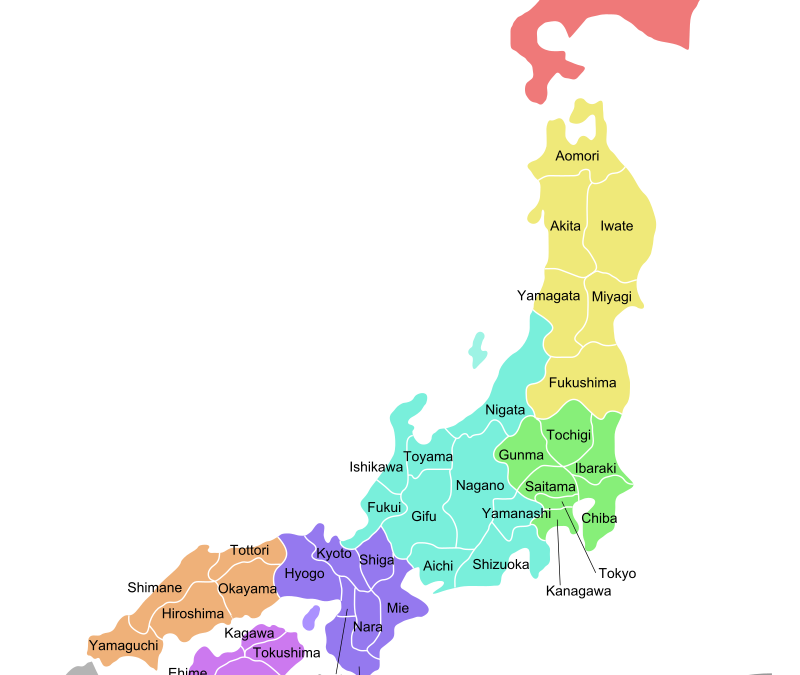
The maneki-neko — the beckoning cat with one paw raised — is now a global shorthand for good fortune, mass-produced in plastic and ceramic by the million. But the figure has a specific birthplace, and it is not a factory. It is a cluster of low-fired earthenware kilns that once lined the Sumida River in the Imado district of Asakusa, in what was then the city of Edo and is now Taito Ward, Tokyo.
Imado-yaki (今戸焼, “Imado ware”) is the soft, unglazed-to-lightly-glazed pottery those kilns produced from the late sixteenth and seventeenth centuries onward. It began with roof tiles, hibachi braziers, and humble daily vessels, and it became famous for hand-shaped figurines. One of those figurines — by long folk tradition tied to the lore of nearby Imado Shrine — is credited as an ancestor of the maneki-neko itself.
This guide is for international readers who want the real thing rather than a souvenir-stand copy: a hand-formed, hand-painted Imado-yaki cat from the surviving Shirai-lineage kiln. We cover what genuine Imado-yaki is, where the tradition comes from, how to buy it from outside Japan, and the caveats that come with a scarce, low-fired folk craft. Based on listings at the time of writing, supply is thin and variable — so we are explicit throughout about what the data does and does not confirm.
🔄 Updated: June 3, 2026
⏱️ Read time: ~10 min

- Who this is for — and who should skip it
- Product overview (from published specs)
- Where this comes from
- Price snapshot across stores
- What it does well
- Weaknesses and things to verify before buying
- Conclusion — which buyer type are you?
- Other ways to approach this purchase
- 🏆 Editor’s Pick
- ❓ Frequently Asked Questions
Who this is for — and who should skip it
- Want the historically-rooted original, not a generic lucky cat
- Value hand-forming and hand-painting over uniform machine finish
- Collect Japanese folk craft (mingei) and figurines (ningyo)
- Are buying a meaningful gift — a housewarming, a shop opening, a wedding pair
- Accept that scarcity means limited stock and variable pricing
- Just want an inexpensive decorative cat — mass-market versions cost a fraction
- Expect flawless symmetry; hand-work carries small irregularities
- Need it to be dishwasher-safe or functional tableware (it is an ornament)
- Want guaranteed same-day stock — genuine Imado-yaki is made in small batches
- Need a confirmed live price before committing (see the data caveats below)
Product overview (from published specs)
The fetched dataset for this item is thin. Based on the Amazon listing snapshot (ASIN B0HFJ6K488) and the recommendation notes, the table below reflects what is documented; fields not present in the source are marked rather than guessed.
Imado-yaki Maneki-neko
今戸焼 招き猫 白井靖二郎作 本人より 江戸東京郷土具
通常7~8日以内に発送します。 · Sold by STORE楓 · ASIN B0HFJ6K488
Price and availability as of 2026-09-01 05:22 JST. The Amazon listing at the time of purchase is authoritative. jpmono.com earns a commission on qualifying purchases at no extra cost to you.
| Attribute | Detail (per source) |
|---|---|
| Item | Imado-yaki maneki-neko (beckoning lucky cat), paired male/female set |
| Maker lineage | Shirai family kiln lineage, Asakusa, Tokyo |
| Material | Low-fired earthenware from fine Sumida riverbank clay |
| Technique | Hand-formed and hand-painted (each piece individually finished) |
| Origin | Imado, Asakusa, Taito Ward, Tokyo (Kantō region) |
| ASIN | B0F12LJFDZ |
| Dimensions / weight | Unconfirmed — check the listing |
| Price | Not available in fetched data; verify on the live listing before buying |
Sources: Amazon US search (primary, moonill-20) + Amazon JP Global Store (secondary, moonill-22, sourced listing) + maker direct where available. Only the Amazon JP listing snapshot is available; live pricing may have shifted since the writing date.
📖 Glossary — key terms
- maneki-neko (招き猫, “beckoning cat”) — a figure with one paw raised, traditionally believed to invite good luck or customers.
- Imado-yaki (今戸焼, “Imado ware”) — low-fired earthenware made in the Imado district of Asakusa, Edo/Tokyo.
- Edo (江戸) — the former name of Tokyo; the Edo period ran 1603–1868.
- Asakusa (浅草) — a temple-and-entertainment district of old Edo, centered on Senso-ji.
- ningyo (人形, “figurine / doll”) — molded or hand-formed clay figures, a specialty of the Imado kilns.
- horoku (焙烙) — a shallow unglazed earthenware roasting pan, a classic Imado product.
- hibachi (火鉢) — a traditional charcoal brazier, another early Imado-yaki staple.
- mingei (民芸, “folk craft”) — everyday handmade objects valued for unpretentious utility and beauty.
Related Japanese craft guides on jpmono — other regional ceramics, Tokyo crafts, and folk figurines worth reading alongside this one.
Where this comes from

Imado is a small riverside district in Taito Ward, on the west bank of the Sumida River in the Asakusa area of Tokyo. In the Edo period this was the northeastern edge of the shogun’s city, where the river met farmland and the kilns could draw on two things they needed: fine alluvial clay from the riverbank, and a steady flow of pilgrims and townspeople passing through Asakusa.
The clay is the reason the craft took root here. The fine, soft sediment of the Sumida lent itself to low-temperature firing, which is why Imado-yaki is an earthenware tradition rather than a high-fired stoneware or porcelain one. That same softness gives the finished cats their warm, slightly porous body and the matte ground that hand-painting sits on so well.
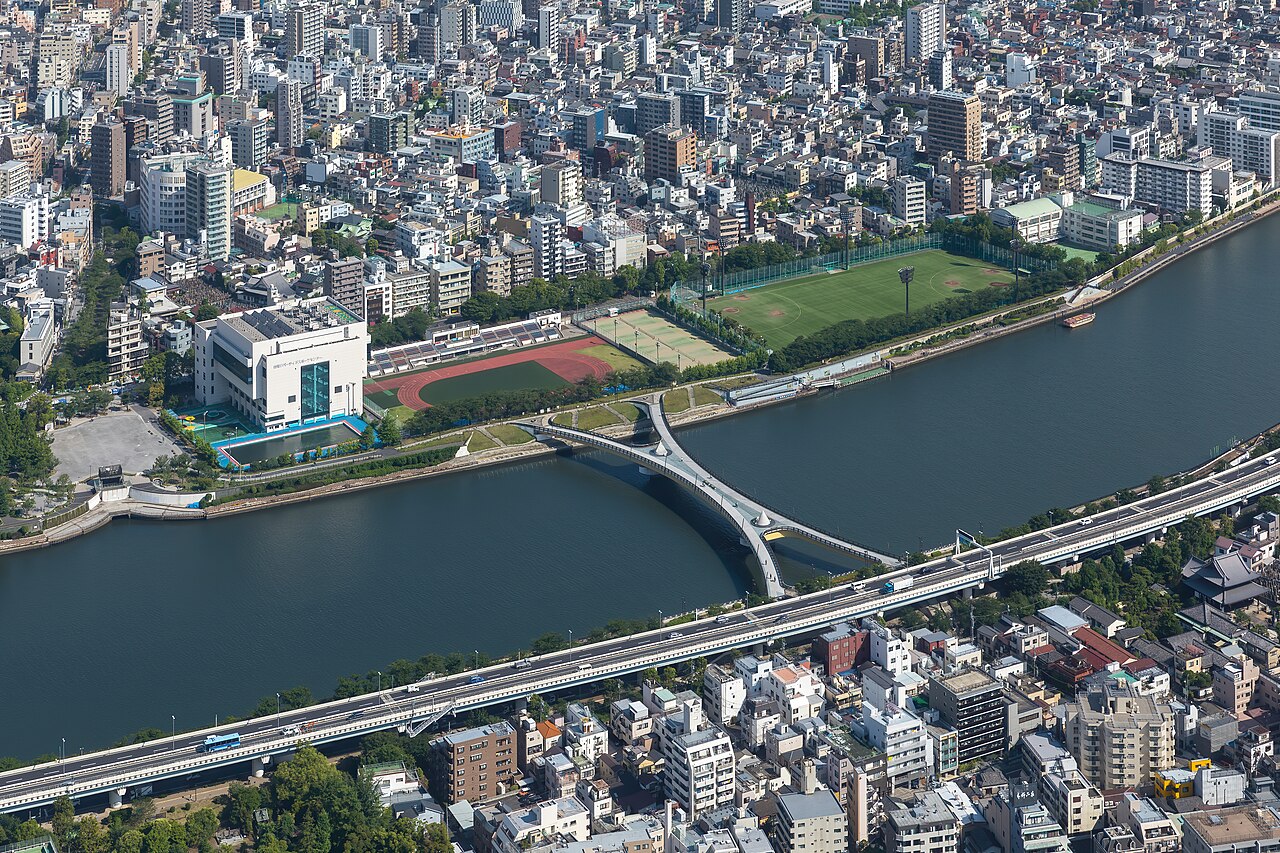
The kilns first turned out practical goods: roof tiles, hibachi braziers, horoku roasting pans, and unglazed daily wares for an enormous, fast-growing city. Edo was one of the largest cities in the world by the eighteenth century, and a district that could supply tiles and household earthenware sat on reliable demand.
Out of that practical base grew the specialty Imado is remembered for: hand-formed clay figurines, or ningyo. And among those figurines, by long folk tradition, was an early beckoning cat.
- Late 16th–17th c. — Kilns established on the Sumida riverbank at Imado, Asakusa, using the river’s fine clay.
- Early Edo (17th c.) — Production of roof tiles, hibachi braziers, horoku pans, and unglazed daily wares.
- Late Edo (19th c.) — Imado becomes known for ningyo figurines; the maneki-neko is traditionally believed to originate here, tied to Imado Shrine lore.
- Meiji onward (late 19th–early 20th c.) — Industrialization pressures the small Sumida kilns.
- 1945 — WWII firebombing of Tokyo devastates the Asakusa kilns; the tradition nearly disappears.
- Postwar–present — A handful of makers, notably the Shirai family lineage, keep hand-forming and hand-painting the cats.
- 2026 — Genuine Imado-yaki remains a scarce, story-rich folk craft rather than a mass product.
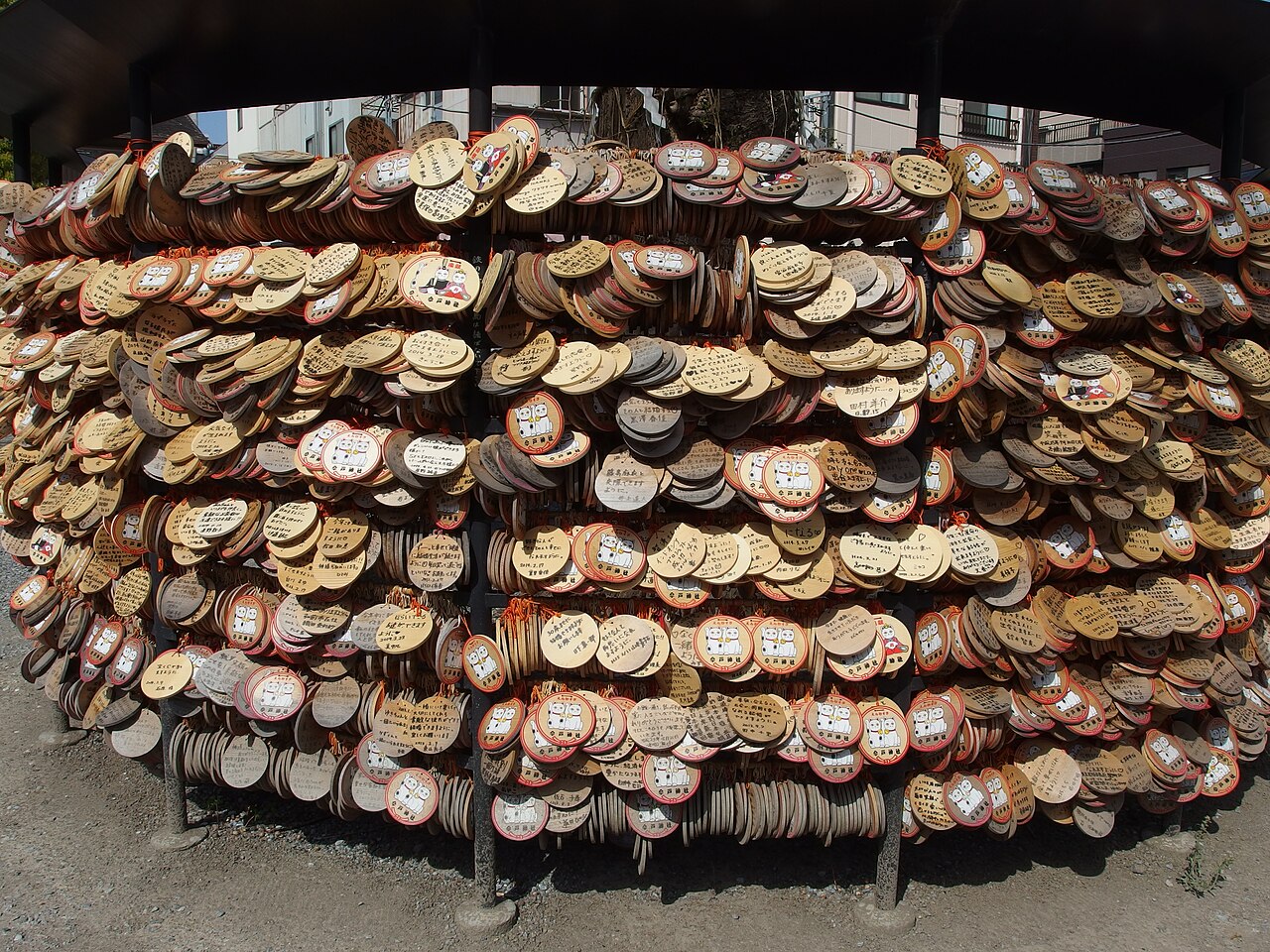
The shrine’s lucky-cat lore and the district’s clay kilns are entwined in the popular account of where the maneki-neko began. Several places in Japan claim a role in the cat’s origin, so this is best stated as it is held — traditionally believed, not documented as scientific fact. What is not in dispute is that Imado was a genuine center of figurine-making in late Edo, and that the beckoning cat is one of its signature forms.
“Imado-yaki did not set out to make a fortune cat. It made roof tiles, then braziers, then figurines — and somewhere in that everyday clay, a legend took shape.”
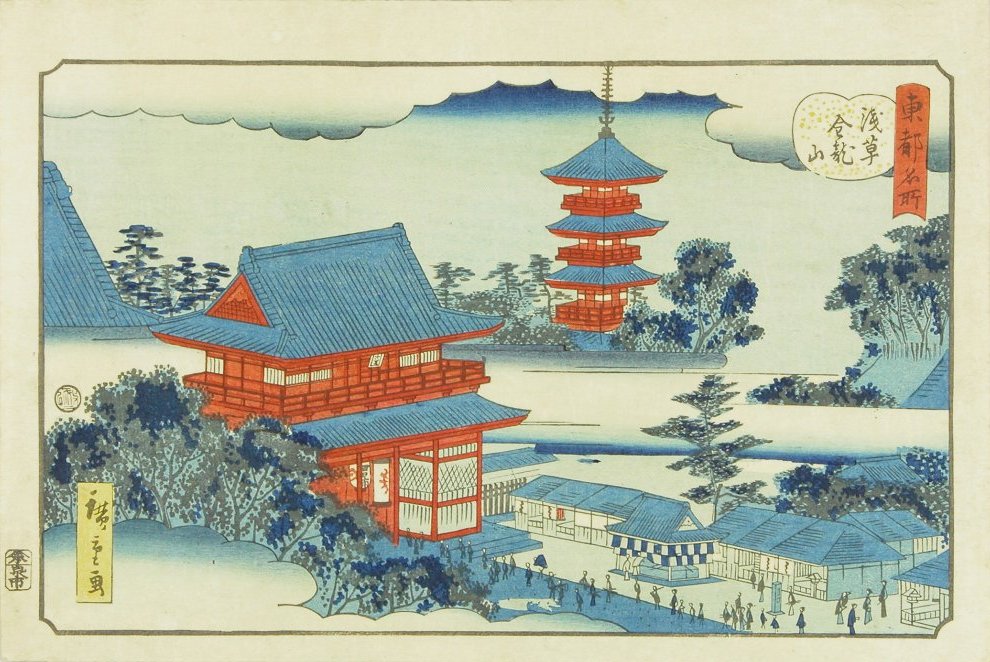
The cultural setting matters here. Asakusa centered on Senso-ji, Tokyo’s oldest temple, and the pilgrim crowds that filled its approach supported a dense trade in souvenirs, charms, and folk figures. A hand-painted clay cat that “beckoned” customers and fortune was a natural fit for that economy — equal parts talisman and keepsake.
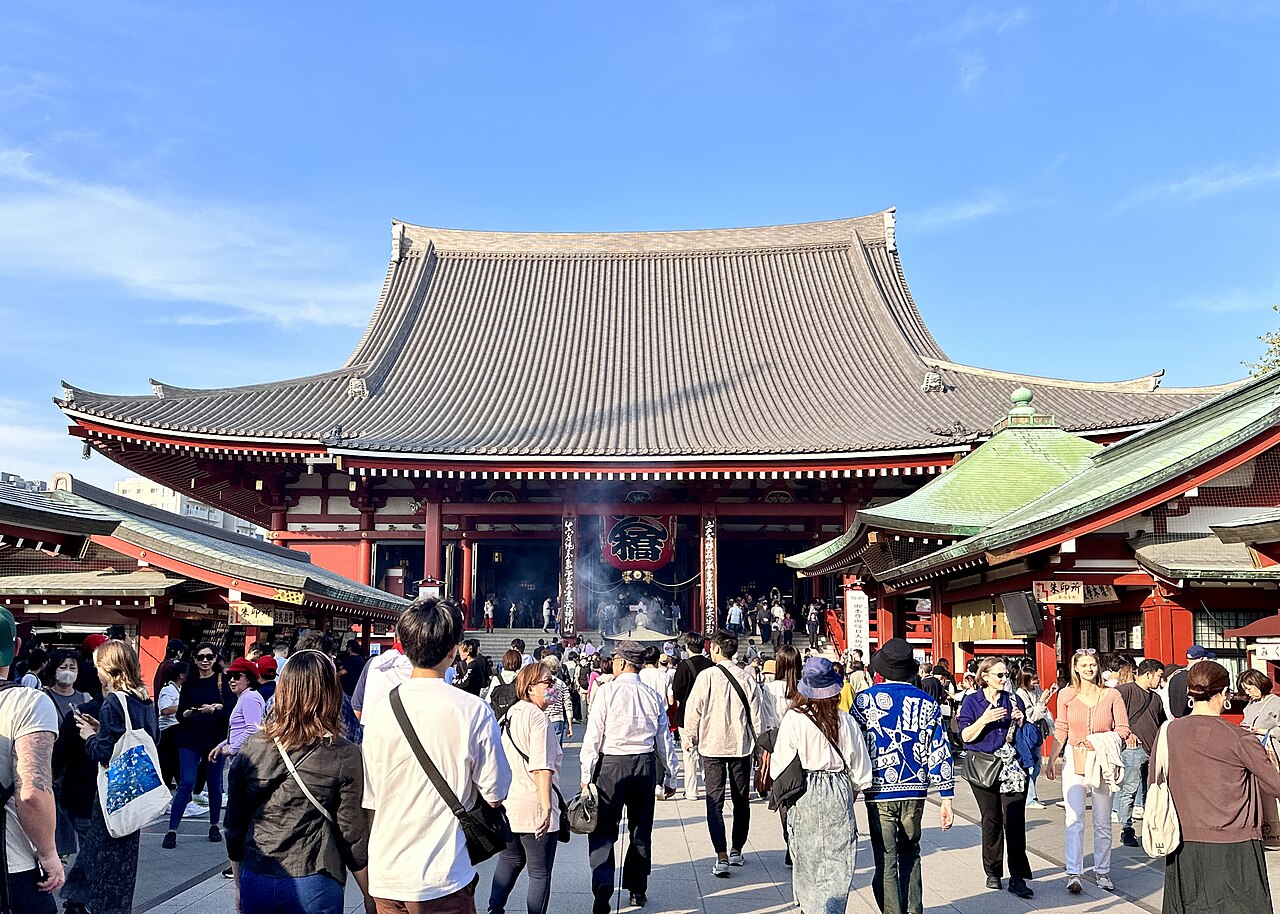
Continuity is the hard part of the story. Industrialization thinned the kilns through the Meiji and early Showa eras, and the firebombing of Tokyo in 1945 came close to ending the tradition outright. Today only a handful of makers — the Shirai family lineage prominent among them — still hand-form and hand-paint Imado-yaki cats.
That scarcity is the practical takeaway for a buyer. A genuine Imado-yaki maneki-neko is closer to a small-batch folk artwork than to a catalog product, and the supply, pricing, and exact form will vary with what the surviving kilns have made.
Price snapshot across stores
The fetched data did not include a live price for this item, so the price cells below are marked accordingly. Always confirm the current figure at the retailer before buying.
| Store | Item / variant | Price (JPY + USD est.) | Notes |
|---|---|---|---|
| 🇺🇸 Amazon US (search) | Browse Japanese maneki-neko & ceramics | varies (USD) | Best if you are shopping from the US — Prime shipping, USD pricing, no international customs. Amazon US carries Japanese lucky cats and ceramics from many makers; the specific Imado-yaki piece in this guide is sourced from Japan (next row). |
| 🇯🇵 Amazon JP Global Store | Imado-yaki maneki-neko, paired set (ASIN B0HFJ6K488) | Price unavailable in data — verify on listing | The sourced listing for the specific item. Ships internationally from Japan to most major destinations via Global Store. |
| Maker direct | Shirai-lineage kiln (Asakusa) | Unconfirmed — check maker | Small-batch output; availability is limited and not guaranteed online. Specialty folk-craft and museum shops in Asakusa sometimes carry pieces. |
| Proxy services (Buyee / Tenso) | Forwarding from JP-only listings | Item price + forwarding fee | Useful when a listing does not ship to your country directly; adds a service fee and a consolidation step. Watch for customs duties above local thresholds. |
Prices in USD are approximate and depend on the current exchange rate (¥150/USD baseline, mid-2026). The JPY price is the authoritative one for the specific listed item. Only the Amazon JP listing snapshot was available; live pricing may have shifted since the writing date.
What it does well
Weaknesses and things to verify before buying
- No live price in the data. The fetched dataset did not include a current price; confirm it on the listing before committing.
- Scarce, variable stock. Genuine Imado-yaki is made in small batches by very few makers. Listings sell out and reappear; the exact piece shown may differ from what arrives.
- Fragile, low-fired earthenware. Soft clay chips more easily than porcelain. It is a display ornament, not functional tableware, and is not dishwasher-safe.
- Hand-work irregularities. Small asymmetries in painting and form are inherent to the craft. If you want machine-perfect symmetry, this is the wrong category.
- Provenance is partly folkloric. Imado’s role in the maneki-neko’s birth is traditionally believed, and other locales make competing claims. Buy it for the documented Asakusa earthenware tradition, not a single proven origin myth.
- International shipping and customs. Confirm the listing ships to your country; a proxy may be needed. Orders above local thresholds can incur duties.
- Dimensions unconfirmed. Size and weight were not in the fetched data — check the listing if scale matters for your display spot.
Conclusion — which buyer type are you?
Other ways to approach this purchase
🏆 Editor’s Pick
❓ Frequently Asked Questions
Is Imado-yaki really the original maneki-neko?
Imado is one of the traditions credited with the birth of the maneki-neko in the late Edo period, tied to the lore of Imado Shrine in Asakusa. It is traditionally believed rather than documented as proven fact, and a few other places make competing claims. What is well established is that Imado was a genuine center of clay figurine-making in old Edo.
What makes Imado-yaki different from a mass-produced lucky cat?
It is low-fired earthenware made from fine Sumida riverbank clay, hand-formed and hand-painted in small batches by a surviving Shirai-lineage maker in Asakusa. That gives it a warm, matte body and individual character, unlike uniform plastic or glossy porcelain versions.
Does Amazon JP Global Store ship Imado-yaki internationally?
The Amazon JP Global Store ships many household items to most major destinations. Confirm that the specific listing ships to your country at checkout; if it does not, a proxy service such as Buyee or Tenso can forward it. Customs duties may apply above local thresholds.
Left paw or right paw — what is the difference?
By tradition, a raised right paw is said to invite money or good fortune, while a raised left paw is said to invite people or customers. A paired male/female set is a common gift form. These meanings are folk traditions rather than fixed rules.
How do I care for low-fired earthenware?
Treat it as a display ornament, not tableware. The soft, porous body chips more easily than porcelain, so keep it away from impacts, wipe gently rather than soaking, and do not put it in a dishwasher.
Is the price on Amazon JP fixed?
No. The fetched data for this guide did not include a live price, and prices and stock for scarce folk craft fluctuate. Always check the current figure on the listing before purchasing.
Can I see Imado-yaki in person in Tokyo?
Imado Shrine and the surrounding Asakusa district are associated with the tradition, and specialty folk-craft and museum shops in the area sometimes carry pieces. Stock is limited, so availability cannot be guaranteed on any given day.
jpmono.com is curated by a Japan-based editorial team (working out of Toyama in the Hokuriku region and Nara in Kansai) and is independent. We do not take payment from the makers we feature; income comes from affiliate links. We do not physically test every product — we read maker specs and source listings.
🤖 This article was prepared with AI assistance and edited against the source listing and curated public-domain imagery. Facts are drawn from the provided data; where data was thin, that is stated explicitly rather than filled in.
Affiliate disclosure: jpmono.com may earn a commission on qualifying purchases made through links on this page, at no additional cost to you.