![Gujo Tsumugi Silk Book Cover: Gifu’s Plant-Dyed Woven Pongee [2026]](https://jpmono.com/wp-content/uploads/2026/05/japan-map-regions-and-prefectures-800x1050.png)
Gujo Tsumugi (郡上紬, “Gujo pongee”) is a hand-spun, hand-woven silk cloth from Gujo-Hachiman, a mountain castle town in the center of Gifu Prefecture. What sets it apart from Japan’s other esteemed pongees is its palette: it is dyed almost entirely with kusaki-zome (草木染め, natural plant dyes), which give it deep but muted earth tones rather than bright synthetic color. The book cover covered in this guide takes that cloth and wraps it around a paperback — a small, everyday object carrying a slow craft.
For an international reader, the appeal is twofold. First, this is one of the few ways to own genuine hand-woven Japanese pongee without buying a full kimono bolt: a book cover uses a modest amount of cloth, so the price stays approachable while the weave and the dye are the real thing. Second, it is a usable object, not a display piece — the slightly slubbed, supple hand of tsumugi is meant to be touched daily.
This article is written from a Japan-based editor’s desk (working out of Toyama in Hokuriku and Nara in Kansai). Below we cover what the cloth is, where Gujo-Hachiman sits and why weaving took root there, who the book cover suits and who should pass, how to buy it from outside Japan, and the honest caveats — because the craft is small, and we say so where availability is limited.
📅 Published: June 4, 2026
🔄 Updated: June 4, 2026
⏱️ Read time: ~9 min
- Who this is for — and who should skip it
- Product overview (from published specs)
- Where this comes from — place, era, and the craft tradition
- 📦 Shipping & where to buy from outside Japan
- Buying options
- What it does well
- Weaknesses and things to verify before buying
- Conclusion — which buyer type are you?
- Other ways to approach this purchase
- ❓ Frequently Asked Questions
Who this is for — and who should skip it
- want genuine hand-woven Japanese silk pongee in an affordable, usable form
- read paperbacks (Japanese bunko or comparable small formats) and protect their covers
- prefer muted, plant-dyed earth tones over bright synthetic color
- appreciate slubbed, irregular texture as a feature, not a flaw
- are buying a meaningful, lightweight gift that ships well internationally
- need a cover sized to US/EU trade paperbacks or hardcovers (this is cut for Japanese bunko)
- want a specific, guaranteed color or pattern — hand-dyed lots vary
- expect machine-washable, low-maintenance fabric (silk needs care)
- are looking for the lowest possible price (synthetic covers cost a fraction)
- Want firm availability before ordering? Product details here are limited.
Product overview (from published specs)
Specifications for a Gujo tsumugi silk book cover vary between weavers, dye lots, and whether the cloth is new or repurposed from a kimono bolt, so confirming exact dimensions, lining material, and current price from the information supplied with the individual cover is worth the few minutes it takes. A standard A5 or B6 cover typically runs around 22 cm by 16 cm, while custom-cut sizes drift noticeably. If those basic measurements are not provided, ask before ordering rather than assume.
| Attribute | Detail | Source |
|---|---|---|
| Object | Book cover / book sleeve (bunko paperback size) | Amazon JP Global Store |
| Material | Silk (Gujo Tsumugi hand-woven pongee) | Maker tradition / data notes |
| Dyeing | Kusaki-zome (natural plant dye); muted earth tones | Data notes |
| Weave | Hand-spun, hand-woven; soft, durable, slightly slubbed hand | Data notes |
| Origin | Gujo-Hachiman, Gifu Prefecture, Chūbu region, Japan | Data notes |
| Dimensions | Standard bunko format | — |
| Weight | — | — |
| Price | — | — |
📖 Glossary — key terms
Tsumugi (紬) — a silk “pongee” woven from hand-spun yarn, often made from shorter or irregular silk fibers. The result is matte rather than glossy, with a soft, slightly textured hand. Historically an everyday cloth rather than formal silk.
Kusaki-zome (草木染め) — “grass-and-tree dyeing”: coloring yarn or cloth with natural plant dyes rather than synthetic ones. It yields muted, complex earth tones and means color varies slightly between lots.
Pongee — the English trade term for a plain-woven, slubbed silk like tsumugi.
Gujo Odori (郡上おどり) — a 400-plus-year-old communal Bon dance held through the summer nights in Gujo-Hachiman; one of Japan’s three great Bon dances.
Sogi-sui (宗祇水) — a famous spring in Gujo-Hachiman, named one of Japan’s 100 Famous Waters; emblem of the town’s clean mountain water.
Bunko (文庫) — Japan’s standard small paperback format (roughly A6); this cover is cut to fit it.
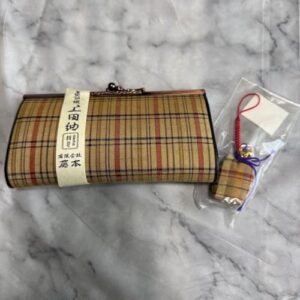 🧵 Ueda Tsumugi gamaguchiNagano pongee, coin purse
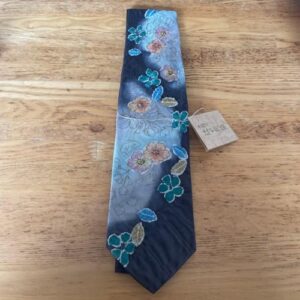
👔 Yuki Tsumugi necktieUNESCO pongee, necktie
🧣 Johana Shike-ginu scarfToyama silk, scarf
 👔 Kiryu-ori silk necktieGunma weaving, necktie
 🧣 Chichibu Meisen stoleSaitama silk, stole
 💳 Nishijin-ori card caseKyoto brocade, card case
 🧣 Kaga Yuzen scarfIshikawa dyeing, scarf
 🧻 Banshu-ori handkerchiefHyogo cotton, handkerchief
Where this comes from — place, era, and the craft tradition

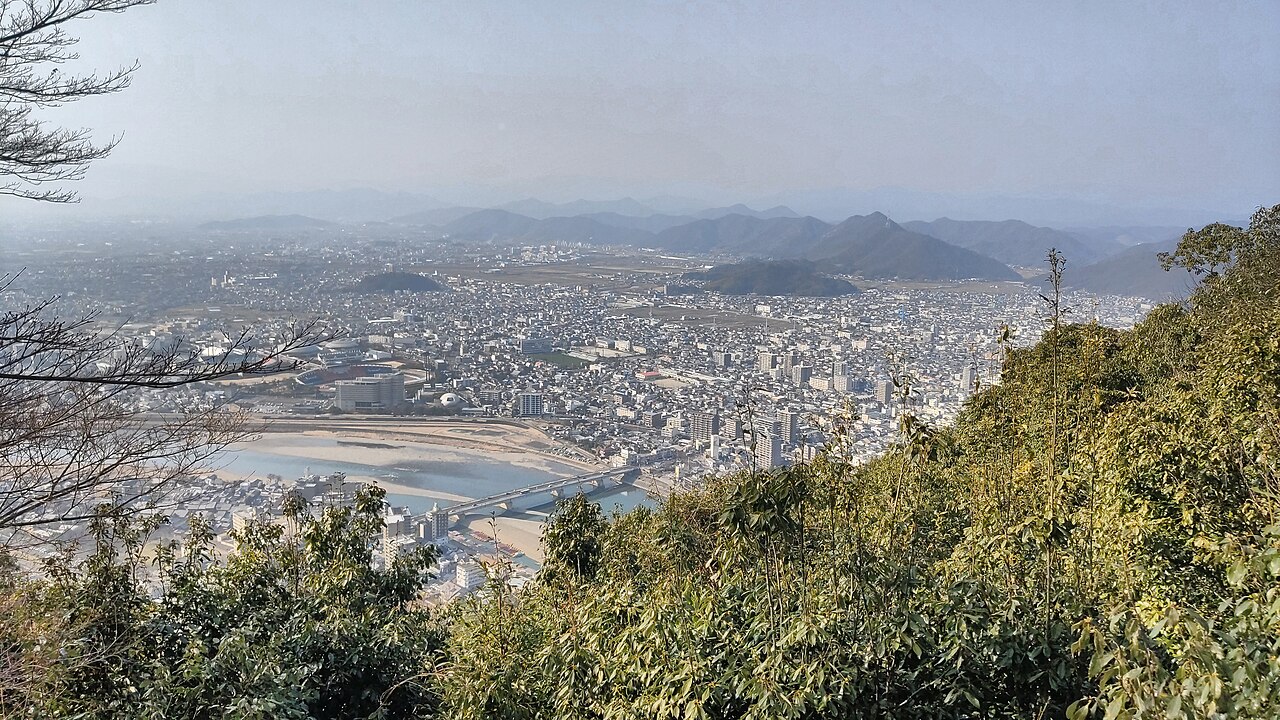
Gujo-Hachiman is a small castle town in the mountainous heart of Gifu Prefecture, in Japan’s Chūbu region, on the upper reaches of the Nagara River. It is the kind of place that international travelers rarely reach: inland, hemmed by forested ridges, fed by springs running cold and clear off the mountains. That isolation is the whole story of its crafts. Cut off from large markets, the town made things for durability and daily use, and its clean water did the rest — supporting both dyeing and the famous canals that thread the streets.
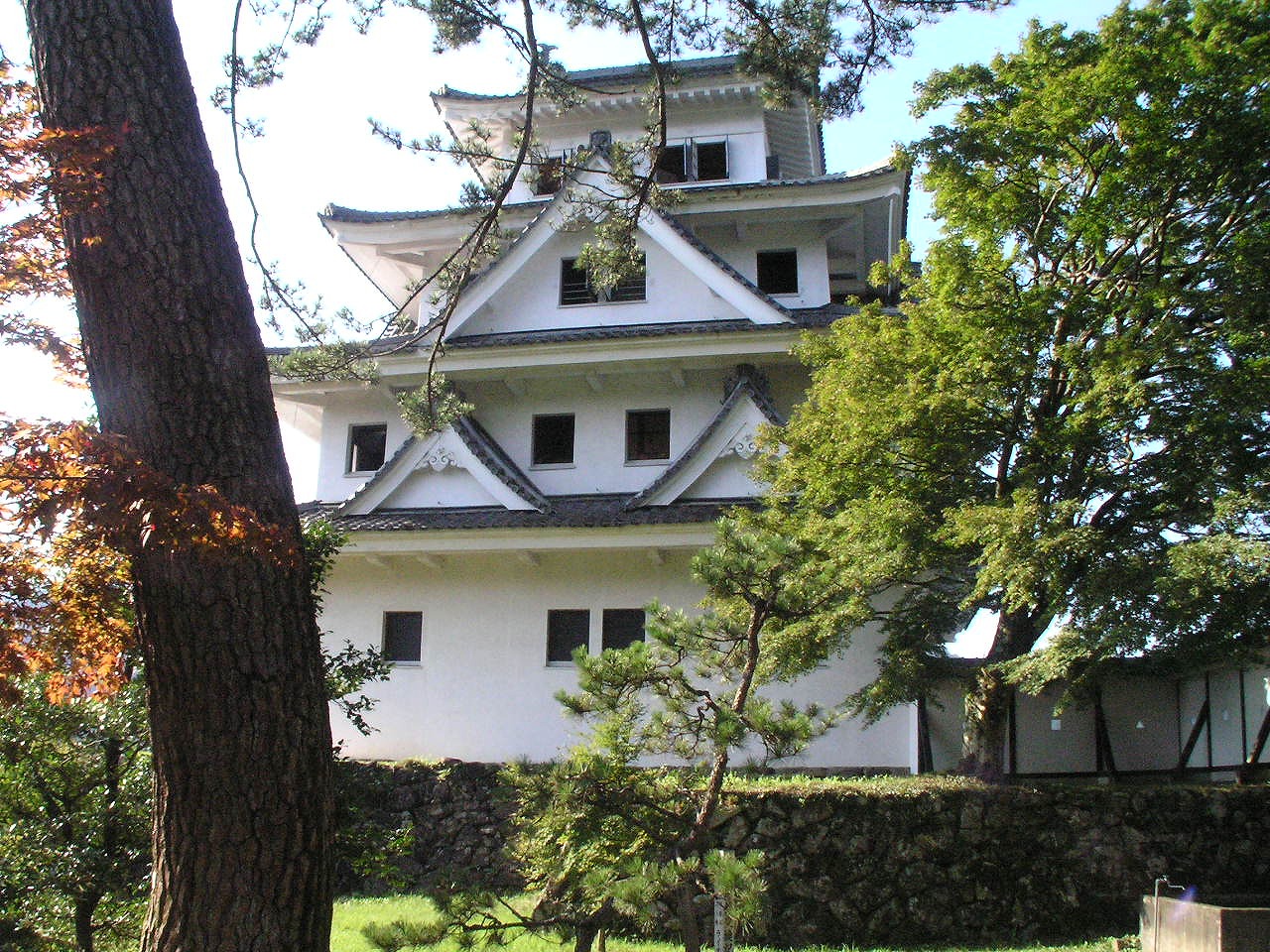
In the Edo period (1603–1868), Gujo-Hachiman was the seat of a small domain ruled first by the Endo clan and later by the Aoyama clan. The castle on the hill above the town was their seat, and the town that grew below it — merchants, dyers, weavers — is the one whose street plan and waterways largely survive today. A domain like this depended on local handwork; cloth woven and dyed in the town clothed the people who lived in it.
- 16th century — The Endo clan builds Gujo-Hachiman Castle, founding the castle town on the upper Nagara River.
- Edo period (1603–1868) — The Endo and later the Aoyama clans rule the domain; local weaving and dyeing serve the town.
- ~17th century onward — The Gujo Odori takes shape as a communal Bon dance — now over 400 years old and one of Japan’s three great Bon dances.
- Shōwa era (1926–1989) — Munehiro Sotozono elevates Gujo Tsumugi’s plant-dyeing and weaving to national recognition.
- 1985 — Sogi-sui spring is named one of Japan’s 100 Famous Waters, emblem of the town’s clean mountain water.
- 2026 — Gujo Tsumugi is still hand-spun and hand-woven in Gujo-Hachiman, in small quantities.
The cloth itself is a pongee — tsumugi, woven from hand-spun silk yarn. What distinguishes Gujo Tsumugi from Japan’s other famous pongees, Yuki and Oshima, is not the silk but the color. It is dyed almost entirely with kusaki-zome, natural plant dyes drawn from the surrounding mountains, which produce deep but muted earth tones — browns, greys, ochres, soft indigos — rather than the bright, even color of synthetic dye. The hand of the cloth is soft, durable, and slightly slubbed, the irregularity of hand-spun yarn left visible.
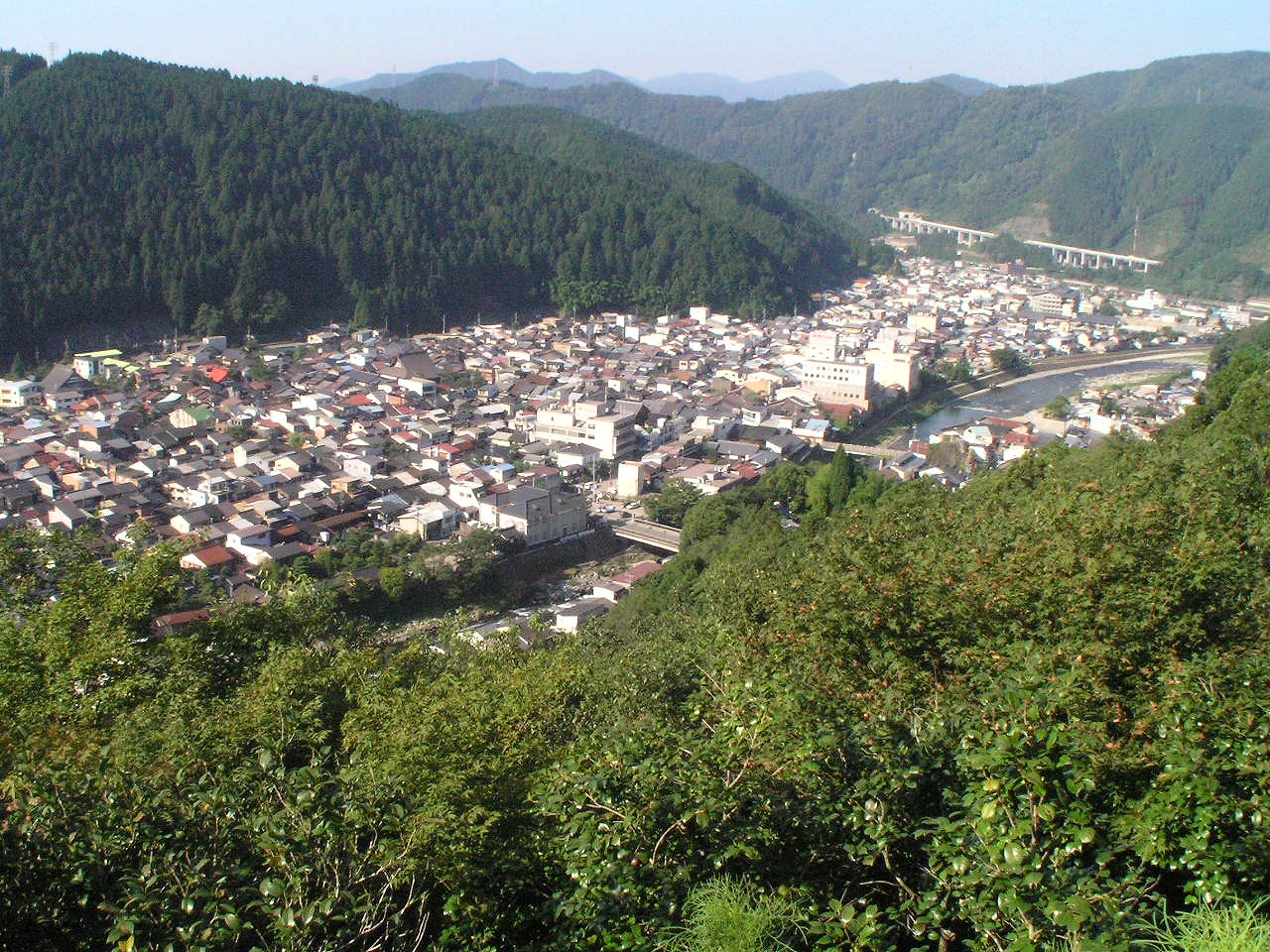
The tradition’s modern reputation owes much to one figure. In the Shōwa era, Munehiro Sotozono refined the plant-dyeing and weaving of Gujo Tsumugi to a level that earned national recognition, lifting a regional everyday cloth into the company of Japan’s esteemed pongee traditions. That recognition is why the cloth survives at all: small mountain-town crafts rarely outlast the generation that championed them.
“Gujo Tsumugi sits beside Yuki and Oshima as one of Japan’s esteemed pongees — distinguished not by the silk, but by a palette pulled straight from its mountains.”
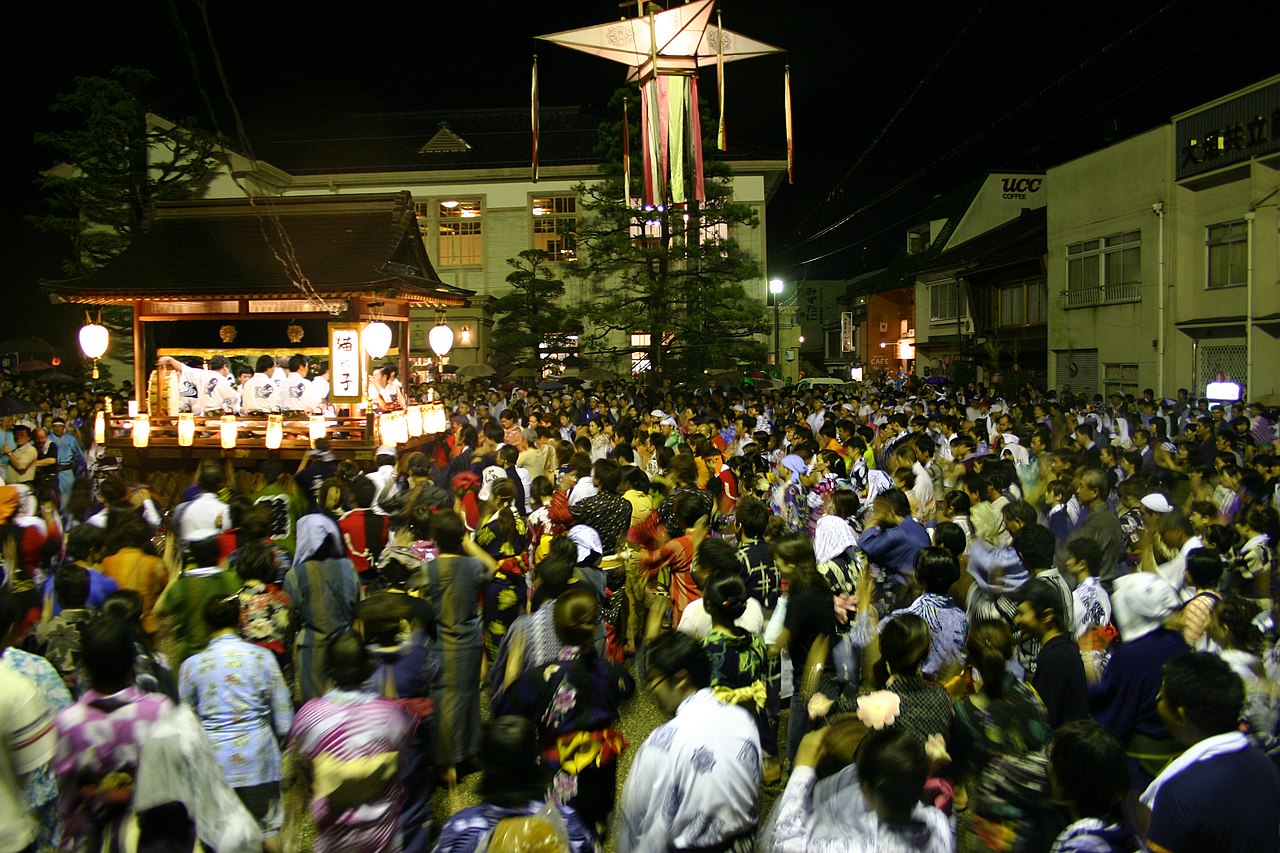
To understand the town, hold the cloth and the dance together. For more than four centuries, Gujo-Hachiman has spent its midsummer nights dancing the Gujo Odori — one of Japan’s three great Bon dances — in the streets, sometimes until dawn. It is a communal, participatory tradition, open to anyone who joins the circle. The same communal culture that keeps a town dancing through the night is the one that kept its looms running. A craft like Gujo Tsumugi is not an isolated workshop product; it is a thread in a town that still does things together.
That practical, hard-wearing character is worth keeping in mind when you handle the book cover. This is not delicate ceremonial silk. Gujo’s pongee was made in a mountain economy for daily use, and the book cover inherits that: it is meant to be carried, opened, and handled, and the slubbed weave hides wear well.
📦 Shipping & where to buy from outside Japan
Gujo tsumugi silk book covers are typically sourced through regional craft cooperatives in Gifu, from specialty stationery shops in Japan that carry local textiles, or through larger Japanese craft platforms that ship internationally. For readers shopping from the US, EU, or Australia, a Japan-based craft platform with international shipping is the realistic path to a handwoven Gujo piece.
Buying options
Pricing for a handwoven Gujo tsumugi silk cover varies with cloth weight, dye lot, and whether the silk is plant-dyed at the workshop or by a regional co-op. As a rough guide, a small cover made from off-cut cloth sits well below the cost of a full kimono-bolt cover, while a larger or plant-dyed piece lands noticeably higher. Treat any listed figure as the seller’s current quote rather than a fixed market price.
| Store | Item / Variant | Price (JPY → USD est.) | Notes |
|---|---|---|---|
| 🇺🇸 Amazon US (search) | Browse Japanese silk book covers & textile goods | varies (USD) | Best if you are shopping from the US — Prime shipping, USD pricing, no international customs. Amazon US carries Japanese textile and book-cover goods for comparison; this exact Gujo Tsumugi piece is sourced from Japan (next row). |
| 🇯🇵 Amazon JP Global Store | Gujo Tsumugi silk book cover | — | Ships internationally from Japan to most major destinations. |
| Maker direct | Gujo Tsumugi workshops / Gifu craft outlets | Varies; often Japanese-domestic only | Local workshops sell hand-woven goods, but many do not ship abroad directly — a proxy is usually needed. |
| Proxy services (Buyee / Tenso) | Forwarding for Japan-only sources | Item price + proxy fee + freight | Use when the Global Store will not ship to your country or to buy from JP-only sellers. |
What it does well
Weaknesses and things to verify before buying
- It is cut for Japan’s standard bunko paperback format. US/EU trade paperbacks and hardcovers are larger and generally will not fit. Check the fit against your books before ordering.
- Color and pattern vary by lot. Plant dyeing and hand weaving mean no two pieces are identical. If you need a specific shade, this is the wrong product.
- Silk needs care. Expect hand-washing or professional cleaning, not the washing machine. Natural dyes can also shift with prolonged sun exposure.
- Price premium over synthetics. A printed-fabric or synthetic book cover costs a fraction of this. You are paying for hand-spinning, hand-weaving, and plant dyeing — value only if that matters to you.
- International shipping and customs add cost. The item is sourced from Japan; freight and possible duties stack on top of the item price.
Conclusion — which buyer type are you?
Other ways to approach this purchase
❓ Frequently Asked Questions
What is Gujo Tsumugi, exactly?
Will this book cover fit my paperbacks?
How do I care for plant-dyed silk?
Can I buy it from outside Japan?
Why does the price show as unconfirmed?
How is Gujo Tsumugi different from Yuki or Oshima pongee?
jpmono.com is curated by a Japan-based editorial team (working out of Toyama in the Hokuriku region and Nara in Kansai) and is independent. We don’t take payment from the makers we feature; income comes from affiliate links. We don’t physically test every product — we consult maker specifications and public craft references.
This article was prepared with AI assistance and reviewed by the jpmono editorial team. Dimensions, lining, price, and availability vary by cover; use the maker’s supplied information for the final choice.
Affiliate disclosure: jpmono.com may earn a commission on qualifying purchases made through links on this page, at no additional cost to you.