![Sengo Muramasa Katana Letter Opener: Mie Ise Blade Heritage [2026]](https://jpmono.com/wp-content/uploads/2026/05/japan-map-regions-and-prefectures-800x1050.png)
Mie Prefecture covers most of the old province of Ise — a stretch of the Pacific coast better known abroad for Ise Jingu, the spiritual center of Shinto, than for its blades. Yet from the late Muromachi period into the Sengoku era, the swordsmiths working around Kuwana in northern Ise built one of the most feared reputations in Japanese sword history under a single name: Sengo Muramasa. Their blades were prized by warriors for being exceptionally sharp and battle-ready, and over the centuries that reputation curdled into legend.
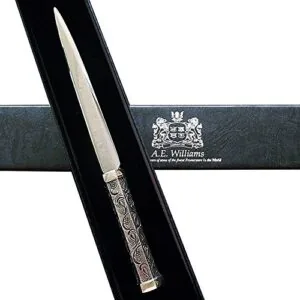
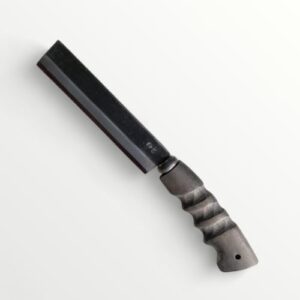
The katana-form letter opener covered here is not a weapon. It is a Japanese-made stainless steel desk piece — mirror-polished, fitted with a small tsuba (hand guard) and a saya-style sheath — modeled on the silhouette of a Muramasa katana. It belongs to the same family of design objects as the Bizen Osafune sword letter opener of Okayama: a way to carry a regional blade lineage onto the writing desk without owning, registering, or maintaining a real Japanese sword.
This guide is written from a Japan-based editor’s desk, working out of Toyama in the Hokuriku region and Nara in Kansai. It explains the letter opener as a small display and utility object, the historical context that makes the form interesting, how it compares to other blade-lineage pieces on the site, and practical ways an international reader can find one. Where details vary, the article says so plainly rather than inventing numbers.
📅 Published: June 7, 2026
🔄 Updated: June 7, 2026
⏱️ Read time: ~9 min
- Who this is for — and who should skip it
- Product overview (from published specs)
- Where this comes from — place, era, and the blade tradition
- Buying options across stores
- What it does well
- Weaknesses and things to verify before buying
- Conclusion — which buyer type are you?
- Other ways to approach this purchase
- ❓ Frequently Asked Questions
Who this is for — and who should skip it
- Want a katana-shaped desk object without the legal and care burden of a real Japanese sword
- Are drawn to the Sengo Muramasa story and old Ise (Kuwana) blade history
- Collect letter openers, paper knives, or small blade-lineage pieces
- Need a low-cost, conversation-starting gift with a clear regional narrative
- Prefer a Japanese-made stainless piece over a generic souvenir replica
- Expect a forged, hand-hammered blade — this is a stainless letter opener, not nihontō
- Want a functional cutting tool sharp enough for kitchen or craft work
- Dislike replica or “inspired-by” objects on principle
- Require fast domestic shipping with no customs steps from outside Japan
Product overview (from published specs)
The table focuses on the craft features of a katana-style letter opener and marks item-specific measurements as unverified. A mirror-polished blade with fittings such as a tsuba and saya is a decorative paper knife, so dimensions and weight can vary between examples.
| Attribute | What the maker indicates |
|---|---|
| Object type | Letter opener / paper knife, katana form |
| Material | Stainless steel, mirror-polished |
| Fittings | Tsuba (hand guard) and saya-style sheath |
| Design reference | Modeled on a Sengo Muramasa katana silhouette |
| Origin | Made in Japan |
| Blade length / overall length | — |
| Weight | — |
| Price | — |
| Source | Amazon US and Amazon JP Global Store search options |
Katana-style letter openers vary in measurements, finish, and price. Confirm the details of an individual piece with the maker or seller before purchase.
📖 Glossary — key Japanese terms
Katana (刀) — the curved, single-edged Japanese long sword worn edge-up. Here it refers only to the silhouette the letter opener imitates.
Tsuba (鍔) — the hand guard between the blade and the grip on a Japanese sword; reproduced in miniature on katana-style letter openers of this kind.
Saya (鞘) — the scabbard or sheath that protects the blade. The letter opener ships with a saya-style cover.
Sengo Muramasa (千子村正) — a school of swordsmiths active around Kuwana in Ise province from the late Muromachi era; “Muramasa” is both the founder’s name and the school name.
Ise (伊勢) — the old province corresponding to most of modern Mie Prefecture; home to Ise Jingu.
Nihontō (日本刀) — a genuine, traditionally forged Japanese sword, legally regulated in Japan. A katana-style letter opener is a decorative paper knife, not a nihontō.
Haitōrei (廃刀令) — the 1876 Meiji edict prohibiting the wearing of swords, which pushed many smiths toward other metal goods.
Related jpmono guides — other blade-lineage pieces, knife traditions, and desk companions worth weighing against this letter opener.
Where this comes from — place, era, and the blade tradition

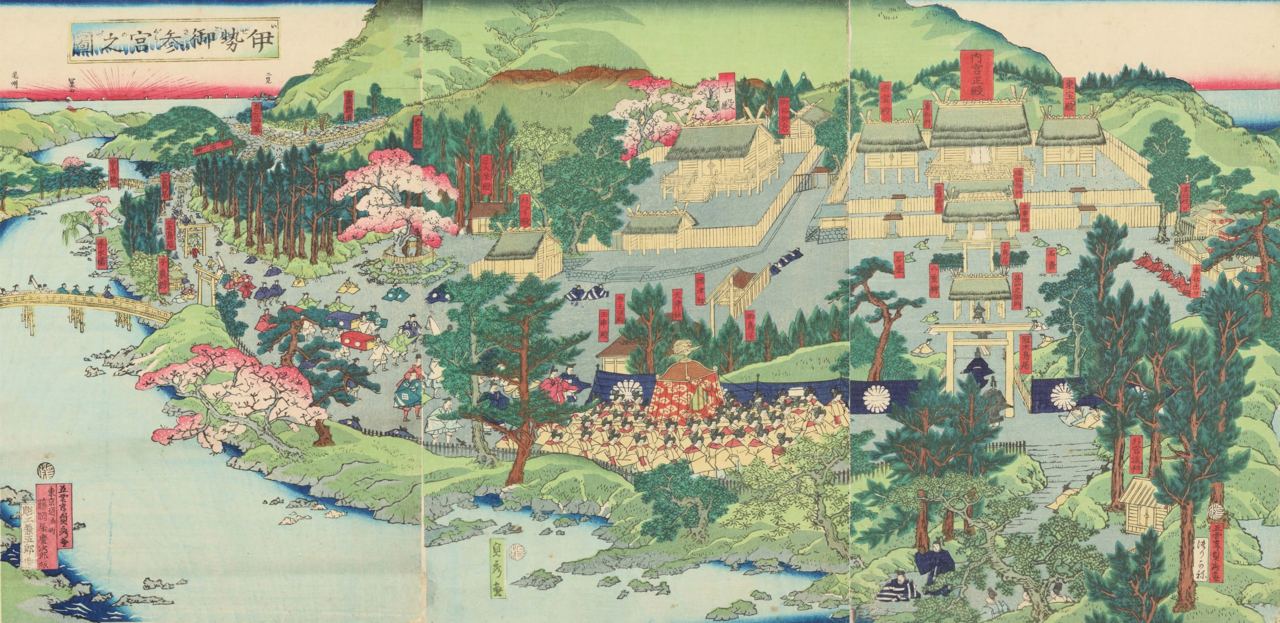
Mie Prefecture occupies most of the former province of Ise, on the Pacific side of central Japan facing Ise Bay. To the north it borders the Nagoya plain; to the west, across the mountains, lies the Kansai heartland and Nara, the eighth-century imperial capital, roughly 100 km away. The province has long been a corridor between the eastern and western halves of Honshu, which placed its towns — Kuwana chief among them — on the trade and pilgrimage routes that fed both commerce and the demand for arms.
Northern Ise had the raw ingredients a sword industry needs: river-borne charcoal and iron sand from the surrounding ranges, water power, and a position close enough to the capital region to find buyers. Kuwana, sitting where the Kiso, Nagara, and Ibi rivers meet Ise Bay, grew into a castle town and port — and into the home base of the school whose name still unsettles collectors five centuries later.
The Sengo Muramasa school worked from the late Muromachi period into the Sengoku era — roughly the turn of the sixteenth century onward — and warriors prized its blades as exceptionally sharp and dependable in battle. That practical reputation is the historical bedrock. The supernatural reputation came later: because several relatives of the Tokugawa house were wounded or killed by Muramasa blades, the Tokugawa shogunate came to fear and discourage them. Over the Edo period this hardened into the famous “Muramasa curse” legend — the idea that the swords thirsted for Tokugawa blood — which is folk tradition, not documented fact, but which made the name unforgettable.
“A Muramasa blade was traditionally said to thirst for blood once drawn — a legend the Tokugawa house came to fear, and which still shadows the name half a millennium on.”
- 690 — Ise Jingu’s twenty-year rebuilding cycle (Shikinen Sengū) is formalized, fixing Ise as a national sacred center.
- c. 1338 — The Muromachi shogunate is established; sword demand grows through a long era of warfare.
- c. 1500 — The first-generation Sengo Muramasa works around Kuwana in northern Ise, late in the Muromachi period.
- 1500s — The school flourishes through the Sengoku era, prized for sharp, battle-ready blades.
- 1603 — The Tokugawa shogunate is founded; over the Edo period the “Muramasa curse” legend spreads as Tokugawa relatives are linked to Muramasa-inflicted wounds.
- 1876 — The Meiji Haitōrei edict ends the wearing of swords, pushing smiths toward other metal goods.
- 20th–21st c. — Metalworkers in Mie and nearby Seki (Gifu) produce katana-form replicas and letter openers that carry the lineage as design objects.
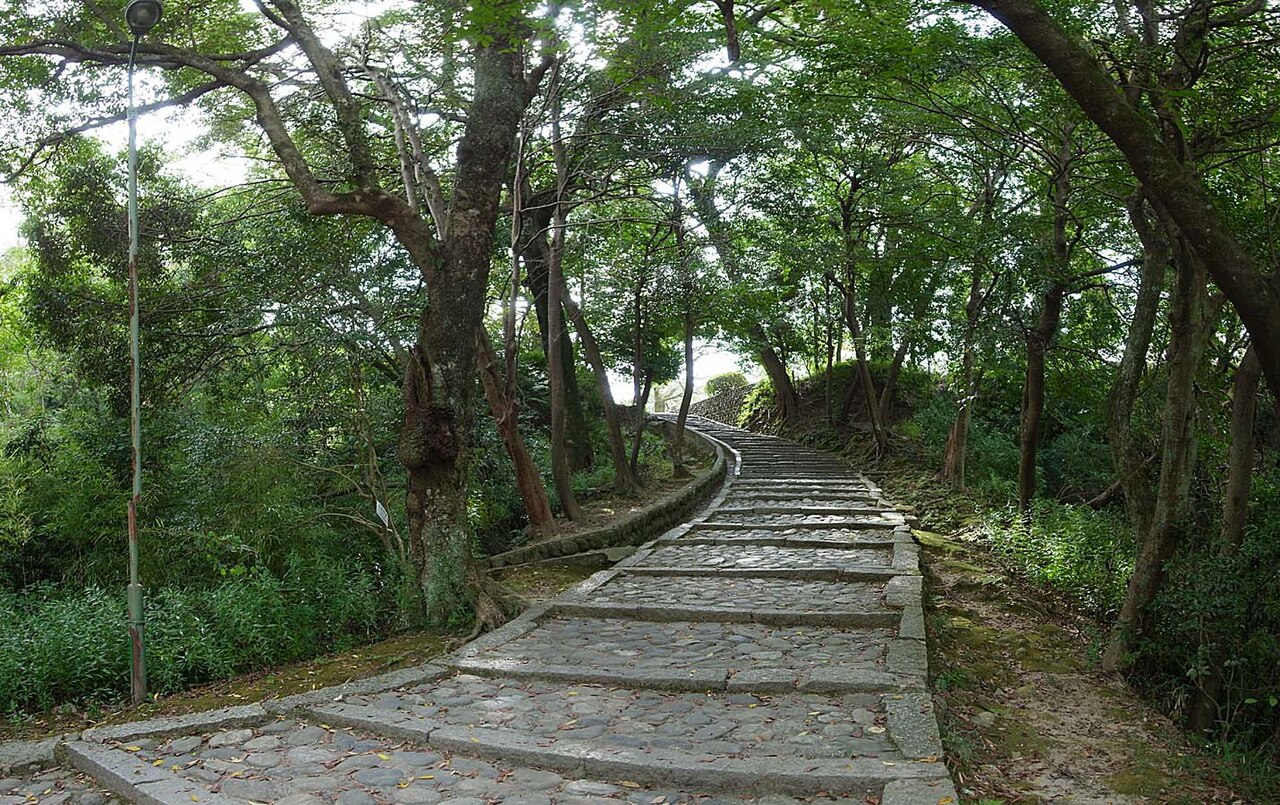
What survives today is not a forge turning out battle swords. Genuine sword-making in Japan is tightly regulated, and the living edge of the tradition has shifted toward design objects and finely finished replicas — many produced in or around Seki in neighboring Gifu, Japan’s best-known modern blade town. A katana-form letter opener is the most everyday expression of that shift: it keeps the curve, the tsuba, and the saya, but trades the regulated steel of a real nihontō for stainless that needs no license and no oiling ritual. The object’s value is narrative — it puts the Ise and Kuwana sword story within reach of a desk drawer.
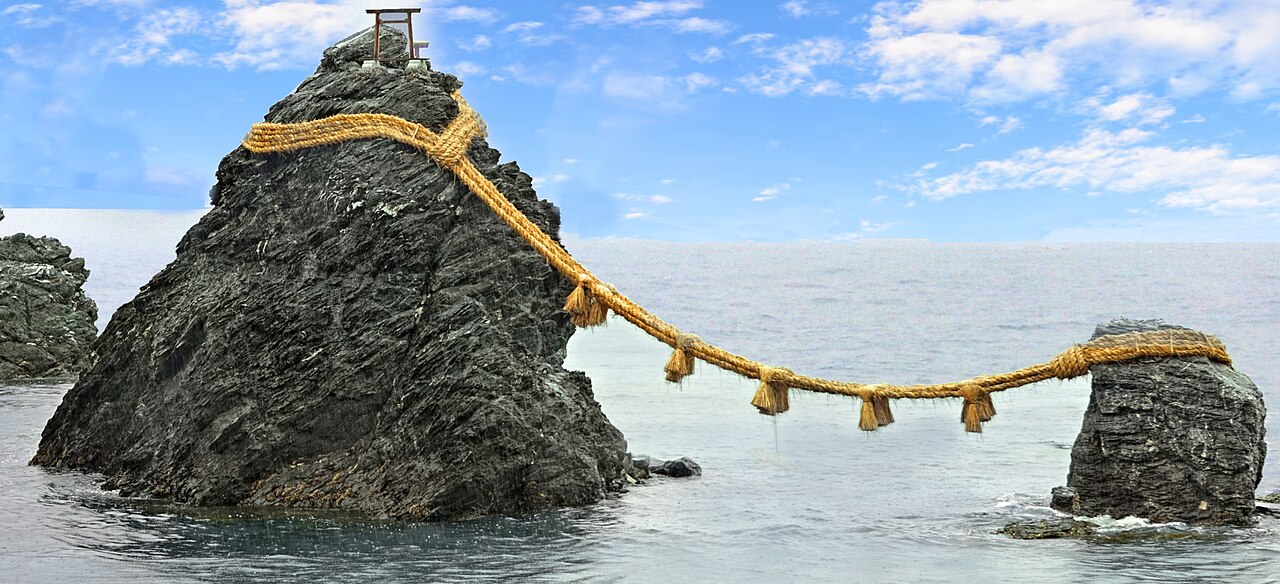
Buying options across stores
Prices for katana-style letter openers vary with materials, fittings, finish, and maker. USD figures are approximate estimates at a ¥150/USD baseline (mid-2026).
| Store | Item / Variant | Price (JPY + USD est.) | Notes |
|---|---|---|---|
| 🇺🇸 Amazon US (search) | Browse Japanese katana-form letter openers | varies (USD) | Best if you are shopping from the US — Prime shipping, USD pricing, no international customs. Amazon US carries katana-style letter openers and Japanese desk blades from various makers; this exact Ise-lineage piece is sourced from Japan (next row). |
| 🇯🇵 Amazon JP Global Store | Sengo Muramasa katana letter opener | — | Ships internationally from Japan to most major destinations. |
| Maker direct | Mie / Seki metalwork studios | Varies | Some replica makers sell direct, but most lack English checkout or international shipping. Confirm before relying on this path. |
| Proxy services (Buyee / Tenso) | Forwarding for Japan-only purchases | Item price + forwarding fee | Useful if a purchase is Japan-domestic only. Adds a forwarding fee and a second shipping leg; check customs thresholds for your country. |
What it does well
The Sengo Muramasa lineage of old Ise is one of the most recognizable names in Japanese sword history — a genuine regional narrative, not generic “samurai” branding.
As a stainless letter opener rather than a nihontō, it needs no registration, no oiling, and crosses borders far more easily than a real sword.
A mirror-polished blade with tsuba and saya presents as a small display object as much as a working paper knife.
Compact, made in Japan, and easy to explain — a natural desk gift for someone interested in Japanese history or sword lore.
Weaknesses and things to verify before buying
- It is a replica, not a forged blade. This is a stainless letter opener inspired by a Muramasa katana — not a traditionally forged Japanese sword, and not represented as one.
- Not a precision cutting tool. A katana-form letter opener is shaped for opening envelopes, not for kitchen, craft, or whittling work; do not expect a functional edge.
- “Muramasa” here is design heritage, not provenance. The piece evokes the school’s silhouette and story; it is not the work of, or certified by, a historical Muramasa smith.
- International logistics add friction. Buying from the JP Global Store or via a proxy means longer transit and possible customs duties above your country’s threshold.
- Blade-shaped objects face shipping and import rules. Some carriers and destinations restrict pointed metal items; verify your local rules before purchase.
Conclusion — which buyer type are you?
If you want true craft heft, look past letter openers toward a licensed iaitō or a certified antique blade — desk objects of this kind are not collector’s swords.
If you want a Japanese-made, story-rich desk piece at a modest price, this Ise-lineage letter opener is squarely aimed at you.
If price is the deciding factor, compare katana-style letter openers by material, finish, and construction before committing.
If you need a functional knife or object to forged-blade purists, this replica is not the right buy — choose a real Seki or Echizen blade instead.
Other ways to approach this purchase
Amazon JP Global Store pricing moves with sale events. If you are not in a hurry, set a watch and compare before and after a campaign.
Used desk pieces occasionally surface through proxy-accessible JP marketplaces; inspect photos for polish wear before buying.
If you already use Amazon credit-card or points programs, the JP Global Store purchase can fold into the rewards you collect on everything else.
If the replica framing bothers you, redirect the budget to a working Seki or Echizen knife from the comparison box and treat that as the heirloom.
❓ Frequently Asked Questions
Is this an actual Muramasa sword?
No. It is a stainless steel letter opener shaped after a Sengo Muramasa katana. It carries the school’s silhouette and story as a design object, but it is not a forged Japanese sword (nihontō) and is not the work of a historical Muramasa smith.
Where is it made, and what is the Ise connection?
Made-in-Japan pieces in this style draw on the design language of Japanese swords. The name Sengo Muramasa refers to a swordsmith school associated with Kuwana in old Ise province — most of modern Mie Prefecture — from the late Muromachi into the Sengoku era.
Can it ship internationally?
Japanese retailers, both domestic and international, carry comparable katana-style letter openers. Check your country’s customs thresholds and any carrier rules on pointed metal items before ordering.
How does it compare to the Bizen Osafune letter opener?
Both are katana-form desk pieces tied to a famous sword region — Muramasa to Ise/Kuwana in Mie, Osafune to Bizen in Okayama. The choice is mostly about which lineage story resonates with you; see the linked Bizen Osafune guide in the comparison box.
What is the “Muramasa curse”?
It is a folk legend, not documented fact. Because several Tokugawa relatives were wounded or killed by Muramasa blades, the Tokugawa shogunate came to fear and discourage them, and over the Edo period this grew into the belief that the swords thirsted for Tokugawa blood.
Do you know the exact size and price?
Dimensions, weight, and price vary among katana-style letter openers; confirm them with the maker or seller before buying.
jpmono.com is curated by a Japan-based editorial team (working out of Toyama in the Hokuriku region and Nara in Kansai) and is independent. We do not take payment from the makers we feature; income comes from affiliate links. We do not physically test every product — we read maker specifications and historical craft sources.
🤖 This article was prepared with AI assistance and reviewed against maker specifications and historical craft sources. Where dimensions or pricing vary between examples, the text says so rather than estimating.
Affiliate disclosure: jpmono.com may earn a commission on qualifying purchases made through links on this page, at no additional cost to you.