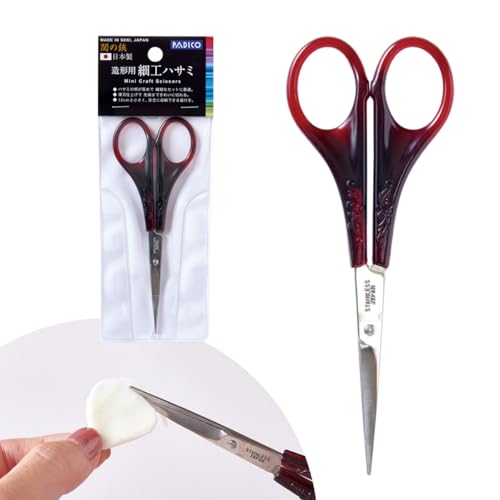
- What it is: a 12 cm stainless-steel craft scissors for fine work — papercraft, resin clay, UV resin, and small handicraft cuts.
- Made in: Seki, Gifu — a blade-making town in central Honshu whose cutlery tradition carries a traditional-craft designation.
- Price band: entry-level for a Japanese-made craft tool — ¥1,056 as of 2026-10-21; verify on the listing.
- Best for: hobbyists who cut small, tight shapes and want a short, thin blade kept for detail work alone.
- Skip if: you need dressmaking shears, or you require a stated steel grade and forging method before buying.
- Shipping: ships internationally from Amazon Japan — jump to our pick ↓
In Seki, a small city in central Gifu Prefecture, a pair of scissors begins as a flat strip of stainless steel that has to be ground thinner and thinner toward the edge — thin enough to turn inside a tight curve on a sheet of paper without tearing it. The 12 cm craft scissors in this guide come from that town, and the Amazon Japan listing says so in the plainest possible way: 日本製 関市, made in Japan, Seki City.
Seki’s name is not a decorative label on a household tool. The town is commonly described as one of Japan’s long-standing cutlery centers, and the commonly told account places its first swordsmiths in the Nagara River basin during the Kamakura period — roughly 780 years of blade work, by that reckoning. When the Meiji government banned the wearing of swords in 1876, the workshops turned the same edge-making skills toward knives, scissors, and small tools. A craft scissors like this one is a direct descendant of that turn.
This guide works from one specific, inexpensive example — a ¥1,056 pair of fine-work scissors — and from what the listing itself states. It compares the price across purchase routes, explains how the item reaches buyers in Canada, the UK, Australia, and the United States, and draws a clear line between the reputation of the town and the stated description of this particular tool.
🔄 Updated
⏱️ 15 min read

- Who this is for — and who should skip it
- Product overview (from published specs)
- 📍 Where this comes from — place, era, and the craft tradition
- Price snapshot across stores
- 📦 Shipping & where to buy from outside Japan
- What it does well
- Weaknesses and things to verify before buying
- Conclusion — which buyer type are you?
- Other ways to approach this purchase
- 🏆 Editor’s Pick — the Seki craft scissors we would start with
- ❓ Frequently Asked Questions
Who this is for — and who should skip it
- Papercraft and model builders who cut small openings, curves, and corners and want a blade that stays inside the shape.
- Hobbyists working with resin clay or UV resin who need a short blade for trimming cured edges.
- Buyers who want an entry point into Seki blade work at a few thousand yen rather than a chef’s-knife budget.
- Shoppers already consolidating an Amazon Japan order and adding one small tool to the parcel.
- Anyone buying a practical small gift with a named place of manufacture on the label.
- Dressmakers and quilters: the listing describes fine craft work and does not name fabric cutting.
- Buyers who need a stated steel grade, hardness number, or forging method before purchase — none appears here.
- Professional users who require a written warranty or a factory sharpening service.
- Shoppers who want one domestic order with no international shipping and no customs line.
- Anyone picturing a large tool: 12 cm is small, and the listing calls it 小さい (small), 細かい (fine), 細い (thin).
Product overview (from published specs)
The table below separates what the Amazon Japan listing states from what it leaves open. The US search results returned no listing for this exact pair, so the Japanese listing is the source for every attribute here. Prices and stock can move after the writing date.
Seki Hamono Craft Scissors
GreenOcean 造形用細工ハサミ 日本製 関市 鋏 ステンレス 12cm 小さい 細かい 細い 薄刃 道具 工具 UVレジン 樹脂粘土 ペーパークラフト 手芸 工作 パジコ PADICO 28240-J
通常2~3日以内に発送します。 · Sold by 隠れ工房GreenOcean:公式店 · ASIN B0H3ZBR9LM
Price and availability as of 2026-10-21 11:05 JST. The Amazon listing at the time of purchase is authoritative. jpmono.com earns a commission on qualifying purchases at no extra cost to you.
| Attribute | What the listing states | Source |
|---|---|---|
| Item type | 造形用細工ハサミ — craft scissors for modeling and fine work | Amazon JP listing, 2026-10-21 |
| Material | Stainless steel (ステンレス) | Amazon JP listing |
| Length | 12 cm (blade length versus overall length is not specified) | Amazon JP listing |
| Blade character | 薄刃 — thin blade; described as small, fine, and narrow | Amazon JP listing |
| Named uses | UV resin, resin clay, papercraft, handicraft, general craft work | Amazon JP listing |
| Origin | Made in Japan, Seki City, Gifu (日本製 関市) | Amazon JP listing |
| Names on the listing | GreenOcean (shop name) and PADICO 28240-J (model code) | Amazon JP listing |
| Condition and seller | New; sold by 隠れ工房GreenOcean (official shop) | Amazon JP listing |
| Price | ¥1,056 (about $7 USD at ¥150/USD; the yen figure is authoritative) — as of 2026-10-21; verify on the listing | Amazon JP listing |
| Availability | Ships within 2–3 days (通常2~3日以内に発送します) | Amazon JP listing |
ℹ️ Only the Amazon Japan listing was available for this item at the time of writing, so live pricing and some specifications may have shifted since October 21, 2026. The linked listing is authoritative; attributes it does not publish are left open below rather than filled in.
🔍 Glossary — the Japanese words printed on this listing
- 関市 (Seki-shi)
- Seki City, in central Gifu Prefecture. The place name printed on the listing is the manufacturer’s declared origin.
- 日本製 (Nihon-sei)
- “Made in Japan.” On a blade tool this is a country-of-origin statement, not a quality grade.
- 造形用 (zōkei-yō)
- “For modeling” or “for shaping” — a use category, the equivalent of the English “craft” or “hobby” label on a tool.
- 細工 (saiku)
- Fine work, detailed handwork, or craftwork. 細工ハサミ is a scissors kept for small, precise cuts.
- 薄刃 (usuba)
- Thin blade. It describes the grind, not a steel type, and it is the reason this tool is suited to soft sheet materials rather than heavy stock.
- 鋏 (hasami)
- Scissors. The listing uses the kanji form rather than the katakana loanword ハサミ in its title.
- 刃物 (hamono)
- Cutting tools — the category word behind “Seki Hamono,” the name of the town’s blade-making tradition.
📍 Where this comes from — place, era, and the craft tradition
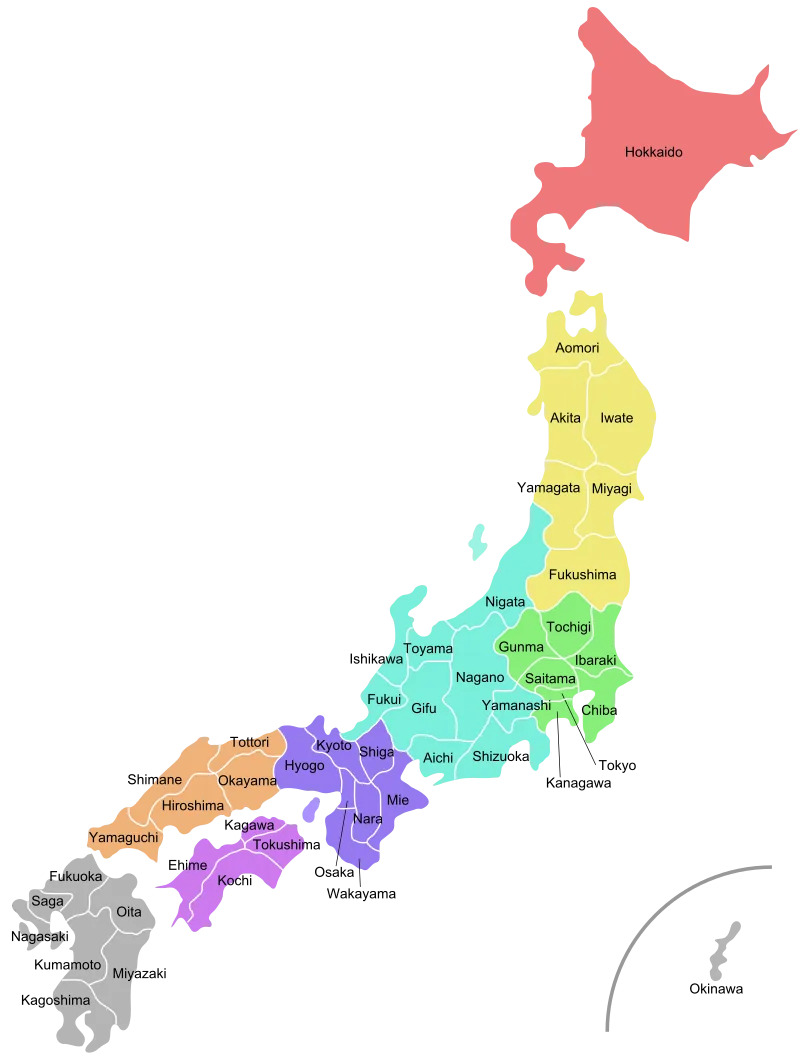
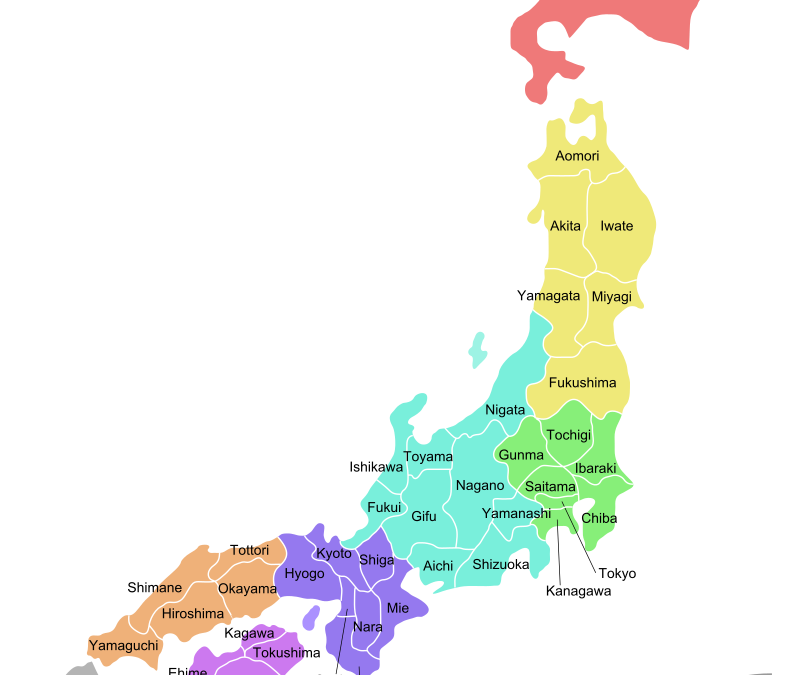
Gifu Prefecture sits in the Chūbu region of central Honshu, and it has no coastline. Seki lies in the central part of the prefecture, in the basin of the Nagara River, and that geography explains more about the town than any slogan does. Blade work needs water for grinding and cooling, and it needs charcoal that burns hot and clean; an inland river basin with forested hills behind it supplied both, and the river system carried finished goods out.

Seki became a blade town when swordsmiths settled along the Nagara River, drawn by the water, the charcoal, and the demand of a warrior society. That is the commonly told version of the origin. It is also the reason the name Seki carries weight in a kitchen or a workshop today: the settlement did not begin as a knife town, but as a place where the edge was the product.
The date that reshaped the industry is 1876. In that year the Meiji government’s sword ban removed the market that had sustained Seki’s smiths, and the workshops moved into knives, scissors, and small tools. The change was less a reinvention than a redirection — the same grinding, fitting, and edge geometry applied to objects people could still legally carry and use every day.
-
1185–1333 — The Kamakura period. Swordsmiths settle in the Nagara River basin, the commonly told starting point of Seki’s blade work. -
1868 — The Meiji Restoration begins; the social order that supported sword-making starts to come apart. -
1876 — The sword ban. Seki’s workshops shift broadly to knives, scissors, and small tools. -
20th century — Scissors and craft tools settle in alongside kitchen knives in the town’s standard output. -
2026 — A 12 cm stainless craft scissors, made in Seki, listed on Amazon Japan at ¥1,056 on October 21.

“The town did not stop making edges when swords stopped being legal. It changed what the edge was attached to.”
What “still made in Seki” means for a ¥1,056 pair of scissors is narrower than the heritage language suggests, and more useful. It means the object was made in a town whose economy has been organized around cutting edges for centuries, by workshops that grew out of that lineage. It does not tell you the steel grade, the grinding sequence, or whether any part of the process was hand-finished. Those are questions the listing leaves unanswered, and a buyer should treat them as open rather than assume the best version.
Beyond Seki: Gifu’s inland workshop economy
Gifu is not a single-craft prefecture, and the blade town is one part of a wider pattern of inland making. Northern Gifu’s mountain villages built in timber and thatch, working from the same forested interior that surrounds the prefecture’s tool towns. The scale is different, but the logic is not: a landlocked region with wood and water turns those materials into objects and moves them out along the rivers and roads.

That context matters when judging a small tool. Seki’s reputation comes from a town-wide industry, not from a single atelier, and the town’s output ranges from high-end kitchen knives to inexpensive craft scissors like the one in this guide. The place name tells you which tradition the tool belongs to. The listing tells you what the tool actually is.
Other Japanese blade guides on this site, for readers weighing a craft scissors against a kitchen knife, an ikebana tool, or a forged pair from another tradition.
 Sakai Takayuki Santoku
 Yaxell Ran Seki Hamono Damascus Santoku: Where to Buy [2026]
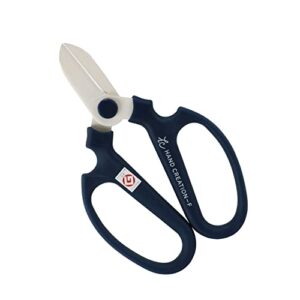 Kyo Hamono Warabite Ikebana Flower Scissors: Where to Buy [2026]
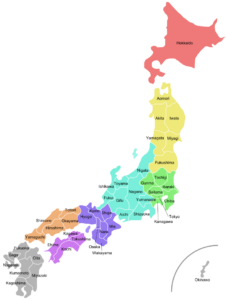 Kaga Hamono Hand-Forged Nakiri Knife: Kanazawa Blade Craft [2026]
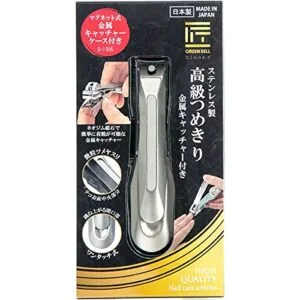 Seki Nail Clipper: Gifu’s Sword-City Precision Steel Tool [2026]Tanegashima Hand-Forged Nigiri Scissors: Japanese U-Shaped Blades Where to Buy [2026]
Price snapshot across stores
Prices below are listed in yen first because the Japanese listing is the authoritative one for this item; the dollar figures are estimates at ¥150/USD. Prices in USD are approximate and depend on the current exchange rate. On a ¥1,056 tool, shipping and import handling will usually cost more than the item itself — plan the order around that, not around the sticker price.
| Store | Item / variant | Price (JPY + USD est.) | Notes |
|---|---|---|---|
| 🇺🇸 Amazon.com (US) | Browse Japanese craft scissors and small blades | varies (USD) | Best if you are shopping from the US — Prime shipping, USD pricing, no international customs line. Amazon.com carries Japanese kitchen knives and craft tools from several makers, useful for comparing geometry and price tiers; this Seki pair ships from Japan (next row). |
| 🇯🇵 Amazon JP Global Store | GreenOcean 12 cm Seki craft scissors (PADICO 28240-J) | ¥1,056 (≈ $7 USD) — as of 2026-10-21; verify on the listing | Ships internationally from Japan to 65+ countries — including Canada, the UK and Australia — with import fees estimated at checkout. |
| Maker direct | Direct order page for this model | — | No direct order page is identified on the listing; which company manufactures this pair is not stated. Unconfirmed — check the manufacturer site. |
| Proxy services (Buyee / Tenso) | Same listing, forwarded | ¥1,056 + proxy and forwarding fees | Useful only if Amazon Japan will not ship to your address, or if you are consolidating several small items from different Japanese shops. |
Only the Amazon Japan listing was available for this item; live pricing may have shifted since the writing date.
📦 Shipping & where to buy from outside Japan
Amazon Japan’s Global Store is the simplest route for this item. It ships to more than 65 countries, including Canada, the UK, and Australia, and it estimates import fees at checkout for most destinations. Individual listings can still be restricted by blade length or destination rules, so confirm the delivery address on the listing before checkout.
Customs is the part buyers underestimate. Orders above the local duty-free threshold can attract VAT, GST, or import duty, and the threshold differs by country; Amazon collects estimated import fees for many destinations at checkout, but a parcel sent through a proxy may be charged on arrival instead. On a tool this cheap, the shipping share is large, which is why adding a second small item to the same parcel is usually the better order.
What it does well
- 🧽 Cleaning: stainless resists rust, but wipe the blades dry after use; the listing gives no dishwasher rating, so hand-washing is the cautious choice.
- 🧴 Resin and clay: the listing names UV resin and resin clay, so wipe the blade after those cuts rather than letting residue cure on the edge.
- 🔧 Sharpening: no sharpening method or service is stated. Keep the tool to soft sheet materials and it will hold its edge far longer.
- 📦 Storage: no cap or case is mentioned in the listing, so store it where the thin blade cannot be knocked against other tools.
Weaknesses and things to verify before buying
- The 12 cm figure is ambiguous. The listing gives one length and does not say whether it is the blade or the whole tool. If the exact dimension matters for a project, confirm it on the listing or with the seller first.
- No steel grade or hardness. “Stainless steel” is a family, not a specification. The listing does not name the alloy, the heat treatment, or a Rockwell figure, so a buyer cannot compare it with a documented blade.
- The forging method is not stated. The town’s tradition is forged blades, but the listing describes a stainless craft scissors without claiming a forging process. Treat “forged” as a description of Seki’s craft lineage, not of this specific pair.
- Two names, one unclear maker. The title carries both the GreenOcean shop name and the PADICO 28240-J code, and it does not say which company manufactures the tool. Buyers who care about the maker should ask before ordering.
- Thin blade means light duty. 薄刃 is a fine-work grind. Card stock, resin clay, and paper are the intended materials; thick leather, metal sheet, or heavy fabric are not named and should not be assumed.
- No accessories or after-sales terms. A cap, case, warranty, and sharpening service are all absent from the listing. None should be expected.
- Shipping can exceed the item price. A ¥1,056 tool sent internationally can cost several times that in postage. The order only makes sense if it is combined with other items or if you specifically want this pair.
Conclusion — which buyer type are you?
Other ways to approach this purchase
🏆 Editor’s Pick — the Seki craft scissors we would start with
A 12 cm stainless-steel craft scissors listed as made in Seki, Gifu, sold new by the GreenOcean official shop on Amazon Japan.
- The listing names the place of manufacture directly — 日本製 関市 — rather than leaving the origin vague.
- The 12 cm thin blade is sized for fine cuts in paper, resin clay, and UV resin, not for heavy stock.
- At ¥1,056, it is an inexpensive way to try a Seki-made tool before committing to a forged knife.
❓ Frequently Asked Questions
Is this scissors actually made in Seki, Gifu?
What is this scissors designed to cut?
Does 12 cm mean the blade length or the whole scissors?
Is the steel forged?
Will Amazon Japan ship it to Canada, the UK, or Australia?
Does it come with a cap, a case, or a sharpening service?
Is ¥1,056 the final price?
jpmono.com is curated by a Japan-based editorial team (working out of Toyama in the Hokuriku region and Nara in Kansai) and is independent. We do not take payment from the makers we feature; income comes from affiliate links. Read more about our editorial standards.
Note: this article was drafted with AI assistance and reviewed against the published product listing; it is not a hands-on test. Specifications and prices reflect the sources cited and may change.
Affiliate disclosure: jpmono.com may earn a commission on qualifying purchases made through links on this page, at no additional cost to you.