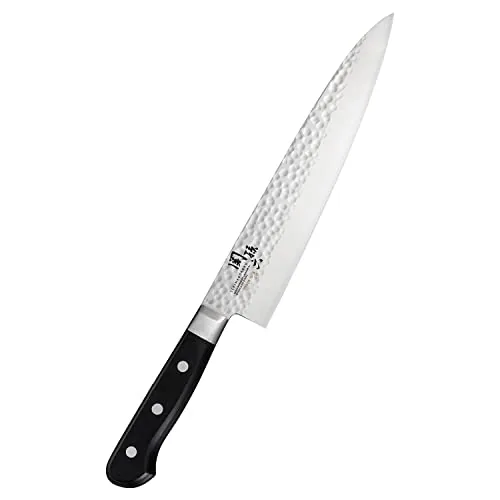
- What it is: A 210 mm Kai Seki Magoroku Imayo gyuto (chef’s knife) with a hammered tsuchime blade, made in Japan, model AB5460.
- Made in: Seki, Gifu — a blade-making town in the Mino region of central Japan, north of Nagoya.
- Price band: No price was shown on the listing at the time of writing; a Seki-made 210 mm gyuto normally sits in the accessible-to-mid range (see the live listing).
- Best for: Cooks who want one general-purpose knife with a verifiable Japanese blade-town name on the blade.
- Skip if: You need the knife in hand this week, or you want the steel grade written down before you buy.
- Shipping: Amazon JP Global Store ships internationally, including Canada, the UK and Australia — jump to our pick ↓
The smiths who put Seki on the map chose the site for three practical reasons: water to quench and grind, charcoal to fire the forge, and whetstone rock close enough to quarry. Those advantages outlasted the swords that first paid for them.
The knife in this guide is a working descendant of that trade rather than a museum piece. It is Kai’s Seki Magoroku Imayo gyuto at 210 mm, made in Japan, with a hammered 槌目 surface and the model number AB5460 — a production kitchen knife from a city that has organized itself around edges for centuries.
What follows is a reading of the listing as it stands: what the title states, what it leaves unstated, where the blade sits in the wider Seki story, and which buyers should act now versus wait. Two things frame everything below. At the time of writing the listing showed no price, and it showed 現在在庫切れです — currently out of stock.
Updated
Read time: about 9 minutes

ℹ️ Live pricing and some specs were not in our snapshot — the linked listing is authoritative; unconfirmed attributes are marked below.
- Who this is for — and who should skip it
- Product overview (from published specs)
- Which finish should you choose?
- 📍 Where this comes from — Seki, Mino, and the blade tradition
- Price snapshot across stores
- 📦 Shipping & where to buy from outside Japan
- What it does well
- Weaknesses and things to verify before buying
- Conclusion — which buyer type are you?
- Other ways to approach this purchase
- 🏆 Editor’s Pick
- ❓ Frequently Asked Questions
Who this is for — and who should skip it
- You want one blade that covers meat, fish and vegetables, and you are done buying three specialist knives.
- You prefer a knife with a named Japanese blade town behind it over an anonymous supermarket blade.
- You like the look and grip of a hammered 槌目 surface and do not mind a little texture.
- You are comfortable waiting for a restock, or setting a stock alert on the listing.
- You are buying a first serious Japanese knife and want a mainstream, low-drama shape.
- You need a knife for a specific task this week — the listing was out of stock at the time of writing.
- You will not buy without a number: no price was displayed, so value cannot be judged from the page.
- You want the steel grade, hardness or cladding stated before purchase — the title does not give them.
- You want a hand-forged, single-smith blade; this is a series-produced knife.
- You need a left-handed or custom-ground version; nothing in the listing says one exists.
Product overview (from published specs)
The table below stays close to what the listing actually states. Where a row says unconfirmed, the information is not in the listing and should be checked with the maker rather than assumed.
Seki Gyuto Chef Knife
貝印 KAI 牛刀 包丁 関孫六 いまよう 槌目 210mm 日本製 AB5460
現在在庫切れです。 · ASIN B08XX8ZYFT
Price and availability as of 2026-10-21 11:05 JST. The Amazon listing at the time of purchase is authoritative. jpmono.com earns a commission on qualifying purchases at no extra cost to you.
| Attribute | What the listing states |
|---|---|
| Maker | 貝印 KAI (Kai Corporation) |
| Series name | 関孫六 (Seki Magoroku) / いまよう (Imayo) |
| Knife type | 牛刀 (gyuto) — the Japanese name for a Western-style chef’s knife |
| Blade length | 210 mm |
| Blade finish | 槌目 (tsuchime) — hammered texture |
| Country of manufacture | 日本製 (made in Japan) |
| Model number | AB5460 |
| Steel grade | Unconfirmed — the title does not name the steel |
| Handle material | Unconfirmed — check manufacturer site |
| Price | No price displayed at the time of writing |
| Availability | 現在在庫切れです (currently out of stock) |
📖 Glossary — the Japanese words on the box
- 牛刀 (gyūtō)
- Literally “beef sword”. In modern Japanese it names the Western-style chef’s knife: a long blade with a gentle belly curve, used for meat, fish and vegetables.
- 槌目 (tsuchime)
- Hammered. A surface pattern of shallow, irregular hammer marks, finished as much for texture as for looks.
- 刃物 (hamono)
- Cutlery, or edged tools generally. A hamono town is a town whose economy was built on blades.
- 関孫六 (Seki Magoroku)
- A Kai knife line that carries the name of Seki, the Gifu blade town, in its first two characters.
- いまよう (Imayo)
- “Modern style” — the sub-line name on this knife, written in kana on the listing.
- 日本製 (Nihon-sei)
- Made in Japan. On this listing it appears in the product title itself.
Which finish should you choose?
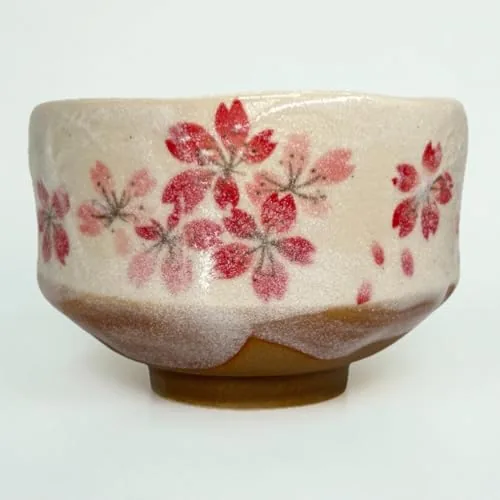
This piece is listed in 10 styles. The photos below are the actual style options on the listing right now — pick the one you want and confirm it on the product page before ordering, since hand-finished wares vary slightly piece to piece.


📍 Where this comes from — Seki, Mino, and the blade tradition
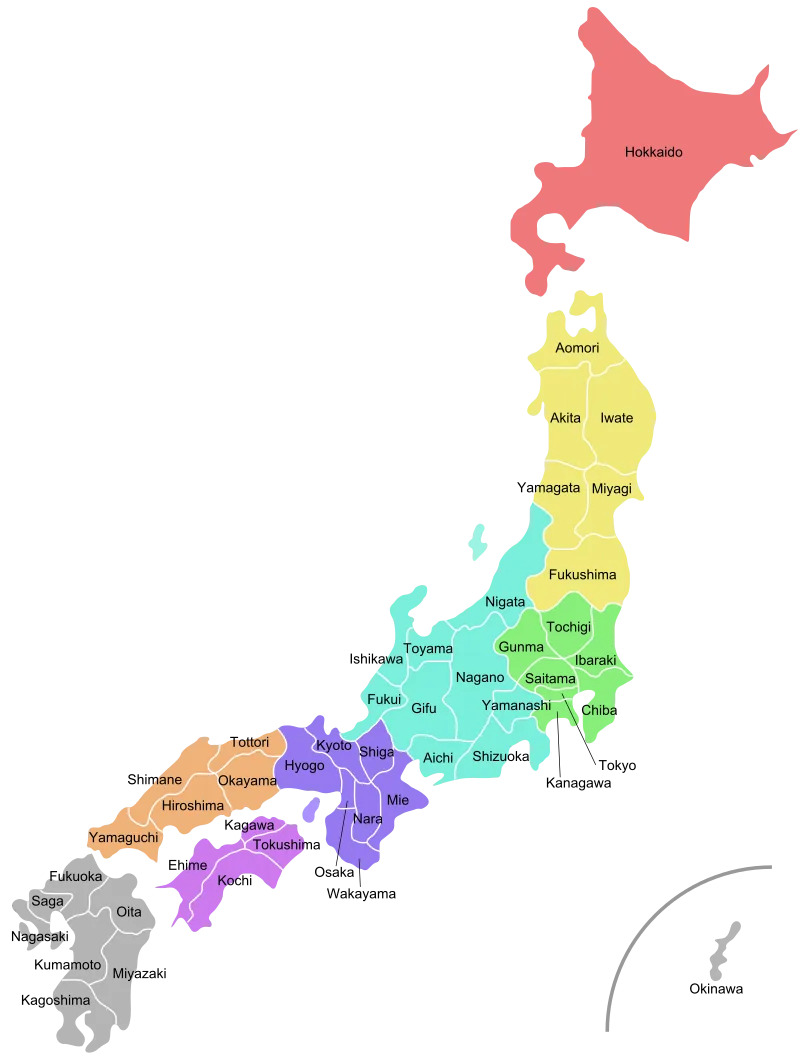
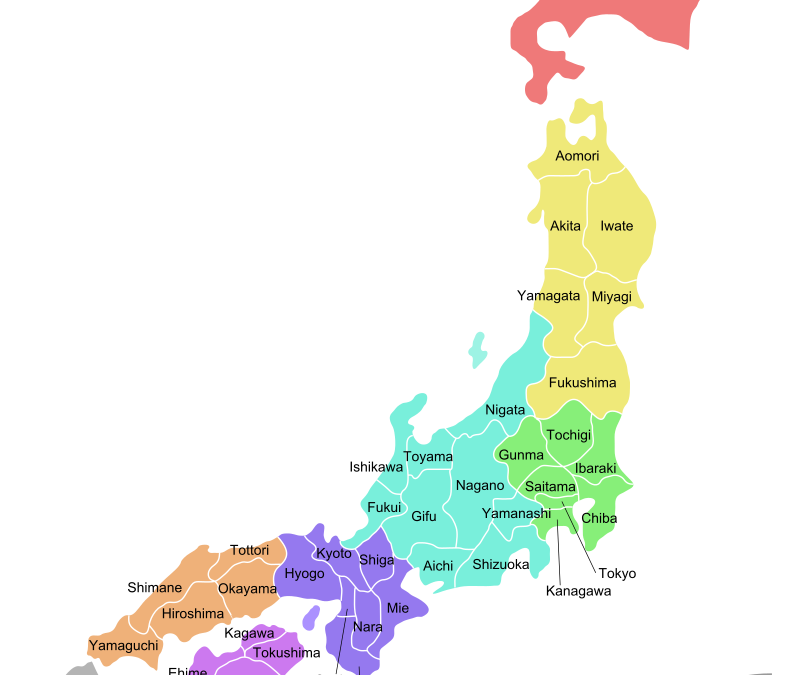
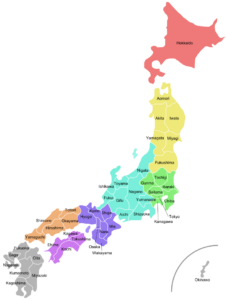
Seki sits in central Gifu Prefecture, in the Chūbu region of Honshu. Nagoya lies to the south, the castle town of Gifu a short distance down the Nagara River, and the mountain country of Gujō to the north. The district belongs to the old Mino province, the part of Gifu that opens onto the Nōbi Plain.
A blade town needs three inputs before it needs anything else: water, charcoal and abrasive stone. Mino had all three. The rivers that cut down from the mountains gave clean water for quenching and grinding, the surrounding forests gave charcoal for the forge, and the region’s rock gave whetstones. That combination, more than any single workshop, is why the trade clustered here and stayed.

The town’s blade trade is generally described as beginning with swordsmiths in the medieval period. Seki was not a court city or a temple town; its reputation came from the forge, and the forge followed the wars. Through the long centuries when blades were military equipment, a town that could harden an edge reliably had a steady customer.
Gifu Castle, on its hill above the modern city, was the seat from which the Mino region was governed in that era. In 1567, Oda Nobunaga took the castle and renamed the town Gifu, closing a long contest among local lords. The detail matters less than the pattern: the same region that supplied armies with steel also supplied the peace that followed with tools.

- Medieval period — swordsmiths settle at Seki and the town becomes a blade-making center.
- 1567 — Oda Nobunaga takes the castle above Gifu and renames the town, ending Mino’s long contest among local lords.
- 1603 — the Edo period begins; Seki remains a blade center through more than two centuries of Tokugawa rule.
- 1868 — the Edo period ends and the Meiji era begins; the market for blades changes with the state that bought them.
- 1876 — sword-wearing is abolished. The commonly told story is that Seki’s smiths turned to kitchen knives, shears and agricultural tools.
- 2026 — the AB5460 gyuto in this guide is listed on Amazon JP under the Seki Magoroku name.
“A blade town is not one famous workshop. It is a whole local economy arranged around water, charcoal and stone — and Seki’s was arranged that way for centuries before anyone wrote a brand name on a box.”
That continuity is worth stating precisely, because it is easy to overstate. Seki today is a grouping of makers — Seki Hamono — producing stainless and layered-steel kitchen knives, and the grouping is nationally known. The town is not a row of smiths hammering out swords behind paper screens. What survived is the cluster: the sharpeners, the handle makers, the steel suppliers, the people who know how a grind should feel. The knife in this guide is one output of that cluster.
It is also a modest one. The listing describes a single 210 mm gyuto, made in Japan, with a hammered finish and a model number. It does not claim a single artisan, a forge date, or a family line, and readers should not read those things into it. The Seki name on the blade is a place name and a line name, not a certificate of hand-forging.
In a Japanese kitchen, that shape does most of the daily work. A gyuto at this length takes over the tasks that a santoku, a petty and a slicer divide between them in a smaller kit — cabbage and daikon, fish, chicken, onions. The hammered surface is the visible cue that this is a Japanese blade rather than a European one, and the 210 mm length is the compromise that made the gyuto the default in Japanese home kitchens.
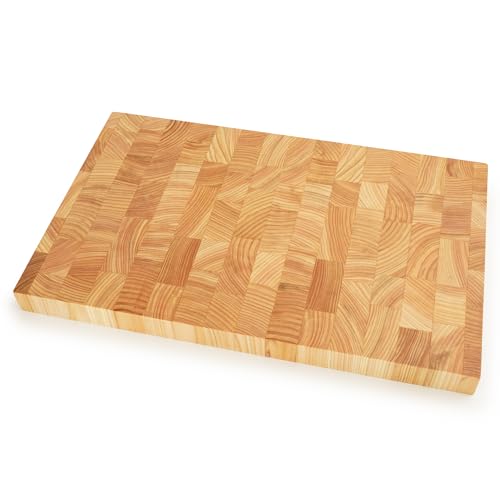 Kiso hinoki board pairing
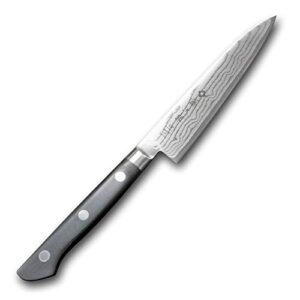 Niigata gyuto contrast
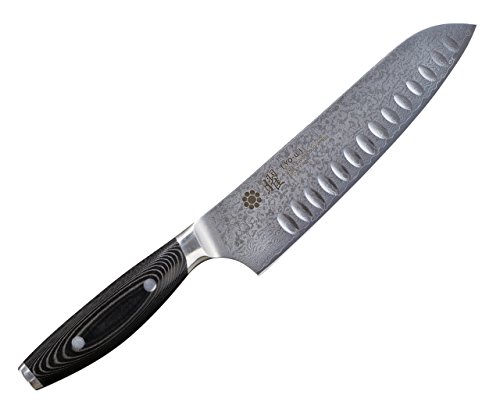 Yaxell Ran Seki Hamono Damascus Santoku: Where to Buy [2026]
 Kawajiri Uchihamono Gyuto: Kumamoto Hand-Forged Chef Knife [2026]Nara Yamato-den Hand-Forged Gyuto Chef Knife: Where to Buy [2026]
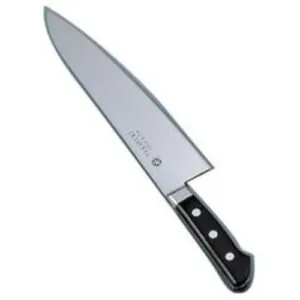 Sakai Takayuki Gyuto Chef Knife: Where to Buy This Sakai Blade [2026]
Price snapshot across stores
Prices below are what the pages showed at the time of writing. For this listing, that means a blank: no price was displayed and the item was marked out of stock. The table still shows the four routes worth checking, in the order a buyer should check them.
| Store | Item / variant | Price (JPY + USD est.) | Notes |
|---|---|---|---|
| 🇺🇸 Amazon US (search) | Browse Japanese gyuto chef knives | Varies (USD) | Best if you are shopping from the US — Prime shipping, USD pricing, no international customs. Amazon.com carries Japanese-style gyuto from Shun, Tojiro, Yoshihiro and other makers, useful for comparing geometry and steel tiers. Kai’s exact AB5460 is sourced from Japan (next row). |
| 🇯🇵 Amazon JP Global Store | Kai Seki Magoroku Imayo 牛刀 210 mm, AB5460 | No price shown at the time of writing (out of stock) | Ships internationally from Japan to 65+ countries — including Canada, the UK and Australia — with import fees estimated at checkout. The listing read 現在在庫切れです when checked. |
| Maker direct | Seki Magoroku range, AB5460 | Not confirmed — check maker site | Useful for confirming steel, handle material and current series lineup. Overseas shipping from the maker is not confirmed here. |
| Proxy services (Buyee / Tenso) | Same Amazon JP listing, forwarded | Not confirmed — proxy fees apply | A route for destinations Amazon JP does not serve directly. You pay a domestic shipping fee plus international forwarding, and returns become impractical. |
Prices in USD are approximate and depend on the current exchange rate. For this listing no JPY figure was available to convert, so no estimate is given.
📦 Shipping & where to buy from outside Japan
The direct route is Amazon JP Global Store, which exports from Japan and estimates import fees at checkout for most destinations. The program covers 65+ countries, including Canada, the UK and Australia.
Budget roughly $15–$40 for shipping to the US, the EU and comparable destinations such as Canada, the UK and Australia, depending on the service level and the parcel’s declared value. A knife is light, so the fee is usually closer to the low end; the wildcard is the handling charge rather than weight.
Customs is the part to plan for. Orders above your local duty-free threshold can attract import duty and a handling fee from the carrier. Amazon’s checkout estimate usually covers the common cases, but it is an estimate, and the courier’s invoice is the final word.
Knife import rules differ by country, and some carriers treat kitchen knives as a restricted category. Check your local rules before ordering, especially if you are shipping to a country with strict blade legislation. Where Amazon JP will not ship, a proxy such as Buyee or Tenso can forward the parcel from a Japanese address, at the cost of an extra fee and a harder returns process.
What it does well
- 🍽️ Dishwasher: not recommended — hand-wash and dry straight away, the usual practice for Japanese kitchen knives.
- ♨️ Microwave: no — no part of a knife belongs in one.
- 🧴 Daily care: wipe the blade dry after washing, keep it out of the sink, and store it where the edge cannot meet other steel.
- 🔧 Repairs: no sharpening or repair service is stated in the listing; a 210 mm gyuto can be resharpened by a local sharpener or with a whetstone.
Weaknesses and things to verify before buying
- It was out of stock. The listing read 現在在庫切れです at the time of writing. Any buying decision starts with whether it has returned.
- No price was displayed. Without a figure the value case cannot be made from the page. Compare against in-stock Seki blades at the same length before committing.
- The steel is unstated. The title names the maker, series, length, finish, model and country — but not the steel grade, hardness or whether the blade is clad. Ask the maker if that matters to you.
- The handle is unstated. Material and shape are not in the title. For a knife that will be washed by hand daily, handle wood and ferrule matter more than most buyers expect.
- Series production, not a single smith. Buyers looking for a hand-forged blade with a signature should look at smith-made lines instead; this is an industrial product from a blade town.
- No sheath or presentation box mentioned. If the knife is a gift, budget for a saya or a box separately.
- Shipping restrictions vary. Kitchen knives are not universally exportable, and the listing does not state destination limits. Confirm at checkout.
- Dimensions beyond length are missing. Blade height, spine thickness and weight are not given, so the knife’s actual heft cannot be judged in advance.
Conclusion — which buyer type are you?
Other ways to approach this purchase
🏆 Editor’s Pick
The listing describes a single 210 mm gyuto from Kai’s Seki Magoroku Imayo line, with a hammered 槌目 blade and the model number AB5460, made in Japan. That is the whole of the confirmed description: one piece, this length, this finish, this maker, this model. It is not a set, it is not presented as hand-forged, and the steel grade is not stated in the title.
Two practical facts sit alongside it. At the time of writing the page showed no price, and it showed 現在在庫切れです — currently out of stock. The buttons below lead to live pages where both can change without notice.
- The length and shape that make a gyuto the one knife most Japanese home cooks reach for.
- A Seki-made blade from a large, established maker — traceable, replaceable, and easy to have serviced.
- A hammered finish that is both the visual signature and a functional choice for wet ingredients.
❓ Frequently Asked Questions
Is the Kai Seki Magoroku Imayo gyuto in stock?
At the time of writing the Amazon JP listing showed 現在在庫切れです (currently out of stock), with no price displayed. Stock changes without notice, so check the listing before relying on it.
What does gyuto (牛刀) mean?
Gyuto literally means “beef sword”. In Japan it now names the Western-style chef’s knife: a long blade with a gentle belly curve, used for meat, fish and vegetables alike.
What is the tsuchime (槌目) finish on this knife?
Tsuchime means hammered. The blade carries a pattern of shallow hammer marks, a finish used on Japanese knives for appearance and, by tradition, to help food release from the blade.
Does the listing state which steel this knife uses?
No. The listing title gives the maker, series, blade length, finish, model number and country of manufacture, but not the steel grade. Confirm the steel with the maker before buying if that matters to you.
Does Amazon JP ship this knife to Canada, the UK or Australia?
Amazon JP Global Store ships internationally to 65+ countries, including Canada, the UK and Australia, with import fees usually estimated at checkout. Some kitchen knives are restricted for export, so confirm shipping at the listing.
Can this knife go in the dishwasher?
Japanese kitchen knives of this type are generally hand-washed and dried immediately. The listing does not give dishwasher instructions, so treat hand-washing as the safe default.
Is 210 mm a good size for a first gyuto?
210 mm is the common all-purpose length in Japanese home kitchens: long enough for cabbage and protein, short enough for a small board. Cooks with very small work surfaces often prefer 180 mm.
jpmono.com is curated by a Japan-based editorial team (working out of Toyama in the Hokuriku region and Nara in Kansai) and is independent. We do not take payment from the makers we feature; income comes from affiliate links. Read more about our editorial standards.
Written with AI assistance and reviewed by the jpmono editorial team. Product details were read from the maker’s published listing at the time of writing; where a detail was not stated, this article says so rather than filling the gap.
Affiliate disclosure: jpmono.com may earn a commission on qualifying purchases made through links on this page, at no additional cost to you.